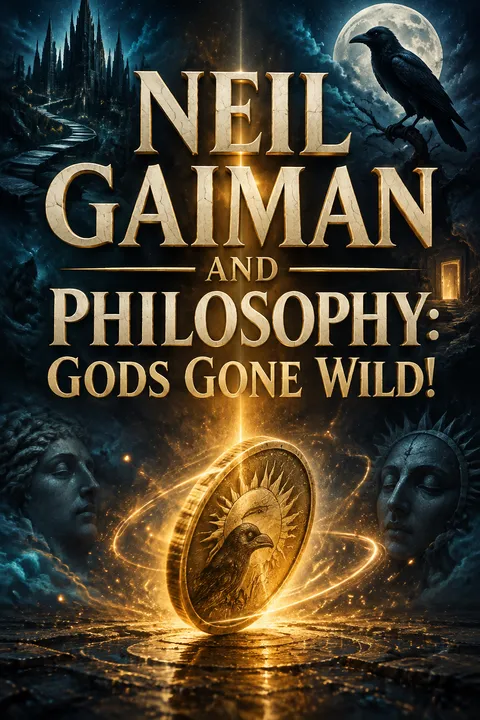
Key Takeaways
1. Misdirection manipulates our perception of cause and effect
Rigged games are the easiest ones to break.
Habitual causal assumptions. Scottish philosopher David Hume demonstrated that human beings never directly observe cause and effect; instead, we merely condition ourselves to expect one event to follow another through repeated observation. In Neil Gaiman’s American Gods, this cognitive vulnerability is exploited through the art of misdirection. Characters like Mr. Wednesday orchestrate elaborate, multi-step outcomes while making them appear to their marks as mere coincidences, tragic accidents, or the unpredictable whims of fate.
Mechanics of the con. By deliberately diverting an observer's focus away from the true mechanism of an event, a master strategist leads them to draw false causal conclusions. In the novel, this manipulation manifests through specific tactics:
- Mr. Wednesday secretly orchestrates Laura's death and Shadow's flight delays to force Shadow into his employment.
- Shadow perceives his string of bad luck as random misfortune, oblivious to the fact that he is trapped in a carefully planned two-man confidence scheme.
- The strategist ensures the mark watches the wrong hand while the actual setup quietly unfolds.
Breaking the illusion. Dismantling a deceptive narrative requires stepping back to re-examine initial assumptions and trace the full chain of events. Once Shadow recognizes that his choices were orchestrated to make him a sacrificial pawn in Odin's war, his understanding shifts entirely. By uncovering the underlying setup, he transforms from an unwitting mark into an active agent who can expose the trick and stop the massacre.
2. Fiction provides philosophical truth where facts fail
We who make stories know that we tell lies for a living. But they are good lies that say true things, and we owe it to our readers to build them as best we can.
Ancient quarrel over art. In the Republic, Plato condemned poets and storytellers for spreading falsehoods about the gods, arguing that depicting divine beings as deceptive, emotional, or violent corrupted public morality. However, Aristotle took a contrasting view in his Poetics, asserting that fiction is more philosophical and of graver import than history. While history merely records specific events that have already occurred, fiction explores universal possibilities and examines how human beings ought to behave under extraordinary conditions.
Internal logic over realism. Mythological and fantasy stories do not need to mirror physical laws to convey profound truths about human nature, provided they maintain rigorous internal consistency. The philosophical value of fantastic narrative relies on several key structural elements:
- Developing plot events that flow logically from established supernatural premises.
- Facilitating catharsis, allowing audiences to safely process grief, fear, and desire through sympathetic characters.
- Testing character integrity under extreme, otherworldly pressure to reveal fundamental human motivations.
Enriching the human intellect. Engaging with imaginative fiction offers a vital exercise in intellectual reflection, allowing us to explore complex ethical dilemmas without immediate real-world consequences. By presenting flawed deities and fallible heroes, Gaiman's modern mythologies operate as expansive thought experiments. They challenge us to confront chaos, morality, and destiny, proving that imaginary constructs can illuminate the deepest realities of the human condition.
3. Belief systems function as pragmatic tools for human survival
If you are to survive, you must believe.
American pragmatism. A central strain of American philosophy, known as instrumentalism, evaluates ideas and belief systems not as abstract, eternal truths, but as practical tools designed to help human beings navigate their environment. In American Gods, deities operate according to this pragmatic reality. They are brought into existence by human necessity and endure only so long as they serve a functional purpose in the lives of their worshippers.
Evolution of functional concepts. As societal conditions and human priorities transform across history, older conceptual tools become obsolete and are replaced by new instruments tailored to modern challenges:
- Ancient gods of thunder, slaughter, and harvest lose their utility in an industrialized, technological landscape.
- Contemporary deities representing Media, Technology, and Surveillance emerge to address modern obsessions and anxieties.
- Simplified worldviews and cultural clichés persist because they offer "good enough" mental shortcuts for daily survival.
Survival of the adaptable. When worldviews are understood as instruments of survival, their value is tied directly to their ability to help individuals adapt to a changing world. Gods and humans alike face the same evolutionary pressure: adapt to current cultural realities or fade into obscurity. Survival requires recognizing when old conceptual tools no longer work and having the flexibility to adopt new ones.
4. Human thought physically manifests abstract concepts into reality
Monads are the ultimate components of reality.
Bridging mind and matter. Platonic philosophy posits that universal concepts exist as ideal Forms, while Gottfried Leibniz’s monadology and contemporary information theory suggest that the universe is composed of fundamental units possessing both physical and mental attributes. In Gaiman's mythos, intense and widespread human focus bridges these realms. When a critical mass of human minds continuously projects belief toward an abstract concept, that concept takes on physical form and independent consciousness.
Mechanism of divine emergence. The process by which a mental construct transitions into a tangible, living entity follows a distinct progression:
- Individual human minds share common experiences, fears, and cultural desires.
- Collective emotional energy condenses into a self-aware mental structure, or archetype.
- Dual-aspect laws of information force this non-physical archetype to materialize physically within the world.
Interdependence of creator and creation. Once physical manifestation occurs, the created entity remains tied to the mental energy that generated it. This creates a reciprocal relationship where divine power depends on human devotion. Should human attention shift or disappear entirely, the physical entity loses its sustaining force, withering away until it ceases to exist.
5. True moral recognition requires seeing the socially invisible
Attention slid off Richard, like water on an oiled duck.
Metaphor of social exclusion. In Neverwhere, the shadowy realm of London Below serves as a vivid allegory for how modern society renders the poor, the homeless, and the vulnerable invisible. Moral invisibility occurs when comfortable citizens systematically withdraw their attention from those in distress. By looking away, society denies marginalized individuals their status as moral subjects who deserve care, respect, and basic human dignity.
Anatomy of indifference. Human beings routinely employ psychological defense mechanisms to evade moral duties toward suffering strangers in their everyday lives:
- Compartmentalizing sympathy by viewing systemic poverty as an inconvenient background detail.
- Rationalizing non-intervention by convincing oneself that public agencies or other passersby will handle the problem.
- Misinterpreting a stranger's desperate needs as self-inflicted or unfixable to alleviate personal guilt.
Cultivating the loving gaze. Philosopher Iris Murdoch advocated for the "loving gaze"—a deliberate, unselfish quality of attention that sets aside personal agendas to see others clearly as they are. Genuine moral growth happens when an individual actively refuses to participate in social indifference. By choosing to truly see the discarded people around us, we accept the personal inconvenience required to acknowledge their humanity and uphold our shared moral duties.
6. Intellect and reason protect personal autonomy from sensory deception
I think, therefore I am.
Cartesian skepticism. René Descartes warned that our physical senses are easily deceived by surface appearances, proposing the hypothetical scenario of an "evil genius" who constructs an elaborate illusion to trick human perception. In Coraline, the Other Mother acts as this evil genius. She crafts a deceptive parallel world designed to entice a lonely child through appetizing meals, interactive toys, and flattering attention.
Seduction versus autonomy. Surrendering to sensory gratification without applying critical thought leads to a subtle loss of self-direction. Gaiman illustrates the grave dangers of uncritical acceptance through clear physical and psychological warnings:
- Exchanging natural eyes for sewn-on buttons, symbolizing the total surrender of independent perception and free will.
- Accepting superficial comfort in exchange for one's authentic identity, history, and memories.
- Allowing oneself to be reduced to a hollow, obedient puppet controlled by an external force.
Triumph of the mind. Coraline defeats the Other Mother not through physical strength, but by practicing Cartesian skepticism and relying on her intellect. By recognizing that the Other Mother's world is a calculated illusion, she refuses to let sensory treats cloud her judgment. Understanding that her true worth comes from internal self-awareness rather than external validation, she preserves her autonomy and reclaims her real life.
7. Mortality gives life its ultimate value and demands empathy
It always ends. That's what gives it value.
The necessity of experience. Frank Jackson’s famous "Mary the Color Scientist" thought experiment shows that complete theoretical knowledge can never replicate first-hand experience. In Gaiman's Sandman universe, the immortal personification of Death must live as a mortal for one day every century. To truly comprehend human fear, joy, and sorrow, she cannot merely observe mortality from afar; she must experience physical limits and emotional vulnerability directly.
The architecture of mortal meaning. Human existence derives its intensity and beauty precisely from its finite nature. The temporal boundary of life shapes how we experience the world around us:
- Ephemeral moments gain profound sweetness because they cannot be kept or repeated indefinitely.
- The anxieties and distractions of daily survival often blind mortals to the preciousness of their fleeting time.
- Direct awareness of life's brevity fosters genuine compassion for the pain and hesitation of others.
Empathy through shared vulnerability. Experiencing mortality firsthand transforms detached duty into warm, empathetic care. By walking in human shoes, Death learns that the dying do not need cold efficiency or philosophical lectures when their time comes. They need a friendly face, a gentle hand, and a compassionate presence to comfort them as they step into the unknown.
8. True redemption requires facing guilt rather than seeking passive punishment
Forgiveness forgives only the unforgivable.
The illusion of punitive satisfaction. In Season of Mists, Lucifer abdicates his throne and evacuates Hell, exposing the fundamental flaw in traditional ideas of eternal damnation. As Michel Foucault observed, historical punishment shifted from public physical torture to institutional efforts to reform the soul. However, passively enduring suffering often acts as an easy alternative to genuine accountability, allowing offenders to avoid the painful work of true self-examination.
Limits of institutionalized reform. When angels take over Hell and attempt to remake it into a mandatory rehabilitation center, the damned actively resist the change. Passive torment feels preferable to compulsory redemption for several clear reasons:
- Retributive physical pain allows sinners to feel they are paying off a debt without having to change who they are.
- Imposed reform fails because it treats the offender as a passive project rather than an active moral agent.
- Authentic redemption requires a voluntary, agonizing confrontation with the actual harm one has caused.
The paradox of forgiveness. Philosopher Jacques Derrida posited that genuine forgiveness can only apply to that which seems truly unforgivable, as trivial misdeeds require simple tolerance rather than true pardon. Redemption cannot be manufactured by administrative systems or external decree. It demands an honest, unvarnished engagement between the wrongdoer and their victim, rooted in shared language, genuine remorse, and mutual recognition.
9. Life's value lies in its journey rather than a final destination
Do you know the only reward you get for being Batman? You get to be Batman.
Rejecting teleological traps. Friedrich Nietzsche criticized philosophical systems that locate the meaning of life in a final goal, destination, or heavenly afterlife, arguing that such views devalue the present moment. In Batman: Whatever Happened to the Caped Crusader?, Neil Gaiman applies Nietzsche’s concept of Eternal Recurrence to Gotham’s hero, refusing to grant Batman a peaceful retirement, a final victory over crime, or a cozy domestic ending.
Affirming the endless loop. Eternal Recurrence challenges us to consider whether we would willingly repeat our exact life—with all its pain, routine, heartbreaks, and struggles—an infinite number of times. Embracing this concept requires a fundamental shift in how we evaluate our choices:
- Finding complete satisfaction in the immediate act of living and striving, independent of the outcome.
- Abandoning the desire for external rewards, praise, or permanent resolutions.
- Treating daily duty and personal struggle as their own intrinsic rewards.
The ultimate life affirmation. By structuring Batman's death so that it loops directly back into his birth as Bruce Wayne, Gaiman turns endless repetition into a profound statement of purpose. The meaning of a hero's life is not found at a final finish line, but in the courage to passionately embrace the struggle over and over again.
10. Authenticity requires accepting freedom and defining your own existence
I'm Nobody Owens. That's who I am.
Existence precedes essence. Existentialist thinkers like Jean-Paul Sartre and Martin Heidegger argued that human beings are not born with a predefined essence or purpose. Instead, we first exist, encounter ourselves in the world, and only afterward define who we are through our deliberate choices. In The Graveyard Book, Nobody "Bod" Owens embodies this radical freedom by carving out his own identity in the quiet space between the living and the dead.
Evading bad faith. Living inauthentically—what Sartre termed "bad faith"—occurs when an individual blindly conforms to social expectations or adopts a pre-packaged identity instead of making original choices. Gaiman contrasts authentic self-hood with empty conformity throughout his narrative:
- The ghouls live in absolute bad faith, abandoning their own memories to adopt stolen titles like "The Emperor of China."
- Bod rejects easy conformity, choosing instead to own his unusual name and define his own moral code.
- Authentic individuals accept the anxiety of freedom rather than hiding behind societal scripts.
Owning one's destiny. Authenticity demands taking full responsibility for one's life, choices, and personal growth. By proudly declaring himself "Nobody," Bod demonstrates that identity is not something handed down by authority, but something forged through action. Embracing his unique upbringing, he steps out of the graveyard ready to face an uncertain world on his own terms.
Review Summary
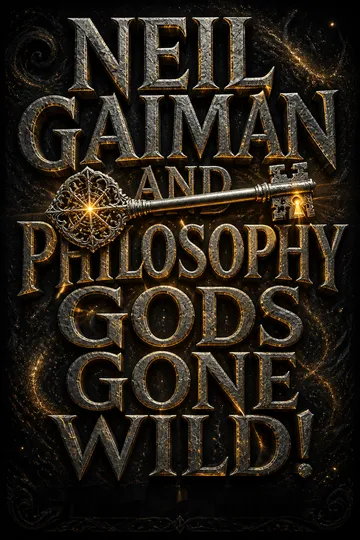
Neil Gaiman and Philosophy receives mixed reviews, with an average rating of 3.55 out of 5. Some readers find the essays thought-provoking and insightful, appreciating the exploration of philosophical themes in Gaiman's works. Others criticize certain essays as overly complex or disconnected from Gaiman's writing. The book is praised for its accessibility to popular culture readers, but some find it disappointing or boring. Several reviewers note that the quality of essays varies, with some being more engaging than others. Overall, opinions are divided on the book's effectiveness in analyzing Gaiman's works through a philosophical lens.
People Also Read

Popular Culture and Philosophy Series Series
Download PDF
Download EPUB
.epub digital book format is ideal for reading ebooks on phones, tablets, and e-readers.








