

Key Takeaways
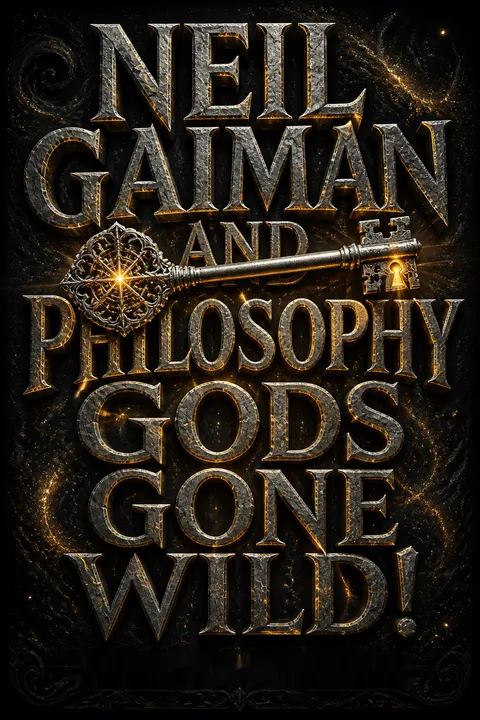
Use Gaiman's impossible worlds to redraw the map of ordinary life.
Fantasy as travel. The book treats Gaiman's stories as journeys into unfamiliar places: the London beneath London, the hidden worlds behind doors, and an America where forgotten gods still walk. Like the characters, readers must learn each place's rules and reconsider what they thought they knew.
The editors distinguish a traveler from a tourist. A tourist observes a strange place from a safe distance and returns unchanged; a traveler engages with it and is altered. These stories make fantasy a kind of philosophical travel writing, where the territory is imaginary but the questions about identity, belief, and responsibility are real.
What's striking is the claim that imagination can change perception without pretending that fantasy is fact. This resembles the use of simulation in education: a model lets people explore consequences they cannot safely or practically encounter firsthand. But transformation is not automatic. A reader can consume an unfamiliar world as spectacle, just as a tourist can collect photographs without understanding the place. The useful test is whether the story changes what seems noticeable or possible after the book closes.
Question the causal story before accepting a coincidence as fate.
A rigged chain. In American Gods, Shadow's canceled flights and unlikely meeting with Mr. Wednesday seem like random misfortune. They are part of a carefully arranged con: Odin and Loki manipulate events and Shadow's assumptions so he will help start a war that benefits them.
Hume's term constant conjunction means that repeated pairing of events trains people to expect one after another; it does not reveal a necessary connection hidden inside the events. Wednesday exploits that habit, nudging Shadow toward false explanations while concealing the real plan. Mad Sweeney's magical coin, given without understanding its consequences, introduces an unforeseen turn that disrupts the scheme.
The chapter's sharpest lesson is about interpretation, not a denial that causes exist. People often mistake a persuasive sequence for proof that one event had to produce another. Modern causal analysis makes a similar distinction between correlation and mechanism, though it usually relies on evidence beyond personal impressions. The caution cuts both ways: suspicion can uncover manipulation, but endless suspicion can turn ordinary misfortune into an imagined conspiracy. The stronger response is to seek alternative explanations and evidence that distinguishes them.
Judge fantasy by its human insight, not its literal plausibility.
Plato against Aristotle. Plato feared that stories about deceitful, violent gods could corrupt their audiences by making bad conduct seem acceptable. By that measure, Gaiman's selfish Odin and emotionally volatile deities are troubling role models.
Aristotle offers a different defense. Fiction can be worthwhile for pleasure and intellectual exercise, and it can reveal patterns of human behavior through imagined cases. Its events need not be realistic if they follow the story's own established logic. He also proposed catharsis, the idea that experiencing emotions such as pity and fear through tragedy can help audiences process them. Fantasy need not be a factual account to test how people might act under pressure.
The disagreement remains useful because both philosophers identify a real power of fiction: stories shape attention and emotion. Plato's concern cautions against treating representation as morally neutral, while Aristotle explains why impossible premises can still illuminate recognizable choices. Neither view settles how a particular audience responds. Context, interpretation, and discussion matter; the same morally compromised character can be read as an example to imitate or a warning about power.
Track what a culture worships by watching what it depends on.
Belief gives gods life. In American Gods, gods survive through human belief. The old deities brought to America by immigrants struggle to persist, while newer figures embody media and technology. The imagined conflict turns cultural attention into a matter of survival.
The chapter connects this premise to instrumentalism, the view that ideas and systems can be understood as tools for dealing with practical conditions. Gods, like technologies, may serve human needs, then lose influence as those needs change. The book makes the point vivid by setting ancient powers beside modern dependencies. It also shows the danger of treating people as tools: Wednesday regards his son Shadow and the other gods as instruments in his own plan.
This framework makes cultural change visible: what people repeatedly attend to can acquire authority, while neglected traditions lose public force. The analogy also clarifies why belief is more than private opinion; shared practices give ideas social consequences. Still, explaining religion only by its usefulness risks flattening devotion, ritual, and spiritual conviction into survival strategies. A tool metaphor is powerful for tracking change, but it does not fully describe what a belief means to the person who holds it.
Dream oddity alone cannot prove dreams are only private fantasies.
Possibility is not proof. One chapter asks whether dreams might be journeys into an objective world, as in Gaiman's Sandman. It proposes dream travel, a thought experiment in which sleep works like unreliable travel: the destination is unpredictable, and memory cannot always connect one visit to the next.
The author argues that discontinuity and strange dream events do not logically rule out an external dream world. A world with different rules could permit transformations or apparent contradictions. But the argument establishes possibility, not evidence that such a world exists. The chapter challenges readers to examine why waking experience seems more reliable, rather than treating that judgment as self-evident.
The distinction between what cannot be ruled out and what has been demonstrated is essential here. Thought experiments can expose hidden assumptions, but they cannot substitute for observations that favor one account over another. The chapter succeeds as epistemology, a study of how knowledge is justified, because it loosens an easy certainty about dreams. Its speculative conclusion should remain modest: philosophical openness does not make every imaginable world equally credible.
Treat seductive comfort as suspect when it asks you to surrender agency.
A world designed to please. Coraline finds a duplicate home where food is delicious, neighbors are entertaining, and the other mother gives her unusual attention. The pleasures are a lure: this world is shaped to satisfy Coraline so its creator can keep and possess her.
The button eyes reveal the price of staying. Coraline understands that accepting them would mean more than changing her appearance; it would mean yielding control over her own life. The chapter connects this danger to Descartes's skeptical question about whether sensory experience can be manipulated by a deceiver. Coraline survives by questioning what feels gratifying and relying on judgment rather than appearances alone.
The story captures a modern problem: systems can earn trust by tailoring comfort to individual desire. That connection does not make every pleasure suspicious; it highlights the importance of noticing when convenience narrows the ability to refuse, leave, or choose differently. Coraline's independence is not isolation. She receives help, but she must retain the capacity to judge that help. Agency depends both on clear thinking and on meaningful alternatives.
Make attention a moral practice, especially toward people outside your circle.
Invisibility has consequences. In Neverwhere, Richard helps Door, a stranger bleeding in the street. His involvement makes him invisible to people in ordinary London, while opening a place for him in London Below. The fantasy literalizes how people can be ignored, misrecognized, or excluded from a community whose members owe one another consideration.
The chapter calls the circle of beings treated as worthy of concern the moral community. Jessica sees Door but minimizes her need and tries to leave; Richard gives her careful attention and recognizes that her situation demands more than a convenient excuse. The chapter calls this attentive way of seeing a loving gaze: focus that resists personal agendas and notices another person's actual needs.
The account usefully separates noticing someone from recognizing what that person needs. Institutions can reproduce invisibility through routine rules, not only through deliberate cruelty, so individual kindness is necessary but insufficient. The chapter's emphasis on attention complements rights-based ethics: rights establish protections, while attention helps reveal when supposedly neutral practices fail to protect someone in front of us. Care also has limits; no individual can meet every need, making collective responsibility important.
Notice small experiences while time still feels abundant.
Mortality makes details vivid. In Sandman, Death becomes mortal for a day every century. As Didi, she delights in ordinary sensations such as eating an apple, while learning why people facing death may feel grief, anger, and regret. Her experience gives emotional weight to a lesson that abstract knowledge alone may not convey.
The chapter considers Frank Jackson's thought experiment about Mary, a scientist who knows every scientific fact about color but has never seen it. Does seeing red teach her something new? The dispute raises a broader question: whether first-person experience adds knowledge that descriptions cannot fully provide. The chapter suggests that simulation can teach efficiently, even if it cannot capture every person's experience.
The argument connects learning to embodiment: a description of pain, taste, or fear is not identical to undergoing it. That does not prove experience is the only route to understanding; testimony, observation, and simulation can all build genuine insight. The practical implication is modest but valuable. Small pleasures are easier to neglect when the future seems unlimited, while attention to them can make daily life feel less like preparation for some later life.
Build character from hardship without declaring the hardship worthwhile.
A tragedy can shape a life without becoming good. In The Graveyard Book, Bod's family is murdered, and he grows up among ghosts. That loss gives him an unusual education and life, but the chapter rejects the conclusion that the murder was therefore beneficial or justified. It distinguishes being sorry for a terrible event from wishing it had never happened, especially when a person's own existence is bound up with its aftermath.
Bod develops character through practice and relationships: the Owens care for him, Silas offers guidance, and the dead teach him about earlier lives. His identity is not simply assigned by a past or a social role. He becomes himself through choices, while learning that authenticity still requires judgment and respect for others.
This distinction protects two truths at once: an event can remain morally appalling, and a person can build a worthwhile life after it. The distinction is especially important when stories of resilience risk turning survival into an argument that suffering was necessary. Bod's fictional outcome cannot predict what trauma does to real people, whose resources and responses vary widely. Character may emerge through hardship, but hardship is not a reliable or ethical way to produce it.
Never impose redemption without listening to the people meant to be redeemed.
Good intentions can preserve harm. In The Sandman: Season of Mists, Lucifer closes Hell, and angels take charge with a plan to replace punishment with redemption. The souls there resist. They understand themselves as deserving punishment, and the angels have not asked what the prisoners want or what would make repair possible.
Drawing on Derrida, the chapter treats forgiveness as especially meaningful when the wrong is profound, not as a casual substitute for accountability. It also compares the angels' project with rehabilitative prisons: reform imposed without dialogue can reproduce domination under a benevolent name. A redemptive system needs more than a stated goal. It must attend to victims, offenders, and the conditions that make repair credible.
The chapter anticipates a central question in restorative justice: who has authority to define repair, and whose voice is missing? Listening does not require accepting every demand or abandoning public safety. It does require that reform be accountable to the people it affects, rather than treating them as raw material for someone else's moral project. The comparison also warns against confusing compassionate language with compassionate practice.
Let repetition itself carry meaning when a story has no final victory.
Batman has no final reward. In Gaiman's Batman story, incompatible accounts describe the hero's death before his mother reveals that he will be reborn as Bruce Wayne and become Batman again. The ending refuses a conventional resolution such as retirement, domestic happiness, or permanent victory.
The chapter links this cycle to Nietzsche's eternal recurrence, the idea that life repeats endlessly in exactly the same form. Nietzsche uses the possibility to ask whether a person can affirm life as lived, rather than relying on a final purpose beyond it. Batman's repeated life makes the activity itself, rather than a destination, the source of meaning. The device also reflects how comic-book characters are continually retold.
The idea is a vivid test of whether a life is valued for its lived contents or only for its eventual payoff. As a literary device, repetition also fits a franchise whose appeal depends on recognizable returns. The philosophical thought experiment is demanding, though not a literal account of time: many lives contain constrained choices and harms that cannot be wished into affirmation. Its strength is prompting evaluation, not requiring cheerful acceptance of everything that happens.
Treat adaptations as related versions, not perfect copies of a single character.
Characters travel between stories. Good Omens recasts the Four Horsemen of Revelation as modern figures, while Gaiman's Sandman presents Death very differently from the skeletal Death in Good Omens. These versions preserve some recognizable traits but change others, creating a problem for the idea that every retelling contains one identical character.
The chapter presents the artifact theory of fiction: fictional characters are abstract creations made by authors. It then distinguishes a character type from its individual versions, or tokens. Wittgenstein's idea of family resemblances helps explain why versions can count as related without sharing one defining feature. This approach allows adaptation to change a character while still acknowledging its literary lineage.
This framework reflects how audiences actually navigate shared stories: identity can persist through overlapping traits, relationships, and history rather than perfect sameness. It also makes room for creative change instead of treating the earliest version as an untouchable template. The ethical complication is that literary lineage involves cultural ownership and unequal power. Recognizing a retelling as related does not by itself ensure that its sources are represented carefully or credited fairly.
Analysis
This anthology does not offer one unified theory of Neil Gaiman. Its method is comparative: stories become laboratories where philosophers' arguments about causation, belief, perception, moral recognition, identity, and fiction can be made concrete. Shadow's con helps explain how causal expectations can be manipulated; Coraline gives sensory skepticism a physical threat; Richard's disappearance makes social exclusion visible. These are not merely illustrations pasted onto abstract ideas. The stories expose what those ideas feel like when a person has to act under uncertainty.
The collection's strongest achievement is its refusal to reduce fantasy to either escapism or disguised instruction. Its chapters recognize pleasure, imaginative possibility, and moral risk together. Plato's anxiety about harmful representation receives a serious hearing, while Aristotle's account of fiction as a way to explore possible human conduct offers a compelling counterweight. The distinction matters because stories can shape sympathies without dictating a single response.
The book's variety is also its limit. Some chapters build careful arguments about literary meaning; others use speculative metaphysics to show that an idea is possible, which is not the same as showing that it is true. The dream-world discussion is most persuasive as a challenge to easy certainty, not as evidence that dreams visit an external realm. Similarly, the claims about redemption and moral attention raise questions that cannot be settled by fictional outcomes alone.
Taken together, the chapters suggest a useful reading practice: enter the imagined world, learn its rules, and then ask which assumptions the journey has unsettled. Gaiman's recurring borders, between waking and dreaming, living and dead, ordinary and divine, are not simply portals to novelty. They are instruments for examining how people assign reality, value, and belonging.
Review Summary
Neil Gaiman and Philosophy receives mixed reviews, with an average rating of 3.55/5. Some readers find it insightful, praising its accessibility and range of perspectives on Gaiman's work. Others criticize it for being uneven, tedious, or overly esoteric. Positive reviews highlight the book's exploration of philosophical themes in Gaiman's stories, while negative reviews mention disappointment with the focus on others' interpretations rather than Gaiman's own philosophies. Several readers note that the quality of essays varies, with some being more engaging and relevant than others.
People Also Read






Glossary
constant conjunction
Repeatedly paired eventsDavid Hume's term for the repeated appearance of one kind of event alongside another. Repetition encourages people to expect the second event after the first, but observation of that pattern does not reveal a necessary connection between them. In the discussion of American Gods, this mental habit helps explain how Wednesday can disguise a planned sequence as coincidence.
catharsis
Emotional processing through artAristotle's account of how tragedy can affect its audience through emotions such as pity and fear. By experiencing these feelings in response to fictional events, audiences may process or release them. In the book's discussion, catharsis offers a defense of emotionally powerful stories against the claim that representing grief or distress must corrupt readers.
instrumentalism
Ideas as practical toolsA philosophical approach that evaluates ideas or systems partly by how they help people respond to their circumstances. The chapter on American Gods connects this approach to cultural change: gods and religions can be understood as serving human needs, while newer social conditions make different tools more influential. The approach illuminates usefulness but may not capture the full meaning of belief.
moral community
Beings owed moral considerationThe group of beings whose needs and claims are treated as morally significant. In the discussion of Neverwhere, becoming invisible means more than going unnoticed: it can mean being excluded from the community whose members are recognized as deserving rights, help, or respect. The concept helps distinguish ordinary inattention from more radical forms of dehumanization.
loving gaze
Careful, receptive attentionA way of attending to another person that tries to see their needs clearly rather than filtering them through self-interest, distraction, or convenient assumptions. The chapter uses the idea to explain why Richard responds to Door's suffering while Jessica minimizes it. Such attention can reveal moral claims that abstract rules or casual social habits overlook.
dream travel
Dreaming as imagined travelA thought experiment that treats sleep as travel to an unpredictable destination. It asks whether the discontinuity and strangeness of dreams could result from unreliable access to a real place, rather than proving that dreams are purely private mental events. The idea establishes a possibility for philosophical examination, not evidence that an objective dream world exists.
eternal recurrence
Life repeating without endNietzsche's thought experiment in which every detail of a person's life repeats endlessly. The possibility tests whether life is affirmed for its own contents or valued only as a path toward some final reward or purpose. In the Batman chapter, the hero's repeated return makes the ongoing life of Batman, rather than a permanent victory, the story's source of meaning.
artifact theory of fiction
Characters as authored creationsThe view that fictional characters are abstract artifacts brought into existence by authors, rather than ordinary physical people. It explains why different authors can create distinct versions of a figure such as Death or War. The chapter uses this view to distinguish a character's creation from the later retellings that preserve some features and revise others.
family resemblances
Overlapping similarities across versionsWittgenstein's term for a pattern in which related things share different, overlapping similarities without all possessing one defining feature. Applied to fiction, it explains how retellings can feel like versions of a familiar character even when names, appearances, or details change. The idea supports continuity across adaptations without requiring perfect identity.
Popular Culture and Philosophy Series Series

Download PDF
Download EPUB
.epub digital book format is ideal for reading ebooks on phones, tablets, and e-readers.








