

Plot Summary
A Snowdrop Crosses the Wall
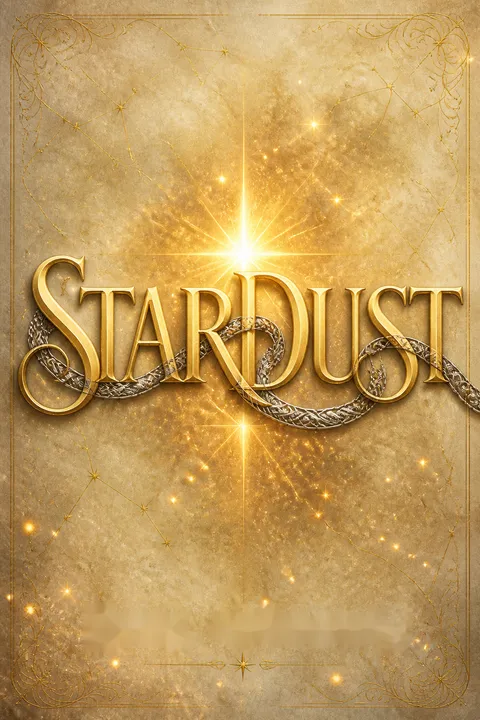
On Wall’s nine-year market day, farmer’s son Dunstan Thorn meets a beautiful faerie girl chained to a flower stall. He buys a glass snowdrop with a kiss, then returns at night and begins an affair with her. Though he later marries Daisy Hempstock, the practical young woman he had been courting, he cannot forget the stranger.
The girl’s freedom is still bound to a spell, but she leaves Dunstan with a child. Months later, guards find a baby pushed through the wall from Faerie, wrapped in blankets and marked with the name Tristran Thorn. Dunstan and Daisy raise him as their own, while the snowdrop remains a quiet link to the world beyond Wall.
The story begins with a transaction that refuses to stay transactional. Dunstan intends to buy a token for Daisy, but the kiss draws him into a different kind of intimacy, one that changes the shape of his family. The snowdrop carries that consequence into Tristran’s life before he can understand its history. Wall’s guards make the border seem like a firm division, yet the abandoned infant proves that its rules are porous. Even belonging, the novel suggests, may be less a matter of origin than of who chooses to care for a child.
A Star for Victoria
Tristran grows up in Wall, dreaming of distant places and nursing an infatuation with Victoria Forester, the village beauty. When she sees a star fall beyond the wall, she treats his extravagant declaration of love as a joke and promises him whatever he wants if he brings it back. Tristran takes her literally.
His father, Dunstan, understands which direction his son means to travel and persuades the guards to let him pass. He gives Tristran the glass snowdrop as a luck charm, without explaining its history. On the far side, Tristran sees an impossible harvest moon and recognizes that he has entered Faerie. He keeps walking, still expecting his quest to end with Victoria’s promised reward.
Tristran’s departure is powered by a fantasy of deserving love through heroic labor. Victoria’s careless wager gives that fantasy a destination, but his father’s quiet assistance gives it a deeper inheritance. The snowdrop is not just protection: it connects Tristran to a family story he does not yet know. The border crossing changes his surroundings before it changes his self-understanding. He enters Faerie believing he is completing a romantic errand, while the journey will force him to distinguish what he wants from what another person is willing to promise.
The Topaz Takes Flight
As Tristran crosses into Faerie, the dying Lord of Stormhold summons his surviving sons and throws the family’s power-bearing topaz into the sky, ordering whoever retrieves it to inherit his rule. The stone falls with the star. His sons begin competing for it, though their dead brothers linger as witnesses to the family’s murderous succession.
Elsewhere, three ancient witches discover the fallen star’s location in an animal’s entrails. The eldest, restored to youth by a last reserve of stolen magic, sets out to cut out the star’s heart, which can renew the witches’ age. Thus the same fall draws three different claims: Tristran’s promise to Victoria, the Stormhold brothers’ inheritance, and the witches’ hunger for another life.
The falling star is made politically and physically valuable before Tristran finds her. That structure complicates the apparent simplicity of his quest: he is not the only person who sees a prize in the sky, and his motives are not the most dangerous ones. Stormhold’s succession ritual makes violence seem like family custom, while the witches’ plan turns a living being into a remedy. The star’s body becomes a contested resource. Against those systems, Tristran’s eventual challenge is not merely to reach her, but to recognize that finding someone does not grant ownership.
The Star Has a Face
A small, hairy traveler helps Tristran survive a deadly serewood, then equips him with a magical candle and a silver chain. The candle carries Tristran across great distances in a few steps, but its last flame gutters out when he reaches the fallen star. She is a young woman named Yvaine, stranded with a broken leg and furious that he means to take her to Wall.
She wears the topaz from Stormhold around her waist. Before they can travel far, they encounter a lion fighting a wounded unicorn over a crown. Tristran places the crown on the lion, ending the battle, and Yvaine tends the unicorn. The pair continue together, bound by the chain and divided over what the journey means.
The revelation that the star is a person exposes the moral flaw in Tristran’s original promise. He has treated Victoria’s desire as a mandate and Yvaine as its object, even while her injuries make the cost of that assumption visible. His response to the unicorn shows a more instinctive capacity for mercy: he acts without calculating what the intervention earns him. The chain keeps their bodies together, but not their wills. Their companionship begins under coercion, making every later act of trust something that must be chosen rather than assumed.
The Unicorn’s Last Shelter
When Tristran loosens the chain so he can seek food, Yvaine rides away on the unicorn, leaving him alone. A talking copper beech hears his story and agrees to help because he freed her rather than keeping her captive. It warns that the star is in danger and points him toward a black carriage. Its driver is Lord Primus, who is hunting the Stormhold topaz and fleeing his brother Septimus.
Primus’s runes confirm that their paths should join, so he gives Tristran a ride toward the mountains. As a supernatural storm drives them toward an isolated inn, Tristran realizes the star is nearby and worries that his earlier treatment of her has made her vulnerable. Their arrival brings all three rival quests to the same door.
Yvaine’s escape is a necessary correction to the power imbalance between her and Tristran. His decision to unchain her costs him the immediate certainty of control, but it also earns the tree’s assistance. The story therefore makes ethical conduct materially consequential, without pretending it guarantees safety. Primus’s carriage folds the inheritance plot into the star’s journey, while the storm and inn tighten the separate storylines into one crisis. Tristran is beginning to move from grand declarations toward accountability: he worries less about fulfilling Victoria’s bargain and more about what his choices have exposed Yvaine to.
The Inn’s Red Knives
At the mountain inn, the witch-queen has disguised herself as the hostess and offers Yvaine a bath, food, and warmth while preparing to cut out her heart. Primus recognizes the topaz Yvaine carries, but before he can claim it, the witch slashes his throat. Tristran rushes in after discovering that the wine offered to him was poisoned.
The unicorn attacks the inn’s servants, then kills the witch’s accomplice, but the witch drives a knife into the unicorn’s eye. With Yvaine unable to stand, Tristran softens the remains of his magical candle, makes a new wick, and ignites it in the fire with his injured hand. The flame carries them away from the inn, leaving Primus and the unicorn dead.
The inn’s hospitality is a weapon precisely because it answers needs the travelers have been forced to endure: warmth, food, care. The witch exploits trust as efficiently as she uses knives. Tristran’s improvised escape reverses the candle’s earlier function: this time he sacrifices his own body to preserve Yvaine’s life. The deaths of Primus and the unicorn make survival costly rather than triumphant. The episode also clarifies the difference between power and care. The witch can command bodies and change appearances; Tristran’s decisive act is to accept pain for someone whose freedom he once ignored.
A Ship Above the Clouds
The candle leaves Tristran and Yvaine stranded on a drifting cloud, where a flying ship rescues them. Its captain and crew tend Tristran’s burned hand and Yvaine’s broken leg, then carry them toward land. During the voyage, Yvaine tells Tristran her name and explains that she is bound to him because he saved her life.
He apologizes for the chain and tries to begin their relationship again without claiming her as a prize. After leaving the ship, they cross Faerie on foot, surviving a goblin press gang, a predatory eagle, and a town that tries to keep Tristran as its poet. Yvaine sings one of her star songs, and their wary dependence begins to soften into companionship.
The ship gives the pair a temporary community in which neither must be the other’s captor or protector at every moment. Practical care, including treatment for injuries and shared work, allows intimacy to develop at a more humane pace. Tristran’s apology matters less as a declaration than as a change in conduct: he begins asking how to travel with Yvaine instead of how to deliver her. Her song offers a glimpse of a life beyond the role others have imposed on her. The journey’s dangers still press them together, but affection begins to emerge from attention and mutual survival.
The Dormouse and the Witch
On the road, Tristran frees a brightly colored bird caught by its chain, unaware that it belongs to Madame Semele, a flower seller. Semele later offers them transport toward Wall. Tristran trades his glass snowdrop for the ride, but Semele uses its magic to turn him into a dormouse and cages him in her caravan.
Her former bird, Yvaine, remains beside him, though Semele cannot perceive the star. Meanwhile, the witch-queen waits near the route to Wall, but an old woman’s truth-binding questions prevent Semele from revealing a passenger she cannot see.
Septimus, trying to avenge Primus, attempts to burn the old woman’s hut and is killed by her magic. Semele reaches the market with Yvaine and the dormouse, while Stormhold’s succession struggle ends without its surviving princes.
Semele’s bargain turns a token of Tristran’s family history into the means of his loss of agency. His transformation is comic in scale but serious in consequence: Yvaine must endure captivity while he cannot speak or act as himself. The bird’s presence also lets the story return to the earlier flower-stall encounter, where enslavement was treated as ordinary commerce. Around them, the old woman’s truth-binding and Septimus’s death expose a different rule: violence does not secure succession when its author cannot escape the consequences. The market is no longer merely a place of wonders; it is where old debts and enchantments come due.
Wall Refuses Its Son
At the market, Semele restores Tristran from dormouse to human form, and he and Yvaine approach Wall. The guards refuse to let them pass because no one has ever returned from Faerie, even when Tristran identifies himself. He withdraws rather than fight his own people. His sister Louisa then arranges a proper welcome, and Tristran meets Victoria, who admits she never expected him to take her challenge seriously.
She had already agreed to marry Robert Monday, and Tristran releases her from her promise by wishing her happiness with him. Tristran’s father explains that the faerie woman from the market was his true mother. The revelation makes Tristran’s journey not an escape from home, but a return to the hidden half of his origin.
The guards’ refusal shows that Wall’s border is enforced by habit as much as by stone. Tristran can cross into wonder, but his old community has no ready category for the person who comes back changed. His response is notably different from the impulsive boy who left: he refuses to turn recognition into a fight. With Victoria, he relinquishes the reward he once imagined he had earned, choosing her freely made future over the literal terms of her promise. The revelation of his parentage then reframes his longing for elsewhere. He was not simply dissatisfied with Wall; part of his history had always been beyond it.
A Heart Freely Given
Yvaine waits in the market while Tristran visits Wall. Victoria tells her that she is marrying Robert, and Yvaine is relieved that Tristran will not claim her as a prize. When Tristran returns, they admit their growing love and kiss in the rain.
The chain binding Semele’s former slave vanishes, freeing the bird-woman, who reveals herself as Lady Una, Tristran’s mother and the last Lord of Stormhold’s daughter. Yvaine gives Tristran the topaz, which identifies him as Stormhold’s heir.
The witch-queen approaches Yvaine once more, but learns that the star’s heart now belongs to Tristran and cannot be taken as a youth-restoring remedy. Tristran accepts his inheritance reluctantly, then chooses to travel with Yvaine toward Stormhold at their own pace.
The romance becomes possible only after the original bargain has been dismantled. Tristran gives up Victoria’s promised reward, while Yvaine’s affection is no longer confused with an obligation imposed by rescue. Una’s release echoes Yvaine’s movement from captivity toward self-directed life, linking the two women without making their experiences identical. The topaz offers Tristran power, but not a script for how to use it. His choice to travel slowly rather than immediately assume command preserves the novel’s central distinction: inheritance may assign responsibility, but it cannot dictate the shape of a life.
Epilogue
Lady Una returns to Stormhold and rules as regent while Tristran and Yvaine continue their travels. They arrive years later, are recognized as the new lord and lady, and Tristran governs with care before eventually dying.
Yvaine remains in Stormhold, ruling after him and keeping her room open to the night sky. Though she has a home and a place in its history, she continues to climb the highest peak and watch the stars. Her limp remains, as does her longing for the world from which she fell.
The ending grants Tristran a home and a public role, but refuses to make either the final measure of fulfillment. His years of travel delay the expected return to power, suggesting that belonging can include detours and chosen distance. Yvaine’s long life creates a sharper asymmetry: the mortal journey that gives Tristran a complete life cannot restore her former place among the stars. Her nightly vigil holds love and loss together without resolving them into a simple happy ending. The open roof of her rooms makes the palace both shelter and threshold, keeping her connection to the sky visible.
Analysis
Stardust makes the familiar quest for a prize unstable by revealing that the prize can speak, refuse, and remember. Tristran begins with a model of love learned from adventure stories: prove devotion through an impossible feat, then receive the desired person as the reward. His encounter with Yvaine exposes the coercion hidden inside that model. The transformation of his desire matters more than the successful completion of the errand. He learns to value her choices, and eventually gives up the very reward that first sent him after her.
The story’s magic repeatedly takes the form of bargains, chains, inheritance, and bodily cost. A glass flower can carry power, a rescue can create obligation, and a royal stone can make a reluctant traveler an heir. These mechanisms raise a common question: when does duty become ownership? The witches answer by claiming Yvaine’s heart as a cure; the Lilim’s hunger for youth turns another being’s life into raw material. Tristran’s better answer is imperfect but ethical: he helps without insisting that help entitles him to possession.
The two homes in the story are also less secure than they appear. Wall’s guards mistake custom for an unbreakable rule, while Stormhold mistakes violence for legitimate succession. Tristran belongs to both worlds by birth, yet chooses his path through them rather than simply accepting either identity. Yvaine’s ending preserves a real tension: love gives her companionship and a home, but does not erase her distance from the stars. The novel’s romance is therefore not a cure for loss. It is a chosen bond that makes a divided life bearable, while leaving the division visible.
Review Summary
Stardust by Neil Gaiman receives mixed reviews. Many praise its whimsical, fairy tale-like qualities and Gaiman's imaginative storytelling. Readers appreciate the blend of fantasy elements, British charm, and adult themes. However, some find the characters underdeveloped and the plot predictable. The book's treatment of women and its graphic content are criticized by some. Comparisons to the film adaptation are common, with opinions divided on which version is superior. Overall, fans of Gaiman and adult fairy tales tend to enjoy the book more than others.
People Also Read


Characters
Tristran Thorn
The star-bound wandererRaised in Wall as a farm boy and shop clerk, Tristran is awkward, romantic, and hungry for a life larger than the one he knows. His vow to Victoria sends him into Faerie, where he must confront the difference between an imagined quest and the wishes of the person at its center. He is not naturally fearless; he acts while frightened, often because someone else is in immediate danger. His early tendency to treat grand promises as proof of love gives way to a more attentive kind of loyalty. Tristran’s unusual origins link him to both Wall and Stormhold, but his character is shaped less by bloodline than by the choices he makes on the road.
Yvaine
The fallen starYvaine is an evening star in human form, proud, sharp-tongued, and unwilling to soften her anger for the comfort of others. Her fall leaves her injured in a strange world, where people quickly see her as a prize, a source of power, or a means to an end. She protects her independence with wit and refusal, but her capacity for care appears in how she tends the unicorn and later responds to Tristran’s changing behavior. Yvaine’s relationship with the sky is not interchangeable with her relationships on earth: she has a past, a family, and a nature that the mortal world cannot fully contain.
Victoria Forester
The village’s admired beautyVictoria is celebrated in Wall for her beauty and accustomed to being the focus of other people’s hopes. She can be playful and careless with Tristran’s devotion because she assumes his promises are only performance. Her private affection for Robert Monday complicates the fantasy Tristran has built around her. Victoria is not a villain for refusing him; the important tension is between her actual wishes and the romantic role he assigns her. When she faces the harm her challenge may have caused, she accepts responsibility and offers him an honest choice.
Dunstan Thorn
Tristran’s worldly fatherDunstan begins as a practical farm worker who longs to leave Wall, though he does not think of himself as a romantic. The Faerie Market unsettles his orderly courtship and gives him a connection he cannot explain to the life he later builds with Daisy. As Tristran’s father, he understands the danger of the border and helps his son cross it without trying to dictate the journey. His quiet recognition of Tristran’s purpose reflects a man who has learned that some desires cannot be settled by staying safely at home.
Lady Una
The captive faerie womanUna is a faerie woman held in service by enchantment, outwardly compliant but inwardly alert to the rules that constrain her. She has survived by observing, remembering, and waiting for the conditions of her bondage to change. Her connection to Tristran’s history gives his journey a family dimension, but Una is not merely a solution to his identity: she has her own grievance, pride, and desire to recover a life stolen from her. The contrast between her formal bearing and years of imposed servitude makes her a figure of endurance without suggesting that endurance is the same as consent.
The witch-queen
The star-heart hunterThe eldest of the Lilim, the witch-queen is resourceful, ancient, and willing to spend her remaining magic for a chance at renewed youth. She disguises herself as a welcoming innkeeper, turning care into a trap for the injured Yvaine. Her power is formidable but costly: each act of magic consumes some of the youth she has borrowed. She is not driven by random cruelty so much as by a fierce refusal to accept decline, though her method reduces another living being to a remedy. The starkness of that choice makes her a dark counterpoint to Yvaine’s insistence on personhood.
Madame Semele
The enchanted flower sellerMadame Semele is a shrewd, suspicious flower seller who knows how to turn bargains and enchantments to her advantage. She prizes unusual objects and dependable labor, and sees little reason to grant freedom when captivity serves her needs. Her dealings with Tristran and Yvaine echo the older bargain that trapped Una, making her stall a small-scale version of Faerie’s harsher economy. Semele’s comic bluster does not make her harmless: she can transform a person with a charm and then claim she has honored the terms of her deal.
Lord Primus
The cautious heir-seekerPrimus is the eldest surviving son of Stormhold’s dying lord and a wary traveler whose pursuit of the topaz is inseparable from his family’s violent succession customs. He trusts preparation more than fellowship, carrying his own provisions and guarding himself against his brother Septimus. Yet he recognizes Tristran’s usefulness and allows the young man to travel beside him. Primus embodies a political world where every companion may become an obstacle, though his brief alliance with Tristran suggests that caution does not entirely erase the capacity to cooperate.
Lord Septimus
The patient family killerSeptimus is the youngest surviving son of Stormhold’s ruler, outwardly blank and inwardly calculating. He has already killed brothers to advance his claim and favors poison, misdirection, and patient surveillance over open confrontation. His pursuit of Primus makes him a persistent danger on the road, while his certainty that he can control every outcome becomes a weakness. Septimus represents a succession system that rewards suspicion until it turns every relationship into a contest of survival.
Charmed
The hairy guideCharmed is a small, hairy traveler with an enormous pack of enchanted goods and a habit of mixing sound advice with earthy digressions. He recognizes the dangers facing Tristran and equips him with the candle and chain needed to reach the star. His generosity is tied to an informal code of debts: he remembers that Dunstan once helped him and repays that kindness through Tristran. Charmed is a guide, but not a guardian who removes every risk; he gives Tristran tools and leaves the consequences of using them to him.
Daisy Thorn
Tristran’s steadfast foster motherDaisy is the practical young woman Dunstan courts and later Tristran’s mother in the home where he grows up. She helps establish a stable family life in Wall and raises Tristran without knowing, or speaking of, his deeper connection to Faerie. Her reserve contrasts with the extraordinary history surrounding his birth, but it does not diminish her importance as the person who gives him a home.
Louisa Thorn
The sharp-tongued sisterLouisa is Tristran’s younger sister, lively and fond of teasing him as a boy. Her sharpness does not cancel her attachment: his long absence frightens and angers her, and she helps arrange his return to Wall. Louisa brings the emotional cost of Tristran’s departure back into view, reminding him that a quest affects the family left waiting at home.
The unicorn
Yvaine’s fierce protectorThe unicorn is a wounded, luminous creature whose actions show a clear concern for Yvaine. It carries her when her broken leg prevents her from walking and remains near her through dangers that would drive an ordinary animal away. Its trust is never explained through speech or domestication; it chooses to help, and its presence gives Tristran an early example of loyalty without ownership.
Robert Monday
Victoria’s chosen partnerRobert Monday is the man Victoria intends to marry, a quieter reality behind the ideal Tristran has made of her. His presence forces Tristran to see that Victoria’s life does not begin and end with his devotion. Robert is important chiefly because he makes her own choice concrete.
Mr. Bromios
Wall’s watchful innkeeperThe innkeeper of the Seventh Magpie, Mr. Bromios knows more about Wall’s border customs than he usually says. He recognizes when Tristran must be allowed through and later helps arrange a fair welcome home. His steady role connects the village’s everyday life with the strange traffic of the Faerie Market.
Plot Devices
The Wall and Faerie Market
A border with a timetableThe old stone wall separates Wall from Faerie, with one guarded opening that is ordinarily closed. Every nine years, the guards relax their rule for the market, allowing commerce and visitors to cross for a day and a night. This calendar makes the market the hinge of the story: Dunstan meets the chained flower seller there, Tristran later leaves on his quest, and the travelers return there for their final choices. The wall also represents a boundary that is more social than absolute, since family ties and magic repeatedly cross it.
The Fallen Star and Topaz
One fall, competing claimsThe star’s fall brings her into reach of Tristran, but she also carries the topaz that names Stormhold’s next ruler. Tristran initially seeks her to fulfill Victoria’s promise, the Stormhold brothers seek the stone as an inheritance, and the Lilim want the star’s heart for its rejuvenating power. These overlapping motives prevent the journey from remaining a simple retrieval quest. The topaz’s eventual transfer resolves the succession claim, while Yvaine’s heart cannot be treated as property once she has given it freely.
The Glass Snowdrop
A charm carrying family historyDunstan buys the snowdrop at the first Faerie Market and gives it to Daisy, but it becomes a treasured token linked to Tristran’s origins. Dunstan passes it to his son as a luck charm when Tristran crosses the wall. Later, Tristran trades it to Madame Semele for passage, unaware that it is a powerful frozen charm. Its repeated changes of owner connect the generations and make an intimate keepsake a practical instrument of danger and survival.
The Candle and Silver Chain
Travel bought with obligationCharmed gives Tristran a magical candle that lets him cross vast distances in a few steps, along with a silver chain capable of binding him to the star. The candle’s short wick imposes urgency, while its remains become the means of escape from the witch’s inn. The chain initially enforces Tristran’s claim over Yvaine, then gives way to a deeper obligation after he saves her life. Together, these objects turn the question of distance into a question of consent: they can bring two characters together, but cannot make them trust one another.
About the Author

Download PDF
Download EPUB
.epub digital book format is ideal for reading ebooks on phones, tablets, and e-readers.








