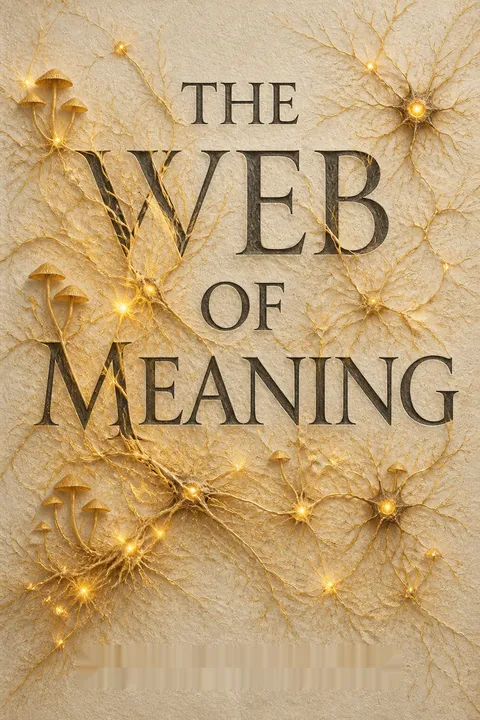


Key Takeaways
Question the story that selfish competition is nature's law.
Uncle Bob’s worldview. The book begins with a familiar speech: people are selfish, nature is a contest, markets turn greed into progress, and technology will fix the damage. Lent argues that these assumptions are not neutral facts. They form a worldview, a lens that shapes what societies value and what they consider possible. Its roots lie partly in European ideas that helped launch modern science, but also justified treating nature and colonized peoples as resources.
Change the foundation. The author’s personal story gives this inquiry stakes: after his business success collapsed alongside his wife’s serious illness, he began a decade-long search for meaning. His answer is not to reject science or technology, but to combine their insights with wisdom traditions that understand life as deeply connected. The book’s central proposal is that a civilization’s future depends on the stories beneath its everyday assumptions.
What’s striking is the focus on background assumptions rather than isolated bad decisions. In social science, frames influence which solutions seem reasonable: a problem described as individual failure invites different policies than one understood as systemic. The critique is strongest when it exposes how market language can make exploitation look natural. Its historical account is necessarily compressed, however. European science also challenged superstition and improved health, while non-European societies have varied widely. The useful question is not whether one tradition is wholly guilty, but which inherited ideas now help or hinder collective survival.
Recognize intelligence in life beyond language, brains, and IQ.
A wider definition. Lent calls the adaptive problem-solving found across living things animate intelligence. Clever Hans, the horse celebrated for arithmetic, was not calculating in the human sense, but could read minute cues from people with remarkable sensitivity. A slime mold can find efficient routes through a maze without a brain. Plants sense changes in their surroundings, adjust their growth, and communicate through chemical signals and fungal networks.
Life is not a machine. Cells regulate their internal conditions, repair damage, and coordinate with neighbors. Animals with nervous systems show evidence of pain, fear, and other subjective states. The point is not that a plant thinks like a person. It is that intelligence need not mean verbal reasoning, and human IQ measures only a narrow kind of capability. Lent urges readers to avoid both projecting human motives onto other species and denying evidence of their complex lives.
This reframing resembles embodied and ecological approaches to cognition, which study intelligence as an organism’s interaction with its surroundings rather than as abstract calculation alone. It also has ethical force: definitions of intelligence influence which beings receive consideration. The caution is important. Evidence of adaptive behavior does not by itself prove that plants have feelings or conscious experience in a human-like form. A plural account can respect organisms’ capacities without collapsing meaningful differences among cells, plants, and animals.
Let bodily feeling and reflective thought govern together.
Two intertwined processes. Lent distinguishes animate consciousness, the felt stream of bodily needs, emotions, and sensations, from conceptual consciousness, which plans, categorizes, and tells stories about the self. The reflective “I” is not a commander separate from the body. It develops in relationship with the changing self it observes and influences. Decisions draw on both deliberate reasoning and bodily signals, often before conscious awareness catches up.
Practice integration. Taoist wu-wei means skillful, relatively effortless action that arises when attention and trained response work in concert. It is not simply acting on impulse. A cook who has mastered a task can respond fluidly because practice has joined conscious understanding with bodily skill. Mindfulness offers another route: notice sensations and emotions without immediately turning them into self-judgment or a fixed story. The aim is cooperation between inner processes, not the domination of feeling by willpower.
The account fits research on embodied cognition: judgment depends on signals from the body, memory, and social context, not reason operating in isolation. It also offers a humane alternative to self-control as internal policing. Yet the popular image of a sharply divided left brain and right brain is too simple to serve as a full model of personality. The book’s more durable point is broader: cognition is distributed, and sound decisions benefit from reflection that listens to emotion without treating every feeling as a command.
Study relationships, not just parts, to understand living systems.
Patterns persist through change. The Ship of Theseus asks whether a vessel remains the same after every plank is replaced. The same puzzle applies to a river, a flame, or a person whose material components continually change. Lent draws on the Neo-Confucian idea of li, the organizing patterns that give things coherence, and qi, the matter and energy those patterns organize.
Use both scientific lenses. Reductionism, which studies systems by breaking them into parts, has produced powerful discoveries. But it cannot alone explain how interactions generate new properties. A cell, forest, or brain is a complex system: its parts affect one another through many feedback loops, and the whole shapes what its parts do. This process can produce emergence, a new coherence that cannot be explained simply by listing the components. Systems thinking complements detailed analysis by asking how relationships create the behavior of the whole.
The distinction between complicated and complex is practically useful. A jet can be described through its components and designed to follow predictable rules; an ecosystem changes as its organisms and conditions interact. This difference matters in policy, medicine, and organizational design, where interventions can trigger feedback effects. Systems thinking does not make prediction useless, but it calls for humility about control. The challenge is to avoid turning “everything is connected” into an excuse for vague explanation. Good systems analysis still specifies mechanisms, evidence, and boundaries.
Read evolution as a history of partnerships.
Cooperation reshaped life. The selfish-gene story treats organisms as vehicles competing to pass on genetic material. Lent argues that this is too narrow. One major evolutionary transition occurred when cells incorporated bacteria that became mitochondria, supplying energy that helped complex cells develop. Bacteria also exchange genes, and single cells eventually formed cooperative multicellular organisms. Across ecosystems, species rely on relationships that can benefit both sides.
Competition still matters. Trees exchange resources through fungal networks; plants depend on pollinators; and human bodies rely on communities of microbes. These relationships do not make nature a peaceful utopia. Organisms compete as well as cooperate, sometimes within the same system. The broader lesson is that life’s complexity often grows when different beings specialize and coordinate. The success of a living system depends not only on which individuals win, but also on whether relationships let the larger community endure.
The emphasis on cooperation connects evolutionary biology to research on transitions in which smaller units become parts of larger organized systems. It corrects a popular mistake: describing a gene as “selfish” does not prove that human societies should reward selfishness. Still, cooperation is not automatically virtuous. Partnerships can be unequal, exclusionary, or beneficial to one group at another’s expense. The more useful question is what kind of cooperation builds resilience and distributes its benefits, rather than whether cooperation or competition is nature’s single master rule.
Understand life as organized work against decay.
A local pocket of order. The Second Law of Thermodynamics describes a general movement toward greater disorder. Living organisms temporarily maintain organization by taking in energy and matter, transforming them through metabolism, repairing themselves, and reproducing. Lent uses the term negentropy for this local creation and maintenance of order. Life does not overturn the law of entropy; it sustains local organization while increasing disorder overall.
Purpose without a planner. A cell’s parts contribute to maintaining the cell, while the cell’s overall organization shapes what those parts do. This reciprocal relationship gives living activity a basic direction: organisms act to preserve and continue their existence. Lent connects that biological drive with flourishing at larger scales, from organisms to ecosystems. This is not evidence that the universe consciously planned life or guarantees progress. It is a way to understand purpose as arising within living systems, not imposed from outside by a blueprint.
The thermodynamic frame offers a compelling bridge between physics and biology. It clarifies why an organism is not merely matter arranged once, but a process that must continually exchange energy with its environment. The distinction between local order and overall entropy is essential, since “life reverses entropy” can otherwise sound like a violation of physics. The further claim that evolution tends toward greater energy use or complexity is more interpretive than the basic account of metabolism. Purpose is illuminating here as a feature of living organization, not a cosmic promise of inevitable progress.
Choose flourishing over the treadmill of manufactured desire.
Pleasure is not the whole good. Aristotle’s eudaimonia describes well-being that comes from developing and exercising one’s capacities; hedonia refers to more immediate pleasure and satisfaction. Lent does not condemn enjoyment. He warns that pleasure alone cannot provide lasting fulfillment, especially when each purchase or status gain creates appetite for the next. Advertising and digital products can exploit evolved needs for belonging, recognition, and rewarding food.
Cultivate the conditions. Mencius compared personal development to growing a plant: provide good conditions and steady care, but do not force growth. Practices such as meditation, movement, meaningful work, friendship, time in nature, and service can support well-being. But individual habits cannot compensate fully for a society organized around loneliness, excessive inequality, and compulsive consumption. The book’s idea of fractal flourishing means that personal health depends on the health of the communities and environments that sustain it.
The distinction between fleeting reward and durable well-being helps explain why rising consumption need not produce rising life satisfaction. It also guards against treating unhappiness as a personal defect when work, social isolation, or economic insecurity may be part of the cause. Mindfulness and exercise can support people, but they can also be marketed as tools for tolerating harmful conditions. The stronger approach joins personal practices with changes to the settings that shape everyday choices, including schools, workplaces, food systems, and measures of public success.
Let belonging, not isolated self-interest, set moral scope.
Morality has roots and training. Mencius argued that people show spontaneous concern for others, illustrated by the impulse to rescue a child in danger. Research described in the book finds helping behavior in other animals too. Human morality, however, is not fixed in one universal form. Evolution gives people social emotions and cooperative instincts, while culture teaches which actions count as right and whose welfare matters.
Widen the circle of responsibility. Indigenous traditions described in the book emphasize relationship, responsibility, reciprocity, and redistribution. These values make community central without erasing individual differences. They also extend kinship beyond humans to other living beings. The book’s ethical proposal follows from interdependence: if well-being depends on relationships, moral concern should not stop at the self, the family, or the nation. It should include people and other life affected by one’s choices.
This account improves on the idea that morality is either an instinct or a cultural invention. Social emotions supply capacities for care, while institutions and stories direct them toward some groups and away from others. That helps explain how people can be generous within a community and cruel to outsiders. Expanding concern is not automatic, and empathy alone can become selective or overwhelming. Durable ethical practice needs structures that make care actionable, such as fair rules, shared responsibility, and accountability for harms beyond one’s immediate circle.
Treat ecosystems as kin to tend, not assets to price.
The damage is not abstract. The book describes the Great Acceleration of human activity and its ecological costs, including a 68 percent decline in monitored vertebrate populations since 1970. It also explains shifting baseline syndrome: each generation may accept the depleted nature it first encountered as normal. Valuing nature only for services to people can backfire. A wetland may lose protection if a profitable development appears more valuable on a balance sheet.
Practice reciprocal care. Indigenous approaches such as the Honorable Harvest advise taking only what is needed, leaving enough for other life, and giving back. The book calls for tending ecosystems rather than either conquering them or pretending humans can have no role. Rewilding, regenerative agriculture, and legal rights for ecosystems offer different paths. The aim is a Symbiocene, an envisioned era in which human activity supports mutual flourishing between people and the rest of the living Earth.
The shifting-baseline idea explains why gradual ecological loss can remain politically invisible: people compare conditions with recent memory, not with historical abundance. The critique of pricing nature is persuasive when markets treat values that cannot be replaced as interchangeable with money. Yet stewardship requires hard choices, and human intervention can sometimes restore a system while harming particular animals or plants. No single rule resolves every conflict. The practical standard is whether decisions preserve ecological relationships and regenerative capacity, while openly accounting for who bears the costs.
Create meaning by joining your actions to life's wider web.
Meaning emerges through connection. Lent proposes that an experience becomes meaningful through the relationships a person sees between it, other experiences, other people, and the living world. Buddhist interdependence, Indigenous ideas of kinship, and systems science each challenge the image of a self-contained individual. Meaning is not simply discovered as a fixed object; people participate in making it through how they attend and respond.
Make the story practical. The book calls for an ecological civilization that measures success by well-being, limits corporate power, shares common resources, and organizes economic life around regeneration rather than perpetual growth. Its ending turns from certainty about outcomes to active participation. The rice-pile illustration captures this: many small additions create conditions for a larger shift, though no single grain controls when it happens. Choose a community and form of action that can connect personal concern to collective change.
The account of meaning as connection resonates with relational psychology, where identity develops through bonds and shared activity rather than in isolation. It also makes action meaningful without promising that every effort succeeds. The rice-pile image captures a complex-systems insight: outcomes can depend on many small contributions and remain difficult to predict. But systemic change also requires strategy, resources, and institutions, not only good intentions. A personal sense of connection becomes politically useful when it supports sustained cooperation and changes the rules shaping collective behavior.
Analysis
The book’s most consequential move is to treat ecological crisis as a crisis of perception. Its target is not science itself, but the assumption that the most successful method for studying parts can explain the whole of life. Lent offers a different synthesis: Chinese concepts such as Tao and li, Indigenous accounts of kinship, Buddhist interdependence, and modern systems biology all make relationships central. This allows him to connect personal experience, biological organization, moral life, and political economy within one argument rather than treating them as separate subjects.
The synthesis is strongest as a practical philosophy. It gives readers a way to interpret familiar phenomena: a body depends on its feelings, an ecosystem on reciprocal relationships, and a meaningful life on ties beyond the isolated ego. Its account of the self as a changing process is also more compatible with embodied cognition than the image of a disembodied rational controller. Most valuable, perhaps, is the link from worldview to institutions. Consumer desire and corporate behavior are not presented as inevitable expressions of human nature, but as patterns that can be reinforced, challenged, and redesigned.
Some claims require more qualification than the book’s sweeping narrative permits. Systems theory does not by itself establish that nature has a unified moral purpose, and describing evolution as life’s drive against entropy risks turning a useful interpretation into a universal law. Evidence for animal sentience is substantial in many cases, while claims about plant intelligence depend heavily on how intelligence is defined. The contrast between Western reductionism and Eastern or Indigenous integration can also flatten traditions that are internally diverse. These cautions do not undo the central insight. They clarify the difference between empirical findings, philosophical interpretation, and ethical commitment. The book is most persuasive when it invites scientific inquiry to become more relational, and asks readers to build institutions that respect life’s interdependence without pretending that complexity offers easy answers.
Review Summary
Reviews of The Web of Meaning are largely positive, averaging 4.26/5. Admirers praise its ambitious synthesis of Eastern philosophy, indigenous wisdom, and modern science, finding it perspective-shifting and deeply meaningful. Critics, however, flag cherry-picking of evidence, oversimplification of Western thought, an idealized portrayal of Eastern traditions, and weak engagement with opposing viewpoints. Many note the book's first half outshines its second. Several readers found it repetitive compared to Lent's prior work, though most agree its core message about interconnectedness and ecological responsibility is vital and timely.
People Also Read




Glossary
Tao
Nature’s unfolding wayAn ancient Chinese concept translated as “way” or “path.” In the book, the Tao refers to the dynamic, interconnected processes through which nature unfolds. It is not a fixed object or an external designer. People can learn to attune their actions to these processes, although the Tao as a whole remains too vast to comprehend completely.
wu-wei
Effortless, attuned actionA Taoist term for action that flows skillfully with a situation rather than forcing outcomes through rigid control. It does not mean passivity or acting on every impulse. In Lent’s account, wu-wei can occur when reflective attention and trained bodily responses work together, as when an experienced practitioner responds fluidly to the demands of a task.
animate intelligence
Adaptive intelligence throughout lifeThe complex, self-organized capacities living beings use to sense conditions, respond, maintain themselves, and interact with others. Lent applies the term to life ranging from cells and plants to animals and humans. It broadens intelligence beyond language, abstract reasoning, and human IQ, without claiming that every organism has human-like thought or experience.
li
Patterns organizing matter and energyA Neo-Confucian term for the organizing patterns through which qi, or matter and energy, takes form. Li helps explain how a river, organism, or other system can retain recognizable organization even as its material components change. Lent extends the idea to patterns of relationship in nature, consciousness, and the wider universe.
autopoiesis
Life’s self-generationA term developed by biologists Humberto Maturana and Francisco Varela for the self-producing organization of living systems. An autopoietic organism continually uses resources from its environment to maintain and regenerate itself. Its organization arises through interactions among its parts, while the organized whole also influences what those parts do.
negentropy
Local creation of living orderThe name used in the book for the way living organisms maintain local organization by taking in energy and matter and transforming them through metabolism. This does not cancel the Second Law of Thermodynamics. It describes how life sustains order locally while contributing to greater entropy in the surrounding universe.
eudaimonia
Flourishing through fulfilled potentialAn Aristotelian term for well-being that comes from developing and expressing one’s capacities and living in accordance with a fulfilling purpose. It differs from hedonia, or more immediate pleasure. Eudaimonia does not require a life free of pain; it describes a deeper sense of flourishing that can persist through difficulty.
fractal flourishing
Well-being across nested systemsThe principle that well-being exists at interconnected levels, from the individual to communities, societies, ecosystems, and the living Earth. A person cannot fully flourish if the larger systems that sustain them are unhealthy. The idea applies the nested, repeating organization of complex systems to health, ethics, and social life.
cultural attractor
A resilient shared cultural patternA dynamic pattern of ideas, values, or behaviors that circulates through a community and influences how people make sense of the world. Cultural attractors are not copied identically from person to person. They change as people reinterpret them, yet some remain recognizable across generations, as with religious traditions or enduring social norms.
Adaptive Cycle model
Four phases of system changeA model of change in complex adaptive systems with four phases: growth, conservation, release, and reorganization. A system expands, becomes more established, encounters destabilization, and then reorganizes into a new pattern. Lent applies the model to natural systems and societies, including the possibility that a dominant worldview may lose stability.
Symbiocene
Era of human-Earth flourishingA proposed future era characterized by mutually beneficial relationships between human societies and the rest of the living Earth. In contrast to treating nature as a resource, a Symbiocene would organize human activity to regenerate ecological health and support the flourishing of human and nonhuman life.
Download PDF
Download EPUB
.epub digital book format is ideal for reading ebooks on phones, tablets, and e-readers.








