

Key Takeaways
Notice who is told no in ordinary life; that is where power begins.
Freedom starts small. Masih Alinejad grows up in Ghomikola, a village in northern Iran where boys roam the fields, swim, and learn to ride bicycles, while girls are expected to stay inside. Her brother Ali promises to teach her, then leaves to join the boys. The repeated message that girls cannot do what boys can becomes her first political education. Even a late-night walk to the village outhouse hints at the pattern: she leads her frightened brother, but he gets the freedom she wants.
Family teaches courage, too. Her mother urges her to face frightening things rather than turn away. Later, that lesson becomes a way of meeting authority: look directly at what is wrong, even when it is easier to accept it. The memoir begins with everyday exclusions because they are not separate from politics. They teach a child whose wishes count.
The scene makes political power legible before the child has the vocabulary for it. Rules about who may play outside or ride a bicycle seem minor beside state violence, yet they teach children to treat unequal treatment as normal. That is how a social order reproduces itself without needing a police officer at every gate. The memoir also resists a simple story of family as oppressor: Alinejad’s mother passes on a practice of courage that later helps her daughter challenge public authority. The distinction matters. People can inherit both the limits of a culture and the tools for questioning them.
Freedom means choosing the veil, not being ordered to wear or remove it.
Compulsion is the issue. Alinejad’s family is religious, and the women around her wear head scarves by choice or habit. Her argument is not that the hijab itself must disappear. It is that a woman should decide whether to wear it. Iran’s history shows why that distinction matters: Reza Shah’s government forced women to unveil in 1936, while after the 1979 revolution the Islamic Republic moved toward compulsory veiling, made law by 1983. In both directions, the state claimed authority over women’s clothing.
Women resisted early. On International Women’s Day in 1979, around one hundred thousand women protested the incoming restrictions, facing attacks from zealots while security forces largely stood by. Alinejad sees their protest as part of a longer fight for choice, not a dispute about fashion. A law that dictates clothing also communicates who is entitled to make decisions about a woman’s body.
This framing is stronger than a simple pro-veil versus anti-veil debate because it identifies coercion as the central variable. Autonomy includes the ability to adopt a religious practice and the ability to refuse it. That principle also makes the historical comparison revealing: forced unveiling and compulsory veiling differ in ideology, but both treat women as objects of state modernization or moral regulation. The account is grounded in Iranian experience, where clothing rules carry legal and social consequences. Its wider application should preserve that context rather than flatten every dress dispute into an identical case.
Small political acts can be recast as crimes when rulers fear ideas.
Reading became risky. As a teenager in Babol, Alinejad joined her brother Ali and other young people in a political reading group. They discussed history and freedom, then produced an underground pamphlet and painted calls for political liberty on public walls. The group, Faryad-e Kaveh, was inexperienced and divided over how radical its message should become. After security agents arrested its members, that youthful activity was described as a conspiracy against the state.
Interrogation shaped the record. Alinejad was blindfolded, threatened, and repeatedly pressured to rewrite confessions naming others. She and fellow members were filmed admitting wrongdoing. A Revolutionary Court sentenced her to five years in prison and seventy-four lashes, with the sentence suspended for three years. The case shows how an authoritarian system can turn a small act of expression into a security offense, then use coerced statements to make its account look voluntary.
The episode highlights a political asymmetry: the state controls the category of crime, the interrogation setting, and the public interpretation of a confession. Under those conditions, a document signed by a prisoner cannot be treated as a transparent account of what happened. The group’s own arguments and internal disagreements also matter. Dissent does not make its participants flawless or politically unified; it makes room for them to think beyond the approved story. That is precisely why regimes may respond to pamphlets and reading groups as threats. Ideas can create alternatives before they create institutions.
Build economic independence, but do not mistake it for equal rights.
Marriage offered an exit. Alinejad initially agreed to marry Reza partly to escape village life. She insisted on a written right to divorce, a striking demand in a system where men had far more power to end a marriage. Yet her marriage did not protect her from unequal law. After Reza left for another woman, a cleric granted him custody of their young son, Pouyan, allowing Alinejad only limited visits.
Work brought leverage, not immunity. In Babol she sold wedding jewelry to buy a camera and built a successful photography business. Later, in Tehran, she worked as a researcher and journalist. Even as the main breadwinner, she faced pressure to return to her family and find another husband. Her experience separates financial self-reliance from legal equality: earnings helped her make choices, but they could not override custody rules or erase the stigma attached to a divorced woman.
The memoir avoids treating independence as a magical escape hatch. Income can increase a person’s options, but family law, social judgment, and care responsibilities still shape what those options are. Alinejad’s experience is especially instructive because she was not economically dependent on her husband when the marriage ended, yet she still lost custody. That distinction complicates familiar advice about self-sufficiency: resources matter, but institutions determine how far those resources can carry someone. Her story also makes clear that intimate choices are made within constraints, not outside them.
Make officials answer with evidence, even when access is at stake.
Reporting meant pursuing proof. Alinejad entered journalism without a university degree or even a high school diploma, then built her reputation by asking politicians questions other reporters avoided. In the seventh Majlis, she obtained pay slips documenting extra payments to lawmakers. One showed a payment of one million tomans; another listed 3.5 million tomans for religious duties. The disclosures contradicted legislators’ public claims of serving ordinary Iranians while refusing themselves special treatment.
The cost was exclusion. After publishing the reports, Alinejad was accused of stealing the documents and expelled from the Majlis as a journalist. Deputies debated her conduct, including sexist attacks on her character, rather than simply addressing the payments. Her colleagues protested the expulsion and some newspapers left their regular parliamentary coverage blank. The episode shows that a reporter’s access can be revoked precisely when reporting begins to matter.
The pay slips turn a general accusation of hypocrisy into a verifiable claim. That is the practical power of documentation: it narrows the room available for denial, even if it cannot force an institution to change. The backlash also exposes a familiar tactic in political communication, shifting attention from the evidence to the reporter’s supposed motives or character. There is a real trade-off here. Access can help journalists gather information, but dependence on access can make them cautious. A watchdog role requires both sources inside power and enough independence to risk losing entry.
When authorities erase victims, preserve their voices before memory is buried.
The 2009 crackdown created a recordkeeping problem. After disputed election results led to mass protests, security forces killed, injured, and detained demonstrators. Families were pressured not to speak, funerals were restricted, and some bodies were buried at night. From exile, Alinejad interviewed relatives and saved their accounts, including audio testimonies that could outlast a censored news cycle. She turned this work into a fifty-seven-part radio series called The Victims of 88, referring to the Iranian calendar year of the protests.
Grief became testimony. One of the mothers she worked with, Shahnaz Akmali, lost her son Mostafa, then began documenting other families’ experiences. She feared arrest and asked Alinejad to keep her story alive. Shahnaz was eventually jailed, then released after sustained attention to her case. The reporting could not undo the deaths, but it challenged the state’s ability to control what the public remembered.
Archiving testimony is not a neutral technical task. It determines which experiences remain available for public understanding, and it can protect details that official records omit. Oral accounts also carry information that statistics cannot: the routines of a family, the uncertainty of searching prisons, the long aftermath of a death. But preservation carries obligations. People facing danger need control over what is published, what is withheld, and when their identities are exposed. The memoir’s work is most compelling when journalism serves not as extraction of grief, but as a durable record made with the people whose lives it represents.
Turn private acts of disobedience into a shared public language.
A photograph opened a conversation. In 2014, Alinejad posted a picture of herself outdoors in London, enjoying the freedom to uncover her hair. Women in Iran responded with their own images, often taken in cars, fields, or other private spaces where they could briefly remove the head scarf. She called these hidden moments Azadi Yavashaki, a Persian phrase she used for “stealthy freedom”: small acts of defiance that offer a little dignity under coercive rules.
The page made those acts visible. My Stealthy Freedom became a social media campaign where women could share photographs and explain why choice mattered. Alinejad checked submissions for authenticity and permission, while some contributors asked that their names remain hidden. Within weeks, the page had hundreds of thousands of followers. The campaign’s message was not that every woman should unveil. It was that women should be able to choose without fear of arrest or punishment.
Private resistance can be psychologically sustaining, but it can also conceal how widespread dissatisfaction is. A shared platform changes that calculation by letting individuals recognize one another as part of a larger public. The photographs function as both testimony and coordination: each one makes the next contribution seem more possible. Yet visibility is not automatically liberation. A public post can expose a participant to danger, especially where the state monitors speech. The campaign’s ethical strength therefore depends on consent, careful handling of identities, and keeping the participants’ reasons for acting at the center.
Defend choice consistently, whether coercion comes from Tehran or Paris.
A principle must survive borders. Alinejad challenged foreign politicians who accepted Iranian dress rules during visits while saying little about compulsory hijab. She wrote to European officials and questioned the assumption that women should quietly accommodate discriminatory rules for diplomatic convenience. The argument became visible when Iranian leaders insisted that hijab was a cultural choice, while women inside Iran sent evidence that they did not experience it as one.
Choice also means opposing bans. Alinejad criticized French towns that tried to prohibit the burkini, full-body swimwear worn by some Muslim women. Her position was not that every policy is identical, but that governments should not dictate what women may wear in either direction. The campaign used public debate, social media, and interviews with politicians to move compulsory hijab from a taboo subject into international discussion.
Consistency gives the argument credibility: women’s autonomy cannot depend on whether a government’s preferred clothing is religious or secular. At the same time, the cases are not interchangeable. Iran’s compulsory hijab is backed by a nationwide legal regime and punishment, while a local clothing ban has a different scope and enforcement structure. Recognizing that asymmetry strengthens rather than weakens the comparison. It prevents solidarity from becoming a slogan and keeps attention on the concrete power each policy gives authorities over women’s bodies.
A movement lasts when ordinary people become its authors, not its audience.
The campaign moved into the street. In 2017, Alinejad launched #WhiteWednesdays, asking women to wear a white scarf or go without a head covering on Wednesdays to protest compulsory hijab. Men could join by wearing white. Women quickly sent in videos from cities across Iran. Conservative groups called for rival days of black or red clothing, but the countercampaigns drew little response.
Participants made choices beyond the camera. Bahar, a young woman, faced pressure from her fiancé to remove her protest video. After discussing the conflict with her mother, she ended the engagement and asked that the video remain online. In 2018, Vida Movahed stood above a busy Tehran street and waved her scarf from a stick. Her arrest sparked further protests. The campaign’s force came not from one founder alone, but from people taking public ownership of its demand.
A movement becomes more resilient when participants can adapt its symbols and act without waiting for a central leader. White clothing offered a simple, repeatable signal, while each person decided how publicly to use it. That decentralization is a strength, but it does not make the risk disappear. Arrests, threats, and social pressure fall on individuals, often unevenly. A responsible account of collective courage should celebrate agency without turning danger into a test of authenticity. People who choose privacy, delay, or withdrawal remain part of the same struggle for freedom.
Analysis
The memoir’s central argument is that freedom is not an abstraction bestowed by a constitution or promised by a reformist politician. It is tested in the ordinary decision: whether a girl may ride a bicycle, whether a woman may choose her clothing, whether a reporter may publish evidence, and whether a mother may raise her child. Alinejad makes those tests tangible by placing political history inside family life. Her father supports the Islamic Republic, her mother defends her daughter against officials, and both relationships remain loving, tense, and shaped by the same system.
The book’s form mirrors its subject. It begins with village memories, follows a young woman through arrest, marriage, journalism, and exile, then turns toward campaigns built through digital media and public protest. The movement from private experience to collective action gives the memoir its narrative engine. Small humiliations accumulate into political understanding; personal stories become evidence; evidence becomes a platform for others to speak. That progression also helps explain why the author treats clothing as more than appearance. Compulsory dress is a visible, daily reminder of who holds authority.
The account is powerful precisely because it is personal, but that is also a limit on what it can establish. One life cannot represent every Iranian woman, and the memoir’s strongest claims are not statistical claims about universal opinion. They are documented experiences and the public responses of women who chose to participate. Social media can reveal dissent that official institutions hide, while also giving authorities new opportunities to identify, threaten, or discredit activists. The book recognizes this danger through anonymity, retractions, and fear for contributors, though the emotional momentum sometimes favors visibility over caution.
Its most useful lesson is not that defiance guarantees victory. Alinejad’s exile, separation from her son, and continuing fear show otherwise. The lesson is that control over one’s narrative is itself contested political ground. When the state defines a protester as immoral, a journalist as a criminal, or a woman’s preference as cultural consent, testimony can challenge that definition. The memoir’s deepest achievement is to show how people build a public record from experiences power would prefer to keep private.
Review Summary
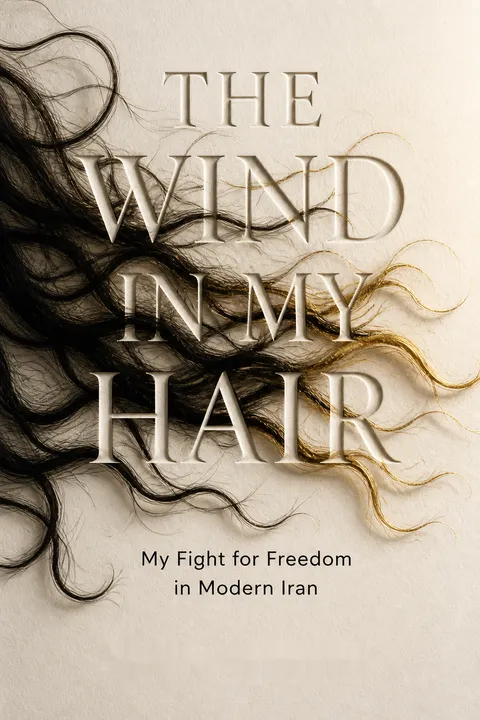
The Wind in My Hair is a powerful memoir chronicling Masih Alinejad's fight for women's rights in Iran. Readers praise her courage, resilience, and activism against compulsory hijab laws. The book offers insights into Iranian culture, politics, and the author's personal journey from a small village to international prominence. While some find certain parts repetitive or exaggerated, most appreciate Alinejad's vivid storytelling and the important issues she raises. The memoir resonates with those interested in human rights, feminism, and Middle Eastern politics.
People Also Read




Glossary
Azadi Yavashaki
Stealthy freedomA Persian phrase Alinejad uses for small, private acts of resistance to compulsory rules, especially moments when women remove their head coverings away from public view. These acts offer brief relief and dignity, but remain hidden because women may face punishment or social pressure if discovered.
My Stealthy Freedom
Online protest campaignA social media campaign founded by Alinejad in 2014 to publicize Iranian women’s opposition to compulsory hijab. Participants submitted photographs and messages, often anonymously, showing moments without head coverings. The campaign argued for freedom of choice, rather than requiring all women to unveil.
#WhiteWednesdays
Weekly dress-code protestA campaign launched by Alinejad in 2017 that invited women to wear white scarves or go without head coverings on Wednesdays as a visible protest against compulsory hijab. Men were invited to show support by wearing white. Participants shared photos and videos from public places in Iran.
shabnameh
Underground political pamphletA secretly distributed publication used in Iran to express opposition to political authority. Alinejad and other young members of the Faryad-e Kaveh group produced a shabnameh calling for greater freedom. The term carries a history of clandestine publication and political protest.
Basij
Regime-linked auxiliary forceA paramilitary organization used as an auxiliary security force and associated with the Islamic Revolutionary Guards. Alinejad’s father joined the Basij after the revolution. The memoir describes Basij members enforcing restrictions, confronting protesters, and participating in state efforts to protect the Islamic Republic.
Guardian Council
Law and candidate review bodyAn Iranian body described in the memoir as having six clerics and six lawyers. It reviews laws passed by Parliament and vets candidates for elections. Its authority limits political competition by excluding candidates it considers insufficiently committed to the Islamic Republic’s religious and revolutionary principles.
mehrieh
Marriage payment promised to brideA sum or set of valuables agreed upon in an Iranian marriage contract and promised to the bride, including in the event of divorce. Alinejad’s contract specified money, gold coins, and a copy of the Quran. In practice, unequal divorce laws can affect whether and how women obtain their rights.
The Victims of 88
Documentary on protest victimsA fifty-seven-part radio documentary series Alinejad created about people killed during the 2009 election protests, known in Iran as the events of 1388. It combines interviews with relatives, recorded testimony, and narration to preserve accounts that authorities restricted or denied.
Download PDF
Download EPUB
.epub digital book format is ideal for reading ebooks on phones, tablets, and e-readers.








