

Key Takeaways
Expect breakdown to be part of renewal, not proof that renewal failed.
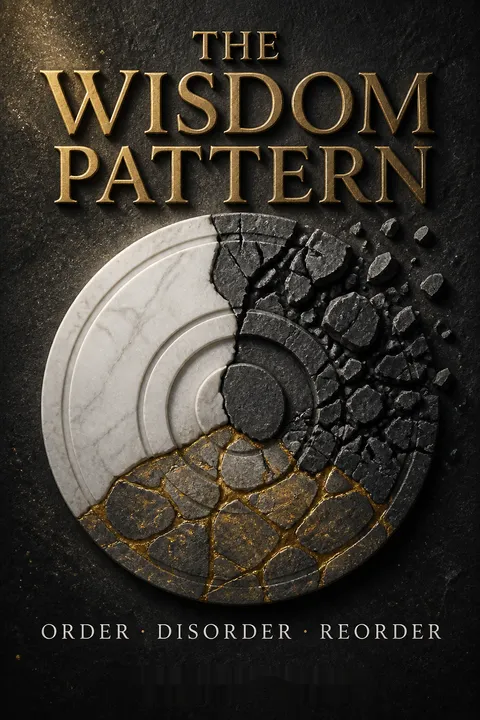
A recurring pattern. Rohr describes change as a passage through three conditions: order, disorder, and reorder. Order offers structure, but when treated as the whole truth it can become rigid and suppress difference. Disorder breaks the old arrangement, sometimes painfully; without any grounding, it can become chaos or despair. Reorder integrates what remains valuable with what the breakdown has revealed. The pattern appears in different forms across traditions, from orientation, disorientation, and renewed orientation in the Psalms to death and resurrection in Christianity.
Not a straight line. Rohr argues that people and institutions often expect to leap from stability directly to improvement. When that fails, setbacks look like proof that progress is impossible. The pattern instead gives disruption a place in a larger story, without pretending that every crisis ends well or on schedule.
The pattern is useful because it changes the question from how to prevent every disruption to what a disruption has exposed. It also resembles how learning often works: an old model fails, uncertainty follows, and a more adequate model can emerge. That resemblance should not be mistaken for a guarantee. Disorder can overwhelm people, and institutions can collapse without becoming wiser. The framework is strongest as a disciplined way to remain open to change, not as a promise that suffering automatically produces renewal.
Carry pain without turning it into blame, revenge, or inherited superiority.
Pain can become identity. Rohr recounts meeting a woman whose unresolved hurt had become a source of moral authority and protection. He uses her story to describe victimhood as a possible way to avoid growth, forgiveness, and responsibility. At the same time, he does not deny that people suffer real injustice. His concern is what happens when pain becomes a permanent license to condemn others or stop changing.
Choose a third response. Rohr calls the alternative the Third Way: neither fighting by projecting evil onto an enemy nor fleeing into denial and innocence. It means naming harm and resisting it while also examining one's own participation in harmful patterns. The aim is not passivity. It is to oppose injustice without letting retaliation reproduce its logic.
This argument usefully separates being harmed from making harm the whole of one's identity. Social psychology helps explain the appeal of blame: a clear culprit can reduce uncertainty and bind a group together. But the distinction needs care. A critique of victimhood can be misused to silence people describing structural injustice or demanding repair. The more defensible reading is not that victims should stop naming wrongs, but that naming wrongs should lead toward accountability and change rather than permanent moral ranking.
Forgiveness creates a future that punishment cannot produce.
A bedside reckoning. Near his mother's death, Rohr describes helping his parents ask each other for forgiveness after more than five decades of marriage. His mother resisted until a tender gesture softened her, then she named the forgiveness and asked for it in return. She said an oppressive barrier had lifted. The episode shows how apparently small resentments can carry deep meaning inside a relationship.
More than moral cleanup. For Rohr, forgiveness is not a way to prove purity or declare that the injury did not matter. It releases people from a cycle in which hurt justifies further hurt. This makes forgiveness a condition for a shared future, not a substitute for recognizing harm. In the Christian story, Jesus receives violence without passing it onward, offering a model of power used to transform rather than punish.
The story makes forgiveness concrete: it is a difficult act between particular people, not merely a generous attitude toward humanity. It also clarifies a necessary distinction. Forgiveness does not by itself restore trust, remove consequences, or require renewed contact with an unsafe person. Treating it as compulsory can burden the injured. Its wider value lies in loosening the grip of revenge while leaving room for protection, truth-telling, and justice.
Build identity across personal, communal, and universal stories.
Three nested meanings. Rohr calls his model the cosmic egg. Its smallest layer is My Story: individual experience, needs, and identity. Our Story is the shared world of family, community, nation, and tradition. The largest layer, The Story, is universal meaning that can place both personal life and group belonging within a wider moral or sacred horizon.
Avoid getting stuck. Personal identity matters, but alone it can leave people scrambling to feel exceptional. Community gives belonging and shared practices, but can turn tribal when loyalty matters more than compassion. Universal ideals can guide both, but become detached or dogmatic if they bypass lived experience. Rohr's whole person participates in all three at once. A family story, for instance, can ground a child while also teaching care that reaches beyond the family.
The model offers a practical check on narrow belonging: does a personal story connect to other people, and does group loyalty remain answerable to a wider ethic? This resembles the way healthy development combines autonomy with attachment. Neither selfhood nor community is a problem by itself; the danger is treating either as complete. The universal layer is also vulnerable to misuse when someone claims to speak for everyone. Its credibility depends on remaining connected to particular lives, especially those with less power.
Clean the lens before trusting what it tells you about reality.
Perception has a history. Rohr argues that people interpret events through inherited assumptions, family experience, culture, and self-interest. He asks readers to examine three linked images: self, God, and world. A person who imagines God mainly as a punishing authority may see the self as perpetually guilty and life as threatening. A change in one image can unsettle the others, so conversion involves more than adopting a new opinion.
More than analysis. Rohr names several forms of knowing: intellectual, will-based, emotional, sensory, imaginal, aesthetic, and epiphanic. A grieving person, for example, may understand loss in a way that information alone could not provide. Contemplative knowing means attending before rushing to judge, so that assumptions become visible and reality can challenge them.
The emphasis on how people know is a valuable correction to the idea that better arguments alone produce wiser judgment. Emotion and bodily response can reveal what a detached analysis misses, while stories and images can make abstract stakes imaginable. Yet no mode is automatically reliable. Strong feelings can distort, and compelling images can manipulate. A sound practice combines self-awareness with evidence, dialogue, and willingness to revise a cherished interpretation.
Test spiritual claims from within, through creation, and from below.
Francis's three reference points. Rohr presents Francis of Assisi as finding a stable center in Jesus, then looking in three directions: inward through prayer, outward through the created world, and downward toward people who suffer or lack power. Francis did not treat faith as a set of ideas detached from daily life. He sought a way to see reality that could include inner struggle, ordinary material existence, and the experience of the excluded.
One connected world. The Great Chain of Being is Rohr's name for a vision linking God, human beings, animals, plants, and the earth. In this view, creation carries sacred value rather than serving as disposable backdrop. Francis's attention to creatures and poverty becomes a test of spiritual perception: does faith deepen reverence and solidarity, or merely protect status and control?
This vision makes spiritual life answerable to ecology and social position, not just private belief. Systems thinking offers a useful parallel: damage to one part of an interdependent whole can affect the rest. The metaphor of a chain, however, can suggest a fixed hierarchy if read carelessly. Rohr's emphasis is connection and dignity, not permission to rank lives by worth. The practical test is whether a claimed sacred order expands responsibility toward vulnerable people and the natural world.
Let limits and shadows teach without calling every wound holy.
Imperfection is part of life. Rohr rejects the expectation that a person, institution, or relationship should become flawless. Limits reveal what a person cannot control; shadow names the painful, rejected, or compromised parts of the self and of groups. Facing these realities can produce humility and patience, while denial often leads to blame or resentment. Rohr calls suffering that becomes a source of insight a sacred wound, rather than an injury that simply hardens into bitterness.
The distinction matters. The book treats failure and disillusionment as possible teachers, not as proof of personal worthlessness. It also warns against demanding that life conform to an ideal of perfect consistency. Still, suffering itself does not guarantee wisdom. The response may require support, honest reflection, apology, or restitution, especially when a person's actions have harmed others.
This insight resists perfectionism, which can make ordinary limitation feel like a moral catastrophe. It also has a useful psychological parallel: integrating disowned parts of the self can reduce projection onto others. But the language of redemptive suffering needs a boundary. Abuse, illness, and oppression should not be romanticized as necessary lessons or reasons to remain in danger. Meaning may be made through suffering, but responsibility belongs to those who cause preventable harm.
Rebuild by practicing a better alternative, not merely attacking the old.
Critique needs a constructive answer. Rohr argues that exposing what is broken is necessary but insufficient. A movement organized only around what it opposes can reproduce the same hostility and exclusion it condemns. He describes a common institutional progression: a person begins an idea, others form a movement, the movement develops machinery and administration, and the institution may harden into a monument devoted to protecting itself. Its original vision can survive only if it is renewed rather than merely preserved.
Francis as an example. Instead of spending his energy denouncing established churches in Assisi, Francis repaired neglected chapels and built a different way of living at the margins. Rohr treats this as reconstruction: demonstrate a more life-giving practice while remaining alert to the old institution's failures.
The constructive emphasis resembles a principle in organizational change: visible working alternatives can make reform more credible than criticism alone. It also guards against the self-righteousness that can grow inside oppositional movements. Still, building an alternative does not remove the need to confront institutions that wield power or cause harm. A better practice needs both moral clarity and durable structures, including accountability, so that its own ideals do not become a new monument.
Give shared meaning a home in rituals, meals, and accountable communities.
Meaning needs repetition. Rohr argues that shared life depends on practices that mark time and give people a common story. He sees the Eucharist as a communal meal meant to welcome outsiders, not simply certify membership or worthiness. He also points to the family table as a place where ordinary life can become spiritually meaningful through gratitude, conversation, and recurring customs.
Build where life happens. Rituals can teach belonging and responsibility before people can explain them in abstract language. Rohr therefore calls for spiritual leadership and shared meaning to be present in homes and communities, not left entirely to formal institutions. His point is not that one prescribed ritual will repair society. Repeated practices matter because they give values a social form and make them available to the next generation.
Rituals turn abstract commitments into shared, embodied habits. They can create continuity across generations and a sense of mutual obligation that private conviction rarely sustains on its own. But rituals are not automatically humane: they can reinforce exclusion or silence disagreement. Their quality depends on who is welcomed, who helps shape them, and whether they support real care. A meaningful table is not only a symbol of belonging; it should also make belonging tangible.
Analysis
The book's central move is to treat crisis as both a spiritual problem and a problem of perception. People suffer not only because familiar structures fail, Rohr argues, but because they have been taught to interpret failure as either a temporary glitch to control or proof that meaning is a fiction. Order, disorder, and reorder offer a third interpretation: stability is valuable but incomplete, collapse can reveal what stability concealed, and renewal requires integrating both knowledge and loss.
The argument is most persuasive when it connects inward transformation to public life. A person who can acknowledge fear, complicity, and dependence is less likely to need a scapegoat. A community that can admit institutional failure has a better chance of reforming than one that equates criticism with betrayal. Rohr also insists that reconstruction needs practices and institutions, not merely improved private attitudes. That distinction is important in a culture where individual choice is often treated as a sufficient answer to collective problems. The book's theological vocabulary is particular, but several of its tests travel beyond Christianity: Does a worldview increase connection or isolate the self? Does an account of justice interrupt retaliation, or rename it? Does a community's ritual widen responsibility, or protect status? These questions make the work useful even to readers who do not share its account of God.
The framework is not a causal law. Breakdown can deepen insight, but it can also exhaust people, and appeals to forgiveness or acceptance can be used to evade justice. The strongest reading keeps Rohr's hope and his insistence on transformation while refusing to treat suffering as automatically redemptive. Reorder is an ethical task, not a guaranteed ending: it requires truth, protection for the vulnerable, and concrete changes in how people live together.
Review Summary
The Wisdom Pattern by Richard Rohr explores the cycle of order, disorder, and reorder as a path to wisdom and growth. Readers praise Rohr's insights on compassion, spirituality, and navigating life's challenges. Many find the book thought-provoking and relevant to current social issues. Some appreciate Rohr's ability to challenge both conservative and liberal ideologies. While a few readers found the content repetitive or difficult, most highly recommend the book for its profound wisdom and potential for personal transformation.
People Also Read






Glossary
Order, Disorder, Reorder
Three-stage transformation patternA recurring pattern in which an established arrangement provides structure, disruption reveals its limits, and a renewed arrangement integrates what was learned. Rohr applies it to personal growth, religious life, and social change. It is not a guarantee that every crisis leads to renewal, but a way to understand why transformation often includes a destabilizing middle.
Third Way
Response beyond fight or flightRohr's term for responding to pain or conflict without either projecting all evil onto an opponent or denying the problem. The Third Way involves naming harm, resisting injustice, and examining one's own participation in destructive patterns. It aims to interrupt retaliation without confusing nonviolence with passivity.
cosmic egg
Three layers of meaningRohr's model of three connected containers of identity and meaning: My Story, the individual's experience; Our Story, the shared life of a family, community, or culture; and The Story, a universal or sacred frame that can place both within a wider horizon. A healthy life participates in all three rather than treating one as sufficient.
Great Chain of Being
Interconnected sacred creationA traditional theological image of creation as a connected whole, linking God, spiritual beings, humans, animals, plants, and the material earth. Rohr uses it to argue that sacred value is not confined to human beings or religious institutions. The image emphasizes interdependence, though it can be misread as a rigid ranking of worth.
True Self
Identity grounded beyond egoRohr's spiritual term for the deeper identity found in relationship with God, as distinct from the ego's changing roles, status, defenses, and self-image. The True Self is not an achievement or a flattering personality description. It names a grounded sense of worth that can make a person less dependent on superiority, approval, or control.
contemplative mind
Receptive, nonreactive awarenessA way of knowing based on attention, patience, and openness rather than immediate judgment or control. Rohr contrasts it with a calculating mind that tries to manage outcomes and defend its preferred interpretation. Contemplation does not reject reason; it loosens the ego's grip so that reason can be informed by experience, emotion, and uncertainty.
sacred wound
Pain transformed into insightRohr's term for suffering that is faced and integrated in a way that deepens compassion, humility, or spiritual understanding. It contrasts with an injury that remains unprocessed and becomes a source of bitterness. The term does not mean that every wound is good, deserved, or automatically transformative.
coincidence of opposites
Contradictions held in relationshipA theological idea associated in the book with Franciscan thinker Bonaventure. It describes a reality in which opposing conditions, such as suffering and hope or human weakness and divine presence, coexist rather than being neatly separated. The cross serves as Rohr's central image of this tension, which he believes must be carried rather than resolved through blame or denial.
scapegoating
Displacing shared fear onto targetsThe process of assigning a group's anxiety, guilt, or conflict to a person or outsider, then treating that target as the source of the problem. Rohr draws on René Girard's account of scapegoating as a recurring social mechanism that can create temporary unity while concealing a group's own involvement. The apparent unity comes at the cost of exclusion and repeated harm.
FAQ
What's "The Wisdom Pattern: Order, Disorder, Reorder" about?
- Book Overview: "The Wisdom Pattern: Order, Disorder, Reorder" by Richard Rohr explores the cyclical nature of transformation in both individuals and societies. It is a revised version of his earlier work, "Hope Against Darkness."
- Core Concept: The book presents a framework of Order, Disorder, and Reorder as a pattern for understanding spiritual and personal growth.
- Historical and Spiritual Context: Rohr draws on various spiritual traditions, philosophies, and historical events to illustrate how this pattern manifests in different contexts.
- Practical Application: The book offers insights into how embracing this pattern can lead to personal transformation and a deeper understanding of life's challenges.
Why should I read "The Wisdom Pattern: Order, Disorder, Reorder"?
- Understanding Transformation: The book provides a comprehensive framework for understanding the process of transformation, which can be applied to personal growth and societal change.
- Spiritual Insights: Rohr offers deep spiritual insights that are rooted in Christian mysticism but are applicable to a wide audience.
- Practical Wisdom: Readers can gain practical wisdom on how to navigate life's challenges by embracing the natural cycles of order, disorder, and reorder.
- Broader Perspective: The book encourages readers to see beyond immediate circumstances and understand the larger patterns at play in their lives.
What are the key takeaways of "The Wisdom Pattern: Order, Disorder, Reorder"?
- Cyclical Nature of Life: Life is a series of cycles that move from order to disorder and then to reorder, which is essential for growth.
- Embrace Disorder: Disorder is not something to be feared but embraced as a necessary part of transformation.
- Integration of Opposites: True wisdom involves holding together seemingly contradictory truths and finding balance.
- Universal Patterns: The book highlights how these patterns are present in various spiritual traditions and philosophies, offering a universal framework for understanding life.
How does Richard Rohr define the "Order, Disorder, Reorder" pattern?
- Order: Represents stability, structure, and the initial state of understanding or belief.
- Disorder: Involves disruption, chaos, and the breakdown of previous structures, leading to confusion and growth.
- Reorder: The stage where new understanding and integration occur, leading to a more profound and mature state of being.
- Continuous Cycle: This pattern is ongoing and cyclical, reflecting the natural process of growth and transformation.
What is the significance of the "Great Chain of Being" in the book?
- Holistic Vision: The "Great Chain of Being" is a metaphor for a connected and coherent universe where everything has inherent dignity and meaning.
- Franciscan Influence: Rohr draws on the Franciscan tradition, emphasizing the interconnectedness of all creation.
- Spiritual Ecology: It suggests a spiritual ecology where the divine is present in all things, promoting a sense of reverence and responsibility.
- Breaking the Chain: The book warns against breaking this chain, which leads to a fragmented and dualistic worldview.
How does "The Wisdom Pattern" address the concept of forgiveness?
- Central Theme: Forgiveness is a central theme in the book, seen as a transformative act that reveals human and divine goodness.
- Threefold Goodness: Forgiveness involves recognizing the goodness in others, experiencing God's goodness, and realizing one's own goodness.
- Personal Story: Rohr shares a personal story of forgiveness within his family to illustrate its power and necessity.
- Path to Freedom: Forgiveness is presented as essential for personal freedom and the reconstruction of relationships and societies.
What role does "Shadow" play in "The Wisdom Pattern"?
- Shadow as Teacher: The book discusses the shadow as a necessary teacher that reveals the parts of ourselves we often deny or ignore.
- Integration of Shadow: Embracing and integrating the shadow is crucial for personal growth and transformation.
- Cultural Shadows: Rohr addresses how societies also have shadows, which must be acknowledged and integrated for true healing.
- Spiritual Growth: The shadow is not to be feared but understood as part of the journey toward wholeness and enlightenment.
What is Richard Rohr's perspective on "Limits" in the book?
- Praise for Limits: Rohr praises limits as essential for creating boundaries that define and protect.
- Healthy Boundaries: Limits are seen as necessary for personal and spiritual growth, providing structure and focus.
- Cultural Critique: The book critiques modern culture's tendency to reject limits, leading to entitlement and dissatisfaction.
- Spiritual Discipline: Embracing limits is a spiritual discipline that fosters humility, patience, and gratitude.
How does "The Wisdom Pattern" relate to postmodernism?
- Critique of Postmodernism: Rohr critiques postmodernism for its skepticism and rejection of universal truths, leading to fragmentation.
- Need for Transcendence: The book argues for a return to transcendent values and universal patterns that provide meaning and coherence.
- Integration of Insights: While acknowledging the insights of postmodernism, Rohr emphasizes the need for a balanced approach that includes spiritual wisdom.
- Reconstruction: The book calls for a reconstruction of society based on enduring truths and spiritual principles.
What are the best quotes from "The Wisdom Pattern" and what do they mean?
- "We are saved by knowing and surrendering to this universal pattern of reality." This quote emphasizes the importance of understanding and embracing the cyclical nature of life for personal and spiritual growth.
- "Forgiveness is the great thawing of all logic, reason, and worthiness." It highlights forgiveness as a transformative act that transcends rationality and opens the heart to divine love.
- "The cross is about how to fight and not become casualties ourselves." This quote reflects the book's message of finding strength and transformation through suffering and challenges.
- "The best criticism of the bad is the practice of the better." Rohr encourages positive action and living by example as the most effective way to bring about change.
How does Richard Rohr address the concept of "Reconstruction" in the book?
- Rebuilding with Hope: Rohr emphasizes the need for reconstruction after deconstruction, focusing on hope and positive action.
- Integration of Past and Present: Reconstruction involves honoring the past while embracing new insights and possibilities.
- Community and Connection: The book highlights the importance of community and shared values in the process of rebuilding.
- Spiritual Foundation: True reconstruction is grounded in spiritual principles and a deep understanding of the interconnectedness of all things.
What practical advice does "The Wisdom Pattern" offer for personal transformation?
- Embrace the Cycle: Accept the natural cycle of order, disorder, and reorder as part of personal growth.
- Practice Forgiveness: Make forgiveness a central practice in your life to experience freedom and transformation.
- Acknowledge the Shadow: Recognize and integrate your shadow side to achieve wholeness and authenticity.
- Set Healthy Limits: Establish boundaries and limits to create a balanced and focused life.
- Seek Transcendence: Look beyond immediate circumstances to find deeper meaning and connection with the divine.
About the Author
Other books by Richard Rohr








Download PDF
Download EPUB
.epub digital book format is ideal for reading ebooks on phones, tablets, and e-readers.








