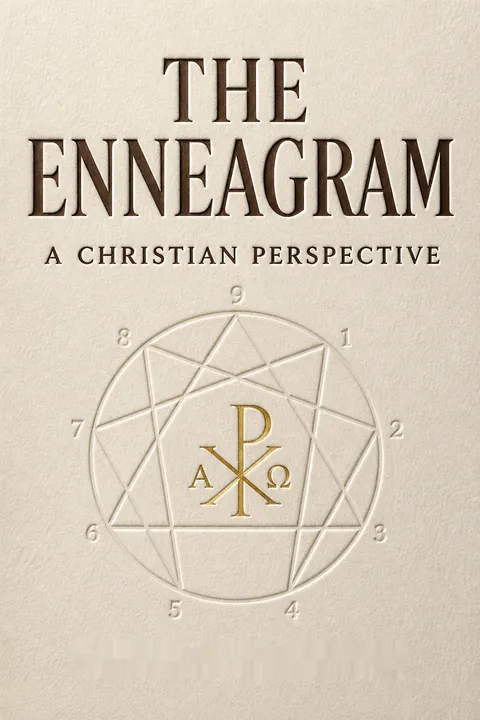


Key Takeaways
Use the Enneagram as a map for change, not a verdict about character.
A limited map. The Enneagram arranges nine recurring personality patterns around a circle. Its purpose, Rohr and Ebert argue, is not merely to describe people but to help them change. The history is uncertain: Gurdjieff introduced the symbol in the West in 1916 as a model of cosmic dynamics, not personality types. Oscar Ichazo developed a modern system of personality fixations in the 1970s. Similarities to the early Christian monk Evagrius and the medieval thinker Ramón Llull suggest possible precedents, but do not prove that the modern system existed in antiquity.
Use it cautiously. The authors acknowledge that the Enneagram lacks generally accepted scientific validation. They advise reading all nine profiles, examining persistent motives, and seeking feedback from people who know you. The descriptions are intentionally broad sketches, not reliable grounds for labeling others.
The book is strongest when it treats personality categories as prompts for inquiry rather than as measurements. That distinction matters: a framework can help someone notice a motive without accurately predicting behavior or establishing a diagnosis. Once a label becomes an identity, confirmation bias can make every action seem like proof of the type. The uncertain history and limited validation call for intellectual modesty, not automatic dismissal. A useful test is whether the model makes a person more curious and accountable, rather than more certain about themselves or other people.
Look for the gift that has hardened into your survival strategy.
Strength has a shadow. The authors call each type’s central compulsion a root sin: not simply a bad act, but a habitual way of trying to secure life that can separate a person from themselves, other people, and God. Early expectations and experiences help shape these strategies. A child may learn to earn approval by being exceptionally good, useful, successful, or unobtrusive. Over time, the adaptation can feel like the person’s whole identity.
Keep the gift. Rohr describes his own perfectionism as a source of energy for teaching and service, but also of anger and harsh judgment. The aim is not to despise the gift or erase the pattern. It is to recognize its costs, loosen its grip, and let the strength serve life without demanding control. In the book’s Christian account, unconditional divine love makes that honest recognition possible.
This account resembles a useful distinction in contemporary psychology: a behavior can be protective in one setting and costly in another. Seeing a pattern as an adaptation can reduce shame while making responsibility more possible. The authors’ emphasis on mixed motives is especially valuable because admirable conduct is not automatically free of self-interest. Still, childhood explanations should be treated as hypotheses, not universal causes. Similar habits can arise from different histories, and a person need not reconstruct a perfect origin story before choosing a different response.
Choose your growth practice by noticing whether gut, heart, or head leads.
Three centers, nine types. The book groups the types into three centers: gut types Eight, Nine, and One; heart types Two, Three, and Four; and head types Five, Six, and Seven. These names describe the authors’ model of a person’s dominant way of processing life, not separate faculties that other people lack. Every person thinks, feels, and acts, but the model claims that one center tends to steer the response.
Practice against imbalance. Gut types are urged toward embodied attention and stillness; heart types toward solitude and reflection without an audience; head types toward feeling, community, and action. A helper who depends on being needed, for example, may benefit from time alone, while a person who retreats into analysis may need to act before every uncertainty is resolved. The point is not to reject a natural strength, but to broaden it.
The three-center model offers a memorable way to ask what kind of information a person habitually trusts: bodily impulse, social feedback, or analysis. Its practical value lies in suggesting a counterweight, much as embodied approaches to learning balance reflection with experience. But the categories should not be confused with established neurological divisions. People can also shift modes across situations, and bodily, emotional, and cognitive processes are deeply intertwined. The model works best as a vocabulary for noticing imbalance, not as a literal map of separate mental systems.
For Ones, Twos, and Threes, examine the motive beneath doing good.
Goodness can conceal a bargain. Ones seek moral correctness, but suppressed anger can turn their idealism into chronic criticism. Their growth is patience with imperfection and the ability to enjoy life before every task is finished. Twos care for others, yet may use giving to secure affection or become indispensable. Their growth is humility, clear boundaries, and the freedom to receive care. Threes pursue achievement and adapt to the image a group rewards; success can conceal a fear that there is little worth loving beneath the performance. Their growth is honesty, hope, and learning to stay present through failure.
Keep the strength. The authors connect Ones with justice, Twos with compassion, and Threes with organization and effective leadership. Their question is not whether these strengths are genuine, but whether they have become tools for securing approval, control, or self-worth.
These profiles make a sharp ethical point: outwardly similar behavior can serve very different needs. Service can express care or purchase belonging; high standards can protect fairness or discharge anger; achievement can benefit a community or disguise insecurity. This is a valuable reminder for leaders and helpers, whose good intentions can make scrutiny uncomfortable. Motive, however, is difficult to infer from the outside, and self-examination can become another arena for perfectionism. The practical safeguard is to examine consequences and listen to others, not to claim certainty about hidden motives.
For Fours, Fives, and Sixes, bring inner life into contact with reality.
Longing, distance, and fear. Fours seek beauty and significance, but envy and fixation on what is missing can make ordinary life feel unworthy. Their growth is balance and engagement with the present. Fives gather knowledge and protect their privacy, but can mistake understanding for participation. Their growth is wisdom that includes action, emotion, and relationship. Sixes scan for danger and seek reliable authorities, but fear can become obedience to rules or suspicion of others. Their growth is courage, trust, and taking responsibility for their own judgment.
Let strengths mature. The book values the Four’s sensitivity, the Five’s clear perception, and the Six’s loyalty and ability to detect risks. It does not ask these people to become someone else. It asks them to stop using longing, withdrawal, or vigilance as a substitute for living and relating.
The trio highlights three familiar ways of managing uncertainty: idealizing what is absent, collecting information, and searching for safeguards. Each can be useful, but each can also defer contact with the present. This connects the Enneagram’s spiritual advice to a broader principle of learning: insight becomes more reliable when tested in relationships and action. There is a needed caution, though. Solitude can be restorative, risk-awareness can be prudent, and grief is not automatically self-indulgence. The question is whether a response expands a person’s choices or narrows them.
For Sevens, Eights, and Nines, let action interrupt escape.
Three forms of avoidance. Sevens chase pleasure, ideas, and future possibilities to avoid pain; their growth is joy that can include grief and limitation. Eights meet vulnerability with force, control, or retaliation; their growth is mercy, including tenderness toward their own weakness. Nines avoid friction by minimizing their needs, delaying decisions, or numbing themselves; their growth is decisive action. In each case, the apparent solution has a cost: pleasure can become excess, strength can become domination, and peace can become disengagement.
Put the gift to work. Sevens bring energy and hope, Eights bring courage and protection, and Nines bring steadiness and mediation. The authors point to Francis of Assisi accepting contact with suffering, Martin Luther King Jr. using leadership for nonviolent justice, and Pope John XXIII turning a quiet disposition into consequential action.
These types show why calm, optimism, and strength cannot be judged by appearance alone. A cheerful person may be fleeing grief; a forceful person may be protecting the vulnerable or controlling them; a peacemaker may be helping people reconcile or avoiding a necessary disagreement. The emphasis on action is useful because it makes growth observable. Still, action is not automatically virtuous, and conflict is not always productive. The relevant question is whether a response protects dignity, faces reality, and leaves other people more free.
Notice your impulses before turning them into a story about who you are.
Practice observing. The book’s inner observer is the capacity to notice thoughts, feelings, and judgments without immediately approving or condemning them. It creates a pause between an impulse and an automatic response. The related Christian practice, discernment of spirits, means examining where an inner movement leads: toward greater honesty, love, and freedom, or toward defensiveness and isolation. Ignatius of Loyola’s method, as presented here, is to notice an inner movement, consider its source and direction, then decide whether to accept or resist it.
Use the pause well. A perfectionist can notice irritation without disguising it as objective truth. A fearful person can test a worst-case prediction before treating it as fact. Prayer, reflection, and candid conversation can deepen the practice. The aim is not to suppress emotion, but to see it clearly enough that it no longer makes every decision.
This practice has a close kinship with metacognition, the ability to notice one’s own thinking, and with mindfulness approaches that distinguish an experience from a command. Such distance can reduce impulsive action without requiring a person to deny what they feel. The book adds a moral and spiritual question: what kind of relationship does this impulse create? That question can be illuminating, but it is not a substitute for evidence. A strong feeling is neither proof of divine guidance nor proof of pathology; its meaning needs context.
Treat your type as a starting point for freedom, not a fixed destiny.
Growth is movement. The authors describe each type along a continuum from immature to mature. They also use wings, the neighboring types that influence a person’s main pattern, and arrows, connections associated with stress and growth. These ideas are meant to show that personality is dynamic, not a sealed box. A person may also recognize aspects of all nine types without having the same central compulsion as each one.
Grace changes the aim. In this Christian interpretation, conversion is not earning approval through perfect behavior. It is becoming less governed by compulsions through honest self-knowledge, prayer, relationships, and trust in God’s love. The authors extend that work beyond private character: a religion that polishes its image while ignoring suffering and injustice has not achieved transformation. The Enneagram is presented as a tool for seeing more clearly and responding with compassion, not a replacement for faith or action.
The model’s dynamic features counter the fatalism that often accompanies personality labels. They make room for context, development, and the possibility that a person can act outside a habitual style. The book’s strongest challenge is also social: inner conversion should affect how people treat the vulnerable, not merely how they describe themselves. Yet spiritual language can itself become a shield against accountability if grace is taken to mean that harm no longer matters. A sound application pairs compassion for a person with honest attention to consequences and repair.
Analysis
Rohr and Ebert offer a spiritual psychology organized around a provocative claim: people are often least free where they feel most naturally virtuous. Perfection, generosity, competence, sensitivity, knowledge, caution, cheerfulness, strength, and calm can each become a strategy for managing insecurity. The framework’s memorable achievement is to ask not only what a person does, but what that behavior is trying to secure and what it costs. This shifts self-knowledge from collecting flattering traits toward noticing repeated motives.
The book’s Christian theology shapes the method. Naming a compulsion is not meant to produce self-contempt; unconditional grace makes truth bearable, while prayer, relationships, and suffering can unsettle the ego’s preferred account of itself. The practical center is the inner observer, which creates room to choose rather than react. The authors also insist that conversion must have public consequences. A spirituality preoccupied with harmless rule-breaking while ignoring domination, poverty, or institutional self-protection has mistaken religious conformity for transformation.
The framework requires substantial qualification. The authors explicitly acknowledge the absence of broad scientific validation, and the historical parallels they identify do not establish that the modern personality system is ancient. Its accounts of childhood origins, national character, and gendered behavior are particularly speculative and can reproduce stereotypes. The confident assignment of biblical and historical figures to types is best read as interpretive storytelling, not evidence about those figures’ actual psychology.
The most defensible use, then, is as a reflective vocabulary rather than a diagnostic instrument. A type can suggest a question: what strength becomes rigid under pressure, and what response might widen the person’s choices? It should not dictate a person’s identity, excuse harmful conduct, or replace professional assessment. The book’s enduring value lies less in proving nine kinds of people than in inviting readers to examine how self-protection can masquerade as virtue, and how humility can turn that recognition into more compassionate action.
Review Summary
The Enneagram by Richard Rohr receives mixed reviews (4.15/5). Supporters praise it as a transformative tool for spiritual growth and self-awareness, connecting personality types to root sins and spiritual development. Many find the descriptions humiliatingly accurate and deeply insightful. Critics object to its theological soundness, questioning Rohr's biblical interpretation and Christian orthodoxy. Some view it as New Age teaching infiltrating the church. Others find the typology reductive or struggle to identify with a single type. Most agree it's best for mature readers seeking spiritual transformation, though some sections are dry.
People Also Read







Glossary
Enneagram
Nine-pattern personality mapA circular model with nine numbered points, each associated with a recurring personality pattern. In Rohr and Ebert’s account, it is more than a classification system: its connections and spiritual interpretation are intended to help people recognize compulsions and move toward greater freedom. The authors caution that it is a map, not a complete account of any individual, and acknowledge its lack of broadly accepted scientific validation.
root sin
Central compulsive patternThe authors’ term for a type’s underlying fixation or habitual strategy for coping with life. It is not limited to a specific immoral act. The pattern may begin as an attempt to meet needs or avoid danger, then become excessive and separate a person from themselves, others, or God. Each root sin is paired with a potential gift that can emerge when the compulsion loosens.
false self
Defended survival identityThe self-image formed around roles, habits, and strategies used to secure approval, safety, or control. The book argues that people can identify so closely with this constructed identity that they mistake it for their whole self. Spiritual work involves seeing how the false self operates and becoming less dependent on it, rather than simply replacing it with a more impressive image.
true self
Self beyond compulsionsThe person’s deeper potential and identity, understood by the authors in Christian terms as grounded in relationship with God rather than earned through performance. The true self is not another perfected persona to construct. It becomes more visible as compulsive defenses are recognized and released, allowing a person’s gifts to serve love and life more freely.
three centers
Gut, heart, and headThe book’s grouping of the nine types into three broad clusters: gut types Eight, Nine, and One; heart types Two, Three, and Four; and head types Five, Six, and Seven. Each center describes a dominant way of responding to experience. All people use bodily, emotional, and mental capacities, but the model suggests that one center tends to lead and may need balancing.
inner observer
Nonjudgmental self-awarenessThe capacity to notice one’s thoughts, feelings, and reactions without immediately endorsing or condemning them. In the book, this awareness creates space between an impulse and a habitual response. It is not the same as a moral judge or a diagnostic analyst. It helps a person recognize which inner voices are active before deciding how to respond.
discernment of spirits
Testing inner movementsA Christian spiritual practice of noticing inner thoughts, emotions, and impulses, considering where they come from and where they lead, and choosing whether to follow them. The book connects this practice to Ignatius of Loyola and to Enneagram work. Its central question is whether an impulse contributes to freedom, love, and life, or reinforces fear, self-deception, and separation.
wings
Neighboring type influencesThe Enneagram’s term for the two personality types immediately beside a person’s main type on the circle. The authors argue that these neighboring patterns can shape and balance the central pattern. Attending to both wings is one way to broaden behavior, though the book treats the Enneagram as a developmental map rather than a fixed or scientifically established measurement.
arrows
Stress and growth connectionsThe connecting lines within the Enneagram symbol. Rohr and Ebert interpret them as relationships among types that can become relevant under stress or during growth. They describe some movements as false consolation, which offers short-term relief while strengthening a problem, and others as true consolation, which supports integration. These are spiritual interpretations of the diagram, not established clinical pathways.
About the Author
Other books by Richard Rohr








Download PDF
Download EPUB
.epub digital book format is ideal for reading ebooks on phones, tablets, and e-readers.








