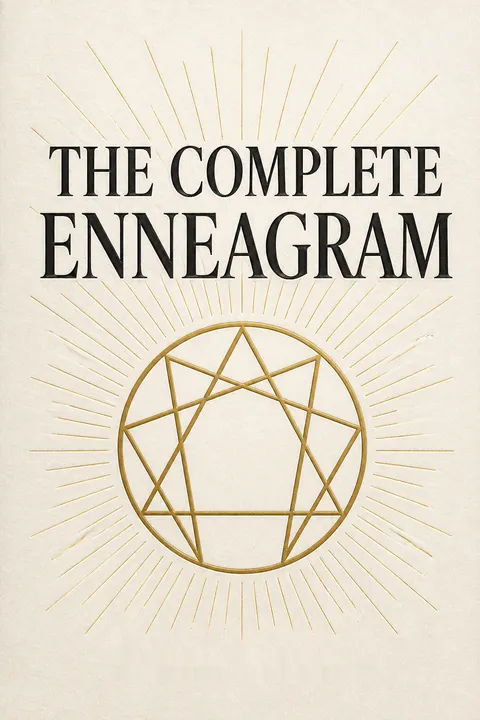


Key Takeaways
Treat your personality as an old defense, not your entire identity.
A coping style can outlive its purpose. The book argues that childhood strategies for staying safe become automatic habits of thought, feeling, and action. A child who learns to please may lose track of anger and personal needs; one who learns to be tough may hide vulnerability. The author calls this automatic, unexamined condition “waking sleep.” Personality, in this account, is a defensive or compensatory self, not the whole person. The seed-and-tree parable gives the growth story: potential is already present, but the protective shell must open for it to develop.
Awareness begins the change. Chestnut describes learning to please others so thoroughly that she did not recognize her own anger. The habit once helped her preserve connection, but later narrowed her choices. The point is not to condemn the defense. It is to see what it protects, and what it now costs.
The useful distinction here is between a trait and the job it performs. “I am agreeable” becomes a different, more workable observation when translated into “I learned to reduce conflict by accommodating people.” That shift resembles functional analysis in psychology, which asks what a behavior accomplishes in context rather than treating it as a fixed identity. The account is most persuasive as a reflective model, not a universal explanation of personality: childhood can shape coping, but adult patterns also respond to present relationships, culture, and biology.
Watch yourself in real time before demanding a different self.
Attention creates room to choose. Self-observation means noticing thoughts, feelings, and actions as they unfold, without immediately judging them. The book calls the capacity to notice from this slight distance the “inner witness.” Meditation is presented as practice for this skill: attention wanders, the person notices, and attention is gently returned. Repetition strengthens the ability to catch automatic behavior while it is happening, instead of understanding it only afterward.
Inquiry turns noticing into insight. Chestnut proposes a sequence: observe a pattern, ask where it came from and what it protects, then try a different response. A person who notices saying yes automatically can investigate the fear beneath the agreement, then experiment with expressing a preference. Observation alone is not transformation, but without it, the old response can feel like the only possible one.
This method connects naturally to metacognition, the ability to notice and evaluate one’s own thinking. It also resembles mindfulness-based approaches, where the goal is not to eliminate thoughts but to change one’s relationship to them. The distinction between awareness and judgment matters: self-monitoring can become another form of self-criticism, particularly for someone already inclined to perfectionism. Observation is most useful when it produces curiosity and specific behavioral evidence, not a new verdict about being defective.
Use the nine-type map to spot patterns, not assign permanent labels.
Three centers organize nine patterns. The Enneagram groups personality into body, heart, and head centers. The body types are Eight, Nine, and One, organized around anger and control; the heart types are Two, Three, and Four, organized around image and emotional recognition; the head types are Five, Six, and Seven, organized around fear and security. Each type has a characteristic focus of attention and a central emotional motivation, called its passion.
Instincts add another layer. Self-Preservation, Social, and Sexual or One-to-One instincts shape how each type expresses its central pattern, producing 27 subtypes. For example, fear may lead one Six to seek allies, another to follow rules, and another to appear intimidating. The descriptions are offered as a map for noticing recurring habits, not as a claim that people fit neatly into one box.
The map’s strength is its multidimensionality: it asks not just what someone does, but what their attention repeatedly selects and what emotional need the behavior serves. That can help distinguish, for instance, a diligent person driven by approval from one driven by fear of error. Yet taxonomies invite confirmation bias: once a label feels right, people may notice matching evidence and ignore exceptions. The map works best when treated as a set of hypotheses to test against specific behavior, not a shortcut to knowing someone.
Body types lose themselves through accommodation, domination, or relentless correction.
Three styles orbit anger and control. Nines avoid conflict by adapting to others, then may discover they cannot name what they want. Eights counter vulnerability by asserting strength, taking charge, and pursuing intensity. Ones manage anger by controlling impulses and correcting what seems wrong. The same pattern can be a strength or a trap: Nines mediate well, Eights protect and mobilize, and Ones bring integrity and care to detail.
Their growth asks for balance. Nines practice stating preferences and taking action; Eights slow down, consider their impact, and acknowledge softer feelings; Ones make room for play, imperfection, and emotions they have deemed unacceptable. In Homer’s Lotus-Eaters episode, Odysseus’s men become so comfortable that they forget their journey home. The story mirrors the Nine’s risk: preserving comfort can mean abandoning direction.
These portraits illuminate three different ways agency can go missing: it is surrendered, overasserted, or tightly policed. The distinction helps avoid equating quietness with passivity or force with confidence. The practical test is relational: does the response make room for both the person’s needs and the needs of others? The framework can understate how context changes behavior. Accommodation, force, and rule-following may be adaptive in unsafe or unjust environments, so growth cannot mean replacing them with a single preferred style in every situation.
Heart types chase love through helping, achievement, or wounded exceptionalism.
Three ways to seek recognition. Twos try to secure affection by anticipating needs and offering help, sometimes without admitting what they themselves need. Threes pursue achievement and manage an image of success, risking disconnection from feelings that slow them down. Fours focus on what is missing, compare themselves with others, and may long for an ideal connection while doubting they deserve it. Their gifts are real: Twos attune to people, Threes get things done, and Fours bring emotional depth and empathy.
The common risk is losing the self. Calypso, the goddess who keeps Odysseus on her island with comfort and attention, illustrates help that becomes a bid for possession rather than care freely given. The corresponding growth is to ask directly, separate worth from performance, and recognize what is already present instead of treating lack as proof of unlovability.
The heart-center account is especially sharp about the difference between receiving approval and being known. Helpful behavior, impressive work, and emotionally vivid self-expression can all win attention while leaving the underlying need for acceptance untouched. This resembles the distinction between contingent self-worth, which depends on meeting standards, and a more stable sense of worth. Still, the three patterns should not be mistaken for moral failures. Helping, achievement, and sensitivity are valuable capacities; the question is whether they remain choices or become compulsory ways to earn belonging.
Head types manage fear by withdrawing, scanning, or outrunning discomfort.
Three strategies for uncertainty. Fives conserve time, energy, and privacy, retreating into knowledge when relationships feel demanding. Sixes scan for danger, question assumptions, and seek safety through allies, rules, or forceful readiness. Sevens move toward pleasure, ideas, and future options to avoid feeling trapped in pain. Each strategy has a useful side: Fives analyze, Sixes troubleshoot, and Sevens imagine possibilities.
The protection can become the problem. Odysseus’s crew opens a sealed sack of winds near home, hoping it contains treasure, and their ship is blown off course. The episode captures how Seven-style appetite for exciting possibilities can undo progress. The growth tasks differ: Fives risk contact, Sixes distinguish evidence from feared projections, and Sevens stay present with discomfort rather than immediately escaping into the next plan.
The head types form a memorable spectrum of responses to threat: retreat, vigilance, and reframing. In decision science, each can be understood as a strategy for reducing uncertainty, though with different costs. Withdrawing can preserve resources but reduce access to support; vigilance can identify real danger but also amplify imagined danger; optimism can sustain initiative but miss warning signs. The value is not in choosing one strategy as universally healthy. It is in noticing when a protective response has become automatic and is no longer proportionate to the situation.
Check the instinct beneath your type; it changes how the pattern appears.
One type can wear three faces. The book’s instinctual subtypes reflect whether attention centers on material security, group belonging, or one-to-one bonds. A Self-Preservation Nine may disappear into familiar comforts; a Social Nine may work tirelessly for the group while neglecting personal desires; a Sexual Nine may merge with a close partner. The shared pattern is inattention to self, but the outward behavior differs sharply.
Some subtypes contradict the stereotype. A countertype is the subtype that expresses its type’s central motivation in a less obvious, even opposite-looking way. The Social Seven, for example, may sacrifice personal pleasure to be seen as good and useful, despite Seven’s usual pursuit of enjoyment. The Sexual Six may meet fear by appearing strong and intimidating. Looking only at surface behavior can therefore mislead; the motive and attentional habit matter more.
This level of detail addresses a genuine weakness of simple personality labels: the same motive can generate different behaviors depending on social role, resources, and relationship context. It also encourages readers to ask what a behavior is doing for someone rather than infer motive from appearance. The countertype idea is particularly useful when a description seems to fit only partly. Its danger is that it can make a system unfalsifiable if every contradiction is explained away. A sound use requires looking for repeated patterns, not rescuing a preferred label from every mismatch.
Practice your type’s opposite virtue, not merely better-controlled habits.
Each passion points toward an antidote. Chestnut pairs the type’s central emotional trap with a virtue that offers a different way to live: One moves from anger toward serenity; Two from pride toward humility; Three from vanity toward hope; Four from envy toward equanimity; Five from avarice toward nonattachment; Six from fear toward courage; Seven from gluttony toward sobriety; Eight from lust toward innocence; and Nine from sloth toward right action.
The aim is not suppression. Sobriety for Seven does not mean refusing pleasure; it means no longer needing constant stimulation to avoid pain. Humility for Two does not mean self-belittlement; it means acknowledging needs and limits without inflating one’s importance. The virtues name qualities to practice, not a demand to become morally perfect.
Pairing a habitual excess with a balancing capacity gives the framework direction: development is more than describing a personality accurately. The nuance is essential, because virtue can be misread as another performance standard. A perfectionistic One could turn serenity into a new achievement; a fearful Six could shame themselves for not feeling courageous. In behavioral terms, the useful move is often a small, observable action that expresses the alternative capacity, while allowing the original emotion to exist. Growth is not a personality transplant.
Use stress and childhood patterns as clues, not deterministic instructions.
The arrows suggest a growth route. Chestnut’s “Inner Flow” is her interpretation of the Enneagram’s connecting lines. The point toward which a type moves under pressure is treated as a possible growth challenge, while the other connected point represents qualities associated with childhood security that may need to be reclaimed consciously. For example, the One’s route invites greater emotional openness and play; the Nine’s invites decisive action and self-assertion.
A repeatable practice grounds the theory. Observe the pattern, investigate what it once protected, then experiment with a more flexible response. The book’s seed metaphor frames this as moving beyond a defensive shell toward fuller development. It also stresses that awareness requires effort: habits return, especially under stress. The arrows are a proposed guide for reflection, not a substitute for examining what actually helps a particular person.
The method joins developmental interpretation with practical self-study. Its strongest element is the sequence from present behavior to its protective history and then to a testable alternative. That resembles contemporary approaches that combine learning history with skills practice. The arrow interpretation, however, is presented by Chestnut as her own theory, and the text does not establish it as an empirically validated account of personality change. Readers can retain the useful question, “What capacity am I avoiding?” without treating diagrammatic movement as a law.
Choose a type only when its hidden motive fits better than its image.
Typing is a process of comparison. The appendix notes that people may recognize themselves in several types because of overlapping traits, connected types, family influence, and the difference between inner experience and public behavior. A hardworking person, for instance, might be driven by achievement and approval, by fear and preparation, or by a need to meet an internal standard. The visible behavior alone cannot settle the question.
Look for the repeated blind spot. Compare what attracts attention, what emotion is hard to acknowledge, and what the strategy is trying to secure. Chestnut’s approach descends from Gurdjieff’s “waking sleep” teaching, Ichazo’s personality model, and Naranjo’s psychological descriptions. The book places this typology within a spiritual tradition, but the practical value rests on whether its descriptions help someone notice and change real patterns.
A type label can function as a compact hypothesis about attention, motivation, and defensive behavior. That can make self-reflection more specific, much as a good clinical formulation links repeated behavior to context and function. But the book’s spiritual claims about an essential or higher self are philosophical commitments, not demonstrated findings in the text. A careful reader can separate those claims from the observable exercises. If a type description increases curiosity, empathy, and behavioral flexibility, it is serving its purpose; if it excuses conduct or narrows identity, it has become another shell.
Analysis
The book’s most durable contribution is not the promise that nine labels can explain a person. It is the insistence that attention itself is patterned. A person repeatedly notices threats, other people’s needs, errors, achievements, or possibilities, while neglecting other evidence. That selective attention helps organize behavior and identity, often around a childhood strategy that once reduced distress. The Enneagram then becomes a vocabulary for seeing the strategy in motion and asking what it protects.
The structure moves from a broad spiritual claim, human beings live mechanically until they become conscious, into a practical sequence of observation, inquiry, and changed action. Homeric episodes and Dante’s underworld make abstract defenses memorable, while the detailed subtype accounts show why surface behavior is an unreliable guide to motive. The countertype concept acknowledges that similar needs can produce opposite appearances.
The framework is more useful as a reflective instrument than as an established scientific taxonomy. The text offers clinical observations and a lineage of teachers, but it does not demonstrate that the nine types or 27 subtypes are validated categories, nor that the symbolic arrows describe universal development. Readers should therefore test descriptions against repeated, concrete examples and welcome disconfirming evidence. That caution does not erase the model’s practical force. Its central question is powerful: what is this familiar response doing for me, and what does it prevent me from noticing? Used in that spirit, a type is not a verdict. It is a prompt to recover choice from a habit that once felt like the self.
Review Summary
The Complete Enneagram is praised as an insightful and comprehensive guide to the Enneagram personality system. Readers appreciate its in-depth exploration of subtypes, practical advice for personal growth, and clear explanations of each type's motivations and behaviors. Many found it helpful for self-reflection and understanding others. Some readers noted its length and occasional repetitiveness but overall found it valuable for both beginners and those familiar with the Enneagram. The book's focus on instinctual variants and detailed comparisons between types were particularly well-received.
People Also Read






Glossary
Waking sleep
Automatic patterned livingChestnut’s term for the largely unexamined state in which people repeat habitual thoughts, feelings, and actions while assuming they are freely choosing. She links these patterns to early coping strategies that become automatic. “Waking sleep” is not literal sleep; it describes reduced awareness of what is driving behavior in the present.
Inner witness
Observing awarenessThe capacity to notice thoughts, feelings, and actions without immediately identifying with or judging them. Chestnut presents it as a skill developed through self-observation and meditation. By distinguishing awareness from the habitual pattern being observed, a person can create enough mental space to consider another response.
Centers of intelligence
Three modes of processingThe Enneagram’s grouping of personality into body, heart, and head centers. The body center emphasizes instinct, movement, anger, and control; the heart center emphasizes emotion, image, and recognition; the head center emphasizes thought, fear, and security. Each center contains three types, giving the system its nine-type structure.
Passion
Core emotional fixationA recurring emotional-motivational pattern that organizes an Enneagram type around an assumed need. Examples include fear for Six, envy for Four, and anger for One. In this system, the passion motivates behavior while also narrowing perspective, so efforts to satisfy it can perpetuate the very dissatisfaction they aim to resolve.
Instinctual subtypes
Three instinct-shaped expressionsThe book’s term for the three variations within each Enneagram type, formed when the type’s central passion combines with a dominant instinct: Self-Preservation, Social Interaction, or Sexual or One-to-One bonding. These instincts shape where attention goes, such as material security, group belonging, or close individual relationships, producing 27 subtype patterns.
Countertype
Less obvious subtype expressionOne of the three subtypes within a type that expresses the central passion in a way that appears to oppose its familiar outward pattern. A Social Seven may sacrifice personal pleasure, for example, while a Sexual Six may appear fearless. The concept cautions that visible behavior alone may not reveal a person’s underlying motivation.
Inner Flow
Arrow-based growth interpretationChestnut’s interpretation of the Enneagram’s connecting lines as a personal development map. One connected point represents challenges that can expand a type’s habitual range; another points toward qualities associated with childhood security that may need conscious recovery. The book presents this as a proposed way to work with the diagram, not an established universal law.
Vice to Virtue
Passion-to-capacity pathwayA development model that pairs each type’s emotional passion, or vice, with a balancing virtue. Examples include fear and courage for Six, envy and equanimity for Four, and sloth and right action for Nine. The aim is not to suppress emotion, but to recognize its habitual influence and cultivate a wider, less fixated response.
False self
Protective personality structureChestnut’s term for the personality built from strategies that help a vulnerable child adapt, gain support, and avoid pain. It is called “false” because a person may mistake this conditioned pattern for the entirety of who they are. The book treats it as both protective and limiting, and as a starting point for self-understanding.
FAQ
What's The Complete Enneagram: 27 Paths to Greater Self-Knowledge about?
- Focus on Self-Knowledge: The book explores the Enneagram, a personality typing system that aids in understanding behaviors, motivations, and emotional patterns.
- Integration of Wisdom: Beatrice Chestnut combines ancient wisdom with modern psychology to provide a comprehensive framework for self-discovery and transformation.
- Practical Application: It offers exercises and insights for applying the Enneagram in daily life, enhancing relationships and personal effectiveness.
Why should I read The Complete Enneagram by Beatrice Chestnut?
- Enhance Self-Understanding: The book provides tools for gaining deeper insights into personality types and motivations, crucial for personal development.
- Improve Relationships: Learning about different personality types can foster better communication and empathy, reducing conflict.
- Path to Growth: It outlines specific growth paths for each Enneagram type, guiding readers to overcome limitations and embrace their potential.
What are the key takeaways of The Complete Enneagram?
- Self-Knowledge is Essential: Emphasizes that self-awareness is crucial for personal growth and happiness, enabling significant life changes.
- Understanding Enneagram Types: Each of the nine types has distinct characteristics and growth paths, aiding in personal and professional navigation.
- Practical Exercises: Includes exercises for self-observation and reflection, making concepts accessible and actionable.
How does the Enneagram work in The Complete Enneagram?
- Nine Personality Types: The Enneagram consists of nine interconnected types, each with unique traits and challenges.
- Centers of Intelligence: Types are associated with body, heart, or head centers, explaining emotional, thought, and instinct processing.
- Dynamic Growth Paths: Offers dynamic paths for growth, with specific challenges and virtues guiding self-awareness and fulfillment.
What are the nine Enneagram types discussed in The Complete Enneagram?
- Type One: The Reformer: Ethical, improvement-driven, and often critical.
- Type Two: The Helper: Empathetic, nurturing, and approval-seeking.
- Type Three: The Achiever: Success-oriented, image-conscious, and validation-driven.
- Type Four: The Individualist: Sensitive, introspective, and emotionally longing.
- Type Five: The Investigator: Analytical, withdrawn, and knowledge-valuing.
- Type Six: The Loyalist: Security-oriented, anxious, and authority-questioning.
- Type Seven: The Enthusiast: Adventurous, optimistic, and pain-avoiding.
- Type Eight: The Challenger: Assertive, strong-willed, and justice-confronting.
- Type Nine: The Peacemaker: Easygoing, accommodating, and conflict-avoiding.
How can I identify my Enneagram type in The Complete Enneagram?
- Self-Reflection: Engage in self-reflection to observe habitual patterns of thinking, feeling, and behaving.
- Personality Descriptions: Compare personal experiences with detailed descriptions of each type's motivations and fears.
- Practical Exercises: Participate in exercises designed to facilitate self-discovery and deepen understanding of your personality.
What is the significance of the passion associated with each Enneagram type in The Complete Enneagram?
- Emotional Drivers: Each type has a specific passion influencing behavior and emotions, such as laziness for Type Nines.
- Path to Growth: Recognizing these passions is crucial for personal development, transforming them into virtues for healthier emotional states.
- Awareness of Patterns: Identifying passions helps in becoming aware of automatic responses and making conscious choices.
How does The Complete Enneagram address personal growth?
- Self-Observation Techniques: Emphasizes self-observation as a tool for personal growth, encouraging reflection and awareness.
- Growth Paths for Each Type: Provides specific growth paths outlining challenges and virtues for effective navigation.
- Integration of Ancient Wisdom: Combines ancient teachings with modern psychology for a holistic approach to development.
What are the three centers of intelligence in the Enneagram according to The Complete Enneagram?
- Body Center: Types Eight, Nine, and One focus on instinctual responses and physical sensations, dealing with anger and control.
- Heart Center: Types Two, Three, and Four are concerned with emotions and relationships, navigating shame and identity.
- Head Center: Types Five, Six, and Seven relate to thinking and analysis, grappling with fear and anxiety.
What is the Vice to Virtue conversion in The Complete Enneagram?
- Path to Growth: Represents the journey from unhealthy patterns (vices) to healthier behaviors (virtues).
- Personal Empowerment: Empowers individuals to recognize and overcome limitations, leading to self-acceptance and fulfillment.
- Holistic Development: Encourages balanced integration of emotional, intellectual, and instinctual aspects for well-being.
How can understanding the Enneagram improve my relationships according to The Complete Enneagram?
- Enhanced Empathy: Fosters empathy by appreciating others' motivations and fears.
- Improved Communication: Leads to better communication strategies tailored to different types.
- Conflict Resolution: Helps resolve conflicts by addressing underlying fears and motivations.
How can I apply the concepts from The Complete Enneagram in my daily life?
- Daily Self-Reflection: Incorporate self-reflection to observe thoughts, feelings, and behaviors, identifying patterns.
- Engage with Others: Use Enneagram understanding to improve communication and relationships, fostering empathy.
- Set Personal Goals: Set growth goals based on your type and subtype, navigating challenges and strengths effectively.
About the Author
Other books by Beatrice Chestnut
Download PDF
Download EPUB
.epub digital book format is ideal for reading ebooks on phones, tablets, and e-readers.








