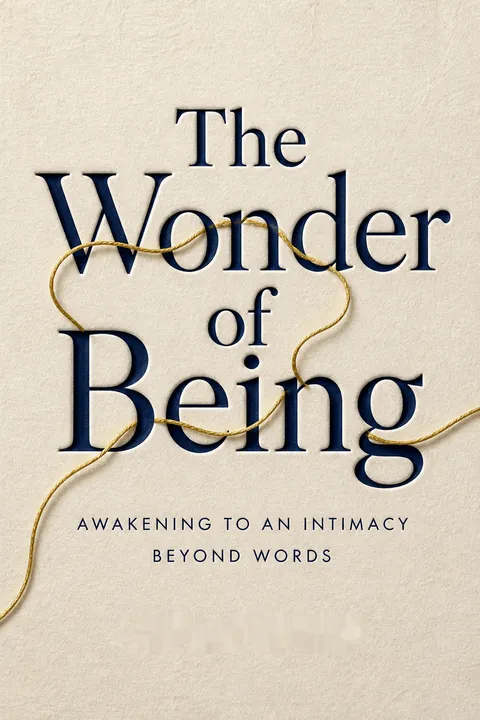


Key Takeaways
Stop postponing awakening; the search for later keeps lack alive.
The seeker’s loop. Jeff Foster describes shutting himself away for more than a year, pursuing spiritual liberation with intense meditation and self-enquiry. After powerful experiences, he decided he had become enlightened. Then he saw that this identity was another story separating a special, awakened person from everyone else. The effort to escape the self had strengthened the very seeker it aimed to dissolve. In his account, seeking begins with the sense that something is missing, then projects its solution into the future.
A different invitation. Foster does not advise readers to force themselves to stop seeking. He asks them to notice the assumption underneath it: that what they want is absent now. Even the wish to end the search can become another search. His proposed shift is recognition, not a new achievement.
The account captures a familiar trap in self-improvement: a person can turn the desire to become free of an identity into a more elaborate identity. This resembles the psychological idea of ironic monitoring, in which efforts to suppress a thought can keep attention fixed on it. The useful question is not whether every goal is misguided, but whether a goal is being treated as proof that the present self is deficient. That distinction matters. Seeking therapy, learning, or changing harmful conditions can be constructive without being a quest for metaphysical completion.
Check the boundary between self and world in direct experience.
Look before concluding. Foster repeatedly asks readers to attend to immediate experience: a birdcall, a bodily sensation, a passing thought. The usual description is that a separate person hears a separate bird. His inquiry asks what can be found before that description is added. There is hearing, but can a distinct hearer be located apart from the sound and the awareness of it? This is a practical pointer toward nonduality, the view that reality is not ultimately divided into separate selves and things.
A pointer, not proof. Foster says that experience does not reveal a firm boundary between inner and outer. He presents this as an invitation to look, not a theory readers must accept. The sound remains, and ordinary distinctions still serve daily life, but the felt certainty of separation may loosen when attention rests on the experience itself.
This inquiry is strongest as phenomenology, a close description of how experience appears, rather than as proof that other people or an external world do not exist. Cognitive science also complicates the picture: perception is shaped by bodily signals, attention, and learned expectations, so experience is neither a transparent view from nowhere nor merely a private invention. The exercise can reveal how the sense of a separate observer is assembled. It cannot, by itself, settle metaphysical questions about what exists beyond experience.
Find the extraordinary in the unremarkable day already unfolding.
A rainy walk. Foster recounts walking through Oxford on a wet autumn evening. The rain, birds, trees, passers-by, and his own body seemed less like separate objects observed by him and more like one vivid happening. He later understood the episode not as a permanent spiritual state, but as a sudden recognition of the ordinary world’s immediacy. The drama faded; daily life continued.
No special stage required. The book returns to small scenes: buying bread and milk, exchanging coins in a corner shop, drinking tea, and paying a gas bill. These moments are not distractions from spiritual life. Foster treats them as its substance. Waiting for an exceptional experience can make everyday life seem like a corridor to somewhere better, while attention to the present reveals that life is already happening here.
The rainy walk gives the book a human anchor: an expansive insight arrives amid mud, weather, and other people, not in a rarefied retreat. Research on mindfulness and sensory attention suggests that attending closely to ordinary perception can alter how vivid and meaningful an experience feels. Still, heightened vividness is not evidence of a final truth, and it need not be. The more durable lesson is modest: significance does not always require novelty. Everyday attention can enrich life without turning every cup of tea into a spiritual test.
Let thoughts pass without turning them into a permanent identity.
Thought is an event. Foster distinguishes a thought appearing now from the larger personal story built around it. Memories and plans are present experiences too: recollections arise as thoughts, and imagined futures arise as thoughts. The book questions the leap from having a thought such as I am failing to treating it as a complete account of a fixed self. In this view, thoughts are not personal possessions that must be eliminated; they are part of what is happening.
No war with the mind. Foster warns that trying to stop thought can preserve the struggle, because the imagined controller becomes another thought in the same stream. His alternative is to notice thinking without making it a defect or a command. This does not require believing every thought, nor does it mean that painful thoughts are pleasant. It changes the relationship to them, from identity to passing experience.
This resembles cognitive defusion in acceptance-based therapies: a thought can be noticed as a mental event rather than obeyed as fact. That distance can create room for more deliberate action. The book’s language goes further by questioning whether there is any separate owner of thought, a metaphysical claim that therapeutic benefits do not require. Nor should detachment become a reason to dismiss persistent distress. Thoughts can be transient and still point toward needs, danger, or memories deserving care.
Accept pain without mistaking acceptance for doing nothing.
Pain is not erased. Foster rejects the comforting idea that spiritual understanding makes the body invulnerable. Bodies can become ill, hurt, and die; intense physical pain cannot simply be thought away. He distinguishes the sensation itself from the additional struggle of insisting that the sensation must not be present. In his account, resistance can turn pain into a larger story of personal failure, fear, and anticipated suffering.
Acceptance is not passivity. The book does not ask anyone to ignore an injury or refuse help. Foster explicitly separates accepting that a fire is happening from failing to put it out. The point is to respond to what is real without adding a demand that reality first become different. Care, treatment, and efforts to reduce harm can coexist with recognition of the present experience.
This distinction is closely aligned with acceptance-based approaches that separate unavoidable discomfort from the extra distress created by avoidance and rumination. It can support action rather than resignation: a person can acknowledge pain while seeking treatment, protection, or comfort. The limit is important. Resistance is not always an optional mental overlay, and pain can impair judgment, function, and wellbeing. A spiritual framing should never imply that someone’s suffering is their fault or that accepting a condition means declining practical help.
Hold your personal story lightly, without pretending it has no use.
Labels shape a world. Foster shows how familiar names carry histories and expectations. A mug, for instance, is not merely an object: it can evoke past routines, family habits, and shared cups of tea. A tree, too, depends on soil, rain, organisms, and other forms of life. Names help organize experience, but they do not capture everything a living thing is or how it relates to the rest of the world.
Useful, not ultimate. The book calls the personal narrative a story: a collection of concepts, memories, and projections that gives a sense of a continuous individual. Foster does not need to deny that people use names, make plans, or remember their lives. He challenges the assumption that this useful account is a complete, independent self. The distinction is between using a story and treating it as the whole of reality.
The idea that categories simplify experience has a strong parallel in cognitive science: concepts help people recognize objects and act efficiently, while also directing attention toward some features and away from others. A name such as tree is not a full account of an ecosystem, but it is not therefore useless or false. The book’s strongest contribution is an invitation to notice what a label leaves out. Its more radical suggestion that the world is only a personal projection risks confusing the limits of knowledge with the nonexistence of what is known.
Let mortality sharpen attention without denying grief or bodily fear.
Death unsettles the self. Foster treats fear of death as bound up with fear that the personal story will end. His reflections ask what remains if identity is not a permanent object but a changing narrative arising in present experience. The book describes this as a way to face mortality, not as evidence that the body cannot die. It also notes that physical pain and the loss of loved ones are real features of human life.
This day is not guaranteed. The practical emphasis is on the fragility of ordinary life: a heartbeat, a conversation, a meal, or a loved one’s voice. Remembering death can loosen the fantasy that meaning and happiness must wait for some later achievement. Foster’s argument is that attention belongs to the life being lived now, not to an imagined future in which everything is finally secure.
Mortality awareness can clarify priorities, a theme found in both philosophical reflections on finitude and contemporary research on how people respond to reminders of death. The response is not uniform: some people become more generous, while others cling more tightly to group identity or certainty. Foster’s invitation to attend more fully is compelling, but claims that death is merely a story can be painful or invalidating in the context of bereavement. A grounded reading distinguishes loosening the grip of self-image from minimizing the reality of loss.
Turn nonseparation into compassion, not an excuse to ignore harm.
Connection has consequences. In the rainy-walk account, Foster’s sense of nonseparation becomes compassion for the people and animals around him. Their lives do not seem like distant objects in a private world; they are inseparable from the conditions that make his own life possible. He describes compassion not as a noble pose, but as a response to seeing interdependence. The book also argues that rigid divisions between us and them can support cruelty.
Include the individual. Nonduality, in Foster’s account, does not mean erasing ordinary people or denying what they feel. It means that the appearance of individuality belongs within the whole rather than standing outside it. The practical implication is not to withdraw from relationships, but to meet others without treating difference as proof of absolute separation. Care for another person is not an escape from life; it is one way life meets itself.
Interdependence can deepen ethical concern by making the consequences of other people’s wellbeing harder to dismiss. Yet compassion alone does not explain every conflict, and separation is not the sole cause of violence; institutions, incentives, and material conditions matter too. Nor does recognizing shared humanity remove the need for boundaries, accountability, or protection. The idea is most useful when it expands concern without dissolving distinctions between harm and care, victim and perpetrator, or responsibility and excuse.
Analysis
The Wonder of Being is a spiritual argument delivered through memoir, short meditations, and repeated invitations to inspect immediate experience. Its narrative begins with Foster’s desperation to escape suffering, turns through an intense period of spiritual seeking, and arrives at the surprising claim that the sought-after freedom was never elsewhere. The Oxford walk in the rain gives this abstract thesis a concrete scene, while the corner shop, cup of tea, bodily pain, and ordinary chores keep returning the reader from doctrine to daily life.
The book’s central strength is its critique of spiritual ambition. It sees how the identity of a seeker can survive by making liberation a future prize, and how claims of personal enlightenment can reproduce status and separation. Its insistence that ordinary life need not be improved into sacredness also counters a common spiritual hierarchy in which unusual states outrank mundane experience.
The same rhetorical force creates its main difficulty. Foster moves from a useful observation, that the self is hard to locate in immediate experience, toward much larger claims about reality, time, choice, and death. Those claims are contemplative interpretations, not conclusions established by the exercises themselves. His language can also sound as if psychological suffering, social injustice, or bodily vulnerability vanish when ownership falls away. The text partly resists that reading by acknowledging pain, illness, and the need to respond to danger, but readers should preserve that distinction.
A generous reading treats the book less as a universal theory than as an experiment in attention. It asks whether the felt boundary between observer and world is as solid as habit suggests, and whether an ordinary moment can be encountered without first grading it as inadequate. Readers need not accept its metaphysics to use that question. Its most durable invitation is to loosen the demand that life become extraordinary before it deserves attention, while remaining fully engaged with the practical lives and vulnerabilities of people in the world.
Review Summary
The Wonder of Being receives mostly positive reviews, praised for its clarity and simplicity in explaining non-duality concepts. Readers appreciate Foster's fresh perspective on spirituality and his ability to convey deep insights through ordinary experiences. Some find the book repetitive and lengthy, while others consider it mind-blowing and transformative. The overall rating is 4.38 out of 5 stars. Readers value Foster's non-dogmatic approach and his invitation to explore the present moment and the sacredness of everyday life.
People Also Read


Glossary
nonduality
absence of ultimate separationFoster uses nonduality for the view that reality is not ultimately divided into an independent self and an external world. It does not mean that apparent differences disappear: people, sounds, thoughts, and sensations still arise. Rather, these forms are understood as inseparable from the whole in which they appear.
aliveness
immediate living awarenessAliveness is Foster’s flexible word for the immediate presence in which sights, sounds, thoughts, and bodily sensations appear. He does not present it as a separate object or entity. The term points to experience as it is happening, while emphasizing that awareness and its contents cannot finally be separated.
life without a centre
life without a separate ownerLife without a centre describes Foster’s view that experience does not require a distinct inner person who controls or owns it. Breathing, hearing, thinking, and feeling happen, while the supposed manager of these events is difficult to find outside the thoughts and stories that describe a self. The phrase does not deny ordinary human functioning.
story
narrative of personal identityIn Foster’s specialized use, a story is the bundle of thoughts, memories, concepts, and expectations that presents a continuous personal self with a past and a future. Stories help people describe their lives, but he argues that they are present thoughts rather than a solid person standing apart from experience.
I-am-ness
bare sense of beingI-am-ness refers to the immediate sense that existence is happening, prior to deciding what the self is or what the world means. Foster treats it as more basic than a personal identity or belief. It is not a special state to acquire, but a name for the undeniable fact of present experience.
FAQ
1. What is "The Wonder of Being" by Jeff Foster about?
- Nonduality and Presence: The book explores the concept of nonduality, pointing to the inseparability of self and world, and the ever-present nature of awareness.
- End of Seeking: Foster challenges the spiritual search for enlightenment, suggesting that what we seek is already here in the present moment.
- Ordinary Life as Sacred: The text emphasizes the sacredness and wonder of ordinary, everyday experiences, dissolving the boundary between the spiritual and the mundane.
- Intimacy Beyond Words: The book invites readers to an intimacy with life that is beyond concepts, beliefs, and language, pointing to a direct, wordless knowing.
2. Why should I read "The Wonder of Being" by Jeff Foster?
- Fresh Perspective on Spirituality: The book offers a radical, non-traditional view of spirituality that goes beyond methods, gurus, and future attainments.
- Relatable and Accessible: Foster uses simple language and everyday examples, making profound insights accessible to anyone, regardless of spiritual background.
- Relief from Seeking: Readers who feel exhausted by endless self-improvement or spiritual searching may find comfort and liberation in Foster’s message.
- Invitation to Presence: The book encourages a direct encounter with life as it is, fostering acceptance, peace, and a sense of wholeness.
3. What are the key takeaways from "The Wonder of Being" by Jeff Foster?
- You Are Already Home: The search for enlightenment or awakening is unnecessary because what is sought is already present.
- No Separate Self: The sense of being a separate individual is an illusion created by thought; true freedom lies in seeing through this illusion.
- Ordinary is Extraordinary: The miracle of life is found in the ordinary, everyday moments, not in special experiences or states.
- Radical Acceptance: True liberation is the unconditional acceptance of whatever arises, without resistance or the need to change it.
4. How does Jeff Foster define "nonduality" in "The Wonder of Being"?
- Not Two, Not Separate: Nonduality means there is no real separation between self and other, subject and object, or inner and outer.
- Beyond Concepts: Foster emphasizes that nonduality is not a concept to be understood, but a reality to be directly experienced beyond words.
- Includes Duality: Nonduality is not the opposite of duality; it includes and embraces all apparent opposites and distinctions.
- Essence of All Traditions: The book suggests that nonduality is the core insight behind all spiritual traditions and even modern science.
5. What is Jeff Foster’s main advice for spiritual seekers in "The Wonder of Being"?
- Stop Seeking, Start Seeing: Foster advises letting go of the search for future enlightenment and recognizing the presence and wholeness already here.
- No Need to Change: He suggests that nothing needs to be added, removed, or improved; the present moment is already complete.
- See Through the Seeker: The very act of seeking creates the illusion of lack; seeing through the seeker is the end of seeking.
- Embrace Ordinary Life: Spirituality is not about escaping or transcending life, but about falling in love with life as it is.
6. How does "The Wonder of Being" by Jeff Foster address the concept of suffering and pain?
- Suffering as Resistance: Suffering arises from resisting what is, especially pain, boredom, or unwanted emotions.
- No Owner of Pain: Pain is a natural part of life, but it becomes suffering when it is personalized—when there is a ‘me’ who owns the pain.
- Freedom in Pain: True freedom is not freedom from pain, but freedom in pain—recognizing that pain arises in awareness, which is untouched.
- Radical Inclusion: Even suffering, pain, and negative emotions are included in the unconditional embrace of life.
7. What does Jeff Foster mean by "the end of the search" in "The Wonder of Being"?
- No Future Liberation: The end of the search is the realization that liberation or enlightenment is not a future event, but the recognition of what is already present.
- Death of the Seeker: The search ends when the illusion of a separate seeker dissolves, revealing the wholeness of life.
- Laughter and Lightness: Seeing the futility of seeking often brings a sense of relief, laughter, and lightness.
- Kingdom of Heaven Here: The "Kingdom of Heaven" is not elsewhere or in the future; it is spread out over the earth, in the present moment.
8. How does "The Wonder of Being" by Jeff Foster approach the idea of choice and free will?
- Choice as a Story: The sense of personal choice is a narrative constructed after the fact; in reality, life simply happens.
- No Separate Chooser: There is no separate individual making choices; the idea of ‘I choose’ is an illusion.
- Freedom Beyond Choice: True freedom is the absence of the need to choose, the acceptance of whatever arises.
- Play of Apparent Choices: While apparent choices happen, they are part of the play of life, not evidence of a separate controller.
9. What role do thoughts and concepts play in "The Wonder of Being" by Jeff Foster?
- Thoughts as Appearances: Thoughts are seen as fleeting appearances in awareness, not as personal possessions or problems.
- Concepts Create Separation: The mind’s concepts and labels create the illusion of separation and suffering.
- No Need to End Thought: The goal is not to stop thinking, but to see thoughts for what they are—innocent, impersonal, and not a problem.
- Beyond Understanding: The deepest truths are beyond conceptual understanding; not-knowing is embraced as part of the mystery.
10. How does Jeff Foster describe love and intimacy in "The Wonder of Being"?
- Love as Non-Separation: True love is the recognition of non-separation, the collapse of the boundary between self and other.
- Beyond Possession: Love is not about possessing or needing another, but about dissolving into the wholeness of life.
- Intimacy with Everything: Real intimacy is being fully present with whatever arises, embracing all of life without exception.
- Love as Radical Aloneness: Paradoxically, true love is found in radical aloneness, where the lover and beloved are not two.
11. What are some of the most powerful quotes from "The Wonder of Being" by Jeff Foster, and what do they mean?
- “The tao that can be told is not the eternal Tao.” – Points to the ineffability of truth; words can only point, never capture reality.
- “You are already Home.” – Reminds us that what we seek is already present; there is nowhere to go and nothing to attain.
- “Love is the death of the seeker, the death of two.” – True love dissolves the illusion of separation and the need to seek.
- “There’s no such thing as an awakened person – it’s the person (awakened or not) that is seen through!” – Enlightenment is not a personal achievement, but the seeing through of the personhood itself.
12. How can readers apply the insights from "The Wonder of Being" by Jeff Foster to their daily lives?
- Embrace Ordinary Moments: Find wonder and presence in simple, everyday activities—drinking tea, walking, paying bills.
- Let Go of Spiritual Goals: Release the need for future enlightenment or special experiences; recognize the sacredness of now.
- See Through Separation: Notice how thoughts and concepts create the illusion of separation, and gently return to the direct experience of life.
- Practice Radical Acceptance: Allow all experiences—pleasant or unpleasant—to arise and dissolve in awareness, without resistance or judgment.
About the Author
Download PDF
Download EPUB
.epub digital book format is ideal for reading ebooks on phones, tablets, and e-readers.








