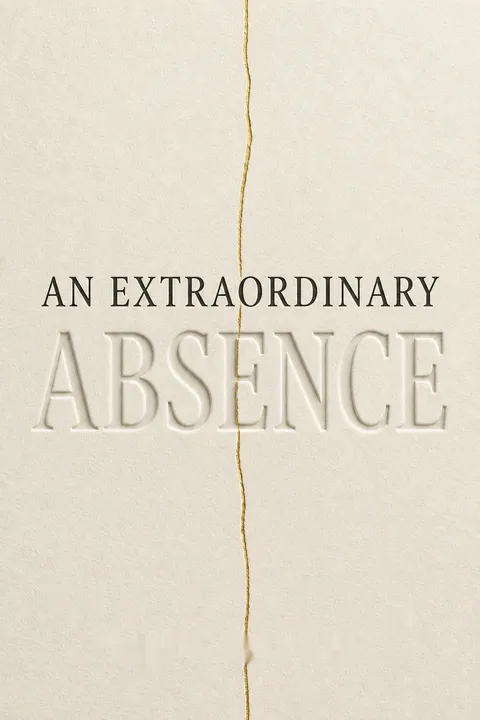


Key Takeaways
Stop postponing life for a future spiritual breakthrough
The familiar search changes costume. Foster argues that chasing money, a relationship, or spiritual awakening can share the same assumption: something is missing now, and a future prize will make the seeker whole. His own spiritual search began after years of misery and a serious illness forced him to face how fragile life was. He pursued books, meditation, and religious ideas, but each answer became another reason to keep looking. The book’s central claim is that freedom is not a later reward. The ordinary events a seeker hopes to escape are already the whole of life as it appears.
Begin with what is here. This is not a plan for getting happier or solving practical problems. It is an invitation to notice the urge to treat this moment as merely a stepping stone. Foster’s image of a person overlooking a chair while searching for enlightenment captures the cost: life is happening, but attention is elsewhere.
What's striking is how this critique reaches beyond spirituality. Consumer culture also sells completion as a future purchase, while achievement culture makes the present valuable chiefly as preparation for the next milestone. Attention research supports the modest version of Foster’s point: people can miss immediate experience while mentally rehearsing goals. Yet future planning is not inherently a trap. It enables care, learning, and coordinated action. The useful distinction is not present versus future, but whether the future is a practical horizon or a fantasy that makes present life seem disqualified.
The seeker cannot reach home because separation is the premise
Nonduality means not two. Foster uses the term for the view that reality is not fundamentally divided into separate selves and objects. His wave-and-ocean image makes the point: a wave may seem like an isolated thing seeking the sea, but it has never been made of anything other than water. Likewise, he argues, the individual is not outside life trying to rejoin it. The longing for home grows from the felt assumption of separation, while the supposed destination is already present.
A radical claim, not a travel plan. Foster is not proposing a new state to attain or a technique for joining the universe. He describes liberation as the falling away of the belief that a separate seeker stands apart from life. In that view, ordinary sights, sounds, and sensations are not signs pointing elsewhere; they are life itself appearing now.
The wave metaphor offers an intuitive correction to the picture of an isolated self: organisms depend on environments, language, and other people in ways that make absolute independence implausible. Still, interdependence does not by itself prove that individual identity is unreal. A person can be relationally constituted and remain a meaningful locus of memory, responsibility, and care. The metaphor works best as a challenge to imagined self-sufficiency, not as a scientific demonstration that persons do not exist. That distinction preserves its contemplative force without asking the image to settle a metaphysical debate.
Do not make self-disappearance another achievement to chase
The search can recruit its own cure. Foster names the felt sense of being a separate, central self the self-contraction. In his account, seeking liberation can strengthen that very sense: someone wants to become the person who has stopped wanting. Foster describes years of asking questions, trying practices, and then adopting the identity of a spiritual seeker. Even the effort to eliminate the self seemed to require a self doing the eliminating.
Notice the loop without obeying it. The book does not tell readers to quit meditation, abandon goals, or give up on life. Foster’s point is that turning non-seeking into a command simply renews the pursuit. He describes practices falling away in his own life, but insists that the opposite choice is not a higher rule. The distinction is between a practice that serves a person’s actual needs and a practice used as proof that the person is not yet enough.
This circularity resembles the problem of trying to force sleep: monitoring whether the desired state has arrived can keep attention fixed on its absence. It also resembles metacognitive traps in which people judge themselves for having unwanted thoughts, adding a second layer of distress. The insight can reduce needless self-surveillance. Its limit is important, though. Repeated practice can build skills even when no transcendent endpoint is promised. A person need not choose between spiritual striving and passivity; a practice may be worthwhile for its ordinary effects, not as a ladder out of personhood.
Treat ordinary sensations as the place, not the waiting room
The ordinary is not a lesser realm. Foster asks readers to notice breathing, a chair, a cup of tea, or the sound of rain without immediately reducing them to background for a future achievement. He calls life an offering because bodies, objects, and sensations appear without being consciously manufactured or earned. A chair supports someone without checking whether they are spiritually advanced; breathing continues during sleep without a deliberate manager.
The point is direct attention. In Foster’s account, the seeker’s habit of labeling experience familiar can conceal its vividness. He recalls looking at a chair and realizing he had been too busy looking for something grander to really see it. The book does not claim that a chair solves life’s problems. It suggests that no elevated experience is needed to make this moment worthy of attention, and that ordinary life need not wait for spiritual credentials.
This emphasis has a practical affinity with mindfulness, where attending to sensory detail can interrupt automatic rumination. But Foster’s claim goes further: the ordinary is not merely a useful focus for attention, but reality’s complete expression. That metaphysical step is not required to benefit from noticing a cup, a sound, or a breath. The distinction matters for readers who find spiritual language alienating. Attention can deepen contact with life while leaving open whether everyday experience is sacred, neutral, or simply what is available.
Emptiness becomes a trap when it rejects the living world
Detachment can become another identity. In his mid-twenties, after severe depression and intense spiritual seeking, Foster describes becoming absorbed in a bleak sense of emptiness. He walked through Oxford feeling that people, places, and ordinary life had lost their reality. He believed this distance was enlightenment, but later recognized that someone was still taking pride in being detached from a world kept at arm’s length.
Freedom includes form. The turning point comes as he lies exhausted in a meadow and sees sunlight through branches. He describes a return to the world: trees, rivers, coffee, thoughts, and feelings become ordinary things again, while also no longer seeming to belong to a separate self. The book’s lesson is not to exchange worldly attachment for a worship of nothingness. A view of emptiness that makes life cold, joyless, or irrelevant has recreated separation in spiritual language.
This autobiographical reversal gives the book a valuable safeguard against spiritual bypassing, the use of transcendent ideas to avoid emotional or social life. It also echoes a longstanding philosophical tension: seeing things as lacking independent essence need not mean treating them as nonexistent or worthless. Foster’s return to ordinary form is therefore more persuasive than a simple celebration of void. A caution remains: severe depression can itself produce numbness or unreality. Those experiences deserve appropriate support, rather than being interpreted automatically as spiritual insight or failure.
Allow pain without making it a verdict about a permanent self
Acceptance is not anesthesia. Foster recounts an excruciating abscess and a painful hospital procedure. He does not claim that the bodily sensation disappears forever or that it should be welcomed as pleasant. He describes pain arising, sometimes interrupted by the music on a hospital television, and then returning. His distinction is between the sensation and the story that turns it into an enduring identity: the person who believes pain defines a fixed, separate sufferer.
Feelings need not become possessions. Foster extends the idea to anger, fear, and sadness. In his account, emotions can be present without being resisted, used to build a self-image, or immediately projected onto someone else. He also acknowledges ordinary responses, including cursing and asking for pain relief. The claim is not that people should refuse treatment or deny distress. It is that a painful experience and the additional struggle over what it means are not necessarily the same thing.
The distinction resembles approaches in clinical psychology that separate sensation from appraisal: changing one’s relationship to distress can sometimes reduce secondary suffering without removing the original signal. Yet that is not proof that pain is unreal or that no one suffers. Physical pain can indicate injury, and emotional distress can signal unmet needs or danger. The book is most useful when read as a prompt to avoid turning experience into an identity, not as a medical theory. Seeking relief, treatment, or help remains compatible with accepting the present fact of pain.
Let non-separation move you toward care, not passivity
Compassion need not depend on self-image. Foster rejects the inference that if there is no separate self, suffering can be ignored. He describes helping an elderly person across the road and caring for a dying man, including the unglamorous work of cleaning him. He presents such action as responsiveness rather than a performance meant to establish oneself as a good person. In his account, seeing another as not ultimately separate can make attention more intimate, not less.
Care stays concrete. The book’s strongest examples are practical: listen to the person in front of you, offer help when it is appropriate, and do not substitute a grand moral theory for noticing what is actually needed. Foster also admits that action cannot be predicted in advance and that sometimes help may not be wanted. This view resists both moral vanity and spiritual indifference, although it does not provide a complete guide to ethical decisions.
Interdependence can support an expansive understanding of concern: another person’s wellbeing is not an entirely external matter when lives are materially and emotionally entangled. But metaphysical unity alone cannot determine which action is right. Ethical decisions also require evidence, consent, knowledge of consequences, and accountability. The book’s emphasis on responsiveness is a useful correction to rigid moral performance, but it should not replace stable protections or social duties. Compassion benefits from openness and from institutions that make care dependable, especially when spontaneous goodwill is absent.
Hold spiritual claims lightly, including the claim that none are true
Words point, then become obstacles. Foster says nonduality is difficult to express because language divides what his view treats as undivided. Claims such as self versus no-self, practice versus no practice, or awakened versus unenlightened can harden into positions. He is particularly wary of teachers who present liberation as a future experience they possess and can deliver to students. He also acknowledges that writing and speaking about the subject can produce the very authority he questions.
His answer is not silence as law. Foster does not insist that readers must reject teachers or practices. He argues that even the instruction to reject them can become another identity. His own books and talks are presented as a sharing, not a guaranteed method. The practical caution is to notice when an idea becomes a badge, a promise of superiority, or a reason to dismiss another person’s experience.
The self-undermining quality of the argument is a strength: it asks readers to inspect the authority of the message rather than accept its vocabulary as a new creed. This resembles philosophical skepticism, which tests the limits of its own claims. Yet skepticism can also be used to evade evaluation, as though every claim were equally unknowable. In ordinary settings, teachers can still offer useful expertise, and claims about harm or history can be assessed with evidence. Humility about ultimate reality need not require indifference to ordinary truth.
Let impermanence sharpen attention to this unrepeatable moment
Mortality interrupts the fantasy of later. Foster recounts collapsing during a severe illness, waking in blood and believing he might die. The experience changed how he regarded being alive, which he had previously taken for granted. He does not frame the event as a technique or as proof that illness has a hidden purpose. It became a turning point in his story because it made the fragility of ordinary life impossible to ignore.
The present is not a possession. The book repeatedly returns to the fact that sensations, people, and circumstances change, while no future moment is guaranteed. Foster’s conclusion is not that loss should be painless or that death can be explained. Rather, the inability to secure life can loosen the demand that experience deliver a permanent guarantee. A cup of tea, a conversation, or a breath can matter without needing to last forever or lead to something grander.
Mortality can clarify priorities, but it can also produce fear, grief, or a renewed hunger for certainty. The book’s emphasis on fragility is therefore best taken as an invitation to attend, not as a prescription to feel serene. Existential psychology similarly treats awareness of death as potentially clarifying, while recognizing that people respond differently and may need relationships, rituals, or practical support. Foster’s story has force because it remains personal: a near-death experience mattered to him, but it cannot establish a universal spiritual conclusion about illness or death.
Analysis
An Extraordinary Absence is a hybrid of spiritual philosophy, memoir, and deliberately paradoxical teaching. Its narrative hinge is not an argument alone but a sequence of lived reversals: Foster moves from depression into an intense search, mistakes emotional distance for spiritual freedom, then returns to ordinary experience with a changed account of selfhood. That arc gives the book more credibility than its repeated metaphysical assertions could provide by themselves. The chair, the cup of tea, the hospital bed, and the dying patient function as tests of the central idea: if freedom is real, it cannot depend on escaping ordinary life.
The book’s main proposition is that the felt separate self is not an independent center controlling experience. Foster uses that proposition to reinterpret seeking, emotion, compassion, and death. Its appeal is practical as well as metaphysical: readers may become less fused with self-judgment and less preoccupied with achieving a special state. Yet the book sometimes moves from a contemplative observation, such as thoughts and breathing arising without deliberate control, to a much broader claim that no person exists. Those claims are not equivalent. Human agency may be constrained and distributed without being meaningless; the conventional person remains crucial to responsibility, care, and treatment.
The text is strongest when it warns against spiritual escape. Foster’s account of emptiness turning cold, and his return to bodily pain, relationships, and caregiving, expose how easily transcendence can become avoidance. It is less persuasive when language about suffering, choice, or death risks being taken literally. A reader in crisis should not infer that pain is unreal, that action is pointless, or that illness needs no care. The book itself offers counterweights through its accounts of treatment and hands-on service, but a careful reading must retain them.
Its distinctive achievement is to make the ordinary feel philosophically strange without offering a program or promising a cure. The reader need not accept its ontology to use its central question: what is happening before the story about what must happen next takes over?
Review Summary
An Extraordinary Absence receives mostly positive reviews, with readers praising its unique perspective and grounding effect. Many find it helpful for those exhausted with spiritual practices. Reviewers appreciate the book's ability to shift perspective and provide comfort during difficult times. Some note the repetitive nature of the content, while others highlight its eye-opening passages. The book is described as not meant to be understood, but experienced. Quotes from the book are shared, emphasizing its focus on love, wisdom, and the concept of oneness.
People Also Read








Glossary
Nonduality
Reality is not twoA spiritual and philosophical view, described by Foster as meaning not two, in which reality is not ultimately divided into separate selves, objects, or worlds. He uses it to question the assumption that an individual stands apart from life and must attain unity or freedom in the future. The term points to his view; it is not presented as an experimentally established scientific finding.
Self-contraction
The felt separate selfFoster’s term for the felt sense of being a distinct, central individual who stands apart from life and must control or complete it. In his account, this contraction underlies the search for fulfilment and spiritual liberation. Its falling away does not mean that a person’s familiar behavior or personality necessarily vanishes; it means that the sense of a separate owner at the center is no longer taken as fundamental.
Dream world
The seeker’s separate realityFoster’s name for experience as organized around a separate seeker and a world of objects, goals, teachers, and future outcomes. Within this framing, a person seeks liberation as something to acquire in time, while the seeker’s assumptions shape what appears meaningful. The term is a spiritual metaphor, not a claim that ordinary events are indistinguishable from nighttime dreams or have no practical consequences.
Liberation
The end of separate seekingFoster uses liberation not for a special experience or achievement, but for the falling away of the belief that a separate individual must become whole or attain freedom. In his account, ordinary life continues, including personality, emotion, and practical activity, but is no longer understood as belonging to an independent self. The term expresses his nondual interpretation, rather than a clinical diagnosis or a universally verifiable state.
An extraordinary absence
No separation, full presenceThe book’s central paradoxical phrase for the apparent absence of a separate self alongside the vivid presence of the whole world of experience. Foster uses it to describe the view that nothing stands apart from life as its independent observer, while sights, sounds, sensations, and actions continue to appear. It names a contemplative interpretation of experience, not literal unconsciousness or the disappearance of the body.
About the Author
Download PDF
Download EPUB
.epub digital book format is ideal for reading ebooks on phones, tablets, and e-readers.








