

Key Takeaways
Stop postponing wholeness; ordinary moments already contain the life you seek
The extraordinary is nearby. Foster opens with a skeptical scientist describing the birth of her child. For a moment, her usual plans and explanations fall away, replaced by awe at the new life in her arms. He finds similar openings in artists absorbed in their work, athletes in the zone, and a hospice patient intent on winning a chess game shortly before she dies. These moments do not change the person’s circumstances. They change the felt separation between the person and life.
No special setting required. The book’s invitation is to notice that wonder and presence can emerge amid dishes, grief, work, and illness, rather than waiting for a dramatic spiritual experience or a more convenient future. Ordinary life is not an obstacle to awakening; it is where the question becomes real.
What's striking is the democratic scale of this claim: awe is not reserved for retreats, religious believers, or people with unusual experiences. Research on attention and flow also suggests that absorption can quiet self-focused thought, though it does not establish Foster’s metaphysical claim that the self disappears. That distinction matters. The experience may be profound without proving a theory of consciousness. The practical invitation still stands: ordinary attention can make familiar life feel newly vivid, without requiring anyone to adopt a spiritual explanation.
Notice when a future prize is being asked to make you feel complete
The destination keeps moving. Foster describes a millionaire who retires young after gaining wealth, a comfortable home, a family, and social respect. The day after leaving work, the old emptiness returns. He begins drinking, replacing a life organized around work with a new way to escape the same unease. The point is not that money or achievement are worthless. It is that no possession can guarantee lasting freedom from change, loss, or dissatisfaction.
Seeking gives lack a target. Foster calls the repeated attempt to escape an unwanted present by pursuing a supposedly completing future an aspect of the seeking mechanism. A relationship, promotion, spiritual breakthrough, or new purchase may bring real pleasure, but when it is treated as the cure for inner incompleteness, relief tends to be temporary. Ask what feeling the next achievement is expected to erase.
This account closely resembles hedonic adaptation: people can grow accustomed to improved circumstances, so the emotional lift may fade. That idea helps explain why external gains often fail to deliver permanent satisfaction, without implying that material security or love are unimportant. The argument is strongest when it questions the burden placed on a prize, not when it dismisses the prize itself. Some needs are concrete, including safety, income, and dependable care. A useful distinction is whether a goal adds something valuable or is expected to rescue a person from being human.
Use distress to investigate what feels forbidden, not to condemn yourself
Look beneath the reaction. Foster recounts his own severe depression and his belief that life had failed him. He came to interpret his suffering as tied to resistance, rigid expectations, and an identity he felt he had to sustain. In another example, a father’s angry outbursts around his noisy children concealed panic about being powerless and failing as a parent. Seeing that fear did not excuse his behavior; it revealed what he was trying to escape before lashing out.
A clue, not a verdict. The book’s seeking mechanism describes the urge to flee uncomfortable experience by grasping for control or relief. Foster suggests asking, in the middle of distress, what feeling or self-image seems intolerable. This is a way to explore experience, not a diagnosis or a claim that depression, trauma, or illness is simply caused by resistance.
The father’s example makes an abstract spiritual idea psychologically legible: anger can protect a person from shame, helplessness, or fear. Emotion-focused therapies similarly investigate what a reaction is doing, rather than treating it as meaningless noise. The caution is essential, especially around depression. Depression can involve biological, social, and psychological factors, and describing it as resistance may deepen shame if presented as a universal cause. Foster’s inquiry is most useful as one compassionate lens among several, not as a replacement for clinical assessment or support.
Recognize that acceptance is not approval, and it does not require inaction
Acceptance is not a performance. Foster uses deep acceptance to mean recognizing that an experience is already present, including the wish that it were not. It does not mean enjoying pain, agreeing with injustice, or forcing oneself to feel calm. A person can dislike an illness, fear a loss, or resent a situation while acknowledging honestly that those reactions are here.
Reality comes before response. Foster argues that accepting what is happening can make action clearer, not weaker. A person may seek treatment, protect a loved one, challenge unfairness, or leave a harmful situation. The difference is between responding to actual conditions and exhausting energy in denial that they exist. Even the effort to reject a feeling can be noticed rather than treated as a failure of spirituality.
This distinction has a useful counterpart in acceptance and commitment therapy, where acceptance means making room for difficult internal experiences while acting according to chosen values. It is not resignation. The approach can reduce the extra struggle created by insisting that a feeling must vanish before action is possible. Still, accepting a situation internally should not be confused with endorsing it morally or politically. A person can acknowledge reality and work to change it. That separation protects the book’s insight from becoming a slogan for tolerating preventable harm.
Question the story of a separate controller before treating it as fact
Inspect experience directly. Foster invites readers to listen for a sound and notice that hearing happens before the thought that a separate self is doing the hearing. Thoughts, sensations, and feelings appear and change; the book calls each such event a wave of experience. Its ocean metaphor points to awareness as the space in which these events are noticed. The exercise asks readers to test the metaphor in immediate experience, rather than merely believe it.
A useful challenge, not a new dogma. Foster warns that ideas such as there being no self can become another identity, used to dodge ordinary duties. He recalls once refusing to do the dishes on spiritual grounds. The practical question is not whether a person exists in daily life, but whether every passing thought or feeling needs to define the whole person.
The exercise separates direct experience from the interpretations layered onto it, a move shared by phenomenology and some forms of mindfulness. It can loosen automatic identification with a thought without requiring a metaphysical conclusion about consciousness. That restraint is important: the absence of a separately observable inner controller does not erase memory, agency, or accountability in social life. A person still needs to keep promises and repair harm. The insight is best used to make identity less rigid, not to claim that choices and consequences no longer matter.
Separate pain from the added story that pain makes you a victim
Attend to what is here. Foster distinguishes physical pain from suffering about pain. A sensation may hurt, while thoughts about how long it will last, what it means, or how unfair it is add another layer of distress. He suggests examining sensations with curiosity: where they are, whether they pulse or shift, and how they change from moment to moment. This approach is intended to replace a fixed label with close attention, not to deny that pain is real.
Care remains sensible. Foster recounts severe pain after an operation and says that using morphine did not conflict with acceptance. Likewise, he warns a doctor against telling a person with cancer that pain is unreal. Pain relief and medical care can matter even when acceptance changes a person’s relationship to suffering. The inquiry is not a substitute for treatment, and it does not promise that pain will disappear.
The distinction between sensation and the interpretation of sensation resembles mindfulness-based pain approaches, which can help some people relate differently to persistent pain. It should not be mistaken for a claim that pain is merely a story. Pain has bodily causes, can signal danger, and may require urgent care. The strongest version of Foster’s point is additive: a person may reduce avoidable fear and self-blame while still seeking treatment and acknowledging the physical burden. Calling someone’s pain an illusion would undermine the very honesty the book advocates.
Stop asking loved ones to supply the completeness no relationship can guarantee
Love is not a rescue contract. Foster argues that relationships become strained when one person is expected to provide lasting completeness or protect the other from loneliness. The expectation can lead to monitoring, pleasing, concealment, or attempts to control. His memory of seeing his elderly father eat breakfast without viewing him only through the roles of father and son illustrates a different kind of contact: meeting the person in front of him, rather than demanding that he match an old image.
Tell the truth without scripting the reply. Foster links reduced dependence on another person’s approval with more honest communication. This means naming feelings and needs without using disclosure as a threat or tactic. It also means hearing the other person’s account without immediately trying to invalidate it. Honest conversation may change a relationship; it cannot guarantee that both people will want the same future.
The emphasis on seeing a partner as a person rather than a source of completion aligns with relational approaches that value differentiation: closeness need not require fusion or self-erasure. The father story also shows how familiar roles can obscure present reality. Yet honesty is not automatically wise in every form or moment. A power imbalance, abuse, or risk of retaliation can make disclosure unsafe, and tact is not necessarily dishonesty. The book’s strongest counsel is to reduce manipulation while preserving boundaries, judgment, and care for consequences.
Meet a craving as an experience before obeying it or attacking it
Look inside the urge. Foster describes craving a cigarette as a sudden sense of lack, followed by the belief that smoking will restore comfort. The cigarette may offer brief relief, but the discomfort returns and the cycle resumes. In his account, the deeper object of addiction is not just the substance; it is the temporary escape from unwanted experience. He calls the possibility of feeling an urge without being ruled by it freedom in need.
Do not mistake this for a cure. Foster asks readers to notice the sensations, thoughts, and urgency of craving without demanding that they disappear. He explicitly does not tell readers to abandon recovery groups, treatment, or rehabilitation. For substances that produce dangerous withdrawal or dependence, professional medical support remains important. The exercise can complement care; it should not be used to justify stopping medication or treatment without guidance.
The book offers a compelling account of why a behavior can persist: the immediate relief reinforces repetition, even when longer-term costs are high. Modern addiction science also describes changes in reward, stress, learning, and environment, so craving cannot safely be reduced to a mistaken spiritual search. Those models complement rather than negate attention to emotional function. The most useful application is to widen the response between urge and action while keeping practical supports in place. Compassion is more likely to help than shame, but compassion alone is not a treatment plan.
Seek the truth in an opponent’s perspective without excusing harmful behavior
Conflict can reveal a defended image. Foster tells of a furious attendee who called him a fraud and demanded submission. Rather than answering with another attack, Foster asked questions and listened for the concern beneath the performance. The man worried that spiritual teachings about oneness could be used to evade responsibility. Foster agreed that this risk was real, while not accepting the man’s threats or every claim.
Understanding is not acquittal. Foster connects inner rejection with projection: people may condemn in others qualities they refuse to acknowledge in themselves. He uses this idea to encourage curiosity about enemies and scapegoats, not to excuse violence. In practical terms, listening for a valid concern can lower defensiveness, while boundaries and consequences remain available when conduct is dangerous or abusive.
The encounter models a demanding form of conflict engagement: separate the person’s potentially valid concern from their intimidating delivery. That resembles perspective-taking in negotiation, where understanding another position can improve judgment without requiring agreement. The broader claim that social violence originates in private inner conflict is more speculative. Political violence also has institutional, economic, and historical causes that cannot be resolved by individual introspection alone. Compassion may help interrupt dehumanization, but accountability and protection are not opposites of compassion.
Measure awakening by openness to ordinary trouble, not by permanent bliss
A peak is not a guarantee. Foster describes a man who experienced a sudden sense of unity and peace in his garden, then found that sadness, fear, relationship conflict, and cigarette cravings returned. He had assumed awakening would stop difficult feelings. During a retreat, he began to see those feelings not as proof of failure but as part of the life he had glimpsed.
The test is everyday life. Foster’s central measure of spiritual insight is not maintaining a special state, but meeting present experience without building an identity around being enlightened or unenlightened. The book’s story returns to ordinary struggles: illness, addiction, family tension, and grief. Awakening does not make a person immune to pain or remove the need to act; it changes the demand that life must become flawless before it can be fully lived.
This distinction resembles the difference between a temporary state and a durable capacity. A striking experience may alter perspective, but its practical value depends partly on how it affects daily conduct, relationships, and resilience. The book usefully resists spiritual perfectionism, especially the idea that sadness disproves insight. At the same time, openness is difficult to measure and can become another ideal to perform. A grounded test is behavioral: does a person become more honest, responsive, and less defensive, while still acknowledging their limits?
Analysis
The book’s central move is to relocate freedom from a future achievement to the way present experience is met. Its recurring sequence is clear: a feeling appears, a person judges it as incompatible with a preferred identity, then seeks relief through control, distraction, approval, substances, or spiritual attainment. Foster’s intervention is to notice the feeling and the attempt to escape it, then recognize that neither has to be eliminated before life can be lived. The distinctive force of this approach lies in applying the same lens across domains that are often kept separate: depression, pain, romance, addiction, anger, and spiritual ambition.
Its best safeguard is its suspicion of spiritual bypassing. Foster repeatedly warns that ideas about non-self or oneness can become defenses against the body, responsibility, and other people. His examples of the angry parent, the ill seeker, and the confrontational retreat attendee make that warning concrete. The book is also unusually strong in distinguishing acceptance from approval and passivity. In principle, a person can acknowledge fear while seeking treatment, or accept anger while choosing not to harm someone.
The main limitation is explanatory reach. Foster presents resistance and seeking as a deep account of suffering, but those concepts do not establish the causes of clinical depression, chronic pain, addiction, or violence. Biological vulnerability, trauma, poverty, social power, and access to care matter. His account of awareness as an all-embracing ground is a contemplative interpretation, not a conclusion demonstrated by the exercises he proposes. Confusing those levels risks blaming people for illness or underestimating structural causes.
Read most productively, the book offers a phenomenological practice rather than a universal theory: examine what is happening now, distinguish sensation from judgment, and notice what a person hopes an escape will provide. That can create room for wiser action without replacing medicine, therapy, boundaries, or social change. Its deepest practical claim is modest but powerful: a difficult feeling need not define the whole self, and it need not be fought before a person can respond to life.
Review Summary
The Deepest Acceptance receives mostly positive reviews, praised for its insights on non-duality, acceptance, and overcoming suffering. Readers appreciate Foster's discussions on relationships, addiction, and the "seeking mechanism." Some find it repetitive and familiar to other spiritual texts, while others consider it life-changing. The ocean metaphor is central but overused for some. Despite criticisms of verbosity, many readers highly recommend the book for its profound wisdom and practical applications in daily life.
People Also Read









Glossary
Deep acceptance
Recognition of present experienceFoster’s term for recognizing that whatever is occurring in experience is already present, including resistance to it. It does not mean liking, approving of, or passively permitting circumstances. Rather than treating acceptance as a personal achievement or mood, the book presents it as an underlying openness that can be noticed even when a person feels distressed or unwilling.
Seeking mechanism
Escape through imagined completionFoster’s description of the pattern in which a person experiences lack or discomfort, then looks to a future state, object, person, or achievement for lasting completeness. The desired target may provide temporary relief, but the original unease returns. The mechanism can appear as material ambition, romantic dependence, addiction, or the pursuit of spiritual enlightenment.
Waves of experience
Passing mental and bodily eventsFoster’s metaphor for thoughts, emotions, sensations, sounds, and other events as they arise and pass in awareness. The waves differ in intensity and character, but the book argues that none is inherently alien to the awareness in which it appears. The metaphor supports the claim that a feeling can be present without defining the entirety of a person.
Spiritual bypassing
Using spirituality to avoid feelingUsing spiritual ideas or practices to sidestep painful human experience rather than meeting it honestly. In Foster’s examples, statements about having no self, being beyond the body, or transcending pain can invalidate real distress and protect an idealized spiritual identity. He argues that genuine spiritual inquiry should include ordinary vulnerability, emotion, and responsibility.
Freedom in need
Room to experience cravingFoster’s phrase for discovering openness within an urge or craving, rather than expecting freedom to mean never having the urge. A person notices the sensations, thoughts, and pressure to act without automatically obeying or condemning them. The idea is offered as a way to change one’s relationship with craving, not as a substitute for addiction treatment or medical care.
FAQ
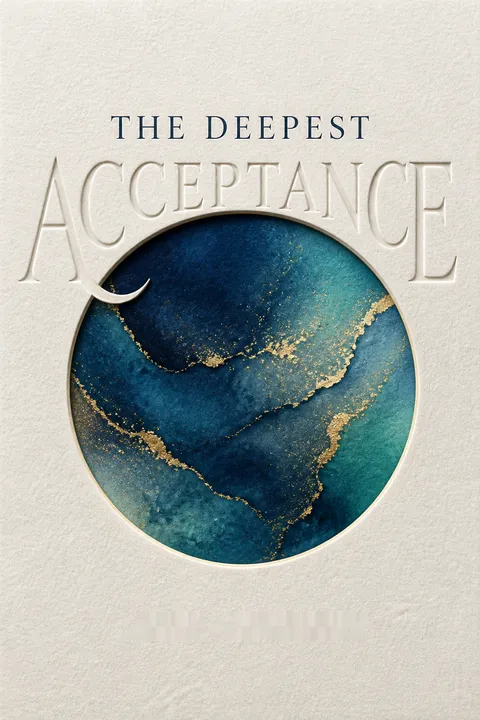
1. What is The Deepest Acceptance: Radical Awakening in Ordinary Life by Jeff Foster about?
- Core message: The book explores how all human suffering and conflict stem from ignorance of our true nature—our inseparability from life itself.
- Radical acceptance: Jeff Foster teaches that spiritual awakening is about radically and fearlessly accepting the present moment, no matter how difficult.
- Everyday spirituality: Unlike many spiritual books, it focuses on living awakening in daily life, especially amid pain, illness, addiction, and relationship struggles.
- Nonduality metaphor: Foster uses the metaphor of the ocean (awareness) and waves (experiences) to illustrate that we are the vast awareness in which all experiences arise and fall.
2. Why should I read The Deepest Acceptance by Jeff Foster?
- Understanding suffering: The book offers profound insight into the root of suffering—resistance to the present moment and the illusion of a separate self.
- Practical spiritual guidance: Foster provides practical advice for living spiritual awakening in everyday life, making it accessible for both beginners and advanced seekers.
- Radical honesty: The approach is grounded in radical honesty about all experiences, including pain and nonacceptance, leading to true healing and freedom.
- Transformative perspective: Reading the book can transform how you relate to pain, fear, emotional struggles, and relationships.
3. What are the key takeaways from The Deepest Acceptance by Jeff Foster?
- Acceptance is always present: Acceptance is not a future goal but the very nature of who you are, always available in the present moment.
- Pain vs. suffering: The book distinguishes between pain (natural sensations) and suffering (the story and resistance around pain).
- End of seeking: Suffering arises from seeking completeness in the future and resisting the present; true peace comes from ending this inner war.
- Healing in pain: Wholeness and healing are found within pain itself, not by escaping or denying it.
4. How does Jeff Foster define “radical acceptance” in The Deepest Acceptance?
- Total honesty with pain: Radical acceptance means fully acknowledging and allowing pain and discomfort, without pretending or resisting.
- Allowing all experience: It involves embracing every wave of experience—fear, sadness, anger, even the urge to escape—recognizing all are already accepted by awareness.
- Beyond passive surrender: Acceptance is not resignation but a creative, intelligent engagement with life as it is.
- Healing through inclusion: Even nonacceptance and resistance are included in this acceptance, which paradoxically dissolves suffering.
5. What is Jeff Foster’s metaphor of the ocean and waves in The Deepest Acceptance?
- Ocean as awareness: The ocean represents the vast, unchanging awareness that is our true nature.
- Waves as experiences: Waves symbolize transient experiences—thoughts, feelings, sensations—that arise and fall within awareness.
- Inseparability and acceptance: The ocean accepts all waves unconditionally, illustrating that no experience can harm our true nature.
- Dissolving separation: This metaphor helps dissolve the illusion of a separate self and invites deep acceptance of all experiences.
6. How does The Deepest Acceptance by Jeff Foster explain the difference between pain and suffering?
- Pain as sensation: Pain is described as a natural, ever-changing dance of sensations in the present moment.
- Suffering as story: Suffering arises when we add a story to pain, such as ownership (“my pain”) and resistance (“I don’t want this”).
- Illusion of control: We suffer because we believe pain is happening to a separate self and try to escape it, which is impossible.
- Healing through acceptance: True healing is the acceptance of pain without the suffering story, revealing wholeness even in pain.
7. What does Jeff Foster say about spiritual awakening in The Deepest Acceptance?
- Awakening as recognition: Spiritual awakening is the timeless recognition of who you really are—the consciousness prior to form.
- Not protection but openness: Awakening destroys the armor of separation, revealing openness, freedom, and love that allows all of life in.
- Living in ordinary life: Awakening is not just a state to be reached when life is easy but a practice to be lived in the messiness of everyday life.
- Ongoing process: It’s not a final state but an ongoing process of recognizing and integrating all experience.
8. How does The Deepest Acceptance by Jeff Foster address addiction and the seeking mechanism?
- Addiction as seeking release: Addiction is seen as the seeker’s craving for release from discomfort and incompleteness, not for the object itself.
- Projection of power: We project the power to complete us onto addiction objects, perpetuating craving and suffering.
- Universal seeking: Everyone is addicted to the story of “me” and the search for completeness, not just those with obvious addictions.
- Freedom through acceptance: True freedom comes from deeply allowing urges and discomfort, discovering that our true nature is not an addict.
9. What practical advice does Jeff Foster offer for dealing with difficult emotions and thoughts in The Deepest Acceptance?
- Allow all feelings: Allow all feelings—ugliness, failure, fear, anger—to arise and fall in awareness without judgment.
- See thoughts as impersonal: Recognize that thoughts are not “owned” by you; they simply appear in awareness, reducing their power.
- Stop defending images: Much suffering comes from defending false self-images; letting go of these brings freedom and authenticity.
- Embrace nonacceptance: Even your resistance or dislike is already accepted in awareness, which helps dissolve inner conflict.
10. How does The Deepest Acceptance by Jeff Foster address relationships and communication?
- Seeking completeness causes conflict: Relationships become battlegrounds when we seek from others what only we can provide ourselves—deep acceptance.
- Honesty without manipulation: True honesty means expressing your present experience without trying to control or win approval.
- Listening with acceptance: Deeply allowing another’s perspective without defensiveness dissolves conflict and fosters authentic connection.
- Love holds all waves: True love is vast enough to hold frustration, anger, sadness, and even despair, allowing relationships to deepen.
11. How does The Deepest Acceptance by Jeff Foster warn against spiritual bypassing and misuse of spiritual concepts?
- Denial of experience: Foster warns that spiritual concepts can be misused to deny present experience, causing more suffering.
- Concepts as pointers: Spiritual teachings are meant as pointers to truth, not as beliefs to cling to or as escapes from reality.
- Radical honesty over denial: The book advocates for radical honesty—admitting the truth of the moment, however painful, as the foundation of healing.
- End of denial: True spirituality is the end of denial, not its perpetuation.
12. What are the best quotes from The Deepest Acceptance by Jeff Foster and what do they mean?
- “Spiritual awakening is actually very simple. It is the timeless recognition of who you really are, the consciousness prior to form.” Awakening is not complicated or distant but a fundamental recognition of your true nature.
- “The armor we wear to protect ourselves from a full experience of life is called the separate self. But our armor does not really protect us—it just keeps us comfortably numb.” Defenses create suffering by separating us from life; true freedom comes from dropping this armor.
- “By his wounds we are healed”—healing in pain: Healing and wholeness are found within the very wounds and pain we try to avoid.
- “Love is the death of ‘two.’” Love arises when the illusion of separation falls away, revealing unity and intimacy at the heart of experience.
- “All shall be well, and all shall be well, and all manner of things shall be well.” Deep acceptance leads to peace and healing, even amidst life’s challenges and addictions.
About the Author
Download PDF
Download EPUB
.epub digital book format is ideal for reading ebooks on phones, tablets, and e-readers.








