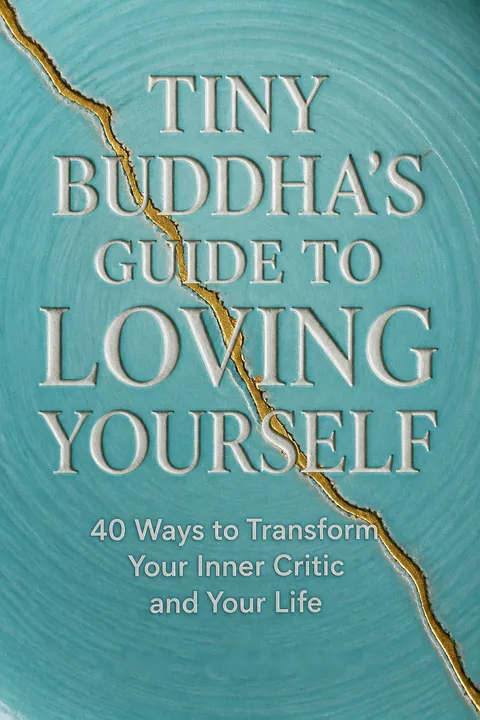


Key Takeaways
Stop trying to earn self-love by becoming someone you can finally approve of.
Kindness comes first. Lori Deschene opens with her history of severe bulimia and self-hatred. At her worst, she restricted food, purged repeatedly, and passed out on campus. Treatment reduced the most dangerous behaviors, but recovery did not instantly teach her how to live without self-punishment. She came to see that criticism had not made her worthy of love; it had kept her trapped in shame.
The present is still yours. The book gathers forty contributors’ stories around this central idea: your past and your worst choices are part of your history, not the whole definition of you. Self-love is not a prize for becoming flawless. It begins in the way you treat yourself now, including when change is slow or uneven.
The book’s strongest move is to treat self-love as conduct rather than a mood. That distinction matters because someone can act with care before feeling confident, much as a person can keep a promise while still feeling doubtful. Compassion also need not cancel accountability: acknowledging harm and making amends are compatible with refusing to reduce a whole person to a harmful act. Deschene’s story makes the stakes vivid, while also showing why severe eating disorders require appropriate professional care, not mindset advice alone.
Trace inherited shame to its source, then test the beliefs it left behind.
Old lessons become inner voices. The book describes how children often interpret neglect, criticism, or conditional approval as evidence that something is wrong with them. As adults, they may repeat that judgment internally, even when they understand that the original treatment was unfair. The point of looking back is not to assign blame forever, but to see how a belief formed and decide whether it still deserves authority.
Bring the hidden into view. Marie, whose mother left when she was fifteen, began writing down her feelings and cautiously trusting new people. At twenty-five, a stranger’s birthday compliment prompted her to question the assumption that her mother’s inability to love her proved she was unlovable. Speaking honestly to a trusted person can make shame less isolating, though disclosure should be selective and safe.
This approach resembles cognitive therapy: a painful event can generate a sweeping belief, and that belief can be examined rather than obeyed. The useful question is not merely where a thought came from, but what evidence supports it now. Sharing a secret can also correct the loneliness that secrecy creates, especially when the listener responds with care. Still, understanding a parent’s history should not be confused with excusing abuse or requiring reconciliation. Explanation can loosen self-blame without erasing responsibility.
Stop treating painful feelings and imperfections as evidence that you are broken.
Human feelings are not defects. Contributors challenge the idea that a worthwhile person should always be happy, confident, or composed. One writer recalls earning 110 percent on an exam and still thinking the work could have been better. The example captures perfectionism’s moving finish line: achievement brings only a fresh demand. Another contributor describes sadness as something to acknowledge rather than immediately suppress.
Acceptance is not passivity. A contributor with obsessive-compulsive disorder describes using exposure response prevention, or ERP, a treatment in which a person faces feared situations without performing the rituals used to reduce anxiety. Treatment helped, but accepting that OCD could recur also mattered. The broader lesson is that a struggle does not make someone defective. It does not mean every condition can be resolved by acceptance or self-help; care and support can be essential.
The distinction between accepting an emotion and endorsing every action taken under its influence is crucial. Emotion research and mindfulness practice both suggest that noticing a feeling without immediately fighting it can create room for a more deliberate response. The perfectionism story adds a useful warning: accomplishment cannot settle a standard designed to keep moving. Yet acceptance should not become a reason to tolerate preventable harm or avoid treatment. It is a stance toward experience, not a claim that every circumstance is fine.
After a mistake, choose repair over self-punishment.
Regret should guide action. Michael Davidson describes failing to stay in regular contact with Josh, a seventeen-year-old cancer patient he was meant to support. After Josh died, Davidson felt so ashamed that he questioned whether he was a good person at all. He eventually recognized that remembering Josh and behaving differently in the future mattered more than endlessly condemning himself. He began dedicating yoga sessions to Josh as a way to honor that commitment.
Forgiveness keeps responsibility intact. The book does not frame self-forgiveness as pretending nothing happened. A mistake can have consequences, and repair may be necessary. But replaying what should have happened cannot change the past. The practical shift is to ask what the situation requires now: an apology, a changed habit, or a wiser response next time, rather than a permanent sentence against one’s character.
This is a useful distinction between guilt about an action and shame about the whole self. Guilt can point toward repair; global self-condemnation often consumes attention without helping the person harmed. The story makes remembrance active rather than merely painful. In more serious cases, however, an internal promise is not a substitute for restitution or accountability to others. Self-forgiveness becomes credible when it supports changed behavior, not when it is used to close a difficult conversation prematurely.
Build self-trust instead of outsourcing your worth to other people's approval.
Approval has a cost. The book argues that trying to please everyone can turn a person into a social chameleon, hiding opinions and needs to avoid rejection. Sacha Crouch describes turning down a chance to coach a corporate chief executive because the possibility of criticism felt too risky. Her approval-seeking also led her to overwork and spend too long perfecting tasks.
Practice your own endorsement. Crouch suggests noticing which commitments are driven by importance and which are driven by a need to be liked. A self-appreciation journal can record choices, values, and moments of self-respect, making internal evidence easier to access when external praise is absent. Feedback from other people still matters; the goal is to use it as information rather than as the final verdict on personal worth.
The tension here is not between caring what anyone thinks and caring about no one’s opinion. Humans rely on social feedback to coordinate, learn, and maintain relationships. The more useful distinction is between feedback that helps improve a choice and approval that determines whether a person feels entitled to exist as themselves. Crouch’s career example shows that the cost of approval-seeking can be opportunity as well as exhaustion. Self-validation is strongest when it includes honest evaluation, not automatic praise.
Turn comparison into information, not a verdict on your life.
Comparison distorts the view. Contributors describe seeing other people’s relationships, bodies, careers, or homes and treating the contrast as proof of personal failure. One writer compares her unsettled life after a breakup with friends who appear successful, then realizes that jealousy is keeping her focused on what she lacks. Another describes moving in search of a better life, only to discover that dissatisfaction travels along.
Use envy as a clue. When another person’s success stings, ask what desire it reveals, then consider one action that belongs to your own life. A colleague’s achievement might suggest a goal worth exploring, not a ranking of human value. The book also recommends returning attention to what is available now, rather than treating someone else’s visible highlights as a complete account of their experience.
Social comparison can supply useful information about aspirations, but it becomes corrosive when unlike lives are treated as if they were measured on one scale. Curated images intensify that error by showing outcomes without the ordinary effort, tradeoffs, or setbacks around them. The book is right to redirect attention toward personal values and present experience. Its occasional suggestion that people attract circumstances matching their inner state is less reliable: rejection, unemployment, and hardship can arise from forces that self-perception does not control.
Build relationships from connection, not panic about being incomplete alone.
A partner cannot supply self-worth. Elizabeth Garbee describes concentrating her social life around a college friend, then investing her hopes in an old crush who did not share her feelings. She overlooked friends and family who already cared for her because she believed one particular kind of love would fill an inner void. The book calls this recurring pattern samskara, a habit that pulls someone back into familiar suffering.
Choose closeness without disappearing. Another contributor contrasts a relationship driven by fear of being alone with one in which both people value each other as individuals. Knowing personal values, maintaining friendships, and learning to tolerate time alone can make it easier to leave a harmful fit and recognize a healthy one. The point is not that people should need nobody; connection matters, but it cannot do the work of self-acceptance on another person’s behalf.
The account fits an attachment-based insight: fear of abandonment can make ambiguous attention feel more valuable than reliable care. Naming the pattern can help a person pause before interpreting every message as evidence of devotion. At the same time, independence should not be confused with emotional self-sufficiency. People need relationships, and a loving partner can genuinely support growth. The more precise aim is interdependence: connection in which affection is welcome, but identity and safety do not depend on controlling another person’s response.
Practice honest disclosure and boundaries in small, deliberate steps.
Authenticity takes both courage and judgment. Julia Manuel describes learning to say yes to avoid conflict until politeness became a way of tolerating disrespect. A solitary stop in Marfa, Texas, forced her to face feelings she had been covering with work and distraction. She began rebuilding a sense of self by noticing what she wanted, not only what others expected.
Let your needs be legible. Stephen Light recounts giving up an aisle seat to avoid disappointing a stranger, then spending the flight cramped and resentful. The lesson was to express a preference before frustration turned into blame. Small acts of honesty can deepen relationships, but vulnerability does not require telling everyone everything. Choose people and settings likely to respect what is shared, and pair openness with clear limits.
This insight joins two skills often treated separately: vulnerability makes connection possible, while boundaries make it safer. Assertive communication is not aggression; it states a need without denying that other people have needs too. The airplane story is effective because its cost is ordinary and recognizable, not dramatic. Disclosure still depends on context. In an unsafe relationship or workplace, concealment may be protective rather than inauthentic, so courage is best measured by discernment, not by how much a person reveals.
Make emotional care part of your routine, not a prize after overwork.
Outer wellness can hide inner neglect. Cat Li Stevenson describes exercising frequently, traveling, and maintaining an active life while pushing aside grief after family separations and a pregnancy loss. Eventually, the feelings she had postponed arrived all at once. Her response was not another productivity plan: she slowed down, journaled, allowed sadness, reduced commitments, and made room for quiet.
Resistance deserves curiosity. Another contributor observes that journaling, meditation, or exercise may feel difficult because change is unfamiliar, self-knowledge can be unsettling, or a person has learned not to prioritize their own needs. Rather than treating reluctance as laziness, ask what it may be protecting. Self-care includes physical habits, but it also means noticing emotional needs, making time for them, and saying no when necessary.
The story exposes a common blind spot in wellness culture: visible routines can coexist with emotional avoidance. A calendar full of healthy activities does not guarantee that grief, exhaustion, or unmet needs are being addressed. Treating resistance as meaningful data can make care less punitive and more sustainable. Still, personal routines cannot solve every source of overload. Work demands, caregiving, money, and access to support shape what is possible, so self-care should not become another individual obligation imposed on an already strained person.
Discover purpose by trying meaningful actions, then notice what gives you energy.
Clarity can follow movement. Madison Sonnier felt aimless after high school and spent months measuring herself against other people’s timelines. She eventually noticed that writing had repeatedly brought her joy and chose to develop that skill. The decision did not require certainty about an entire career; it gave her a direction she could test.
Make progress visible. Patrycja Domurad describes losing a job she loved and waiting for life to deliver answers. Journaling helped her take ownership, reconsider what mattered, and break a distant vision into steps for the coming months, weeks, and days. Joanna Weston, unemployed and depressed, also began moving toward work she found meaningful. The book recommends experimenting, tracking what energizes or drains you, and recognizing how far you have come instead of waiting to feel completely ready.
This resembles values-based action: a person need not resolve every doubt before taking a small step in a chosen direction. Experiments create information that introspection alone may not provide, and reviewing past progress can counter the tendency to notice only what remains undone. Energy is a useful signal, but not a perfect compass; meaningful work can be tiring, and responsibilities may limit options. Purpose is therefore better treated as an evolving practice than as one hidden calling that must be discovered before life can begin.
Analysis
This book is best understood as a story-rich guide to self-compassion, not a single clinical program. Deschene frames the central change as moving from self-attack to self-support, then assembles forty personal essays that make that change concrete across childhood pain, shame, perfectionism, relationships, boundaries, care, and purpose. The anthology structure is part of its argument: seeing many people describe familiar patterns can weaken the belief that one’s private struggle proves personal defectiveness.
Its practical strength is its repeated conversion of abstract reassurance into small acts: write down a belief and test it, tell a trusted person what has been hidden, decline a request, notice a need, or take one step toward an interest. These actions are modest enough to try while distressed, and the contributors’ varied stories offer readers more than one route into the material. The book also resists a fantasy of linear recovery. Setbacks and difficult emotions remain part of being human, not evidence that self-work has failed.
The main limitation is that some contributors explain external rejection or hardship as a reflection of inner beliefs, or imply that experience is drawn toward a matching emotional state. That can be meaningful as a prompt for self-inquiry, but dangerous as a general explanation: discrimination, illness, abuse, and economic hardship are not caused by insufficient self-love. Similarly, forgiveness and acceptance should never be used to pressure someone into reconciliation or to replace mental-health care. The most durable reading preserves the book’s compassion while rejecting self-blame in spiritual language. Self-love is neither a guarantee of good outcomes nor an excuse to ignore real conditions. It is a way to respond to oneself with enough respect to seek support, set limits, learn from mistakes, and act where action is possible.
Review Summary
Tiny Buddha's Guide to Loving Yourself receives mostly positive reviews, with readers appreciating its collection of personal stories and practical advice on self-love. Many find it inspiring and relatable, praising its easy-to-read format and actionable tips. Some readers note the book's repetitive nature and similarity to other self-help works. Overall, reviewers commend the book for its encouraging message and ability to help readers feel less alone in their struggles, though a few found it didn't meet their expectations.
People Also Read









Glossary
samskara
recurring habit patternIn the book, samskara refers to a recurring pattern that can draw a person back into familiar suffering. One contributor uses the term for repeatedly investing her self-worth in a particular friendship or romantic interest, then feeling devastated when that person does not return the same attachment. Recognizing the pattern can create room to respond differently.
false power
fear-based sense of controlAmyra Mah uses false power to describe the temporary feeling of control she gained by acting out suppressed anger. The feeling was followed by dissatisfaction because it came from fear rather than grounded self-trust. The term contrasts reactive attempts to dominate experience with a more authentic sense of agency developed by staying present with feelings.
shadow
disowned parts of selfThe book uses shadow for qualities a person hides or refuses to recognize, often because they seem unacceptable. These can include anger, need, or other difficult traits, but also strengths and creative capacities that have been suppressed. Shadow work means noticing what is disowned, considering what it may reveal, and taking responsibility for it rather than projecting it onto others.
exposure response prevention (ERP)
face fears without ritualsExposure response prevention is a treatment approach described by a contributor with obsessive-compulsive disorder. A person encounters feared situations or thoughts while refraining from the compulsive rituals used to reduce anxiety. In the contributor’s account, remaining with anxiety rather than checking or seeking reassurance helped her symptoms go into remission. The book presents this as treatment, not as a universal self-help technique.
security priming
recall feelings of careThe book uses security priming for a visualization exercise intended to evoke the feeling of being loved and cared for. A person recalls or imagines a safe, supportive presence and uses that memory to steady feelings of insecurity or clinging. A chapter tip attributes the approach to researchers Mario Mikulincer and Phillip Shaver.
four levels of approval-seeking behavior
approval and performance mapSacha Crouch’s framework compares approval-seeking or self-acceptance with low or high performance. It distinguishes people whose fear of judgment leads them to avoid important tasks from those who overwork to satisfy others. It also separates self-acceptance with low performance from self-acceptance with effective, values-led choices. The map is meant to identify how approval needs shape behavior.
discernment
understanding without reactivityOne contributor distinguishes discernment from emotionally charged judgment. Discernment means noticing another person’s behavior and understanding one’s reaction without being swept into resentment or condemnation. A strong reaction can still offer information about personal insecurities or disowned traits, while discernment preserves the ability to recognize that a behavior is undesirable without reducing the person to it.
FAQ
1. What is "Tiny Buddha's Guide to Loving Yourself" by Lori Deschene about?
- Collaborative Self-Love Guide: The book is a collection of 40 stories and lessons from contributors to tinybuddha.com, curated to help readers transform their inner critic and cultivate self-love.
- Practical Wisdom: It offers practical advice, personal anecdotes, and actionable tips for overcoming shame, insecurity, perfectionism, and self-judgment.
- Thematic Structure: The book is organized into ten chapters, each addressing a common barrier to self-acceptance, such as childhood pain, the need for approval, and comparison with others.
- Mindset Shift Focus: Rather than providing a rigid program, it encourages readers to shift their mindset and approach self-love as an ongoing, imperfect journey.
2. Why should I read "Tiny Buddha's Guide to Loving Yourself" by Lori Deschene?
- Relatable and Diverse Stories: The book features real-life stories from a wide range of people, making it easy for readers to find experiences that resonate with their own struggles.
- Actionable Tips: Each chapter concludes with four practical tips, offering readers concrete steps to apply the book’s wisdom in daily life.
- Focus on Mindset, Not Perfection: It emphasizes that self-love is about changing your mindset, not achieving perfection or following a strict set of rules.
- Supportive Community Feel: The collaborative nature of the book fosters a sense of belonging and reminds readers they are not alone in their challenges.
3. What are the key takeaways from "Tiny Buddha's Guide to Loving Yourself"?
- You Are Not Alone: Many people struggle with self-acceptance, and sharing stories helps break the cycle of shame and isolation.
- Self-Love Is a Practice: Loving yourself is an ongoing process that involves self-compassion, forgiveness, and challenging negative beliefs.
- Mindset Over Action: Small shifts in thinking can lead to significant changes in how you feel and act.
- Practical Tools: The book provides 40 specific tips and numerous exercises to help readers move from self-criticism to self-kindness.
4. How is "Tiny Buddha's Guide to Loving Yourself" by Lori Deschene structured?
- Ten Thematic Chapters: Each chapter addresses a specific obstacle to self-love, such as childhood wounds, perfectionism, or the need for validation.
- Four Stories Per Chapter: Every chapter includes four personal stories from different contributors, offering multiple perspectives on the theme.
- Tips Section: At the end of each chapter, four actionable tips summarize the main lessons and provide practical advice.
- Quotes and Contributor Bios: The book also features inspirational quotes and short bios of each contributor, adding depth and context.
5. What are the main concepts and themes explored in "Tiny Buddha's Guide to Loving Yourself"?
- Moving Beyond Childhood Pain: Understanding how early experiences shape self-worth and learning to heal from them.
- Letting Go of Perfectionism: Accepting yourself as a work in progress and embracing imperfection.
- Releasing the Need for Approval: Learning to validate yourself instead of seeking constant external validation.
- Embracing Authenticity and Vulnerability: Allowing yourself to be real, even when it feels risky, to foster deeper connections.
- Prioritizing Self-Care: Recognizing and honoring your own needs as a foundation for self-love.
6. What specific advice or methods does Lori Deschene recommend for transforming your inner critic in "Tiny Buddha's Guide to Loving Yourself"?
- Challenge Limiting Beliefs: Identify and question the negative beliefs you hold about yourself, replacing them with more empowering ones.
- Practice Self-Compassion: Treat yourself with the same kindness and understanding you would offer a friend.
- Reframe Mistakes: View mistakes as opportunities for growth rather than evidence of unworthiness.
- Use Practical Exercises: Engage in journaling, mindfulness, and self-appreciation practices to reinforce positive self-talk.
7. How does "Tiny Buddha's Guide to Loving Yourself" address overcoming shame and self-judgment?
- Shine a Light on Shame: The book encourages sharing your story and seeking empathy, as shame thrives in secrecy and silence.
- Empathy Over Judgment: Replace self-judgment with empathy, understanding that your feelings and experiences are valid.
- Let Go of Old Stories: Stop defining yourself by past hurts or mistakes and focus on creating new, empowering narratives.
- Validate All Emotions: Accept and honor both positive and negative emotions as part of your authentic self.
8. What role do personal stories play in "Tiny Buddha's Guide to Loving Yourself" by Lori Deschene?
- Real-Life Examples: The stories provide relatable, real-world examples of people overcoming self-doubt, shame, and insecurity.
- Diverse Perspectives: Contributors come from various backgrounds, offering a wide range of experiences and insights.
- Inspiration and Hope: Reading about others’ journeys helps readers feel less alone and more hopeful about their own potential for change.
- Practical Lessons: Each story is paired with actionable advice, making the lessons tangible and applicable.
9. How does "Tiny Buddha's Guide to Loving Yourself" help readers deal with comparison and the need for external validation?
- Recognize Comparison Traps: The book highlights how comparing yourself to others leads to dissatisfaction and self-judgment.
- Focus on Your Strengths: It encourages readers to flip their focus from what they lack to what they have and value about themselves.
- Self-Appreciation Practices: Keeping a self-appreciation journal helps reinforce internal validation.
- See Rejection as Redirection: The book reframes rejection as an opportunity to find more authentic connections and self-acceptance.
10. What are the best quotes from "Tiny Buddha's Guide to Loving Yourself" and what do they mean?
- "You, yourself, as much as anybody in the entire universe, deserve your love and affection." —Buddha: Reminds readers that self-love is a universal right, not something to be earned.
- "Pain is inevitable. Suffering is optional." —Unknown: Suggests that while hardship is part of life, how we respond to it is within our control.
- "Good enough is the new perfect." —Becky Beaupre Gillespie and Hollee Schwartz Temple: Encourages embracing imperfection and letting go of unrealistic standards.
- "What makes you vulnerable makes you beautiful." —Brené Brown: Highlights the power and beauty in showing your true self, flaws and all.
11. How does "Tiny Buddha's Guide to Loving Yourself" by Lori Deschene suggest readers approach self-care and setting boundaries?
- Identify Your Needs: The book encourages readers to get clear on their emotional, physical, and spiritual needs.
- Prioritize Self-Care: Make self-care a non-negotiable part of your routine, not an afterthought or luxury.
- Practice Saying No: Learn to say no to requests that compromise your well-being, understanding that this is an act of self-respect.
- Communicate Boundaries: Clearly express your needs and boundaries to others, fostering mutual respect in relationships.
12. In what ways does "Tiny Buddha's Guide to Loving Yourself" by Lori Deschene help readers discover their worth and life path?
- Self-Reflection Exercises: The book prompts readers to ask what makes them proud, passionate, and fulfilled, independent of others’ expectations.
- Experiment and Explore: It encourages trying new things and paying attention to what energizes and excites you.
- Celebrate Progress: Readers are reminded to look back and appreciate how far they’ve come, not just how far they have to go.
- Purpose Through Self-Love: By building self-worth, readers are better equipped to pursue meaningful goals and create a life they love.
Download PDF
Download EPUB
.epub digital book format is ideal for reading ebooks on phones, tablets, and e-readers.








