

Plot Summary
The Pink Room's Reckoning
On his way to Marcelle Duffet's room, Mathieu Delarue gives money to a hungry stranger, who hands him a stamped card from Madrid and recalls wanting to fight in Spain. The encounter stirs Mathieu's sense of a life he never chose. Then Marcelle reveals that she is two months pregnant. They have spent seven years together without marrying, and neither has planned for a child.
Mathieu assumes she wants an abortion and learns she has an address for an unlicensed practitioner who charged her friend four hundred francs. Fearing the woman's rough methods, he visits her himself. The cramped, suspicious operator refuses to discuss the procedure with him, so Mathieu leaves determined to ask Sarah for a safer recommendation.
The opening ties Mathieu's private crisis to the political world he has watched from a distance. Madrid is not simply a place on a card; it represents a possible life that required commitment, while the pregnancy makes consequence impossible to keep theoretical. Mathieu responds by taking charge of logistics, which lets him feel responsible without first asking what Marcelle wants. Their long arrangement has depended on an assumption of mutual agreement, but the pregnancy exposes how easily his confidence can stand in for her voice. His visit to the abortionist shows genuine concern for Marcelle's safety, yet also establishes his habit of converting emotional uncertainty into a problem to manage.
Boris and Lola's Unequal Bargain
At a late supper, Boris Serguine sits beside Lola Montero, the older singer who is his lover, while she tries to draw out feelings he prefers to keep unspoken. He admires her age because it makes her affection seem dependable, yet he resents the dependence that makes her ask for reassurance.
He measures his own worth against Mathieu, his former philosophy teacher, whose freedom seems to Boris both enviable and emotionally remote. Lola's career disappointments and fear of growing old sharpen her need for Boris, while her heroin use gives their intimacy a dangerous undertow.
Boris feels desire, tenderness, and disgust in quick succession, then imagines his own youth expiring before thirty. The relationship offers comfort, but neither lover can mistake it for a promise of lasting security.
Boris and Lola turn age into a private economy: she offers attachment and experience, while he receives a sense of shelter from the future he fears. Yet the protection is unstable. Boris interprets her need as evidence of her weakness, then uses that weakness to reassure himself that he remains free. Lola, meanwhile, seeks proof of love from someone whose affection is real but poorly accessible to him even as a feeling. Their scenes complicate Mathieu's abstract ideal of independence by showing that dependence is not merely a social arrangement. It is also the emotional labor of needing another person to confirm that one matters.
A Price for Mercy
Sarah Gomez receives Mathieu in the studio she shares with refugees and political contacts, where his old friend Brunet is pressing her to evict Weymüller, a former German minister suspected of spying. Sarah refuses to abandon him on suspicion alone, while Brunet insists that the risks to the Spanish cause are real.
After Brunet leaves, Mathieu explains Marcelle's pregnancy. Sarah, remembering her own abortion and its lasting grief, finds him a reputable specialist, Dr. Waldmann, who demands four thousand francs in cash within two days.
Mathieu leaves to meet Ivich, then sits in the Luxembourg Gardens calculating how to find the money. A childhood memory of smashing a precious vase resurfaces as he wonders whether his lifelong pursuit of freedom has become only a way to avoid choosing.
The money problem gives Mathieu's philosophical paralysis a material shape. He is not free from consequence; he is entangled in a pregnancy, a deadline, and a relationship whose emotional terms he has rarely questioned. Sarah's history makes her help morally costly: she assists him despite believing that an abortion can leave a wound that outlasts the operation. The dispute over Weymüller offers a political parallel. Sarah refuses to treat a suspected person as an expendable abstraction, while Brunet weighs individual risk against collective struggle. Mathieu watches both and remains outside their decisiveness, increasingly aware that noncommitment is itself a way of acting.
The Taxi's Wrong Turn
At a café, Mathieu meets Ivich Serguine, Boris's sister, who is dreading the results of her medical examination and believes failure may send her back to her family's home in Laon. Sarah telephones with Waldmann's price and deadline, worsening Mathieu's private panic.
He accompanies Ivich to a Gauguin exhibition, but in the taxi he abruptly kisses her. Ivich stiffens, and Mathieu understands that the gesture has changed their friendship into something more conventional and harder to undo.
He had been drawn to her precisely because their closeness seemed to escape ordinary romantic claims. Now he anticipates her contempt and recognizes his own desire. The exhibition waits ahead, but the kiss has already made their shared outing a test of how much Mathieu wants from her.
The kiss is a small action with a disproportionate consequence because it destroys the ambiguity Mathieu had valued. He wants intimacy without the obligations or self-definition that intimacy can demand, so the gesture exposes a contradiction rather than resolving it. Ivich's fear of returning to Laon also makes her vulnerability visible, but Mathieu's attraction does not translate into a clear offer of help or a stable commitment. He reads her future as tragic while treating his own desires as events that happen to him. That asymmetry anticipates the novel's persistent question: whether freedom means authorship of one's conduct or merely the story one tells afterward.
Gauguin's Uncomfortable Mirror
Inside the Gauguin exhibition, Ivich laughs at a respectable visitor who dismisses the artist's serious paintings, then turns the encounter into a sharper judgment of Mathieu. As they walk, she contrasts the painter's willingness to abandon his settled life with Mathieu's habit of approaching experiences only when they feel safe.
She recalls his carefully arranged outings, which left her feeling obligated even when she enjoyed the art. Mathieu recognizes the force of her criticism: his orderly life and professed independence may be a sheltered routine rather than a courageous refusal of convention.
He apologizes for kissing her in the taxi, but Ivich says she had already forgotten it. Her indifference hurts him more than anger would, and he ends the walk eager to be alone.
Gauguin functions as a living contrast, not an artistic lesson: his imagined capacity for rupture makes Mathieu's carefulness legible to him. Ivich's criticism is specific because she identifies how even his gifts can become forms of control. By planning cultured outings, Mathieu has offered her pleasure on terms that place him in the role of guide and her in the role of grateful guest. Her account exposes benevolence as a possible instrument of hierarchy. Mathieu's apology over the kiss does not repair the imbalance, because his deeper failure is not one unwanted gesture but his assumption that he knows what another person needs.
The Wicker Basket Test
Daniel Sereno packs his three cats into a basket and carries them toward the Seine, intending to drown them as an experiment in escape from himself. At the river he cannot drop the basket; he cuts the string and returns home, ashamed but relieved that he saved Poppaea. Later, Mathieu visits and asks Daniel for four thousand francs to protect Marcelle from the dangerous abortionist.
Daniel has enough money but claims he cannot lend it. Instead, he tells Mathieu that marriage could solve the crisis, a suggestion Mathieu rejects. Daniel then points out that Mathieu's settled routine already resembles marriage, though Mathieu refuses to accept that description. Mathieu leaves with his need unmet, while Daniel keeps his money and his distance.
Daniel's failed attempt to drown the cats reveals a split between the cruel performance he stages for himself and the attachment that interrupts it. He cannot erase his responsibility by treating living creatures as props in an experiment. Yet when Mathieu asks for help, Daniel makes a different choice: he withholds practical aid and uses the crisis to provoke Mathieu. Their encounter shows how perceptive judgment can coexist with cruelty. Daniel sees the evasions in Mathieu's life, but he does not initially offer care without leverage. The cats' survival gives Daniel no moral transformation; it simply exposes that his self-image as an agent of pure destruction is as theatrical as Mathieu's image of pure freedom.
Two Offers, Two Refusals
Mathieu asks his older brother Jacques for the four thousand francs. Jacques refuses to finance the abortion, arguing that Mathieu already lives with Marcelle as though they were married and avoids responsibility by calling the arrangement freedom.
He offers a much larger sum if Mathieu will marry her, but Mathieu will not accept a wedding as an escape from immediate trouble. Soon afterward Brunet, now committed to the Communist Party, urges Mathieu to join before Europe slides toward war. Brunet believes collective purpose could give Mathieu's life the reality it lacks.
Mathieu refuses because he cannot make himself believe by decision alone, even as he envies Brunet's certainty. After both encounters, he feels exposed as a man who can identify what he will not do but cannot choose what he will do.
The two refusals bracket Mathieu with distinct models of commitment. Jacques treats marriage as social order and a practical cure; Brunet treats political membership as chosen participation in history. Mathieu resists both, partly because each would make his actions answerable to a structure beyond himself. But his refusal is not pure autonomy: he already relies on a salary, a home, family money, and Marcelle's patience. The scene makes the difference between rejecting authority and escaping dependence painfully clear. Mathieu can say no to the available forms of belonging, yet he has not developed an alternative capable of sustaining a life.
Blood at the Sumatra
At the Sumatra nightclub, Mathieu sits with Boris and Ivich as Lola sings and Ivich drinks heavily before her examination results. The club's audience jeers at a struggling dancer; Boris alone applauds, while Ivich watches with troubled intensity. When a woman at a nearby table scorns Ivich's behavior, Ivich cuts her palm with Boris's newly bought knife.
Mathieu tells her to stop, then drives the blade into his own hand to answer her challenge. The cloakroom attendant bandages both wounds, and Ivich presses her injured palm to his, deliberately mixing their blood. For a short time they share an intimacy that neither can name. The night ends with the exam still unresolved and Ivich's future no less precarious.
The matched cuts turn self-injury into a test of whether Mathieu can meet Ivich without managing or interpreting her. His imitation is partly courage, partly vanity, and partly a performance for the young woman whose approval he wants. Ivich's response briefly converts rivalry into mutual contact, but the closeness remains contingent on a dangerous spectacle. The nightclub audience has already treated vulnerability as entertainment, and Mathieu and Ivich reproduce that structure in miniature. Their blood is real, yet the gesture cannot guarantee a durable bond. The scene makes embodiment briefly more convincing than argument, without pretending that sensation alone can settle their conflicting needs.
The Room That Wasn't a Grave
The next morning, Boris arrives at the café shaken because Lola lies motionless in bed after taking heroin during their quarrel. Believing her dead, he leaves her room and worries that letters he wrote about the drug will expose its supplier. He asks Mathieu to retrieve them. Mathieu enters the hotel room, sees Lola's still body, and finds Boris's letters and a bundle of cash in her suitcase.
He takes only the letters, then Lola wakes and explains that she has suffered a dangerous fainting spell. She asks him to send Boris back, but Boris cannot face her and refuses. Mathieu carries the letters to the café, where Boris receives them and learns Lola is alive, though his first response is relief mixed with revulsion.
The false death turns Boris's fear into a practical crisis before he can understand its emotional meaning. His immediate concern about the letters and drug supplier does not prove he feels nothing, but it shows how quickly he tries to contain experience through damage control. Mathieu, by contrast, enters Lola's room and confronts the material fact of her vulnerable body. He retrieves evidence for Boris yet leaves the money untouched, a restraint that will later become difficult to maintain. Lola's survival does not restore the relationship; she is left waiting for a man who has already begun treating her as absent.
Marcelle's Hidden Wish
Before telling Mathieu anything, Daniel visits Marcelle and challenges the assumption that she wants the pregnancy ended. Marcelle admits that, despite her fear and silence, she wants the child. She also doubts Mathieu would marry her and feels she has no place of her own in his life.
Daniel presses her to make that desire known, then meets Mathieu in a café and reveals that he has been visiting Marcelle secretly for months. He explains that her silence does not mean agreement and that his own account of her distress comes from what she told him. Mathieu is startled by the deception, but he recognizes that he has not asked Marcelle what she wants. He leaves knowing he must speak with her directly.
Daniel's intervention is morally mixed. He gives Marcelle a listener who notices what Mathieu's confident intimacy has failed to notice, but he also turns her private disclosure into information he controls. Marcelle's wish for the child is not presented as a simple reversal: she is caught between desire, financial danger, and the belief that Mathieu's choice has already been made. Daniel's revelation forces Mathieu to see that a relationship built around frankness can still contain carefully protected silences. The novel distinguishes confession from understanding. Knowing more about Marcelle does not automatically restore trust, especially when the knowledge arrives through a third party.
Ivich's Failure in Paris
Mathieu visits a loan society, but its clerk says official checks will delay any money for weeks. Later, an express message from Ivich reports that she has failed. When the students' hostel and Boris's hotel cannot tell him where she is, Mathieu searches cafés until Renata points him toward a dance cellar.
He finds Ivich drunk, dancing with a young man and performing reckless flirtations for a watching group. Her bandaged hand is exposed, and she asks Mathieu to take her away. He gets her into a taxi and brings her to his flat, where she vomits, sobers, and falls asleep. When she wakes, she admits that the failure means she must return to Laon, a prospect she can barely endure.
Ivich's failure converts her fear of a stolen future into a night of deliberate self-disordering. The dance cellar offers brief escape from the family decision awaiting her, but its audience also turns her distress into a spectacle. Mathieu's search is driven by attachment, though he still arrives as rescuer rather than equal. At his flat, the quiet aftermath allows Ivich's despair to emerge without the performance, but it also places her dependence directly before him. The failed exam matters less as an academic setback than as the sudden collapse of her imagined route out of Laon. Time, which Mathieu treats as an abstract problem, is experienced by her as a narrowing door.
The Last Available Choices
While Ivich rests in his flat, Mathieu offers to lend her money so she can return to Paris and continue her studies. She resists accepting help that would make her feel indebted, then agrees only tentatively when he admits that he wants her near him. Sarah arrives with the final news: Waldmann will not perform the abortion without payment in advance.
With no safe money available, Mathieu tells Ivich he intends to marry Marcelle. Ivich rejects both his plan and the promised future between them, recognizing that he is making the offer under pressure. She leaves to pack for Laon. Mathieu has found no solution that preserves every relationship, and he goes to Marcelle with the money he will obtain by other means.
The sequence exposes how offers of help can become entangled with desire and self-preservation. Mathieu frames financial support as a loan, but his admission that he cannot bear to lose Ivich reveals an emotional claim hidden inside the offer. Ivich's refusal is not merely pride; she resists being converted into the beneficiary of a man whose life is already attached elsewhere. The medical deadline removes the fantasy that Mathieu can indefinitely postpone a decision. His announced marriage sounds decisive, but its timing makes it unclear whether he chooses Marcelle or simply submits to the pressure of consequence.
Four Thousand Francs
After Ivich leaves, Mathieu returns to Lola's hotel and steals four thousand francs from her suitcase, telling himself that he can repay the money. He brings the notes to Marcelle, who realizes he has seen Daniel and learned about her hidden confidences.
Mathieu asks whether she wants their relationship to become a marriage; Marcelle hears the question as proof that he has misunderstood her. She wants the child, but she will not accept marriage as a defensive gesture from a man who no longer loves her.
Mathieu admits that his love has changed. Marcelle throws the money back at him and orders him out, then breaks into hysterical laughter when he leaves. The cash that was meant to spare her an unsafe procedure has become part of their separation.
The theft is Mathieu's first unmistakably irrevocable act, but it does not deliver the freedom he expects. He risks taking Lola's money to protect Marcelle, yet arrives with a solution that assumes he understands what she wants. Marcelle's rejection exposes the emotional cost of being treated as a problem to solve. Her desire for the child cannot be translated into a demand that Mathieu marry her, and his proposal cannot undo the years in which he made decisions on her behalf. When he admits he no longer loves her, he stops hiding behind principle, but honesty arrives only after the relationship has been damaged beyond repair.
The Archangel's Proposal
Lola comes to Mathieu's flat accusing Boris of stealing her money. Mathieu admits that he took it, but Lola doubts him until Daniel arrives with the four thousand francs, supplied by Marcelle, and she accepts repayment.
Daniel then tells Mathieu that he plans to marry Marcelle and keep the baby. He also reveals that he is homosexual and has concealed the fact even from himself. Mathieu tries to stop the marriage, then telephones Marcelle and asks to marry her instead; she hangs up.
Daniel leaves, and Mathieu remains alone, recognizing that the day's acts have not made him freer or given his life a new direction. He has reached the age of reason not as a settled adult, but as a man forced to see that refusing to choose has also shaped his life.
The ending gathers the novel's competing forms of action without reconciling them. Daniel makes a concrete commitment, though its motives remain tangled with shame, self-punishment, and care for Marcelle. Mathieu's last proposal comes after the moment when it could have expressed mutual understanding; the telephone call cannot restore the intimacy he lost. Lola's repayment resolves the immediate theft but not the damage or her abandonment by Boris. The ending therefore resists a conventional moral reward for decisive behavior. Mathieu can finally name the consequences of his evasions, but recognition is not redemption. His new self-knowledge arrives as an obligation to live with what he has done.
Analysis
The novel makes freedom difficult by refusing to treat it as an inward possession. Mathieu can describe himself as independent, but his daily life depends on a government salary, a fixed home, Marcelle's patience, and relationships whose emotional costs he has not fully examined. When a pregnancy turns consequence into fact, he discovers that postponement is not neutral. It distributes risk to other people, especially Marcelle, while allowing him to preserve the flattering image of a man who has not yet chosen.
The parallel characters expose different costs of commitment. Brunet accepts political discipline and gains a shared purpose, though that choice does not protect him from danger. Jacques embraces respectability and regards Mathieu's refusal as an evasion of ordinary responsibility. Daniel uses secrecy to control how others see him, then faces the discomfort of naming himself. Boris and Ivich resist adulthood by treating youth as a temporary state they must defend, but their experiments with alcohol, sex, and self-injury show how easily rebellion becomes another performance. Each character seeks an escape from a different form of dependence, and none escapes consequence.
The book's bodily details keep its arguments from floating free. Pregnancy, money, blood, hunger, fatigue, and the cats in Daniel's basket repeatedly interrupt characters' preferred explanations of themselves. Even confession offers no clean release. Mathieu's eventual admission that he no longer loves Marcelle is honest, but arrives after his assumptions have helped break their bond. His final marriage proposal cannot restore the choice he failed to make earlier. The title's age of reason therefore names no calm mastery. It marks the painful moment when a person recognizes that habits, refusals, and silences have already composed a life, whether or not he meant to choose it.
Review Summary
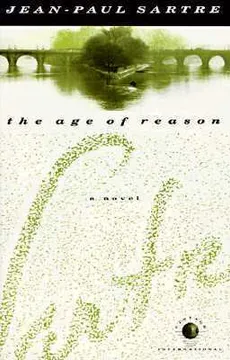
The Age of Reason is a philosophical novel exploring existentialism through the story of Mathieu, a teacher seeking money for his mistress's abortion. Readers appreciate Sartre's complex character development and philosophical insights, finding the novel thought-provoking despite its slow pace. Many praise Sartre's exploration of freedom, responsibility, and the human condition. Some find the characters unlikeable but compellingly human. While some readers struggle with the dense philosophy, others consider it a masterpiece of existentialist literature.
People Also Read








Characters
Mathieu Delarue
The waiting intellectualA thirty-four-year-old philosophy teacher, Mathieu is Marcelle's longtime lover, Boris's former mentor, and an old friend of Brunet and Daniel. He prizes independence and distrusts commitments that might define him from outside, yet he depends on a stable job, a home, and intimate relationships. His habit of examining his motives can look like honesty, but it often delays action until another person has already borne the consequences. He is observant, capable of tenderness, and uneasy with the body and needs of others. Mathieu's central psychological conflict is not simply freedom versus convention; it is whether he can act without first demanding certainty about what the action means.
Marcelle Duffet
The silenced companionMarcelle is Mathieu's partner of seven years and lives with her mother above the family draper's shop. Once a chemistry student, she had to abandon her studies because of illness, and her memory of that interrupted life gives her a private measure of what she has lost. She is perceptive about Mathieu's self-protective habits, yet struggles to speak plainly about her own desires. Their relationship makes her both his confidante and someone whose inner life he assumes he already understands. Marcelle uses wit and composure to contain hurt, but beneath them is a longing to matter to another person without having to turn herself into a case for analysis.
Ivich Serguine
The volatile escapeeIvich is a twenty-one-year-old medical student and Boris's sister, living in Paris while her family remains in Laon. She experiences time as urgent and resists the prospect of being sent back to a life she considers already decided for her. Her moods swing between sly detachment, fierce admiration, and impulsive self-destruction; she dislikes being touched or made grateful, and guards her pride even when she needs help. Mathieu is drawn to her intensity, but often treats her as a symbol of youth and possibility rather than a person with boundaries. Ivich's refusal to explain herself is both defense and protest against other people claiming authority over her inner life.
Boris Serguine
The guarded youthBoris is Ivich's younger brother, a philosophy student and former pupil of Mathieu. He moves through Paris's cafés and clubs with a mixture of charm, vanity, and cultivated indifference. He is attached to Lola, yet finds her emotional demands difficult to meet, and he looks to Mathieu for an example of independence while resisting the role of disciple. Boris's fascination with youth shapes his view of love, work, and the future: he wants to remain vivid and unencumbered, and treats lasting obligation as a threat. Underneath his casual manner is a young man who borrows other people's convictions because he has not yet decided what his own should be.
Daniel Sereno
The smiling adversaryDaniel is Mathieu's old friend, a handsome, well-dressed man who works at the Bourse and cultivates a polished air of control. He is drawn to secrecy, provocation, and the chance to observe how others behave under pressure. His wit often protects him from vulnerability, while his attention to other people's weaknesses gives him leverage he does not always use kindly. Daniel sees through Mathieu's claim to live outside convention, but his own self-knowledge is more painful and less secure than his social mask suggests. His bond with Marcelle is built on a different kind of attention from Mathieu's, one that can feel both generous and dangerously possessive.
Lola Montero
The aging singerLola is a professional singer and Boris's older lover. Her work gives her public poise and a measure of independence, but she is acutely aware of age, unstable employment, and the audience's changing attention. She loves Boris with an intensity he cannot easily return, and her attempts to secure reassurance can make their connection feel both tender and suffocating. Lola is proud, practical about money, and capable of defending another performer from an unfair dismissal. Her use of heroin belongs to a broader effort to manage feelings she cannot simply sing away. She is more than the role of the abandoned older woman that Boris sometimes assigns her.
Brunet
The committed organizerBrunet is Mathieu's former close friend and a committed Communist organizer. He believes political membership gives personal life a direction that private reflection cannot supply. His loyalty to collective struggle can make him impatient with hesitation, but his concern for Mathieu is genuine, and he recognizes when his old friend is in distress. Brunet embodies a chosen identity grounded in work, comradeship, and historical purpose.
Sarah Gomez
The compassionate brokerSarah is married to the painter Gomez, who has gone to Spain, and she shelters refugees and people connected to the Spanish cause. Her kindness is active rather than abstract: she offers a home, makes introductions, and helps Mathieu find a doctor. Her own painful experience with abortion makes her compassionate without making her judgment disappear. Sarah's instinct to protect individuals can conflict with the political dangers Brunet asks her to consider.
Jacques Delarue
The respectable brotherJacques is Mathieu's older brother, a successful solicitor married to Odette. He speaks for respectability and social order, but he is not a simple scold: he understands Mathieu's habits and argues that his brother already enjoys the comforts of marriage while rejecting its name. Jacques uses money as both practical assistance and moral leverage, believing that principles matter only when they shape conduct.
Odette
The elusive bourgeois wifeOdette is Jacques's wife, elegant and composed, with an intelligence Mathieu finds difficult to read. She enjoys his occasional attention and lightly mocks his neglect, but remains anchored in the polished domestic world she shares with Jacques. Her calm presence makes Mathieu aware of the ease and security he both distrusts and envies.
Gomez
The absent painterGomez is Sarah's husband, a painter who leaves Paris to fight in Spain. His absence shapes Sarah's household and connects the novel's intimate French lives to the war beyond them. His choice to join the fighting stands in contrast to Mathieu's repeated hesitation, while Sarah's complicated memories of their marriage keep him from becoming a simple heroic emblem.
Weymüller
The vulnerable refugeeWeymüller is a German refugee and former minister who has lost his lodging and depends on Sarah's hospitality. Brunet suspects he may be passing information to the German Embassy, but no proof is available. His precarious position forces Sarah and Brunet to weigh a vulnerable individual's immediate need against the security of political work.
Dr. Waldmann
The costly specialistWaldmann is a Jewish gynecologist who has practiced in Berlin and Vienna before arriving in Paris. Sarah recommends him as a competent specialist, but his demand for cash in advance places his medical skill beyond easy reach. He represents the way displacement and political persecution shape even private decisions.
Madame Duffet
Marcelle's watchful motherMadame Duffet is Marcelle's mother and the owner of the shop beneath their home. Her presence constrains the couple's private meetings, as they must keep quiet to avoid waking her. She appreciates Daniel's attentions and treats him warmly, unaware of the tensions surrounding her daughter's life.
Andrée Besnier
The practical intermediaryAndrée is Marcelle's friend and the person who has previously used the unlicensed abortionist. Her recommendation gives Marcelle an immediate, inexpensive option, though Mathieu distrusts its safety.
Renata
Ivich's helpful friendRenata is an Italian friend of Ivich. Mathieu encounters her near the Luxembourg Gardens, and she directs him toward the dance cellar where Ivich has gone.
Bobby
Daniel's former favoriteBobby is a young man Daniel once helped find work. He drifts between jobs and relationships, returning to Daniel when he needs money or assistance. His easy persistence unsettles Daniel because it makes their past attachment difficult to dismiss.
Ralph
Bobby's precarious companionRalph shares a cramped room with Bobby and lives by a rough code of loyalty and retaliation. His pride in physical strength provokes Daniel into a wrestling match, revealing the tension beneath their uneasy acquaintance.
Pablo
Sarah's observant childPablo is the young child in Sarah's household. His presence makes Mathieu confront the concrete reality of a child's consciousness while he considers whether Marcelle's pregnancy should continue.
Plot Devices
The Madrid Stamp
A token of abandoned actionA stranger gives Mathieu a stamped card from Madrid after Mathieu offers him money. The stranger had hoped to reach Spain and fight, but the plan never came together. The card gives physical form to the alternative life Mathieu has imagined without entering. Its appearance at the beginning links the impending pregnancy crisis to the Spanish conflict and to Mathieu's recurring belief that a decisive opportunity might eventually arrive. The card is small and almost worthless, yet Mathieu keeps it because it carries the weight of someone else's failed attempt at commitment. It becomes a measure of the distance between wanting a different life and actually choosing one.
The Pregnancy Deadline
An urgent demand for choiceMarcelle's pregnancy forces the couple to decide whether to seek an abortion, while the risks of an unlicensed practitioner and the fee demanded by Dr. Waldmann make delay dangerous. The physical facts of pregnancy confront Mathieu's abstract ideas about freedom with a consequence neither partner can undo by reflection. Marcelle's private desire for the child complicates Mathieu's assumption that their old agreement still represents her wishes. The deadline tightens as money proves hard to find, transforming a question of principle into a practical test of care, honesty, and consent.
Four Thousand Francs
A measure of obligationThe doctor's required payment drives Mathieu from Sarah to Daniel, Jacques, a loan society, and finally Lola's suitcase. Each source of money carries a different relationship and moral cost: friendship, family pressure, usurious delay, or theft. The sum is therefore more than a financial obstacle. It reveals whom Mathieu can ask for help, which debts he accepts, and how far he will go to avoid marriage or an unsafe operation. The stolen notes briefly seem to solve the crisis, but they cannot settle what Marcelle wants or repair the relationship between them.
The Wicker Basket
A trial of attachmentDaniel carries his three cats in a basket to the Seine, intending to drown them as a way of testing his capacity to act against what he loves. He cannot release the basket and returns home with the animals alive. The episode parallels Mathieu's difficulty turning ideas into irrevocable acts, but Daniel's test is harsher and more openly destructive. The cats make attachment visible as an embodied fact, not a position in an argument. Their survival does not redeem Daniel, yet it interrupts the self-image he tries to construct through cruelty and control.
The Knife and Bandages
An intimacy made physicalAt the Sumatra, Ivich cuts her palm with Boris's knife, and Mathieu answers by stabbing his own hand. A cloakroom attendant binds both wounds, after which Ivich presses their injured palms together. The shared blood briefly makes their connection physical in a way that their conversations and Mathieu's earlier unwanted kiss could not. Yet the gesture arises inside a nightclub performance, amid alcohol, spectators, and Ivich's distress over her examination. The wounds create contact, but they cannot guarantee trust or a future together.
About the Author
Other books by Jean-Paul Sartre


Download PDF
Download EPUB
.epub digital book format is ideal for reading ebooks on phones, tablets, and e-readers.








