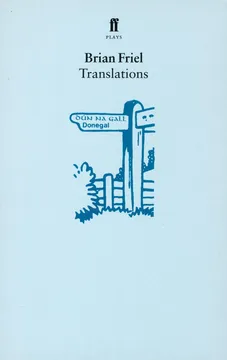


Plot Summary
A Voice in the Hedge-School
In a disused barn in Baile Beag, Manus, the lame son of schoolmaster Hugh, patiently teaches Sarah, long assumed unable to speak. She finally manages to say her name, and his pride gives her a first claim on a voice of her own. Around them, the pupils trade gossip and study Greek, Latin, arithmetic, and scraps of English.
Maire, who must support younger siblings, has passage money for America and presses Manus to apply for a paid post at the coming national school. He refuses because Hugh has applied too. Meanwhile, Doalty admits to shifting survey poles used by English sappers, and rumors of potato blight unsettle the class. Their fragile school is already caught between poverty, departure, and a changing order.
Sarah’s lesson makes speech a practical achievement rather than a metaphor: Manus gives her patient attention, and she gains a way to present herself to others. Yet the classroom cannot shelter its pupils from material pressures. Maire’s emigration plans and Manus’s refusal of secure work show how filial duty can become economic self-denial. Doalty’s small interference with the survey poles offers a comic but pointed counteraction: the community can disrupt the mapmaking, though it cannot control why the map is being made. Friel places these ordinary needs beside classical learning, letting the school appear both intellectually alive and politically vulnerable.
The Map Arrives in Baile Beag
Hugh tells his pupils that Captain Lancey, the Royal Engineers officer overseeing the survey, has complained about missing equipment and horses. Then Hugh’s younger son Owen returns after six years away, polished and warmly familiar with the villagers.
He brings Lancey and Lieutenant Yolland into the school, where Lancey explains that the British government is making a detailed map for military use and more consistent land valuation. Owen translates this as a plan to replace inaccurate estate maps and perhaps ease taxation.
He does not mention the scale of the changes to the Irish place-names. Manus challenges him afterward: the names are not errors to be corrected, and Owen’s employers have even started calling him Roland. Owen brushes off both concerns, insisting the work is simply standardization.
Owen’s return briefly restores the ease of a family reunion, but his new job puts him between two audiences whose interests are not equal. He makes Lancey’s technical language intelligible by softening its implications, and the translation turns a military survey into a promise of administrative fairness. Manus hears what the performance leaves out. The mistaken name Roland becomes more than a joke: Owen accepts the convenience of being renamed while assuring himself that he remains unchanged. His confidence depends on treating language as a neutral tool, even as his own work alters how the authorities will record the community.
Names Enter the Ledger
As the sappers finish their fieldwork, Owen and Yolland convert local names into English entries for the survey’s Name-Book. Yolland prefers to preserve the sound of Bun na hAbhann, but Owen proposes Burnfoot; older records offer several conflicting versions of other names.
At Tobair Vree, Owen explains that the name preserves the story of a man and a well no longer there. Yolland insists that the inherited name should remain, and Owen agrees.
Their work also exposes Owen’s casual acceptance of the name Roland: he finally tells Yolland that he is Owen, and they laugh at how long the mistake has lasted. Soon afterward, Manus reports that islanders have offered him a paid hedge-school post, giving him a possible escape from dependence on Hugh.
The Name-Book turns naming into a choice between legibility and memory. An English equivalent may help a distant authority use the map, but it cannot carry every local association embedded in a name. Tobair Vree makes this concrete: the story survives through Owen even though the well and its original meaning have faded from common knowledge. Yolland’s wish to preserve the name is sincere, but he still participates in a process whose institutional purpose is standardization. Owen’s correction of his own name echoes the larger conflict in miniature. He can recover his personal name in conversation, while the ledger gives official permanence to the versions he helps create.
A Dance Without Translation
At a village dance the following night, Maire and Yolland slip away together. They begin with gestures and isolated English words, while Maire tries the Latin she knows and Yolland struggles to make himself understood. A remembered phrase from Maire’s childhood English lesson unexpectedly connects him to his mother’s Norfolk home.
They then exchange the Irish place-names they have been mapping, using familiar sounds to find a rhythm together. Maire tells Yolland through fragments and touch that she wants a life with him; he tries to express that he wants to stay. Neither can fully verify what the other means, but they kiss. Sarah comes upon them, sees the embrace, and runs to find Manus.
The lovers’ connection is real, but the scene does not pretend that affection removes the problem of translation. Their gestures and words create a provisional intimacy in which each supplies meaning the other cannot confirm. The place-names briefly become shared material rather than entries controlled by the surveyors, yet they cannot promise a common future. Maire’s wish to leave for America and Yolland’s desire to remain in Ireland pull in different directions, even as each imagines choosing the other. Sarah’s discovery changes a private encounter into a consequential event: the community’s intimate ties are about to collide with the survey’s hierarchy of power.
The Missing Lieutenant
Manus packs hurriedly, taking his own classical books and asking Owen to delay the islanders who offered him work. He explains that he found Maire and Yolland together after the dance, but could not bring himself to approach them.
He sets out toward Mayo, leaving Sarah with a message for the islanders. By the next evening, Yolland is missing. Lancey arrives with soldiers searching the countryside and announces escalating reprisals: the army will kill the parish’s livestock, then evict residents and destroy homes unless Yolland is found.
Owen translates each threat, including the new English names of the places marked for clearance. When Doalty reports that the military camp is burning, Lancey rushes outside; no one explains who started the fire, and Yolland remains unaccounted for.
The personal and political crises converge without becoming the same problem. Manus’s departure follows the pain of seeing Maire with Yolland, but his fear that the army will suspect him adds practical urgency. Lancey, meanwhile, turns a search for one missing officer into collective punishment. Owen’s translation now carries direct consequences for the people in the room, and the English names identify the places where homes may be destroyed. The burning camp briefly interrupts the officer’s command, but the play does not reveal its cause or resolve Yolland’s disappearance. That uncertainty denies the audience a clean explanation while making the danger immediate.
A New Tongue, No Answer
Maire returns to the school in distress, trying to recall the English place-names Yolland taught her and fearing he has been harmed. She says she needs to learn English, and Hugh agrees to teach her after the funeral. Owen leaves to seek Doalty, who hints that he may know more about Yolland.
Hugh comes back from the wake with news that Bartley Timlin, a schoolmaster from Cork who also cures bacon, has been chosen for the national school instead of him. Jimmy, drunk and lonely, confides that he imagines marrying the goddess Athena for companionship. Maire picks up the Name-Book and waits for Yolland to return. Hugh begins reciting Virgil, loses his place, and starts again as the scene fades, leaving the search unresolved.
The ending refuses to equate learning English with gaining access to another person’s inner life. Maire needs the language for practical survival, but her attempt to remember Yolland’s English place-names also makes absence painfully present. Hugh’s offer is sincere and modest: he can teach words and grammar, not guarantee understanding. His lost school appointment confirms that the institution replacing the hedge-school will not preserve his role, while Jimmy’s imagined marriage reveals the loneliness beneath his comic classical learning. The Name-Book remains in Maire’s hands as both a record and a promise with no confirmed fulfillment. The unfinished recitation closes on damaged continuity rather than resolution.
Analysis
Translations sets intimate lives inside a process that appears administrative. The surveyors measure land, revise names, and make a map; their work does not need to be openly cruel to alter how Baile Beag can be seen and governed. The new names are not simply incorrect versions replacing correct ones. Some local names have already shifted through centuries of use, and their histories survive unevenly, sometimes only because one person remembers them. The play’s difficulty lies in that instability: preserving a name is not always the same as preserving the life it once described.
Owen embodies the ethical compromise at the center of the work. He loves his home and recognizes the people in it, yet his confidence in technical translation allows him to make the survey’s purposes sound less threatening. Manus sees the danger earlier, but his loyalty to Hugh leaves him without an independent livelihood. Their different responses are not a contrast between courage and cowardice; each is shaped by a different dependence. The map can be resisted in small ways, but the villagers do not possess equal power over the institutions producing it.
The romantic plot repeats this conflict on a personal scale. Maire and Yolland share attraction, yet each relies on incomplete words and gestures to imagine a future together. Their intimacy does not resolve the practical divide between the woman planning to emigrate and the soldier who wants to stay. Sarah’s hard-won speech, meanwhile, shows what communication can make possible when it is patiently offered rather than imposed. The ending withholds certainty about Yolland and leaves Maire with the Name-Book and the intention to learn English. The play closes not by declaring language useless, but by insisting that understanding requires more than vocabulary: it requires attention, accountability, and a willingness to hear what translation leaves out.
Review Summary
Translations is a critically acclaimed play exploring language, colonialism, and cultural identity in 19th century Ireland. Readers praise Friel's masterful use of language, complex characters, and thought-provoking themes. The play's innovative approach to representing different languages through English is both challenging and rewarding. Many find the work deeply moving and relevant to contemporary issues of cultural preservation. While some critics find certain elements pretentious or slow-paced, the majority view Translations as a powerful and insightful examination of the impact of colonization on language and identity.
People Also Read



Characters
Manus
Lame Schoolmaster’s SonManus is Hugh’s older son and unpaid assistant at the hedge-school. Lame from an accident in infancy, he has built his identity around teaching, practical service, and care for his father. He patiently helps Sarah learn to speak and is attentive to the needs of pupils who have few other chances to study. His attachment to Maire is complicated by his lack of money and his unwillingness to compete with Hugh for the national-school post. Manus is capable and observant, but his loyalty can become a trap: he keeps postponing his own security to protect his father and preserve a school whose future is already uncertain.
Owen
The Community’s InterpreterOwen is Hugh’s younger son, a handsome and sociable man who returns after six years away to work for the Royal Engineers as a civilian interpreter. His ease with people makes him an effective intermediary, and his affection for home is genuine. He also likes to believe that his role is merely practical, even when his translations omit the force behind Lancey’s project and his work helps standardize local names. Owen is less confrontational than Manus, preferring accommodation and humor to open resistance. His divided loyalties reveal how a person can feel at home in a community while helping an outside authority make it more manageable.
Maire Chatach
The Determined EmigrantMaire is a strong, practical young woman who works hard to support the younger members of her family. She plans to leave for America because Baile Beag offers little economic security, and she is impatient with the classical education that cannot pay her passage or provide a future. Her directness unsettles Manus, whose hopes for her are not matched by his material circumstances. Maire is curious and responsive to people, yet she does not confuse intellectual refinement with opportunity. Her desire to learn English is rooted in the ordinary pressures of work, migration, and communication, not in a wish to reject where she comes from.
Lieutenant George Yolland
The Romantic SurveyorYolland is a shy Royal Engineers lieutenant assigned to work on place-names. He is not a natural soldier and appears more comfortable with landscape, language, and imagination than with command. His attraction to Ireland is sincere, as is his wish to learn Irish, but he tends to romanticize the community before understanding its hardships. Yolland is disturbed by the possibility that the survey will erode what it records, even while he remains part of the project. His awkwardness and openness make him approachable to the locals, but his inability to speak their language leaves important feelings and intentions uncertain.
Hugh
Classical SchoolmasterHugh is the aging master of the hedge-school and father to Manus and Owen. He teaches through Greek and Latin, moving among classical learning, local lore, and drink with a practiced performance of dignity. Beneath his pomposity lies an acute understanding of poverty and cultural loss; he knows that eloquence cannot change the material facts facing his pupils. He depends on Manus more than he acknowledges and sees the coming national school as both an opportunity and a threat. Hugh’s intelligence does not make him immune to self-deception, but it lets him recognize how memory and language shape the way a community understands its own past.
Sarah
The Emerging StudentSarah is a young woman whom the people of her community have long treated as unable to speak. Manus works with her patiently, teaching her to form words and to write. She is observant, emotionally responsive, and more capable than the label imposed on her suggests. Her progress depends on someone giving her time rather than assuming what she can do. Sarah’s presence also makes the school’s promise tangible: education can alter a person’s ability to participate in public life. She remains vulnerable to other people’s attention and judgments, but she is not merely a symbol of silence; she has her own curiosity, pride, and loyalties.
Jimmy Jack Cassie
The Classical DreamerJimmy Jack is a solitary bachelor in his sixties who reads Homer in Greek and treats classical myths as part of his everyday world. His learning is genuine, but it also gives him a refuge from loneliness and the practical limits of his life. He shares the school’s intellectual pleasures without the status or security that formal education might promise elsewhere. His comic confidence can suddenly give way to vulnerability, revealing that his imagined conversations with gods answer a very human need for companionship.
Doalty Dan Doalty
The Mischievous LocalDoalty is an openhearted, impulsive pupil who enjoys teasing authority and performing comic imitations. His interference with the surveyors’ work is a small act of mischief with larger implications, though he does not command the resources to oppose the army directly. He is generous with his friends and quick to turn a serious moment into a joke. Beneath that humor, Doalty understands that the survey and military presence may put local lives at risk.
Bridget
The Sharp-Eyed GossipBridget is a lively pupil with a keen appetite for local gossip and a practical sense of how news moves through Baile Beag. She enjoys joking with Doalty and is alert to what the soldiers are doing around the parish. Her chatter can seem frivolous, but it also carries information from one household to another. When danger becomes explicit, she recognizes that neighbors may need to protect their animals and property.
Captain Lancey
The Survey’s CommanderLancey is a precise Royal Engineers officer responsible for the survey. He is competent at maps and military administration but uncomfortable communicating with the Irish-speaking residents. He approaches the work as a formal government operation, trusting procedure and authority to justify its purpose. His dependence on Owen’s translations exposes how little he understands the people whose land he is recording. When challenged by uncertainty, Lancey responds through command rather than negotiation.
Plot Devices
The Name-Book
Records a changing landscapeThe Name-Book is the surveyors’ working ledger for standardizing the Irish names of hills, streams, roads, and settlements. Owen supplies local pronunciations and meanings, while Yolland helps determine how they will appear on the English-language map. The choice between preserving a sound, translating its meaning, or adopting a version from an older record turns the book into a visible record of negotiation. It also shows how an administrative tool can outlast the conversation that produced each entry. The ledger’s presence in the final scene links the fate of local memory to the unresolved relationships and political threats surrounding it.
The Hedge-School
A home for shared learningThe school occupies a disused barn and offers lessons in classical languages, arithmetic, writing, and fragments of English. Its pupils include adults and young people who learn at their own pace, while Hugh’s teaching blends scholarship with local knowledge. Because the national school is approaching, the barn is not simply a setting: it represents a form of education rooted in the community but economically precarious. Manus’s unpaid work and Maire’s practical objections show both the school’s value and its limitations. The classroom gathers the characters together just as outside institutions begin to change the language and records of their world.
The Royal Survey
Makes land legible to powerThe British government’s mapmaking project is presented as a technical effort to create detailed, consistent records of Ireland. The sappers measure the landscape, and Owen and Yolland give local names English forms for the maps. The survey’s declared administrative benefits coexist with its stated military use, making its purpose difficult to separate from the power behind it. Doalty’s interference with the surveyors’ work hints at local resistance, while Lancey’s later threats demonstrate that the military presence is not an abstract concern. The map gives faraway institutions a new way to describe and administer the parish.
Unequal Translation
Controls what can be understoodThe English soldiers and Irish-speaking villagers cannot communicate directly, so Owen translates between them. Yolland’s limited Irish and Maire’s limited English create a second, more intimate version of the same problem. Translation can convey practical information, but it also requires choices about emphasis, tone, and meaning. Owen’s account of Lancey’s project softens its military purpose, while the lovers’ improvised exchanges cannot guarantee that they understand one another fully. Language in the play is therefore neither a transparent bridge nor a simple barrier; the person who interprets can shape what others believe is happening.
Download PDF
Download EPUB
.epub digital book format is ideal for reading ebooks on phones, tablets, and e-readers.








