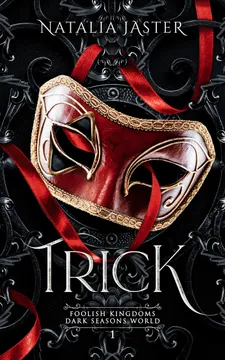


Plot Summary
Prologue
Poet,2 Whimtany’s nineteen-year-old Court Jester,2 introduces himself as an acrobat, wordsmith, and servant who can influence the monarchs while concealing his own purposes.
His ribbons carry private meaning, and his life beyond the castle is more dangerous than the court suspects. He presents the coming story as the account of how a clever performer, accustomed to winning every contest of wit, lost his will to an Autumn princess.1
Poet’s introduction establishes performance as both his instrument and his shelter. He can turn attention into influence, yet the tale he promises is not about outwitting a king: it is about meeting someone who sees past the act. His confidence also sets up a productive tension. He speaks as if he controls the story, but admits at once that a private attachment has already undone that control. The framed narration invites readers to notice how his cleverness will serve two opposing ends, protecting what he loves while making genuine intimacy harder to evade.
Spring's Scarlet Marker
Briar,1 the eighteen-year-old heir to Autumn,1 arrives in Whimtany with her widowed mother, Queen Avalea,5 for the seasonal peace gathering. She wants to return home, where she can help govern, but the visit also recalls the father she lost in Spring six years earlier. In her room, she finds an unexplained scarlet ribbon and hides it.
That evening, the Spring courtiers crowd her window to watch a flamboyantly dressed young man in the garden. Briar1 recognizes the ribbon’s color on his wrist. Before the banquet, she slips away to the ruined garden and reunites with Eliot,4 the minstrel who has been her secret friend since childhood. Eliot4 admits he is captivated by the jester,2 Poet,2 and Briar1 fears he will hurt him.
Briar’s first instinct is to manage risk: she hides the ribbon, avoids the revelry, and keeps her most important friendship secret. These are not signs of indifference so much as strategies learned after grief made ordinary spontaneity feel dangerous. Eliot offers a rare relationship in which she can exist outside her title, yet even that bond is concealed by class rules. The ribbon begins to unsettle her carefully controlled world before she knows its giver. Its color links her home to Spring, turning a small token into an invitation she would rather treat as a threat.
The Jester's Candle
At the welcome banquet, Poet2 dances through fog, juggles with his whole body, and ends by offering candles to the monarchs. The crowd adores him. When he reaches Briar,1 he pretends his pouch is empty, leaving her hand extended while the hall laughs. Later, she finds him in a mirrored corridor and accuses him of playing with Eliot’s4 feelings.
Poet2 says the kiss Eliot4 described was meant to settle his nerves before their performance, not begin a romance. He also proves he noticed Briar1 watching the banquet’s kissing couple and names the loneliness beneath her sternness. She resents his insight, but the exchange turns their mutual suspicion into a sharper, more personal contest.
The candle prank matters because it transforms a public joke into a private wound. Briar does not merely dislike being laughed at; she has built her identity around never giving others an opening. Poet’s work depends on finding precisely such openings. His perceptiveness makes him dangerous to her, while his explanation about Eliot exposes how readily she mistakes protection for control. Their attraction develops through antagonism, but the imbalance is real: Poet knows how to read a room, and Briar has not yet learned how much of herself she reveals when she tries to conceal it.
A Fool's Authority
At the peace talks, Summer’s King Rhys9 challenges Poet’s2 right to sit with the monarchs. Spring’s King Basil7 and Queen Fatima8 explain that Poet2 is more than an entertainer: he advises them on public and private matters. Poet2 answers Rhys9 with jokes that expose the king’s hypocrisy, then turns serious when Rhys9 dismisses people born with cognitive differences as burdens and curiosities.
Briar1 sees that the jester’s2 license to speak freely gives him influence, though not freedom from the Crown. At a later garden gathering, their argument deepens: Briar1 calls him careless with people, and he challenges her to reconsider the laws that reduce vulnerable citizens to property. Their clash follows her into the night.
The court’s jester occupies a paradoxical position: he can criticize rulers precisely because they classify his candor as entertainment. That privilege is conditional, however, and Poet understands its limits. Briar initially regards authority as a structure to serve responsibly; Poet treats it as a structure whose contradictions must be made visible. Their disagreement is not simply about temperament. He suspects her duty has become an excuse for passivity, while she fears his irreverence evades accountability. Each identifies a real weakness in the other, which is why neither can dismiss the other’s judgment.
Following the Hidden Road
After seeing Poet2 leave the castle at night with a dagger, Briar1 assumes he may be plotting something dangerous. She follows him through a concealed gate and into the floral forest, carrying a hoof pick for protection. Poet2 catches her, but their argument startles both horses and sends them running.
While they search for the animals, Briar1 explains how Eliot4 became her friend: she defended his music at a market when they were twelve, then turned to him for comfort after her father died. Poet2 refuses to reveal his destination. Their search brings them face to face with a leenix, a huge forest cat. Poet2 draws its attack away from Briar,1 but she strikes the animal with her hoof pick and is badly clawed.
Briar’s pursuit begins in suspicion, but the lost horses force her to reveal the history behind her protectiveness toward Eliot. Poet listens, yet still withholds his own destination, preserving the asymmetry between them. When the leenix attacks, he instinctively places himself between Briar and danger, while she refuses to leave him to fight alone. Their rescue of one another is physical before it is emotional: neither has yet earned trust, but each acts as if the other’s safety matters. The forest also brings Briar back into the landscape where her grief began.
The Cottage of Ribbons
Poet2 carries the injured Briar1 to a secluded cottage, where the healer, Old Jinny,6 stitches her leg. A four-year-old boy named Nicu3 rushes to Poet2 and calls him Papa. The child’s unusual face and intense friendliness make Briar1 recognize the danger he would face under the kingdoms’ laws.
Once she wakes, Poet2 explains that Nicu3 needs help navigating the world, and that the Crown would claim him as property if it learned about him. Poet2 has hidden him with Jinny6 while serving the royals, using his influence to protect his family and argue against the abuse of people labeled fools. Briar1 promises secrecy. During the stormbound recovery, she sees Poet2 care for Nicu3 with fierce tenderness.
Nicu changes the moral scale of the story. Until now, Poet’s defiance could look like a performer’s appetite for attention; his secret reveals that his influence is a form of parental protection. Briar, in turn, must confront the distance between her stated belief in benevolence and a legal order she has not challenged. The ribbons inside the cottage are practical guides for Nicu, unlike the ribbon Poet left in her room as a tease. Their shared material carries two different meanings: one helps a child move safely through home, the other draws Briar toward an unfamiliar life.
Mud, Music, and a Kiss
While Briar1 heals, she helps Jinny6 gather berries and watches Poet2 guide Nicu3 through ordinary routines. At the stream, Poet2 explains how he taught himself acrobatics, reading, and courtly speech by studying performers and listening to people. They compete at skipping stones, trade favorite things, and laugh together. When Nicu3 falls and Briar1 comforts him, Poet2 pulls her aside, then kisses her.
Their return to the castle is cautious: Poet2 blindfolds her to protect the cottage’s location, and they agree on a cover story. At the feast, Briar’s mother5 embraces her, while Briar1 and Poet2 conceal what has changed. Their private attraction now rests on a secret shared beyond desire: Briar1 knows the family Poet2 is risking everything to protect.
The cottage gives Briar a form of intimacy she has avoided: shared labor, unguarded conversation, and care that does not depend on rank. She sees Poet not as a collection of performances but as someone shaped by self-education, abandonment, and responsibility. Her comfort to Nicu also reveals a capacity for warmth that her courtly persona suppresses. The first kiss follows this mutual exposure, but it does not resolve their differences. Instead, it makes their secrecy more consequential, since Briar now understands what Poet has to lose if her judgment proves unreliable.
The Labyrinth's Borrowed Night
Back at court, Briar1 and Poet2 begin meeting in secret, often using Tumble15 the ferret to carry notes. Their growing intimacy complicates Briar’s1 friendship with Eliot,4 who still hopes Poet2 might return his feelings. One night, Briar1 joins Eliot,4 Poet,2 and three of the Spring courtiers16 in a secret passage to the castle labyrinth.
They race to its wishing well, then spend the night laughing and dancing. Briar1 lets herself move without the restraint she has practiced for years. As the affair continues, Eliot4 sees Poet2 enter Briar’s1 room and catches them kissing. When Briar1 later seeks his comfort, Eliot4 confronts her for hiding the relationship and leaves her alone with the knowledge that she has wounded her oldest friend.
The labyrinth briefly suspends the social identities that govern the characters, but it cannot erase their consequences. Briar’s unguarded dancing is a genuine recovery of pleasure, not simply Poet’s influence; Eliot recognizes the girl she was before grief narrowed her life. Yet her secret affair violates the trust that made their friendship possible. Eliot’s pain is not an obstacle for the romance to brush aside. It is the cost of Briar’s choices, and it forces her to see that secrecy can protect intimacy while also turning loved ones into outsiders.
The Decree's Bitter Reading
Poet2 persuades Spring’s rulers to invite Briar1 to the final peace talk, hoping she can help challenge the laws governing people born with cognitive differences. Briar1 does not know he arranged the invitation and believes she has earned her place. Before the monarchs, she proposes a sanctuary for people considered mad and argues that families should have a say in their relatives’ treatment.
Avalea5 warns that sudden reform could provoke public backlash, and Briar1 yields to the elders. Poet2 sees her retreat as abandonment. In their private argument, he accuses her of clinging to inherited rules; she protests that he cannot understand the responsibilities of a future queen. In anger, she compares him to Nicu,3 and Poet2 ends their relationship.
The failed debate exposes the difference between having a just belief and being prepared to act on it under pressure. Briar’s caution is not baseless: her mother names the political risk of reform, including the possibility that vulnerable families may become targets. But Briar has not yet developed a strategy that can sustain her convictions against authority. Poet experiences her retreat through the intimate stakes of Nicu’s safety, while she experiences his anger as another person denying the weight she carries. Her careless comparison wounds him because it reduces his son to the very category she opposes.
The Dungeon Takes Nicu
As Lark’s Day preparations begin, Jinny6 finds Briar1 and reports that Nicu3 has disappeared. He followed the scarlet ribbon Briar1 had left in the forest, then wandered to the castle, where guards recognized him as a born fool and locked him in the dungeon. Briar1 slips inside, dismisses the guard, and finds Nicu3 frightened and cold in a bare cell.
She feeds him, gives him a sleeping draught, wraps him in her cloak, and stays beside him while he tells a confused account of his journey. The Crown has recently discussed trading people classified as fools between kingdoms, so time is short. Briar1 leaves Nicu3 asleep and hurries to tell Poet,2 despite their estrangement.
The ribbon’s earlier role as flirtation now produces a concrete danger. Briar’s forgotten marker guides Nicu away from safety, making her responsible for a mistake she never intended. Her response is immediate and practical: she uses royal authority to enter the cell, but spends that authority on food, warmth, and comfort rather than punishment. In staying with Nicu, she recognizes that her compassion must survive contact with the systems she has tolerated. The crisis also removes the luxury of avoiding Poet. Whatever remains unresolved between them is secondary to the child’s safety.
The Run Through Spring
Poet2 learns Nicu3 is imprisoned and joins Briar1 and Eliot4 in a rescue plan. Tumble15 distracts the upper guard, Poet2 drugs the dungeon watchman, and the three companions reach Nicu.3 When guards corner them during their escape, Poet2 fights while shielding his son,3 and Briar1 knocks an attacker unconscious with a rock. Eliot4 has horses ready outside the castle.
Briar1 rides Nicu3 to Jinny’s6 cottage while Poet2 draws the pursuing knights away. On her return, Briar1 finds the place where her father died and is struck by a tranquilizer dart. The royals capture her and Poet,2 but neither reveals Nicu’s3 hiding place. In the prison tower, Briar1 tells Poet2 how her childhood prank preceded her father’s fatal fall.
The rescue distributes courage across the group rather than granting it to a single heroic figure. Poet’s acrobatics and Briar’s quick aim matter, but so does Eliot’s logistical help. Nicu’s presence changes every action: Poet must fight without letting his son witness violence, and Briar must deliver him somewhere safe before facing the Crown. The dart that captures her lands near the site of her father’s death, bringing her private guilt into the public crisis. Telling Poet the truth reframes her years of self-punishment; she was a grieving child who misunderstood a fall, not the author of her father’s death.
A Loophole in the Law
Avalea5 removes Briar1 from the tower, then listens as her daughter explains the rescue, her grief, and her love for Poet.2 Mother and daughter reconcile, and Avalea5 helps her negotiate with the monarchs. Briar1 offers to take twenty people considered mad from Summer’s overcrowded prisons in exchange for Nicu.3
She then invokes the new trade amendment, which says that fools and all that they are belong to their new Season. Briar1 argues that the wording includes family, making Poet2 part of Nicu’s3 transfer to Autumn. Spring recognizes the loophole, and Summer accepts the bargain. Briar1 also repairs her friendship with Eliot,4 promising to work toward future visits. At Lark’s Day, she and Poet2 are assigned as Fest Fools.
Briar’s solution joins political imagination to emotional commitment. She does not dismantle the kingdoms’ prejudice in a single negotiation, but she uses its own language to protect Nicu and Poet while offering a concrete alternative for people confined in Summer. Her argument turns family from an invisible attachment into a legal relation. The reconciliation with Avalea matters for the same reason: Briar can no longer treat closeness as a threat she must manage alone. Her renewed friendship with Eliot does not erase his hurt, but it restores the possibility of a relationship that can survive honest disagreement.
Two Fools at Lark's Day
At the carnival, Briar1 and Poet2 are made to perform degrading tasks before a crowd that knows they defied the Crown. When Summer’s King Rhys9 ignores Poet’s2 verse, Poet2 reshapes it into a satire of the monarch. Briar1 answers by kissing him in public, and the pair leave together. In a secluded woodland bower, they make love, then face the harder question of what comes next.
Poet2 fears Briar’s1 future duties will pull her away from him and Nicu,3 so he argues that their love will eventually hurt them all. Briar1 refuses to accept that future as inevitable. She promises to make Nicu3 part of her family and to build a life with Poet2 openly. Poet2 accepts her hand and her vow.
The public kiss transforms the assigned role of fool into a chosen act of self-definition. Briar and Poet cannot control the crowd’s judgment, but they can refuse to perform shame for it. Their private intimacy then gives way to a conflict more demanding than desire: Poet fears that love will expose Nicu to another abandonment, while Briar understands that a promise requires sustained work, not merely passion. Her vow answers his fear with specific commitments to care and belonging. His acceptance is not a sudden triumph over social structure; it is a decision to stop treating caution as the only form of protection.
Epilogue
Three years later, Briar1 works beside Autumn’s people and raises Nicu3 with Poet,2 who now advises the kingdom and helps care for people once treated as property. Resistance has not vanished: a riot has already tested their reforms, and children still sometimes reject Nicu.3 But he has made a friend, calls Briar1 Mama, and follows ribbons through the castle with more confidence.
Briar1 and Poet2 continue to argue, reconcile, and work toward humane care, while preparing to challenge the old decree beyond Autumn. In the closing frame, Poet2 presents their story to an audience and reflects that Briar1 changed both his purpose and his understanding of love.
The ending offers progress without pretending that affection can solve institutional cruelty by itself. Nicu’s friendship is small beside the kingdoms’ laws, yet its importance lies in the ordinary life it makes possible. Briar and Poet’s public work remains unfinished, and the riot shows that reform can provoke the fear it seeks to change. Their family therefore functions as a daily practice, not a symbolic cure: care, accommodation, and advocacy must be renewed. Poet’s final framing also completes his transformation. The performer who once controlled attention now uses his voice to make his family and their unfinished struggle visible.
Analysis
Trick places a forbidden romance inside a conflict over who is allowed to count as fully human. The kingdoms’treatment of people born with cognitive differences is not an incidental cruelty; it is built into law, labor, entertainment, and the language of usefulness. Poet’s performance exposes the contradiction. The Crown grants him a voice because his criticism can be consumed as amusement, yet the same rulers would claim his son3 as property if they knew the truth. His wit is both political leverage and concealment.
Briar’s1 development turns on the difference between private decency and public responsibility. She already believes in kindness, but belief has not yet made her capable of challenging custom. Her grief has taught her to mistake restraint for moral safety: if she never acts freely, she cannot cause another loss. Poet2 unsettles that logic, though his own impulsiveness can confuse courage with control. Their romance becomes persuasive when each learns the other’s limits. Briar1 must act without waiting for perfect certainty; Poet2 must trust another person with the risks he has carried alone.
The book also treats care as a form of knowledge. Briar1 understands Nicu3 more accurately after spending time with him, not after hearing a legal category or observing him from court. Her later political argument grows from attention to his particular needs: warmth, food, familiar routes, patience, and protection from strangers. This does not make love a substitute for policy. The ending shows reforms that remain partial, contested, and vulnerable to backlash. What changes is the scale of responsibility. Briar1 and Poet2 build a family openly, advocate for humane treatment, and accept that making a more just society requires repeated work rather than one grand gesture.
Review Summary
Reviews for Trick are mixed, averaging 3.78/5. Many readers adore the lyrical, poetic writing style and complex characters, particularly the charming jester Poet and strong-willed Princess Briar. Standout praise goes to the meaningful representation of disability and neurodiversity, the father-son relationship, and the slow-burn romance. Critics cite Poet's difficult dialogue, occasional prose confusion, and an underwhelming ending. The book's 2022 revised edition drew controversy, with some preferring the original's emotional depth over the added explicit content.
People Also Read



Characters
Briar
Autumn's guarded heirBriar is an eighteen-year-old princess raised to inherit Autumn’s throne. Short, plain-faced, and sharper than the court expects, she values competence and respect over popularity. Her father’s death left her afraid that spontaneity can harm those she loves, so she manages grief by limiting pleasure and keeping emotional distance from her mother5. Her friendship with Eliot4 shows that she can be playful when rank falls away, while her concern for people treated as fools reveals a principled mind that has not yet learned how to turn conviction into political action. Briar is loyal, observant, and capable of admitting when she has been wrong, though she can confuse responsibility with self-denial.
Poet
Whimtany's sharp-tongued jesterPoet is a nineteen-year-old performer whose acrobatics, satire, and quick reading of people have made him indispensable to Spring’s rulers. He treats comedy as a way to challenge hypocrisy, not simply entertain, and has earned enough royal trust to advise the Crown. His flamboyant clothes and flirtatious confidence conceal a guarded private life. He is inventive, proud, and skilled at turning vulnerability into a joke, but responsibility places real limits on his appetite for risk. His distrust of inherited hierarchies is practical as well as philosophical: he knows that laws can endanger people who cannot protect themselves.
Nicu
Wonder-minded childNicu is a young child whose intense friendliness, imaginative language, and difficulty with directions make everyday life both vivid and demanding. He notices colors, animals, and small changes with unusual force, and he often approaches strangers without understanding the risks. His need for repeated guidance does not diminish his affection or creativity. Nicu’s presence makes the abstract rules of the four kingdoms painfully concrete: a society that measures people by independence and conformity mistakes his differences for a reason to control him. He depends on consistent routines and attentive adults, while offering them a way to see the world less narrowly.
Eliot
Briar's minstrel friendEliot is a young minstrel whose music and open-hearted nature first draw Briar1 into friendship. He is expressive, romantic, and prone to investing hope quickly in people he admires. His closeness with Briar1 gives her a rare space beyond royal expectations, while his feelings for Poet2 expose the emotional costs of their secrecy. Eliot is not merely a lovesick observer: he is a skilled musician, a loyal friend, and someone capable of offering practical help even when hurt.
Queen Avalea
Autumn's widowed rulerAvalea is Briar’s mother1 and the Queen of Autumn. Sociable, warm, and politically experienced, she tries to keep her daughter1 close after the death of Briar’s father1. Her affectionate gestures can feel intrusive to Briar1, but they come from grief and fear of losing the last member of her family. Avalea values humane treatment, while also understanding that sudden reform can expose vulnerable people to public backlash. She is a loving parent and a ruler who weighs compassion against the stability needed to make change last.
Old Jinny
Cottage healer and guardianOld Jinny is a practical healer who has cared for Poet2 and Nicu3 in a secluded cottage. Skilled with herbs and stitches, she has learned to treat injuries because the family cannot safely rely on official institutions. Her dry humor does not hide her vigilance. She understands how much responsibility Poet2 carries and recognizes Briar’s1 character through the work she does, not through her title.
King Basil
Spring's indulgent monarchBasil rules Spring alongside his wife, Fatima8, and values Poet2 as both entertainer and adviser. He is warm, jovial, and often indulgent, but his affection for the jester2 does not immediately free him from the kingdom’s laws. Basil represents a ruler who can enjoy candor and still hesitate when justice would require challenging the order from which he benefits.
Queen Fatima
Spring's buoyant monarchFatima shares Spring’s throne with Basil7 and brings an affectionate, playful energy to court. She delights in Poet’s performances and trusts his judgment, though she is also responsible for preserving the established order. Her warmth makes the tension between personal kindness and institutional complicity especially visible.
King Rhys
Summer's rigid rulerRhys is the King of Summer, a forceful monarch who prizes hierarchy, refinement, and public order. He regards people with cognitive differences as burdens to be managed and resists challenges to the laws that give the Crown control over them. His pride makes him an easy target for Poet’s satire, but his political power gives his prejudices practical consequences.
Queen Giselle
Summer's royal consortGiselle rules Summer with Rhys9. She appears within the seasonal court’s deliberations and reflects the shared political culture that sustains its hierarchy, even when individual rulers differ in temperament.
Cadence
The Seven's bold flirtCadence is the most provocative of Briar’s1 Spring-court peers. Confident in her beauty and quick with a cutting remark, she initially treats Briar1 as an awkward outsider. She is also capable of revising her assumptions when Briar’s1 actions challenge them, making her a measure of how social attitudes might shift.
Posy
A tender-hearted courtierPosy is one of the young Spring courtiers who surrounds Avalea5 and watches Poet2 with fascination. She is affectionate and impulsive, and her worry about a relative having a child considered a fool reveals how deeply public prejudice reaches even into private family hopes.
Vale
A loyal Spring courtierVale is one of the Spring courtiers and Posy’s12 beloved. She is socially confident and affectionate, but also perceptive enough to reconsider her assumptions about Briar1. Her loyalty to her friends helps turn the group’s attention from gossip toward genuine support.
Silvia and Doria
Winter's senior queensSilvia and Doria are the elderly Queens of Winter and the senior monarchs among the four Seasons. Their presence lends age and institutional authority to the peace talks, where long-standing custom often weighs more heavily than new proposals.
Tumble
A ferret with a purposeTumble is Poet’s2 quick, mischievous ferret. He follows familiar signals, slips through spaces people cannot, and carries messages between Briar1 and Poet2. His practical usefulness makes him part of their secret communication, while his restless energy adds a small, affectionate presence to the family.
Fae, Lisette, Questa, and Rhiannon
The other Spring companionsThese four young courtiers form the rest of the lively group known around Briar1 as the Seven. Their chatter and shifting reactions show how quickly court opinion can turn from admiration to judgment.
Plot Devices
The Four Seasonal Kingdoms
A map of inherited rankSpring, Summer, Autumn, and Winter each have distinct customs, resources, landscapes, and rulers, but all maintain strict divisions of class and Season. The peace talks preserve their alliance while excluding young heirs from most decisions. These boundaries shape the romance, determine who may travel, and give the treatment of people labeled fools a legal foundation. The seasonal structure is more than scenery: it lets the story show how a peaceful society can still enforce cruelty through tradition and administrative routine.
The Fool's Decree
Law as both cage and keyThe decree makes people born with cognitive differences the Crown’s property, assigning them to labor, entertainment, or confinement. Its provisions underpin Poet’s2 fear for Nicu3 and the political conflict over reform. Later, language in a trade amendment creates an opening for Briar1 to argue that a person’s family is bound to the new Season as well. The same legal system that enables abuse therefore supplies a narrow route toward protection, although it does not erase the prejudice that produced the law.
Scarlet Ribbons
Tokens, guides, and warningsPoet2 uses ribbons as playful markers, while the ribbons in his cottage help Nicu3 navigate familiar rooms. Their meaning shifts with context, from flirtatious mischief to practical care. Briar’s1 decision to leave one in the forest after following Poet2 has an unintended consequence when Nicu3 finds it and follows its path toward the castle. The ribbon thus binds the romance’s opening gesture to the family’s central danger, turning a small token into a guide that leads in the wrong direction.
Poet's Performance Craft
A mask that moves powerPoet’s2 dancing, juggling, satire, and command of attention are both livelihood and political tools. As Court Jester2, he can make rulers laugh while steering their judgment, and he can disguise serious criticism as entertainment. His skill also drives the escape: he deceives a guard, uses acrobatics in combat, and turns a public punishment into a performance of defiance. Yet the craft has limits. The court accepts his truth most easily when it can call that truth a joke.
Hidden Routes and Tumble
A network for secret movementWhimtany’s concealed passages let Poet2 leave the castle without drawing attention, while Tumble15 carries notes and creates distractions. The devices support his visits to his family and the lovers’ covert meetings. During Nicu’s3 rescue, the ferret draws a guard away from the dungeon entrance, buying the others time to act. These routes and signals make secrecy possible, but they also create risks: Briar1 follows Poet2 into the forest, loses the horses, and leaves the ribbon that later guides Nicu3 toward the castle.
Download PDF
Download EPUB
.epub digital book format is ideal for reading ebooks on phones, tablets, and e-readers.








