

Key Takeaways
Judge a treatment by controlled evidence, not its age or reputation
A cure needs a fair test. In 1747, naval surgeon James Lind divided twelve sailors with scurvy into six pairs. They shared the same food and conditions, but each pair received a different remedy. The sailors given oranges and lemons improved dramatically; the others did not. Later, Gilbert Blane introduced lemon juice across the British fleet, and deaths from disease were cut roughly in half. The active ingredient, vitamin C, had not yet been discovered. The treatment could still be tested before its mechanism was understood.
Tradition can be wrong. George Washington was bled repeatedly as doctors tried to treat his illness. In 1809, Alexander Hamilton compared 366 soldiers treated with and without bloodletting. Thirty-five died in the bloodletting group, versus six in the groups that avoided it. The practice’s long history and prestigious supporters could not make it safe.
The Lind story separates two questions that are often tangled together: does a treatment help, and why might it help? Medicine can test the first before it has a satisfactory answer to the second. That is a useful antidote to both reflexive skepticism toward unfamiliar treatments and reflexive trust in old ones. Still, Lind’s small trial illustrates why striking early results should be treated as a beginning, not a verdict. Replication, larger samples, and careful attention to harms help distinguish a genuine effect from a lucky result.
Use fair comparisons to separate real cures from medical folklore
Build the comparison carefully. A randomized controlled trial, or RCT, compares people receiving a treatment with a similar group receiving a control. Random assignment helps balance known and unknown differences between groups. A placebo, an inactive treatment made to resemble the real one, helps account for patients’ expectations. Blinding patients and practitioners can reduce the influence of their expectations on reports and care.
Evidence needs synthesis. Florence Nightingale used records from the Crimean War to argue that filthy hospital conditions were killing soldiers. At Scutari, mortality reached 427 per 1,000, compared with 27 per 1,000 among soldiers housed at an army camp. Researchers must also weigh limitations and combine studies systematically. Evidence-based medicine uses the best available research alongside clinical expertise and the needs of the individual patient. It remains open to revision: the book notes specific modern uses for bloodletting and leeches.
The book’s historical cases make a strong point about institutional humility: a confident clinician can be mistaken, and structured comparison can expose the mistake. The same logic applies beyond medicine whenever people infer effectiveness from personal experience. Randomization is powerful because it makes rival explanations less persuasive, but it is not a universal answer to every question. Rare harms, long-term outcomes, and patients’ experience may need other kinds of evidence too. Sound evaluation is not one experiment elevated to scripture. It is a process for checking claims from several angles.
Treat improvement after therapy as a clue, not proof of cause
Expectation can change experience. The placebo effect is an improvement linked to a patient’s expectation or the treatment setting, rather than the specific action of an active ingredient. In 1799, physician John Haygarth tested the celebrated metal tractors promoted for pain. Patients treated with fake versions made from ordinary materials reported benefits much like those given the supposed special-metal devices. The ritual and reputation seemed to matter more than the metal.
Recovery has many causes. Symptoms fluctuate, many illnesses improve naturally, and people often seek treatment when they feel especially bad. That can make an ordinary return toward their usual condition look like a cure. Attention, other treatments, and lifestyle advice can also help, even when the remedy itself does not. A convincing personal story may be sincere and still fail to identify what caused the improvement.
This is a practical lesson in causal reasoning. Sequence is not causation: taking a remedy before recovery does not establish that the remedy produced the recovery. A comparison group helps estimate the counterfactual, what might have happened without the treatment. Yet the placebo response should not be dismissed as imaginary. Relief, comfort, and confidence are real experiences, even when they do not show that a therapy has the mechanism its practitioner claims. The ethical challenge is to preserve humane care without turning a patient’s understandable hope into evidence for an unsupported product.
Acupuncture may soothe some pain, but its grand claims fail
The claims outrun the evidence. Traditional acupuncture explains illness through Ch’i, a life force said to flow along meridians, or pathways. The book reports no anatomical evidence for either. Early clinical trials often compared acupuncture with no treatment, so they could not tell whether improvement came from needling itself or from expectation and attention.
Better controls changed the picture. The authors criticize a 2003 World Health Organization review for relying on many weak studies and heavily on Chinese research, where positive findings were disproportionately published. Cochrane reviews found no reliable benefit for many conditions, including smoking addiction, asthma, and depression. For some pain and nausea, results were more encouraging but inconsistent. In large German trials, real acupuncture often performed no better than sham needling. The book’s conclusion is cautious: any specific benefit appears narrow and uncertain.
Acupuncture shows why the question should be specific: which version of the treatment, for which condition, and compared with what? A ritualized visit may reduce distress or alter pain experience even if its traditional account of meridians is unsupported. That possibility does not justify advertising it as a treatment for unrelated diseases. The difficulty of blinding practitioners also leaves room for subtle differences in tone or attention to affect results. That is a genuine research limitation, but it calls for careful design and modest claims, not immunity from testing.
Most homeopathic doses contain no medicine, and trials find no extra benefit
Dilution leaves little behind. Homeopathy follows the idea that a substance producing symptoms in a healthy person can treat similar symptoms in someone ill. Its remedies are repeatedly diluted and shaken, a process called potentization. A common 30C preparation has been diluted by a factor of 100 thirty times. The authors explain that this is so extreme that the final dose is overwhelmingly unlikely to contain even one molecule of the starting substance.
Large reviews disappoint. An early 1997 meta-analysis of homeopathy trials suggested a benefit beyond placebo. When the same research was reassessed with greater attention to study quality, the apparent effect shrank. A 2005 analysis of the strongest available trials found only a tiny advantage, compatible with placebo. Reviews of individual conditions also failed to establish reliable benefits. The authors conclude that homeopathy has not demonstrated efficacy for any particular ailment.
The case against homeopathy rests on more than the intuitive oddness of its dilution theory. An implausible mechanism is a reason to demand especially clear evidence, not a substitute for examining outcomes. Here, the reported clinical advantage weakens as study quality rises, and independent replication of proposed water-memory effects has not persuaded the scientific community. A useful distinction is between a treatment’s traditional explanation and its demonstrated effect. If reliable trials showed meaningful benefit, the explanation could be investigated afterward. The book argues that such evidence has not emerged.
Reserve spinal manipulation for back pain, and keep the neck untouched
A narrow use, not a cure-all. Chiropractic began with the claim that spinal misalignments, or subluxations, disrupt an innate intelligence and cause diseases throughout the body. The book finds no evidence for this life-force theory or for chiropractic treatment of conditions such as asthma, allergies, or digestive disorders. Reviews suggest spinal manipulation may help some people with back pain, but its average benefit is similar to conventional options such as exercise or anti-inflammatory medication.
Risk changes the calculation. Temporary pain, stiffness, or dizziness are common reported side effects. More rarely, forceful neck manipulation can damage a vertebral artery and cause a stroke. The authors also criticize routine X-rays without a clear clinical reason and long, costly courses of treatment. Their advice is to prefer safer conventional approaches first, avoid neck manipulation, and be wary of chiropractors who promise to treat diseases unrelated to the musculoskeletal system.
The useful distinction is between a manual technique and the theory used to justify it. Evidence that spinal manipulation can help some back pain does not validate claims that every vertebra governs distant organs. Nor does equal effectiveness make two options equally wise: cost, safety, and patient preference matter. The reported stroke risk is rare, but a severe outcome deserves attention when the expected benefit is modest and other options exist. This is a case for precise informed consent, not for treating every chiropractor or every hands-on intervention as identical.
Treat herbs as potent drugs, not harmless gifts from nature
Plants contain active chemistry. Herbal medicine differs from homeopathy because plants can contain pharmacologically active substances. Scientists isolated quinine from cinchona bark and developed aspirin from willow-derived compounds. Some whole-plant remedies also have evidence: the book reports that St John’s wort can help mild to moderate depression, while noting that it interacts with many prescription drugs and can undermine oral contraceptives or transplant medication.
Natural does not mean safe. Other products have weak evidence or serious hazards. Aristolochia was linked to kidney failure and tumors; ephedra was associated with severe reactions and deaths. Herbal products can also be contaminated with heavy metals or adulterated with pharmaceuticals. The authors advise discussing herbs with a doctor, checking for drug interactions, and never replacing prescribed treatment without medical guidance. Evidence and safety need to be assessed for each herb and each use, not inferred from the label natural.
Herbal medicine is the book’s clearest reminder that alternative therapies cannot be judged as one undifferentiated category. A plant can be a source of a useful drug, a harmful toxin, or a mixture whose effects depend on dose and preparation. This is why evidence for one product cannot automatically transfer to another, even when both are sold as natural. Product quality and interactions matter as much as the herb’s reputation. The scientific approach does not reject nature; it asks which components help, at what dose, for whom, and at what cost in risk.
Choose honest, tested care over placebo promises that delay treatment
The greatest danger may be delay. An ineffective remedy can become dangerous if it replaces proven care. The book describes homeopaths offering malaria prevention to a traveler, despite no evidence that their remedies protect against the disease. It also recounts patients who turned from effective cancer treatment to unproven alternatives, losing valuable time. Even a remedy with no active ingredient can cause harm when its advice changes what a patient does.
Trust needs honesty. The authors reject routinely prescribing placebos through deception. A good clinical encounter can offer attention, empathy, and realistic reassurance while still recommending treatments supported by evidence. Some remedies with traditional roots, such as St John’s wort for limited uses, can be accepted when research supports them. The authors argue for stronger testing and clearer labels, so patients can distinguish proven benefit, uncertain evidence, and unsupported promises.
The book’s ethical argument is strongest when it separates comfort from deception. Time, listening, and a patient’s sense of agency can matter without requiring a false account of how a remedy works. There is also a systems lesson: when conventional care feels rushed or dismissive, people may seek practitioners who offer more attention, even if their claims are weaker. Better communication is therefore part of evidence-based care, not a decorative extra. Regulation can reduce misleading claims, but it cannot replace a clinical relationship in which uncertainty is explained plainly and choices remain genuinely informed.
Analysis
The book’s most durable contribution is not a verdict on four therapies, but a way to keep three questions separate: does a treatment improve outcomes, is its proposed explanation credible, and does its use create risks? These questions can receive different answers. A remedy may have a real effect for one condition while its traditional theory remains unsupported. A treatment may offer subjective relief while failing to outperform a convincing sham. And a modest benefit can be outweighed by cost, injury, or delayed diagnosis.
Its historical storytelling makes this method emotionally legible. Washington’s bleeding, Lind’s citrus trial, and Nightingale’s hospital records show that medical confidence is not a reliable substitute for comparison. The stories also prevent a simplistic triumphalism: researchers can miss a good treatment, poor publication practices can conceal inconvenient results, and conclusions must remain revisable. The book’s strongest standard is therefore not allegiance to conventional medicine, but willingness to accept results that challenge either tradition or professional authority.
The term alternative medicine, however, groups together products and practices with very different mechanisms, evidence, and risks. That grouping is useful for a critique of marketing and regulation, but it can blur distinctions between an inactive ultra-dilute remedy, a pharmacologically active herb, and a manual therapy with some evidence for a narrow complaint. Readers should carry the book’s condition-specific method further than its umbrella categories.
The placebo discussion also raises an important design problem for healthcare. If ritual, attention, and expectation contribute to relief, clinicians should improve those aspects of care without pretending an unproven treatment has a specific medicinal action. That is not a choice between sterile science and humane practice. Evidence can discipline claims, while communication and patient priorities shape how care is delivered. The practical test is whether a treatment’s measurable benefits, uncertainties, and harms are described honestly enough for the patient to make an informed choice.
Review Summary
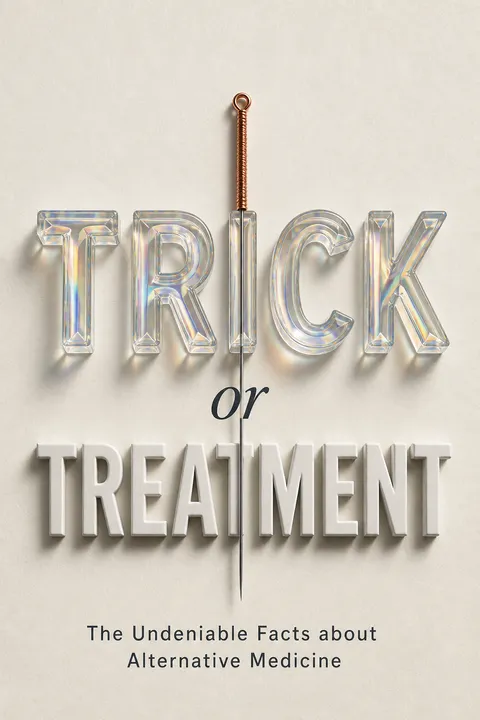
Trick or Treatment examines alternative medicine through scientific scrutiny. The authors thoroughly investigate acupuncture, homeopathy, chiropractic, and herbal medicine, concluding that most are no more effective than placebos. While some readers appreciate the evidence-based approach and clear writing, others find it biased against alternative therapies. The book provides historical context, explains clinical trials, and includes a guide to various alternative treatments. Many reviewers consider it essential reading for understanding the efficacy and risks of alternative medicine, though some critique its repetitive nature and perceived lack of neutrality.
People Also Read





Glossary
Evidence-based medicine
care guided by researchA method of making medical decisions using the best available research alongside clinical expertise and the needs of the individual patient. It emphasizes testing treatments, evaluating the quality of evidence, and revising conclusions when stronger findings emerge. In the book, it is the standard used to assess both mainstream and alternative therapies.
Randomized controlled trial
randomized treatment comparisonA study that compares a treatment group with a control group, assigning participants to groups by chance. Randomization helps make the groups comparable, while the control provides a basis for estimating what would have happened without the treatment or with an alternative. Placebos and blinding can further reduce bias when they are practical and ethical.
Placebo effect
benefit shaped by expectationA change in symptoms or health associated with a patient’s expectations, experiences, or the context of care, rather than the specific pharmacological action of an active treatment. The book describes placebo responses as potentially meaningful, especially for pain and other symptoms, while stressing that they can make ineffective treatments appear effective in uncontrolled comparisons.
Systematic review
critical review of studiesA structured assessment of research on a particular treatment and question. Reviewers search for relevant studies, evaluate their quality, and weigh their results rather than treating every paper as equally reliable. A systematic review can clarify a conflicting research record, but its conclusions depend on the studies included and the rigor of the review.
Meta-analysis
statistical pooling of studiesA statistical method that combines results from multiple studies to estimate an overall effect. Pooling can make findings from small trials more informative, but studies must be sufficiently comparable, and weaker research can distort the result. The book describes how homeopathy’s apparent benefit diminished when analyses gave greater weight to higher-quality trials.
Publication bias
selective reporting of findingsA distortion that occurs when studies with positive results are more likely to be published than studies with negative or inconclusive results. A review of published papers can then give an overly favorable impression of a treatment because missing results remain unseen. The book raises this concern in its discussion of acupuncture research originating in China.
Potentization
dilution followed by shakingThe homeopathic preparation process of repeatedly diluting a substance and vigorously shaking the mixture between stages. Homeopathy claims that this process increases a remedy’s potency as the original substance becomes more dilute. The book explains that common high dilutions are so extreme that the final remedy is unlikely to contain a molecule of the starting material.
FAQ
What's Trick or Treatment about?
- Exploration of Alternative Medicine: Trick or Treatment by Simon Singh and Edzard Ernst investigates the effectiveness and safety of various alternative medicine practices, including acupuncture, homeopathy, chiropractic therapy, and herbal medicine.
- Scientific Method Focus: The book emphasizes the importance of the scientific method in evaluating medical treatments, arguing that opinions should not overshadow empirical evidence.
- Patient Choices and Safety: It discusses the implications of alternative medicine on patient choices and safety, questioning whether these therapies should be integrated into mainstream healthcare.
Why should I read Trick or Treatment?
- Informed Decision-Making: Reading this book equips you with the knowledge to make informed decisions about your health and the treatments you choose, especially regarding alternative therapies.
- Balanced Perspective: The authors combine their backgrounds in science and medicine to evaluate alternative treatments, offering a balanced perspective on their potential benefits and limitations.
- Engaging Narrative: Singh presents complex medical topics in an engaging and accessible manner, making it suitable for both lay readers and those with a scientific background.
What are the key takeaways of Trick or Treatment?
- Importance of Evidence: The book stresses that scientific evidence should guide medical decisions rather than anecdotal experiences or marketing claims.
- Skepticism Towards Alternative Therapies: Many alternative therapies, such as homeopathy and acupuncture, are shown to lack substantial evidence for their effectiveness.
- Call for Regulation: Singh advocates for stricter regulations on alternative medicine to ensure patient safety and to prevent exploitation by practitioners of unproven therapies.
What are the best quotes from Trick or Treatment and what do they mean?
- Science vs. Opinion: “There are, in fact, two things, science and opinion; the former begets knowledge, the latter ignorance.” This underscores the importance of relying on scientific evidence rather than personal beliefs.
- No Alternative Science: “The truth is that there is no such thing as alternative science, just as there is no alternative biology.” This emphasizes that all medical practices should adhere to the same rigorous scientific standards.
- Risks of Ineffective Treatments: “If ineffective herbs replace an effective conventional treatment, then it is almost inevitable that the patient’s condition will deteriorate.” This highlights the dangers of relying on unproven alternative treatments.
How do the authors evaluate alternative therapies in Trick or Treatment?
- Scientific Trials Analysis: The authors systematically review scientific trials related to various alternative therapies, focusing on randomized controlled trials as the gold standard.
- Comparison with Conventional Medicine: The book compares the effectiveness of alternative therapies with conventional medical treatments, highlighting where alternative methods fall short.
- Critical Examination of Claims: Singh and Ernst critically examine the claims made by alternative medicine practitioners, often revealing inconsistencies and lack of evidence.
What is the scientific method, and why is it important in Trick or Treatment?
- Definition of Scientific Method: It involves systematic observation, experimentation, and analysis to draw conclusions about the effectiveness of treatments.
- Foundation for Conclusions: The authors use the scientific method as the foundation for their conclusions about alternative therapies, ensuring evaluations are based on solid evidence.
- Encouraging Critical Thinking: By emphasizing the scientific method, the book encourages readers to adopt a critical thinking mindset when evaluating medical claims.
What does Trick or Treatment say about acupuncture?
- Historical Context: The book discusses the historical origins of acupuncture, tracing its roots back to ancient practices in China and Europe.
- Lack of Scientific Support: Despite its popularity, the authors conclude that acupuncture lacks substantial scientific evidence for its effectiveness in treating various conditions.
- Placebo Effect: The book suggests that any benefits from acupuncture are likely due to the placebo effect rather than the treatment itself.
How does Trick or Treatment evaluate homeopathy?
- Core Principles of Homeopathy: The book explains that homeopathy is based on the principle of "like cures like," critiqued for lacking scientific validity.
- Extreme Dilution: Homeopathic remedies are often diluted to the point where they contain no molecules of the original substance, raising questions about their efficacy.
- Lack of Evidence: The authors present evidence from clinical trials showing that homeopathy does not work beyond the placebo effect.
What are the dangers of chiropractic therapy according to Trick or Treatment?
- Risk of Serious Injury: Singh highlights that chiropractic manipulation, particularly of the neck, carries risks such as stroke and even death.
- High Malpractice Rates: The book cites statistics indicating that chiropractors are more likely to face malpractice claims compared to medical doctors.
- Questionable Diagnostic Techniques: Singh criticizes the unorthodox diagnostic methods used by some chiropractors, which can lead to unnecessary treatments.
What does Singh say about herbal medicine in Trick or Treatment?
- Mixed Evidence: The book acknowledges that while some herbal remedies have shown effectiveness, many others are unproven or potentially harmful.
- Quality Control Issues: Singh points out that herbal products often lack standardization and quality control, leading to variations in potency and safety.
- Risks of Self-Medication: The book warns against self-medicating with herbal remedies, as this can delay necessary medical treatment.
How does Trick or Treatment address the concept of the placebo effect?
- Significant Impact: Singh explains that the placebo effect can lead to real improvements in patients' conditions, but it should not be confused with the effectiveness of the treatment itself.
- Ethical Considerations: The book raises ethical questions about the use of placebos in clinical practice, arguing that patients deserve honest information.
- Alternative Therapies and Placebo: Many alternative therapies rely heavily on the placebo effect, which can mislead patients into believing in the efficacy of treatments that lack scientific backing.
What recommendations does Trick or Treatment make for patients considering alternative therapies?
- Consult Conventional Medicine First: Singh advises patients to seek conventional treatments before exploring alternative options, especially for serious health issues.
- Research and Verify: The book encourages patients to research the evidence behind any alternative therapy they are considering and to be wary of unsubstantiated claims.
- Be Cautious with Children: Singh emphasizes that children are particularly vulnerable to the risks of alternative therapies, and parents should be especially cautious.
About the Author
Other books by Simon Singh

Download PDF
Download EPUB
.epub digital book format is ideal for reading ebooks on phones, tablets, and e-readers.








