

Key Takeaways
Treat mortality as a clue to why humans keep reaching for permanence
Death changes the questions. Humans can remember the past, imagine distant futures, and recognize that their own lives will end. Brian Greene proposes that this awareness helps explain our persistent attraction to things that seem lasting: scientific laws, religious afterlives, monuments, art, and the hope of a legacy. Ernest Becker’s account of death anxiety frames culture as one way people manage the tension between ambitious minds and mortal bodies. Greene treats mortality as an important influence, not a single explanation for every human motive.
Science widens the frame. The same search for permanence unfolds against a universe in which stars, planets, life, and thought appear temporary. That contrast does not settle why existence matters. It does make the human desire for permanence easier to see, and turns the book’s journey from cosmic origins to cultural meaning into one connected question.
The argument is strongest as a lens, not a master key. Awareness of death can shape what people value, but curiosity, attachment, play, and practical problem-solving also motivate human action. Greene’s restraint about a universal explanation matters: the same artwork or scientific project can satisfy several motives at once. The cosmic perspective adds a useful distinction between wanting to last and wanting an experience to matter. A legacy may disappear eventually, yet its temporary effects on living people remain real while they occur.
Build local order by moving disorder and waste somewhere else
Entropy counts possibilities. In statistical physics, entropy measures how many microscopic arrangements can produce the same broad, observable state. A neatly arranged set of pennies has fewer compatible arrangements than a random mixture, so the random state is vastly more likely. The second law says total entropy tends to increase, not that every local region must become more disordered.
Order exports a cost. A steam engine can perform useful work only while it takes in concentrated energy and releases waste heat. Greene calls this exchange the entropic two-step: a system can become more ordered by causing a larger increase in entropy around it. Stars form through a similar process. Gravity gathers gas into a hot core while heat flows outward, raising the entropy of the surroundings by more than the core’s order lowers it. Life follows the same broad thermodynamic logic.
This account replaces the misleading slogan that entropy simply means mess. It makes energy quality central: a fixed amount of energy can be easy or difficult to use, depending on how concentrated it is. That distinction links engines, stars, and organisms without claiming they are identical systems. The useful question becomes not whether order appears, but what energy flow sustains it and where the resulting waste goes. This perspective also discourages treating local organization as evidence that nature has suspended its ordinary laws.
Trace energy and replication to explain life, while keeping its origin open
Stars supply the ingredients. The early universe produced mostly hydrogen and helium. Stars forged heavier elements, including carbon and oxygen, and stellar explosions and neutron-star collisions spread many of those elements through space. A later generation of stars and planets, including our solar system, formed from this enriched material. Water’s unusual electrical structure helps it dissolve and transport substances, making it an effective medium for cellular chemistry.
Life has shared machinery. Earth’s organisms use a nearly universal genetic code and related systems for extracting energy, storing it, and delivering it through ATP molecules. That commonality supports descent from a shared ancestor, but it does not explain how the first life began. One proposal, the RNA World, imagines early molecules that could both carry information and help catalyze their own replication. The origin remains unresolved; molecular Darwinism offers a possible route from imperfect replication and competition to greater chemical complexity.
The account separates two questions that popular explanations often blur: how living systems work, and how the first living system arose. Shared DNA coding and energy pathways make common ancestry persuasive, while origin scenarios remain provisional. This is a productive model of scientific confidence: strong convergence on some claims can coexist with uncertainty about an earlier transition. It also shows why reduction alone is insufficient as an explanation. Knowing the ingredients matters, but so do the organized processes that let those ingredients store information, use energy, and reproduce.
Explain minds through physical mechanisms and lived experience
One brain, different descriptions. Neurons and their activity can be studied from the outside, while sensations such as seeing red are known from the inside. The hard problem of consciousness names the challenge of explaining why physical processes are accompanied by subjective experience at all. Greene contrasts proposals that consciousness may require new fundamental properties with physicalist accounts that expect brain science to explain it using familiar matter and laws.
Levels need not compete. A complete account of a baseball’s particles would not explain what a batter feels under pressure; a human-level story answers a different question. Greene’s nested naturalism holds that explanations at many scales can be useful, provided they remain compatible with physical law. Brain research can map processes associated with awareness, but the relationship between such processes and felt experience remains unsettled.
The section’s most valuable move is to resist a false choice between neuroscience and first-person experience. Neural measurements can explain perception, memory, and behavior without yet explaining why experience feels like anything. Naming that gap clarifies the problem instead of treating mystery as proof of a supernatural ingredient. At the same time, the gap is not evidence that physical explanations must fail. The history of science counsels patience: a problem can look conceptually impossible before the right explanatory vocabulary and measurements exist.
Trade absolute free will for the richer freedom to respond
Physics leaves no outside lever. Greene argues that thoughts and actions arise from physical processes governed by nature’s laws. Quantum mechanics introduces probabilities, but its equations still determine those probabilities; randomness alone does not create a freely chosen decision. On this view, people are not ultimate authors who can step outside the causal unfolding of the universe.
Organization changes what is possible. A rock and a person obey the same physical laws, yet a person can learn, deliberate, save someone from danger, and change behavior in response to experience. Greene calls this a meaningful form of freedom: a complex organism has a far wider range of responses than an inanimate object. Learning and responsibility still matter because actions shape what happens next, even if they are not uncaused. The higher-level account of choices remains useful alongside the physical one.
This reframing preserves practical agency without pretending that human beings are exempt from nature. It shifts attention from whether a choice has no causes to whether a person can recognize reasons, learn from consequences, and respond flexibly. That is a more workable basis for education and social policy than treating behavior as either wholly free or irrelevant. A complication remains: responsibility can mean moral authorship, accountability, or simply being the source of an action. The argument supports the latter senses more clearly than the first.
Use stories to rehearse lives beyond your own
Language enlarges the social world. Human language can recombine a finite set of sounds into an open-ended range of ideas, including events that happened yesterday or plans for tomorrow. Researchers offer different accounts of its origins: communication may have aided cooperation, gossip may have helped manage relationships, or language may have first strengthened private thought. The evidence does not settle the question.
Stories simulate possibilities. Greene presents fiction as a kind of mental practice. Following characters through danger, conflict, and difficult choices lets readers encounter situations beyond their own experience without facing the real-world consequences. Stories can also make other people’s motives more legible, helping social life. The ancient Epic of Gilgamesh shows how enduring these concerns are: its grief, ambition, and fear of death remain recognizable despite the distance between its world and ours.
Stories do more than pass along information. They organize experience into motives, consequences, and relationships, which makes them particularly suited to social understanding. The rehearsal idea is compelling because it explains why fictional trouble can be absorbing rather than merely distracting. But usefulness is not proof of evolutionary design. Storytelling may combine adaptation, cultural inheritance, and pleasure, with different functions in different settings. Its value is also not exhausted by preparing readers for decisions. Stories can make unfamiliar lives emotionally present, a form of understanding that instruction alone rarely provides.
Read religion and art as inventions with consequences, not mere illusions
Belief draws on evolved habits. Human minds readily detect agency, infer other people’s intentions, and remember ideas that are surprising but still partly familiar. These tendencies can make spirits and gods intuitively compelling. Religious practice may also strengthen group loyalty, discourage cheating through the imagined presence of a watcher, or ease the strain of mortality. Greene presents these as competing hypotheses, not settled explanations.
Art does more than signal fitness. Some theories treat artistic talent as a way to attract mates; others call art a pleasure-producing by-product of brains shaped for survival. Greene also considers art’s capacity to bind groups and train imagination. A shared song or ritual can create solidarity, while imaginative works can help people see familiar problems differently. Religious and artistic traditions may therefore shape behavior and community even when their supernatural or factual claims are not accepted literally.
The distinction between factual truth and human consequence keeps this discussion from collapsing into either dismissal or endorsement. A belief can be unsupported as a description of the physical universe and still organize ritual, identity, comfort, or cooperation. Likewise, art need not have a proven evolutionary purpose to be valuable. The cautions are important: explanations based on adaptation are difficult to test against the ancient past, and shared traditions can support both solidarity and exclusion. Their force comes from what people do with them, not simply from where they began.
Measure civilization against a universe whose stars and structures expire
The future has landmarks. The sun is expected to swell in roughly five billion years, making Earth uninhabitable. Star formation across most galaxies is projected to fade over about one hundred trillion years. On still longer timescales, gravitational encounters can eject planets and stars, while black holes gradually radiate away. Some theories also predict that protons decay, dismantling ordinary matter, though that remains unobserved.
Thought has physical needs. Any thinker must obtain usable energy and dispose of waste heat. Freeman Dyson showed how a hypothetical mind might stretch its energy supply by thinking more slowly and resting between periods of activity. But if accelerated cosmic expansion persists, the universe’s background temperature may set a lower limit on cooling, preventing indefinite waste disposal. Greene estimates that thought could end around 10^50 years from now under these assumptions. These are conditional forecasts, not a precise schedule.
Cosmic timescales turn abstract transience into a physical story: stellar fuel runs down, structures become less available, and even computation has thermodynamic constraints. The forecasts are valuable partly because they expose their assumptions. Dark energy’s long-term behavior, proton stability, and the physical form of future minds are uncertain, so the details are less secure than the broad lesson that familiar environments are not permanent. The distinction between a robust physical constraint and a speculative forecast is essential when scientific precision can make distant scenarios sound more certain than they are.
Treat cosmic probabilities cautiously: eternity can make rare minds plausible
Time changes what counts as negligible. Quantum mechanics permits outcomes that are extraordinarily unlikely but not forbidden. Over familiar durations, such events can safely be ignored. Across immense stretches of time, rare fluctuations may become important. A Boltzmann brain is a hypothetical mind assembled by an improbable fluctuation in a disordered universe, complete with memories that may have no real history behind them.
The possibility threatens confidence. If such minds eventually outnumber minds formed through ordinary cosmic history, a randomly selected observer might appear more likely to be one of them. That would undermine confidence in memories and scientific evidence, including the argument that led to the puzzle. Proposed resolutions include a finite cosmic lifetime, a changing dark energy, or a different account of cosmic evolution. Infinite space also raises the possibility of repeated histories, but these conclusions depend on disputed assumptions about probability and cosmology.
The Boltzmann brain puzzle is not just an exotic prediction. It is a stress test for the rules used to interpret probability and for the trustworthiness of observation itself. Its self-undermining character is philosophically useful: a theory that predicts observers should distrust their evidence may have a serious problem, even if the reasoning is internally consistent. Yet the puzzle is not a direct forecast that human memories are false. It depends on contentious assumptions about how to count observers and cosmic fluctuations, making it a warning about inference rather than a reason for everyday skepticism.
Make meaning for finite lives and for people who inherit their work
The future gives present work context. Greene considers a thought experiment: would life feel different if humanity were destined to disappear shortly after one’s own death? For him, the prospect of no descendants to receive knowledge or build on shared achievements threatens the value of projects more deeply than an individual death does. The philosopher Samuel Scheffler similarly argues that many commitments quietly assume human life will continue beyond any one person.
Meaning is not a cosmic instruction. Physical laws describe how the universe unfolds, but they do not appear to assign it a purpose. Greene concludes that meaning arises within minds and cultures through relationships, inquiry, creativity, and the values people make and share. Permanence is unavailable, but that does not make experience empty. A temporary act can matter to the people it touches, even if neither the act nor its legacy lasts forever.
This ending links personal meaning to something larger without requiring belief in an eternal record. The claim that descendants support present commitments is illuminating, though not universal: some people may value an activity for its immediate experience, regardless of who follows. The broader point survives that disagreement. Meaning can be relational and time-bound rather than written into the fabric of the cosmos. That account makes value neither an objective cosmic property nor a private whim, but a human achievement shaped by shared lives and consequences.
Analysis
The book’s central achievement is to make cosmology and human culture parts of one narrative without pretending they answer the same questions. Entropy explains why usable energy degrades and why local order requires exchange with an environment. Evolution explains how replication and selection can build increasingly capable organisms. Neither framework supplies a purpose. Language, religion, science, and art arise within the physical story, yet their meanings are not usefully reduced to particle descriptions. This is the logic of nested explanation: a lower-level account constrains a higher-level one, but does not replace its vocabulary or its purposes.
The synthesis is most persuasive when it marks differences in evidential strength. The second law and stellar evolution rest on mature physical theories, while accounts of life’s origin, consciousness, ancient religious behavior, and the distant fate of thought contain substantial uncertainty. Greene generally acknowledges that distinction, but the smooth narrative can make speculative hypotheses feel like established links in a chain. Readers should retain the conditional language, especially around inflation, molecular origins, physicalism, and cosmic end states.
The philosophical conclusion is neither cosmic optimism nor nihilism. If meaning is not an ingredient in fundamental physics, that does not make it unreal any more than temperature or a novel is unreal because neither appears in a basic particle inventory. Higher-level properties depend on physical arrangements while remaining intelligible at their own scale. The book’s strongest implication is therefore practical but not simplistic: impermanence is not a defect that must be repaired by eternity. It is a condition under which attention, care, discovery, and shared work acquire urgency. The present matters not because it lasts, but because conscious beings can experience it and affect one another within it.
Review Summary
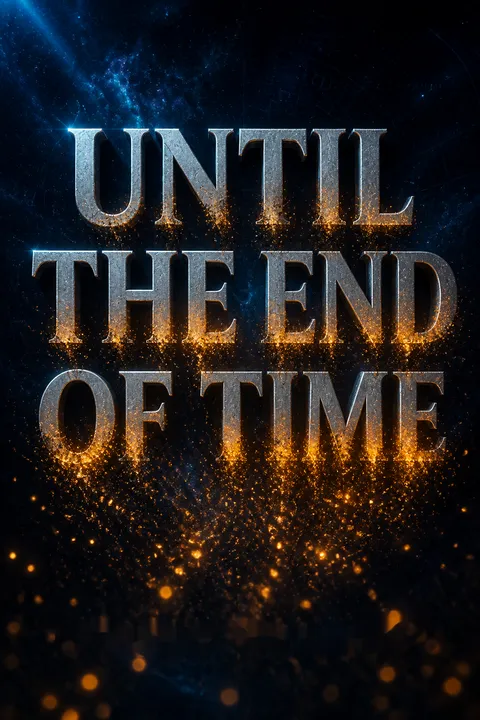
Until the End of Time explores the universe's history and future, delving into physics, consciousness, and philosophy. Reviews praise Greene's accessible writing and fascinating ideas, though some found the philosophical sections less compelling than the scientific ones. Readers appreciated Greene's awe-inspiring perspective on existence and meaning, but some felt the book lacked focus or relied too heavily on reductionism. Overall, the book offers a thought-provoking journey through cosmic time, blending science and humanistic inquiry to contemplate life's ultimate questions.
People Also Read

Glossary
entropic two-step
Local order through exported entropyA process in which a system becomes more ordered by transferring entropy to its surroundings. The system’s local decrease is more than offset by an increase in the environment, so total entropy still rises. Stars, steam engines, and living organisms illustrate different forms of this exchange.
molecular Darwinism
Selection among replicating moleculesA proposed prebiotic process in which molecules replicate imperfectly, producing variants that compete for limited materials and conditions. Variants that replicate more successfully become more common. Greene presents molecular Darwinism as a possible contributor to life’s emergence, not as a complete or confirmed account of life’s origin.
nested naturalism
Compatible explanations at multiple scalesGreene’s view that all events are describable through physical constituents and laws, while explanations at higher levels can be more useful for particular questions. Accounts of particles, organisms, minds, and cultures should fit together, but concepts such as learning, meaning, and social behavior need not be replaced by particle-level descriptions.
hard problem
Why physical processes feel like somethingThe challenge of explaining why brain activity is accompanied by subjective experience, such as the felt quality of seeing a color or feeling pain. It differs from explaining how the brain processes information or guides behavior. The problem remains unresolved, and disagreement persists over whether conventional physical science can fully address it.
Boltzmann brain
A mind formed by random fluctuationA hypothetical observer that forms spontaneously when particles in a high-entropy universe briefly arrange themselves into a brain-like configuration. Its apparent memories could be false, with no corresponding personal history. The possibility raises questions about observer probabilities, cosmological assumptions, and whether scientific evidence can be trusted.
dissipative adaptation
Energy-driven molecular organizationJeremy England’s proposed process in which a system exposed to a steady energy source can shift toward arrangements that absorb and dissipate energy effectively. Such arrangements may become more organized while releasing degraded energy to their environment. Greene presents the idea as a possible physical contribution to the emergence of life, still under investigation.
FAQ
What's Until the End of Time about?
- Exploration of Existence: Brian Greene's book delves into fundamental questions about existence, time, and the universe, examining how life and consciousness emerge from the laws of physics.
- Interconnected Themes: It weaves together cosmology, physics, and human experience, exploring how these disciplines inform our understanding of meaning and purpose.
- Journey Through Time: The narrative spans from the origins of the universe to the eventual fate of all matter, emphasizing the transient nature of existence.
Why should I read Until the End of Time?
- Insightful Perspective: Greene offers a unique perspective on the intersection of science and philosophy, making complex concepts accessible to a general audience.
- Engaging Storytelling: The book captivates readers with a narrative style that blends scientific rigor with personal reflection and storytelling.
- Broad Appeal: It provides valuable insights for both science enthusiasts and those curious about the meaning of life, resonating across disciplines.
What are the key takeaways of Until the End of Time?
- Transience of Existence: The book emphasizes the impermanence of life and the universe, highlighting that "in the fullness of time all that lives will die."
- Role of Entropy: Greene discusses how entropy drives the universe toward disorder while facilitating the emergence of complex structures, including life.
- Unity of Life: The author illustrates that all life shares a common ancestry and operates under similar biochemical principles, reinforcing interconnectedness.
What are the best quotes from Until the End of Time and what do they mean?
- “In the fullness of time all that lives will die.”: This quote encapsulates the book's central theme of mortality and the transient nature of existence.
- “We are the product of a long lineage that has soothed its existential discomfort by envisioning that we leave a mark.”: Greene reflects on humanity's desire for permanence and legacy in the face of inevitable decay.
- “Life is physics orchestrated.”: This statement underscores the idea that the processes of life are fundamentally rooted in physical laws, bridging science and the essence of living.
How does Brian Greene explain the concept of entropy in Until the End of Time?
- Entropy as Disorder: Greene describes entropy as a measure of disorder in a system, stating that "over time there is an overwhelming tendency of entropy to increase."
- Entropic Two-Step: He introduces the "entropic two-step," where localized decreases in entropy (like star formation) are offset by greater increases in the surrounding environment.
- Role in Life: The author argues that life itself manages entropy, extracting energy from the environment to maintain order and complexity.
How does Until the End of Time address the concept of consciousness?
- Consciousness as a Physical Phenomenon: Greene argues that consciousness arises from complex arrangements of particles and their interactions, rooted in physical reality.
- The Hard Problem of Consciousness: The book engages with philosophical questions about how subjective experiences emerge from objective processes.
- Evolution of Thought: Greene explores the evolutionary basis for consciousness, suggesting it provides survival advantages and is a product of natural selection.
What is the relationship between consciousness and quantum physics in Until the End of Time?
- Quantum Mechanics as Foundation: Greene acknowledges that quantum mechanics underpins the physical basis of everything, including consciousness.
- Quantum Measurement Problem: He discusses how reality transitions from probabilistic states to definite outcomes, arguing that consciousness is unlikely to play a special role.
- Skepticism of Quantum Consciousness Links: Greene expresses skepticism about claims that consciousness is fundamentally linked to quantum mechanics.
How does Brian Greene envision the future of the universe in Until the End of Time?
- Cosmic Timeline: Greene outlines a vision of the universe's future, suggesting it will ultimately lead to a state of increased entropy and disorder.
- Role of Dark Energy: He explains how dark energy may lead to scenarios like the "big rip," where the universe could be torn apart by accelerating expansion.
- Long-Term Survival of Life: Greene speculates on the potential for life to adapt and persist in the far future, even as conditions change dramatically.
What role does art play in Until the End of Time?
- Art as Expression of Humanity: Greene argues that art is fundamental to human experience, allowing exploration and communication of complex emotions and ideas.
- Art and Social Cohesion: He suggests that shared artistic experiences foster social bonds and enhance group cohesion.
- Creativity and Innovation: Greene highlights the importance of creativity in driving innovation and problem-solving, cultivating a flexible mindset.
How does Until the End of Time explore the future of the universe?
- Cosmological Scenarios: Greene outlines theories about the universe's fate, including heat death and cyclical models, suggesting a bleak future for consciousness.
- Boltzmann Brains: The book introduces hypothetical self-aware entities that could arise in a high-entropy universe, discussing their implications for reality.
- Eternal Recurrence: Greene touches on the idea of eternal recurrence, where particle configurations may repeat over vast timescales, raising questions about identity.
What is the significance of the title Until the End of Time?
- Temporal Exploration: The title reflects Greene's exploration of time, both in terms of the universe's history and its future.
- Human Experience: It evokes the human desire to understand our place in the universe and the significance of our existence.
- Philosophical Inquiry: The title invites readers to engage with profound questions about life, consciousness, and the nature of reality.
What are the philosophical implications of Until the End of Time?
- Existential Reflection: Greene encourages readers to contemplate their existence within the vast timeline of the universe.
- Interconnectedness of Science and Philosophy: The book illustrates how scientific discoveries inform philosophical inquiries about meaning and existence.
- Legacy and Memory: Greene discusses the importance of legacy and the desire for continuity in human experience, emphasizing the value of our contributions.
About the Author
Download PDF
Download EPUB
.epub digital book format is ideal for reading ebooks on phones, tablets, and e-readers.








