


Key Takeaways
Treat imagination as a tool for reality, not an escape from it.
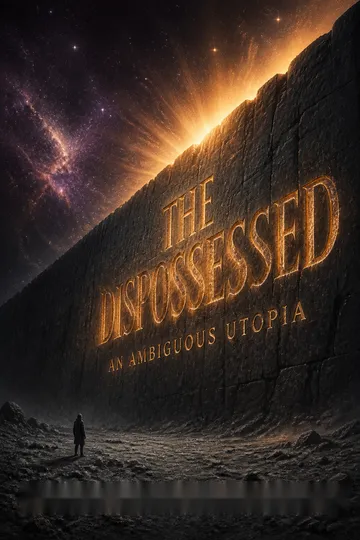
Imagination has practical work. Le Guin argues that fantasy does not have to imitate the visible world to tell the truth about it. Children can know dragons are imaginary and still recognize truths in stories about them. Imaginative stories let readers rehearse possibilities, question social arrangements, and picture futures that do not yet exist. In her novel The Dispossessed, an anarchist society uses a changed language as part of its attempt to build a changed social order. The imagined world makes the relationship between words and institutions easier to see.
A faculty to exercise. Le Guin worries that education often trains rational skills while treating imaginative work as frivolous. Myths, too, can help communities understand who they are, where they belong, and how they relate to the land. Imagination does not replace evidence; it expands what people can notice and consider.
What's striking is that imagination is presented not as the opposite of reason, but as a way to generate questions reason can test. This resembles scenario planning: a community imagines several possible futures, then considers what choices might lead toward or away from them. Fiction can make abstract systems emotionally legible by letting readers inhabit their consequences. Yet imaginative power is not automatically wise. Stories can naturalize prejudice as easily as challenge it. The practical lesson is to treat imagination as a capacity requiring both freedom and scrutiny, much like any other instrument of thought.
Read sentences aloud, then use grammar as a tool rather than a badge.
Sound carries meaning. Le Guin listens to the prose she writes, attending to cadence, sentence length, and the underlying rhythm that makes language feel clear or clumsy. She traces this attention partly to Virginia Woolf, whose prose shows how rhythm can shape a reader's experience before any single idea is isolated. Grammar matters, too: knowing how sentences are built gives writers conscious control over their tools. Le Guin learned to diagram sentences by studying the work's underlying structure, much as an artist might learn how a form is assembled.
Rules have politics. Le Guin calls some prescriptive grammar rules fake rules when they enforce status rather than clarity. She points to resistance against singular they and the rule that generic he can stand for everyone. Such conventions can make some people visible and others disappear. Correctness, in her view, is not the same as moral or artistic quality.
This account joins craft to embodied cognition: reading aloud lets writers detect patterns that silent proofreading can miss, because breath and hearing register strain, emphasis, and pace. Grammar knowledge also gives writers more choices, not fewer. At the same time, conventions are not all arbitrary. Shared usage can help readers follow complex sentences, and a writer may choose a traditional form for deliberate effect. The useful distinction is between learning how language works and treating one social group's preferences as timeless law.
Choose tense and viewpoint for the story, not the current fashion.
Technique changes the view. Le Guin objects to writers treating present tense or first-person narration as default choices. Present tense can create immediacy and suspense, but she calls its narrow field of attention “flashlight focus”: the reader follows the next moment while the past and future recede. Past tense can more easily move through memory, history, and possibility. Neither is automatically superior; the story's scale and movement should guide the decision.
Perspective is movable. Le Guin favors deliberate experimentation with point of view, including what she calls authorial point of view, in which the narrative can move among characters' minds. Tolstoy and Virginia Woolf demonstrate how such shifts can widen or complicate a scene without confusing the reader. Unplanned shifts, by contrast, create inconsistency. The craft problem is not simply which viewpoint to use, but how consciously to manage it.
Narrative viewpoint is an information design choice. A limited perspective can create intimacy by restricting what readers know, while a broader one can expose gaps between what characters believe. That makes viewpoint relevant to more than suspense: it shapes whose experience counts as evidence. Le Guin's resistance to fashion is especially useful in a culture that can mistake familiarity for necessity. Still, conventions sometimes persist because they solve real problems efficiently. The aim is not novelty for its own sake, but knowing what a chosen form makes visible and what it keeps outside the frame.
Let stories hold change, relation, and peace, not just combat.
Conflict is not the whole plot. Le Guin challenges the writing advice that treats every story as a battle. Conflict matters, but making it the only engine of narrative narrows the range of human experience and can imply that life is fundamentally a contest resolved through force. Her own experience of the Second World War sharpened the distinction: she remembers the postwar period as a return to space for creation and thought, rather than a time when war itself made art flourish.
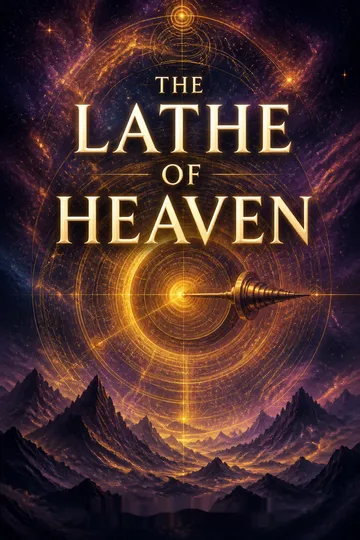
Change can move quietly. Le Guin describes story as centrally concerned with change, an idea connected to Taoist thought in her work. In The Lathe of Heaven, dreams alter reality, and the reader cannot always cleanly separate dream from waking life. This kind of movement makes uncertainty and transformation the story's substance, rather than treating every meaningful turn as a victory over an opponent.
Conflict is an efficient narrative device because it creates pressure, but pressure is not the only source of change. Care, discovery, grief, cooperation, and gradual adaptation can also reorganize a life. Le Guin's challenge invites writers to ask whether a story needs an antagonist or whether it needs a meaningful alteration in how characters understand one another. The caution is that avoiding conflict can become its own formula, especially when injustice requires naming who benefits and who is harmed. A fuller narrative vocabulary makes room for struggle without reducing all experience to combat.
Let form constrain you until it reveals choices you could not see.
Limits can generate material. Le Guin finds that a chosen form can give a writer a problem worth solving. A villanelle, for instance, requires lines to return at set intervals; accepting the pattern seriously can prompt discoveries that free-form drafting might not. She sees a related possibility in genre fiction: its conventions can direct attention toward ideas and evidence a writer might otherwise overlook. Form is not a cage if the artist actively works with it.
Practice by subtraction. Le Guin's exercise “Chastity” asks writers to draft without adjectives or adverbs, forcing more work onto nouns and verbs. Another exercise, which she calls “A Terrible Thing to Do,” asks writers to cut a piece of their own prose in half while preserving its meaning. Both expose habitual excess and make revision concrete. They are training devices, not rules that every finished work must obey.
Constraint-based work is a useful antidote to the blank page: a narrow task reduces the number of decisions and can reveal habits that broad advice leaves untouched. It also shifts attention from self-expression alone toward problem-solving. Le Guin's exercises make revision tactile, since a writer can compare what disappears with what becomes stronger. The limit is that deletion is not inherently improvement. A long sentence or adjective may be exactly right when it serves voice, atmosphere, or precision. Exercises are most valuable as temporary lenses, not permanent commandments.
Use poetry's attention to make the nonhuman world more than scenery.
Attention creates relationship. Le Guin uses “the nonhuman other” for animals, plants, stones, and human-made objects considered beyond their usefulness to people. Her poetry attends to a well-used stone pestle, imagining the hands and repeated labor that shaped it. She argues that poetry can describe the world from within a felt relationship, while science describes it through external observation. Both ways of knowing matter.
Technology has many scales. Le Guin rejects the label of being against technology. A kitchen knife or pestle is also a technology; her concern is with resource-intensive high technology and the promise that machines should remove people from direct experience. She also resists the idea that animals' feelings are unknowable simply because humans cannot fully share their perspective. Fellowship requires attention, though not a claim to know everything about another being.
The distinction between observation and fellowship opens a productive conversation between environmental ethics and the arts. Accurate description can correct human projection, while imaginative identification can challenge the assumption that other lives matter only when useful to people. Neither method is sufficient alone. Empathy without attention risks turning an animal or landscape into a mirror of human feeling; detached measurement can make living beings seem like objects. Le Guin's position is strongest when these approaches remain in conversation, with poetry extending concern and evidence keeping that concern honest.
Write nonfiction to find out what you think, not merely announce it.
Prose can be inquiry. Le Guin describes her essay “Living in a Work of Art” as an exploration of the childhood home that shaped her. Writing about the house helped her discover connections between its design and her sense of what a novel could be. In this mode, prose is not just a delivery vehicle for an opinion already formed; the act of writing makes new understanding possible.
Opinions need an exit. Le Guin finds nonfiction harder than fiction because it asks her to make explicit claims about subjects where others may know more. She describes laboring over first pages and sometimes rewriting an essay after delivering it as a talk. For writing based on opinion, she argues for endings that leave room for further thought rather than pretending the question is settled. Exploration does not excuse carelessness: factual claims still need support.
This approach resembles reflective practice, in which putting an experience into words helps a person examine assumptions that were previously implicit. It also explains why a draft can surprise its writer: language is not merely a container for thought, but a tool for testing and revising it. The open ending is valuable when evidence is incomplete or the subject is genuinely contested. It should not become a way to blur established facts. Intellectual humility is most persuasive when paired with clarity about what is known, what is interpretation, and what remains uncertain.
Imagine across difference carefully, and credit voices your account depends on.
Imagination has ethical limits. Le Guin worries that writing across cultural or human differences can become appropriation when the writer takes over a voice that has already been ignored. She points to white writers speaking for Indigenous people and men speaking for women as histories in which representation often accompanied exclusion. Her fictional autobiography of her cat Pard is also a deliberate act of imagining another being's inner life, one she recognizes could misrepresent him.
Empathy needs vigilance. Le Guin describes Charles L. McNichols's Crazy Weather as a book she judged unusually successful in imagining a boy raised by Mojave people. She took a risk in endorsing it, and notes that a Native grandmother's introduction approving the book mattered to her assessment. The example does not make cross-cultural writing automatically safe. It shows the importance of care, credit, and attention to who has authority to speak.
The section identifies a central tension in representation: refusing to imagine beyond one's own experience can preserve distance, but imagining without accountability can reproduce the very silencing it claims to overcome. Empathy is therefore a starting capacity, not proof of accuracy. Crediting sources, noticing unequal power, and listening to people represented in a work help make imaginative effort answerable to others. The case of animals complicates the question because they cannot authorize a human account in the same way. That makes humility especially important, without requiring silence about their lives.
Track who gets remembered, because literary canons are made by omission.
Recognition is uneven. Le Guin describes women writers being diminished through denigration, omission, treatment as exceptions, and eventual disappearance from literary memory. She worries that Grace Paley may fade from view and contrasts the later reputations of science fiction writers C. J. Cherryh and William Gibson, whose work had both helped shape their field. A writer's influence and quality do not guarantee equal visibility.
Credit matters materially. Le Guin recounts how Wallace Stegner built his novel Angle of Repose from Mary Foote's life and writing, yet did not name Foote in the acknowledgment she believed she deserved. She also challenges the separation of genre fiction from “serious” literature and criticizes publishing's tendency to value marketability over editorial judgment. The common issue is not only what gets written, but who receives credit, attention, and a place on the shelf.
Canons can look like neutral lists of great works, yet they are also outcomes of institutions: publishers, reviewers, teachers, libraries, and readers all affect which books remain available. Le Guin's examples make disappearance visible as a process, not a single act of exclusion. Correcting it requires more than praising one overlooked writer; it involves preserving books, tracing influence, and naming sources. At the same time, commercial success and literary merit do not always align in a simple opposition. The sharper question is which decisions narrow the record, and whose work those decisions make harder to encounter.
Keep submitting through rejection, and search for readers open to your form.
Persistence takes years. Le Guin spent six or seven years writing fiction, submitting it, and receiving rejections before selling two stories in the same week. She had occasionally placed poems in small magazines, but fiction proved harder to place. Her commitment to writing her own way helped her continue through that period, though persistence did not make the delay painless.
Find receptive readers. Le Guin noticed that some of her stories had an unconventional element that left mainstream editors unsure what to do with them. Fantasy and science fiction magazines were more willing to read such work without treating its imaginative premise as a defect. The lesson is not that every writer should choose the same market, but that rejection from one editorial context does not settle a work's value. Le Guin also declines to offer confident rules for self-publishing, describing the publishing landscape as unsettled.
This story gives persistence a practical dimension: submission is not only a test of endurance, but a search for the right editorial conversation. A manuscript can be poorly matched to one venue and well suited to another. That distinction helps writers interpret rejection without treating every response as either a verdict or meaningless noise. Still, Le Guin's eventual breakthrough should not be mistaken for a guarantee that persistence alone overcomes unequal access to time, money, and networks. Her uncertainty about new publishing routes is a reminder to seek current, concrete advice rather than turn one career into a universal formula.
Analysis
These conversations are less a manual than a portrait of a mind testing how language shapes attention. Across fiction, poetry, and nonfiction, Le Guin returns to a common discipline: notice the tools at work, then refuse to let their inherited uses pass as natural. A tense, a pronoun, a genre label, or a plot built around combat can carry assumptions about time, gender, status, and whose experience deserves space. Craft is therefore not separate from ethics, though the book does not reduce art to a moral message. Le Guin is wary of precisely that reduction.
The interviews also make a case for artistic receptivity. A story may arrive through a character's voice; a poem may begin as a beat; an essay may uncover its subject through writing. This is not passive inspiration. It depends on technique, revision, reading, and a willingness to subordinate ego to the form's demands. Her exercises show how a constraint can make this discipline teachable, while her stories of rejection show that sustained practice often occurs without immediate reward.
The book's strongest challenge is to habits that narrow what counts as literature or knowledge: realism as the only serious mode, conflict as the only plot, human beings as the only meaningful subjects, and market visibility as a reliable measure of value. Her arguments are at times deliberately polemical, and not every writer or story needs the same tense, viewpoint, or relation to form. Their value lies less in replacing one orthodoxy with another than in making defaults visible. The reader leaves with a broader craft vocabulary and a sharper sense that artistic choices build worlds, even when they appear to be only choices about sentences.
Review Summary
Conversations on Writing is praised for its insightful discussions between Ursula K. Le Guin and David Naimon on fiction, poetry, and non-fiction. Readers appreciate Le Guin's wisdom on craft, her literary references, and her views on gender and publishing. Many found the book thought-provoking and inspiring, though some wished for more depth. The inclusion of excerpts from referenced works is highlighted as a valuable feature. Overall, the book is recommended for both fans of Le Guin and those interested in writing and literature.

Glossary
flashlight focus
Present-tense limited viewLe Guin's term for the concentrated, immediate perspective often created by present-tense narration. The reader follows events as they unfold, while past and future can feel less accessible. She sees this as useful for suspense and immediacy, but potentially restrictive for stories that move across long periods or depend on memory and historical context.
authorial point of view
Flexible narrative perspectiveLe Guin's preferred alternative to the more judgment-laden term omniscient point of view. It allows a narrator to move among characters' minds or provide a wider view of events. The technique can reveal several perspectives within one unfolding story, but shifts must be deliberate and controlled so readers understand whose experience they are following.
wu wei
Action through non-forcingA Taoist concept Le Guin connects to allowing a story's movement to emerge without imposing the writer's ego, opinions, or desire for control. It can sound passive, but in her account it involves focused self-restraint: the writer works attentively while resisting the urge to force the work into a predetermined message.
Chastity
Adjective and adverb exerciseLe Guin's writing exercise that asks a writer to draft narrative prose without adjectives or adverbs. The restriction reveals how much a piece relies on modifiers and redirects attention toward nouns and verbs. It is a practice for developing precision and strength, not a claim that finished prose should always avoid descriptive words.
A Terrible Thing to Do
Cut prose by halfLe Guin's revision exercise in which a writer takes a piece of their own work and tries to express the same things in half as many words. The task forces decisions about what is essential, exposes repetition, and can clarify a passage's structure. It is intentionally difficult and serves as practice rather than a universal editing rule.
fake rules
Status rules disguised as grammarLe Guin's label for prescriptive language rules that claim moral or logical authority while often enforcing social hierarchy. She uses objections to singular they and the generic use of he as examples. The term does not mean that all conventions are useless; it distinguishes rules that help language communicate from those that stigmatize ordinary usage or erase people.
nonhuman other
Life beyond the humanLe Guin's phrase for animals, plants, stones, and even human-made objects considered as more than resources or scenery. It names the effort to attend to beings and things beyond human experience while recognizing that their inner lives cannot be fully possessed by human interpretation. Poetry, careful observation, and humility can help sustain that attention.
Disappearing Grandmothers
Patterns of women's literary erasureThe title of Le Guin's essay about how women writers can be pushed out of literary memory. It identifies four recurring practices: denigration, omission, framing a woman as an exceptional case rather than part of a tradition, and disappearance after her death. The phrase emphasizes that historical forgetting is produced through repeated critical and institutional choices.
FAQ
What's Annals of the Western Shore about?
- Fantasy Setting: The series is set in a richly imagined world where characters possess unique gifts, such as the ability to "undo" or "twist" others.
- Three Interconnected Novels: It includes Gifts, Voices, and Powers, each exploring themes of power, identity, and societal struggles.
- Character Focus: The stories center around characters like Orrec and Gry, who grapple with their gifts and societal expectations.
Why should I read Annals of the Western Shore?
- Thought-Provoking Themes: The series raises important questions about power, identity, and responsibility, encouraging readers to reflect on their own lives.
- Rich Storytelling: Ursula K. Le Guin is renowned for her intricate narratives that explore deep philosophical and ethical questions.
- Cultural Reflections: The books provide insights into real-world cultures and issues through the lens of fantasy.
What are the key takeaways of Annals of the Western Shore?
- Understanding Power: The series emphasizes that power can be dangerous if not understood or controlled, highlighting the importance of self-awareness.
- Cultural Identity: It explores how cultural backgrounds influence personal identity and the choices individuals make.
- Friendship and Loyalty: The bond between characters like Orrec and Gry illustrates the strength of friendship in overcoming adversity.
What are the best quotes from Annals of the Western Shore and what do they mean?
- "To see that your life is a story while you’re in the middle of living it may be a help to living it well.": This quote reflects the idea that perspective can influence how we navigate our lives.
- "The power will come to you.": This signifies the importance of patience and growth in mastering one's abilities.
- "You must will to destroy.": It encapsulates the struggle with power and the necessity of intention behind one's actions.
How does Annals of the Western Shore explore the theme of identity?
- Gift and Self-Perception: Characters' gifts significantly influence their identities, shaping how they see themselves and how others perceive them.
- Cultural Expectations: Societal norms create pressure for characters to conform to specific roles, driving the narrative and highlighting the struggle for self-acceptance.
- Personal Growth: Characters evolve as they confront their identities and the gifts they possess, central to the themes of the book.
What role does magic play in Annals of the Western Shore?
- Magic as a Metaphor: Magic symbolizes personal power and the potential for change, serving as a tool for characters to explore their identities.
- Cultural Significance: The use of magic is intertwined with characters' cultural backgrounds, reflecting their beliefs and values.
- Consequences of Power: The series illustrates the dangers and responsibilities that come with magical abilities, emphasizing careful and understanding use of power.
How does Annals of the Western Shore address the concept of power and responsibility?
- Power as a Double-Edged Sword: The series illustrates that power can be both a blessing and a curse, with the potential for great good or harm.
- Consequences of Actions: Every use of power has consequences, and characters must be mindful of their choices.
- Moral Implications: The theme of responsibility challenges characters to consider the ethical implications of their actions.
What is the significance of the title Annals of the Western Shore?
- Historical Connotation: "Annals" suggests a historical record, indicating that the stories document the experiences and struggles of the characters.
- Geographical Reference: The "Western Shore" refers to the setting, grounding the fantastical elements in a specific cultural and geographical context.
- Connection to Themes: The title reflects themes of memory, identity, and the passage of time, as characters navigate their histories and futures.
How does Annals of the Western Shore depict the concept of storytelling?
- Power of Narratives: Storytelling is portrayed as a powerful tool for understanding and navigating the world.
- Cultural Significance: The importance of oral traditions and the role of storytellers in preserving history and culture is highlighted.
- Personal Reflection: Characters use stories to make sense of their experiences and to connect with others.
What's Ursula K. Le Guin: Conversations on Writing about?
- Exploration of Writing Process: The book delves into Le Guin's thoughts on the craft of writing, discussing her personal experiences and insights.
- Themes of Creativity: It covers themes such as imagination, storytelling, and the role of the writer in society.
- Interviews and Dialogues: The text is structured around conversations, providing a unique perspective on her views and writing evolution.
Why should I read Ursula K. Le Guin: Conversations on Writing?
- Inspiration for Writers: The book serves as a source of inspiration for aspiring writers, offering practical advice and encouragement.
- Understanding Literary Philosophy: Readers gain insight into Le Guin's literary philosophy, deepening appreciation for her works and speculative fiction.
- Rich Personal Anecdotes: The conversations are filled with personal anecdotes, making her experiences relatable and engaging.
What are the key takeaways of Ursula K. Le Guin: Conversations on Writing?
- Value of Authenticity: Le Guin emphasizes the importance of writing authentically and staying true to one's voice.
- Role of Imagination: Imagination is crucial in writing, allowing authors to create worlds and characters that reflect deeper truths.
- Connection to Readers: The book highlights the writer's responsibility to connect with readers, fostering empathy and understanding through storytelling.
About the Author
Other books by Ursula K. Le Guin

Download PDF
Download EPUB
.epub digital book format is ideal for reading ebooks on phones, tablets, and e-readers.








