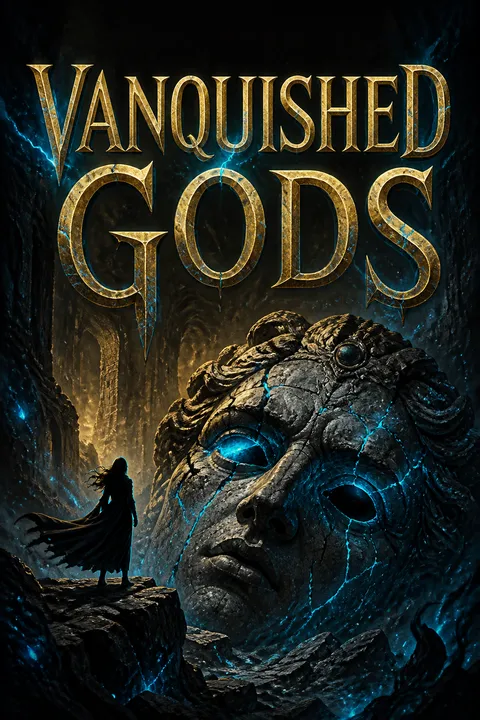


Plot Summary
The Thornwood Refusal
A decade after her deadly touch first emerged, Elowen hides in the Thornwood with Leo, the orphan she has raised, and two former soldier-bards, Hugo and Godric. She escaped the Order’s witch trials, but still fears her magic will make her kill without control. When a vampire messenger threatens Leo to force her to Gwethel, Elowen tears away his sunlight-protecting pendant and watches him burn.
She carries the pendant’s name, Bran Velenus, back to the cottage, knowing Sion, Gwethel’s vampire king, will come looking. Her refuge has already become a target. Rather than risk Leo among vampires, Elowen decides to move them deeper into the woods, clinging to a rough, hungry version of safety.
Elowen’s protective instinct is both her clearest virtue and the lever others use against her. The cottage offers a carefully managed world where she can feed Leo and keep her hands gloved, but Bran’s threat exposes how little control she has over the larger danger. Killing him is not a triumphant release: it protects Leo while forcing Elowen to act through the same power she fears. Her isolation is less a peaceful choice than a strategy that has begun to fail.
The Underworld Queen
Searching for a new cottage, Elowen encounters Sion beside a river. He has come for Bran and recognizes her fear as evidence that she knows more than she admits. He says the Order will soon find her and Leo, and that a Gwethel oracle has identified a witch with a death-touch as the only person able to defeat the Pater, leader of the witch-hunting Order.
The prophecy names her the Underworld Queen. Elowen rejects both the title and Sion’s authority, reminding him that she believes he killed her father. Sion insists that she will eventually need an army, not a spear and two companions. His warnings strike home, but his secrecy and the prophecy make trust feel like another danger.
The prophecy gives Elowen a political identity before she has chosen one, turning a private curse into a public resource. Sion’s appeal is practical, but it is also coercive: he frames alliance as the only alternative to capture. Elowen resists because past losses have taught her that powerful people often call control protection. Their conflict establishes the novel’s central question: whether a dangerous capacity can be directed toward care without becoming another instrument of domination.
Torches at the Cottage
Maelor, the silver-eyed vampire Elowen met during the trials, reaches the cottage with news that the Order is closing in. He offers blood-repelling tincture for Leo and protection in Gwethel; the approaching Luminari torches confirm his warning, so Elowen leaves with him, Leo, Hugo, and Godric.
At the island’s tooth-built cottage, the Keeper of Relics tests Elowen with a vision of Leo hanging from a cliff. Elowen jumps to save him, and the fae confirms that she can help bring down the Pater, though not how. Leo and the bards settle in the protected witch village of Veilcross Haven. Elowen must go on to Donn Hall, where Sion expects her to train.
The flight makes Elowen’s choice concrete: she abandons the small home she has built because the Order has made staying more dangerous than leaving. The Keeper’s test turns her defining motivation into evidence for the prophecy. Elowen does not volunteer to become a weapon; she leaps because she believes Leo is in danger. That distinction matters. Her courage is relational, rooted in a particular child, rather than in ambition or a hunger for power.
Donn Hall's Blood Price
At Donn Hall, Elowen sees Sion’s kingdom without its gentler public face: he executes a thrall who tried to expose the island to the Order. He gives Elowen a luxurious room, sunlight-safe windows, food, and stakes, while warning her that vampires can lose control when hunger takes over.
Maelor and Sion explain that they have spent years gathering intelligence against the Pater. In the ancient temple beneath the castle, Sion asks Elowen to practice channeling her death magic through him rather than letting it consume her.
She can send the power outward, but cannot yet draw it back. The training forces her to consider whether the magic is only a curse, while the screams from elsewhere in the castle make the vampires’ refuge feel far from harmless.
Donn Hall unsettles any simple division between safe humans and monstrous vampires. Sion’s court provides protections Elowen lacked, but its order rests on lethal power and vulnerable human servants. Her training also changes the meaning of control: suppressing the magic has not made it disappear, only made its return more violent. Sion’s lesson is compelling but ethically fraught, since he is both instructor and ruler with a direct stake in how Elowen uses her power.
The Pater's Borrowed Strength
Elowen and Sion return to Ruefield Castle disguised by Ivy’s glamour. Elowen impersonates Verica, the Pater’s chambermaid, while Sion distracts the guards. In the Pater’s room, she hears him describe how the trials identify witches whose magic he can drain to restore his failing strength. He is preparing a rapid Purification in Lyramor, where soldiers will threaten children to provoke magic, then seize survivors for interrogation.
Sion helps Elowen escape as their disguises fail, and she kills guards who block their way. Her magic floods her with a frightening appetite for more death, but they get away with the crucial revelation: the Pater’s immortality depends on stolen witch power, and a city is about to be trapped in his trial.
The trials’ cruelty is not merely ideological theater; it is also a mechanism that supplies the Pater with power. This revelation makes the Order’s moral language especially hollow: it condemns magic while secretly harvesting it. Elowen’s own experience complicates the distinction between righteous violence and predation. She escapes with knowledge that can save people, yet the killing exhilarates her, showing why victory cannot depend on power alone. Her fear of becoming like the Pater remains a practical problem, not an abstract worry.
Lyramor Opens Its Gates
Racing ahead of the Luminari, Elowen and Sion reach Lyramor and learn that the Order has moved the gate mechanism outside the walls. The guard will not act without the Lord Mayor’s key; Sion breaks into the mayor’s house, but the mayor dies before giving them help.
Elowen and the guard, Dunstan, ring the town bell and warn residents to flee. When soldiers seal the gate, Elowen lures them into the square while Sion darkens the streets. They escape through a well into the stream beyond the wall.
Elowen kills the soldiers guarding the gate and releases the townspeople. Hawthorn arrows have wounded Sion, so she lets him drink from her once the protective tincture has worn off. They return to Gwethel having saved the city, but the Order now knows where they live.
Elowen’s response to Lyramor’s danger is an improvisation built from attention: she notices the external lever, remembers the stream, and turns the city’s architecture into an escape route. Sion’s intimidation is effective where civic caution fails, but Elowen’s warning gives residents a chance to act for themselves. Their survival depends on cooperation rather than prophecy alone. The blood-sharing scene also creates intimacy through risk, making bodily trust part of a partnership that neither has fully learned how to name.
The Forest Takes Aim
Back on Gwethel, Elowen practices with a yew wand and learns to draw power from the forest, sending it outward and pulling it back before hunger takes over. Sion tests her resolve by bringing Leo near a charging wolf; Elowen strikes the animal with magic, then rebukes Sion for risking the boy. Sion later accepts that he was wrong.
During dinner, a hidden razor shell cuts Elowen, and Maelor, driven into a blood frenzy by her scent, attacks her. Sion throws him from the tower to stop him. Maelor survives but disappears from the island. After two weeks of training, Elowen and Sion receive a demand from the Order: Maelor has been captured, and they must surrender to save him.
Elowen’s progress is not simply increased force. She learns to let power circulate, an embodied alternative to both denial and indulgence. The wolf exercise reveals Sion’s blindness to mortal fear, while his later admission shows that attachment can restore a feeling he has used callousness to suppress. Maelor’s frenzy demonstrates the cost of treating hunger as a private weakness. The Order exploits precisely these bonds, converting friendship and care into pressure points.
Hawthorn at Dredbury
Elowen, Sion, and Lydia reach Dredbury to rescue Maelor from a public execution. Disguised in stolen Luminari armor, Elowen and Sion enter the town and attack when Maelor is brought to the scaffold with a hawthorn stake aimed at his heart. Their magic and speed disrupt the execution, but an arrow pierces Elowen’s neck. As she dies, Sion gives her his blood.
She wakes in Gwethel, clawing out of a grave with new fangs and no heartbeat. The transformation leaves her disoriented and grieving: she must now drink blood to live, while fearing that vampiric hunger will make her as dangerous to Leo as her death-touch once seemed. She drinks from a carafe, discovers her witch magic remains, and learns the invasion is only weeks away.
Elowen survives by crossing into the very condition she spent years fearing. Her new body is not framed as a clean cure: survival brings hunger, altered senses, and a fresh threat to her relationship with Leo. The rescue also makes Sion’s care irreversible. He chooses her life when there is no safe way to preserve it unchanged. Her continued magic suggests that identities can coexist, but it does not erase the work required to govern them.
The Queen Belowground
A week after her transformation, Elowen is arrested for Bran’s murder. She has concealed the butterfly pendant she took from him, but Sion’s attendant, Rowena, has found it and used the king’s seal to convince soldiers that he ordered the arrest. Elowen is chained in the death temple beneath the castle, without her pendant and with hawthorn poisoning her body.
Rowena claims Sion intends to discard her, then boasts that she has taken command. When Elowen reaches Maelor through her magic, he breaks open the cage and carries her out. He recognizes that Rowena is actually Epona, his wife, whose vampiric transformation left her unstable and obsessed with Sion. Epona has also taken Sion away, and Maelor sets out to find him.
The arrest exposes how authority can be counterfeited when people trust symbols more than relationships. Epona’s access to Sion’s seal lets her turn institutional obedience against Elowen, while the cage beneath the death temple strips the prisoner of sunlight, mobility, and reliable time. Elowen’s rescue comes through the same magic others fear, used not to kill but to reach Maelor. Epona’s instability complicates her threat: her actions are dangerous, but they grow from grief and fixation rather than a coherent political scheme.
The Crag's Burning Vines
On the way to the Crag, Maelor confesses that he, not Sion, killed Elowen’s father. Sion had erased Elowen’s memories of their earlier friendship and intimacy after she saw Maelor’s attack. At the Crag, Epona has bound Sion in rowan vines and surrounded him with fire. Elowen uses her magic to reach the tree’s roots and show them the life Sion has lived, loosening their grip.
Maelor fights Epona, then drives a hawthorn stake into her heart. Back at Donn Hall, Elowen confronts Sion about Bran and her stolen memories. Sion admits their past and explains why he erased it. Before they can settle everything, a message warns that the Order’s fleet will reach Gwethel by morning.
The Crag’s rescue depends on recognition rather than brute strength: Elowen changes the tree’s response by making Sion legible as more than a king or monster. The revelation about her father then rearranges years of resentment without making the loss disappear. Sion’s memory theft was meant to spare her, but it also denied her the right to understand her own life. Their renewed trust begins with mutual disclosure, not innocence. The arriving fleet immediately tests whether that fragile honesty can survive a collective crisis.
The Shore of Death
When the Order lands with thousands of soldiers, Elowen and the vampires combine death magic and shadows while Percival and the fire witches attack the ships. The first wave falls, but the defenders weaken, and hawthorn arrows injure Elowen. A child’s cry draws her to the Pater, who is holding Leo at knifepoint.
Elowen pretends not to care, touches Leo lightly, and makes him appear dead; while the Pater hesitates, she breaks his skull and helps Sion and Maelor defeat his guards. Maelor carries Leo to safety. Elowen then exposes the Pater as a captive, helping break the Luminari’s resolve. With Cecily’s stone-shaping magic, she seals the unconscious Pater in the temple pit, cutting him off from the witches whose power sustained him.
The battle forces Elowen to use deception as care: she performs indifference to Leo so the Pater will release him. Her death magic is no longer merely a private danger or a weapon wielded for others; she directs it within a larger defense that includes fire, shadow, and stone. The Order’s defeat begins when its followers see that the supposedly invulnerable Pater can be captured. Sealing him matters more than killing him, because the system has depended on his access to other people’s magic.
A Hand Without Gloves
With the Luminari driven from Gwethel and the Pater sealed away, the Order collapses before its forces can return. At Veilcross Haven, Elowen celebrates with Leo, Lydia, Hugo, and Godric. Leo asks whether they can stay; Elowen agrees that the witch village can be home, though she will live near Sion at Donn Hall.
The old king’s son, Ambrosias VI, is expected to take the throne and dismantle what remains of the Order. Elowen takes Leo’s hand without gloves, trusting that she can control her touch, then takes Sion’s as well. She has not recovered the life she imagined as a girl, but she can now offer Leo safety without treating herself as a danger that must be hidden.
The ending resolves the opening’s central practical fear: Elowen can hold Leo’s hand without gloves, and protection no longer requires exile from everyone she loves. The solution is not assimilation into vampire life or a return to her former human hopes. Instead, she chooses a community divided across village and castle, where different needs can coexist. Political liberation and personal agency meet in a modest gesture, a child’s hand held without fear.
Analysis
Vanquished Gods makes isolation a political technology. The Order does not rely only on soldiers and trials; it teaches neighbors to fear one another, makes families into leverage, and presents submission as the sole route to safety. Elowen’s first refuge in the woods is therefore both understandable and precarious. She can protect Leo from touch, but not from a political order that can find them wherever they hide.
The novel’s supernatural systems sharpen this conflict. Elowen’s death magic and the vampires’ blood hunger are real dangers, not metaphors that disappear once the characters embrace themselves. Control comes through practice, shared knowledge, limits, and trust. Elowen learns to channel her power instead of treating all restraint as denial; Sion has to recognize that detachment is not the same as strength; Maelor’s guilt shows how moral awareness can become another form of self-destruction. None of them becomes harmless. They become more accountable for what they can do.
That accountability also distinguishes the resistance from the Order. Both sides use force, but the Order hides extraction and murder behind sacred authority, while the alliance depends on people with different abilities choosing to protect one another. The final victory requires more than Elowen’s strength: Sion’s shadows, the witches’ fire, Cecily’s stone shaping, Maelor’s loyalty, and Leo’s survival all matter. The ending’s handholding resolves the personal story in the same terms as the political one. Elowen is no longer forced to choose between love and safety, because she has learned to live with her power and to build safety through connection rather than isolation.
Review Summary
Vanquished Gods receives mixed reviews with a 3.73 rating. Many readers found the sequel disjointed from book one, criticizing rushed pacing and abrupt character changes, particularly the unexplained love interest switch from Maelor to Sion. Several felt the duology needed a third book for proper development. However, fans praised Sion's character depth, the fast-paced action, unexpected plot twists, and Crawford's writing style. Common complaints include rushed endings, inconsistent character motivations, and unresolved plot holes. Positive reviews highlighted the enemies-to-lovers romance, morally gray characters, and satisfying conclusion despite wishing for more content.
People Also Read


Characters
Elowen
The death-touch witchElowen is a former gardener’s daughter whose lethal touch has shaped every relationship she has tried to protect. She wears gloves, guards her distance, and measures decisions by their consequences for Leo, the orphan she has raised. Years of persecution have made her suspicious of prophecy, authority, and anyone who calls her power useful. Beneath that caution is an instinctive willingness to risk herself for others. Her struggle is not simply to become stronger, but to decide whether strength can be exercised without surrendering her judgment or compassion.
Sion
The shadowed vampire kingSion rules Gwethel with the confidence of someone accustomed to surviving by force. A vampire with shadow magic, he is strategic, provocative, and openly shaped by appetites he refuses to disguise. His methods can be frightening, but he also accepts responsibility for protecting his people and opposing the Order. Elowen’s distrust challenges the distance he maintains from other people’s fear. His attachment to her unsettles his practiced detachment, while his history with Maelor reveals the loyalty beneath his kingly authority.
Maelor
The haunted Raven LordMaelor is an ancient vampire, a former Raven Lord, and Sion’s closest companion. His silver eyes and shadow magic make him imposing, but grief and guilt shape his private life. He remembers what he has done and fears what hunger can make him do, so he often treats self-punishment as proof of moral awareness. His protectiveness toward Elowen is genuine, though not free from secrecy or error. Unlike Sion, Maelor struggles to imagine that an immortal life can still hold purpose.
Leo
Elowen's chosen familyLeo is the orphan Elowen has raised since he was a baby. Curious, lively, and fascinated by castles and vampires, he wants the freedom to explore a world Elowen sees mainly through its dangers. His trust in adults gives the story a measure of hope, while his vulnerability continually tests Elowen’s protective instincts. He is not a symbol to her but a child with ordinary appetites, questions, and the right to feel safe.
Lydia
Elowen's estranged friendLydia is Elowen’s childhood friend, a witch with healing magic. Their friendship was damaged by jealousy, romantic disappointment, and years of danger, but Lydia remains connected to Elowen’s earlier life. In Gwethel, she helps make protective pendants and supports the alliance between witches and vampires. Her history with Elowen carries both affection and resentment, giving their relationship the awkwardness of a bond that matters even after trust has been broken.
The Pater
The Order's immortal zealotThe Pater leads the Order, a religious institution that hunts witches and frames persecution as moral duty. He uses trials, public punishments, and the threat of family separation to make people police one another. His authority depends on being seen as more than an ordinary ruler, while his treatment of witches exposes the violence beneath that image. He is patient enough to build systems of fear and ruthless enough to accelerate them when his control weakens.
Rowena
The king's devoted attendantRowena is a vampire attendant at Donn Hall who serves the court and longs for the king’s recognition. She speaks freely about vampire desire and status, treating proximity to power as a promise of belonging. Her view of intimacy is shaped by devotion and competition, and she can be both entertaining and unsettling. Through her, the castle’s hierarchy appears not only as a matter of rulers and servants, but as a web of people seeking safety, favor, and a place in an immortal household.
Percival
The fire-wielding allyPercival is a former nobleman who joins the resistance and learns to direct his fire magic. His scars and blunt humor sit alongside a serious need to give his life meaning. He helps the witches make sunlight pendants and brings destructive force to the alliance, though he remains vulnerable beside the vampires. His willingness to fight comes from conviction rather than confidence, which makes his courage feel deliberate rather than effortless.
Hugo
The practical bardHugo is a former soldier and bard who escapes the trials with Elowen, Leo, and Godric. He writes letters, helps keep their woodland household functioning, and later contributes to making vampire pendants. His practical assistance steadies a group whose lives are repeatedly disrupted by violence. He combines a performer’s imagination with the habits of someone who has learned to be useful under pressure.
Godric
The irrepressible bardGodric is Hugo’s fellow bard and another former soldier who shares Elowen’s flight from the Order. He fills cramped rooms with bawdy songs, even when others are exhausted or afraid. His humor can grate, but it also gives the fugitives a form of companionship that persecution is designed to destroy. He helps protect Leo and contributes to the practical labor of the resistance.
Bran Velenus
The missing seneschalBran is Sion’s seneschal and longtime friend, an experienced hunter who also serves as a valuable source of intelligence. His absence unsettles the vampire court and reveals how much Sion depends on relationships formed over centuries. Accounts of Bran suggest a man drawn to danger and pleasure, though his bond with Sion carries a history deeper than either quality.
The Keeper of Relics
The island's fae oracleThe Keeper of Relics is an ancient fae oracle who trades in teeth and delivers visions rather than clear explanations. Her tests are perilous and deliberately unsettling, forcing visitors to reveal what they will sacrifice. She confirms the importance of Elowen’s power without offering an easy map of the future.
Cecily
The sculpting witchCecily is a witch whose magic can shape stone. Her work is usually artistic, but her ability can also alter the physical world in consequential ways. She represents the breadth of skills the Order has tried to suppress.
Anselm
The lost first loveAnselm is Elowen’s former fiancé and Lydia’s husband. His place in their shared past marks the life Elowen expected before her magic and the Order changed it. He remains part of the emotional history that complicates the two women’s friendship.
Plot Devices
Elowen's death-touch
A lethal gift to governElowen’s touch kills mortals, making gloves essential to the ordinary acts of care she wants to offer Leo. The magic initially appears to be an uncontrollable curse, and using it can leave her hungry for further deaths. Training with Sion and Maelor teaches her to channel it through a yew wand, direct it at a distance, and draw the power back into herself. The ability becomes both a tactical defense and a test of whether Elowen can act without letting fear or appetite dictate her choices.
The Underworld Queen prophecy
A destiny that recruitsThe Gwethel oracle identifies a woman with a death-touch as the person who can help defeat the Pater. Sion and Maelor connect the prophecy to Elowen, giving the resistance a reason to seek her out and giving Elowen a reason to question whether her power can serve more than survival. The prophecy never supplies a complete plan, so it creates urgency without replacing choice. Its practical force comes from the allies who interpret it and the risks Elowen accepts.
Hawthorn and navka pendants
Vampire limits and leverageHawthorn can poison vampires and is used in weapons and in the tincture that makes human blood dangerous for them to drink. Navka pendants protect vampires from sunlight, allowing a limited number to fight outside their darkened castle. These protections make battles depend on scarce materials and preparation rather than supernatural strength alone. They also give the Order and its enemies practical ways to restrain vampires, injure them, or force them to depend on human allies.
The Pater's stolen magic
Immortality with a sourceThe Pater’s strength and continued life depend on siphoning magic from witches who survive the Order’s trials. This discovery explains why the trials continue even though witchcraft is officially forbidden, and why he orders mass witch-findings when he grows weak. It turns his immortality from an abstract mystery into a system with a vulnerable source. The resistance can defeat him only by cutting off that supply and preventing him from drawing on witches again.
Sion's altered memories
The past withheldPowerful vampires can alter memories, and Sion used that ability to erase Elowen’s recollection of their earlier connection and of the events surrounding her father’s death. The missing memories preserve Elowen’s mistaken understanding of Sion while keeping a genuine history between them hidden. When Maelor later reveals who killed her father, Elowen has to reconsider both her grief and her distrust. The device makes memory itself a contested form of protection, since the person who removes pain also controls what another person can know.
Hallowed Games Series Series
About the Author
Other books by C.N. Crawford


Download PDF
Download EPUB
.epub digital book format is ideal for reading ebooks on phones, tablets, and e-readers.








