


Plot Summary
The Kiss That Kills
In a cottage outside Briarvale, Elowen Wrothmere fights three Order witch-hunters after the Baron’s mission proves far more dangerous than promised. With a blade at her throat and no way to escape, she kisses her attacker’s hand. Her lethal magic kills him, but the pleasure it gives her sharpens the craving she struggles to suppress.
Back at the manor, Baron Morvel Throckmore reveals that his daughter Lydia healed her wounded hound in front of a farmer, Rufus Wrenbrook, who may report her to the Order. The Baron orders Elowen to follow Rufus into the capital and learn what the Order plans. He reminds her that the marked orphan Leo’s safety depends on his continued favor, leaving her little room to refuse.
Elowen’s magic is both weapon and appetite: using it keeps her alive, yet each use threatens to turn survival into compulsion. The Baron understands this conflict and exploits it alongside her love for Leo. His protection is not generous care but a system of coercion, one that makes Elowen responsible for a child’s safety while denying her freedom to choose how to protect him.
Blood at the Dome
Elowen follows Rufus from the coast to Penore, where an unnaturally bloodless corpse suggests another witch is killing across the kingdom. Inside the Dome of the Archon, she discovers Rufus has come to sell information about Lydia. Worse, he tells a Raven that Leo’s marked wrist makes him a suspect too.
Elowen kills both men in the whispering chamber, arranging their bodies to suggest they fought each other. Outside, the Raven Lord, Maelor, confronts her about the disturbance. His attention makes her feel exposed, but he lets her leave with a warning to keep away from him. Elowen returns home believing Rufus is no longer a threat, unaware that Maelor has already begun watching her.
The murder at the temple is a tactical success with a psychological cost: Elowen protects Leo by acting decisively, but she also confirms how readily she can answer fear with violence. The Order’s confession booths, built to gather private secrets, become the scene of her counterattack. Maelor’s brief encounter changes the emotional geometry of the story. For the first time, Elowen meets a powerful enemy who studies her rather than simply dismissing her.
A Wedding Left Behind
Two and a half months later, Elowen attends the wedding of Lydia and Anselm, the man she once expected to marry. She brings Leo, dressed in clothes she saved a year to buy, and watches Anselm search the crowd for her. In the cemetery afterward, he admits he had waited for her, but Elowen insists they cannot be together because her touch can kill.
Lydia overhears their exchange and leaves in tears, wounded by the sense that she has never displaced Elowen in Anselm’s heart. Maelor appears at the gathering and questions Elowen about the deaths in the Dome. She hides what she knows and leaves with Leo, but the wedding has reopened old loyalties just as the Order’s scrutiny tightens.
The wedding turns private grief into a public triangle. Elowen’s refusal to marry Anselm was meant to protect him, yet it has not erased either his attachment or Lydia’s resentment. Her practiced composure keeps the scene from becoming an open confession, but it also traps her in a life built around pretending not to want what she cannot safely have. Maelor’s questions bring that same pressure from the political world.
Names for the Pyre
At dawn, Luminari soldiers seize everyone at the manor and march them into Briarvale for a Purification. The Pater demands twenty suspects, then has Agnes de Vray beheaded when the crowd refuses to accuse anyone. When soldiers name Baron Throckmore, Lydia offers a different name to save her father: Elowen.
She also identifies Leo as a possible accomplice, so Elowen secretly sends him through the crowd with a dagger and directions to their meeting place beneath a bridge. The crowd turns against her as Lydia publicly exposes her lethal touch. Elowen’s years of hiding are over, and Leo is alone in the chaos, fleeing toward a place she can only hope he remembers.
The Purification makes the Order’s logic visible: guilt is not discovered but manufactured to satisfy a quota. Agnes’s death demonstrates that silence offers no protection, while Lydia’s accusation shows how fear can make even intimacy transactional. Elowen’s most important act is not defending herself but sending Leo away. Her care becomes a deliberate separation, an attempt to save him by surrendering control over where he goes.
Chaos Cannot Hold
Elowen removes her gloves and touches Lydia, trusting Lydia’s hidden healing magic to revive her after the lethal blow. The resulting panic gives Leo a chance to escape, but Luminari surround Elowen. She reaches Maelor and touches his face, expecting him to die as her other victims have. He survives, then binds her hands and orders the soldiers to take Lydia as well.
During the march toward Ruefield Castle, Elowen cuts her ropes, kills a guard, steals his horse, and breaks away. She reaches Leo at the bridge and sends him north toward Eboria, where his uncle Hamelin lives. Maelor catches her before she can follow. With Leo beyond immediate reach, Elowen is taken to Ruefield and its lethal trials.
Elowen’s escape depends on two kinds of trust: she trusts Lydia’s healing enough to use her own power, and she trusts Leo to travel without her. Both choices buy time, but neither gives her control of the outcome. Maelor’s immunity is the first crack in her understanding of her own magic. His capture also reframes protection as something she cannot simply provide through force.
Five at One Table
At Ruefield, Maelor explains that three trials will leave only one prisoner forgiven by the Pater. Elowen meets the other accused, including Percival de Montfort, a disillusioned knight; Godric, a former soldier; Hugo, a sickly musician; and Sazia de Zallas, a healer. Though alliances seem foolish when only one person can survive, Elowen persuades them to work together.
Maelor later returns with a note in Leo’s handwriting, confirming he found the boy hungry on the road and delivered him safely to Hamelin as an apprentice. Relief finally lets Elowen eat and rest. She keeps the note close, then prepares to face the first trial with the knowledge that Leo is safe for now.
The note gives Elowen a rare release from fear, but it also changes what survival means: she can no longer justify every decision solely as a way to reach Leo. Her alliance challenges the Order’s design, which relies on turning the condemned against one another. Cooperation does not erase the threat of competition, but it creates a small community in a place built to make every prisoner feel alone.
Blades Beneath Ruefield
The first trial sends the Penitents into an ancient labyrinth that shifts behind them. Elowen’s group follows other prisoners through the passages, then watches hidden blades cut down two people. By testing the stones, they learn the traps can be triggered across whole stretches of floor, so Elowen leads them along the vine-covered walls instead.
A blade still tears open her thigh, and Sazia stitches the wound while the group presses on. When a wall of fire drives Lydia and Gwyneth toward them, arrows strike both women. Elowen pulls the shafts from Lydia so her healing magic can work, then runs after the others. Edric, a tattooed prisoner, uses a disorientation spell to knock Elowen into a deep pit.
The labyrinth forces Elowen to exchange the certainty of individual skill for shared competence. She recognizes hazards, Sazia treats her wound, and the others follow her route, but survival remains contingent and painful. Saving Lydia despite their recent betrayal marks a shift from scorekeeping toward responsibility. The attack that sends Elowen into the pit also exposes the limits of her vigilance: the danger is not only the Order’s machinery but the prisoners’ choices under pressure.
The Raven Lord’s Blood
Trapped in the pit with a broken leg, Elowen finds an old door controlled by a puzzle. Percival shines firelight down from above, helping her identify the symbol that opens it, but the mechanism floods the chamber and closes before she can escape. Alone in the maze after nightfall, Elowen sees the ghost of a freshly killed woman, then faces a huge wolf.
Maelor arrives from the shadows, kills the animal, and reveals that he is a vampire. To heal her, he makes Elowen drink his blood. The blood restores her strength and overwhelms her with desire, but Maelor stops their kiss before it goes further. He carries her to the exit, where she rejoins the survivors and conceals how he saved her.
Maelor’s secret gives physical form to the novel’s blurred boundary between monster and protector. Elowen’s magic is not the only power that can consume its bearer; Maelor’s hunger also demands discipline. Their shared vulnerability produces intimacy, but the scene refuses to make attraction equivalent to safety. Elowen survives because she accepts help from someone she has reason to fear, then must protect that secret from the Order.
Confessions and Old Blood
After the maze, Magister Sion punishes prisoners suspected of using magic, killing several in the temple. Elowen’s remaining allies begin discussing escape and a possible resistance within the Order. Maelor tells Elowen he has lived for centuries, lost his daughter Pearl, and joined the Order to control his hunger. He also reveals that Sion is a vampire who still feeds on people.
During the required Unburdening, Elowen admits her fear that her curse caused the deaths of those around her and that she may have killed her own father. She presses Maelor for information and learns that vampires can be killed with a wooden stake. Their desire is real, but each still withholds the truth that might put the other in danger.
The confessions expose two different relationships to guilt. Elowen fears that her capacity for violence has made her irredeemable; Maelor experiences his long life as an accumulation of loss and self-restraint. Their candor creates connection without producing full trust. At the same time, the possible resistance gives Elowen a political horizon beyond personal escape, and the wooden stake turns her attraction into a source of practical intelligence.
Candles in the Garden
For the second trial, each Penitent must drink a potion, keep a candle burning, and solve three riddles while crossing a ruined garden. The potion distorts Elowen’s senses, and Maelor appears in visions that make her forget the task. She regains focus by repeating the Order’s prayer and solves the riddles: a candle, a pen, and fire.
As her flame dwindles, she nearly loses herself to the final hallucination. Lydia finds her, strikes her back to awareness, and guides her through the garden gates. The dead include Guillaume, the musician whose accusation helped send Godric and Hugo to Ruefield. Elowen leaves the trial shaken, but no longer thinking only about her own chance to survive.
The garden weaponizes desire rather than brute force, making Elowen’s longing for touch a vulnerability the Order can exploit. Her repeated prayer is less a declaration of faith than a tool for recovering attention. Lydia’s intervention complicates their rivalry: she does not erase the harm between them, but she chooses to keep Elowen alive. That act helps turn Elowen’s emerging solidarity into a reciprocal, if uneasy, bond.
The Abyss Opens
Before the final trial, Elowen overhears the Pater furious that Eboria received warning of an impending Order attack. In the dungeon, he threatens to bring Leo into the trials if Elowen will not help him find the traitor. She denies knowing the boy. The trial begins as toxic mist fills the chambers, giving the prisoners terrifying hallucinations.
Elowen anchors herself by feeling the stone beneath her bare feet and warns the others to distinguish visions by their missing shadows. When real wolves enter the dungeon, Percival unleashes fire to stop them, but the flames spread beyond his control. Maelor tears through the dungeon door and orders the survivors out. He is wounded, and the Pater now knows he has been helping them.
The final trial collapses the distinction between psychological terror and physical danger. Elowen’s grounding method can expose illusions, but it cannot protect the group from real wolves or uncontrolled fire. The Pater’s threat against Leo turns a political struggle into an immediate personal emergency. Maelor’s rescue confirms his defiance, yet his wounds and exposure make clear that his protection cannot remain secret or unlimited.
Keys Before Dawn
Maelor carries Elowen into a hidden chamber and shares his blood to heal her after the smoke and fire. He admits the Pater suspects him and offers to get Elowen out alone. She refuses to abandon the remaining Penitents. After the Magister announces that everyone will burn at dawn, Elowen fashions a wooden stake and prepares to act.
The Pater visits her cell and threatens Leo, promising to spare him only if she reveals Maelor’s location. Instead, Elowen calls Maelor to her room, kisses him, steals his keys, then locks him inside. She gives the keys to Percival and orders him to free the other prisoners and hide them in the tunnels while she goes after the Pater.
Elowen’s decision rejects the survival bargain the Order has trained her to accept: one person saved at the cost of everyone else. She does not become selfless in an abstract sense; she makes a concrete plan, steals the means to carry it out, and knowingly deceives Maelor. The betrayal is emotionally painful because it grows from the same care that binds them. For Elowen, love cannot mean leaving others to die in silence.
The Pater Falls Twice
Elowen kills the Luminari guarding her route, then slips into the temple and drives her stake into Sion’s chest. She touches the Pater’s face and watches him die from her magic. But both men recover: the Pater returns from death, while Sion survives the stake because it was made from the wrong wood.
Sion then reveals that he and Maelor belong to the resistance and had been trying to discover how to kill the Pater. He also tells Elowen that Sion killed her father after her father informed on Leo’s parents to protect her from the Order. The revelation turns Elowen’s grief into fury, but she agrees to cooperate with the vampires when the Pater’s soldiers close in.
The failed assassination overturns Elowen’s belief that decisive violence can settle a problem. Her touch kills, but the Pater’s return makes death itself an unreliable solution. The revelation about her father is especially destabilizing because it recasts the care he gave Leo as potentially bound to guilt and sacrifice. Sion’s disclosure is not absolution: he remains her father’s killer, and the resistance asks Elowen to cooperate with a man she has every reason to hate.
Shadows Through the Gate
Maelor and Sion lead Elowen to the prisoners in the catacombs. Together, they cover Ruefield in shadow while Percival heats the great wooden gate until it begins to give way. The Pater arrives with armed Luminari and strikes Maelor and Sion with arrows. One arrow pierces Elowen, but she pushes forward and uses her touch to spread death from soldier to soldier.
Her magic overwhelms the phalanx and opens a path for the prisoners to flee. Yet the Serpent’s hunger takes over her thoughts, drowning out her memories of Leo, Maelor, and her childhood. Maelor carries her away as the others escape, but Elowen loses awareness of where they are going and what she has done.
The climax gives Elowen the power she has feared and the purpose she has chosen, then reveals how easily those can become indistinguishable from appetite. Her violence frees the prisoners, but the victory costs her control of her own memory. The Order’s methods have failed to make her obedient; the danger now comes from a force within her that can use liberation as permission for indiscriminate destruction.
A Cottage After Ruin
Five days later, Elowen wakes in an abandoned cottage in the weald, where Lydia has been caring for her. Maelor tells her that he can no longer control his blood hunger and leaves before she can reach him. Then Elowen finds Leo at the kitchen table with Lydia, safe in a flower crown. Percival and the other survivors are sheltering nearby.
Lydia says the resistance is regrouping and expects Elowen to join, arguing that hiding forever will not keep Leo safe. Sion arrives and orders Elowen into his army, intent on using her power against the Order. Elowen remains wary of him, especially after learning he killed her father, but the refugees now have a place to regroup and a shared enemy.
The ending restores Elowen’s immediate attachment to Leo without restoring the safety she once imagined that attachment could provide. Maelor’s departure repeats the separation that has shaped much of her life, this time because he fears his own hunger. Lydia’s practical challenge forces Elowen to confront the limits of hiding, while Sion’s recruitment leaves her future politically and morally uncertain. The refuge is a pause, not a resolution.
Analysis
Hallowed Games makes the politics of Merthyn intimate. The Order does not govern through doctrine alone; it reaches into family bonds, romantic history, bodily autonomy, and the everyday labor of keeping a child safe. Elowen’s gloves, Leo’s mark, the Baron’s threats, and the trials all show power operating through control of contact and information. The public language of purification disguises a system that manufactures guilt and then forces the accused to enact its violence on one another.
Elowen’s arc is not a simple rejection of violence. She begins as a disciplined killer who uses her magic only when circumstances leave no alternative. As the trials strip away her chance to protect Leo directly, she forms alliances and risks herself for people she once regarded as competitors. Yet when she finally unleashes her power against the Luminari, the victory nearly erases the distinctions she has fought to preserve. The novel’s central question is therefore not whether violence can be justified, but whether a person can use a destructive capacity without allowing it to define the self.
The romance with Maelor intensifies that question. Both characters experience desire as dangerous, but for different reasons: Elowen fears her touch, while Maelor fears his hunger. Their attraction offers warmth and recognition without dissolving the political conflict between them. It also exposes the costs of secrecy. Maelor protects Elowen by withholding information; Elowen protects the prisoners by deceiving him. In this world, intimacy becomes a negotiation over what can safely be known.
The book ends in refuge, not resolution. Leo is reunited with Elowen, but the Order remains powerful, the Pater may return, and Elowen’s magic has shown that freedom can itself become a route to possession. Her next challenge is to join a resistance without mistaking vengeance for justice, or surrendering her judgment to the same forces she opposes.
Review Summary
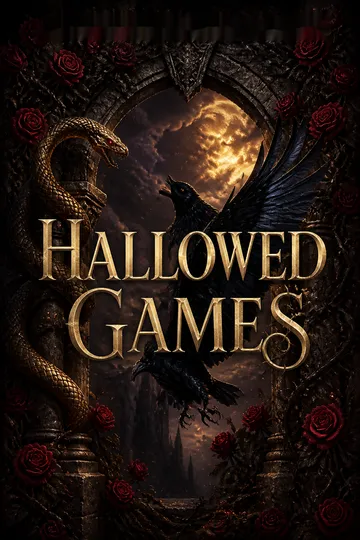
Hallowed Games receives mixed reviews averaging 3.87/5 stars. Readers praise its fast-paced blend of Salem witch trials and Hunger Games elements, featuring vampires, witches, and deadly trials where only one of 100 survives. Many enjoy the forbidden romance between Elowen and Maelor, though some find it lacks chemistry and depth. The FMC's touch-of-death curse and moral complexity appeal to readers. Criticisms include weak world-building, plot holes, rushed pacing, inconsistent character motivations, and underdeveloped trials that serve unclear purposes. Fans appreciate Crawford's accessible fantasy writing style, while detractors note superficial characters and confusing narrative choices.
People Also Read








Characters
Elowen Wrothmere
A lethal, loyal soldierElowen is a soldier in Baron Throckmore’s service whose bare touch can kill. At twenty-nine, she has spent years controlling her power, hiding her scarred wrists, and protecting Leo, the orphan she loves as family. She is observant, tactical, and practiced at concealing emotion because the people with authority over her punish vulnerability. Yet her restraint is not the same as innocence: she knows the pleasure of using her magic and fears how easily it can become hunger. Her central conflict is whether survival means protecting only the person she loves or risking herself for a wider circle. She distrusts institutions, but she keeps looking for a reason to act beyond revenge.
Maelor
The watchful Raven LordMaelor is the Raven Lord, a senior figure in the Order’s machinery of religious policing. His composure and authority make him dangerous, while his private interest in forbidden knowledge suggests a life more complicated than his office allows. He notices what others overlook and studies Elowen with unnerving attention. Their attraction grows beside mutual suspicion, so tenderness never feels entirely separate from risk. Maelor is drawn to discipline as a defense against impulses he fears, and he carries the emotional reserve of someone who has learned to treat self-control as a duty. His connection with Elowen challenges the distance his position requires, but he remains difficult to read.
Sion
The ruthless MagisterSion commands the Luminari as Magister Solaris and enforces the Order’s authority with polished cruelty. He is physically imposing, perceptive, and comfortable making public violence serve as theater. Unlike leaders who hide behind bureaucracy, Sion takes personal charge of punishment and enjoys unsettling people who believe they can read him. His relationship with Maelor is marked by old familiarity and sharp disagreement, while his attention to Elowen makes him both a threat and a source of information. Sion is not motivated by simple obedience. He pursues a private purpose beneath the official role, making his loyalties difficult to judge.
Leo Silverlock
Elowen’s curious young wardLeo is an eight-year-old orphan who lives in the soldiers’ barracks under Elowen’s protection. He is small, inquisitive, and delighted by questions about the world, from favorite instruments to stars and stories. That curiosity is a bright counterweight to the fear surrounding him, but his marked wrist makes him vulnerable to the Order’s suspicion. Leo trusts Elowen deeply and depends on her for safety, affection, and a sense that ordinary pleasures still exist. He is not a fighter, and Elowen’s awareness of that shapes nearly every risk she takes. His needs are concrete: food, shelter, reassurance, and the chance to grow up.
Lydia Throckmore
Elowen’s divided old friendLydia is the Baron’s daughter and Elowen’s childhood companion, bound to her by years of shared mischief and a lasting rivalry over Anselm. Raised with wealth and social standing, she is clever, proud, and accustomed to defending what she believes should be hers. Her jealousy can make her cruel, but it does not erase the history between the women or the choices they make when danger becomes immediate. Lydia understands the risks of being discovered by the Order and has learned to hide an important part of herself. Her shifting relationship with Elowen is shaped by affection, resentment, fear, and the uncomfortable knowledge that neither can fully sever their past.
Baron Morvel Throckmore
A calculating noble patronThe Baron is Lydia’s father and Elowen’s employer, a former power broker whose authority has been steadily eroded by the Order. He keeps forbidden art in his manor and understands how to use secrets as leverage. His treatment of Elowen mixes training, manipulation, and conditional protection, especially where Leo is concerned. He values loyalty when it serves him and treats other people’s vulnerabilities as tools. Although he presents himself as a practical survivor, his control over Elowen reveals how closely his idea of protection is tied to possession.
Anselm
The love Elowen leftAnselm is Lydia’s husband and Elowen’s former lover, the son of an earl who once hoped to marry her despite their difference in status. He is affectionate and sincere, but the history between them remains unresolved even after he begins a new life. His enduring feelings intensify Lydia’s insecurity and Elowen’s grief. Anselm represents a possible ordinary future that Elowen believes her lethal power has made impossible.
Pater Sanctus
Merthyn’s iron religious rulerThe Pater rules Merthyn as both political leader and head of the Order. He presents the Purifications as holy necessity and treats public executions as instruments of government. Unlike the striking Maelor and Sion, he appears ordinary, which makes his authority feel more institutional than supernatural. He believes suffering can be justified by a divine mission and regards dissent as evidence of corruption. His command over the Luminari and the trials gives him power over the accused, while his insistence that the Archon has chosen him disguises personal certainty as sacred law.
Percival de Montfort
A knight seeking purposePercival is a noble-born former knight with battlefield training and a blunt sense of what danger requires. His family name carries a history of violence, but he is not content to repeat its old purposes. A serious injury has left him questioning the value of a life spent entertaining aristocrats with martial skill. He is pragmatic in the trials and willing to take risks for the people around him. His secret hopes for a resistance give his courage a political direction, though he has little certainty that such a movement exists.
Sazia de Zallas
A healer from AquitaniaSazia is an Aquitainian noblewoman who has learned practical healing despite her family’s disapproval. She is sharp-tongued, self-possessed, and candid about the prejudices she has encountered in Merthyn. Her skill makes her valuable to Elowen’s alliance, but she is more than a useful medic: she has a strong sense of personal dignity and refuses to let other prisoners decide what her life means. Sazia’s warmth can be hidden beneath impatience, especially when fear threatens to overwhelm the group.
Godric
A blunt former soldierGodric is a large, battle-tested former soldier who enters Ruefield alongside his friend Hugo. He is suspicious of magic and initially doubts Elowen’s place in an alliance, but his loyalty to Hugo is immediate and practical. Godric responds to danger with blunt assessments rather than religious reassurance. His toughness is real, though it does not make him immune to fear. The bond he shares with Hugo gives him a reason to think beyond his own survival.
Hugo
A fragile, eloquent musicianHugo is a former soldier turned musician whose body has been weakened by dependence on poppy water. He speaks in poetic, sometimes mystical terms, and his friends work to keep him steady when his health falters. Beneath his frailty is a history of military skill and an attachment to music as a way to make meaning from suffering. His friendship with Godric is one of the few forms of loyalty the trials have not yet broken.
Gwyneth Ableworth
A devout accused womanGwyneth is a pious prisoner who believes devotion to the Archon should protect her. She repeats the Order’s assumptions about purity and initially treats the trials as a test of faith rather than a slaughter designed by the authorities. Her confidence in religious hierarchy makes her vulnerable to the difference between the promises of the Order and its actions.
Rufus Wrenbrook
A farmer with dangerous knowledgeRufus is a farmer who carries information about the magic practiced at Baron Throckmore’s manor. The Order’s reward for naming suspected witches tempts him to report what he has seen. His practical calculation brings him into conflict with Elowen, who understands that his information could endanger Leo as well as Lydia.
Hamelin
Leo’s distant uncleHamelin is Leo’s uncle in Eboria, a relative who could not take the boy in when he was younger. He lives outside Elowen’s immediate circle and represents the possibility of a more stable home for Leo. His willingness to accept the boy as an apprentice offers a practical refuge, though the Order’s reach makes that safety uncertain.
Agnes de Vray
A condemned village womanAgnes is an older woman singled out during the Purification. Faced with the demand to name another suspected witch, she refuses to save herself by accusing someone else. Her decision reveals a courage that the Order’s staged spectacle cannot manufacture or control.
Edric
A hostile fellow prisonerEdric is a tattooed prisoner who resents Elowen and blames her for the dangers surrounding the Penitents. He is willing to use magic against her when the labyrinth gives him an opportunity. His hostility shows how effectively the Order’s trials redirect prisoners’ fear toward one another.
Plot Devices
Elowen’s lethal touch
Power with a priceElowen kills through direct contact, a power that makes gloves essential and ordinary affection dangerous. Every use also feeds a craving for more magic, so the ability threatens her self-command as much as it threatens her enemies. The story uses touch to bind physical danger to emotional deprivation: Elowen longs for closeness but has spent years treating her own hands as weapons. Her power is therefore both a tactical advantage and an obstacle to intimacy. Its final, uncontrolled surge becomes the central danger of her victory.
The Penitent trials
A state-run death mazeThe Order’s three trials are presented as a path to spiritual forgiveness, but each is engineered to kill most of the accused. The shifting labyrinth tests perception and endurance, the garden turns desire into distraction, and the final dungeon weaponizes terror through poisonous mist and hallucinations. The trials force prisoners to compete for a single survivor, while their hospitality between tests disguises the violence as mercy. Their structure gives the Order control over both bodies and beliefs, and gives Elowen repeated chances to choose between individual escape and collective survival.
Leo’s marked wrist
A lever of controlThe Order’s mark on Leo identifies him as the child of a convicted family and leaves him vulnerable to suspicion. The Baron uses the mark to keep Elowen obedient, while the Pater later uses Leo as leverage to force information from her. The mark is small and visible, but its consequences reach across the plot: it turns Elowen’s protective love into a point of political pressure. Leo’s journey to Eboria offers a temporary answer to the threat, though it cannot keep the Order from pursuing him.
Vampire blood and shadows
Healing that temptsMaelor’s blood can restore Elowen after serious injury, but drinking it intensifies desire and creates a dangerous bond of sensation. His shadow magic can conceal movement and help the prisoners challenge Ruefield’s defenses. These abilities make him a powerful ally, yet they carry costs: his hunger is difficult to control, and the magic cannot be revealed without exposing him to the Order. The device ties physical rescue to intimacy and makes the central romance inseparable from questions of consent, danger, and self-restraint.
The old gods’ riddles
Ancient knowledge unlocks escapeThe forbidden nursery rhyme and carved symbols preserve knowledge from before the Order’s rule. Elowen uses the rhyme to interpret an old mechanism in the labyrinth, while later riddles test her ability to think through the garden’s intoxicating visions. Ancient language and imagery offer practical tools where the Order’s official teachings provide only obedience. These clues connect the kingdom’s suppressed past to the prisoners’ attempts to survive, suggesting that cultural memory can remain useful even when its public practice has been forbidden.
Hallowed Games Series Series
About the Author
Other books by C.N. Crawford






Download PDF
Download EPUB
.epub digital book format is ideal for reading ebooks on phones, tablets, and e-readers.








