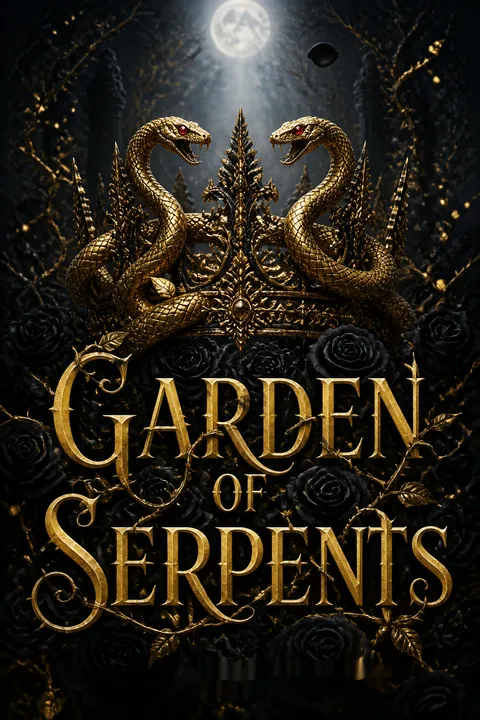


Plot Summary
The Gauntlet at Moonrise
Hiding in New England after Orion exiled her, Rowan fears he will soon unleash demons on the mortal world. Her friend Shai brings the iron gauntlet required for the ancient trials, and Rowan chooses the moon festival to challenge Orion publicly, so the city will witness the result.
She slips through a tunnel beneath the gates, where her magic returns, and steps into the festival as the last succubus and a claimant to the throne. Before Orion can distract her with his charm, she strikes first.
Their aerial fight gives him chances to overpower her, but Rowan surprises him, bites his throat, then uses a feint to bring him crashing to the stones. She wins the first trial. Orion publicly distinguishes her from Mortana, the woman he blamed for the Lilu massacre, and accepts her presence in the city.
Rowan’s challenge is both a political act and a refusal to let Orion define her through his resemblance to Mortana. The gauntlet and public witnesses matter because power in this city depends on spectacle as much as strength. Rowan does not win by becoming the more powerful combatant; she wins by reading Orion’s habits and exploiting his confidence. Yet victory does not settle their conflict. His public defense of her complicates her belief that he is only a revenge-driven tyrant, while his appeal to join forces tests whether her suspicion is judgment or armor. Her first success therefore creates a more difficult contest: not just for the crown, but for control of the story each tells about the other.
A Memorial and an Attack
After the trial, Rowan meets Kas and Legion, two ancient demons who agree to help her prepare. Orion uses his incubus magic to make them and Shai lust-drunk, then takes Rowan to her new palace and argues that freeing demons from mortal control is necessary for their survival.
At a memorial for the slaughtered Lilu, he gives Rowan her parents’ keepsakes to send down the river and shows her the stones he has made for the dead, including Mortana. His tenderness unsettles her more than his threats.
Later, Jasper, Orion’s trusted soldier, attacks Rowan in her bedroom, claiming the king ordered her death. Orion kills Jasper and discovers that other guards received the same supposed order. Believing someone has manipulated them, he brings Rowan to his own home, where she can watch him and he can guard her.
The memorial gives grief a public form, but Orion’s private gestures expose the more intimate problem: he can honor Rowan’s losses while still defending a future that could cause new ones. Their disagreement is not a simple clash between compassion and cruelty. Orion understands safety as control over the conditions that once made his people vulnerable; Rowan understands it as refusing to punish people who did not commit the original crimes. Jasper’s attack makes that distinction harder to maintain because the evidence points toward Orion, yet Orion’s intervention also saves Rowan. The novel turns trust into a practical dilemma: she must decide what his actions mean while the city’s magic makes appearances and testimony unreliable.
The Light That Overwhelms
Rowan chooses a spellcraft trial: summon Alaric, a dead Visigoth king, and take his blackthorn crown. Shai, Kas, and Legion begin teaching her magic in the Elysian Wilderness. Rowan can summon enormous power through anger, but her first weather spell turns the grove into a hailstorm and sets an oak ablaze.
Orion later teaches her to draw on intense feeling, then temper her Lightbringer power with sorrow and guilt before it destroys everything nearby. Against her friends’ advice, Rowan attempts a full summoning practice and pours too much magic into the spell.
It consumes the surrounding trees and leaves her disoriented, unable to remember even Orion’s name. He carries her home and slowly restores her through their shared Lilu magic, keeping her alive by feeding her power in careful stages.
Rowan’s magical education is also an education in emotional regulation. Anger gives her access to power, but it cannot govern that power safely; grief and guilt become instruments of control, even when they are painful. The lesson is psychologically complicated because these emotions are not treated as moral virtues. They are forces she must understand without allowing them to dictate her choices. Orion’s help deepens their intimacy, but it also creates dependence at the precise moment Rowan is trying to become an independent ruler. Her near-destruction shows that inheritance does not equal mastery: being chosen by divine signs gives her capacity, not wisdom. The coming trial will test whether she can hold both.
The Blackthorn Crown
At dusk, Rowan and Orion mark their foreheads with witch’s blood and race to summon Alaric. Rowan completes the spell first, forming a bond that pulls her toward him. She binds Orion long enough to reach Alaric, but the king escapes and sends ravens after her.
During the pursuit, a huge sea serpent bites Rowan with venom that weakens her magic. Orion kills it, then draws the poison from her wound despite their rivalry. At dawn, Alaric returns from the sea, but a powerful French witch appears and attacks Rowan, claiming Orion summoned her.
Orion’s fire saves Rowan, yet burns both the witch and Alaric before Rowan can take the crown. With the trial unresolved, Orion gains the right to choose the next contest. His rescue leaves Rowan grateful, but no closer to knowing whether he is protecting her or maneuvering her.
This trial makes the limits of competition visible. Rowan and Orion are bound by rules, but the danger around them refuses to remain neatly inside those rules. The serpent and the witch turn a contest of skill into a test of whether either rival can tolerate the other’s vulnerability. Orion’s choice to heal Rowan rather than exploit the venom is persuasive evidence of care, but it does not erase his political advantage or the possibility of deception. The burned crown is especially consequential: no one wins, and the next contest passes into Orion’s hands. The result keeps the romance and the power struggle intertwined, since every act of mercy can also look like strategy.
The Book Behind the Walls
For the next trial, Orion chooses a race to recover the Grimorium Verum from the demon hunters’ headquarters in Sudbury. The book contains the spell that weakens demons beyond the City of Thorns and keeps them trapped inside; Orion sees it as the key to protecting his people from future attacks.
He gives Rowan the location rather than concealing it, and she begins planning with Shai, Kas, and Legion. Their reconnaissance reveals a cloaked mansion, lethal wards, and a likely archive room.
Meanwhile, Rowan visits the dungeon where Orion was imprisoned and finds the inscription he showed her: it names both Lightbringers as the ones who will free the city. She also discovers the cell opposite the execution room, where Orion watched his mother die. That knowledge deepens her sympathy, but she still intends to win the crown herself.
The grimoire converts a private history of captivity into a problem of sovereignty. Orion wants to remove the spell that leaves demons vulnerable, but doing so could also restore their ability to prey on mortals. Rowan’s objection is not that demons deserve confinement; it is that liberation without restraint could reproduce the violence that created the prison. The dungeon inscription offers a different model, one in which the two rivals share responsibility rather than compete for exclusive authority. Rowan’s visit makes that prophecy emotionally credible by showing the cost of Orion’s past, but it does not excuse his plans. Sympathy here is a demand for greater precision, not surrender: she can understand how he was shaped and still insist that his choices matter.
The Mansion’s False Prize
When the trial begins, Rowan flies invisibly toward the Noyes Mansion, while Legion warns that an army of hunters seems to know they are coming. Inside, she opens the safe in the chancery and finds a list of suspected Lilu fugitives instead of the grimoire.
The names suggest that Rowan and Orion may not be the last of their kind. Following Orion’s scent, she finds him with the real grimoire, which he gives to her. She hands him the list, and together they head for the southern exit, where Shai should be waiting.
Instead, Jack Corwin and other hunters ambush them with darts containing hawthorn and Ladon venom. Rowan escapes through a burning building with the grimoire, but Orion is left behind. Kas and Legion treat her poison and urge her to leave the book with them. She refuses, then turns back for Orion.
The false prize creates a revealing exchange: Rowan and Orion each find something that could change the future, and neither hoards it. The list shifts their imagined world from extinction toward the possibility of a dispersed surviving people. The grimoire, by contrast, carries a more dangerous promise of control over the boundary between demons and mortals. Their decision to trade discoveries suggests a form of partnership that the formal trials have not yet allowed. Then the ambush fractures the team’s trust. Shai’s absence and the hunters’ foreknowledge implicate someone close, while the poison strips both rivals of their supernatural advantage. Rowan’s refusal to abandon Orion becomes the decisive measure of her loyalty, even before she knows whom to trust.
The Boy Beneath the Scars
Rowan returns to the mansion and finds Orion chained in a barred drawing room, his body cut by the hunters. She gives him the antidote and breaks his restraints. Before leaving to pursue Jack, she asks whether restoring the Lilu could satisfy his vow of revenge without a preemptive war.
Orion agrees, then reveals the guilt he has carried for centuries: as a frightened young child, he falsely accused his mother of plotting against the king because the Puritans threatened him.
Rowan recognizes a child’s survival response, not proof that Orion is evil, and tells him his mother would have chosen to protect him. She gives him the grimoire to take home and leaves to find Jack and learn what happened to Shai. Orion, injured but free, accepts that Rowan trusts him and promises not to start a war.
Orion’s confession separates responsibility from totalizing shame. He did participate in the accusation, but he did so as a child under coercion, and the adults who weaponized his fear bear the greater moral burden. Rowan’s response does not erase the act; it restores the developmental context that Orion’s self-condemnation has denied him. He has treated survival as evidence of corruption, measuring himself against his heroic brother and dead mother. Rowan offers a different standard: a person’s worth is also visible in what they choose to protect now. The scene changes their alliance because she does not demand that he become innocent before she can care for him. She asks instead whether he can choose restraint.
Rowan Turns to Chaos
Rowan tracks Jack through the autumn woods and demands the location of the stolen Lilu records and news of Shai. Jack says the records have been digitized, then tries to use Rowan’s former friendship with him to shame her back into obedience.
He mocks her and reveals that the hunters carved the word matricide into Orion’s chest, turning the childhood confession into a mark of supposed guilt. Rowan’s rage overwhelms her restraint. Light and chaos erupt together, and she tears Jack apart, leaving herself emptied and unable to think.
Orion carries her back and restores her through controlled Lilu magic, refusing to overwhelm her even when her delirious desire makes her reach for him. She sleeps for a week. When she wakes, Orion explains that he returned with the grimoire and that the trial has ended with them ruling together.
Rowan’s violence is not framed as a clean triumph. She protects Orion, but the act exposes how easily defense can become annihilation when power is fused with accumulated anger. Jack’s attack on Orion’s childhood shame strikes Rowan’s own protective instincts, and her response reproduces the hunters’ logic of making a body carry a moral verdict. The difference is that she recognizes the danger in what she has done. Orion’s slow healing reverses the earlier lesson of power: care means regulating desire, not simply gratifying it. Their shared rule emerges from this crisis, but the cost is substantial. Rowan has discovered that she can destroy the enemy and still need another person to bring her back.
The Lilu Return
Once Rowan has recovered, Orion takes her to a festival celebrating the Lilu who have returned to the city. The cleared Asmodean Ward fills with music, flight, and the movement of the clocktower’s restored hands.
Rowan learns that her elderly chess-playing friend, Mr. Esposito, is actually Sabazios, a Lilu who had hidden his true nature while living among mortals. The survivors’ return gives Orion another way to honor the dead without turning remembrance into a war against every human.
He and Rowan accept the city’s call to rule together, and their intimacy becomes a chosen partnership rather than a tool in their contest. Yet Shai remains missing, and Rowan cannot set aside the possibility that someone close to her helped the hunters. Their celebration is real, but it is not proof that the danger has passed.
The festival makes political restoration bodily and communal. The Lilu do not return as an abstract population; they return through music, movement, and familiar relationships, including Rowan’s unsuspected bond with Sabazios. This changes the emotional meaning of Orion’s revenge. The recovery of a people can answer the history of their destruction without requiring the destruction of another people. Still, the unresolved absence of Shai prevents celebration from becoming a false ending. The novel gives Rowan a new public role while keeping her private trust unsettled. A crown can confer authority, but it cannot tell her which testimony is true. Her rule will depend on relationships that remain vulnerable to manipulation.
The King Who Wasn’t
At a public gathering, a figure wearing Orion’s face calls Rowan a traitor and threatens to unleash the demons beyond their city. A soldier poisons her with the same venom used at the mansion, but Legion carries her to safety.
In Osborne, Rowan learns that Shai was arrested while waiting at the mansion, not that she betrayed Rowan. Sabazios secures her release, and Legion confirms that Kas can create convincing illusions and has been hiding his powers. The allies return to the City of Thorns to find the real Orion imprisoned in the dungeon.
Rowan injects him with antidote, but Kas attacks and shapeshifts, forcing them into pursuit. While poisoned, Orion realizes the supposed dungeon companion Ashur was not another man at all: it was his own childhood name, folded into a memory that gave his revenge oath an imagined witness.
Kas’s impersonation weaponizes exactly the uncertainty the story has cultivated. Rowan is not fooled because she lacks intelligence; she is forced to interpret evidence produced by a skilled illusionist, while those she trusts have secrets of their own. Shai’s imprisonment exposes the difference between absence and betrayal, and Legion’s testimony becomes credible only because he admits his limits and his knowledge of Kas. Orion’s realization about Ashur is an especially intimate form of revelation: trauma has divided his identity so thoroughly that he misrecognized part of himself as an external ally. The discovery does not make his vow meaningless, but it changes its foundation. Revenge has been sustained by a story that helped him survive and now must be reconsidered.
Light Beneath the Shield
Kas flees toward the Tower of Baal, where a crowd could keep Rowan and Orion from using their most destructive power. Their allies clear the square and raise a shield of ice and shadow around the combatants.
Kas creates multiple versions of himself and uses silken magic to hurl Rowan against the stones, but Orion’s Lightbringer power bursts through the shield, dissolving the illusions and Kas with them. Rowan survives and helps Orion stand. Before the gathered demons, she claims the crown beside him and promises to defend the city without starting a war against mortals or sacrificing her people to appease them.
Later, she and Orion join Shai, Legion, Sabazios, and Amon for a night out among mortals. Their flight to Osborne turns the former boundary between worlds into a route they can cross together.
The final battle resolves the novel’s central problem by changing the conditions of power rather than simply selecting the stronger ruler. The allies’ shield creates a protected arena, allowing Rowan and Orion to use dangerous magic without turning the entire city into collateral damage. Their victory depends on collective action, a sharp contrast with Kas’s belief that superior skill alone entitles him to rule. Rowan’s public promise defines kingship as protection constrained by judgment, not revenge disguised as security. The closing journey into Osborne extends that principle beyond the walls. It does not prove that demons and mortals will never conflict; it shows that contact, rather than inherited fear, is the only possible ground for a different future.
Epilogue
Thirteen years later, Rowan and Orion are raising their son, Nico, while Rowan is pregnant again. When Nico disappears from his protected bedroom, the parents fear an abduction until Lydia lures him out of hiding by promising cotton candy. The oracle Isabeau discovers that Nico can pass through walls and floors, a gift that lets him slip beyond ordinary safeguards.
She gives Rowan and Orion yew leaves to restrain the power until he can learn to control it. Nico’s talent adds a new kind of danger to family life, while Rowan’s old nightmares about a demonic attack continue to remind her that loving her family means living with the possibility of loss.
The epilogue brings the book’s political stakes into the intimate scale of parenting. Rowan and Orion have built a safer city, but safety cannot mean total control: their child possesses a power that bypasses the wards designed to protect him. The episode echoes Rowan’s own hidden nature and the cost of adults withholding knowledge in the name of protection. Lydia’s practical, maternal trick succeeds where force and surveillance cannot, while Isabeau offers containment as temporary care rather than punishment. Rowan’s continuing nightmares prevent the ending from becoming a fantasy of perfect security. The family’s happiness is genuine precisely because fear has not vanished; they have learned to act lovingly while knowing uncertainty remains.
Analysis
Garden of Serpents makes political authority inseparable from the private injuries that shape it. Orion’s wish to free the demons begins in real history: the Lilu were hunted, his family was destroyed, and he endured imprisonment with no reliable way to protect anyone. But the novel refuses to treat suffering as automatic moral permission. Orion’s grief can explain why revenge feels like safety without making indiscriminate violence just. Rowan’s insistence that mortal responsibility varies is therefore not naïve optimism; it is a demand that justice distinguish perpetrators from populations.
The romance develops through repeated contests over interpretation. Rowan cannot assume Orion’s charm is sincere, while Orion cannot assume her attraction means trust. Their most important shifts occur when one accepts vulnerability without gaining a political advantage: Orion gives her the grimoire, Rowan returns to rescue him, and she hears his childhood confession without reducing him to it. Love becomes credible not because either character stops being dangerous, but because each begins to recognize the other’s capacity for choice. That recognition is also the basis for shared rule.
Magic externalizes the characters’ psychological lives. Rowan’s emotions produce extraordinary force, but unregulated power empties her sense of self. Orion’s guilt likewise becomes a private prison, magnified by a false memory that makes an imagined companion seem like the source of his oath. Kas’s illusions exploit the same instability at a civic level: if faces, memories, and testimony can be manipulated, public trust becomes a strategic resource. The answer is not perfect certainty. It is accountable cooperation, with allies who disclose what they know and rulers who accept limits.
The ending offers neither an easy reconciliation between demons and mortals nor a return to an innocent past. Rowan and Orion choose to protect their city without turning its survival into permission for conquest, then cross into mortal space with their friends. The epilogue preserves the emotional cost of that choice. Rowan still fears losing her family, and Nico’s ungoverned gift makes protection an ongoing practice rather than a finished victory. The novel’s deepest claim is that safety cannot be achieved by eliminating vulnerability; it can only be built by deciding what not to do with power.
Review Summary
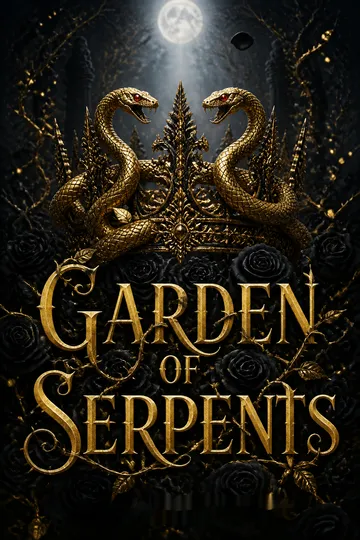
Garden of Serpents receives mixed reviews with a 3.86 rating. Many readers found the finale disappointing and rushed, with plot holes and underdeveloped new characters. Common criticisms include anticlimactic trials, weak world-building, and a romance that felt unearned until late in the book. However, fans praised the chemistry between Rowan and Orion, appreciating their relationship resolution and the epilogue. Some enjoyed the action sequences and found it a satisfying, bingeable conclusion despite flaws. Overall, reactions ranged from loving the series to feeling let down by wasted potential.
People Also Read
Characters
Rowan Morgenstern
The reluctant LightbringerRowan is a former mortal college student, newly returned to the City of Thorns as a succubus and claimant to its throne. Her psychology is shaped by vigilance: she studies other people, catalogs danger, and often anticipates catastrophe before she can trust a hopeful outcome. That anxious attention also makes her perceptive, especially when powerful people disguise self-interest as protection. She wants to avenge her mother, but she resists turning grief into collective punishment. As her magic grows, Rowan must learn that emotional intensity can fuel power without being allowed to govern it. Her awkward humor and practical moral reasoning keep her human perspective in view, even as she embraces the wildness and responsibility of her demon inheritance.
Orion
The haunted demon kingOrion is the silver-haired king of the City of Thorns, an incubus and Lightbringer whose long imprisonment has left vengeance at the center of his identity. He is strategic, intensely protective, and skilled at using charm to redirect a conversation or control a threat. Under that composure lies a child’s unresolved grief, sharpened by the belief that surviving his family’s destruction makes him morally unworthy. Rowan challenges both his political certainty and his self-condemnation. His central struggle is not simply whether to forgive mortals, but whether he can separate protection from retaliation. He fears hope because attachment makes loss possible, yet his bond with Rowan gradually forces him to imagine a future not organized solely around the dead.
Shai
Rowan’s loyal mortal friendShai is Rowan’s closest friend, a mortal student with a growing command of demon magic. Her humor and warmth offer Rowan a human point of contact in a city where nearly everyone has political motives. Shai is not a passive companion: she helps locate the gauntlet, studies spellcraft, and takes risks to support Rowan’s claim. Her own emerging abilities make her confront a divided sense of identity and the danger of losing control. Shai’s loyalty is emotionally important because Rowan has spent much of her life expecting betrayal or abandonment. Their friendship gives her a place to be vulnerable outside her complicated bond with Orion.
Legion
The steadfast demon dukeLegion is a powerful, tattooed demon and Shai’s magic teacher, as well as an ally to Rowan. His bluntness and long memory reflect a culture that has survived by hiding vulnerabilities and withholding information. He understands the old purge from the perspective of someone who lived through it, and his guilt helps explain why he supports change. Legion wants a capable ruler, but he also recognizes that replacing one dangerous leader with another would solve little. His growing affection for Shai brings a softer, more personal dimension to his usual reserve.
Kasyade, called Kas
The charming magic tutorKas is an ancient demon, an accomplished artist, and one of Rowan’s principal instructors in magic. His casual manner and dry humor make him approachable, but he repeatedly warns Rowan not to trust appearances or even her own senses. He is skeptical of divine selection and hereditary rule, preferring the idea that leadership should be earned through ability. His closeness with Legion and growing connection to Shai place him within Rowan’s circle, though his guarded nature makes it difficult to know what he truly believes. Kas represents both the value and the danger of expertise when it is separated from accountability.
Sabazios
The hidden family allySabazios is an elderly chess-playing friend of Rowan’s family who provides the book explaining the demon trials. He has spent years moving cautiously through mortal life, using concealment and patience rather than open power. His advice helps Rowan prepare for the throne without forcing her decisions. Sabazios’s devotion to Rowan’s mother and his long absence from the demon city give him a wider view of what survival has cost the Lilu. He is practical, affectionate, and quietly resourceful.
Amon
Orion’s trusted household friendAmon is Orion’s longtime cook and confidant, a survivor of the Lilu massacre with a deep facial scar. He treats Orion less like a king than a wounded person who still needs honest company. Amon’s dry humor challenges Orion’s self-justifying plans, and his presence gives the king a rare experience of ordinary domestic life. He also helps Rowan see that Orion’s private world contains loyalty and routine, not only violence.
Jack Corwin
Rowan’s demon-hunting pastJack is a demon hunter from Rowan’s mortal life and a former schoolmate who assumes their shared past should still give him influence over her. He represents the way personal familiarity can conceal ideological cruelty. Jack treats demon hunting as a sacred duty and interprets violence against demons as purification, not persecution. His taunts draw on Rowan’s old insecurities, revealing how little he understands the person she has become.
Tammuz
The chaos god and mentorTammuz is a chaos god who trained Rowan in the underworld and is Orion’s father. He delights in disruption and treats uncertainty as an instrument, making him both a source of knowledge and a poor guide to trust. His influence helps Rowan become a fighter, but his involvement in the pair’s lives also complicates the meaning of the Lightbringer marks. Tammuz’s presence connects divine power to manipulation rather than simple wisdom.
Cambriel
Rowan’s murdered half-brotherCambriel was the former demon king and Rowan’s half-brother. He killed her mother and held power that rightfully belonged to Orion. Rowan’s pursuit of him shaped her earlier life, so Orion’s decision to kill him before she could claim her revenge remains a lasting source of anger between them.
Mistress Blacknettle
The trials’ mortal refereeMistress Blacknettle is the dean of Belial University and the formal overseer of the demon trials. Her measured presence gives ancient ritual a public structure and keeps the contestants accountable to the rules. She is a mortal authority operating comfortably within a demon political system.
Isabeau
The city’s mortal oracleIsabeau is an elderly mortal oracle who advises Rowan and Orion when their son’s unusual magic becomes difficult to interpret. Her knowledge is formidable, but she does not pretend that insight means complete control. She uses direct observation and practical remedies, offering the family help without claiming certainty about every consequence.
Lydia
The resourceful duchessLydia is a duchess of the Luciferian Ward whose earlier rivalry with Rowan gives way to a working relationship. She is composed in public and inventive in private, especially when applying her experience as a parent. Her practical instincts make her useful beyond the court’s formal hierarchies.
Alaric
The summoned Visigoth kingAlaric is a dead Visigoth ruler and powerful witch whom Rowan and Orion summon during the first trial. His crown enhances his magic, and his ability to escape bindings and change form makes the pursuit far more dangerous than Rowan expects.
The Brocéliande Witch
The demon-hating sorceressThis ancient French witch carries a fierce grievance against demons, whom she blames for her family’s destruction. She arrives during Rowan and Orion’s trial and attacks Rowan with the conviction that vengeance is justice. Her presence shows that mortal magic can rival demon power.
Nicodemus
Rowan and Orion’s curious sonNico is Rowan and Orion’s young son, affectionate, energetic, and prone to vivid worries about ghosts. His curiosity leads him toward places his parents’ protections cannot fully anticipate. He is a child whose needs remain ordinary even as his inherited abilities are not.
Plot Devices
The Demon Trials
A crown decided by trialsThe trials provide a lawful contest between Rowan and Orion, replacing an immediate fight for the throne with a sequence of public tests. Each trial requires more than physical strength: candidates must use strategy, magic, and knowledge of old customs. The rules also restrict the king from simply killing his challenger between contests. The trials create a structure in which political legitimacy can be witnessed by the city, while their changing tasks keep the rivals vulnerable to new threats. Their limitations matter too. A trial can decide who holds power, but it cannot by itself decide what that ruler should do with it.
The Twin Lightbringers
Power that demands emotional controlRowan and Orion bear marks linked to the Lightbringer prophecy and possess unusually potent magic. Rowan learns that intense emotions can call the power forth, while sorrow and guilt can temper its destructive force. When she unleashes too much, light and chaos overwhelm her mind and damage everything nearby. The same capacity makes the pair formidable in the final confrontation, but it also turns power into a psychological risk that must be managed rather than celebrated. Their connection gives Orion a sense of Rowan’s danger and ties their fates together, yet it does not make them identical or remove their responsibility for their choices.
The Grimorium Verum
A spellbook holding the boundaryThe grimoire contains the spell that weakens demons when they leave the City of Thorns and helps keep them confined there. Orion views it as a means of ending the vulnerability that once enabled the Lilu massacre. Rowan sees the other side of that freedom: restoring demon power could also restore their ability to hunt mortals. The book becomes the prize in the second trial and a test of whether either ruler can be trusted with power that affects both worlds. It is not a simple weapon. Its significance lies in who controls the conditions of coexistence and whether that control will be used for protection or domination.
Ladon and Hawthorn Venom
A weapon against demon magicThe demon hunters use darts carrying Ladon venom and hawthorn to weaken demons and interfere with their magic. The poison makes Rowan and Orion vulnerable inside the hunters’ headquarters, where their usual strength cannot guarantee escape. Kas later uses the same substance to imprison Orion. Its repeated use links the historical persecution of the Lilu to the hunters’ present tactics, while forcing Rowan to rely on allies, medicine, and judgment rather than supernatural force. The antidote provides a countermeasure, but obtaining it does not resolve the deeper problem of who has weaponized the knowledge.
Kas’s Illusions
Appearance used as political sabotageKas’s hidden magical skill lets him create convincing illusions and imitate another person’s appearance. He uses that ability to make Rowan doubt Orion’s intentions, disrupt alliances, and present himself as the king before the city. The deception exploits a world where demons conceal their powers and where reports of violence seem plausible on both sides. Rowan and her allies cannot solve the crisis by trusting a single face; they must compare evidence, test what each person knows, and recognize patterns that an imitation cannot fully reproduce. The device turns the story’s concern with trust into an active threat rather than a metaphor.
The Demon Queen Trials Series Series
About the Author
Other books by C.N. Crawford



Download PDF
Download EPUB
.epub digital book format is ideal for reading ebooks on phones, tablets, and e-readers.








