

Plot Summary
Gallows Hill Blood
After Orion’s oath forces her out of the City of Thorns, Rowan returns to her poor mortal neighborhood, where her demon strength begins to drain away. She brings spare sweatpants to her elderly neighbor, Mr. Esposito, but five demon hunters arrive before she can leave. Jack Corwin identifies her, and his father, a congressman who leads the hunters, tries to capture her with a metal hook.
Rowan’s fear and anger finally ignite her fire magic. She burns the congressman and cuts his throat, then flees as police sirens approach. Mr. Esposito urges her toward the demon city. At its gate, her key-shaped mark unlocks the way; she tumbles inside, wounded but home.
The opening turns exile into a test of belonging. Rowan’s magic weakens outside the city, making the border more than a political boundary: it is the condition of her survival. Yet the hunters’ attack forces her to use the power she has barely learned to control, and survival comes at the cost of killing a public official. Mr. Esposito’s intervention offers care without certainty, while the gate’s response makes home feel both refuge and inheritance. Rowan gets back inside, but the violence that follows her there makes clear that safety will not come from simply finding the right place.
The False King’s Ring
Inside her parents’ abandoned mansion, Rowan finds a portrait of Duke Moloch, a red-haired noble whose features resemble King Cambriel’s. A nursery rhyme about a false king and a golden ring sharpens her suspicion that Cambriel’s apparent immortality depends on a hidden protection.
Before she can investigate further, Orion appears. He still believes Rowan is Mortana, his ancient enemy, and says his sacred oath requires him to kill her. Rowan distracts him long enough to argue that her knowledge could help him reach the throne.
They make a blood oath: she promises to share her theory if he frees her from his obligation. Orion accepts, but insists she accompany him to the underworld to seek the Dying God, the one being who may be able to sever the oath.
The mansion gives Rowan a family history in fragments: a portrait, a poem, and a possible secret about the king. She has enough evidence to act, but not enough to know whom she can trust. Orion’s certainty that she is Mortana collides with Rowan’s insistence that her memories are real, turning their attraction into a problem of recognition as much as desire. Their blood oath is a practical bargain made under threat, not a reconciliation. Each needs the other, and each understands that need as a source of leverage.
A Road Beneath the City
At Mortana’s apartment, Rowan meets Carl, a human intern whose friendliness briefly cuts through the hostility between her and Orion. Orion discovers that Carl has been reporting their location to the king and kills him before the approaching soldiers can arrive.
Rowan learns that her best friend, Shai, has been summoned by Cambriel, so she sends instructions for Shai to reach Orion’s hidden tunnels. Shai catches up as the fugitives escape by car, and Orion reluctantly lets her come.
When soldiers attack, he burns them, horrifying Rowan and confirming how differently they judge violence. The road then crosses the supernatural veil. Shai cannot follow into the underworld and remains behind in Massachusetts, while Rowan and Orion fall into a dead version of Salem.
Escape binds the three characters together briefly, then divides them by what they can survive. Rowan’s loyalty to Shai makes her conceal the plan from Orion, while Orion’s murder of Carl shows that he treats even a plausible threat as a problem to erase. Their argument about violence is therefore not abstract: Rowan has just watched a harmless-seeming acquaintance die, and Orion sees the killing as efficient protection. The veil literalizes their unequal worlds. Rowan and Orion enter a place where ordinary rules collapse, while Shai is left in the mortal realm, a separation that makes Rowan’s fear of losing her more immediate.
The Purgatory Caves
In caves built from the misery of Salem’s witch trials, demons force Rowan to endure visions of a hanging double and a set of keys she cannot escape. The ordeal leaves her exhausted, thirsty, and unsure what her guilt means. She finds Orion slumped against a cave wall with a knife lodged in his chest.
Remembering that Lilu draw strength through desire, Rowan kisses him and restores his failing heart. Outside the caves, they reach Salem’s frozen village, where the bodies of the condemned and a couple punished in public show how the dead remain trapped in their old cruelties. Rowan has survived the visions, but the keys and the image of her own hanging follow her into the town.
Purgatory makes emotion physical: Rowan cannot dismiss guilt as a mistaken thought because the keys return whenever she tries to throw them away. Her rescue of Orion then complicates the ordeal’s lesson. She acts from empathy toward the person who has threatened her, though doing so also draws on the erotic bond between them. The frozen Salem around them extends the same logic outward: violence is not merely remembered, it is reenacted. Rowan’s survival is not yet understanding, and her ability to save Orion does not dissolve the mistrust between them.
The Night in Osborne Woods
At an inn, Goody Putnam describes a powerful figure in the woods and directs Rowan and Orion toward him. The enchanted forest intensifies their Lilu desire, and they sleep together in a secluded cottage, though neither trusts what the intimacy means. They then meet Tammuz, the Dying God, who demands Rowan’s memory of her mother’s death.
His vision shows Rowan as a teenager arguing with her mother, Aria, delaying their escape, then running ahead when Cambriel pursues them. Aria draws the king away from her daughter and is burned alive. Rowan remembers that she left her mother behind, but sees that Cambriel was the one who killed her. The revelation gives her a target for revenge and a new reason to distrust the crown.
The revelation separates culpability from guilt without making either disappear. Rowan’s decision to run helped her survive, and she remains responsible for that choice in her own mind, but the vision identifies Cambriel as the agent who killed Aria. Tammuz’s method forces memory into the open rather than offering comfort, exposing how self-blame can persist even after the facts are clear. The forest’s erotic pull offers Rowan and Orion a brief, embodied refuge from their histories, but their connection cannot erase the competing claims that brought them there.
The Confession of Chaos
After Rowan identifies Cambriel, Tammuz presses Orion to explain what he will do as king. Orion admits that he wants revenge for the massacre of the Lilu and intends to break the spell that confines demons to their city, even if doing so unleashes them on mortals. Before Tammuz can resolve the bargain, Salem’s demon hunters arrive.
Orion stays to fight them, driven by the old slaughter that shaped his life. Rowan runs, then turns back when she hears him screaming. She strikes one hunter with a rock and helps Orion overpower the others, though the killing leaves her sickened. When she returns to herself, she is injured and freezing; Orion carries her to Goody Putnam’s inn, where he cleans her wounds and keeps her warm.
Orion’s confession changes the stakes from a private struggle over a throne to a threat against people who had no part in his imprisonment. His grief has become a political program, and the promise of liberation conceals a plan for indiscriminate retaliation. Rowan’s return to help him is a decisive answer to her own memory of abandoning Aria: she refuses to leave someone behind again, even when that person is dangerous. The scene does not make her violence easy or noble. It shows her learning that survival may demand force while resisting Orion’s attempt to make force the only moral language.
Mortana’s Second Life
While recovering at the inn, Rowan deciphers a hidden message in her father’s note. It identifies Cambriel as Moloch’s son and warns that Orion’s rise could endanger the mortal world. Tammuz later breaks Rowan and Orion’s blood oath after hearing Orion’s plans. Rowan lies about Cambriel’s weakness, then tricks Orion across the boundary and summons Tammuz alone.
He explains that Rowan is Mortana’s surviving double, created from her spirit with a new identity and memories, not the same person who betrayed the Lilu. Before Tammuz can train her, a mob captures Rowan. Judge Corwin condemns her as a witch, and she is hanged on Gallows Hill, repeating the death she had seen in the caves.
The hidden letter and Tammuz’s explanation give Rowan a history that neither she nor Orion could previously name. She is connected to Mortana without being reducible to her, a distinction that preserves the reality of Rowan’s upbringing while complicating the idea of a single, continuous self. Yet knowledge does not grant safety. Rowan uses deception to separate herself from Orion and pursue her own claim, then faces the same punitive machinery that condemns women for imagined crimes. Her hanging turns the identity question into a literal passage through death.
A Year in the Doubleworld
Tammuz brings Rowan back to life and trains her in the underworld, killing her repeatedly until she learns to summon claws, fire, and wings and to fight without freezing at the thought of death. The long training changes her from a frightened newcomer into a capable combatant, though she remains unsure whether she can kill Orion.
During this period, Orion attacks Cambriel using Rowan’s invented claim that a book beneath the king’s pillow sustains his life. He finds no book, is shot by the guards, and watches Cambriel escape by leaping from the tower. Believing Rowan dead, Orion returns to the underworld to search for her. Rowan, meanwhile, finds Shai alive in Salem, helps her escape the dead world, and leaves with her for Osborne.
Tammuz’s training answers fear through repetition rather than reassurance: death becomes survivable because Rowan experiences it repeatedly and returns with greater skill. That approach grants her agency, but it also exacts a cost in isolation and physical hardship. Orion’s failed attack shows the danger of acting on Rowan’s lie, while his search for her reveals that his attachment is no longer contained by his stated mission. Shai’s return restores Rowan’s chosen family at the moment she leaves the doubleworld. Her competence grows, but her central conflict remains: whether protecting others will require her to become the kind of ruler she fears.
Baal Tower Burns
Rowan reaches the Tower of Baal before dawn and fights through Cambriel’s guards with fire and newly learned combat skills. She breaks into his chamber, disables him, and learns that he killed her parents because they threatened to expose his false claim and wanted to bring their daughter home. Rowan stabs Cambriel and prepares to carry him before the city as proof of her right to rule.
Orion arrives, accusing her of lying and competing for his crown. They fight through the burning room; Rowan cannot bring herself to kill him. She escapes with Cambriel, but Orion catches them in the air, tears out the king’s heart, and claims the throne. He orders Rowan banished from the city, leaving her defeated and still determined to stop his plans.
The tower confrontation brings private motives into public power. Cambriel’s account confirms that Rowan’s parents were trying to protect their daughter, while also revealing that the king treated them as threats to his position. Rowan has become strong enough to defeat guards and incapacitate Cambriel, but cannot finish Orion when the contest becomes personal. Orion’s victory is therefore both political and intimate: he takes the crown and imposes exile on the woman he cannot admit he needs. The result is not a clean triumph. A tyrant is gone, but a new ruler has announced a potentially larger catastrophe.
A Book in the Rain
Back in mortal Osborne, Rowan watches the City of Thorns from a hotel room and worries that Orion will carry out his plan to attack mortals. Shai has returned safely to the city under an oath Orion made to protect her, but Rowan cannot follow. When Mr. Esposito drops a paper bag in the rain, Rowan retrieves it and discovers an old book about trial by combat in the demon world.
Its rules describe how a challenger with a legitimate claim can publicly contest a ruler and let the gods judge the outcome. The discovery gives Rowan a path back that does not depend on Orion’s permission. She resolves to return to the City of Thorns and challenge him, leaving the story poised between his new reign and her unfinished fight.
The ending converts a small act of neighborly care into a political opening. Rowan first noticed Mr. Esposito because he needed practical help; now his dropped book supplies the knowledge she needs to contest a king. The recurrence of their connection suggests that resistance need not begin with armies or prophecy. It can begin with attention to another vulnerable person. Rowan’s exile echoes the novel’s opening, but she is no longer simply trying to get home. She has a procedure, a claim, and a purpose. The conclusion resolves her immediate ignorance while deliberately leaving the struggle for power unsettled.
Analysis
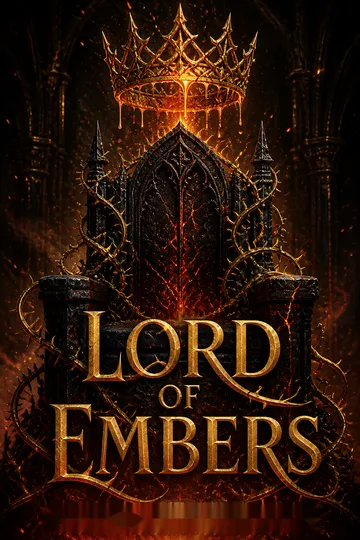
Lord of Embers treats identity as something shaped by memory, inheritance, and action rather than by resemblance alone. Rowan’s likeness to Mortana makes Orion’s suspicion understandable, but his insistence that appearance settles the question repeats the novel’s central danger: old wounds can turn interpretation into certainty. Tammuz’s revelation supplies a supernatural explanation for Rowan’s connection to Mortana, yet it does not erase Rowan’s lived childhood or dictate what she must become. Her identity remains a matter of choices.
The novel also distinguishes survival from innocence. Rowan’s guilt over leaving Aria is emotionally real, but the recovered memory shows that Cambriel committed the murder. Orion, by contrast, converts survival and loss into a political mandate for revenge. His history makes his rage legible without making his proposed violence just. Rowan’s refusal to abandon him, followed by her inability to kill him, reveals both her compassion and its cost: empathy can preserve a person, but it can also leave a dangerous ruler in power.
Power is repeatedly presented as protection against vulnerability. Rowan wants authority because mortal poverty, persecution, and dependence have left her exposed; Orion wants it to reverse the helplessness of imprisonment. Their motives differ, but both risk confusing safety with control. The underworld’s Salem episodes sharpen this question by showing a society where accusation and punishment reproduce themselves as civic order. In the final turn, Rowan finds a legal tradition that can challenge the crown without merely repeating Orion’s violence. The ending offers no settled justice, only a more promising method of contesting power.
Review Summary
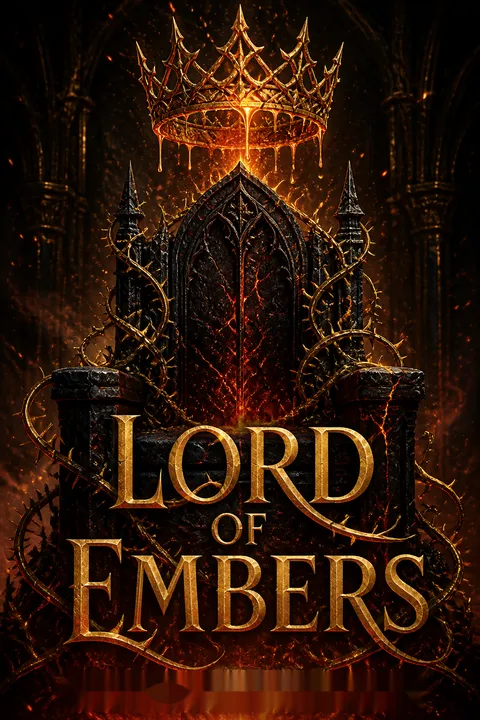
Lord of Embers receives mixed reviews with a 3.83 rating. Many readers found it to be filler, lacking the action and plot development of the first book, City of Thorns. Common criticisms include overused miscommunication tropes, rushed pacing, and minimal plot progression. However, fans appreciated Rowan's character development, the tension between protagonists Rowan and Orion, and the introduction of Tammuz. Some readers enjoyed the enemies-to-lovers dynamic and fast-paced reading experience, while others felt disappointed by predictability and lack of emotional depth.
People Also Read

Characters
Rowan
The returning LightbringerRowan is a young woman raised in mortal Osborne who discovers that demon magic and a royal mark are part of her identity. Practical, anxious, and fiercely loyal to the few people she trusts, she meets danger with improvisation more often than confidence. Her mother’s death has left her with a broken memory and a persistent fear of fire, while her time in the City of Thorns forces her to reconsider what she owes to family, friendship, and herself. Rowan is not drawn to power for its own sake; she wants the safety and respect that power might offer. Her empathy remains a strength, but the story tests whether she can act decisively without letting guilt or desire choose for her.
Orion
The vengeance-bound incubusOrion is the silver-haired Lord of Chaos, a powerful incubus whose life has been shaped by captivity and the destruction of the Lilu. He pursues Cambriel’s throne as both political vindication and a means to punish those he blames for his people’s suffering. His confidence and cruelty protect a self built around survival; tenderness threatens the purpose that has kept him alive. Rowan unsettles him because she resembles the enemy he remembers yet acts in ways he cannot explain through that history. His attraction to her is tangled with mistrust, grief, and fear of hope. Orion is compelling partly because he recognizes his own brutality but treats that recognition as permission rather than a reason to change.
Shai
Rowan’s steadfast best friendShai is Rowan’s closest friend, a perceptive and candid presence who refuses to let danger turn her into a passive bystander. She responds to supernatural upheaval with fear, humor, and practical questions, often noticing the risks Rowan has already begun to normalize. Her loyalty makes her a source of emotional continuity between Rowan’s mortal life and the demon world, but she has her own judgment and does not simply follow Rowan’s lead. Shai’s trust is generous rather than blind: she helps because she cares, while continuing to ask what the plan is and what it will cost.
Cambriel
The polished reigning kingCambriel rules the City of Thorns with the composure of someone accustomed to having his authority accepted. His pale beauty and courtly manner conceal a fierce concern for succession and control. He regards powerful rivals as threats to the order he has built, and his treatment of Rowan’s family grows from that political calculation. Cambriel’s position allows him to present self-interest as public necessity, a habit that makes him dangerous even when he appears calm. He is not merely a villainous figure in a crown; he understands that legitimacy matters, and much of his behavior is shaped by his fear of losing it.
Tammuz
The Dying GodTammuz is an ancient, unsettling power who moves between life and death and treats time as a flexible instrument. He offers Rowan knowledge and training, but rarely in the form she expects; instead, he uses visions, confession, danger, and repetition to force her toward change. His apparent indifference masks an interest in the contest for the throne, and his interventions serve his own appetite for uncertainty as much as Rowan’s survival. Tammuz is a teacher without the comfort of a mentor. He believes that fear must be confronted directly, even when his methods leave Rowan to bear the emotional cost.
Aria
Rowan’s watchful motherAria is Rowan’s mother, remembered through domestic rituals, hard-earned caution, and the tenderness that once steadied her daughter’s anxiety. She prepares for danger more carefully than Rowan understands when she is young, keeping supplies ready and urging the family to flee when threats approach. Rowan’s memories of Aria are ordinary as well as loving: tea, quiet evenings, and the familiarity of home. That ordinariness matters because Rowan struggles to reconcile the mother she knew with the hidden history surrounding her family. Aria’s vigilance shapes Rowan’s survival instincts long after she is gone.
Mortana
The feared Lilu legendMortana is a succubus from the past whose name carries the weight of the Lilu massacre and Orion’s deepest grievances. In his memory, she is ruthless and deceptive, a figure who taught him to expect betrayal whenever he dared to hope. Rowan’s resemblance to her makes Mortana a constant presence even when she is absent from the action. The story treats her reputation as both a personal wound for Orion and a historical account that may not explain every part of Rowan’s identity. Mortana functions less as a simple villain than as the shadow against which Rowan and Orion judge themselves.
Mr. Esposito
Rowan’s elderly neighborMr. Esposito is an elderly neighbor with few people to rely on and a warm, if sometimes cryptic, connection to Rowan. They share chess and coffee, and Rowan notices his practical needs even while struggling with her own precarious life. His quiet concern helps anchor her to mortal Osborne, a place she misses despite its hardship. He is easy to underestimate because of his age and frailty, but his observations and actions carry unusual weight. The bond between him and Rowan rests on modest acts of attention rather than dramatic declarations.
Duke Moloch
The missing noblemanDuke Moloch is a former Lilu aristocrat whose portrait and private writings provide clues to the history Rowan’s family concealed. His red hair and resemblance to people in the present make the past feel physically close. Though absent from the main action, his choices and the messages he left help connect the royal succession to Rowan’s search for her origins.
Jack Corwin
The hunter’s sonJack Corwin is the congressman’s son and a member of the demon-hunting circle. He recognizes Rowan from her time in the City of Thorns and helps draw his father’s attention to her. His confidence often outruns his judgment, making him a link between mortal politics and the danger Rowan faces outside the city.
Congressman Corwin
The demon-hunting politicianCongressman Corwin is a powerful mortal politician who leads the Malleus Daemoniorum, an organization dedicated to hunting demons. He combines public authority with a private willingness to use force, treating Rowan as a creature to capture rather than a person to understand. His arrival makes clear that the human world has its own systems of power and persecution.
Carl
The nervous doormanCarl is a human intern working at Mortana’s apartment building. He enjoys drawing, history, and the building’s architecture, and his easy interest in Rowan briefly suggests a gentler relationship between mortals and demons. His position is more complicated than Rowan first assumes, reflecting how little either side can safely take at face value.
Goody Putnam
Salem’s suspicious innkeeperGoody Putnam runs an inn in the Salem trapped in the underworld. She is judgmental, flirtatious, and eager to interpret strange events through the suspicions of her community. Her gossip offers Rowan and Orion useful information, but her appetite for accusation also makes her a dangerous observer. She embodies the way ordinary people can help enforce cruelty while believing themselves righteous.
Ashur
Orion’s lost cellmateAshur is an older Lilu prisoner who shares Orion’s years of captivity. He keeps the memory of their murdered people alive and urges Orion to imagine a future beyond the dungeon. His decline leaves Orion with a debt to the dead that continues to shape his choices.
Nergal
The former demon kingNergal is the former ruler of the City of Thorns, whose decisions during the conflict with mortals remain part of the kingdom’s contested history. His legacy is invoked as proof of inheritance, betrayal, and political compromise. Even in absence, the question of who truly succeeded him shapes Orion’s claim and Cambriel’s rule.
Plot Devices
Lucifer’s mark
A visible claim to ruleThe five-pointed mark associated with Lucifer identifies those believed to have a destiny tied to the throne. Its appearance on Rowan makes Orion interpret her as Mortana, his enemy and rival, while its presence on Orion supports his own conviction that he should rule. The mark gives their private conflict public consequences: each can claim a divine basis for authority, but neither can prove what that authority demands. The story uses it as both a symbol of succession and a source of mistaken certainty. Its meaning shifts as Rowan learns that several marked figures can exist at once.
The blood oath
A deadline made bindingOrion’s sacred oath compels him to kill Rowan because he believes she belongs to Mortana’s family. Rowan counters with a second oath promising to share her theory about Cambriel’s vulnerability if Orion frees her. The magical contracts make their distrust concrete: a breach can kill the person who swore, and the danger presses them toward the underworld before they can resolve their personal conflict. Tammuz eventually severs the obligation, but the promises continue to shape Rowan and Orion’s choices even after their magical force is gone.
The veil and doubleworld
A passage through remembered deathThe veil separates the mortal world from the underworld, where Salem remains trapped in the atmosphere and customs of the witch trials. The crossing exposes Rowan and Orion to Purgatory, a place where guilt and trauma appear as visions, and where the dead repeatedly enact their old tragedies. Time moves differently there, allowing Rowan to endure a long period of training while little time passes elsewhere. The doubleworld is not simply a setting for physical danger. It externalizes memory, making the characters encounter the stories they tell themselves about survival, guilt, and the people they failed to save.
The hidden family messages
Clues concealed in old wordsRowan’s parents leave knowledge in forms that require interpretation rather than force. A nursery rhyme hints that Cambriel’s life depends on a golden ring, while a note disguised as a repeated declaration of loyalty contains a message visible only through tiny punctures in the page. These clues connect the royal succession to Rowan’s family history and give her leverage over Orion. The messages also reflect the family’s precarious position: they could not confront the king openly, so they made information portable and difficult to recognize. Rowan’s readings are imperfect, which lets the clues advance the plot while leaving room for deception.
Trial by combat
A path back to powerThe old demon custom described in Mr. Esposito’s book allows a claimant with a legitimate case to challenge a ruler through public trials, with divine judgment determining the outcome. Rowan discovers the rule only after Orion has taken the crown and expelled her from the city. It turns the ending from simple defeat into a new political possibility: rather than trying to slip back through the gates or persuade Orion to admit her, she can invoke a recognized process. The device also reframes the struggle over power as a contest that the kingdom’s own traditions may authorize.
The Demon Queen Trials Series Series
About the Author
Other books by C.N. Crawford



Download PDF
Download EPUB
.epub digital book format is ideal for reading ebooks on phones, tablets, and e-readers.








