

Key Takeaways
Treat vegan eating as an invitation, not an identity test
Start with possibility. Singla does not ask readers to adopt a label or follow a strict diet. She grew up in a home where her mother avoided meat and eggs while her father ate meat, and she describes moving toward vegan eating in adulthood after a naturopath suggested avoiding several foods for six months. Her practical invitation is simpler: eat real, whole foods, and try plant-based meals as often as suits you.
Labels explain, not police. The book distinguishes vegetarian diets that include dairy or eggs from vegan diets that exclude animal products, but argues that these words should help people understand food preferences, not judge every meal. Its recipes are meant to make experimentation easier, whether readers want one meatless dinner or a lasting change.
What's striking is the way this approach lowers the social cost of dietary change. Identity labels can help people find community, but they can also turn an ordinary meal into a test of consistency. A flexible invitation keeps attention on repeatable choices, such as cooking beans more often, rather than on proving purity. That fits behavior-change research broadly: practices that feel manageable are easier to sustain. The nuance is that labels can also be useful shorthand for allergies, ethics, and shared meals. The book's strongest point is not that labels are useless, but that they should serve communication rather than become a scorecard.
Let vegetables lead, with beans and grains making the meal satisfying
Put plants center stage. Singla presents Indian cooking as a deep repertoire of vegetable-centered dishes, rather than a meat-based meal with vegetables on the side. Her account connects this tradition partly to ahimsa, the principle of nonviolence that shaped some Indian religious and food practices. Beans, lentils, and grains provide the substance of meals, while vegetables bring range, color, and texture.
Think beyond salad. The book's examples include lentil stews, chickpea salads, vegetable curries, rice dishes, and dosas made from rice and lentils. Singla recalls seeing a newly vegan friend eat large quantities of carrots and papaya and worrying that he had mistaken a narrow menu for a healthy one. Indian recipes offer another model: plant-based eating can mean varied, filling dishes, not just raw vegetables.
This is a useful correction to the idea that removing meat leaves a nutritional and culinary hole. The broader lesson is to design a meal around several plant ingredients that contribute different qualities, rather than asking one substitute to imitate meat in every respect. Beans and grains also make the approach practical because they are inexpensive pantry staples. Still, Indian cuisine is not uniform, and its regional traditions cannot be reduced to vegetarianism. Singla's own examples are primarily a Punjabi home cook's perspective, enriched by South Indian and other influences, rather than a complete map of the subcontinent.
Build Indian flavor from a small spice kit, not curry powder
Begin with a few essentials. Singla recommends starting with roughly seven or eight commonly used spices, including cumin, mustard seeds, turmeric, ground coriander, garam masala, and chile, with salts for seasoning. A masala is a blend of spices. Instead of relying on a generic curry powder, cooks can combine individual spices or make blends such as chaat masala for tangy snacks and garam masala for North Indian dishes.
Separate flavor from heat. Spices do not automatically make food hot. Fresh green chiles, dried red chiles, and red chile powder supply most of the heat, so cooks can reduce or omit them while keeping the other flavors. Whole spices keep for years, Singla says, while ground spices lose freshness more quickly, so she advises using ground blends within about six months and storing them dry.
The book turns an intimidating spice aisle into a manageable toolkit. This resembles modular design: a small set of components can produce many combinations once the cook understands each one's role. The distinction between aroma and heat is especially helpful for households with different spice tolerances. Freshness matters because aromatic compounds fade after grinding, although storage life varies with the spice, packaging, and conditions. The most durable lesson is to buy a few ingredients that will be used repeatedly, learn their flavor, and expand only when a recipe gives a reason.
Cook plain legumes ahead, then give them a different purpose each night
Make the base once. Legumes are seeds that grow in pods, including beans, lentils, and peas. Singla recommends cooking dried batches with water in a slow cooker, then using them as a flexible base. Her guide gives cooking times for varieties such as chickpeas, brown lentils, black beans, and black-eyed peas. Cooked legumes keep for several days in the refrigerator and up to three months in the freezer.
Change the finishing move. A batch can become a spiced salad, a soup, hummus, a curry, or crisp roasted chickpeas. For example, plain chickpeas can be tossed with spices and baked for a snack, or mixed with tomato, onion, lemon, and chutney for chaat, a seasoned street-food-style salad. Kidney beans are the exception to her no-soak routine: the book advises soaking them before cooking.
Batch cooking works because it separates a slow task from the quick decisions made at dinnertime. Once the legumes are ready, the cook can change the flavor profile without repeating the longest step. This is a form of choice architecture: the convenient option is already a useful ingredient, not a packaged emergency meal. The method does require planning and freezer space, and slow-cooker timing can vary by appliance and age of the beans. The book's flexible finishing ideas help make that advance effort worthwhile rather than leaving a container of plain beans forgotten in the refrigerator.
Use slow heat and prepared bases to make Indian cooking fit busy weeks
Let time do some work. Singla connects slow-cooker cooking to dum, a traditional method in which food cooks gently in retained steam. The modern appliance lets her prepare beans, lentils, and one-pot dishes while doing other things. A slow cooker is not essential: she says a heavy pot over very low heat can work, with less water and more attention.
Prepare the flavor foundation. Her make-ahead North Indian tomato base, called Gila Masala, slowly cooks onion, tomato, ginger, garlic, and turmeric before being blended. Stored in the refrigerator or freezer, it can shorten the next meal's preparation. Add vegetables, legumes, tofu, or another main ingredient, then season and simmer. This shifts effort from every single dinner to a few planned cooking sessions.
The valuable idea is not that slow cooking makes every dish effortless. It moves labor to a time when the cook can handle it, then makes later meals faster. Prepared bases also preserve a recognizable flavor structure, so convenience need not mean dependence on packaged sauces. The approach suits legumes and braises particularly well, while quick-cooking vegetables or dishes that rely on crispness may need stovetop attention. The book's practical honesty about alternatives matters: a technique is useful when it expands options, not when it becomes a new rule.
Keep the whole-grain tradition, adapting recipes one ingredient at a time
Choose everyday grains. Singla contrasts restaurant staples such as naan, typically made from refined white flour, with roti, the whole-wheat flatbread she describes as common in North Indian homes. She also adapts familiar dishes: brown rice replaces white rice in several recipes, and brown rice with whole lentils forms the base of her dosas. Quinoa can stand in for rice in some preparations.
Make the switch gradual. The book acknowledges that brown rice can seem dense or unfamiliar. Singla suggests mixing cooked brown rice into white rice before making a full transition. Other adaptations include baking samosas rather than deep-frying them and using less oil than many restaurant versions. The aim is not to make every traditional dish identical to its original, but to preserve appealing flavors while choosing less processed ingredients.
Incremental substitutions respect both habit and sensory preference. A sudden overhaul can make a healthier choice feel like a punishment, while a partial swap lets people adjust to new textures and flavors. The book is especially effective when it explains what changes: brown rice gives a heartier result, and baked samosas will not duplicate the texture of fried ones. Whole grains are not automatically appropriate for every person or meal, and nutrition depends on the overall diet. The practical point is to make a considered substitution, then judge it by taste, function, and fit.
Balance each plate with contrast, rather than chasing complicated recipes
Build a varied bite. Singla describes an Indian meal as a combination of sweet, savory, spicy, soft, and crunchy elements. A simple main dish can feel complete beside a fresh cucumber and onion salad, a chutney, or a pickle. These sides are not just decoration: lemon, black salt, herbs, and spice can make vegetables or legumes taste vivid without depending on heavy sauces.
Plan the meal, not a production. She argues that Indian cooking is often less difficult than outsiders assume; the challenge is coordinating a main dish and a few accompaniments. A tomato, cucumber, and onion salad, for instance, requires little cooking but supplies freshness and crunch beside a soft lentil stew. This is why the book favors repeatable everyday recipes over an enormous catalogue of elaborate dishes.
Contrast is a powerful design principle because appetite responds to more than flavor alone. Texture and temperature can make a meal feel varied even when its ingredients are humble. A crisp salad beside a soft dal changes the experience of both, while sour chutney can sharpen a mild dish. This framework also helps cooks improvise: rather than follow a long recipe, they can ask which quality is missing from the plate. There is a practical limit, since preparing several sides can add work. The book's simplest combinations show how one fresh condiment can create contrast without multiplying the workload.
Choose substitutions by their cooking function, not by their label
Replace what an ingredient does. Singla tests vegan alternatives in specific roles. Extra-firm tofu is baked before being used in dishes inspired by paneer, giving it a firmer texture. Unsweetened soy yogurt supplies moisture and tang in recipes traditionally made with dairy yogurt. Blended cashews create a creamy sauce, while chickpea flour can bind savory mixtures without eggs.
Check the details. A substitute that works in one dish may not work in another. Seitan has a chewy, meat-like texture but is made from wheat gluten, so it is unsuitable for people who must avoid gluten. Chickpea flour is naturally gluten-free, but Singla warns that processing facilities may create cross-contact risks. She also treats meat-like processed products as occasional conveniences, not the foundation of a whole-food diet.
This functional approach is more reliable than searching for a one-for-one imitation. Ingredients contribute structure, moisture, richness, or binding, and identifying the job makes substitutions easier to evaluate. It also explains why the book's tofu preparation matters: baking changes texture before tofu enters a saucy dish. The necessary caution is that allergen safety cannot be inferred from an ingredient's name alone; labels and manufacturing practices matter. Likewise, vegan alternatives vary in nutritional value. A successful culinary swap is not automatically a nutritional equivalent, so both texture and the ingredient list deserve attention.
Use spices for flavor first, and treat medical claims as possibilities
Season regularly, not magically. The book presents spices as everyday ingredients with long histories in Indian food and home remedies. Singla describes family uses for ginger, garlic, turmeric, and cardamom, and discusses research into compounds such as curcumin in turmeric. Her practical recommendation is to incorporate spices into ordinary meals, while acknowledging that they are not instant cures.
Keep the claim in proportion. Turmeric can deepen a curry's color and flavor; cumin can make rice smell warm and savory; ginger can add brightness to tea or soup. Those culinary effects are immediate and dependable. The book also mentions possible health benefits, including anti-inflammatory effects, but its recipe guidance is not a clinical treatment plan. Its strongest, safest takeaway is to enjoy spices as part of varied cooking, not as a substitute for medical care.
The distinction between a food's culinary value and its therapeutic promise is essential. A spice can be worth using because it makes beans, vegetables, or grains more appealing, even when a health claim remains uncertain or applies only under particular conditions. Research on a compound in isolation does not automatically show that a typical serving produces the same effect. The book itself cautions against expecting an overnight cure, which helps keep tradition and scientific possibility in perspective. Flavor is the soundest reason to build a regular spice habit; health claims require evidence matched to dose, outcome, and population.
Analysis
This is a cookbook with a personal and cultural argument running through it. Singla writes from Punjabi family food, her own transition toward vegan eating, and the practical problem of getting dinner on the table while raising children. The 64,935-word source ranges across recipes, pantry guidance, cooking techniques, ingredient definitions, family memories, and claims about nutrition. Its breadth makes a recipe-by-recipe summary poor service: the central value lies in the way the recipes form a usable system.
That system has three parts. First, Indian food can provide a wide plant-based repertoire, rather than a narrow cycle of salads and steamed vegetables. Second, beans, lentils, whole grains, spices, and vegetables are adaptable building blocks. Third, advance preparation, especially batch-cooked legumes and blended bases, makes those building blocks practical on busy days. The book also teaches a sensibility: combine contrasting textures and flavors, and let cooks adjust heat, ingredients, and strictness to household needs.
Its storytelling matters because recipes arrive with lineage and lived detail. A grandfather's eggplant lesson, a mother's slow-cooker routine, and a father's objection to a missing favorite dish show food as inherited practice, not just nutrient delivery. That warmth helps readers approach unfamiliar ingredients without treating the cuisine as a technical obstacle.
The strongest caution concerns the health language. The book discusses traditional remedies and research on spices, but a cookbook is not a systematic evaluation of clinical evidence. The adaptation therefore distinguishes reliable culinary guidance from possible medical effects. Some ingredient substitutions also require judgment: a vegan alternative can reproduce texture or richness without matching the nutrition of the original, and allergy-sensitive readers need to verify sourcing.
The result is best read as an invitation to cook from a flexible pantry, not a demand for dietary purity. Its durable insight is that convenience and whole-food cooking need not be opposites: a little advance work, a compact spice collection, and versatile legumes can turn plant-centered meals into ordinary household food.
People Also Read







Glossary
Ahimsa
Principle of nonviolenceAhimsa is a principle of nonviolence associated with several Indian religious traditions. Singla explains that, in some communities, the idea extends beyond daily conduct to food choices, including avoiding harm to animals. It is one historical and cultural influence on vegetarian practices in India, though it does not describe every Indian household or regional cuisine.
Masala
Blend of spicesMasala means a blend, often a mixture of spices prepared for a particular dish or style of cooking. The ingredients and proportions vary by recipe, household, and region. Examples in the book include garam masala, chaat masala, and chai masala. A masala may be bought ready-made or mixed at home, where the cook can control its freshness, heat, and salt.
Masala dabba
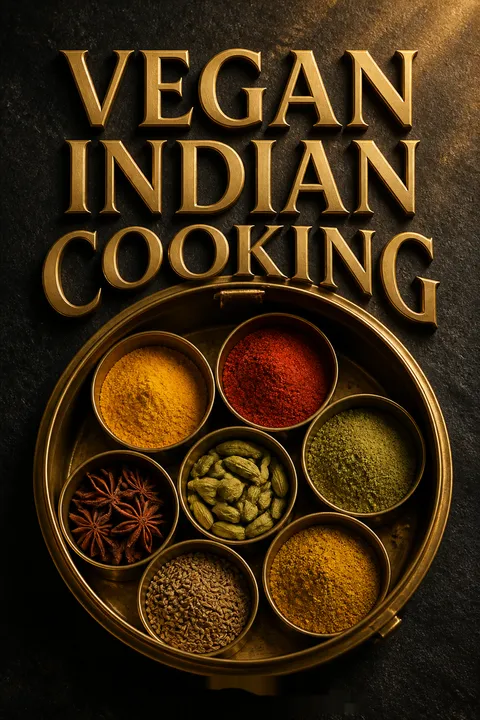
Indian spice boxA masala dabba is a round container, traditionally made of stainless steel, holding smaller containers for frequently used spices. It keeps a working set of seasonings close at hand while cooking, reducing the need to search through separate jars. Singla describes it as a practical staple in Indian home kitchens and discusses a version designed to fit measuring spoons.
Tarka
Hot-spice oil seasoningTarka, also called chounk or vaghar in the book, is a seasoning method in which spices are briefly heated in oil until they sizzle and release aroma. The hot oil and spices are added to a cooked lentil dish or used to begin a vegetable dish. Timing matters: spices should bloom without burning, since burnt spices can turn bitter.
Dum
Cooking in trapped steamDum is cooking food gently in its own steam. Singla describes a traditional method that seals a pot so steam cannot escape, allowing ingredients to cook slowly and their flavors to combine. She connects this principle to the modern slow cooker, while noting that the appliance is a convenient adaptation rather than the origin of slow cooking in India.
Dal
Lentils or lentil dishesDal can refer to legumes such as lentils, or to a cooked preparation made from them. Usage differs across India: Singla says her Punjabi family used the word specifically for soupy lentils, while other regions may also use it for drier preparations. The book uses varied forms of lentils and beans as central ingredients in soups, stews, salads, and one-pot meals.
Chaat
Seasoned street-food dishesChaat is a broad family of Indian street-food-style snacks and small dishes, often combining fresh vegetables or legumes with sour, salty, spicy, and sometimes sweet seasonings. Singla connects the word with the pleasure of eating a dish down to the last flavorful bite. Her examples include chickpea chaat, fruit chaat, and vegetables sprinkled with chaat masala.
Download PDF
Download EPUB
.epub digital book format is ideal for reading ebooks on phones, tablets, and e-readers.








