

Key Takeaways
Prepare for the near-universal fear of human aggression before it surprises you.
Combat begins with fear. Grossman calls the overwhelming fear of interpersonal violence the “Universal Human Phobia.” The label is his, not a formal clinical diagnosis, and he estimates it affects about 98 percent of people. A person may accept the risks of storms or illness more readily than the deliberate violence of another human being, because aggression feels personal and violates the expectation of safety.
Preparation changes the encounter. The book points to the Washington-area sniper attacks, which altered ordinary routines across several states despite the relatively low odds that any individual would be attacked. Its argument is not that everyone should live in alarm. It is that those expected to confront violence should understand its emotional force before they meet it, much as firefighters learn what fire can do before entering a burning building.
What's valuable here is the distinction between statistical risk and psychological impact. Human beings are social creatures, so a deliberate attack can threaten trust and belonging as well as physical safety. That helps explain why interpersonal violence may feel more shattering than an equally dangerous natural event. The label is memorable, but the 98 percent figure should be treated as the author's estimate, not a settled prevalence measure. Preparedness is most useful when it supports proportionate awareness, rather than turning rare danger into a constant expectation.
Expect lethal stress to narrow perception and fracture confidence in memory.
The senses can shift. In a survey of 141 police officers involved in shootings, psychologist Alexis Artwohl found that 85 percent reported diminished sound and 80 percent tunnel vision. Other officers described heightened visual clarity, slow-motion time, or automatic actions. These responses vary; one person may report more than one, and none is guaranteed to occur.
Memory is not a recording. More than half the surveyed officers reported memory gaps for parts of the event, and nearly half did not recall some of their actions. A video may show a sound or person that an officer says they did not hear or see, but it cannot reveal what the officer consciously perceived. The book argues that investigators should consider stress effects while checking accounts against recordings, physical evidence, and other witnesses.
This insight has broad relevance to eyewitness testimony and high-stakes investigations. Memory is reconstructed, not replayed, and intense arousal can make gaps or confident errors more likely. That does not mean every discrepancy is harmless, or that a person’s account should automatically be accepted. It means that careful investigators separate sincere perception from external evidence instead of treating inconsistency as proof of dishonesty. The cited survey is informative, but a sample of officers who experienced shootings cannot establish how every person responds.
Rehearse judgment under pressure, not merely the movement of your hands.
Practice writes the response. The book credits realistic, repeated training with helping soldiers move beyond the low firing rates reported in S. L. A. Marshall’s account of World War II. Grossman cites estimates rising from 15 to 20 percent of individual riflemen firing in that war to about 95 percent in Vietnam, attributing much of the change to more realistic training. The history of combat, from Roman formations to modern units, also points to leaders and cohesive groups as influences on performance.
Bad practice transfers too. Police officers once practiced firing two shots and immediately reholstering. Some later performed that routine during real incidents, even when a threat remained. Grossman’s lesson is to practice decisions, including when not to act, using realistic targets and scenarios that reflect lawful rules of engagement.
The central principle is powerful: under pressure, people draw on what practice has made familiar. It applies to emergency medicine, aviation, and other work where a practiced sequence can preserve attention for changing conditions. Yet historical firing-rate estimates, especially Marshall’s, have been debated, and the book’s causal story is more confident than the evidence warrants. Realistic practice can improve readiness, but it must test discrimination and restraint as seriously as speed. Otherwise, repetition may make the wrong response effortless.
Use realistic stress practice to build resilience without rehearsing defeat.
Stress can be trained. Grossman uses “stress inoculation” for controlled exposure to demanding situations that helps reduce surprise and build confidence. Examples include force-on-force exercises with paint-marking rounds and simulations that require participants to make decisions while startled, tired, or under pressure. The point is not to reproduce combat perfectly, but to give the mind and body a safer chance to practice responding.
The training climate matters. The book warns trainers not to tell participants they are dead when a scenario goes badly, and not to send them away feeling defeated. Instead, trainers should identify the failure, coach a better response, and let the participant practice it successfully. Stress without instruction or recovery can overwhelm; carefully designed challenge can teach.
This resembles exposure-based learning: a feared situation becomes more manageable when someone encounters it in a controlled setting and learns that effective action is possible. The emphasis on recovery and a successful final attempt also protects learning from becoming a lesson in helplessness. Still, stress exposure is not a universal inoculation, and a difficult simulation can worsen fear or shame if handled badly. Good training needs informed instructors, clear boundaries, and attention to individual responses, not just louder noise and harder impacts.
Breathe deliberately to reclaim a slice of choice when adrenaline crowds out thought.
Breathing is a control point. Tactical breathing is the book’s paced pattern for settling arousal: breathe in through the nose for a count of four, hold for four, breathe out for four, then hold empty for four. Repeat as needed. Because breathing can be brought under conscious control, Grossman presents it as a way to influence the body’s automatic stress response and steady attention, voice, and fine movement.
Arousal has tradeoffs. The book’s color model describes rising readiness, from relaxed in “Condition White,” through alertness in “Condition Yellow,” to high arousal in “Condition Red.” It proposes approximate heart-rate zones where fine or complex motor skills may deteriorate, while warning that individual responses differ. Breathing may help an officer prepare for a decision or recover after an incident, but it does not replace training or immediate safety actions.
Paced breathing gives people a concrete action when panic makes abstract advice useless. The practice also creates a small pause between sensation and response, a useful form of self-regulation in many settings. The color scheme is a memorable teaching aid, not a precise diagnostic instrument, and the book’s claim that breathing controls the wider autonomic system is too sweeping. A more careful framing is that breathing can influence arousal for many people, while severe stress, injury, or illness may limit its effect.
Treat sleep and recovery as part of operational readiness.
The body pays after danger. Grossman describes a “parasympathetic backlash,” a period of fatigue or physical shutdown after the body has mobilized for threat. A police officer may be too wired to sleep after a brief gunfight; troops who have fought for hours may instead collapse into exhaustion. The book also recommends time away from high-stakes decisions after a shooting, when possible, because additional stress can pile onto an already taxed system.
Fatigue degrades performance. Grossman cites an Army artillery exercise lasting 20 days in which groups allotted seven hours of sleep reportedly retained 98 percent of peak performance, while the four-hour group fell to 15 percent. Whatever the limits of that particular study, the practical warning is clear: sleep loss impairs judgment, coordination, and patience. Rest is not a reward for finishing the mission. It is part of staying capable of doing it.
Sleep is often treated as negotiable because its costs accumulate gradually, then become visible in mistakes. The chapter usefully frames fatigue as a systems problem, not a test of toughness. That matters especially when people make decisions that affect others. The cited artillery figures are striking, but they come from one demanding exercise and should not be applied as a universal performance formula. The broader point stands without them: leaders and organizations should plan for recovery instead of relying on depleted people to compensate through willpower.
Debrief together, but never mistake compulsory disclosure for healing.
A debrief can restore context. The book describes critical incident debriefings as structured conversations that help participants reconstruct what happened, identify lessons, and support one another. A medic who believed he had failed a dying soldier found relief when colleagues explained what they had witnessed. In another account, a Vietnam veteran carried intense guilt about leaving fellow soldiers behind, without ever having a chance to examine the event with people who understood it.
Participation should be handled carefully. Grossman stresses that debriefings should not be forced, should be led by trusted people where possible, and should connect participants with further support when needed. The aim is not to demand emotional confession. It is to reduce isolation, correct mistaken assumptions when evidence allows, and learn from the event. Persistent distress or impaired daily life calls for qualified professional help.
The strongest element is the social one: people who shared an event can supply missing context and challenge a survivor’s private, often distorted self-blame. That is different from assuming that everyone benefits from an immediate group recounting. Research and clinical practice have cautioned that compulsory single-session emotional processing can be unhelpful for some people. The book itself recognizes that poor debriefings may do harm. The sound application is voluntary, practical, and connected to continuing care, with peers supporting rather than diagnosing one another.
Keep force inside the law, and keep revenge outside the mission.
Readiness needs boundaries. Grossman argues that people assigned to protect others should think seriously in advance about whether they can use lawful force when necessary. He distinguishes that decision from a wish to kill: the purpose is to stop a threat and protect people, not to punish an enemy. His discussion of the biblical commandment contrasts murder with authorized force, while recognizing that religious traditions differ on this question.
Vengeance corrodes the protector. The book warns that retaliation and atrocities can violate a warrior’s code and leave lasting moral injury. Its ideal is a person capable of force who remains answerable to law, discipline, and the protection of others. That includes accepting surrender and resisting dehumanization, even when fear or anger makes restraint difficult.
This is the book’s essential ethical counterweight to its emphasis on readiness. A capacity for force is not a moral credential by itself; it becomes legitimate only within a narrow framework of necessity, proportionality, and accountability. The author’s religious interpretation will not persuade every reader, but the broader distinction between protection and vengeance is widely intelligible. A further safeguard is to treat de-escalation and restraint as trained competencies, not signs of hesitation. The protector’s discipline matters as much as the willingness to act.
Help survivors choose continued life over shame, isolation, or self-punishment.
Survival can bring guilt. After a violent death, a survivor may feel relief that they lived, then feel ashamed of that relief. The book presents this as a common response, not evidence of indifference. It also argues that honoring a fallen friend means living fully, rather than treating one’s own life as something undeserved. Loved ones can help by expressing care, avoiding intrusive questions, and offering practical support.
Support should be specific. The book recommends acknowledging a survivor’s safety without judging the incident or demanding details. For a returning veteran, it favors open questions, sincere appreciation, and continued support after public attention fades. Friends should notice sustained changes in sleep, mood, relationships, or work, and encourage professional help when distress persists. Care is neither pity nor denial. It is staying present while the person regains footing.
This section links personal recovery to relationship repair. A survivor may withdraw not because they no longer care, but because guilt, exhaustion, or shame makes connection difficult. A simple, nonjudgmental expression of relief can reopen that connection without pretending the experience was easy. The risk is turning recovery into an obligation to be grateful or resilient on someone else’s timetable. Support works best when it makes room for grief, offers choices, and recognizes that professional care may be needed alongside family and peer support.
Treat violent media as rehearsal, while separating warning from proof.
The book sees conditioning. Grossman argues that interactive violent games can rehearse targeting and reward simulated killing, much as military training can build automatic responses. He cites a joint statement by medical and child-health organizations referring to more than 1,000 studies linking media violence with aggressive behavior in some children. He also highlights a Stanford school intervention: after a curriculum encouraged children to reduce television and game use, the study reported 40 percent less physical aggression and 50 percent less verbal aggression compared with a similar school over 20 weeks.
The finding is a reason to examine habits. The book urges parents to know what children watch and play, especially when they are young. It does not follow that every child exposed to violent media becomes violent, or that media alone explains rare attacks. The practical suggestion is to reduce exposure and observe behavior, not to treat a screen as a prediction of criminality.
The analogy between games and training simulators raises a legitimate question about repetition, reward, and what behaviors become familiar. The Stanford intervention also suggests that family and school media habits can be changed, with measurable effects in that setting. But it tested a broad screen-reduction curriculum at two schools, not violent content in isolation, and it cannot establish a pathway from gaming to mass violence. The most responsible conclusion is precaution without scapegoating: limit age-inappropriate material, while taking bullying, family conditions, and mental health seriously too.
Be a disciplined protector, not the predator you are trained to stop.
The sheepdog is a metaphor. Grossman uses sheep for ordinary, generally peaceful citizens, wolves for predators, and sheepdogs for protectors willing to confront danger. The distinction is not that protectors are morally superior or eager for violence. It is that they accept a responsibility to prepare, act under authority, and defend people who may not be able to defend themselves.
Protection is more than combat. The book extends the role to firefighters, medics, teachers, aid workers, and others who move toward danger to help. Its story of the Flight 93 passengers shows ordinary people responding collectively during an attack. The metaphor’s useful question is not whether someone belongs to a permanent category, but whether they are prepared to serve, and whether their force remains governed by care and restraint.
The sheepdog image makes invisible protective labor easy to understand, and it counters the fantasy that courage means enjoying violence. Its weakness is the tidy division of people into three types. Real communities contain changing roles, mixed motives, and citizens who protect one another without uniforms. The metaphor is most humane when it describes a duty rather than an identity: readiness in service of others, constrained by law, empathy, and accountability. That interpretation keeps the book’s ideal of protection from becoming a license for superiority.
Analysis
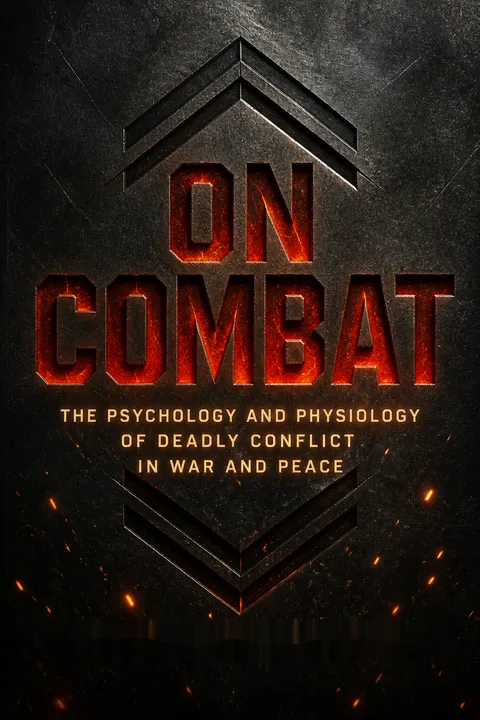
On Combat is part field guide, part moral argument, and part oral history. Its recurring structure is concrete: a physiological claim, a survivor’s account, then a practical lesson for training or recovery. That structure gives abstract ideas a human scale. The mouse in a classroom, the officer who cannot hear his own gunfire, and the veteran who carries private guilt all make the same point: people need language for reactions they may otherwise mistake for personal failure.
The book’s strongest contribution is its insistence that preparation includes perception, memory, recovery, ethics, and relationships, not just equipment or physical skill. It also understands that training is not neutral. Repetition can create useful automatic responses, but it can just as readily encode the wrong action. The same caution applies to organizational culture: a team’s habits determine whether members can seek help or learn from a mistake.
Its limits deserve equal attention. Some numerical claims are presented with more certainty than their methods justify, and its argument about violent media sometimes moves from plausible mechanisms to strong causal conclusions. Its biological metaphors can simplify complex trauma, and its language of wolves and sheepdogs risks dividing people too sharply. These weaknesses do not erase the practical value of the book, but they argue for separating its durable principles from its most sweeping claims. The durable principles are specific: rehearse decisions, not just motions; preserve sleep; recognize that stress can alter recall; support survivors without forcing disclosure; and keep force accountable to law and care. The broadest insight is that competence under pressure is a social achievement. It depends on individual practice, trusted teams, responsible leadership, and a culture that treats recovery as part of duty rather than a private weakness.
Review Summary
On Combat receives mixed reviews, with many praising its insights into combat psychology and physiology. Readers appreciate the practical advice for warriors and their families. Critics note repetitiveness, lack of citations, and potential bias. Some find it essential for understanding combat stress, while others question its scientific rigor. The book's exploration of post-combat issues and breathing techniques is widely commended. Overall, it's considered valuable for military, law enforcement, and those close to them, despite some flaws in presentation and academic approach.
People Also Read


Glossary
Universal Human Phobia
Fear of human aggressionGrossman’s name for the overwhelming fear many people experience when confronted with deliberate human violence. He estimates that it affects about 98 percent of people, while acknowledging that “universal” is an approximation. The term describes a proposed common psychological response, not a formal diagnosis or a standardized clinical measure.
Condition White, Yellow, Red, Gray, and Black
Stress and readiness modelA color-coded model connecting mental readiness and rising stress to possible changes in performance. White represents unprepared inattention, Yellow alert readiness, and Red heightened arousal. Gray and Black describe still more intense states, where performance may deteriorate sharply. The book treats associated heart-rate ranges as rough guides, not fixed thresholds that apply equally to everyone.
Stress inoculation
Practice under controlled stressA training approach that exposes people to realistic but managed stressors so they can practice functioning under pressure. In the book, examples include force-on-force exercises and simulations followed by recovery and coaching. The aim is to reduce surprise and build confidence, not to make a person invulnerable or to assume that one kind of stressful practice prepares someone for every other kind.
Tactical breathing
Paced breathing for arousalA deliberate breathing pattern used to help settle stress arousal and restore attention. Grossman describes breathing in for four counts, holding for four, exhaling for four, and holding empty for four, then repeating. The technique can be practiced before, during, or after stressful situations. The book presents it as a tool for self-regulation, not as a substitute for safety measures or professional care.
Parasympathetic backlash
Post-stress physical crashGrossman’s term for the pronounced fatigue or shutdown that can follow intense sympathetic arousal. After a threat ends, a person may shake, feel dizzy, become nauseated, or abruptly need sleep. The book uses the idea to explain why people can be vulnerable after a confrontation and why recovery time, hydration, and continued attention may matter.
Critical incident debriefing
Structured post-event reviewA facilitated discussion after a traumatic or high-stakes event. In the book, it serves two purposes: reconstructing events and extracting operational lessons, while also allowing participants to support one another and address confusion or guilt. Grossman argues that it should be handled by trusted people, should not be forced, and should connect to further support when needed.
Bathtub Model of Stress
Model of accumulating stressAn analogy in which stress flows into a bathtub while coping and recovery drain it. If stress arrives faster than it can be processed, the water rises and may overflow, representing impairment. Physical fitness, exercise, sleep, and other recovery practices are presented as ways to increase capacity or improve the drain. The model emphasizes cumulative load rather than treating each stressful event in isolation.
The Klinger Study
Police shooting experience surveyA National Institute of Justice project in which criminologist Dave Klinger interviewed 113 police officers from 19 agencies in four states about gunfights in which they had shot and hit a person. The study explored thoughts, feelings, and sensory distortions before and during shootings. Its sample excluded many officers who missed, left the profession, or declined interviews, limitations the book discusses.
Perceptual Distortions in Combat
Survey of altered perceptionThe heading used for findings from Alexis Artwohl’s survey of 141 police officers involved in deadly-force encounters. Reported experiences included diminished sound, tunnel vision, automatic behavior, heightened visual clarity, slow-motion time, and memory gaps. The findings illustrate possible stress effects; they do not mean every officer experiences the same changes or that the survey represents all people exposed to violence.
Sheep, wolves, and sheepdogs
Protector and predator metaphorGrossman’s metaphor for ordinary peaceful citizens, people who prey on others, and people willing to protect others from danger. The sheepdog represents the capacity for force combined with empathy and a duty to defend. The framework is intended to explain the protector’s role, not to establish fixed categories of human beings or rank one kind as morally superior.
FAQ
What's On Combat about?
- Psychological and Physiological Focus: On Combat by Dave Grossman examines the psychological and physiological aspects of deadly conflict, applicable in both war and peace.
- Warrior Mindset Development: It emphasizes developing a "warrior mindset" for military and law enforcement personnel, focusing on mental preparedness and resilience.
- Stress Management Techniques: The book provides techniques for managing stress, such as Tactical Muscle Relaxation and Tactical Breathing, to enhance performance under pressure.
Why should I read On Combat by Dave Grossman?
- Essential for High-Stress Professions: It's crucial for military and law enforcement personnel, offering psychological tools to handle high-stress situations effectively.
- Real-World Applications: The insights are based on empirical research and real-life experiences, making them applicable in various critical scenarios.
- Performance Enhancement: Understanding psychological factors in combat can improve decision-making and overall effectiveness in high-pressure roles.
What are the key takeaways of On Combat?
- Mental Toughness is Crucial: Success in military and police operations is largely attributed to psychological skills rather than physical abilities.
- Stress and Arousal Management: Techniques like Tactical Muscle Relaxation and Tactical Breathing are vital for controlling arousal levels and optimizing performance.
- Fear Management: Acknowledging and managing fear is essential for effective action in combat situations.
What is the Warrior Mindset as described in On Combat?
- Mental Preparedness: It involves being mentally ready for combat challenges, including stress and fear management.
- Psychological Skills Development: Focuses on enhancing decision-making and performance under pressure through skills like focus and emotional control.
- Mind-Body Integration: Success in combat requires a balance of mental and physical training.
How does On Combat define mental toughness?
- Psychological Skills Utilization: Mental toughness is the ability to understand and use psychological skills effectively under stress.
- Adaptation and Persistence: It enables individuals to adapt and persist in both everyday and high-stress environments.
- Critical for Warriors: Essential for military and law enforcement personnel to perform optimally in life-and-death situations.
What techniques does On Combat recommend for managing stress?
- Tactical Muscle Relaxation (TMR): Involves tensing and relaxing muscle groups to promote relaxation and focus during missions.
- Tactical Breathing: Controlled breathing helps manage arousal and anxiety, maintaining composure in high-stress situations.
- Imagery and Self-Talk: Using mental imagery and positive self-talk prepares individuals for challenges and boosts confidence.
What is Tactical Muscle Relaxation (TMR) as per On Combat?
- Active Relaxation Technique: TMR helps control physiological responses to stress through a physically and mentally active approach.
- Conditioning Response: Associating a command word with relaxation allows quick induction of a relaxed state.
- Immediate Application: Useful in various settings, including missions, to conserve energy and manage stress effectively.
How does On Combat address the relationship between fear and performance?
- Fear as a Natural Response: Fear is common in high-stress situations and can serve as a warning signal.
- Courage in Confronting Fear: True courage involves recognizing and managing fear, allowing effective performance despite it.
- Training to Manage Fear: Training prepares warriors to confront and control their fears, enhancing performance in critical situations.
What role does experience play in managing stress according to On Combat?
- Experience Reduces Arousal: Experienced individuals maintain lower arousal levels during high-stress situations compared to novices.
- Training and Simulation: Realistic training scenarios build experience, enhancing confidence and reducing stress responses.
- Adaptation Over Time: With experience, warriors learn to manage stress and arousal levels more effectively, improving field performance.
What is tactical self-talk, and how is it used in On Combat?
- Definition of Tactical Self-Talk: Internal dialogue guiding individuals during high-stress situations, using specific phrases to enhance focus.
- Positive Framing Importance: Self-talk should be positive and action-oriented, like "Stay calm and focused" instead of "Don't panic."
- Examples of Tactical Self-Talk: Phrases like "Breathe, Relax, Aim, Squeeze" help remember critical actions during high-pressure scenarios.
What is the significance of mental imagery in On Combat?
- Preparation for Real-Life Scenarios: Mental imagery allows rehearsal and visualization of responses to combat situations, enhancing readiness.
- Physiological Benefits: Produces physiological responses similar to actual performance, reinforcing neural pathways for executing skills.
- Vividness and Detail: Engaging all senses during imagery practice leads to better performance outcomes.
How can I apply the concepts from On Combat in my daily life?
- Practice Breathing Techniques: Use diaphragmatic breathing and the 4-count method to manage stress and improve focus in daily routines.
- Use Tactical Self-Talk: Develop positive, task-relevant self-talk habits to guide actions and decisions, enhancing performance in various situations.
- Engage in Mental Imagery: Regularly practice mental imagery to prepare for challenges, building confidence and stress-handling abilities.
About the Author
Other books by Dave Grossman
Download PDF
Download EPUB
.epub digital book format is ideal for reading ebooks on phones, tablets, and e-readers.








