

Key Takeaways
Treat resistance to killing as a human constraint, not a soldier's defect.
A startling baseline. Historian S. L. A. Marshall reported that only 15 to 20 percent of American riflemen in World War II fired at the enemy during close combat. His estimate came from interviews with thousands of soldiers across hundreds of infantry companies. Grossman argues that the finding reflects a powerful resistance to killing another person, even when soldiers face danger and have been ordered to fight.
A contested measure. The book notes that Marshall's interview methods have been questioned, and firing rates alone cannot reveal why a soldier did not shoot. Still, Grossman points to other historical accounts and studies that he believes support the broader pattern. The claim is not that soldiers are incapable of violence, but that killing often requires pressure, training, or circumstances that overcome reluctance.
What's valuable here is the shift from judging a nonfiring soldier as cowardly to asking what the situation demanded of him. That reframing makes room for moral agency and for the difference between physical courage and willingness to kill. The exact historical percentage deserves caution: interview data can be affected by memory, battlefield roles, and what counts as firing. The durable insight is less a universal rate than a research question: what conditions make people participate in violence, and what conditions help them refuse?
When soldiers fire, ask whether they are aiming to kill or merely posture.
Noise is not proof. Grossman adds posturing and submission to the familiar fight-or-flight model of danger. In conflicts between members of the same species, threats, displays, and retreat can resolve confrontations without lethal force. He applies this idea to armies: soldiers may fire to sound dangerous, encourage comrades, or keep up appearances, rather than to hit the enemy.
A battlefield puzzle. Civil War regiments sometimes hit only one or two opponents per minute despite firing at short range. After Gettysburg, many recovered muskets were loaded, and thousands had been loaded more than once. Grossman interprets this as evidence that some soldiers avoided firing. The objects cannot prove any one soldier's intention, but they sharpen the puzzle: battlefield activity and a desire to kill are not the same thing.
The distinction between display and violence helps explain why combat cannot be read from noise or ammunition use alone. It also warns against treating every apparent failure as cowardice. The discarded weapons are suggestive, but the evidence does not establish the motive behind each one. Confusion, malfunction, and tactical conditions may also matter. The strongest contribution is methodological: historical accounts should be examined for the gap between what weapons could do, what soldiers actually did, and what they meant to do.
Killing becomes easier when authority, comrades, distance, and perceived threat align.
Several forces combine. Grossman draws on Stanley Milgram's obedience experiments, in which many participants continued to administer what they believed were painful electric shocks when instructed by an authority figure. On the battlefield, authority can be strengthened by proximity, legitimacy, and a respected leader. Comrades add pressure and diffuse responsibility, while distance can make the victim feel less real.
The target matters. The book also considers whether killing seems tactically useful, whether the target appears dangerous, and whether the soldier has been trained or conditioned to act. These influences do not operate as a simple checklist. They compound: a legitimate order, a trusted group, a distant or dehumanized enemy, and a perceived threat can make an act easier than any one factor would alone.
This account resists the comforting idea that violence belongs only to unusually cruel individuals. It directs attention toward organizational design, group norms, and the stories people tell about targets. Milgram's laboratory findings illuminate obedience, but a laboratory shock experiment is not equivalent to combat or murder. The comparison works best as a warning about situational pressure, not as a numerical forecast of battlefield behavior. Responsibility remains real even when institutions make harmful action easier.
The closer the victim's face, the harder it is to deny the act.
Distance changes the experience. Grossman traces killing from bombing and artillery at great range to rifles, grenades, bayonets, and hand-to-hand combat. At long range, machinery and distance can let a killer think in terms of targets rather than people. At close range, the victim's expression, suffering, and identity are harder to ignore.
A face breaks abstraction. The book contrasts bomber crews who could observe a city burning from high above with soldiers who saw an opponent die at arm's length. It also describes how a sniper's scope, a blindfold, or an enemy's turned back can create psychological distance. The point is not that distant killing is harmless, but that physical and emotional separation can make it easier to act and harder to feel immediate empathy.
The face functions as a moral interruption: it makes the victim difficult to reduce to a category. This connects the book's military history to a broader question about how technology mediates responsibility. Remote systems can protect operators, but they can also conceal consequences from decision-makers and publics. Distance alone does not determine remorse, and close contact does not guarantee compassion. Still, the framework usefully asks who sees the harm, who acts, and who is insulated from the result.
Treat combat trauma as cumulative, not simply fear of being killed.
More than fear. Grossman describes combat stress as an accumulation of fear, exhaustion, horror, guilt, and hatred. Continuous danger activates the body's stress response, while poor sleep, hunger, weather, and the sight and smell of death wear down a soldier's capacity to cope. He calls the inner emotional reserve the Well of Fortitude, a metaphor for the strength that can be depleted by prolonged strain.
A grim estimate. The book cites a World War II study by Swank and Marchand reporting that after 60 days of continuous combat, 98 percent of surviving soldiers showed some form of psychiatric breakdown. That finding concerns a particular study and historical setting, not every soldier in every war. Grossman's larger point is that fear of death alone cannot explain why combat damages people.
The cumulative model is more persuasive than a single-cause account because it recognizes that bodies and minds are affected by duration, deprivation, and moral conflict as well as immediate danger. It also makes recovery a matter of replenishment and support, not simply toughness. The cited 98 percent figure should not be generalized beyond its study conditions. Combat stressors interact, and individual responses vary. The metaphor of a finite reserve is memorable, though real resilience is shaped by relationships and circumstances, not just an internal supply.
Atrocity can strengthen a unit briefly while trapping it in its crimes.
A short-term power. Grossman describes atrocities as violence against civilians or people who are no longer fighting, while recognizing that guerrilla warfare can blur those categories. Terror can make a population flee or submit, and shared participation can bind perpetrators to one another and their leaders. In the book's account of a Congo peacekeeping mission, a soldier kills two armed men after witnessing their torture of a young woman. He describes pride in the moment, but the episode also marks a lasting moral break.
A trap with consequences. Atrocity can harden an enemy's resistance, discourage surrender, and leave perpetrators fearing punishment if their side loses. The temporary power comes at the cost of moral injury, isolation, and a narrowed path back to ordinary life. Grossman argues that atrocity is not merely chaotic excess; institutions can use it, then become trapped by it.
This section's strength is its refusal to explain atrocity away as madness alone. Group loyalty, terror, authority, and perceived necessity can help ordinary people cross moral boundaries, while the act itself can bind them to a cause. That analysis should not flatten differences between combat, unlawful killing, and systematic mass murder. Naming the mechanisms clarifies how atrocities happen, but explanation is not exoneration. The account also invites attention to prevention: discipline and accountability matter before a group becomes invested in shared wrongdoing.
Conditioning can make killing automatic, but it cannot erase its moral cost.
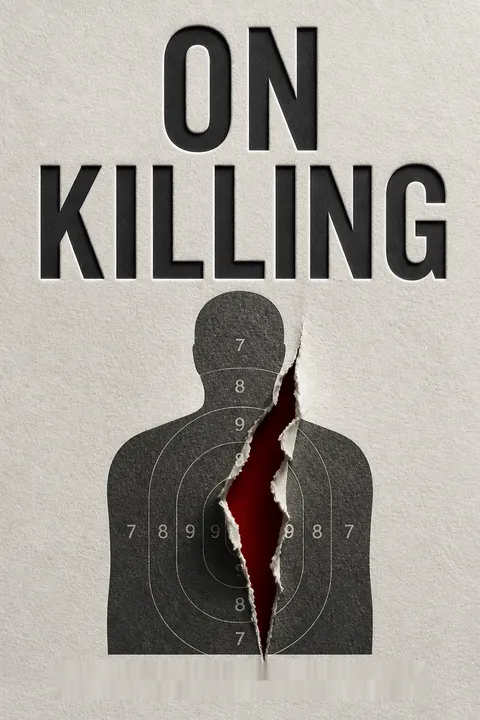
Practice changes behavior. Grossman describes modern combat training that replaces calm firing at bull's-eye targets with realistic drills: human-shaped targets appear briefly, and a hit makes them fall. Repetition and immediate feedback teach soldiers to respond quickly under pressure. He connects this to classical conditioning, which links a cue with a response, and operant conditioning, which strengthens behavior through consequences.
Effectiveness has a price. The book reports firing rates rising from 15 to 20 percent in World War II to about 55 percent in Korea and 90 to 95 percent in Vietnam. Grossman attributes much of the change to training and conditioning. He also stresses safeguards: soldiers are trained to fire under authority and in designated circumstances. Even so, greater readiness to kill can leave a psychological burden that training cannot settle.
The distinction between physical skill and ethical judgment is crucial. Rehearsal can make a response fast, but it cannot determine whether the order is lawful or the target is correctly identified. The reported firing-rate changes are striking, yet they cannot be attributed to training alone without accounting for differences in weapons, tactics, and measurement. The book's enduring warning is institutional: a system that engineers rapid action also has a duty to build restraint, accountability, and support into the same system.
A kill may bring exhilaration first, then remorse that lasts for years.
A recurring sequence. Grossman describes a common, though not universal, pattern: concern about whether one will act, the kill itself, a rush of exhilaration or satisfaction, remorse, and an extended effort to rationalize and accept what happened. He compares the stages to responses people may have when confronting death, while emphasizing that killing another person can carry a distinct burden.
One memory stays. A World War II veteran told Grossman that a particular kill still troubled him decades afterward. Other veterans describe nausea, crying, or lingering questions about the person they killed. Some feel no immediate emotion, while others may skip or combine stages. Grossman's model is meant to give language to these reactions, not to claim that every soldier follows the same psychological script.
The value of this sequence is its permission to hold seemingly incompatible emotions together. Relief or exhilaration does not prove cruelty, just as remorse does not erase a victim's suffering. Such a framework can help a veteran describe an experience that has remained private, especially when shame blocks conversation. It should not be used as a diagnostic tool or as a universal timeline. Individual memory, circumstance, and interpretation differ, and support should begin with listening rather than imposing a prescribed emotional sequence.
Give returning soldiers the rituals and support that Vietnam veterans lacked.
The return matters. Vietnam veterans often arrived in combat as individual replacements and left on one-year tours, without the unit continuity common in earlier wars. On returning, many had no long voyage home with comrades, no broad public welcome, and no shared ritual to mourn losses or discuss what they had done. Some encountered hostility, including accusations that they were murderers or baby killers.
A lasting wound. The book reports estimates ranging from 400,000 to 1.5 million Vietnam veterans with post-traumatic stress disorder, among roughly 2.8 million who served in Southeast Asia. The wide range signals uncertainty, and not all veterans had the same exposure or outcome. Grossman's central claim is that combat trauma can be amplified when social support is replaced by condemnation or silence.
This account makes reintegration part of the moral responsibility of a society that sends people to war. Public rituals, peer contact, and an honest welcome can help people make sense of loss without pretending the conflict was simple or universally supported. The estimates of PTSD vary substantially, and social rejection is not the only cause of the disorder. Still, the contrast between combat exposure and the response at home is an important reminder that trauma unfolds within relationships, institutions, and public narratives.
Ask what violent games rehearse, not just what stories they tell.
The book's warning. Grossman argues that violent movies, television, and interactive games can desensitize viewers, reward simulated aggression, and provide role models for violence. He compares realistic shooting games with military training in which targets appear, the player fires, and immediate feedback confirms a hit. Unlike military training, he argues, entertainment lacks safeguards that limit firing to authorized targets.
A wider problem. The book places media alongside family breakdown, gangs, drugs, poverty, and weapons as factors that can enable violence. It calls for resensitization and greater responsibility from the entertainment industry, rather than assuming that exposure is harmless. Its claim is not simply that violent images exist, but that repetition, reward, and identification may shape how young viewers learn to respond.
The comparison between interactive games and marksmanship drills is a useful prompt to examine what a medium asks a player to practice. Yet resemblance in format does not establish equal psychological effects, and the book's broad causal claims about media outrun what its examples alone can prove. Violence is shaped by many conditions, including family life and social environment. A careful response can distinguish depiction from rehearsal, measure effects rather than assume them, and avoid treating media as either wholly harmless or the single cause.
Analysis
On Killing is at its strongest when it treats the act of killing as a problem of human behavior, not merely military technique. Its narrative moves from the surprising possibility that soldiers may refuse to fire, through the social and psychological conditions that enable killing, to the burden carried by combatants and the society that sends them. That arc makes the book more than a catalogue of battlefield anecdotes. It asks readers to examine what institutions do to make violence possible, and what they owe people afterward.
The book's most useful conceptual move is its insistence on interacting causes. Authority, group belonging, distance, target perception, training, and personal disposition work together. This avoids the simplistic claim that killers are either monsters or passive instruments. Its accounts of hesitation and remorse also resist the popular image of effortless, emotionally clean combat.
The empirical foundation is uneven. The book acknowledges disputes over Marshall's research, but often treats a contested firing-rate estimate as a broad historical truth. Several claims about training, psychiatric breakdown, and media violence are presented with more certainty than the evidence summarized here can bear. The media argument especially risks moving from plausible learning mechanisms to a strong causal verdict without isolating other influences. Those limits do not erase the questions the book raises, but they require readers to distinguish a compelling interpretation from a settled measurement.
Its ethical contribution is ultimately larger than its policy prescriptions. The analysis shows how violence can be made easier by systems, while insisting that explanation does not dissolve responsibility. The central question is not whether humans are naturally peaceful or naturally violent. It is how institutions cultivate, restrain, and account for the capacity to harm, and whether they provide a path back for those asked to use it.
Review Summary
On Killing receives mixed reviews. Many praise its insights into the psychology of killing in combat and its examination of PTSD. Readers find the historical analysis and personal anecdotes compelling. However, some criticize Grossman's reliance on disputed data and repetitive arguments. The book's later sections on media violence and societal implications are controversial. While some readers consider it eye-opening and thought-provoking, others find it biased and lacking scientific rigor. Overall, it remains a widely discussed work on the psychological impact of warfare.
People Also Read






Glossary
Killology
study of killingGrossman's proposed name for the systematic study of killing, especially its psychological, social, and military dimensions. The term signals his effort to examine the act itself rather than treating it as a minor part of the broader study of war. It includes resistance to killing, methods that enable it, and the consequences for those involved.
Well of Fortitude
reserve of emotional enduranceGrossman's metaphor for the emotional strength a soldier draws upon while facing combat stress. Fear, exhaustion, guilt, horror, and hatred can deplete this reserve. Supportive leaders and success may help replenish it, while prolonged exposure can leave a soldier unable to continue coping. The image emphasizes that endurance is limited, not an inexhaustible measure of character.
Wind of Hate
stress of hostile intentGrossman's term for the psychological impact of facing deliberate aggression from another person. He distinguishes this from danger alone: a person may endure impersonal risk yet be deeply affected by the knowledge that someone intends to harm them. In his account, direct hostility threatens a person's sense of safety, control, and human connection.
Group Absolution
shared burden of responsibilityThe process by which belonging to a group can make an individual feel less personally responsible for a harmful act. In combat, comrades can encourage participation while also sharing the apparent burden of the decision. Grossman argues that this combination of accountability to the group and reduced personal visibility can make killing easier.
Killing Response Stages
common emotional sequence after killingGrossman's model of possible emotional responses to killing: concern about whether one can act, the act itself, exhilaration or satisfaction, remorse, and an ongoing effort to rationalize and accept the experience. The stages are not universal or mechanically sequential. Individuals may skip, combine, or experience them differently.
Target attractiveness
perceived value of a targetA concept Grossman draws from Israeli military psychologist Ben Shalit's work. It describes how likely a person is to be selected for attack based on the perceived threat, the tactical usefulness of available ways to engage, and the expected benefit to the attacker or loss to the opponent. It is a situational assessment, not a judgment of a person's worth.
Acquired violence immune deficiency
metaphor for weakened restraintGrossman's analogy for his claim that repeated exposure to media violence can weaken a person's resistance to violent behavior. He compares that proposed effect to damage to an immune system, which leaves someone more vulnerable to other pressures such as drugs, gangs, or social conflict. It is a metaphor, not a clinical diagnosis.
Milgram's studies on obedience
experiments on obeying authorityStanley Milgram's laboratory experiments examined whether participants would follow an authority figure's instructions to administer what they believed were increasingly painful electric shocks to another person. Grossman uses the studies to illustrate the power of authority and situational pressure. The experiments were not battlefield simulations, so they illuminate a mechanism rather than directly measure combat behavior.
Fight or flight, posture or submit
four responses to threatGrossman's expanded model of responses to danger. Fight and flight are joined by posturing, in which a person uses display or intimidation, and submission, in which a person yields to an opponent. He applies this framework to explain why conflicts between members of the same species may involve ritualized threats and retreat rather than immediate lethal violence.
Post-traumatic stress disorder
disorder following severe traumaA mental health condition that can develop after exposure to a traumatic event. In the book, symptoms include intrusive memories or dreams, emotional numbing, withdrawal, difficulty maintaining relationships, and sleep problems. Grossman emphasizes the possible role of combat experience and the social environment after return, while noting that the disorder's manifestations can vary.
FAQ
What's On Killing about?
- Exploration of Killing in War: On Killing by Lt. Col. Dave Grossman examines the psychological cost of learning to kill in war and society, focusing on the innate resistance humans have to killing.
- Psychological and Social Aspects: It discusses how authority, group dynamics, and emotional distance influence a soldier's willingness to kill, and addresses the trauma and guilt associated with killing.
- Historical Context: Grossman uses historical examples and psychological studies to provide a comprehensive study of the act of killing throughout history.
Why should I read On Killing?
- Understanding Human Nature: The book offers profound insights into human nature, particularly regarding violence and aggression, challenging readers to confront uncomfortable truths.
- Relevance to Modern Society: Grossman connects themes of killing in war to contemporary issues like media violence, making it relevant for military personnel and civilians alike.
- Educational Resource: It serves as a valuable resource for military professionals, psychologists, and educators, providing a framework for understanding the psychological effects of combat and violence.
What are the key takeaways of On Killing?
- Resistance to Killing: Most individuals have a strong, instinctive resistance to killing, which can be overcome through conditioning, authority, and group dynamics.
- Psychological Trauma: Killing in combat leads to significant psychological trauma, guilt, and horror, with long-lasting effects on soldiers.
- Influence of Distance: Physical and emotional distance from the victim affects a soldier's ability to kill, with greater distance making it easier to commit violence without remorse.
What are the best quotes from On Killing and what do they mean?
- Innate Resistance: "The average and healthy individual... has such an inner and usually unrealized resistance towards killing a fellow man." This highlights the moral and psychological barriers to killing.
- Soldier's Paradox: "The soldier above all other people prays for peace, for they must suffer and bear the deepest wounds and scars of war." It reflects the emotional toll of warfare on soldiers.
- Confronting War Realities: "It is to no purpose, it is even against one's better interest, to turn away from the consideration of the affair because the horror of its elements excites repugnance." Grossman argues for confronting the realities of war and killing.
How does [Author] define the psychological cost of killing?
- Psychological Burden: Grossman describes it as a heavy burden leading to long-term trauma and guilt, often manifesting in mental health issues like PTSD.
- Emotional Responses: Soldiers experience emotional stages after killing, including initial euphoria followed by guilt and horror, leading to psychological distress.
- Coping Mechanisms: Soldiers often cope through denial or rationalization, and understanding these mechanisms is crucial for addressing veterans' mental health needs.
What role does authority play in the act of killing according to On Killing?
- Influence of Command: Authority figures can significantly influence a soldier's decision to kill, with commanding officers compelling soldiers to act against their instincts.
- Milgram's Experiment: Grossman references Milgram's studies, showing individuals' willingness to inflict harm when directed by authority, illustrating authority's power in overcoming moral objections.
- Group Dynamics: Group cohesion and peer pressure further enable killing behavior, with soldiers more likely to kill when accountable to comrades and leaders.
How does On Killing relate to media violence?
- Desensitization: Grossman argues that media violence desensitizes individuals, making them more likely to accept violence as a norm, leading to increased societal aggression.
- Conditioning Effects: Media violence conditions individuals, especially children, to respond to conflict with aggression, paralleling military conditioning techniques.
- Cultural Impact: The normalization of violence in media contributes to real-world violence and aggression, connecting media themes to broader societal issues.
What is the significance of the "Well of Fortitude" concept in On Killing?
- Emotional Resilience: The "Well of Fortitude" represents the emotional stamina soldiers draw upon during combat, which depletes under stress, leading to psychological breakdown.
- Cumulative Stress: Continuous combat stress drains a soldier's fortitude, resulting in exhaustion and mental health issues, highlighting the need for rest and recuperation.
- Leadership Influence: Effective leaders can help replenish soldiers' fortitude through support and encouragement, sustaining morale and resilience.
How does Grossman address the concept of killing at different ranges?
- Distance and Killing: Grossman categorizes killing into various ranges and discusses how distance affects willingness to kill, with greater distance making it easier to commit violence.
- Emotional Impact: Close-range killing often involves intense emotional responses like guilt and horror, contrasting with the lesser emotional impact of long-range killing.
- Psychological Mechanisms: Emotional and physical distance buffer the killer from the reality of their actions, enabling killing at different distances.
What are the implications of On Killing for understanding combat trauma?
- Recognition of Trauma: Grossman emphasizes recognizing and addressing the psychological trauma associated with killing in combat, essential for supporting veterans.
- Coping Strategies: Soldiers use coping strategies like denial and rationalization to deal with the psychological cost of killing, affecting long-term mental health.
- Need for Support: Grossman advocates for better mental health support for soldiers and veterans, highlighting the importance of addressing combat experiences' emotional impacts.
How does [Author] explain the influence of group dynamics on killing?
- Peer Pressure: Group dynamics, including peer pressure, can significantly influence a soldier's willingness to kill, as soldiers often act in accordance with group expectations.
- Cohesion and Accountability: Soldiers are more likely to kill when they feel accountable to their comrades and leaders, with group cohesion playing a crucial role.
- Moral Support: The presence of a supportive group can help soldiers rationalize their actions, reducing individual moral objections to killing.
How does [Author] connect historical examples to the psychological aspects of killing?
- Historical Context: Grossman uses historical examples to illustrate the psychological aspects of killing, providing a comprehensive understanding of the act throughout history.
- Psychological Studies: He draws on psychological studies to support his arguments, showing how historical and psychological perspectives intersect.
- Illustrative Examples: These examples help readers understand the complexities of killing, offering insights into the factors that influence soldiers' actions across different eras.
About the Author
Other books by Dave Grossman
Download PDF
Download EPUB
.epub digital book format is ideal for reading ebooks on phones, tablets, and e-readers.








