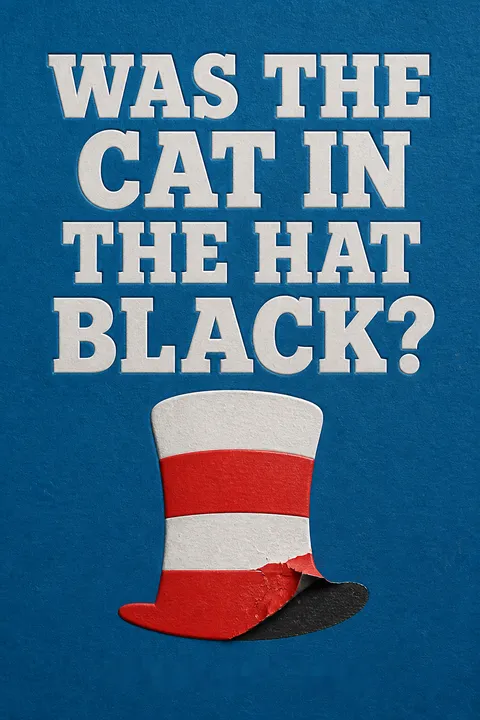


Key Takeaways
Assume a children's book teaches race, even when its characters never mention it
A hidden curriculum. Philip Nel argues that children’s books help shape ideas about whose lives are ordinary, important, and worth imagining. Racism here is not limited to openly hateful characters. It can also be structural: routine choices and assumptions that preserve unequal power. Color-blind racism is the language of apparently race-neutral explanations that conceal racial inequality, such as claiming a story by a Native author will not sell.
The numbers expose it. In 2015, only 13 to 15 percent of children’s books featured people of color, while roughly half of US school-age children were people of color. Nel also reports that people of color made up only about 3 percent of children’s-book creators. Scarcity is not a neutral gap. It shapes what young readers learn to expect from stories and from society.
The argument is strongest when it treats representation as part of a system, not as a test of an individual creator’s virtue. Cultural learning often happens through repetition and omission, so a book can normalize a narrow world without stating a prejudiced belief. At the same time, the publication figures establish disparity, not a precise causal measure of how any single book changes a child’s attitudes. That distinction strengthens the case: the remedy is not to claim that one story fixes bias, but to examine the accumulated pattern across books, classrooms, and publishing decisions.
The Cat in the Hat carries a racial history beneath his red-and-white hat
A mixed inheritance. Nel traces the Cat’s origins to several sources, including Annie Williams, an African American elevator operator whose white gloves and smile caught Dr. Seuss’s attention in 1955. He also links the Cat’s costume and performance to blackface minstrelsy, a theatrical tradition in which White performers caricatured Black people, and to Black cultural influences such as jazz and George Herriman’s Krazy Kat. The Cat’s ancestry is therefore contested and layered, not a simple claim that the character is Black.
Progress and residue. Seuss’s early cartoons used racist caricatures, while his later work included stories opposing prejudice. Yet stereotypes continued to appear in books such as If I Ran the Zoo. The Cat’s unruly showmanship can disrupt the children’s orderly home, but its minstrel echoes can also reproduce old racial jokes.
Reading a familiar mascot through its cultural influences makes the history of popular art less neatly segregated. It also shows why good intentions and progressive politics do not automatically erase inherited visual habits. The Cat’s ambiguity is analytically useful, but ambiguity should not become a verdict that the character is secretly one thing or another. A productive reading keeps several questions open: which traditions shaped the image, what the image invites audiences to feel, and how those effects shift across historical contexts.
Don't sanitize racist classics until their remaining assumptions disappear from view
Edits can disguise. Nel examines revisions to four popular books. A revised Huckleberry Finn replaces a racial slur with the word slave; a later Doctor Dolittle removes skin-color references; Charlie and the Chocolate Factory recasts African Oompa-Loompas as white people; and Mary Poppins eventually replaces human characters from several regions with animals. The revisions reduce some overtly offensive details, but leave much of the original hierarchy intact. Wonka still treats the Oompa-Loompas as labor he can import, and Doctor Dolittle still plays the European rescuer in a supposedly primitive land.
The problem shifts. A less explicit text can make prejudice harder to identify, especially when its changes are not disclosed. Replacing a slur does not remove a character’s caricature, and removing race from a scene does not necessarily remove colonial assumptions. The revised book may look cleaner while teaching a subtler version of the same story.
This critique usefully distinguishes removing a harmful word from confronting the social logic that made the word meaningful. Editorial revision can protect some readers from an injury, yet it can also obscure how a canonical work was built. There is no single policy for every age, classroom, or reader: access to an unaltered text is not automatically more ethical than choosing another book. The key distinction is between transparent, contextual editing and silent revision that presents a contested work as if its history had vanished.
Let discomfort interrupt nostalgia before affection turns into an alibi
Memory protects favorites. Adults often reason that a book they loved cannot be racist, or that people in its era all thought alike. Nel argues that nostalgia can make ideology difficult to see because criticism feels like an attack on cherished memories. White Fragility is a defensive response to racial stress, including anger, guilt, silence, or argument that restores a person’s comfort rather than engaging the issue.
History was never unanimous. Defenders of Doctor Dolittle and Huckleberry Finn sometimes excuse their racism as typical of their time. Nel counters that people in every period held different racial beliefs. Jesmyn Ward recalls reading Gone with the Wind as a child and feeling horrified by its portrayal of Black people, but without a guide she struggled to make sense of that response. Discomfort can begin analysis; it should not end it.
The link between emotion and interpretation is important because readers do not approach classics as detached judges. Affection can narrow attention, while anger or sadness can make previously ignored details salient. Yet discomfort alone does not prove that a reading is correct. A careful response pairs emotional recognition with evidence from the language, images, publication history, and readers’ experiences. That pairing avoids two easy exits: dismissing a critique because it feels painful, or treating a strong feeling as a substitute for analysis.
Teach offensive books with context, alternatives, and room for anger
Support critical reading. Nel rejects both automatic protection from every racist text and unsupported exposure to it. Children need adults to help name stereotypes, explain historical context, and invite questions about who benefits from a story. In Charlie and the Chocolate Factory, for example, readers can examine the bargain that brings the Oompa-Loompas to Wonka’s factory: they are offered food and wages in cacao beans, then shipped in crates. Questions about the terms of that arrangement make its exploitation visible.
Build a fuller shelf. A difficult book should be read alongside works that show the lives and resistance it distorts or omits. Nel points to books such as Tom Feelings’s The Middle Passage and Christopher Paul Curtis’s Elijah of Buxton as sources of history and perspective. Adults should also make space for anger without requiring children targeted by racism to teach everyone else.
This approach treats emotional literacy as part of reading instruction. Children can learn that anger signals a perceived violation, then practice turning that feeling into questions, conversation, art, or informed judgment. The adult’s role is crucial, but it must not become a demand that harmed students supply the lesson. Choice matters: a reader may need an alternative text or a pause. Critical teaching is most responsible when it offers support without making exposure to injury a condition of education.
An all-White story is not universal just because race stays unnamed
Absence has a setting. William Joyce’s The Fantastic Flying Books of Mr. Morris Lessmore draws inspiration from Hurricane Katrina, yet its film, app, and picture-book versions largely populate their worlds with White characters. Nel notes that Black residents accounted for 66 percent of New Orleans storm deaths, compared with 31 percent for White residents. The story’s beautiful library, White protagonist, and White readers turn a disaster that exposed racial and economic inequalities into a largely White meditation on books and loss.
The default is learned. When White characters are left undescribed, audiences often treat them as simply human, while characters of color are marked as racial. Nel calls attention to this unmarked Whiteness: a racial identity that appears neutral precisely because it is not named. The result is not proof of conscious prejudice, but an omission that can make a diverse place seem naturally White.
The case shows how setting changes the meaning of absence. A story need not include every affected group, and no single narrative can represent an entire disaster. But when a work draws on a catastrophe whose unequal effects are central to its history, its selective memory deserves scrutiny. This is a useful test beyond books: ask which communities are visible, whose losses shape the plot, and which experiences are treated as background. Such questions distinguish artistic focus from the assumption that one group’s experience stands for everyone.
A whitewashed cover can change who sees a story as theirs
The cover tells first. Whitewashing is the publishing practice of using a White or racially ambiguous image on a book whose protagonist is a person of color. In a survey of more than 600 young-adult books published in 2011, Kate Hart found that 90 percent of covers showed a White character, while only 1.2 percent showed a Black character. A White model on Magic under Glass obscured the protagonist’s brown skin and her experience of racial prejudice; after readers objected, the publisher issued a new cover.
Marketing can loop. Publishers may assume White readers will avoid books with characters of color, then hide those characters, reducing the chance that readers of color will recognize the book as intended for them. Lower sales can then be cited as proof that the market is small. A cover does not merely decorate the story: it influences who encounters it and how its characters are imagined.
A cover is a form of paratext: material surrounding a story that guides expectations before the first page. Photographic covers can make that guidance feel like objective fact, giving a fictional character a face that may persist in a reader’s imagination. Still, racial identity is not always legible from appearance, and some stories deliberately unsettle fixed categories. The relevant question is not whether every cover must photograph the protagonist accurately, but whether marketing choices conceal identity for commercial convenience while narrowing access and distorting the book’s concerns.
Track who gets to imagine beyond realism, history, and biography
Genre sorts possibility. Nel’s phrase Genre Is the New Jim Crow describes how publishing can admit writers and characters of color while steering them toward a narrow set of genres. In his review of 2014 titles about African Americans, 34 percent were realism, 30 percent had a historical focus, and only 7 percent each were fantasy and science fiction. For Native American titles, 35 percent were realism, 33 percent historical, and only four titles were fantasy.
The pattern reproduces itself. Editors may describe decisions as market-based, but when the industry repeatedly treats fantasy or dystopia as a poor fit for authors of color, the market expectation becomes self-confirming. History and realism remain vital, especially when they correct omissions and distortions. The problem is their dominance. If only White children regularly encounter quests, magic, future worlds, and rebellions, the genre map quietly assigns them a wider imaginative territory.
The genre argument shifts attention from simple presence to the distribution of narrative freedom. A count of diverse titles can look encouraging while concealing that some groups appear mainly in stories about trauma, history, or social problems. The Jim Crow comparison is deliberately forceful, but it should be read as an analogy about regulated access, not as a claim that publishing restrictions equal the violence of legally enforced segregation. Its practical value lies in exposing how apparently neutral categories can sort opportunity.
Reform publishing's pipeline, not just the books it occasionally approves
Change the conditions. Nel’s closing proposals target the people and systems that produce, market, teach, and buy children’s books. Publishing was reported as 79 to 89 percent White, and entry routes often required expensive training or unpaid experience. Hiring and retaining more people of color, paying internships, and making publishing programs more accessible could widen who acquires, edits, designs, and promotes books.
Share the work. Readers and educators can buy and teach books by creators of color, support independent presses and self-published authors, and ask whether classroom shelves offer varied experiences across genres. Reviewers and publishers can name White characters rather than treating Whiteness as the invisible default. These steps matter together: a more diverse workforce does not automatically eliminate bias, but changing who has authority and what choices are rewarded can challenge the routines that keep representation narrow.
The institutional focus prevents diversity from becoming a temporary publicity campaign or a burden placed on a small number of creators. Paid entry routes and hiring practices address who gets to make decisions, while purchasing and teaching shape which books remain visible. These measures still need accountability: head counts alone cannot show whether employees have influence or whether authors retain creative control. A durable reform effort tracks not only who enters the pipeline, but whose projects are acquired, supported, reviewed, and allowed to range across genres.
Analysis
Nel’s central claim is that children’s literature is not a decorative reflection of society. It participates in making society legible to children by deciding who appears as an ordinary protagonist, whose history becomes a national story, and who is permitted to imagine beyond familiar genres. The book’s strength lies in connecting details that are often discussed separately: a mascot’s visual ancestry, a revised classic, an absent character, a misleading cover, and an editor’s market rationale. Each example shows a different route by which racial hierarchy can persist without an openly prejudiced decision-maker.
The argument also avoids a simplistic division between virtuous and racist creators. Seuss’s anti-prejudice writing coexists with earlier caricature and later stereotypes; Joyce’s aesthetic achievement coexists with racial erasure. This contradiction is not an exception to the thesis but its evidence: intentions and outcomes do not reliably align when inherited conventions and institutional incentives go unexamined. The book’s attention to readers’ emotions adds a practical dimension. Discomfort, anger, and nostalgia are treated as material for interpretation, not distractions from it.
Its evidence has different levels of force. Publishing counts and cover surveys reveal patterned scarcity, while close readings explain how particular images and narratives carry meaning. Those methods establish a persuasive case for scrutiny, but they do not by themselves quantify how much a specific book changes a child’s beliefs. Nor can numerical inclusion measure whether a character has agency, complexity, or cultural specificity. The strongest application is therefore not a simplistic quota for every story, but a layered audit: who is present, what roles they occupy, which genres they inhabit, and who controls the decisions.
The book’s focus is primarily anti-Black racism in US children’s culture, while its analytic tools can illuminate other exclusions. Its most durable lesson is methodological: look beyond explicit slurs to the defaults, edits, silences, and business explanations that make unequal representation appear natural. Representation is not the whole work of justice, but it is one place where the rules of belonging are rehearsed early and often.
Review Summary
Was the Cat in the Hat Black? examines hidden racism in children's literature, exploring how classic books perpetuate racial stereotypes. Nel argues for more diverse representation and analyzes whitewashing in publishing. Readers appreciate the book's academic approach and call for change, though some find it repetitive or overreaching. Many praise Nel's insights on structural racism in children's books and publishing. The final chapter's actionable steps for promoting diversity are highlighted as particularly valuable. Overall, reviewers consider it an important, thought-provoking work for those involved with children's literature.
People Also Read

Glossary
color-blind racism
Race-neutral language masking inequalityA form of racism that explains or maintains racial inequality through apparently nonracial language, such as claims about market demand, merit, or cultural fit. It differs from explicit prejudice in tone, not necessarily in effect. In children’s publishing, the claim that a story by or about people of color will not sell can make unequal access appear like neutral business judgment.
Racial Innocence
Racism hidden in childhood cultureA way racial ideology can persist in children’s books, toys, and popular culture beneath the appearance of childhood innocence. The forms may seem harmless or universal, making their racial assumptions hard to notice. The idea also highlights how innocence has historically been granted more readily to White children, while Black children have been denied the same protection.
White Fragility
Defensive response to racial stressA pattern in which even modest racial discomfort triggers defensive reactions such as anger, guilt, argument, silence, or withdrawal. Those responses can restore a familiar sense of racial comfort rather than sustain reflection. Nel uses the concept to explain why some White readers resist acknowledging racism in beloved books, even when the criticism concerns the work’s effects rather than their personal intentions.
whitewashing
Whitening a character's cover imageA publishing practice in which a White or racially ambiguous image is used on a book whose protagonist is a person of color. The cover can obscure the character’s identity, alter how readers picture the story, and discourage readers of color from recognizing the book as meant for them. Nel connects the practice to market assumptions that White readers are more likely to buy books with White characters.
Genre Is the New Jim Crow
Genre as literary gatekeepingNel’s analogy for the way publishing can include writers and characters of color while disproportionately directing them toward realism, history, biography, or nonfiction. Other genres, especially fantasy and science fiction, remain less accessible. The comparison concerns the regulation of cultural space, not an equivalence between publishing practices and the violence of legally enforced segregation.
restorative nostalgia
Rebuilding an idealized lost pastA mode of nostalgia that treats a lost home or earlier era as recoverable truth and tradition. In Nel’s reading of The Fantastic Flying Books of Mr. Morris Lessmore, aged books and elegiac imagery suggest reflection, but the story’s all-White library and patrons evoke an idealized past in which Whiteness appears universal and racial history fades from view.
reflective nostalgia
Questioning longing for the pastA mode of nostalgia that dwells on longing and loss without assuming that the past can or should be restored as a perfect home. It remains attentive to contradiction and historical change. Nel uses the distinction to contrast mourning that examines its own desires with nostalgic storytelling that presents a selective, idealized past as natural or complete.
racecraft
Language concealing racial assumptionsA term used by Karen and Barbara Fields for linguistic and social practices that make race seem like the cause of inequality while concealing the actions that produce it. Nel applies the idea to everyday phrases, including terms that mark people of color as racial while leaving White people unnamed. Examining such language can reveal how supposedly neutral descriptions carry inherited assumptions.
The Woody Allen Blues
Erasure mistaken for neutralityA term used by legal scholar Jerome McCristal Culp Jr. for the belief that a work cannot be racist if it includes no characters of color. Nel applies it to stories such as The Fantastic Flying Books of Mr. Morris Lessmore, where an all-White cast can appear universal because race is not discussed. The omission can still exclude communities from representation.
FAQ
What is Was the Cat in the Hat Black?: The Hidden Racism of Children's Literature, and the Need for Diverse Books by Philip Nel about?
- Exploration of hidden racism: The book investigates how racism, both overt and subtle, is embedded in classic and contemporary children's literature, often going unnoticed by readers.
- Focus on structural and cultural racism: Nel argues that racism is structural, deeply rooted in publishing, culture, and institutions, with children's books serving as a key site where these ideologies persist and can be challenged.
- Case studies and analysis: Through examples like Dr. Seuss’s The Cat in the Hat, whitewashed book covers, and genre segregation, Nel illustrates how racial ideologies shape literature for young people.
- Call for change: The book advocates for increased diversity, anti-racist activism, and systemic reform in the publishing industry and beyond.
Why should I read Was the Cat in the Hat Black? by Philip Nel?
- Unveils persistent racism: The book helps readers recognize how racism endures in children’s literature and culture, even after decades of civil rights activism.
- Critical engagement with beloved texts: Nel encourages readers to confront the complexities of classic children’s books, fostering critical reading skills and emotional reflection.
- Actionable insights: The book offers concrete steps for readers, educators, and publishers to recognize, resist, and dismantle racism in children’s literature.
- Broader cultural understanding: It situates children’s books within larger social and historical contexts, deepening readers’ understanding of systemic racial bias.
What are the key takeaways from Was the Cat in the Hat Black? by Philip Nel?
- Racism is structural and systemic: Racism in children’s literature is not just about individual prejudice but is embedded in publishing practices, cultural norms, and institutional structures.
- Whiteness as the unmarked norm: The book reveals how Whiteness is often treated as invisible and universal, marginalizing people of color in both stories and the industry.
- Whitewashing and genre segregation: Practices like whitewashing book covers and limiting authors/characters of color to certain genres perpetuate racial hierarchies.
- Need for diverse books and activism: Nel calls for more diverse representation, critical reading, and active efforts to reform the industry and challenge racism.
How does Philip Nel define and critique “whitewashing” in children’s and young adult literature?
- Definition of whitewashing: Whitewashing is the practice of altering book covers or illustrations to depict characters of color as White or racially ambiguous, erasing authentic representation.
- Market-driven justification: Publishers often claim whitewashing is necessary for sales, but Nel argues this perpetuates structural racism and normalizes Whiteness as the default.
- Impact on readers: Whitewashing denies children of color the chance to see themselves in stories, reinforcing the idea that only White characters are relatable or important.
- Historical and ideological context: Nel connects whitewashing to earlier practices that positioned Whiteness as authoritative, showing its deep roots in publishing.
What is “color-blind racism” in children’s literature according to Philip Nel?
- Subtle denial of race: Color-blind racism refers to the ideology that claims race no longer matters, while actually preserving systemic inequalities through non-racial justifications.
- Publishing examples: Publishers use color-blind rhetoric to exclude or marginalize authors and characters of color, often citing market concerns or supposed genre fit.
- Sustaining racial hierarchies: This approach makes Whiteness invisible and normative, while people of color remain marginalized or stereotyped in children’s books.
- Risks of erasure: Color-blindness can make racism less obvious but more insidious, removing opportunities for critical engagement and reflection.
How does Was the Cat in the Hat Black? analyze the racial complexity of Dr. Seuss’s The Cat in the Hat?
- Origins in blackface minstrelsy: Nel reveals that the Cat was inspired by blackface minstrelsy, African American culture, and real Black individuals, such as elevator operator Annie Williams.
- Challenging literary segregation: Recognizing the Cat’s mixed racial ancestry disrupts the segregated history of American literature and highlights the “mixed bloodlines” of canonical children’s books.
- Symbolic ambiguity: The Cat embodies both oppressive racial caricatures and subversive, transgressive qualities, reflecting the contradictions of race and identity in 1950s America.
- Critical reflection: Nel encourages readers to confront the uncomfortable racial history behind beloved characters.
What are some notable examples of whitewashing in children’s and YA literature discussed by Philip Nel?
- Justine Larbalestier’s Liar: The US advance copy featured a White model on the cover, misrepresenting the mixed-race protagonist and undermining the novel’s themes.
- Rae Carson’s The Girl of Fire and Thorns: The cover depicted the dark-skinned protagonist as White, distorting the story’s racial politics and critique of colonialism.
- Cindy Pon’s Silver Phoenix: The hardcover exoticized the Asian protagonist, while the paperback lightened her skin and obscured her ethnicity, sending mixed messages about authenticity.
- Effects on readers: These cases alter perceptions, erase racial identities, and reinforce White supremacy in literature.
How does genre function as a mechanism of racial segregation in children’s literature, according to Philip Nel?
- Genre as the new Jim Crow: Nel argues that genre acts as a color-blind mechanism, segregating authors and characters of color into realism, historical fiction, and nonfiction, while fantasy and science fiction remain predominantly White.
- Statistical evidence: Data shows that books by and about African American and Native American characters are disproportionately concentrated in a few genres, with few in speculative fiction.
- Limits on imagination: This segregation restricts the diversity of stories available to children of color, limiting their imaginative possibilities.
- Reinforcing stereotypes: Genre boundaries reinforce ideas about which stories “belong” to which racial groups, perpetuating exclusion.
How does Philip Nel critique the argument that whitewashing or concealing a character’s race increases empathy in readers?
- Criticism of “judicious whitewashing”: Nel challenges the idea that hiding a character’s race fosters empathy, arguing that it treats race as a superficial trait rather than an integral identity.
- Risks of denying difference: Concealing race suggests that difference is an obstacle to identification, rather than an opportunity for learning and connection.
- Authentic identification: Nel asserts that readers can identify with characters of different races without erasing those differences, and that White children should have opportunities to identify with characters of color.
- Personal experience: He cites his own reading experiences to show that authentic representation does not hinder empathy.
What role does the publishing industry play in perpetuating racism in children’s literature, according to Philip Nel?
- Predominantly White workforce: The industry is overwhelmingly White, influencing which stories are published, how they are marketed, and who gets opportunities.
- Structural barriers: Unpaid internships, networking biases, and market assumptions disproportionately exclude people of color from publishing careers.
- Impact on diversity: These barriers limit the range of stories and voices in children’s literature, reinforcing systemic inequalities.
- Alternative avenues: Many authors of color turn to self-publishing or independent presses to share authentic stories.
What solutions and actions does Philip Nel propose in Was the Cat in the Hat Black? to combat racism in children’s literature?
- Multi-part remedy: Nel offers nineteen concrete suggestions for publishing, teaching, funding, and writing to dismantle racism in children’s books.
- Increasing diversity: He calls for more editors and creators of color, more books featuring diverse characters, and broader representation of lived experiences.
- Critical engagement: Teaching children to read “uncomfortably” and confront racist content with guidance fosters critical thinking and anti-racist awareness.
- Industry reforms: Nel advocates for hiring diverse staff, paid internships, and anti-racist education policies.
What is Philip Nel’s “manifesto for anti-racist children’s literature” and how can readers and the industry enact it?
- Recognize systemic racism: Nel urges readers, especially Whites, to understand that racism is often unconscious and shapes judgments in publishing and reading.
- Listen and act: He emphasizes listening to people of color, diversifying media consumption, and supporting diverse books and authors.
- Be accomplices, not just allies: Nel calls for active participation in anti-racist work, using privilege to challenge White supremacy and advocate for systemic change.
- Reader and industry activism: Readers can pressure publishers, support independent presses, and join campaigns like We Need Diverse Books to promote authentic diversity.
Download PDF
Download EPUB
.epub digital book format is ideal for reading ebooks on phones, tablets, and e-readers.








