

Plot Summary
The Board in the Field
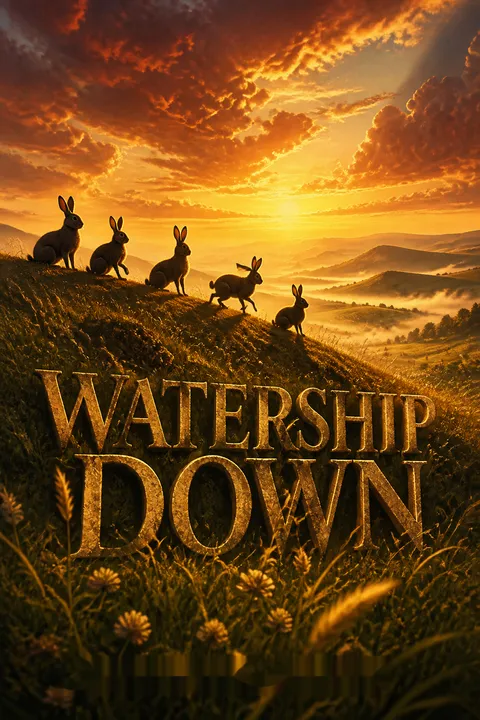
The warning begins with a new board on the field beside Sandleford Warren, where Fiver, a small rabbit unusually sensitive to danger, sees the sunset as blood and feels catastrophe approaching.
His older brother Hazel believes him, but Chief Rabbit Threarah declines to move the warren on the strength of an uncertain vision. Bigwig, an Owsla officer angered by the Chief’s contempt, quits and joins Hazel’s plan to leave. Blackberry, Dandelion, Pipkin, Silver, Buckthorn, Hawkbit, Speedwell and Acorn follow, mostly because life at Sandleford offers the weaker rabbits little protection.
Captain Holly arrives to arrest Bigwig and Silver for stirring dissent. Their companions fight off the guards, making return impossible, and Hazel leads the fugitives into the night.
The first crisis tests two kinds of knowledge against one another. Threarah’s caution is rooted in remembered experience: he has saved the warren before by resisting panic. Fiver offers no evidence that can be checked, only a bodily certainty that something is wrong. Hazel acts between these poles, trusting his brother without pretending to understand him. His authority begins not with rank or strength but with a willingness to accept responsibility for an uncertain choice. Bigwig’s departure adds another motive: leaving is both a response to danger and a refusal to accept a society that treats status as permission to bully.
The River Crossing
In the dark woodland, the refugees evade a badger and reach the Enborne, a river none of them can safely cross while exhausted. When a loose dog drives them onward, Blackberry spots a flat piece of wood and realizes it can carry Fiver and injured Pipkin over the water.
Bigwig pushes the floating board while the others swim, and the whole band reaches the far bank. Hazel finds shelter in a flowering beanfield, where he removes a thorn from Pipkin’s paw after a crow attacks the two smallest rabbits.
Gunfire scatters the group again. Hazel leads them across a road and the bleak Newtown Common, resisting Hawkbit and two companions when they demand to turn back. At dawn, Fiver identifies the distant downs as their destination, and Hazel guides everyone off the common.
The journey makes survival a shared intelligence rather than a single heroic talent. Fiver identifies direction, Hazel holds the group together, Bigwig supplies force, and Blackberry sees how an ordinary piece of wood can solve an apparently impossible crossing. Each skill matters because the others are vulnerable: Pipkin’s injury slows the group, fear threatens to split it, and unfamiliar human structures turn routine movement into risk. Hazel’s leadership is therefore practical and relational. He does not eliminate fear; he keeps frightened companions moving long enough for their different abilities to become useful.
A Home Above the Fields
At last the rabbits reach the open slopes of Watership Down. Hazel climbs toward the summit with Dandelion and Hawkbit to judge whether Fiver’s promised refuge can sustain them. The high ground offers a clear view in every direction, but Hawkbit has vanished.
Hazel finds him beneath thorn trees, examining several shallow, deserted holes. They are rough and cramped, yet dry enough to shelter the exhausted party. The rabbits settle in and begin digging more seriously in a nearby beech wood, encouraged by Blackberry’s argument that bucks can learn the work usually left to does.
Hazel also starts a common meeting burrow, later called the Honeycomb. The new home is safer than the country below, but its all-male population leaves its future unsettled.
Watership Down answers Fiver’s vision without making safety absolute. The summit offers early warning, not immunity; the rabbits must still dig, forage, and learn unfamiliar terrain. Hawkbit’s useful discovery quietly revises Hazel’s expectations of who contributes. The supposedly dull follower proves observant at exactly the moment the group needs shelter. Blackberry’s proposal to dig also challenges custom: survival requires altering habits that once seemed natural. The Honeycomb gives the bucks a shared place to make decisions and tell stories, turning shelter into the beginning of a community rather than merely a hiding place.
Cowslip’s Fine Warren
Rain catches Hazel’s band before their new scrapes are comfortable. Across the brook, the well-fed rabbit Cowslip offers them shelter in his warren, whose broad passages and large communal burrow seem astonishingly prosperous.
His people welcome the newcomers, provide abundant carrots, and show Hazel a stone pattern they call a Shape. Yet their customs feel wrong: they sing and perform elaborate greetings, and their storyteller Silverweed celebrates acceptance of fate rather than El-ahrairah’s resourceful defiance.
Fiver recoils from the poem, while Hazel notices that Cowslip and Strawberry repeatedly divert questions about where rabbits have gone. The newcomers enjoy the food and comfort, but Fiver refuses to eat the carrots. When Bigwig is caught in a wire snare outside, Cowslip’s rabbits decline to help.
Comfort works here as a form of persuasion. Cowslip’s warren appears to solve the refugees’ immediate problems, and its abundance makes suspicion seem ungrateful. But Hazel notices not a single decisive clue so much as a pattern of omissions: questions about missing rabbits receive no answers, and the warren’s art turns resignation into a virtue. Silverweed’s poetry is not simply false; it expresses a genuine wish to escape fear. Its danger lies in making passivity feel profound. Fiver’s distress registers what the others cannot yet articulate: a community may be materially protected while losing the habits that let its members recognize and resist coercion.
The Wire Beneath Comfort
Hazel and the others dig around the peg anchoring Bigwig’s snare while Pipkin and Fiver bite through the wood. Bigwig survives, badly hurt, and reports that Cowslip’s people knew about the trap but left him there.
Fiver understands the warren’s abundance at last: a farmer feeds the rabbits and kills their predators, then takes them selectively in snares. The survivors have built songs, Shapes, and silence around a bargain they cannot bear to name. Hazel rejects a retaliatory attack and leads his band away, taking the ashamed Strawberry with them.
His rabbits abandon the comfortable burrows and head for the distant hills Fiver had identified. The broken peg and discarded wire mark the end of a refuge that had made captivity look like hospitality.
The revelation distinguishes protection from freedom without pretending that freedom is comfortable. Cowslip’s rabbits have not merely been deceived by an outside power; they have organized their culture around not asking questions that would make daily life unbearable. Their songs and Shapes preserve beauty, but they also help conceal the cost of their safety. Hazel’s refusal to seize the warren matters: violence would reproduce the same logic of treating others as resources. By taking Strawberry despite his complicity, Hazel makes the new community answerable to a different standard, one that allows shame and change rather than demanding purity.
Holly’s Ruined Home
On Watership Down, Captain Holly arrives from Sandleford with Bluebell, both injured and nearly broken. His account explains the disaster Fiver foresaw. Men blocked the warren’s entrances and forced poisonous gas through its runs; rabbits suffocated, fought one another in the crush, or were shot as they escaped.
A machine then tore up the field. Holly survived by finding an abandoned tunnel, but his companion Pimpernel later died, and Cowslip’s rabbits attacked Holly’s party when they sought Hazel.
Hazel welcomes the battered survivors and accepts Holly’s assurance that he does not intend to challenge his leadership. Holly’s testimony confirms that the old home is gone and makes Watership Down the only refuge the scattered rabbits can build together.
Holly’s testimony converts Fiver’s private foreboding into a witnessed political fact. The destruction is not a natural disaster or a consequence of rabbit rivalry; humans remove the warren because it obstructs development. Holly’s damaged body carries knowledge that the others could not have gained safely, while his restraint in recognizing Hazel’s authority prevents a second crisis of leadership. The story also complicates survival: escaping the immediate killing does not spare Holly from grief, exhaustion, or guilt over those left behind. The warren’s future must therefore be built by survivors who remember the catastrophe without allowing memory to paralyze them.
A Gull and a Farm
Hazel realizes that a warren made entirely of bucks cannot endure, so he asks the injured gull Kehaar to search the surrounding country for rabbits. The newcomers nurse Kehaar, who later agrees to scout in return for their help.
His report reveals no free warren nearby, only rabbits kept in a farm hutch and a distant, tightly controlled settlement called Efrafa. Before a formal expedition returns, Hazel takes Pipkin to the farm, hoping to invite the caged rabbits to Watership.
They free Boxwood and Clover, but cats and a barking dog scatter the escape; Laurel and Haystack are left behind, and Hazel is shot while drawing the men away. Fiver follows his trail to a drain and finds him alive. Holly’s embassy returns separately, reporting Efrafa’s oppressive rules and refusal to release any does.
The reproductive problem forces Hazel to see that refuge is not the same as continuity. His first attempt to solve it is impulsive, driven partly by a wish to act before Holly returns and partly by his growing confidence in improvisation. The farm raid shows the limits of that confidence: Hazel gains two does, but the hutch rabbits have not learned how to choose danger for themselves, and his own body pays for the rescue. Fiver’s ability to find him restores a balance between Hazel’s initiative and his brother’s insight. Kehaar’s discovery of Efrafa then widens the problem from scarcity to political control.
Bigwig Enters Efrafa
With only the farm does to sustain the warren, Hazel sends a small party toward Efrafa, where overcrowding may make some does willing to leave. Holly’s account has already established the risk: General Woundwort’s hidden warren divides rabbits into Marks, restricts when they may feed, and uses the Owsla to punish escape. Bigwig enters alone, pretending he wants to join, and earns a place as an officer.
He meets Hyzenthlay, a thoughtful doe who helped organize a petition to leave, and learns that her friend Blackavar has been mutilated for trying to escape. Hyzenthlay agrees to recruit other does in secret. Bigwig decides to bring Blackavar too, though guarded prisoner or not, and relies on Kehaar and Hazel’s band for the escape route.
Efrafa presents security as an administrative achievement: surveillance, schedules, marks, and punishment make danger legible to the rulers while narrowing ordinary rabbits’ choices. Bigwig must temporarily accept that system’s language and privileges to expose its weaknesses from within. Hyzenthlay is crucial because she is neither a passive victim nor a reckless rebel; she understands that courage without secrecy would endanger everyone. Bigwig’s decision to include Blackavar adds a moral risk to a plan already difficult to execute. His loyalty is not abstract. He refuses to treat a mutilated prisoner as expendable merely because rescuing him complicates the escape.
The Storm Breaks Efrafa
Bigwig’s escape begins when he tricks a sentry, overpowers Blackavar’s guards, and leads Hyzenthlay and the other does out of their Mark. A storm darkens the fields, but General Woundwort quickly organizes the pursuit and corners the fugitives near the river.
Kehaar attacks from the air, disrupting the Efrafans long enough for Hazel’s party to reach the bank. Blackberry’s earlier discovery now becomes their escape plan: they gnaw through the rope holding a small punt, which carries the rabbits downstream beyond Woundwort’s reach.
A bridge nearly strikes several passengers, and the punt finally lodges against another bridge. Kehaar swims through the culvert to show the way; Hazel and the others follow through the rushing water to a muddy, hidden bank.
The escape succeeds through accumulated knowledge, not luck alone. Kehaar’s flight gives the rabbits a defense they could never provide themselves, while Blackberry’s observation of a tied boat converts a human object into a means of disappearance. The storm both worsens their physical danger and conceals their movements. Woundwort’s quick response shows that the escape is not a contest between clever individuals and a foolish regime; Efrafa’s discipline is formidable. The decisive advantage is the fugitives’ ability to cooperate across differences in strength, species, and experience. Even the river crossing requires trust before certainty: each rabbit must enter water whose far bank cannot yet be seen.
The Road Home
The escape leaves the rabbits exhausted, soaked, and short one doe, who dies during the night. Kehaar departs for the Big Water, while Hazel leads the enlarged band north with his injured leg and Bigwig’s wounded shoulder slowing them. Blackavar proves a keen scout, but Bigwig initially dismisses his warning that a copse is dangerous. A fox attacks there and kills another doe, forcing the group onward.
Later, Captain Campion and a small Efrafan patrol intercept Hazel’s party. Hazel bluffs that the much larger warren is nearby and lets Campion withdraw rather than risk a bloody fight. At Watership Down, Holly and the waiting rabbits welcome the survivors. The warren now has enough does to grow, but Woundwort has learned where Hazel lives.
The return journey tests whether survival can become judgment. Blackavar’s scouting knowledge is valuable, but Bigwig’s resentment makes him slow to trust a former prisoner whose competence threatens his own status. The fox’s attack makes the cost immediate, while Hyzenthlay’s account of Efrafan habits helps Bigwig understand why Blackavar does not claim credit afterward. Hazel’s decision to spare Campion shows a different form of strength from Woundwort’s: he can threaten, assess risk, and still decline needless killing. Yet mercy does not erase consequences. The patrol’s discovery means the new warren’s hard-won safety has already become a target.
Woundwort Finds the Warren
Woundwort turns the failed rescue into a personal campaign. He organizes a patrol, follows the rabbits’ tracks, and brings a force to Watership Down, where the residents hide underground and block their entrances.
Before the assault, Hazel meets Woundwort alone and proposes that Efrafa and Watership establish a third warren between them, easing overcrowding without further bloodshed. Woundwort rejects the offer and demands that the does and deserters be surrendered. His force begins digging down through the beech roots.
Inside, Hazel assigns Bigwig to defend the Honeycomb while Blackberry, Dandelion, and Hazel prepare a separate move. Fiver falls into a trance and cries out in the voice of the farm dog, giving Hazel a sudden, dangerous idea.
Woundwort’s invasion grows from a political failure as much as a military one. By rejecting Hazel’s proposal, he refuses an arrangement that could meet Efrafa’s real needs, because compromise would mean recognizing another warren as an equal. Hazel’s diplomacy is not naïve: he knows his group may lose the fight and offers a practical alternative before violence begins. Once it fails, his responsibilities change. He must preserve people who cannot all defend themselves, including young rabbits and new mothers. Fiver’s trance reconnects the present siege to an earlier danger, suggesting that insight can arrive through memory when deliberate planning has run out of time.
The Dog Plan
As Efrafan digging approaches the Honeycomb, Bigwig prepares to hold the narrow runs, and Hazel takes Blackberry and Dandelion toward Nuthanger Farm. Fiver’s vision has recalled the loose dog that once drove the refugees across the Enborne. Hazel intends to free it and lead it back to Watership, while Blackberry and Dandelion will make sure it follows.
At the farm, Hazel climbs onto the kennel roof and chews through the dog’s tether. He stamps to draw the dog out, but a cat attacks him before he can escape. Dandelion races toward the sheds with the dog behind him; Blackberry works to keep it moving in the right direction. Their plan now depends on returning the dog to the warren before the Efrafans break through.
Hazel’s plan repurposes an earlier terror. The dog that once scattered the refugees becomes a possible defense, but only because Hazel remembers its behavior and accepts that he may be unable to control what follows. The farm is not a neutral storehouse of useful tools; it is a human-controlled space full of animals that can kill him. His injury on the kennel roof makes the strategy depend on Dandelion’s speed and Blackberry’s ingenuity rather than on Hazel’s own escape. This is a marked change from his first risky raid, when initiative outran preparation. Now he distributes the danger among trusted companions and gives each a distinct task.
The Siege Turns
Below ground, Woundwort breaks into the Honeycomb and pushes toward the blocked sleeping burrows. Bigwig hides beneath loose earth, then springs up and wounds the General in close quarters.
Though bloodied, Bigwig refuses Woundwort’s offer of rank and holds the narrow run, preventing the Efrafans from reaching the rest of the warren. The dog arrives after Dandelion and Blackberry draw it up the hill. Efrafans scatter; Woundwort alone stands his ground and disappears in the confusion, never seen again.
At the farm, Lucy rescues Hazel from the cat and persuades her father to let Doctor Adams release him on the downs. Hazel returns to find Bigwig alive and the attack broken. Campion leads the surviving Efrafans away, while Groundsel and several others remain in the warren.
The climax brings together the novel’s two competing models of courage. Bigwig faces Woundwort in the kind of direct combat both understand, but his victory depends on defending others rather than proving dominance. The dog breaks the larger battle not because it is a moral judge but because its arrival disrupts a hierarchy built on certainty and command. Woundwort’s disappearance preserves the unsettling possibility that force has not been permanently defeated. Hazel’s rescue by Lucy offers a contrasting human encounter: she treats an injured wild animal as a living creature worth helping, even when her father objects. The ending depends on imperfect allies, not a simple division between human enemies and animal friends.
A Warren Made Together
With Woundwort’s force gone, the rabbits reopen the Honeycomb and tend Bigwig’s wounds. Hazel returns to leadership, while the survivors make room for the Efrafans who no longer wish to live under Woundwort’s rule.
The newcomers learn to dig, forage, and feed in the open; Hyzenthlay and Clover raise litters, giving the warren a future beyond the original band of bucks. Hazel plans another settlement between Watership and Efrafa, where rabbits from both groups can live without being marked or confined.
Bigwig trains young rabbits to recognize danger, while Fiver grows quieter and remains closely bonded to Vilthuril. The community’s growth does not erase grief or fear, but it replaces enforced sameness with shared work, practical vigilance, and room for individuals to choose their lives.
The resolution is deliberately social rather than triumphal. Watership does not simply defeat Efrafa and declare itself pure; it absorbs former opponents and makes a settlement that could reduce the pressures that produced conflict. Digging becomes a form of participation, especially for does who were denied it in Efrafa. The young rabbits inherit caution from Bigwig, but not the closed, punitive system he opposes. Hazel’s authority now appears less as command than as the capacity to make room for difference. The costs remain visible in grief and Fiver’s inwardness. Recovery means building routines that can hold those wounds without turning them into laws for everyone else.
Epilogue
Years later, Hazel has become an old rabbit whose senses and strength are fading. One spring morning, a radiant visitor arrives and invites him to join a new Owsla.
Hazel leaves his body behind, watches the young rabbits feeding, and follows the visitor through the wood as primroses begin to bloom. His departure is not presented as another escape from danger, but as a final passage into the rabbit stories that have accompanied the living throughout the book.
Hazel’s death completes the novel’s movement between practical life and myth. The visitor is recognizable through the world of rabbit belief, yet the scene stays close to ordinary details: a tired body, a sentry, spring grass, and young rabbits at feed. Hazel’s final choice is not an act of leadership or rescue. He can leave because the community no longer depends on his presence to continue. The image also gives the stories a reciprocal life: the myths that helped the rabbits endure danger now offer a language for accepting age and death without reducing them to defeat.
Analysis
Watership Down is a story about survival, but it refuses to make survival a synonym for mere endurance. Each warren offers a different bargain. Sandleford trusts established authority; Cowslip’s rabbits accept food and protection while avoiding the truth of the snares; Efrafa trades freedom for disciplined security. Hazel’s community is not simply the opposite of these systems. It is an unfinished alternative, built through shared labor, practical attention, and a leadership willing to hear correction.
The novel’s attention to ordinary rabbit capacities gives its ethical questions physical weight. A river is not a symbol to the exhausted rabbits; it is a force that can carry them away. A wire is not an abstract image of oppression; it tightens around Bigwig’s neck. A small rabbit’s judgment, a gull’s flight, or a piece of floating wood matters because survival depends on noticing what others overlook. The animal perspective also makes human power strange and often incomprehensible. Development, farming, and domestic care can alter the rabbits’ world without any human intending to understand what the change means to them.
The book’s myths are not decorative interruptions. El-ahrairah’s tricks preserve an adaptable tradition, one that teaches the rabbits to interpret danger rather than submit to it. Silverweed’s poetry at Cowslip’s warren reveals the opposite possibility: beauty can express suffering while also making surrender feel noble. Hazel’s leadership is therefore cultural as well as tactical. He protects the conditions under which stories, skills, and disagreements can remain alive.
Woundwort complicates any easy celebration of resistance. His courage and organizational gifts are real, and his followers gain a sense of belonging under him. The danger lies in his insistence that protection must take the form of obedience. Against that model, Hazel’s eventual success is less a conquest than a capacity to build relationships across differences, including with former enemies. The book’s deepest lesson is that a community becomes resilient not by eliminating vulnerability, but by refusing to make vulnerability a reason to discard anyone.
Review Summary
Watership Down is a beloved classic about a group of rabbits seeking a new home. Readers praise Adams' world-building, character development, and beautiful prose. The story explores themes of leadership, friendship, and survival. Many find it emotionally engaging and profound, despite initial skepticism about a book featuring talking rabbits. Some criticize its length and perceived sexism. The novel resonates with both children and adults, often evoking strong emotions and lasting memories. Overall, it's widely regarded as a masterful work of fiction.
People Also Read







Characters
Hazel
The practical young leaderHazel is an undersized yearling who becomes the organizing center of the rabbits leaving Sandleford. He listens to Fiver without surrendering his own judgment, and he earns trust by making decisions that account for the group’s weakest members. His instincts are practical: he scouts, negotiates, improvises, and accepts help when another rabbit sees more clearly. Hazel’s wish to protect his companions can also become rashness, especially when action makes him feel more useful than waiting. What distinguishes him is not flawless foresight but a capacity to revise his judgment and to treat authority as a responsibility shared with others.
Fiver
The warning-seer brotherFiver, Hazel’s smaller brother, experiences danger as intense foreboding before he can explain its cause. His visions are not orderly predictions; fear and insight arrive tangled together, leaving him vulnerable to dismissal and exhaustion. Hazel’s trust gives Fiver’s warnings practical force, while Fiver’s perceptions repeatedly correct Hazel when confidence outruns attention. He is also emotionally porous: a story, a strange warren, or another creature’s suffering can overwhelm him. Fiver’s gift does not make him a conventional strategist. It makes him a sensitive instrument for truths that stronger, more self-assured rabbits may prefer not to notice.
Bigwig
The battle-tested enforcerBigwig is a powerful former Owsla officer, blunt in manner and quick to meet uncertainty with anger or action. He initially measures leadership by strength and dislikes being directed by rabbits he considers less capable. Yet loyalty and experience gradually complicate that reflex. Bigwig is willing to fight, but he can also learn patience, accept Hazel’s authority, and carry a dangerous secret without an audience to reassure him. His courage is physical and conspicuous; his deeper challenge is to make that force serve people besides himself. The rabbits respect him because he does not ask others to take risks he would refuse.
General Woundwort
The commanding warlordWoundwort is a formidable Efrafan leader whose discipline grows from early experiences of violence, loss, and survival. He believes safety can be built through vigilance, hierarchy, and strength, and he works tirelessly to make those principles real for his warren. That genuine capacity for protection is inseparable from his appetite for control: he restricts movement, punishes dissent, and treats rival communities as threats to be subdued. Woundwort is brave enough to face danger personally and strategic enough to command loyalty, which makes him more than a simple bully. His central limitation is an inability to imagine authority that does not depend on obedience.
Blackberry
The ingenious problem-solverBlackberry is observant, intellectually curious, and unusually willing to learn from unfamiliar objects. He sees that a board can float and later recognizes how a tied boat might become an escape route. His ideas matter because he tests what others dismiss as nonsense and then explains the practical consequence. Blackberry is not primarily a fighter or a visionary; his strength lies in making a workable bridge between danger and possibility. He also knows when Hazel needs support rather than an argument, helping turn individual cleverness into a tool the whole group can use.
Holly
The scarred Owsla veteranHolly is a dependable officer from Sandleford, conscientious and capable of enduring hardship without making himself the center of it. His first loyalty is to duty, which helps explain why he does not leave with Hazel at the beginning. After catastrophe changes what duty can mean, he carries testimony between communities and supports Hazel’s leadership rather than competing with it. Holly is a practical tracker, a steady messenger, and a rabbit whose grief is visible without erasing his usefulness. His experience gives the younger rabbits a living connection to the warren they lost.
Kehaar
The sharp-beaked allyKehaar is an injured black-headed gull from far beyond the rabbits’ familiar country. Pain makes him suspicious and irritable, while his broken Lapine and impatience with land-bound thinking often create comic friction. Once the rabbits nurse him, he repays them with aerial knowledge no rabbit could gather alone. Kehaar does not become domesticated or lose his own desires; he helps because gratitude and friendship matter to him, even as he longs to return to the Big Water. His presence expands the rabbits’ sense of geography and gives their plans a perspective beyond the ground.
Hyzenthlay
The clear-eyed Efrafan doeHyzenthlay is an intelligent doe living under Efrafa’s strict rules. She has already tried to improve the lives of the does around her, so she understands both the need for change and the danger of speaking openly. Her judgment is measured rather than timid: she evaluates Bigwig’s claims, chooses whom to trust, and helps coordinate the escape without exposing the group too soon. Hyzenthlay’s insight is shaped by experience inside a controlled warren, where privacy is scarce and hope can become dangerous. She gives Bigwig more than information; she gives him a partner in decision-making.
Blackavar
The resilient Efrafan scoutBlackavar is a proud, capable rabbit whose ambition to serve in Efrafa’s Owsla is frustrated by the Council’s decisions and punishments. His attempted escape brings severe retaliation, leaving him withdrawn and apparently defeated. Beneath that imposed passivity, he retains a strong mind for tracking and danger. Freedom allows his skill and initiative to reappear, though his experience has also taught him to suppress personal claims and adapt to the prevailing authority. Blackavar’s relationship with Bigwig begins in rescue and grows through earned respect, especially as both rabbits learn how easily a strong fighter can misread someone quieter.
Cowslip
The polished warren hostCowslip is an unusually well-fed rabbit whose ease and courtesy make him a persuasive host to Hazel’s exhausted band. He avoids direct conflict and prefers to redirect uncomfortable questions, relying on charm and the comforts of his warren to maintain a smooth surface. His manner unsettles Hazel precisely because it offers little that can be openly challenged. Cowslip represents a form of social adaptation that prizes calm even when calm depends on silence. He is not physically imposing, but he understands how atmosphere, ritual, and abundance can shape what newcomers are willing to notice.
Strawberry
The sheltered warren buckStrawberry comes from Cowslip’s prosperous warren and is devoted to his doe, Nildro-hain. He is physically strong but accustomed to comfort, careful grooming, and a life in which danger is kept at a distance. His gentleness and uncertainty make him slow to act when events turn threatening, yet he is capable of recognizing when a community’s comfort has become a trap. Among Hazel’s rabbits, he must learn practical skills and earn trust through effort rather than appearance. Strawberry’s presence tests whether a new society can make room for someone formed by a very different way of living.
Pipkin
The steadfast small companionPipkin is timid, small, and physically vulnerable, but his loyalty to Hazel is unwavering. He follows Hazel into danger even when fear makes his movements falter, and Hazel repeatedly takes responsibility for keeping him with the group. Pipkin’s apparent helplessness can obscure how closely he watches other rabbits and how readily he acts when someone needs him. He represents the ordinary member of the band for whom leadership has material consequences: a safe crossing, a removed thorn, or a companion who refuses to leave him behind.
Dandelion
The quick-footed storytellerDandelion is a fast runner and a gifted teller of traditional rabbit stories. His storytelling steadies frightened companions, preserves the trickster figure El-ahrairah as a model of resourcefulness, and gives the rabbits a way to remember shared experience. He is brave when called upon, though not immune to fear, and his speed makes him useful on scouting and rescue missions. Dandelion’s importance lies partly in morale: he can keep a group from becoming only a collection of frightened bodies by giving them a story in which cleverness and endurance remain possible.
Silver
The steady Owsla veteranSilver is a strong, reliable rabbit from the Sandleford Owsla whose calm judgment often complements Bigwig’s force. He is willing to swim, scout, fight, and take responsibility for organizing others when Hazel cannot lead from the front. Silver is less interested in command than in doing the necessary work, and his steadiness makes him a natural bridge between experienced fighters and frightened newcomers. He provides continuity from the old warren while adapting to a community with different expectations.
Bluebell
The joke-making survivorBluebell is a survivor from Sandleford whose jokes and quick patter help others endure fear. Humor is his way of keeping despair from taking over, not evidence that he misunderstands danger. He has an eye for absurdity and a generous readiness to keep talking when silence would leave companions alone with their worst thoughts. Bluebell also contributes practical courage when needed, but his most distinctive role is emotional: he gives the group permission to laugh without pretending that loss and terror have vanished.
Hawkbit
The underestimated followerHawkbit is an ordinary, not especially quick-witted rabbit who joins Hazel’s band despite his fear. His practical discovery of the abandoned holes on Watership Down helps provide the group’s first shelter. Though he doubts the journey at a moment of exhaustion, he continues with the others and takes part in the work of establishing their home. Hawkbit shows how a useful community can depend on uncelebrated contributions.
Threarah
The cautious old chiefThrearah is Sandleford’s experienced Chief Rabbit, known for measured judgment and a history of decisive action during earlier dangers. His refusal to evacuate the warren is not simple cowardice; he sees the risks of abandoning a settled community on uncertain evidence. But his caution becomes a failure when he dismisses Fiver without making room for what cannot be proven in time. He represents leadership shaped by past success, and the difficulty of recognizing when yesterday’s sound policy has become today’s fatal delay.
Campion
The disciplined Efrafan trackerCampion is one of Efrafa’s most capable trackers, respected even by Woundwort for his precision and self-command. He follows orders but is not a mindless pursuer; his skill lies in reading trails, choosing routes, and keeping a patrol together under pressure. Campion’s sense of duty makes him dangerous to Hazel’s group, yet he is more measured than the regime he serves. He embodies the competence that allows Efrafa to function and the possibility that capable people may outlast a ruler’s personal obsession.
Lucy
The compassionate farm childLucy is a farmer’s daughter who cares about animals and wants to be treated as thoughtful and capable. When she finds an injured rabbit, she protects it from the farm cat and seeks advice rather than accepting that it should be killed or kept in a hutch. Her compassion remains bounded by the practical authority of her father and the routines of farm life, but she still changes Hazel’s immediate fate. Lucy offers a humane encounter with a human being without making the human world harmless.
Clover
The adaptable hutch doeClover is a strong, active doe raised in a farm hutch, where food and shelter have come at the cost of freedom and self-reliance. She is excited by the possibility of life outside but initially lacks the instincts needed to move safely through open country. Her adjustment is gradual: she must learn to feed, run, and live among wild rabbits rather than behind wire. Clover’s experience helps Hazel’s warren confront the difference between opening a cage and preparing someone for life beyond it.
Vilthuril
Fiver’s perceptive doeVilthuril is a thoughtful doe who comes to understand Fiver’s inwardness and forms a close bond with him. She is attentive to the young rabbits and shares stories that give them a way to understand the warren’s past. Her connection with Fiver shows that companionship need not require someone to explain every private perception. She brings patience and ordinary domestic care into a story often driven by flight and crisis.
Vervain
The feared Council enforcerVervain leads Efrafa’s Council police, the Owslafa, and is accustomed to making punishment visible. His authority depends on fear and unquestioned obedience. In a crisis, that habitual power proves less secure than it appears when he faces a kind of moral certainty he cannot intimidate. Vervain shows how a coercive system trains its enforcers to dominate others without teaching them how to respond when force no longer works.
Groundsel
The loyal Efrafan officerGroundsel is a solid Efrafan officer devoted to Woundwort and to the identity Efrafa gives its fighters. He believes the regime has made ordinary rabbits more courageous and capable, even though its security comes with severe costs. His loyalty is sincere rather than merely opportunistic, which makes his eventual place among other rabbits psychologically complicated. Groundsel carries the perspective of those who experienced Efrafa’s discipline as pride and belonging, not only as oppression.
The Mouse
A small debt repaidThe field mouse Hazel saves from a kestrel is cautious, talkative, and deeply grateful. The mouse cannot offer the rabbits strength or shelter, but its knowledge of the countryside proves useful. Its friendship becomes a small example of Hazel’s willingness to help a creature outside his own kind without demanding immediate payment. The mouse also reminds the rabbits that alliances may begin with acts whose value is not yet apparent.
Plot Devices
Fiver’s forebodings
Warnings before evidenceFiver’s visions and bodily intuitions alert the rabbits to dangers before they can identify their source. They do not provide a dependable map or complete explanation, so the others must decide how much risk to take on his word. His warnings lead Hazel to leave Sandleford, recognize the danger in Cowslip’s warren, and later act during the siege. The device keeps foresight distinct from certainty: Fiver can sense that something is wrong while still being unable to tell Hazel exactly what to do. It makes listening, trust, and interpretation part of the plot’s practical survival work.
El-ahrairah’s stories
Myth as survival knowledgeThe rabbits’ tales about El-ahrairah preserve practical models of deception, courage, and endurance. Dandelion tells stories when fear threatens to scatter the group, while later tales help Bigwig recognize how to act inside Efrafa and give Hazel a way to think about the siege. Stories do not magically solve the rabbits’ problems; their value depends on a listener finding the relevant idea and adapting it to present circumstances. The contrast between these traditional tales and the fatalistic poetry at Cowslip’s warren also shows how culture can either encourage agency or help people accept a harmful arrangement.
Human-made snares
Comfort conceals captivityWires, guns, blocked burrows, roads, vehicles, and farm structures shape the rabbits’ dangers without regard for their intentions. The most deceptive use is the feeding and protection around Cowslip’s warren: the rabbits appear prosperous, but the farm’s snares quietly take them one by one. Elsewhere, human-made objects can be repurposed, as when a floating board saves exhausted rabbits or a punt carries the fugitives beyond pursuit. The device keeps human power materially present in the landscape, even when no person is visible. It also makes observation and ingenuity essential to survival.
The river punt
Escape without a trailBlackberry notices a small boat tethered to the bank and realizes that cutting its rope could carry the rabbits beyond the Efrafan patrol’s reach. The plan depends on several earlier discoveries: he has already recognized that wood floats, and Kehaar can guide the group through unfamiliar country. The boat creates a dangerous passage rather than an easy rescue. The rabbits have no control over its course, nearly collide with bridges, and must eventually swim through a culvert to reach land. Its importance lies in transforming a human object into a temporary route where pursuit cannot follow by scent.
The loose farm dog
A threat redirectedThe dog first appears as a danger that drives Hazel’s band toward the river. Later, Hazel remembers its presence during the siege and plans to free it by gnawing through its tether. Dandelion and Blackberry must lead it uphill, turning its instinct to chase into a weapon against the Efrafan assault. This device pays off an earlier encounter while preserving uncertainty: the rabbits cannot command the dog or guarantee whom it will attack. Its arrival breaks the attackers’ formation, but also sends the entire warren into immediate danger. The plan succeeds through timing, teamwork, and the dog’s own behavior.
FAQ
Synopsis & Basic Details
What is Watership Down about?
- A Rabbit Exodus: Watership Down follows a small group of wild rabbits who abandon their doomed warren after one of their number, Fiver, experiences a terrifying premonition of destruction. Led by the resourceful Hazel, they embark on a perilous journey across the English countryside.
- Quest for a New Home: Their quest is to find a safe, new home, facing numerous dangers from predators (elil), human interference, and the harsh realities of the wild. Along the way, they encounter other rabbit societies, some complacent and trapped, others brutally totalitarian.
- Struggle for Survival: The narrative culminates in a desperate struggle for survival as they establish their own warren on Watership Down, only to be threatened by the tyrannical General Woundwort and his militaristic Efrafan rabbits, forcing them into a climactic battle for their freedom and future.
Why should I read Watership Down?
- Deep Anthropomorphic Exploration: It offers a unique and profound exploration of complex themes like leadership, freedom, survival, and community, all through the eyes of rabbits. The detailed Lapine culture and mythology enrich the narrative, making the animal characters surprisingly relatable.
- Masterful Storytelling: Richard Adams' prose is rich and evocative, blending thrilling adventure with moments of quiet reflection and philosophical depth. The book is renowned for its vivid descriptions of nature and its compelling, character-driven plot.
- Timeless Allegory: Beyond a simple animal story, Watership Down functions as a powerful allegory for human societies, examining the tension between individual liberty and collective security, the dangers of unchecked power, and the enduring spirit of resilience in the face of adversity.
What is the background of Watership Down?
- Inspired by Bedtime Stories: Richard Adams originally conceived Watership Down as a series of improvised stories told to his daughters during long car journeys. The initial request was for "stories about rabbits," leading to the development of the characters and their epic journey.
- Grounded in Rabbit Behavior: Adams drew heavily from R.M. Lockley's The Private Life of the Rabbit, a scientific study of rabbit behavior, to lend authenticity to his anthropomorphic characters. This research informed everything from their social structures (Owsla, Chief Rabbit) to their communication (Lapine language) and survival instincts.
- Post-War British Context: While not explicitly political, the novel can be read as a reflection of post-World War II anxieties and societal structures. Efrafa, with its rigid control and surveillance, has often been interpreted as a critique of totalitarian regimes, while the Sandleford warren's destruction hints at environmental concerns and unchecked human development.
What are the most memorable quotes in Watership Down?
- "All the world will be your enemy, Prince with a Thousand Enemies, and whenever they catch you, they will kill you. But first they must catch you, digger, listener, runner, prince with the swift warning. Be cunning and full of tricks and your people shall never be destroyed.": This quote, from the story of El-ahrairah, encapsulates the core philosophy of rabbit survival: cunning, speed, and resilience against overwhelming odds. It defines the very essence of their existence.
- "My heart has joined the Thousand, for my friend stopped running today.": Spoken by Hazel after Bigwig is caught in a snare, this poignant line expresses profound grief and the deep bond of comradeship among the rabbits. It highlights the constant threat of death and the emotional toll of their perilous journey.
- "Animals don't behave like men... If they have to fight, they fight; and if they have to kill they kill. But they don't sit down and set their wits to work to devise ways of spoiling other creatures' lives and hurting them. They have dignity and animality.": Strawberry's impassioned plea to the Efrafan Council offers a stark moral contrast between the natural world's brutal honesty and humanity's capacity for calculated cruelty, a central theme in the novel's social commentary.
What writing style, narrative choices, and literary techniques does Richard Adams use?
- Anthropomorphic Realism: Adams employs anthropomorphism, giving rabbits human-like intelligence and speech, but grounds their behavior in meticulous biological detail from R.M. Lockley's studies. This creates a believable world where animal instincts and human-like motivations coexist, enhancing the
Watership Down analysis. - Oral Tradition & Mythology: A significant narrative choice is the inclusion of traditional Lapine folk tales, particularly those of El-ahrairah. These stories serve not only as entertainment but also as moral lessons, historical records, and a means of cultural transmission, reinforcing themes of cunning, survival, and identity.
- Vivid Sensory Detail & Foreshadowing: Adams' prose is rich in sensory descriptions, immersing the reader in the rabbits' world of smells, sounds, and textures. He frequently uses subtle foreshadowing, such as Fiver's early visions and the unsettling atmosphere of Cowslip's warren, to build tension and hint at future dangers, making the narrative deeply immersive and suspenseful.
Hidden Details & Subtle Connections
What are some minor details that add significant meaning?
- The Notice Board's Creosote Smell: In Chapter 1, Fiver's initial terror is linked to the "reek of creosote and paint" from the notice board. This seemingly minor detail subtly connects the abstract human threat (development notice) to a tangible, repulsive sensory experience for the rabbits, foreshadowing the destructive nature of human intervention.
- The Burying Beetle's Appearance: In Chapter 10, a yellow-and-black burying beetle is seen crawling on a sleeping Pipkin. Hazel's immediate misgiving, knowing these beetles come to dead bodies, is a chilling, subtle hint of the constant proximity of death and the fragility of life in the wild, even in moments of rest.
- Woundwort's Childhood Trauma: General Woundwort's backstory, detailed in Chapter 34, reveals he was a hutch rabbit who witnessed his mother's death by a weasel and was later tormented by a cat. This hidden detail explains his extreme ferocity, obsession with control, and hatred of weakness, providing a psychological depth to his
General Woundwort motivations.
What are some subtle foreshadowing and callbacks?
- Fiver's "Board of Bones and Wire" Dream: In Chapter 2, Fiver dreams of being on a "board—like that board in the field—all white and covered with black lines... all made of bones and wire." This vividly foreshadows the snares and the true nature of Cowslip's warren, which is later revealed to be a death trap, directly linking the initial human threat to a specific, hidden danger.
- Blackberry's Raft Idea and its Recurrence: Blackberry's ingenious use of a piece of wood as a raft to cross the Enborne (Chapter 8) is a crucial moment of problem-solving. This idea is subtly recalled and expanded upon when they use the punt to escape Efrafa (Chapter 38), demonstrating the group's capacity for learning and adapting, and highlighting Blackberry's consistent intelligence.
- Kehaar's Early Impatience for "Mudders": When Kehaar first arrives (Chapter 23), he mentions that it's too late for him to find a mate ("Ees finish mudders for me dis year"). This seemingly throwaway line subtly foreshadows the central problem of the Watership Down warren – the lack of does – and sets up Kehaar's later, vital role in helping them find female rabbits.
What are some unexpected character connections?
- Strawberry's Transformation and Loyalty: Initially a complacent, almost indolent rabbit from Cowslip's warren, Strawberry's decision to join Hazel's group after witnessing the snare's horror (Chapter 17) is unexpected. His subsequent loyalty and practical skills, particularly in digging the Honeycomb (Chapter 20), show a profound connection to the wild rabbits' values, contrasting sharply with his former warren's apathy.
- Blackavar's Shared Spirit with Bigwig: Blackavar, the mutilated Efrafan prisoner, forms an unexpected bond with Bigwig. Despite their different backgrounds, both share a fierce, unyielding spirit and a deep hatred for Woundwort's tyranny. Bigwig's determination to rescue Blackavar, even at great risk (Chapter 35), highlights a connection based on mutual respect for courage and defiance.
- Lucy's Unwitting Role in Hazel's Survival: The farm girl, Lucy, who finds and cares for the wounded Hazel (Chapter 48), is an unexpected human connection. Her compassion, despite her father's pragmatic view of wild animals, directly saves Hazel's life, demonstrating that not all human-rabbit interactions are destructive and providing a
dea ex machinathat is both natural and poignant.
Who are the most significant supporting characters?
- Kehaar, the Unconventional Ally: Beyond being a scout, Kehaar represents the unpredictable, wild forces of nature that can be harnessed through empathy. His gruff loyalty and unique perspective (e.g., his understanding of the "Big Water") are crucial, providing not just information but also direct, physical intervention against the Efrafans, a role no rabbit could fulfill.
- Strawberry, the Redeemed Outsider: Strawberry's journey from the complacent Cowslip warren to a valued member of Watership Down is significant. He brings unique knowledge (e.g., about supporting burrow roofs with roots, Chapter 20) and a deep understanding of the dangers of false security, serving as a living testament to the importance of freedom and self-reliance.
- Blackavar, the Symbol of Defiance: Blackavar embodies the spirit of resistance against oppression. His brutal mutilation by Woundwort's Owsla (Chapter 27) makes him a powerful symbol of the cost of freedom, and his unwavering courage and tracking skills become invaluable to Hazel's warren, proving that even the most broken can find purpose and strength.
Psychological, Emotional, & Relational Analysis
What are some unspoken motivations of the characters?
- Cowslip's Warren's Collective Denial: The rabbits of Cowslip's warren are motivated by a deep, unspoken fear and a collective denial of their grim reality. They accept the farmer's "gifts" (food, protection from predators) in exchange for their lives, choosing to ignore the "shining wire" (snares) and the disappearance of their comrades. Their elaborate "art" and poetry (Chapter 16) serve as a coping mechanism, a way to distract themselves from the truth and maintain a semblance of dignity.
- Woundwort's Drive for Absolute Control: General Woundwort's relentless pursuit of power and order stems from his traumatic past as a hutch rabbit who witnessed his mother's death and suffered human cruelty (Chapter 34). His motivation is to create a warren where no rabbit is ever vulnerable or surprised, leading to a totalitarian system where security is prioritized above all else, even freedom and natural instinct.
- Hazel's Need for Validation: While a compassionate leader, Hazel's decision to raid Nuthanger Farm (Chapter 24) is partly driven by an unspoken need to prove himself, especially after the initial failure at Efrafa and Fiver's warnings. He wants to show Holly and Silver that he is "up to anything that they were up to," revealing a subtle insecurity beneath his leadership.
What psychological complexities do the characters exhibit?
- Fiver's Burden of Foresight: Fiver's prophetic abilities are a source of both salvation and immense psychological strain. His visions often leave him "tharn" (paralyzed by fear) or deeply distressed, isolating him from others who cannot comprehend his insights. His constant nervous tension and physical reactions (trembling, twitching) highlight the heavy burden of knowing future horrors, as seen in his reaction to the notice board (Chapter 1) and the snare warren's truth (Chapter 17).
- Bigwig's Struggle with Pride and Vulnerability: Bigwig, initially a proud and aggressive Owsla member, grapples with his own vulnerability after being caught in the snare (Chapter 17). His initial anger and bravado give way to a deeper understanding of fear and dependence, yet he retains his fierce courage. His internal conflict is evident in his surliness when he feels out of his depth, but also in his unwavering loyalty and self-sacrifice.
- Hyzenthlay's Crushed Spirit and Renewed Hope: Hyzenthlay embodies the psychological toll of Efrafa's oppression. Her spirit is "worn down" and her courage diminished by the constant surveillance and lack of freedom (Chapter 35). Her initial reluctance to escape reflects the deep-seated fear instilled by Woundwort, making her eventual decision to trust Bigwig a powerful testament to the enduring human (rabbit) desire for freedom and a natural life.
What are the major emotional turning points?
- The Revelation of Cowslip's Warren's Secret: The discovery that Cowslip's warren is a death trap, where rabbits are snared by the farmer in exchange for protection and food (Chapter 17), is a major emotional turning point. It shatters the newcomers' sense of false security and forces them to confront the true nature of human-controlled existence, leading to profound horror and a renewed appreciation for wild freedom.
- Hazel's Injury and Fiver's Desperate Search: Hazel being shot and left for dead during the Nuthanger raid (Chapter 25) is a devastating emotional blow. Fiver's subsequent frantic search and unwavering belief that Hazel is alive (Chapter 26), despite all evidence, highlights the depth of their bond and Fiver's unique intuition, leading to Hazel's miraculous rescue and reinforcing his leadership.
- Bigwig's Confrontation with Woundwort: The climactic battle between Bigwig and General Woundwort (Chapter 46) is an intense emotional peak. Bigwig's willingness to stand his ground, despite severe injury, against the terrifying Woundwort, represents the ultimate act of courage and defiance. This personal duel is the emotional core of the siege, determining the fate of the warren.
How do relationship dynamics evolve?
- Hazel and Fiver's Symbiotic Partnership: Their relationship evolves from Fiver being a nervous visionary and Hazel a protective older brother to a true symbiotic partnership. Hazel learns to trust Fiver's intuition implicitly, even when it seems irrational, while Fiver gains confidence in Hazel's leadership and practical skills. This mutual reliance becomes the bedrock of the warren's survival.
- Bigwig's Integration and Respect for Hazel: Bigwig initially joins Hazel out of discontent with the Owsla, viewing Hazel as an "outskirter" (Chapter 3). His respect for Hazel grows through shared dangers, particularly after Hazel saves him from the snare (Chapter 17) and entrusts him with the perilous Efrafa mission. This transforms Bigwig from a proud, independent warrior into a loyal and trusted second-in-command, acknowledging Hazel's unique leadership.
- The Does' Collective Empowerment: The does, initially passive and submissive in Efrafa, gradually develop a collective agency. Hyzenthlay, Thethuthinnang, and others, inspired by the prospect of freedom, actively participate in the escape plan and later contribute to the new warren's well-being, challenging traditional rabbit gender roles and highlighting the importance of female contribution to the community.
Symbolism & Motifs
What is the symbolism of the "Shining Wire" and its connection to human control?
- Hidden Danger and False Security: The "shining wire" (snare) is the central symbol of hidden danger and the insidious nature of human control. In Cowslip's warren, the rabbits live in a state of denial, accepting food and protection in exchange for the occasional, seemingly random disappearance of their kind. This represents a Faustian bargain, where comfort comes at the cost of freedom and life itself.
- The Price of Domestication: The wire symbolizes the ultimate consequence of domestication and dependence on humans. It highlights how a seemingly benevolent relationship (humans providing food and safety) can mask a brutal, exploitative reality, stripping animals of their natural instincts and dignity. Fiver explicitly calls the Cowslip rabbits "like dogs carrying sticks" (Chapter 14), emphasizing their unnatural state.
- Truth Suppressed and Denied: The rabbits of Cowslip's warren actively suppress the truth about the wire, refusing to speak of it or acknowledge its existence. This symbolizes the human tendency to ignore uncomfortable truths for the sake of perceived comfort or stability, leading to a collective psychological paralysis and a loss of self-awareness.
The role of El-ahrairah stories as cultural anchors and coping mechanisms.
- Preserving Identity and History: The tales of El-ahrairah serve as the rabbits' oral history, mythology, and moral compass. They are not mere entertainment but vital cultural anchors, teaching lessons of cunning, resilience, and survival against overwhelming odds. They remind the rabbits of their shared heritage and identity as "the Prince with a Thousand Enemies."
- Coping with Fear and Hardship: In moments of extreme fear, exhaustion, or despair, Dandelion's storytelling provides a crucial coping mechanism. The stories distract, inspire, and offer a framework for understanding their own struggles. For instance, Dandelion tells "The Blessing of El-ahrairah" (Chapter 6) when the rabbits are "tharn" with fear in the woods, reminding them of their inherent indestructibility.
- Critique of Modernity and Loss of Tradition: The Efrafan rabbits' dismissal of El-ahrairah stories as "old-fashioned" (Chapter 16) and their preference for Silverweed's fatalistic poetry highlights a loss of cultural identity and traditional wisdom under a totalitarian regime. This contrasts sharply with Watership Down, where the stories are cherished and actively used to guide their actions and maintain morale.
The contrast between wildness and domestication (Cowslip's warren, Nuthanger hutch rabbits).
- Wild Instinct vs. Learned Helplessness: The novel starkly contrasts the wild rabbits' innate instincts for survival, self-reliance, and freedom with the learned helplessness of domesticated rabbits. Cowslip's warren, though seemingly free, is a subtle trap, while the Nuthanger hutch rabbits are entirely dependent on humans, unable to forage or defend themselves.
- Adaptability vs. Stagnation: Hazel's rabbits, constantly adapting to new dangers and environments, embody the dynamism of wildness. In contrast, the Cowslip rabbits have stagnated, losing their natural skills and becoming complacent. The hutch rabbits are so unaccustomed to wild life that they struggle to even move or understand basic survival, highlighting the detrimental effects of over-domestication.
- Freedom as a Core Value: The wild rabbits' relentless pursuit of freedom, even at great risk, underscores its fundamental importance. The domesticated rabbits, by contrast, have traded freedom for perceived security, leading to a diminished existence. The narrative argues that true life, even with its dangers, is found in embracing one's natural state and autonomy.
The significance of weather patterns (mist, thunder) as reflections of emotional states or impending doom.
- Mist as Confusion and Deception: Fiver's premonition of "a thick mist between the hills and us" (Chapter 10) symbolizes the confusion and deception they encounter at Cowslip's warren. The mist is not physical but a metaphorical veil over the truth, reflecting the rabbits' bewilderment and the hidden dangers they face.
- Thunder as Mounting Tension and Catastrophe: The recurring motif of thunder (Chapters 36, 38) often accompanies moments of extreme tension or impending catastrophe. It reflects the characters' internal anxiety and the escalating external threats, particularly before the Efrafa escape and the final battle. Bigwig even claims the storm as "his own" (Chapter 38), linking the natural phenomenon to his personal fury and determination.
- Rain as Cleansing and Renewal: While initially a source of discomfort and danger, rain also plays a role in cleansing and renewal. The heavy rain during the Efrafa escape (Chapter 38) helps to obscure their scent and disorient the Efrafans
Download PDF
Download EPUB
.epub digital book format is ideal for reading ebooks on phones, tablets, and e-readers.








