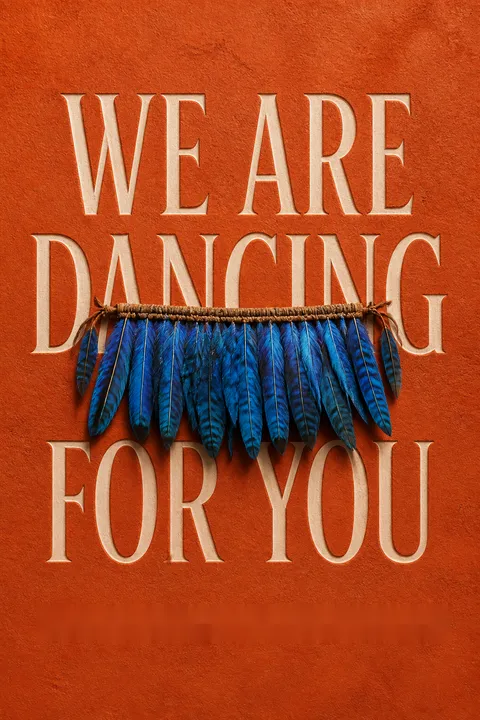


Key Takeaways
A ceremony can restore the worth colonization taught a girl to doubt.
A personal beginning. At twelve, Cutcha Risling Baldy rejects her mother’s offer to celebrate her first menstruation with a Flower Dance. She has absorbed the wider culture’s message that periods are embarrassing. Years later, as she leaves an abusive relationship and feels worthless, her mother tells her they should have danced for her. The words connect the ceremony to a community of women, songs, and memories that help her find the strength to leave.
The book’s driving question. That experience prompts Baldy to investigate the Hupa women’s coming-of-age ceremony and the history that silenced it. The Flower Dance, or Ch’iłwa:l, becomes more than a puberty ritual: it publicly tells a young woman that her life matters and that she is not alone.
What's striking is how the story links private recovery to a public cultural practice without claiming that ritual alone cures abuse. The dance offers recognition, belonging, and a counter-story to the abuser’s isolation of the narrator. That distinction matters: social support can strengthen a person’s agency, but it cannot replace safety, material resources, or professional help. The ceremony’s power lies partly in making care visible, a communal act that contradicts the claim that a woman is disposable.
Treat cultural revival as continuity, not resurrection from extinction.
The language of loss. Indigenous cultures are often described as vanishing, even when their knowledge and practices persist in stories, elders, language, and community memory. Baldy argues that calling the Flower Dance lost can repeat the colonial assumption that Native people belong to the past. She uses survivance, a term associated with Gerald Vizenor, for active Indigenous presence and the continuing life of stories, not merely endurance after harm.
Dormant is not dead. Hupa elders had preserved songs and accounts of the ceremony, and some parts had been practiced privately or intermittently. In May 2001, Kayla Rae Carpenter agreed to the first public revitalized Flower Dance in Hoopa. The community was not inventing a culture from nothing. It was bringing forward knowledge that had remained in people and relationships.
This shift in language changes the historical question. Instead of asking why a people failed to preserve a custom, it asks what conditions made public practice dangerous and how knowledge remained available despite them. That move also makes room for agency without pretending that interruption caused no damage. Continuity can be real even when practice has been constrained, altered, or carried in forms that outsiders do not recognize as tradition.
Read origin stories as living knowledge, not quaint folklore.
Stories carry frameworks. Hupa oral narratives describe the K’ixinay, immortal First People who lived before humans and left teachings through stories, songs, prayers, and ceremonies. These accounts explain not only how the world came to be, but how people should care for it and one another. In one story, Chickenhawk, a K’ixinay woman, prepares protective medicine and guidance for people facing war. Her leadership is part of the story’s knowledge, not an incidental detail.
More than one version. Hupa narratives can have different tellings and interpretations. Baldy treats them as a living archive that informs present-day ideas about gender, responsibility, land, and community. This approach refuses the assumption that only written scholarship counts as history or theory.
Treating oral narrative as intellectual work expands what counts as evidence. These stories preserve ethical and political reasoning in a form tied to place, performance, and relationships, rather than separating knowledge from daily life. Their multiple tellings are not necessarily defects to be corrected; they can keep interpretation responsive to changing circumstances. The challenge is to respect that plurality without turning a specific Hupa account into a universal claim about every Indigenous nation.
Put women's authority at the center of cultural self-determination.
A tribally grounded feminism. Baldy uses Native feminisms to examine how gender, colonial power, and community life intersect. The plural matters: Indigenous women’s histories differ across nations, so no single formula defines their feminism. In Hupa life, women held roles as healers, land managers, property owners, and ceremonial leaders. Oral narratives and material practices complicate accounts that cast Native women as marginal or Native cultures as naturally patriarchal.
A world-renewal dance. The Flower Dance belongs alongside the Hupa Jump Dance and White Deerskin Dance in the K’ixinay ceremonial world. Its place in that spiritual system makes women’s coming-of-age central to communal balance, not a private concern or a celebration of fertility alone. Revitalizing it renews women’s authority as part of sovereignty and self-determination.
The argument makes gender equality a condition of cultural renewal, rather than an outside standard imposed on Indigenous societies. It also avoids treating feminism as a finished doctrine: the relevant questions and practices emerge from a particular nation’s stories and responsibilities. That specificity is a strength, especially where broad labels have erased local histories. It also requires care, since affirming older gender balance should not silence contemporary women who identify ongoing sexism within their communities.
California's ceremonies went quiet under organized violence, not voluntary decline.
A violent disruption. The California Indian population fell by about 90 percent during the invasion and Gold Rush era. In 1860, settlers massacred more than 150 Wiyot people on Indian Island after a world-renewal ceremony. California laws enabled the enslavement of Native people and children, while state funds supported militias that attacked Native communities. Native women faced rape, kidnapping, and enslavement, making public ceremonies that drew attention to young women especially dangerous.
Assimilation continued the attack. Boarding schools surveilled girls’ bodies and treated menstruation as a medical problem rather than a moment of community recognition. Allotment imposed male-headed property arrangements that conflicted with Native women’s ownership and autonomy. The reduced public practice of women’s ceremonies must be understood against this history, not as evidence that communities freely discarded them.
The historical account insists that cultural change has causes, and that silence can reflect danger rather than indifference. It also shows how law, violence, education, and scholarship can reinforce one another: coercion disrupts practice, then records describe the disruption as natural decline. A careful reading should retain both scale and local variation. The book’s California focus provides a powerful case, but its history should not be used as a substitute for the distinct timelines of other Native nations.
Read ethnography against its gaze, and alongside Native testimony.
The archive is not neutral. Salvage ethnography was scholarship that documented Indigenous cultures under the assumption that they were disappearing and largely static. Alfred Kroeber’s influential writing treated some women’s coming-of-age ceremonies as signs of cultural inferiority. Yet his own notes include Yurok woman Susie of Weitchpec describing menstrual practices, songs, and community participation that complicate his conclusions.
Records can be reclaimed. Hupa women rebuilding the Flower Dance consulted elders and oral histories as well as anthropological texts. The archive offered useful details, but its interpretations required scrutiny. Baldy also sees Native consultants’ decision to share stories and songs as a possible way of leaving knowledge for future generations, even within records shaped by outsiders.
This is a productive way to approach compromised archives: neither discard every record nor accept the authority its authors claimed. Comparing an ethnographer’s summary with the notes and the testimony behind it can reveal whose perspective was generalized and whose was omitted. The same method applies beyond anthropology wherever institutions preserve marginalized communities through categories they control. Still, the possibility that consultants intended to aid future revitalization remains an interpretation, not something that can be assumed for every exchange.
Replace menstrual shame with the Hupa idea of concentrated power.
A different meaning of menstruation. Hupa language describes menstruation through actions and responsibilities, including time spent in concentration and bathing at a tim, a place associated with luck or power. The Hupa term m’inch refers to a women’s house used during menstruation, after childbirth, and after miscarriage. It is often translated as menstrual hut, but that label reduces a valued, multipurpose place to a stereotype of shameful isolation.
Specificity matters. Baldy challenges theories that treat Indigenous menstrual customs as universally based on pollution or fear. In Hupa accounts, menstruation can carry power and bring luck; practices help women focus and decide how to participate in community life. This is a Hupa interpretation, not a template for all cultures. The Flower Dance makes a first menstruation a public occasion for support rather than a secret to conceal.
The careful attention to language exposes how translation can smuggle in judgment. Calling a place a hut, or a body process an illness, frames cultural practice before its participants can explain it. The corrective is not to replace a negative universal with a positive universal: menstrual practices vary, and seclusion can mean different things in different settings. The book’s strongest contribution is its insistence that meanings be established through specific cultural knowledge, not inferred from an outsider’s assumptions.
Make coming-of-age a community's public promise to stand with girls.
The community takes part. During a Flower Dance, which can last three, five, or ten days, a young woman runs, bathes, prays, learns from older women, and receives songs and support. Men and women sing and keep time with sticks over her. Running expresses how she meets difficulty: if she falls, she gets up and continues. The ceremony’s public nature tells her that the community has chosen to invest time and care in her.
Strength includes joy. Humor and teasing are part of the ceremony, not distractions from its seriousness. Participants describe the songs as a source of connection and reassurance. The event can also bring relatives together and create relationships beyond the immediate family, giving the young woman a wider circle to call on.
The ceremony functions as a social institution: it gives a young person attention, teaches community expectations, and lets adults enact support rather than merely promise it. Its combination of discipline and humor resists the idea that empowerment must look solemn or individualistic. Yet a powerful communal gathering cannot guarantee that a girl’s surroundings remain safe. Its value is better understood as building connection and cultural resources that can accompany her beyond the ceremony.
When girls request the Flower Dance, revival has become inheritance.
A change in who asks. At the start of the Hoopa revitalization, some young women hesitated because they had learned to hide menstruation. Within about ten years, girls who had watched earlier ceremonies began requesting their own. New songs were composed, participants learned one another’s songs, and the dance became part of young people’s ordinary expectations of community life.
A future, not a replica. Kayla’s 2001 ceremony took place in unusually cold weather, and the planned barefoot run gave way to shoes after the rough trail injured her feet. That practical adjustment did not erase the ceremony’s purpose. Other California tribes have also revitalized women’s ceremonies, including the Wiyot, whose 2014 ceremony followed more than 150 years without a public one. Each nation shapes its practice in its own setting.
A tradition becomes durable when the next generation can choose it, rather than merely receive it as an obligation. The shift from elders inviting girls to girls asking for the ceremony signals that its meaning has entered community life. Adaptation also distinguishes continuity from reenactment: changing a practical detail can preserve a ceremony’s purpose under changed conditions. At the same time, a successful Hoopa experience should inspire exchange, not pressure other nations to adopt the same forms.
Analysis
This book is at once personal narrative, historical intervention, and account of cultural practice. Its emotional hinge is a daughter’s early rejection of a ceremony and her later recognition that the ceremony’s public affirmation might have strengthened her sense of worth. That personal arc gives the scholarly argument stakes: the question is not simply what a Flower Dance means, but what happens to a community when women’s lives and knowledge are repeatedly made peripheral.
The strongest analytical move is to connect three kinds of evidence that are often kept apart: Hupa oral narratives, the record of colonial violence, and ethnographic documents. Together they challenge the notion that a ceremony became uncommon because Native people naturally outgrew it. The archive is shown as both compromised and useful. Its biases matter, but details preserved within it can support community-led revitalization when read against the authority of the original authors.
The book’s account of Native feminisms is strongest when it stays tribally specific. It does not need to prove that all Indigenous societies shared one gender system. Instead, Hupa stories, women’s social roles, language, and the Flower Dance establish a local intellectual and ceremonial tradition in which women’s power belongs to collective well-being. The ceremony then acts as embodied theory: its running, songs, bathing, humor, and public attendance express teachings through practice.
A useful distinction is between cultural recognition and structural repair. The dance can affirm girls, create intergenerational ties, and challenge inherited shame. It cannot by itself undo poverty, ongoing gender violence, or institutional constraints on Native communities. That limit does not diminish the ceremony. It clarifies why revitalization is one form of decolonizing work, not a substitute for material and political change. The book ultimately presents tradition not as a frozen artifact, but as a relationship to knowledge that communities can renew and carry into their futures.
Review Summary
We Are Dancing for You receives overwhelmingly positive reviews, praised for its insightful exploration of indigenous women's coming-of-age ceremonies, particularly the Hupa Flower Dance. Readers appreciate the author's perspective on cultural erasure, revitalization, and decolonization. The book is commended for its thoughtful analysis of Native feminism and historical trauma. Some find the academic style challenging, but most consider it an essential read for understanding indigenous women's experiences. Critics note that more focus on Hupa-specific history and oral traditions would have enhanced the book's impact.
People Also Read


Glossary
Native feminisms
Indigenous gender analysisA set of Indigenous, community-grounded ways of analyzing gender, power, and colonialism. The plural recognizes that Native women belong to distinct nations and cannot be reduced to one universal experience. In the book, Native feminisms expose patriarchal structures while supporting women’s authority, cultural revitalization, sovereignty, and the rebuilding of Indigenous communities.
survivance
Active Indigenous presenceA term associated with Gerald Vizenor that describes Indigenous presence and continuity through stories, culture, and community life. It rejects accounts that frame Native people only through disappearance, victimhood, or historical loss. In the book, the continued memory and renewal of the Flower Dance demonstrate survivance.
salvage ethnography
Documentation of supposedly vanishing culturesAn approach to anthropology that records Indigenous cultures on the assumption that they are disappearing and should be preserved before they vanish. Baldy critiques its tendency to depict cultures as static and to position Western scholars as the authoritative interpreters. The resulting records can still contain knowledge that Native communities scrutinize and use.
ethnographic refusal
Community control of representationA concept associated with Audra Simpson describing Indigenous authority over what information is shared with researchers and how it is presented. Refusing to disclose everything can protect community concerns and affirm sovereignty. Baldy also considers how Native people selectively shared knowledge with ethnographers, despite the risks and unequal power of those exchanges.
politics of taboo
Colonial framing of menstruationBaldy’s term for the discourses that characterize Indigenous menstrual practices as primitive, shameful, or oppressive without first understanding their meanings within specific cultures. These assumptions helped normalize Western ideas about menstruation and gender while erasing Indigenous women’s power, autonomy, and knowledge.
decolonizing praxis
Embodied cultural resistanceA practical, community-based process that draws on Indigenous traditions to challenge colonial hierarchies and rebuild cultural life. In the book, the Flower Dance is a decolonizing praxis because it enacts Hupa knowledge, supports women’s authority, and brings a community together. It is both a cultural practice and a way of creating Indigenous futures.
K’ixinay
Hupa immortal First PeopleThe Hupa name for the immortal beings who inhabited the world before humans. In Hupa accounts, they prepared the world and left instructions through stories, songs, prayers, ceremonies, and other knowledge. They are not simply characters in folklore; their teachings continue to inform Hupa relationships with land, community, and spiritual life.
Ch’iłwa:l
Hupa Flower DanceThe Hupa women’s coming-of-age ceremony associated with a girl’s first menstruation. The public ceremony includes community singing and dancing, as well as activities such as running, bathing, and learning from older women. Baldy presents its revitalization as an affirmation of young women and a renewal of Hupa cultural knowledge.
kinahłdung
Girl honored in Flower DanceA Hupa term for a girl undergoing the Flower Dance, or for the young woman for whom the ceremony is held. The term identifies her ceremonial role during coming-of-age. In Hupa accounts, she is connected to the first, perpetual kinahłdung honored in the K’ixinay world.
m’inch
Hupa women's houseA Hupa women’s house used during menstruation, after childbirth, and after miscarriage. The word is often translated as menstrual hut, but Baldy explains that the translation narrows the house’s functions and carries misleading assumptions about shame and isolation. Its use is part of a broader Hupa context of concentration and care.
FAQ
What's We Are Dancing for You about?
- Focus on Native Feminisms: The book explores the revitalization of women's coming-of-age ceremonies among Native American tribes, particularly the Hupa, Yurok, and Karuk peoples. It highlights how these ceremonies are crucial for cultural identity and community healing.
- Cultural Revitalization: It discusses the historical context of these ceremonies, detailing how colonization and genocide led to their decline. The author, Cutcha Risling Baldy, argues for reclaiming these practices as a form of decolonization.
- Personal Narratives: The book intertwines personal stories with academic analysis, showcasing the author’s own experiences and those of other women in the community, emphasizing the emotional and spiritual significance of the ceremonies.
Why should I read We Are Dancing for You?
- Insight into Indigenous Culture: The book provides a deep understanding of Native American cultures, particularly regarding gender roles and spirituality, challenging stereotypes and misconceptions.
- Empowerment and Healing: Readers will learn about the role of women in Native societies and how revitalizing these ceremonies can empower communities and promote healing from historical trauma.
- Intersection of Feminism and Tradition: It offers a unique perspective on how Native feminisms are rooted in traditional practices, making it relevant for those interested in gender studies, anthropology, and Indigenous rights.
What are the key takeaways of We Are Dancing for You?
- Revitalization of Ceremonies: The book emphasizes the importance of revitalizing women’s coming-of-age ceremonies as a means of cultural survival and empowerment.
- Critique of Colonial Narratives: It critiques historical narratives that depict Native cultures as primitive or extinct, highlighting their dynamic and resilient nature.
- Community and Kinship: The book illustrates how these ceremonies foster community bonds and support systems among women and their families, reinforcing cultural identity and shared values.
What are the best quotes from We Are Dancing for You and what do they mean?
- “I am here. You will never be alone. We are dancing for you.”: This quote encapsulates the essence of community support and the spiritual connection fostered through the Flower Dance.
- “The Flower Dance is a dance that I wish all young women could have.”: This reflects the author’s desire for all young women to experience the empowerment and healing from the ceremony.
- “We believe that in the heavens... we need to make sure that all of those ceremonies are done.”: This highlights the spiritual connection between earthly ceremonies and their counterparts in the K’ixinay afterworld.
How does Cutcha Risling Baldy approach the topic of menstruation in We Are Dancing for You?
- Cultural Significance: Baldy discusses menstruation as a powerful and sacred aspect of womanhood within Native cultures, contrasting it with Western taboos.
- Historical Context: The book details how colonization and assimilation policies led to the suppression of menstrual ceremonies, framing them as primitive or shameful.
- Empowerment through Ceremony: Baldy emphasizes that revitalizing menstrual ceremonies is a form of reclaiming agency and cultural identity for Native women.
How does the Flower Dance serve as a form of decolonization in We Are Dancing for You?
- Reclaiming Cultural Practices: The Flower Dance is a powerful act of reclaiming Indigenous cultural practices suppressed by colonization.
- Empowering Women: By celebrating young women's transitions into adulthood, the Flower Dance empowers them to embrace their identities and roles within their communities.
- Community Healing: The ceremony promotes healing for the entire community, bringing people together to support and celebrate one another.
What role do oral narratives play in We Are Dancing for You?
- Cultural Transmission: Oral narratives are vital for passing down cultural knowledge, traditions, and values among Native peoples.
- Empowerment of Women: The book highlights how oral stories often center women’s experiences and contributions, reinforcing their importance in cultural practices.
- Framework for Analysis: Baldy uses oral narratives to analyze and critique anthropological studies that have historically marginalized Native women.
How does We Are Dancing for You address the politics of taboo surrounding menstruation?
- Challenging Misconceptions: The book confronts the stigma associated with menstruation by presenting it as a sacred and powerful experience.
- Cultural Context: Risling Baldy provides a cultural framework that redefines menstruation within Indigenous epistemologies, contrasting it with Western views.
- Empowerment through Ceremony: The author illustrates how the Flower Dance empowers young women, allowing them to embrace their identities and cultural heritage.
What methods does Cutcha Risling Baldy use in We Are Dancing for You?
- Collaborative Ethnography: The author employs a collaborative ethnographic approach, working closely with Indigenous communities to document their stories and practices.
- Interviews and Personal Narratives: The book includes interviews with kinahłdung and community members, providing firsthand accounts of their experiences with the Flower Dance.
- Cultural Analysis: Risling Baldy combines cultural analysis with personal storytelling to explore the intersections of gender, culture, and colonialism.
How does the author connect personal experiences to broader cultural themes in We Are Dancing for You?
- Interweaving Narratives: Baldy shares her own journey of understanding and reclaiming her cultural identity through the lens of the Flower Dance.
- Emotional Resonance: By connecting her experiences to those of other women in her community, Baldy creates an emotional resonance that underscores the significance of these ceremonies.
- Call to Action: The author’s personal narrative serves as a call to action for readers to engage with and support the revitalization of Indigenous cultures.
What impact has the revitalization of the Flower Dance had on the Hupa community?
- Increased Participation: The revitalization has led to increased participation in the Flower Dance, with more young women requesting the ceremony for themselves.
- Strengthened Community Bonds: The ceremony has fostered stronger community bonds as members come together to support the kinahłdung.
- Cultural Continuity: The Flower Dance serves as a living tradition that connects the Hupa people to their ancestors and cultural heritage.
Download PDF
Download EPUB
.epub digital book format is ideal for reading ebooks on phones, tablets, and e-readers.








