

Key Takeaways
Build products around the feelings people seek, not the features teams can ship.
Start with the person. Kolko’s central argument is that design is not decoration added after requirements are set. It is a way to decide what to build by understanding people and shaping how they feel while using it. A product can be useful yet leave people indifferent. A thermostat or payment app becomes more compelling when its practical function also feels inviting, reassuring, or effortless. Product management by design connects three realities: what people value, what a market can support, and what technology can deliver.
Make trade-offs human. When a launch date conflicts with fixing a confusing interface, the design-led manager weighs the cost to users alongside business and engineering needs. This does not mean always delaying a release. It means making trade-offs from a clear understanding of whose experience is affected, rather than treating schedule or feature count as automatic winners.
The emphasis on emotion expands product quality beyond task completion. A service can be technically efficient and still produce anxiety, embarrassment, or distrust, all of which shape whether people return. This also connects design to public services, where dignity and perceived control can matter as much as speed. The caution is that emotional appeal is not inherently benevolent. A product can make people feel understood while nudging them toward choices that primarily benefit the company. A useful test is whether the promised feeling reflects a real user benefit, and whether the product’s behavior honors that promise.
Read the whole market, including culture, infrastructure, law, and user communities.
Fit is an ecosystem. Product-market fit is not simply sales or a popular feature. It is the relationship between an offering and the surrounding community, customers, competitors, technology, policies, laws, and timing. GPS existed for decades before a broadly accessible phone interface helped make it ordinary. A product can be wanted and technically possible, yet still fail because the surrounding world is not ready to support it.
Heyride met the boundary. The ride-sharing service tried to let ordinary drivers offer rides through a mobile app, but Austin’s taxi regulations challenged its ability to operate. The example shows why a market map must include institutions, not just consumers and rival products. Community support may help a new service press for change, but it does not make legal or infrastructure constraints disappear.
This ecosystem view resembles systems thinking: outcomes emerge from interactions among actors, rules, and technologies, not from a product in isolation. It is especially useful in regulated sectors, where legal legitimacy and delivery infrastructure can be part of the user experience itself. The frame also discourages a common strategic error: treating resistance as proof that customers do not want the service. Still, advocacy cannot substitute for compliance, and a passionate early community may not represent the broader public. Teams need to distinguish a temporary adoption barrier from a durable limit on the business model.
Observe people in context instead of trusting what they say they do.
Watch the work happen. Before researching health tracking, Joe assumed people exercised regularly and recorded their progress. At a yoga studio, he instead encountered conversations about stress, anxiety, and emotional support. The mismatch showed how easily a team mistakes its own assumptions for customer needs. Kolko recommends observing people where the relevant behavior occurs, asking them to demonstrate actions, and requesting examples rather than hypothetical opinions.
Pair behavior with feeling. Watching someone use a product can reveal where they hesitate, improvise, or abandon a task. Talking with them as they act can help explain what those moments mean. Analytics can show that many users leave a registration flow, but not why. A small, focused usability session can help interpret that pattern, even though it cannot establish how common the cause is across the whole user population.
Contextual observation corrects two predictable distortions: people often misremember routine behavior, and hypothetical answers are cheap because they carry no real decision or cost. The approach also makes research a form of organizational learning, since designers witness the workarounds that spreadsheets tend to erase. Yet observation is not a transparent window into another mind. Participants may act differently when watched, and researchers bring their own expectations to what they notice. Strong practice combines observation with follow-up questions, varied participants, and a willingness to revise an interpretation that the evidence does not support.
Turn messy observations into bold, testable guesses about hidden human motives.
Synthesize before solving. A product synthesis wall is a shared physical display of research notes that lets a team compare statements and actions across participants. Joe’s team transcribed its sessions, separated the material into movable notes, grouped recurring patterns, and wrote short summaries of what the patterns might mean. In his health study, people described job stress and difficult routines. One possible insight was that they noticed the cumulative toll only after a day had passed.
Treat insight as a hypothesis. Kolko defines an insight as an inference about human behavior, stated clearly enough to guide a product. Joe translated his interpretation into a constraint: help people notice changes in stress as they occur. The inference might be wrong, so it is not statistical proof. Its value is that it gives the team a reasoned direction to explore, instead of jumping from one anecdote straight to a feature.
This process is a form of abductive reasoning: the team looks for an explanation that makes observed details meaningful, then uses it to generate a possible intervention. Its strength is creative leverage. A small set of vivid observations can reveal a question that broad averages miss. Its danger is the confident tone of a hypothesis mistaken for a discovered fact. A disciplined team keeps the original evidence visible, asks what else could explain the pattern, and seeks cases that challenge the preferred story. Bold inference can open a design space, but it should not close inquiry.
Give the product a consistent personality, then let it veto features.
Design a character. A product stance is the attitude or personality a product conveys through its features, language, imagery, and interactions. An emotional value proposition describes the feeling or capability a person gains by using it. For LiveWell, Joe’s team aimed to help people feel more connected to their body rhythms and more in control of their mental health. It described the product as warm, supportive, casual, and affirming, then translated those qualities into requirements for its behavior and tone.
Let the stance guide choices. A playful detail in MailChimp’s interface reinforced the service’s lighthearted character. In contrast, adding a feature simply because users request it can make a product less coherent. Are You Watching This?! chose not to let users filter alerts by favorite team, because the founder believed that would undermine the broader sports experience the product was designed to offer.
A product’s personality is not just branding applied to the surface. Repeated interactions teach users what kind of relationship to expect, much as predictable conduct builds trust between people. The idea of emotional requirements makes that relationship actionable: teams can use them to judge copy, defaults, and feature decisions. But a coherent stance can become an excuse for paternalism. Rejecting user requests may protect a product’s purpose, or it may protect the maker’s attachment to an idea. The distinction depends on evidence about user goals, clear communication, and whether people retain meaningful choice.
Explore several futures before choosing one, especially the uncomfortable one.
Use market tools to provoke. Early research should create possibilities, not pretend to predict which product will win. Joe’s team mapped health and wellness communities against attributes such as population size and introspection. Empty sections suggested questions to investigate, not guaranteed openings. Teams can also ask what might happen if a competitor launches, users distrust the service, or regulators intervene. Imagining a future in which the product loses can expose weaknesses in positioning or delivery before they become expensive.
Borrow patterns across fields. Kolko also recommends looking at analogous experiences. A health service that needs daily engagement, visible progress, and occasional expert help might learn from marathon training, where trackers, calendars, groups, and stories help participants stay engaged. Such comparisons widen the solution space. They do not prove that a borrowed feature will work in a new setting, so each analogy should be adapted to the actual people and context.
The value of scenario work is not accurate prediction. It is preparation for multiple plausible conditions, a principle shared with contingency planning and pre-mortem exercises. Asking how a product could fail also helps teams surface assumptions that optimism tends to hide. Analogies serve a different role: they let a team transfer a useful pattern without copying a competitor’s feature list. The limit is that analogies can smuggle in false equivalences. Marathon training and managing a health condition may share a need for feedback, but differ greatly in risk, motivation, and expertise. Exploration is strongest when it generates questions for research rather than ready-made answers.
Draw the product story so teams can reason about the same future.
Make the invisible visible. A product concept map connects the people, objects, and actions that make up a product. Joe’s map linked users’ feelings, messages, health data, and visualizations. It helped him see the whole system, while a detailed map alone could overwhelm people who had not helped create it. Sharing a simpler version first, then adding complexity through conversations, gave colleagues a chance to build understanding gradually.
Show the lived journey. Hero flows are sketches or stories of the main paths a user takes to achieve a goal. Joe mapped both a first-time setup and a typical day of responding to check-ins and reviewing emotional patterns. These artifacts helped designers, engineers, and marketers discuss the same experience rather than argue over vague descriptions. Mood boards, sketches, and diagrams also give teams a concrete object to question, improve, and carry between meetings.
Visual artifacts act as shared thinking tools: they reduce the amount each person must hold in memory and make disagreement more specific. A sketch of a user journey can reveal missing steps that a polished strategy slide hides. Gradual sharing also matters politically, since people are more likely to engage with a vision they can influence. Still, an artifact can acquire authority simply because it looks finished. Teams should preserve its status as a working model, mark unresolved assumptions, and avoid confusing a clear diagram with a validated product direction.
Road-map toward user value, then protect the details that make it felt.
Build in meaningful stages. A product road map lays out capabilities over time and shows how each contributes to a user or business goal. Kolko recommends starting with capabilities, prioritizing what is essential to the value proposition, and then working with engineers to estimate a realistic sequence. If a feature is too large, break it into usable stages rather than postponing the whole product until every part is complete.
Measure what matters, then inspect the experience. Joe proposed tracking paid renewals as a sign of perceived value, alongside an aggregate wellness score. These measures connect product decisions to the intended outcome more closely than page views alone, though neither directly proves that people feel healthier. After launch, teams should also examine support requests, usage patterns, and visual or usability defects. Frequent releases can keep a product adaptable, while careful detail work helps preserve trust.
The road map links aspiration to capacity, which makes it a coordination device rather than a promise that every estimate will hold. Connecting metrics to the intended user benefit also counters the tendency for each department to optimize its own local score. But proxies can become targets: a renewal rate may reflect habit, price, or lack of alternatives rather than genuine value, while an average wellness score can hide harm to particular users. Metrics should therefore be read alongside qualitative evidence, and teams should revisit whether their measures still represent the human outcome they claim to serve.
Lead by aligning specialists, not by claiming authority you do not have.
Make progress through people. Product managers rarely control every person whose work determines a product. Their job is to clarify the problem, listen across design, engineering, marketing, and business, and help the group make and communicate decisions. In interviews, product leaders describe the role less as issuing orders and more as setting a direction, asking useful questions, and giving people a shared understanding of why their work matters.
Give the team ownership. A product manager can use stories and visual artifacts to make a future concrete, then invite colleagues to shape it. Airbnb’s early product team used customer stories to help staff imagine the experiences they hoped to create. As organizations grow, informal alignment becomes harder, so road maps, regular communication, and explicit rationales help connect specialized teams without pretending that one process fits every company.
This view treats product leadership as coordination under limited authority, a demanding form of influence that depends on credibility and listening. It also explains why communication is not administrative overhead: separate specialists need a common account of what problem they are solving. The approach is strongest when participation changes the work, rather than serving as a ritual before a predetermined decision. Collaboration does not eliminate the need for accountability, however. Someone must make a call when evidence conflicts or time runs out, and that person should explain the choice, its trade-offs, and what would prompt reconsideration.
Analysis
Kolko’s method is best understood as a disciplined way to make decisions under uncertainty, not as a recipe that mechanically converts research into successful products. Its sequence moves from broad market context to close observation, from interpretation to a product stance, and from a shared vision to staged execution. Each transition changes the kind of evidence being used. Market signals describe constraints and shifts; field observations show behavior; insights propose explanations; product artifacts make those explanations actionable. The process is persuasive because it makes these transitions visible instead of hiding them inside a feature list. Its central strength is the combination of empathy and operational structure. Empathy without a road map can remain a moving anecdote. A road map without empathy can produce efficient irrelevance. Visual artifacts bridge the two by helping teams retain context while making decisions. The book is also alert to organizational reality: a product manager may be responsible for coherence without having formal authority over every contributor. Shared artifacts and careful storytelling are therefore not merely design techniques, but tools for coordination.
The method’s main epistemic risk is that a vivid interpretation can feel more certain than it is. A small number of observations can uncover an overlooked need, but cannot show how widespread it is. Kolko treats this uncertainty as part of innovation, yet modern teams can strengthen the method by recording assumptions, seeking counterexamples, and separating exploratory research from validation. Quantitative measurement then becomes useful without being mistaken for a complete account of motivation.
A further ethical question follows from designing for emotional engagement. Helping people feel capable, connected, or informed can be valuable, but the same techniques can increase dependence or steer behavior toward organizational goals. The practical standard should be reciprocal value: the product should improve a user’s ability to pursue their own aims, not merely make an interaction feel pleasant. In that sense, well-designed work is not simply empathetic. It is accountable for what its empathy enables.
Review Summary
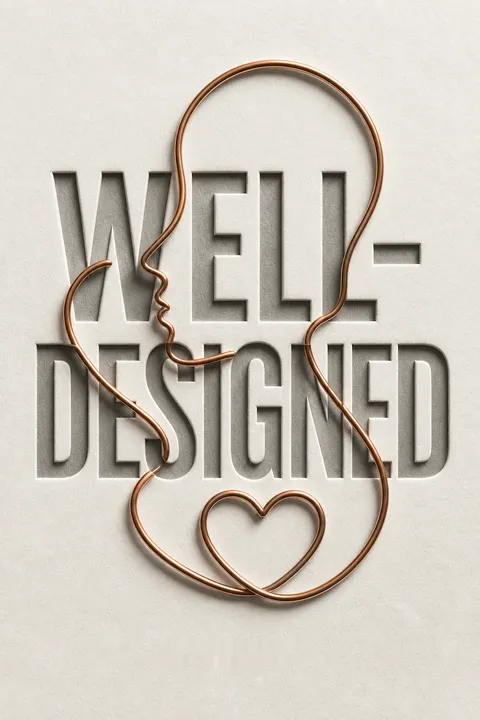
Well-Designed by Jon Kolko receives mixed reviews, with an average rating of 3.92 out of 5. Many readers appreciate the book's focus on empathy in product design and management, finding it insightful for those new to the field. The practical advice and interviews with industry professionals are frequently praised. However, some criticize the book for lacking depth, being too specific to product management, or having poor translations in non-English versions. Despite these critiques, many readers find the book valuable for understanding user-centered design and product development.
People Also Read







Glossary
Product-market fit
Market and offering alignmentThe relationship between a product and the wider conditions that determine whether it can succeed. These include customer response, user communities, competitors, technology, infrastructure, laws, policies, and timing. The concept is broader than sales: a product may be useful but poorly matched to the market’s capabilities, expectations, or rules.
Insight
Inferred human behaviorA provocative interpretation of why people behave as they do, stated clearly enough to guide product decisions. An insight is based on observations but goes beyond what those observations directly prove. It is a generative hypothesis, not a statistical finding, and can lead a team to define constraints for a product.
Product synthesis wall
Shared display of researchA physical, visual workspace where research material, often separated into individual statements or actions, can be arranged and compared. Teams group patterns, identify unusual cases, and develop interpretations together. Externalizing the material helps participants notice relationships that can be difficult to see when notes remain in files or individual memories.
Emotional value proposition
Promised user feelingA statement of the emotional change a person should experience through using or acquiring a product. It complements practical value by asking what someone will feel, understand, or be able to do in a new way. It can guide feature choices and help teams judge whether the product is delivering on its promise.
Product stance
Product personalityThe attitude a product expresses through its behavior, language, imagery, features, and visual form. Teams can define a stance using specific emotional traits, then translate those traits into requirements that guide decisions across the product. A consistent stance helps users experience the product as a coherent interaction rather than a collection of unrelated functions.
Product concept map
Map of product relationshipsA visual representation of the people, objects, systems, and actions that make up a product. It commonly connects nouns, such as users or data, with verbs, such as track or send. The map helps a team see the system as a whole, reason about its scope, and communicate an emerging product vision.
Hero flows
Main user journeysStories or sketches showing the primary paths through a product that let users achieve important goals. They focus on intended, successful use rather than every exception or failure case. Hero flows connect an abstract product vision to concrete interactions and help teams align on how the experience should unfold.
Product road map
Timeline of product capabilitiesA forward-looking view of the capabilities a team plans to build and the goals those capabilities support. It helps establish sequence, expose dependencies, and coordinate work across people or teams. It is a living planning artifact, not a guarantee of exact delivery dates or a detailed project schedule.
About the Author
Other books by Jon Kolko

Download PDF
Download EPUB
.epub digital book format is ideal for reading ebooks on phones, tablets, and e-readers.








