Key Takeaways
1. You're Pregnant Too! (Emotionally, Anyway)
Remember, you’re pregnant, too! (Just be very selective about how often you tell her that.)
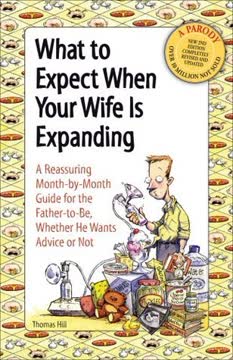
Shared journey. While your wife carries the physical burden, pregnancy is a profound, shared experience that transforms both partners. Today's father is expected to be a birthing coach, dietician, masseur, and psychotherapist, among other roles, all without the "healthy glow." This book acknowledges your unique needs, problems, and concerns, offering a lighthearted yet reassuring companion to the more serious guides your wife is reading.
Prepregnancy clues. Before she even knows for sure, your wife might drop subtle hints about wanting a baby. Pay attention to increased suggestive comments like "Don't you think Zoë is a pretty name?" or renewed interest in real estate. Ignoring these clues can lead to trouble, mister, so it's vital to discern her "prepregnancy" state early on.
Early anxieties. The journey begins with a mix of excitement and panic, whether planned or a surprise. You'll find yourself doing things like trying to record the baby's heartbeat for a ringtone, debating paternity leave, and repainting the nursery multiple times. Embrace these early, often absurd, experiences as part of your unique path to fatherhood.
2. Master the Art of Communication (and Strategic Silence)
Fine is seldom fine.
Decoding her complaints. Your pregnant wife will have a litany of complaints, from exhaustion and morning sickness to heartburn and the sudden realization that the child could inherit your nose. It's crucial to understand that "fine" is a danger signal, often masking deeper concerns. Learn to recognize these "danger signals" to avoid serious long-term damage to your relationship.
What to say (and not to say). To appear caring and sensitive, memorize a few interesting, real facts about pregnancy to drop into conversation. For instance, mention "Montgomery's tubercles" or "rubella titer." Conversely, avoid comments like "This isn't another bogus false labor thing, is it?" or "You don't look like you're having fun" during active labor.
The power of listening. While you might be tempted to offer solutions or jokes, often what she needs most is a sympathetic ear. If you can't be fully present, try to ease off gradually, perhaps by commenting on the prose style of her pregnancy books. Remember, your goal is to be a supportive presence, not a stand-up comedian or a medical expert.
3. Navigate the Consumer Minefield (What to Buy & What Not To)
Your little bundle of joy will cost you a little bundle before you even get to take it home from the hospital.
Budgeting for baby. Having a baby is expensive, but costs can be managed with careful planning. From labor and delivery to education, the expenses add up quickly. While home birth and hand-me-downs can save money, a typical contemporary lifestyle demands significant financial outlay.
- Labor and delivery: $6,000–$8,000
- Gifts, dining out for wife: $3,200
- Education (through grade 12): $40,000–$200,000
- College (four years): $240,000
Gifts for her, not the baby. When holidays or birthdays roll around, remember that your pregnant wife is still a person, not just an incubator. Avoid baby clothes, toys, or anything that implies she needs to "get back in shape." Stick to jewelry, gourmet chocolates, or items from her specific list.
The stroller dilemma. The choice of stroller is a public declaration of your commitment to parenting, and prices have skyrocketed. While a basic model is functional, many parents succumb to the allure of high-end, imported "Euro-strollers" with features like antilock brakes and on-board bottle warmers. Be prepared to invest, or at least pretend to.
4. Prioritize Her Well-being (Even When It's Inconvenient)
Unless her doctor advises otherwise, pregnancy should not prevent your wife from engaging in any of her ordinary activities.
Health and diet. While your wife has strict dietary guidelines, your metabolism is different, so you can eat "any crap you like." However, the big question is, will she let you? Lunch becomes a key meal for indulging in raw, junk, greasy, spicy, or stinky foods that are off-limits for her.
- Foods for Dad: Sushi, rare steak, potato chips, pizza, Slim Jims, Gorgonzola.
- Beverages for Dad: Beer (for vitamins B6/B12), coffee (for stress/exhaustion).
Exercise for expectant fathers. If you want to get in shape, avoid contact sports and try specific exercises like "Wife Catching" (maneuvering her in crowded places), "Labor Coach's Neck Tilt" (preparing for sleepless nights), or "Basic Kegel Exercises" (tensing penis muscles for no particular benefit, but it's pleasant).
Avoiding Couvade Syndrome. This psychosomatic condition, where men experience pregnancy symptoms, can be avoided by not being too sympathetic. If symptoms persist, try playing pranks like tampering with the bathroom scale or setting clocks back. If that doesn't work, you might have to fake it, complaining about swollen feet and rubbing your belly.
5. Manage Expectations (About Sex, Sleep, and the Baby's Looks)
Sexual relations during this physically and emotionally traumatic period are nothing to worry about. You should remember that the statistical chances of having sex during pregnancy are very low, almost negligible.
Sex during pregnancy. While there's no medical reason to avoid sex, many men feel uncomfortable or worry about hurting the baby. The book humorously suggests that the statistical chances of having sex during pregnancy are "very low, almost negligible," making it "nothing to worry about." If it does happen, proceed with caution and no unrealistic expectations.
The reality of sleep deprivation. The single greatest issue other parents will warn you about is the lack of sleep. It's a natural part of early parenting, leading to "psychoses and hallucinations." Embrace the "silver linings" of sleeplessness:
- Hallucinations are interesting.
- Unshaven look fits dark circles.
- Too tired to resent your wife's tiredness.
- Napping in unusual places (couch, garage, conference room).
Ugly newborns. Try to relax about the baby's appearance. While everyone will coo, newborns are "ugly" – pudgy, wrinkled, droopy, with potential caput (head bump), sugar loaf molding (conehead), boxer's nose, or baby rug syndrome (bad toupee). Keep photography to a minimum for the first few days; moments like these are too important to spend behind a lens.
6. Prepare for the Big Day (and the Aftermath)
This is your one chance to do something useful! You’re the coach, man, and whether your personal style is more Rex Ryan or Herm Edwards or Bill Belichick, this is an opportunity to get involved.
Lamaze (or "Birthing Readiness") classes. Despite the tedium and awkwardness of hearing words like "labia" in public, these classes are your chance to be useful. You're the coach, learning breathing techniques and pain relief options, even if the nurses handle the nitty-gritty. Don't miss the films; they'll teach you that the "greenish, slimy, blood-streaked thing" is a healthy baby.
Packing your hospital bag. Don't forget your own bag for the hospital stay. Essentials include a pillow for naps, a pack of cards (for tossing into a hat), a toothbrush, and food (Pop-Tarts, Slim Jims, Doritos). Crucially, bring an expensive, beautiful, and incredibly thoughtful gift for your wife – always a good idea during high stress.
What to say during labor. Your role is willing slave, interpreter, and coach. Stick to basics: "I love you," "You're wonderful," "You're doing great." Avoid negativity, irony, or complaining about hospital costs. After delivery, "You did it," "Thank you," and "Look at our baby" are perfect.
7. Embrace the Chaos of Fatherhood (It's a Marathon, Not a Sprint)
Being pregnant was the easy part, especially for you, the expectant father.
The post-hospital reality. The moment you get home, you'll realize pregnancy was the easy part. Fatherhood is "all over the place": constant feedings, diaper changes (including "stunning free-form aerial peeing demonstrations"), and a desperate 5 a.m. drive around the block. You'll suddenly feel nostalgic for morning sickness.
Diaper duty. Changing diapers is the most feared, yet most overrated, task. You'll quickly become inured to it, along with other grosser tasks like sucking snot with a nasal aspirator or catching vomit in your hand. The debate between cloth and disposable diapers is ongoing, but for most, disposables offer convenience, despite environmental concerns.
The wisdom of fathers. You'll eventually face profound questions from your child, from "Do dogs go to heaven?" to "Why is the sky blue?" While misdirection ("Presto! A quarter in your ear!") or deflection ("Ask your mother") can work, you'll need to grapple with your own philosophical shortcomings. Luckily, you have about six or seven years before the truly tough ethical questions begin.
8. Humor is Your Best Defense (But Know When to Be Serious)
Husbands need to be increasingly aware that there is a fine line between the affectionate “you’re an idiot” and the despairing and resentful “you’re an idiot.”
The fine line of humor. While this book embraces humor as a coping mechanism, there's a critical distinction between affectionate teasing and genuinely hurtful comments. During pregnancy, your wife's emotional state is heightened, making her less receptive to jokes about her weight, "pull my finger," or your new golf shorts.
Things that are not funny. Avoid specific "not funny" behaviors:
- Hiding the last piece of ice cream cake.
- Insisting a layette means a "little lay."
- This book (if she's reading it).
- Drawing a window frame on her belly while she sleeps.
- Teaching toddlers snappy catchphrases like "Show me the money."
When to be serious. There are moments when humor must be set aside. When discussing genetic counseling, for instance, or when your wife expresses genuine fears about vanishing-twin syndrome. Your unwavering support and understanding are paramount, even if it means temporarily shelving your comedic aspirations.
Last updated:
Similar Books