

Key Takeaways
A terminal diagnosis destroys the imagined future before it offers any wisdom.
The future disappears. At thirty-six, Paul Kalanithi was near the end of neurosurgery residency, with prestigious jobs within reach and a life with his wife, Lucy, carefully pictured ahead. Weight loss, severe pain, and scans revealed advanced lung cancer that had spread to his spine and liver. The career and family life he had expected to begin soon suddenly seemed impossible. The diagnosis did not instantly make him serene or wise. He felt frightened, physically helpless, and unsure who he was without his work.
Crisis changes relationships. Before the diagnosis, residency had strained Paul and Lucy’s marriage. She had asked him to share his fears instead of hiding them. When he finally told her he might have cancer, their distance gave way to closeness. Illness altered their lives, but it did not arrive as a neat lesson or a sudden revelation about what mattered.
What's striking is how this account resists the familiar story in which disaster instantly reveals life's priorities. Psychological research on grief and identity often describes disruption as a process: familiar roles stop organizing experience, and a person must slowly rebuild a sense of self. Paul's first response is confusion, not transformation. That distinction matters because it relieves the ill, and those who love them, of the pressure to turn crisis into inspiration. The change in his marriage also shows that vulnerability is not a decorative virtue. It can disclose practical information a partner needs in order to remain close.
Use literature, biology, and lived experience to approach questions no single field can answer.
He searched across disciplines. Growing up in Kingman, Arizona, Paul read literature encouraged by his mother and became fascinated by how the brain could produce thought and meaning. At Stanford, he studied English literature and human biology, then pursued graduate work in literature and the history and philosophy of medicine. He eventually chose medical training because he wanted to meet suffering directly, not only analyze it from books.
Each language had limits. His neuroscience research explored whether signals could be written into the brain, a possibility he called neuromodulation. Yet scientific knowledge could describe bodies and disease without fully explaining love, identity, or what made an individual life worthwhile. When cancer made those questions personal, he returned to literature for language that could help him understand what he was experiencing.
The combination is more than a list of interests. Science tests claims against observable evidence; literature attends to particular lives, motives, and felt experience. Those methods answer different questions, and confusion follows when either is asked to do the other's job. A survival study cannot explain what a patient fears losing, while a moving story cannot establish which treatment works. Paul's search is valuable because it preserves that difference while letting the disciplines inform one another. Its limit is equally important: combining perspectives enriches judgment, but does not produce a single, complete theory of human meaning.
Learn what makes a patient's life worth living before trying to preserve it.
Brain surgery touches identity. Neurosurgery forced Paul to weigh more than whether a patient might survive. A tumor near the hypothalamus threatened a boy's basic drives; removing it could spare him future treatment, but even slight damage could profoundly change his behavior. In another case, an electrode placed deep in a patient's brain improved a tremor but triggered overwhelming sadness. Moving it a few millimeters relieved the tremor without that emotional effect.
Ask before acting. Paul came to believe that a surgeon must understand what the patient values before deciding which risks make sense. Speech, movement, independence, and time alive do not carry the same importance for everyone. For him, informed consent was not just a signature acknowledging hazards. It was a conversation about what the patient hoped to protect and which possible futures they could accept.
This is a concrete version of person-centered medicine: outcomes are not meaningful in the abstract, because patients experience them through particular goals and relationships. Decision science calls attention to the difference between extending life and improving the life a person can actually experience. Neurosurgery makes that distinction unusually visible, since a tiny intervention can affect language, emotion, or independence. Still, asking about values cannot eliminate uncertainty or make every tradeoff fair. Its contribution is more modest and more useful: it makes the tradeoff explicit, so medical expertise serves a person's priorities rather than quietly substituting for them.
Treat survival statistics as population maps, not verdicts on individual lives.
A curve is not a calendar. A Kaplan-Meier curve estimates the proportion of a group surviving over time. It can help researchers compare treatments and describe the course of a disease, but it cannot identify where one patient will fall. When Paul developed metastatic lung cancer, he wanted his oncologist, Emma, to discuss survival curves. She declined to give him a personal deadline. Tests eventually found an EGFR mutation, allowing him to take the targeted drug Tarceva rather than begin chemotherapy immediately.
The numbers still mattered. Paul studied the research and understood that his mutation improved the outlook for some patients, but it could not promise a particular number of years for him. He had once relied on medical probabilities when advising families. As a patient, he discovered that statistical knowledge could inform decisions without answering the existential question of how to live.
The tension here resembles the reference-class problem: an estimate can be accurate for a group while remaining uncertain for a person who belongs to it. That does not make population data useless. It helps compare options, set expectations, and plan care. The mistake is treating a median or percentage as if it were an individual forecast. Paul's experience also shows why avoiding numbers altogether can frustrate a patient who wants them. Good communication should clarify what a statistic can support, what it cannot predict, and whether the patient wants detail now or later.
Let values guide decisions when prognosis cannot provide a reliable timetable.
Plans had to change. Paul had imagined decades as a neurosurgeon and scientist, followed by a writing life. Cancer made those long horizons uncertain. He wondered whether to return to surgery, concentrate on writing, or become a father. Emma could not tell him how much time remained, so she asked what mattered to him. He began physical therapy, regained enough strength to operate again, and later reconsidered a distant academic job because moving would leave Lucy more isolated if his health worsened.
Values are revisited. His choices did not follow a fixed formula. Returning to the operating room felt meaningful, but the energy and responsibilities it demanded also changed what he wanted. He learned that a decision made under uncertainty might need to be reassessed as health, family needs, and personal priorities shifted.
This is close to values-based decision-making under uncertainty: instead of waiting for a forecast that may never arrive, a person chooses among options by asking which costs and benefits fit their priorities. The approach is stronger when it includes practical constraints, as Paul's concern for Lucy's support network did. It also avoids the fiction that a person's values are permanently settled. Preferences can change with pain, treatment, and experience. That makes repeated conversations essential. A choice is not a binding declaration of identity; it is a workable commitment made with the knowledge available at the time.
Strive for technical excellence without mistaking effort for control over death.
Small errors can matter. As a neurosurgeon, Paul learned that a few millimeters could separate a successful operation from paralysis, loss of speech, or a profound change in behavior. He also watched patients die despite intense effort. One elderly patient he had treated deteriorated and died after surgery, despite his attempts to stabilize her. Such cases taught him that technical skill and good intentions were necessary, but neither could guarantee a good outcome.
Failure weighs heavily. Paul saw colleagues struggle with responsibility and recalled a close friend, Jeff, who died by suicide after a patient died from a complication. He understood the pressure to be excellent, but also that medicine operates in an imperfect world. The aim was not to become flawless. It was to keep improving while accepting that clinicians cannot control every result.
The distinction between responsibility and control is ethically crucial. Clinicians should own preventable errors, but an adverse outcome alone does not prove negligence or personal failure. In high-stakes professions, that distinction can protect learning from turning into self-condemnation. Paul's account also raises a systemic question: relentless workload and perfectionism can intensify moral distress, so individual resilience cannot be the whole remedy. The aspiration to improve remains essential, particularly when patients depend on fine technical judgment. It becomes destructive when the standard is an impossible guarantee against loss.
When cure is uncertain, good medicine restores agency and shares responsibility.
Care is more than treatment. As a physician, Paul learned to explain serious diagnoses in stages, giving patients time to absorb what they could and returning to unanswered questions. He saw conversations as part of care, not paperwork before it. When he became ill, he depended on Emma to explain options, coordinate treatment, and help him think about returning to work.
Someone must coordinate. During a severe hospitalization, several specialist teams disagreed about his worsening condition and medication. Paul called this the WICOS problem, meaning the question of who is in charge when many clinicians are involved. He and Lucy tried to keep the facts and plans aligned. Once Emma took responsibility for coordinating his care, he could stop trying to manage every decision himself and be a patient.
This section connects communication to agency. Patients are not empowered simply by receiving more information; they need a comprehensible account, space to ask questions, and a clinician who helps make the next step navigable. The WICOS problem also reveals a design weakness in complex care: specialization can deepen expertise while fragmenting accountability. Coordination is therefore a clinical task, not an administrative luxury. There is a useful nuance here. Shared responsibility does not mean patients must become project managers of their own illness. A trustworthy team makes room for patient choice while carrying the burden of integration.
Do not refuse love merely because loss is certain.
They chose to become parents. Paul and Lucy had planned to have children after residency. His terminal diagnosis made the decision urgent and painful: he might die while their child was still young, and Lucy might have to raise the child alone. They discussed those realities rather than pretending they did not exist. They decided to try, using assisted reproduction because of Paul's treatment and the need to preserve sperm before it began.
Joy arrived with risk. Their daughter, Cady, was born while Paul was severely weakened by illness. Holding her did not erase the possibility that he would die soon. It gave their family a relationship and a future to care for in the time they had. Paul and Lucy did not treat grief as proof that choosing a child had been a mistake.
Their decision distinguishes a meaningful risk from a risk that should automatically be avoided. In existential terms, love creates something valuable while also making loss more imaginable. That is not a universal argument for parenthood under illness; the choice depends on the people involved, their resources, and their wishes. The strength of this account is that the couple faces the likely burden openly rather than dressing it up as a cure for grief. It also refuses a narrow idea of wellbeing in which the safest life is always the best one.
Measure a limited life by presence, not by the future it missed.
A future was not required. After his cancer returned and treatment became more difficult, Paul left neurosurgery and spent much of his remaining energy with Lucy and Cady, while working to finish his book. The family shared ordinary pleasures alongside fear and declining health. Near the end, as breathing support became the central decision, Paul chose comfort care rather than an intervention unlikely to give him meaningful time. Lucy and their family stayed with him.
The unfinished still mattered. Paul died before completing the manuscript, which Lucy and their editor prepared for publication. His daughter would not have years of memories with him, but the time they shared was not made worthless by its brevity. The book's ending holds sorrow alongside affection, rather than claiming that love or writing cancels death.
The ending resists two tempting distortions: calling an early death a victory because the person found meaning, or calling the person's life a tragedy because it ended too soon. Meaning and loss remain simultaneously true. This distinction resembles work in bereavement studies, where continuing bonds with the dead can coexist with acute grief rather than replacing it. The manuscript offers a particular form of continuity, but it does not stand in for a father or spouse. Its value is in carrying testimony forward while leaving the irreparable absence visible.
Analysis
When Breath Becomes Air is a memoir of medicine, illness, and literary formation, arranged around a reversal: a neurosurgeon who has spent years interpreting other people's mortality must learn to live inside his own diagnosis. Its force comes from the change in vantage point. Clinical knowledge gives Paul language for tumors, treatment, and probabilities, but it does not spare him the patient's confusion or tell him what to do with uncertain time. His experience therefore tests, rather than simply confirms, the expertise he has acquired.
The book's deeper structure is a search for an adequate account of human life. Literature offers vocabulary for suffering and relationship; biology explains the vulnerable machinery that makes thought and feeling possible; medical practice brings those accounts into contact with actual decisions. None can absorb the others. The memoir is most persuasive when it shows their limits through choices: whether to operate, how much prognosis to disclose, whether to return to work, and whether to have a child. Meaning appears less as a solution to death than as something made in the relationships and commitments that death threatens.
The narrative also revises the heroic image of medicine. Technical skill matters because errors can alter identity, yet no clinician can guarantee survival or undo every loss. The physician's work includes interpreting uncertainty, coordinating care, and helping patients and families face futures they did not choose. That role depends on competence, but also on humility and communication.
The memoir cannot establish that every person will find meaning through family, vocation, faith, or writing. Nor should Paul's decisions become a standard for other patients. Its achievement is not a universal prescription. It makes an intimate case for honest attention: acknowledge what is uncertain, name what matters, and do not mistake a life's brevity for proof that it lacked value. The book remains unfinished in the ordinary sense, but its incompletion also belongs to the reality it describes.
Review Summary
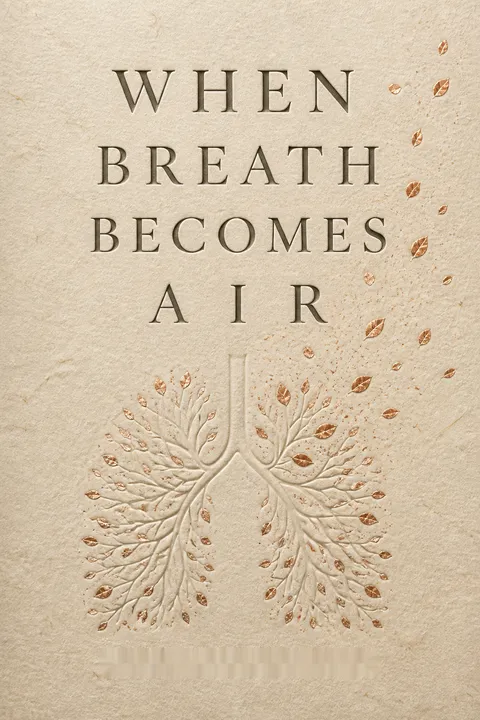
When Breath Becomes Air deeply moved readers with its profound exploration of life, death, and meaning. Many praised Kalanithi's eloquent writing and found his story both heartbreaking and inspiring. The book's honest portrayal of facing mortality resonated strongly. Some felt the first half was less engaging or too focused on Kalanithi's accomplishments. The epilogue by his wife was particularly impactful for many. Overall, readers found it a powerful, thought-provoking memoir that left a lasting impression, though a few felt it lacked depth or relatability.
People Also Read









Glossary
human relationality
meaning through human relationshipsPaul Kalanithi's term for the relational basis of human meaning. Language, moral values, and a sense of self develop between people, not inside an isolated mind alone. He connects this idea to medicine: doctor and patient meet as people whose relationship can help make illness, choice, and suffering more understandable.
Kaplan-Meier curve
group survival over timeA statistical graph used in medical research to estimate the proportion of a study group that remains alive over time, including when some participants leave the study or observation ends. It helps researchers describe and compare outcomes across groups. It cannot tell an individual patient exactly how long they will live.
WICOS problem
who coordinates the care teamAn abbreviation for the question of who is the captain of the ship when many medical specialists are involved. Kalanithi uses it to describe the confusion that can arise when teams disagree, plans multiply, and no one clearly integrates the whole course of care. The problem is both organizational and personal for patients and families.
neuromodulation
altering neural activityA research approach involving changes to activity in the nervous system. Kalanithi's laboratory work explored writing signals into the brain, rather than only reading them out, with the long-term possibility of influencing neurological or psychiatric conditions. The book presents this as a developing scientific direction, not an established cure for the conditions it might address.
FAQ
What's "When Breath Becomes Air" about?
- Memoir of a neurosurgeon: "When Breath Becomes Air" is a memoir by Paul Kalanithi, a neurosurgeon who was diagnosed with terminal lung cancer at the age of 36.
- Exploration of life and death: The book explores Kalanithi's journey from being a doctor to becoming a patient, and his reflections on life, death, and what makes life meaningful.
- Intertwining of medicine and literature: Kalanithi combines his medical knowledge with his love for literature to provide a profound narrative on the human condition.
- Legacy and purpose: The memoir is also about Kalanithi's attempt to leave a legacy for his daughter and to find purpose in his remaining time.
Why should I read "When Breath Becomes Air"?
- Insightful perspective: The book offers a unique perspective on life and death from someone who has experienced both as a doctor and a patient.
- Emotional and thought-provoking: It is a deeply emotional and thought-provoking read that challenges readers to consider their own mortality and what makes life meaningful.
- Beautifully written: Kalanithi's writing is eloquent and poetic, making complex medical and philosophical concepts accessible and engaging.
- Inspiration and courage: The memoir is an inspiring testament to courage, resilience, and the human spirit in the face of terminal illness.
What are the key takeaways of "When Breath Becomes Air"?
- Life's fragility: The book emphasizes the fragility of life and the importance of living with purpose and intention.
- Interconnection of life and death: Kalanithi explores the inextricable link between life and death, and how facing mortality can bring clarity to one's values and priorities.
- Role of a doctor: It highlights the profound responsibility and moral duty of doctors to guide patients through life-and-death decisions.
- Legacy and meaning: The memoir underscores the significance of leaving a legacy and finding meaning in life, even in the face of death.
How does Paul Kalanithi's background influence "When Breath Becomes Air"?
- Dual expertise: Kalanithi's background in both medicine and literature allows him to weave together scientific and philosophical insights seamlessly.
- Personal journey: His journey from a promising neurosurgeon to a terminally ill patient provides a deeply personal and authentic narrative.
- Philosophical exploration: His studies in the history and philosophy of science inform his exploration of existential questions about life and death.
- Literary references: Kalanithi frequently references literature and poetry, enriching the memoir with cultural and intellectual depth.
What are the best quotes from "When Breath Becomes Air" and what do they mean?
- "I can't go on. I'll go on.": This quote reflects Kalanithi's determination to continue living meaningfully despite his terminal diagnosis.
- "The physician’s duty is not to stave off death or return patients to their old lives, but to take into our arms a patient and family whose lives have disintegrated and work until they can stand back up and face, and make sense of, their own existence.": It highlights the compassionate role of doctors in helping patients and families navigate the complexities of illness and mortality.
- "You can’t ever reach perfection, but you can believe in an asymptote toward which you are ceaselessly striving.": This quote speaks to the idea of continuous improvement and striving for excellence, even if perfection is unattainable.
- "When you come to one of the many moments in life where you must give an account of yourself, provide a ledger of what you have been, and done, and meant to the world, do not, I pray, discount that you filled a dying man’s days with a sated joy.": It underscores the impact of love and relationships in providing meaning and joy, even in the face of death.
How does "When Breath Becomes Air" address the concept of mortality?
- Facing death directly: Kalanithi confronts his own mortality head-on, using his experience to explore what it means to live a meaningful life.
- Doctor to patient transition: The book details his transition from a doctor who deals with death professionally to a patient who must face it personally.
- Philosophical reflections: Kalanithi reflects on philosophical questions about life, death, and the human condition, drawing from his background in literature and philosophy.
- Legacy and impact: He considers the legacy he will leave behind, particularly for his daughter, and how to make the most of his remaining time.
What role does literature play in "When Breath Becomes Air"?
- Source of comfort: Literature provides Kalanithi with comfort and a means to process his experiences and emotions.
- Philosophical exploration: It serves as a tool for exploring existential questions and understanding the human condition.
- Cultural references: Kalanithi frequently references literary works and authors, enriching the narrative with cultural depth and intellectual insight.
- Writing as legacy: Writing the memoir becomes a way for Kalanithi to leave a legacy and communicate his thoughts and experiences to his daughter and readers.
How does Paul Kalanithi's medical career influence his perspective in "When Breath Becomes Air"?
- Understanding of mortality: His experience as a neurosurgeon gives him a unique understanding of life, death, and the human body.
- Moral responsibility: Kalanithi reflects on the moral and ethical responsibilities of doctors in guiding patients through life-and-death decisions.
- Empathy and compassion: His interactions with patients inform his compassionate approach to his own illness and mortality.
- Scientific insight: His medical knowledge allows him to understand and articulate the complexities of his illness and treatment.
What challenges does Paul Kalanithi face in "When Breath Becomes Air"?
- Terminal diagnosis: Kalanithi faces the challenge of a terminal lung cancer diagnosis at a young age, forcing him to confront his mortality.
- Identity crisis: He struggles with the loss of his identity as a neurosurgeon and the need to redefine his purpose and priorities.
- Balancing hope and reality: Kalanithi navigates the tension between hope for more time and the reality of his prognosis.
- Legacy and family: He grapples with the desire to leave a legacy for his daughter and to make the most of his remaining time with his family.
How does "When Breath Becomes Air" explore the doctor-patient relationship?
- Dual perspective: Kalanithi provides insight into the doctor-patient relationship from both sides, as a doctor and a patient.
- Compassionate care: He emphasizes the importance of compassionate care and the role of doctors in guiding patients through difficult decisions.
- Communication and trust: The memoir highlights the significance of communication and trust in the doctor-patient relationship.
- Shared humanity: Kalanithi underscores the shared humanity between doctors and patients, and the impact of illness on both.
What is the significance of the title "When Breath Becomes Air"?
- Transition from life to death: The title symbolizes the transition from life to death, as breath is a metaphor for life and air for the afterlife.
- Ephemeral nature of life: It reflects the ephemeral nature of life and the inevitability of death.
- Connection to literature: The title is derived from a line of poetry, emphasizing the book's connection to literature and the exploration of existential themes.
- Metaphor for transformation: It serves as a metaphor for Kalanithi's transformation from a doctor to a patient and his journey toward understanding mortality.
How does "When Breath Becomes Air" address the theme of legacy?
- Desire to leave a mark: Kalanithi is driven by the desire to leave a legacy for his daughter and to make a meaningful impact through his work and writing.
- Writing as a legacy: The memoir itself becomes a legacy, a way for Kalanithi to share his experiences and insights with others.
- Family and relationships: He reflects on the importance of family and relationships in shaping one's legacy and providing meaning in life.
- Enduring influence: The book explores how one's actions and choices can have an enduring influence, even after death.
Download PDF
Download EPUB
.epub digital book format is ideal for reading ebooks on phones, tablets, and e-readers.








