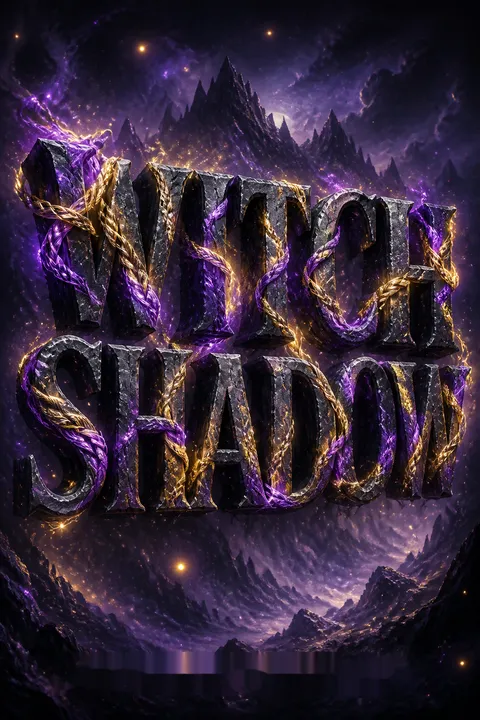


Plot Summary
Prologue
At the healed Earth Well, six ancient beech trees stand around a pond as two young women enter the water hand in hand. Safi, the Sun, surfaces first; Iseult, the Moon, follows, completing the healing. A watching rook recognizes the old pattern in their union, while a sunrise-haired man celebrates the Well’s recovery and a powerful official considers what the event might mean for the Emperor.
The girls emerge shivering but together, each helping the other from the water. Their bond is the first promise the story makes: whatever power the Witchlands awaken, these two will face it as partners.
The opening frames the novel’s political and mythic struggles through a simple physical act: the girls enter the Well together and emerge together. Their contrasting titles, Sun and Moon, could imply opposition, but the scene makes their cooperation the essential condition of healing. The watching rook and the men’s interest introduce a second meaning: sacred power is never left alone for long. Someone observes, names, and plans around it. The prologue therefore sets the tension between mutual care and the institutions that would claim the girls’ abilities for themselves.
Iseult’s Roadside Slaughter
Iseult det Midenzi knows the Cartorran soldiers have found her, but hunger and exhaustion leave little room to evade them. When their Hell-Bard leader threatens her, she offers clemency and receives contempt in return. Iseult then grabs the soldiers’ Threads, bites through them, and forces three men to cleave.
They attack their comrades until the road is littered with corpses and Cleaved remains. Iseult kills the wounded Hell-Bard, takes his sword, and walks back into the forest. Her tiny companion, Owl, is hidden nearby with a strange weasel. The Emperor’s forces will keep hunting them, Iseult knows, but she has chosen survival over flight without resistance.
Iseult’s opening violence is both tactical and morally costly. Her power does not simply defeat enemies; it turns their own bodies and loyalties into instruments, leaving her responsible for what they do after she takes control. She tries to offer a way out before fighting, which complicates the image of a cold killer. Hunger, prejudice, and pursuit narrow her choices, but they do not erase her awareness of consequence. Her later wish for a cleaner method begins here, beside the bodies she cannot pretend were merely obstacles.
The Empress in Gray
At the Cartorran palace, Safi fon Hasstrel has already lost her Truthwitchery to Emperor Henrick’s golden noose. Color has drained from her world, and she burns her own hand against a Firewitched candle simply to feel something. When Henrick commands her guard Lev to deliver her, Lev resists and is punished with pain.
Safi confronts the Emperor and discovers he carries a second chain that can command the other nooses. Her earlier attempt to trap Henrick failed: at their wedding, he noosed Safi and Iseult, forcing Iseult to flee. Now reunited briefly at the Hasstrel estate, the friends plan to free Safi’s uncle Eron by making Safi Empress and getting close to Henrick.
Safi’s numbness is not just the loss of a useful gift. Truthwitchery had organized her world into reliable signals, and its removal leaves her unsure which perceptions to trust. Her impulse to burn herself is a crude attempt to reclaim sensation, while the chain makes intimacy with power impossible: Henrick can reach her through the people she loves. The failed wedding scheme also establishes the flaw in her style of action. Safi initiates boldly, but she and Iseult have mistaken proximity to the throne for control over it.
The Map That Hunts
Iseult finds food and horses in an abandoned shepherd’s hut, then discovers an enchanted military map that tracks imperial troops and marks Owl as a heretic target. The wooden collar around the child’s neck blocks her Earthwitchery and apparently lets the Hell-Bards follow her. Iseult refuses the weasel’s suggestion to abandon Owl, even though the girl slows their escape.
At Safi’s estate, the weasel arrives with torn pages from Eridysi’s ancient diary. The notes describe Void magic, cleaving, dream-walking, and the first Hell-Bard Loom. Iseult recognizes that the knowledge may explain her own dangerous power, but the complete diary lies in Poznin, farther east.
The map makes the pursuit brutally intimate: the Empire does not merely search a landscape, it can locate a child by the device meant to suppress her. Iseult’s decision to keep Owl is therefore not sentimental convenience. It is a refusal to treat a vulnerable person as expendable, even when abandoning her would make escape easier. The diary offers a contrasting kind of knowledge, one that might help Iseult understand her power rather than simply fear it. But its promise is also a temptation to pursue mastery at the cost of the relationships she is trying to protect.
Dalmotti Shuts Its Gates
Vivia Nihar, the displaced Nubrevnan queen, and Vaness, the exiled Empress of Marstok, ask Dalmotti’s Doge for an alliance to recover their thrones. He refuses, preferring trade and safety to a war that might cost his people. Vivia and Vaness leave for the Iris, Vivia’s ship, only to find the harbor sealed by thirty-four warships.
Vivia orders the crew through the blockade. She drives the Iris on rising waves while Vaness catches cannonballs and hurls them back, though the effort leaves her bleeding and weak. The ship reaches the hidden Lonely Bastard passage. In the aftermath, Vivia learns Vaness has a blood illness, and both women admit they have concealed their own vulnerabilities.
The failed alliance strips away the comfort of distant political ideals. The Doge’s choice is self-interested, but he frames it as protecting lives, forcing Vivia and Vaness to confront the cost of asking others to fight for their crowns. Their escape depends on collaboration, yet each woman still struggles to command the other. The battle makes their unequal forms of power visible: Vivia trusts the sea’s movement, while Vaness forces iron to obey. Their later confessions begin to shift the relationship from strategic usefulness toward mutual knowledge.
Stix Enters the Ring
In the Pirate Republic of Saldonica, Stix, Vivia’s missing first mate, joins Sightwitch Ryber in searching Baile’s Slaughter Ring for the ruins that call to her. Admiral Kahina gives Stix a fight against a flame hawk. Stix nearly wins before memories overwhelm her: she sees an ancient life in which the Exalted Ones rule and the Rook King kills her.
Kahina recognizes the returning memories and says Stix must recover them before they can find what they seek. Stix suspects Kahina is the old Paladin Lovats, but refuses to discuss the broken blade and glass Ryber carries. The visions deepen Stix’s fear that her mind may no longer belong solely to her.
Stix’s problem is not lack of power but the instability of memory and identity. Her extraordinary Waterwitchery gives her confidence in physical danger, yet the visions expose a history she cannot command. She longs for silence, which makes the Ring’s call both a route toward answers and a threat to her sense of self. Kahina’s recognition unsettles Stix because it turns her private confusion into part of a larger ancient conflict. Her refusal to engage with the relics is less ignorance than self-protection.
Leopold Opens the Loom
Leopold gives Safi the Truth-lens she made before losing her magic. It still detects falsehood, and he uses a fabricated love letter to give her privacy from palace spies. Safi meets him secretly, learns his hidden passage connects to ancient ruins, and agrees to investigate Hell-Bard Keep.
With Caden and Lev’s help, she enters the Keep by accepting a deliberately severe knife wound. A healer treats her, then Safi removes her noose and reaches the Loom, where the souls of Hell-Bards churn together. Through the lens, she finds Eron’s Threads and learns he is held in the sulfurous Solfatarra. She returns alive, carrying a direction for her next escape.
Safi’s return to action depends on a device that restores only partial agency. The Truth-lens cannot replace her lost gift, but it lets her test claims and build cautious trust. Her journey into the Keep is also a deliberate exposure to the suffering that defines Hell-Bard life. Seeing the Loom makes the system bodily and collective rather than abstract: every prisoner’s loss is connected to every other. Eron’s location gives Safi a concrete objective, while her willingness to wound herself shows how far she will go to regain the initiative.
Yoris Takes the Queen
On Nihar’s poisoned shore, Vivia and Vaness are captured by Master Huntsman Yoris, who holds Vivia’s young ally Cam at knifepoint. Yoris marches them inland to Noden’s Gift, a thriving village beside the Origin Well, and locks them with Vivia’s captured crew. He drugs Vaness to suppress her magic. Assassins then break into the prison and carry the unconscious Empress away.
Wounded, Vivia pursues them through the river and attacks the Tidewitch carrying Vaness. She drags the assassin underwater, takes the boat, and rides the river to the Origin Well. Both women enter its waters and heal. Yoris’s hunters find them again, and Vivia finally sees how deeply the Well and its people claim her.
Nihar changes from a private wound into a living community. Vivia had associated the coast with poisoning and imperial punishment, but Noden’s Gift reveals people who have made a home there despite the damage. Her rescue of Vaness is not a clean triumph: she nearly loses herself to the water’s power and must confront how much she now cares for the woman she once blamed. The Well’s healing also sharpens the danger. Vivia gains strength, but the land’s renewed life makes her responsible for more than her own escape.
Iseult Meets Aeduan Again
At a river crossing, Iseult recognizes Aeduan but sees strange Threads and a predatory smile. The man is possessed by an ancient soul, and the monk Evrane carries the same shadow-bird corruption. Together they capture Iseult and Owl, seeking a Threadstone and a body for the Old One.
Corlant arrives with Purists and demonstrates his power by stealing a Herdwitch’s magic, then commanding the man’s dog to jump into an empty well. Iseult later escapes when imperial Hell-Bards attack the village. She gouges out Corlant’s eye, steals Eridysi’s diary, and flees with Owl. In the woods, she breaks the false Aeduan’s neck, briefly allowing the real Bloodwitch to return before the Old One reclaims him.
Possession turns familiar bonds into unstable evidence. Iseult recognizes Aeduan’s body but cannot rely on its behavior, and her affection becomes a liability the occupying soul can exploit. Corlant’s public theft of magic makes his threat ideological as well as personal: he presents domination as purification. Iseult’s escape requires violence she would rather avoid, but it also demonstrates that she is no longer merely fleeing her power. The return of the real Aeduan offers hope without security, a brief human presence swallowed again by the ancient conflict.
A Mother Behind Fog
Iseult and Owl cross the acid fog of the Solfatarra by following hidden Nomatsi trail signs. They reach a concealed camp led by Iseult’s mother, Gretchya, and her favored apprentice, Alma. Iseult learns that Gretchya has been sheltering witches from Corlant’s campaign to erase their magic.
Her mother blames Iseult for leading danger to the camp, while Iseult resents being treated as a failure beside Alma. Gretchya’s people capture the possessed Aeduan, and Alma gives Iseult supplies, spectacles, and the Hell-Bard map when Iseult chooses to leave with Owl. Reading Eridysi’s complete diary, Iseult learns how Portia built the first Loom and begins to understand the power she might wield.
Iseult’s reunion exposes the emotional cost of being raised to suppress emotion. Gretchya’s apparent coldness and Iseult’s own restraint have made love almost impossible to recognize between them. Alma functions as the ideal daughter Iseult believes she failed to become, intensifying rivalry where the deeper need is acceptance. Yet Alma’s practical help complicates that rivalry, and Iseult’s choice to keep Owl rather than remain with the camp marks a different kind of belonging: care can be chosen even when family has not made room for her.
Baile Claims the Ring
Stix bargains with Kahina for the Slaughter Ring’s prisoners, then learns that freeing them does not guarantee their safety beyond the cells. A six-fingered cat helps her and Ryber escape a fire and a flood of rats through a hidden passage beneath the arena.
In the old chamber, Stix remembers her life as Baile, the Water Paladin, and understands the Ring’s rhyme as a signal to use the tide at midnight. Kahina returns with the broken blade and glass, taken from Ryber, and uses a jade-bound bargain to inflict unbearable pain on Stix. Stix will not reveal where the relics are hidden. The Ring burns around them as Kahina keeps the tools.
Stix’s moral growth begins when she discovers that an act of liberation can be incomplete. The prisoners leave their cells, but poverty and renewed captivity remain possible. Her decision still matters, yet she must accept that no single rescue can repair an entire system. The old chamber and the rhyme transform memory into practical knowledge, while Kahina’s bargain shows that the past is not safely contained in relics. Stix’s growing power brings responsibility, not omnipotence, and her trust in her own judgment is tested by the consequences of overconfidence.
Safi Steals Her Leash
Safi steals Henrick’s command chain and the Threadstones from his belt, replacing them with convincing copies. She and Leopold use an old flying machine to cross the Ohrins, joined by Caden, Lev, and Zander. Henrick’s command reaches the Hell-Bards during the flight, causing Caden and Lev to convulse, but Safi’s chain makes the Emperor release them.
The machine crashes near the Solfatarra. Safi and Caden survive, though injured, while Leopold, Lev, and Zander are missing. Two Cartorran Windwitches arrive with pistols. From above, Iseult spots Safi and slows her fall by stealing the Windwitches’ power, landing between them and taking control of their bodies.
Safi’s escape is a triumph of improvisation, but the chain cannot simply reverse the power structure without reproducing it. Her apparent command over the Hell-Bards is a bluff, and Henrick remains able to hurt them. The flight’s crash strips away the illusion that cleverness alone can protect everyone. Iseult’s arrival answers Safi’s need for help, but her control of the Windwitches introduces an ethical danger: rescuing a friend through coercion resembles the system they are trying to dismantle.
Alma Falls in Snow
At the hidden camp, Corlant reveals himself as Iseult’s father and calls her his daughter. Iseult attacks him but is overwhelmed by his stolen magic. When Purists threaten Alma, Iseult hesitates, frozen between loyalty to her mother and fear of what her own power might do. Alma attacks Corlant herself, but he steals her magic and she falls with a knife in her chest.
Gretchya finally chooses Iseult, shielding her from the shadow wyrm and helping her escape. Iseult takes Corlant’s other eye and runs with her mother, but the diary’s lesson on reanimation cannot immediately save Alma. The cost of Iseult’s emotional withdrawal is now a body in the snow.
Iseult’s failure is not that she lacks power; it is that her practiced numbness delays choice until another person pays for the delay. Gretchya’s rescue breaks Iseult’s belief that her mother cannot love her, but the revelation arrives alongside irreversible loss. Alma’s death makes the conflict between restraint and action brutally concrete. The diary offers a possible answer, yet knowledge cannot erase the moral fact of what happened. Iseult must learn to feel without being ruled by either paralysis or the desire to control.
Nihar’s Sunken Navy
Yoris reveals that the King Regent has traded Vivia and Vaness to Dalmotti in exchange for sparing Noden’s Gift. Rather than sacrifice themselves, the women flee and later surrender aboard the Lioness on their own terms, planning to release prisoners and sabotage the warship with iron drills. The plan breaks when the ship’s captain attacks before the prisoners are safely ashore.
Vivia and Vaness fight through fire and cannon smoke, then sink beneath the ship. Vivia kisses the drowning Vaness to share air, and both draw on the deep undertow. They raise a fleet of wrecked ships and fire warning shots, driving the Dalmotti away. Vivia stops before the sea can consume her entirely.
Vivia’s central challenge is learning that surrender and resistance are not simple opposites. She accepts capture to protect the people held as hostages, but the plan’s collapse forces her to act without the safety of a controlled outcome. The underwater alliance with Vaness is both literal and political: they survive because their powers cooperate rather than compete. Yet Vivia must also refuse the undertow’s invitation to become pure force. Leadership means setting a limit even when greater violence is available.
Henrick Loses the Crown
At the ruined tower, Henrick catches up with Safi and offers to spare her if she submits. Safi refuses and fights him with a branch, disarming him and knocking off his crown. Henrick explains that his ancestors seized the Hasstrel throne centuries earlier. He married Safi to merge the bloodlines and restore the Earth Well’s chosen family to power without surrendering Cartorra.
He also admits he ordered Eron to kill Safi and her parents; Eron refused and removed his own noose. Safi leaves Henrick alive but takes his crown and command chain. Nearby, Iseult uses the Threadstones to release the imprisoned dark-giver souls, restoring the power Corlant had stolen from them.
The revelation reframes Henrick’s rule as a mixture of genuine responsibility and inherited theft. His care for Cartorra does not excuse the violence used to preserve his family’s claim, and his desire to restore the old order still assumes he can control its terms. Safi’s victory is therefore not simply a transfer of power. By refusing to kill Henrick and taking the chain instead, she separates accountability from revenge, though she has not yet escaped the political burden attached to her lineage.
The Loom Opens
Corlant attacks Safi and Iseult, using the Loom’s power to seize their bodies and kill Hell-Bards around them. Iseult enters the Dreaming with a Hell-Bard chain and faces Corlant at the heart of the Loom. Instead of overpowering the dead, she acknowledges each soul and restores its stolen Threads, freeing the Hell-Bards one by one.
Safi’s own magic returns with the others. Corlant weakens as his victims leave him, and Iseult refuses to kill him herself. Leopold appears and drives a saber through Corlant’s heart. The freed souls leave the Loom, ending Henrick’s hold over the Hell-Bards and giving Iseult a way to use her power without making other people her tools.
The Loom’s resolution reverses the logic that created it. Corlant treated souls as a reservoir of power; Iseult defeats him by recognizing each one as a life that can be restored. Her method demands attention rather than domination, a difficult middle ground between emotional absorption and emotional denial. Refusing to kill her father is not absolution, since Leopold’s intervention ends Corlant’s life, but it lets Iseult reject the role Corlant designed for her. Her power becomes reparative because she chooses what not to take.
The Crown Is Refused
With Henrick deposed and the Hell-Bards free, Safi rides to the Solfatarra and finds Eron near death in the acid dungeons. He had pretended to despise her to keep Henrick’s attention away while secretly preparing a plan for peace, but Safi has completed the struggle in her own way. She refuses to rule Cartorra merely because her bloodline may have a claim.
Eron reveals Leopold was never part of his plan, leaving Safi to wonder what the prince intended. Vivia and Vaness return to Noden’s Gift, while Stix and Kahina enter the Sightwitch mountain to continue their work. Merik awakens from an icy tomb with a storm hound, opening another path beyond the novel’s immediate resolution.
Safi’s refusal of the throne completes a shift from proving herself worthy of power to questioning whether inherited power should decide who rules. Eron’s protection was real, but his secrecy deprived Safi of the ability to choose with full knowledge. Leopold’s absence leaves a deliberate uncertainty: not every political actor can be reduced to ally or enemy. The ending also refuses to close the world around one pair of protagonists. Vivia, Stix, and Merik each move toward separate obligations, suggesting that liberation is a beginning rather than a final settlement.
Epilogue
After Iseult tries to revive Alma through her own weaving, the Rook King secretly takes up the work. He returns Alma’s soul to her body with an old song and the Threads Iseult gathered, then slips away before she can know he helped. Saria, newly awakened as a child, confronts him across a stream and accuses him of manipulating the Cahr Awen through secrets and half-truths.
The Rook King insists he meant to protect them, but Saria recognizes that his need to direct events has left him isolated. His hidden intervention saves Alma, while his unresolved guilt promises that the ancient conflict is not finished.
The closing scene makes rescue inseparable from the question of who gets to choose. The Rook King gives Alma life, but he does so secretly, continuing the pattern of shaping other people’s futures without their consent. Saria’s accusation identifies the danger beneath benevolent manipulation: protection can become another form of control when the protector withholds the rules. His loneliness is not a punishment imposed by others alone; it is reinforced by his habit of acting behind their backs. Alma’s revival offers hope, but the secrecy ensures that the novel ends with a moral problem still alive.
Analysis
Witchshadow treats power as a relationship before it treats power as a weapon. The noose, the Loom, the Threadstones, and even the Wells all shape what one person can do to another. Henrick’s chains turn service into obedience; Corlant’s Purism disguises theft as purification; Iseult’s ability to control Threads raises the same danger inside the heroine. The novel’s moral question is not whether power should exist, but whether it can be used without reducing people to instruments.
The three central women approach that question differently. Safi acts first and learns that courage without information can endanger allies. Vivia learns that command has limits, especially when the sea’s ancient force threatens to replace her own judgment. Iseult begins by confusing emotional distance with safety, then discovers that neither numbness nor domination can repair what has been broken. Their different gifts become most useful when they are not treated as rival claims to authority.
Family is equally unstable. Eron’s protection of Safi depends on secrecy; Gretchya’s love for Iseult is hidden beneath inherited discipline; Henrick’s private devotion does not cancel the violence of his public rule. The book refuses to make affection a moral alibi. Love matters, but it does not automatically produce honesty or justice. The most durable bonds are those that allow the other person to choose, to object, and to remain more than a means to someone else’s plan.
The ending’s acts of restoration are therefore deliberately different. Iseult frees souls one by one rather than claiming them, Vivia stops the undertow before it consumes her, and Safi declines to treat bloodline as sufficient reason to rule. These are incomplete political solutions, not a clean peace. Their value lies in changing how power is practiced: liberation begins when protection stops resembling possession.
Review Summary
Witchshadow receives mixed reactions. Fans praise the epic scope, character development, and world-building, particularly Iseult's arc and answers about Paladins. Many love the Iseult-Aeduan relationship and consider it among the series' best. However, critics cite major issues: confusing non-linear timelines, absent main characters (notably Aeduan and Merik), excessive focus on side characters like Hell-bards, and inconsistent characterization. The Paladin possession plotline frustrates readers, feeling like a retcon. Some find romance lacking and the plot convoluted. Several reviewers note this as their least favorite installment, though others consider it brilliant setup for the finale.
People Also Read





Characters
Iseult det Midenzi
The reluctant PuppeteerIseult is a Nomatsi witch who reads the emotions threaded through other people and whose emerging Void power can seize, cleave, and control those Threads. Raised to suppress visible feeling, she often appears cold even when she is fiercely loyal to Safi and protective of Owl. Her practical intelligence makes her an observant survivor, but it can also trap her in analysis when action is needed. Iseult’s deepest conflict is not simply whether her power is dangerous. She must decide whether to treat people as lives with agency or as Threads she can rearrange. Her bond with Safi gives her a model of belonging that her rigid upbringing never provided.
Safiya fon Hasstrel
The truth-seeking EmpressSafi is a bold Truthwitch whose quick instincts and appetite for action repeatedly pull her into danger. She is devoted to Iseult, her uncle Eron, and the people caught in political schemes, yet she can confuse decisive movement with a complete plan. Her magic once let her sense truth and falsehood, but losing it forces her to build judgment through observation, trust, and error. Safi’s humor and bravado conceal grief and fear, though she is rarely willing to let either stop her. She is drawn to power as a means of protecting others, then increasingly questions the right to rule that comes with her inherited name.
Vivia Nihar
The sea-bound queenVivia is a displaced Nubrevnan queen and accomplished Tidewitch, accustomed to surviving through sharp judgment, a loyal crew, and control of her public image. She wants to prove herself capable of ruling, especially after her father takes the throne she expected to inherit. Her closeness to the sea is both a source of strength and a risk: powerful currents can overwhelm her limits and blur the boundary between her wishes and the water’s. Vivia often hides anxiety behind command and wit. Her evolving alliance with Vaness forces her to reconsider old resentments and recognize that knowing an adversary can make hatred harder to sustain.
Stix
The Water BrawlerStix, also known as Stacia Sotar, is Vivia’s missing first mate and a full Waterwitch with formidable command of water. She is practical, competitive, and usually steady under pressure, traits that make her a fearsome fighter and an overconfident one. In Saldonica, memories from ancient lives intrude on her present identity, and she struggles to distinguish her own wishes from the voices demanding that she remember. Her loyalty to Vivia is deep, but she must face the possibility that her path will lead away from the ship and queen she considers home. She wants freedom from the voices, not a crown or a life as someone else.
Vaness
The iron-clad EmpressVaness is the deposed Empress of Marstok, a formidable Ironwitch whose formal bearing conceals illness, grief, and a lifetime of guarded feeling. She has learned to treat vulnerability as a political liability, so she often appears cold even when she is acting to protect others. Her alliance with Vivia forces her to work under another ruler’s authority and to confront the damage her own empire inflicted on Nubrevna. Vaness is strategic and disciplined, but her control can become inflexible. She values duty to her people above comfort, and her growing trust in Vivia tests the belief that self-reliance is the only safe form of strength.
Leopold fon Cartorra
The polished princeLeopold is Emperor Henrick’s heir, a cultivated strategist who has spent his life performing the role others expect from him. His charm can soften a room or conceal what he has chosen not to disclose. He helps Safi with secret passages, information, and escape, yet his motives remain difficult to read even through the Truth-lens. Leopold takes his future as ruler seriously and is deeply lonely beneath his practiced ease. His relationship with Safi is shaped by affection, political calculation, and the danger of trusting someone who has made concealment an art.
Henrick fon Cartorra
The commanding EmperorHenrick is the Emperor of Cartorra, a calculating ruler who presents himself as ungainly and crude while exercising precise political control. He commands the Hell-Bards through golden chains and treats their obedience as a foundation of imperial order. Henrick believes stability and the survival of his empire justify harsh measures, including the use of people as instruments. Yet he is not without private attachments or doubts, and his loyalty to family complicates his image as a simple tyrant. He values performance because he understands that people take emotional cues from their leaders. His confidence in inherited authority is central to the conflict around Safi.
Owl, Dirdra det Allaeli
The collared EarthwitchOwl is a young, full Earthwitch whose magic is blocked by a wooden heretic’s collar. She speaks Nomatsi, struggles to trust new guardians, and often behaves younger than her body suggests. Her vulnerability attracts protectors, but she is not merely a burden to be carried: she notices details, remembers stories, and forms strong attachments. Iseult’s care for Owl brings out a tenderness she does not know how to express, while Owl’s responses challenge Iseult’s assumption that affection must be earned by perfect protection. The child’s unusual history and the collar’s effects make her important to forces far beyond her age.
Aeduan
The Bloodwitch monkAeduan is a Bloodwitch and former monk whose discipline, physical skill, and blunt sense of duty often conceal how deeply he cares. He can track people through blood and acts decisively when others hesitate, yet he is wary of attachment because it exposes him to loss and manipulation. His connection to Iseult is built through repeated acts of rescue, conflict, and recognition rather than easy confession. The body he inhabits becomes a battleground between his own identity and an ancient presence, forcing his relationships to survive uncertainty about who is speaking or acting.
Corlant
The Purist priestCorlant is a persuasive Purist leader who claims to cleanse the world by removing witches’ magic. His calm public manner masks hunger for power and an ability to steal the abilities of those he captures. He presents coercion as moral purification, attracting followers who would rather believe someone is defending them than examine what he does. His pursuit of Iseult is personal as well as political, and his relationship to her is bound up with the frightening possibility that family resemblance can coexist with cruelty. He understands how faith can overpower evidence and uses that knowledge to recruit and command.
Gretchya det Midenzi
The guarded Threadwitch motherGretchya is Iseult’s mother, a Threadwitch trained to keep her emotions from disturbing her perception of others. She is disciplined, capable, and devoted to protecting Nomatsi witches from Corlant, yet her rigid reserve has made her daughter feel unwanted. Gretchya’s care often appears as instruction or distance rather than comfort. She expects restraint because it is the only way she has learned to survive, not because she feels nothing. Her relationship with Iseult is strained by years of unspoken love and standards neither woman knows how to question.
Alma det Midenzi
The favored apprenticeAlma is Gretchya’s gifted apprentice and Iseult’s childhood rival. Beautiful, composed, and seemingly flawless, she embodies the qualities Iseult believes her mother values most. Alma’s practiced calm can make her difficult to read, but it does not mean she is without feeling or judgment. She serves as a mirror for Iseult’s envy and insecurity, while their shared history holds possibilities neither has fully acknowledged. Alma’s competence makes her a trusted leader among the Nomatsis, though Iseult’s assumptions about her leave little room for their deeper connection.
Esme
The weasel guideEsme is a sentient white weasel who communicates with Iseult through images, sensations, and a sharp stream of animal impatience. She guides Iseult and Owl through dangerous terrain, brings pages from Eridysi’s diary, and recognizes patterns Iseult cannot yet see. Esme was once human and shares an affinity with Iseult’s Void power, but her transformation has left her with only fragments of her former self. Her mischievous temperament makes her a useful guide and an unreliable comfort, often offering temptation as readily as help.
Ryber
The Sightwitch companionRyber is a Sightwitch with an extraordinary memory and a habit of using taro cards to think through uncertain choices. She accompanies Stix into Saldonica, helping her reach the Ring and interpret the memories that surface there. Ryber is adaptable in social situations and deeply curious about ancient history, but her loyalty can draw her into dangers she would rather study from a distance. She is one of the few people who remains beside Stix while the past becomes increasingly difficult to separate from the present.
Kahina Léon
The Red Sails admiralKahina is a Firewitch, pirate admiral, and Master of Saldonica’s Slaughter Ring. She is an imposing tactician who delights in testing people and rarely gives away her full purpose. Her dealings with Stix combine recognition, manipulation, and a genuine need to recover ancient tools. Kahina has lived through many identities and carries the confidence of someone who believes the present crisis is only one phase of a much older struggle. Her methods can be ruthless, especially when she thinks the stakes justify them.
Eron fon Hasstrel
Safi’s elusive uncleEron is Safi’s uncle and the head of the Hasstrel family, known to her for years as a bitter, unreliable man. Beneath that appearance, he has been navigating a dangerous political landscape and trying to protect Safi from Henrick’s attention. Eron’s secrecy is intended as defense, but it has left Safi unable to distinguish his care from rejection. His long-term plan for peace reflects a belief that political change must be engineered carefully, even when the people affected are not invited into the design.
Caden fitz Grieg
The loyal Hell-Bard captainCaden is a Hell-Bard captain with a dry humor, a strong fighter’s instincts, and a deep loyalty to the people bound to him. He helps Safi train and find a route into Hell-Bard Keep, while carefully balancing service to the Emperor against the obligations he feels toward his comrades. Caden does not romanticize the Hell-Bards’ condition and knows how dangerous it is to hope for freedom. His frankness gives Safi a clearer view of the costs she is trying to challenge.
Lev
Safi’s armored guardLev is Safi’s Hell-Bard guard, a seasoned soldier who speaks plainly and refuses to let imperial titles erase the person beneath them. She protects Safi while remaining acutely aware that Henrick can punish her through the chain. Lev’s loyalty is not blind obedience; it is a choice made within severe constraints. Her blunt counsel and practical humor help Safi understand how Hell-Bards survive when power has been taken from them.
Zander
The gentle Hell-BardZander is a large, gentle Hell-Bard who becomes Owl’s protector despite their inability to speak the same language. He helps Safi reach the Loom and offers care without demanding explanation. His tenderness contrasts with the violence of the institution he serves, showing how mutual loyalty can persist even when magic and freedom have been stripped away. Zander’s quiet patience makes him a source of safety for characters who have learned to expect pursuit.
Cam Leeri
The loyal ship’s boyCam is a young sailor who serves Vivia and remains optimistic even when their political plans fail. He is quick to prepare for trouble and steadfast in his loyalty, despite other people questioning where his allegiance lies. Cam’s warmth can irritate Vivia when she is afraid, but it also gives her a source of uncomplicated faith. His connection to both Vivia and Merik helps bind the ship’s crew to the Nihar family’s larger struggle.
Evrane
The possessed monkEvrane is a Carawen monk who once saved Iseult and Aeduan, but now acts under the influence of an ancient soul. She is volatile, sharp-tongued, and drawn toward the old conflict that has returned through the Wells. Her history with Aeduan gives their confrontation emotional weight beyond the immediate danger. Even under possession, traces of the person she was complicate the distinction between an enemy and someone being used.
The Rook King
The hidden Paladin kingThe Rook King is an ancient Paladin associated with a black bird, secret passages, and the power to move souls between lives. He observes events from the edges and prefers to influence outcomes indirectly. His interventions can protect people, but his secrecy repeatedly deprives them of the chance to understand or consent. Beneath his strategic patience is a deep loneliness and unresolved guilt about the old catastrophe that divided the Paladins and the Six.
Merik Nihar
Vivia’s missing brotherMerik is Vivia’s brother, presumed dead by many but still present in the wider conflict. He has a complicated history with Vivia and a strong connection to Nubrevna’s future. His appearance in the story’s closing movement suggests that his own journey has continued beyond the events Vivia knows about.
Serafin Nihar
The King RegentSerafin is Vivia’s father and the King Regent of Nubrevna. He is skilled at presenting confidence and patriotic purpose, but his choices reveal a deep hunger for authority and control. His relationship with Vivia is shaped by her long effort to earn his approval and her growing recognition that his affection cannot be separated from his political demands.
Plot Devices
The Threadstones
Bind the sisters’ powerThe paired rubies connect Safi and Iseult as Threadsisters and preserve a bond Henrick’s noose cannot fully erase. Safi’s Threadstone allows the friends to communicate across distance, while the stones’ deeper contents connect to ancient souls and powers suppressed by Corlant. Their absence leaves the sisters divided and makes finding them a central objective. When Iseult reaches their hidden power, the stones become a means of restoring what Corlant stole, not merely a tool for locating one another.
The Hell-Bard Loom
Imprison stolen soulsThe Loom binds the souls of Hell-Bards into a shared structure, severing their magic and connecting their obedience to golden nooses. Its power also lets an emperor command the people wearing those chains. Safi sees its scale when she enters Hell-Bard Keep, and Iseult later discovers how Corlant uses it to hold stolen lives. The Loom’s gray realm is both a literal prison and a system that makes each victim’s suffering support the rest. Its destruction requires freeing individual souls rather than simply breaking its machinery.
Safi’s Truth-lens
Expose false claimsSafi builds the lens from her own Truthwitchery, and it continues to register lies after Henrick turns her into a Hell-Bard. At first she uses it to test Leopold’s claims and protect private conversations from the palace spies. Later she alters it into a necklace that preserves part of her magic and helps her travel beyond the Loom’s pull. The lens is useful but limited: it identifies falsehood without explaining motive, and a person whose self-deception runs deep can still evade its simple verdicts.
The Hell-Bard map
Track witches across CartorraThe enchanted map shows moving imperial troops and marks witches wearing heretic collars as targets. Iseult uses it to understand why soldiers keep finding her and Owl, then relies on it to plan routes around patrols. The map changes pursuit from a matter of footprints to a system of surveillance, making Owl’s collar dangerous even when it suppresses her magic. It also gives Iseult an advantage later, because she can see where the Hell-Bards are moving before they arrive.
The ancient memories
Link present lives to PaladinsStix’s voices and visions reveal that she carries the memories of an ancient Paladin, while the same old conflict resurfaces through the souls inhabiting Aeduan and Evrane. The memories connect the Slaughter Ring, the Sightwitch mountain, the Wells, and the relics of blade and glass. They are not simple exposition: remembering can overwhelm the living person and make the past feel like a rival identity. The characters must use inherited knowledge without surrendering their present choices to it.
The Witchlands Series
Download PDF
Download EPUB
.epub digital book format is ideal for reading ebooks on phones, tablets, and e-readers.








