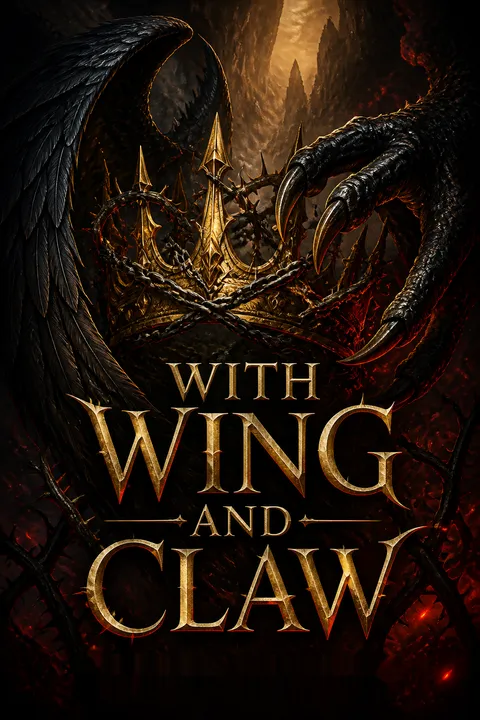


Plot Summary
The Crown in Ruins
After weeks in an Alliance prison, Thysandra is released by Agenor, a former ally now serving the rebellion, and brought back to the Crimson Court. The Mother is dead, the bone hall is wrecked, and human workers are pulling down the old regime’s decorations. Emelin, Agenor’s daughter and the new High Lady of the fae, announces that the empire will be divided, human slaves freed, and conquered islands returned to their former rulers.
Then she names Thysandra to govern the Crimson Court. Thysandra’s fellow prisoners stare as the appointment turns her from captive into ruler, even though many of them believe she helped bring about their defeat. She has inherited power, but no dependable loyalty and little time to decide what to do with it.
Thysandra’s appointment is less a reward than a forced confrontation with the identity she built around service. For centuries she measured her worth through the Mother’s approval, then discovered that approval was conditional and that the empire she defended had already fallen. Emelin’s reforms make the transfer of power concrete: Thysandra must rule a damaged court stripped of its old labor system and imperial reach. Her immediate numbness is not simple cowardice. It is the psychological aftermath of having her moral map erased while she is still expected to act as if she knows the way.
A Door Opens Again
Thysandra retreats to her locked rooms, where Naxi, a half-demon she has desired and mistrusted for more than a century, is waiting. Their old attraction resurfaces beneath anger: Thysandra accuses Naxi of using her, while Naxi insists that she wants to stay near her. When Naxi will not leave, Thysandra holds a dagger to her own throat, forcing the demon to go.
Alone, she bathes, sleeps, and wakes to the scale of the task ahead. The court has lost its human workforce, its food arrangements are uncertain, and a power vacuum invites violence. Thysandra decides that escape or self-destruction would only leave the island to collapse. She will take the title and try to rule well, though she trusts no one.
Thysandra’s threat against herself exposes how completely she has learned to make vulnerability into a weapon, even against the person she longs for. Her choice to rule is similarly constrained: she does not embrace power because she suddenly believes in the court, but because every alternative looks like surrendering its people to a worse outcome. The movement from bedroom refuge to public responsibility begins the novel’s central psychological shift. She can no longer rely on the Mother’s approval to tell her what she is worth, yet she has not learned to value herself apart from usefulness.
Forty Corpses Before Breakfast
The next morning, Nicanor, a calculating commander, reports that Naxi has killed dozens of fae, selecting veterans of the regiment that destroyed her homeland, Mirova.
Thysandra recognizes the connection and goes to face her in the ruined bone hall, where Naxi reveals that the Labyrinth beneath the castle is alive and has been killing intruders. Naxi wants to help Thysandra govern, but threatens further deaths if refused. Thysandra bargains with her: Naxi must not willingly harm her, and Thysandra must not deliberately sacrifice Naxi to the court.
The agreement leaves Naxi free to act, but gives Thysandra a reason to keep her close. Her first attempt at rule now depends on an alliance with a demon whose methods could provoke the very rebellion she fears.
The massacre makes Naxi’s grievance legible without making her violence harmless. Her targets connect the court’s present disorder to the old conquest of Mirova, while her casual threat shows how little ordinary political restraint means to her. Thysandra’s bargain is a distinctly courtly response: she does not ask for trust, but tries to make danger manageable through enforceable terms. That approach gives her a foothold, yet also mistakes a promise against deliberate harm for a substitute for emotional security. Each woman is trying to secure the other without admitting how much she wants more than an alliance.
A Court Without Servants
Thysandra appoints Nicanor Lord Protector for a year, securing military support through a bargain that promises him the office in exchange for loyalty. She then meets Inga, a half-fae former servant who demands legal rights, wages, and decent housing for the humans who cannot return to human islands.
Thysandra agrees to pursue the changes and turns to the archives for food records. The figures are grim: the court has only a few months of provisions, and its islands cannot feed everyone through winter.
Its senior archivists died in the war, leaving Gadyon, a limping education supervisor, to take charge. Thysandra must govern without a functioning administration, while choosing between costly trade and the tempting prospect of taking food by force.
This section makes reform material rather than rhetorical. Human rights mean protection from assault, wages, and housing; political independence means discovering that the court cannot feed itself. Thysandra is forced to see how the empire’s apparent abundance relied on coerced labor and tribute, not sound administration. Her alliance with Nicanor is also revealing: she can work with self-interest because its terms are visible, while Naxi’s apparent care unsettles her precisely because it cannot be priced so neatly. The court’s crisis tests whether Thysandra can distinguish practical compromise from reproducing the system that made the crisis possible.
The Mountain Wants Company
The Labyrinth begins enchanting fae and drawing them through its opened entrances. When a mother reports that her son has vanished, Naxi volunteers to investigate. Deep underground, she finds captives trapped in the stone, too frightened to approach the sentient mountain.
Instead of attacking it, she promises to visit every day if it releases them. The Labyrinth frees the group and guides Naxi out through a gate into Faewood, where she discovers bones and a torn wing marked as a traitor.
The remains suggest that the court’s own inhabitants are already carrying out reprisals. Naxi’s rescue wins Thysandra’s confidence in public, but her promise to the mountain creates a new obligation that may keep her tied to the court longer than either woman expects.
Naxi succeeds where force fails because she recognizes the Labyrinth as a being seeking company, not merely a trap to be defeated. This is an important counterpoint to the court’s habit of treating living beings as instruments, from human servants to the hounds in Faewood. Yet the rescue is not pure altruism: Naxi also wants to remain close to Thysandra, and she accepts a daily obligation to the mountain. Her solution therefore binds her through relationship rather than coercion. The torn wing in the forest widens the danger, showing that the Mother’s methods of punishment have survived her.
Traitor in the Map Room
A fae named Symeon attacks Thysandra in a map room and calls her a traitor like her father. Nicanor kills him before he can explain, then admits that rumors are spreading that Thysandra traded information to the Alliance for the throne. The accusation hits harder than the wound: she remembers her father being thrown to the hounds but cannot recall what he supposedly did.
Naxi notices the gaps in Thysandra’s memories and asks questions about both parents, unsettling the story Thysandra has accepted for centuries. When Thysandra returns to her rooms, Naxi shields them with living plants and comforts her. Their long-suppressed desire becomes physical, but Thysandra remains uncertain whether Naxi’s attention is affection, strategy, or both.
The attack converts political suspicion into a family wound. Thysandra’s fear is not only that the court will kill her, but that the accusation may confirm the identity the Mother imposed on her. Her missing memories complicate the reliability of that identity: trauma may explain some blankness, but Naxi suspects deliberate interference. The intimacy that follows is emotionally consequential because Thysandra has treated desire as another route to being used. Naxi offers protection and pleasure, yet her methods remain forceful and her motives difficult to read. Their closeness grows precisely where Thysandra’s capacity for trust is most impaired.
Silas Behind the Locked Door
A letter from Agenor helps Thysandra remember a childhood instruction from her father: find Silas on Ilithia. She flies to the abandoned island and discovers the Bargainer, his arms covered in old magical marks. Their bargain obliges each to answer three questions truthfully. Silas confirms that Thysandra’s father expected danger and planned to get her and her mother out of the court, but Thysandra never reached him.
He does not know what happened to her mother that night. He says the Mother watched Thysandra closely because of her magical talent, and that no single ruler can repair the Crimson Court’s deeper rot. Despite his hatred of returning, Silas agrees to go back and help Thysandra, bound by his promise to her parents.
Silas’s account gives Thysandra a first alternative to the Mother’s version of her childhood, but not yet a complete one. Her father’s planned escape suggests protection where she had been taught to see betrayal; her uncle’s questions also expose how little she chose to know. The bargain makes truth temporarily safer by compelling it, though Silas’s guardedness reminds her that even truth arrives inside relationships of power. His return is an act of care, but also an admission that structural harm cannot be corrected by replacing the person on the throne. Thysandra gains family help while inheriting a larger moral problem.
The Archive Mob
While Thysandra is away, fae loyalists attack the archives, believing she plans to evict them for the humans. She arrives to find Nicanor defending the doors and Naxi caught in the violence. Silas uses bargains owed to him to force the attackers to withdraw, while Nicanor helps Thysandra heal her wounds.
The captured assailant Lyron admits that Bereas spread the false claim, and names Iaris as his source; Nicanor reports that Iaris has been murdered. Lyron dismisses human lives as insignificant, confirming the cruelty beneath the court’s politics.
Thysandra realizes that even her allies may not be able to hold the court together. Rather than face another round of threats, she leaves for the Cobalt Court to ask Emelin and Creon what her appointment is supposed to mean.
The riot reveals that Thysandra’s challenge is not simply to suppress a few ambitious opponents. The false story succeeds because it turns a modest housing promise into a threat to fae privilege, and because the court is ready to believe the worst about her. Lyron’s contempt for mortal life gives the conflict an ethical center: neutrality would preserve the same hierarchy that endangered Inga’s community. Thysandra’s departure is both avoidance and a search for orientation. Her old skill at managing court politics has not prepared her to decide whether the court itself deserves preservation.
Creon Names the Real Duty
At the ruined Cobalt Court, Thysandra tells Emelin she intends to resign. Emelin refuses to treat the declaration as final, and Creon, once Thysandra’s bitter rival, invites her to eat with them. Their ordinary meal among alves and rubble disorients her more than a threat would. In private, Creon admits that the Mother encouraged him and Thysandra to blame each other for the attention she withheld.
He also recalls Thysandra once offering help when Emelin was in danger. Emelin chose Thysandra partly because of that small act. Creon explains that the appointment is an opportunity to do better, especially for humans and the wider archipelago. Thysandra recognizes that she cannot simply flee from harms she now understands.
Creon’s reappearance dismantles the rivalry that helped organize Thysandra’s life. The Mother’s favoritism was not merely a reward system; it engineered competition between people who might otherwise have recognized their shared exploitation. The simple meal models a different political culture, one where cooperation is not disguised as weakness. Most important, Creon reframes Thysandra’s appointment as a moral responsibility beyond fae prestige. Her choice to stay is not obedience to Emelin or a renewed loyalty to the empire. It begins to become her own decision, based on knowledge she cannot ethically unlearn.
A Home Worth Fighting For
Thysandra returns to find Naxi has been driven from Rustvale when frightened humans reject her offer to help. She finds the demon alone in Faewood and asks for her assistance, then explains that she intends to stop indulging the court’s demands. The next morning she visits the humans moved into the ivy wing. Their fear makes the history of her rule visible in their faces, while Inga speaks plainly about their needs.
Thysandra promises clothes, toiletries, and citizenship, despite Nicanor’s warning that open reform could provoke the army. Naxi becomes a political ally as well as a lover, though Thysandra still tries to treat her loyalty as a bargain. Together they begin preparing to challenge the court’s entrenched interests.
The humans’ fear is a crucial form of evidence: Thysandra can no longer define justice by her intentions or by the court’s customs. Her recognition of their terror turns reform from an abstract favor into an acknowledgment of what her government has done. Naxi’s rejection by the villagers mirrors Thysandra’s own expectation of abandonment, though the two respond differently: Naxi hides hurt beneath defiance, while Thysandra reaches for rules and bargains. Their partnership grows through shared work, but Thysandra has not yet stopped translating care into transactions. Her political awakening and emotional vulnerability advance together.
Names for Extradition
Bereas escalates the conflict by attacking a fishing ship, killing part of its crew and threatening the court’s food supply. Thysandra orders heightened defenses rather than immediately declaring another war.
The Alliance then answers her request for trade with an offer of grain at market prices, conditional on the extradition of fae accused of wartime crimes. Thysandra sees a way to feed the court without raiding other islands, but knows the army will resist surrendering its own.
She secretly arrests the listed suspects and confines them on Ilithia, where Silas once hid. For three days, the disappearances remain unexplained. Thysandra hopes to complete the negotiations before the court learns that its leaders may face consequences for their violence.
The food agreement forces Thysandra to choose between collective survival and the protection of powerful perpetrators. The Alliance’s condition is not vengeance against all fae, but accountability for individual acts, a distinction the old empire rarely made. Thysandra’s secrecy is understandable as a way to prevent immediate revolt, yet it also reproduces the court’s political habits of concealment and manipulation. The ship attack exposes how fragile peace is when resources remain in the hands of armed factions. Her careful plan may be ethically sound, but its success depends on controlling information in a court built on rumor.
The Hunter’s Moon Poison
At the Hunter’s Moon feast, Orthea publicly reveals that Thysandra has secretly detained more than a hundred fae for transfer to the Alliance. The hall erupts against the High Lady. Before the crowd can act, Naxi uses demon magic to force one attacker into a fatal crisis, buying Thysandra a moment to continue the feast. Someone has also poisoned Thysandra’s wine.
Nicanor recognizes the symptoms and carries her to his laboratory, where he gives her an antidote in time. Two hours later, Inga and Silas arrive with a letter from Gadyon. He confesses that he misplaced notes containing Thysandra’s plans and has fled, believing she will punish him. The poisoning and the leak leave Thysandra unsure whom she can safely trust.
The feast makes secrecy collapse in public, where Thysandra cannot control how the story is framed. Orthea’s toast turns a complex choice about accountability into a charge of treason, while the poison makes the danger bodily and immediate. Nicanor’s medical knowledge initially appears to confirm his value as an ally, but the letter from Gadyon introduces a second, more intimate failure: even a well-meaning subordinate may expect cruelty from the ruler he serves. The episode links political violence with learned fear. Thysandra’s authority depends not only on surviving attacks, but on changing what people believe she will do to them.
The Gallery’s Broken Glass
Thysandra meets Alliance representatives in the statue gallery to finalize grain trade and the transfer of prisoners. As they begin discussing terms, Bereas’s followers smash through the windows and attack. The representatives escape by fading away, leaving Thysandra and Naxi surrounded.
Thysandra finds Naxi injured by glass and heals her feet, then pursues Bereas when the rebel tries to flee. She stops him by magically restoring a shattered window in his path; the impact leaves him fatally wounded.
Before dying, Bereas implies that Thysandra has trusted the wrong person. She assumes he means Naxi, accuses the demon of leaking her plans, and refuses Naxi’s denial. Their bargain ends when Naxi leaves the court, while Thysandra is left with a victory that feels like another betrayal.
The failed summit turns Thysandra’s attempt at diplomacy into a private catastrophe. The attack demonstrates that the court’s opposition is organized enough to locate a secret meeting, while Bereas’s final insinuation exploits Thysandra’s oldest defense: expecting abandonment before it can surprise her. She chooses suspicion over the evidence of Naxi’s care, mistaking fear for prudence. Their separation is therefore not just a romantic rupture; it removes the ally who could read emotional motives that Thysandra cannot see. The moment also echoes the book’s recurring violence against trust: an ambiguous warning can do damage even when it is not the truth.
The Body in Faewood
After leaving the gallery, Naxi walks through the Labyrinth and into Faewood, intent on leaving the court. There she encounters Silas and Inga searching for the source of the leaks. They explain why they never believed Gadyon simply ran away: his habits made the confession in his letter suspicious. Together they find his half-eaten body hidden among the trees.
Naxi now understands that someone killed him and used his disappearance to conceal a larger scheme. She could continue toward the coast and escape, but the knowledge that Thysandra remains in danger changes her course. She runs back toward the court through the forest, scraping her feet and legs, no longer able to pretend that Thysandra’s fate is none of her concern.
Naxi’s return is a decisive act because it contradicts the identity she has been assigned and sometimes claims for herself: the solitary demon who leaves when a relationship stops serving her. The corpse in Faewood makes the political danger undeniable, but the motive for returning is personal as well as strategic. She does not need to feel human empathy in order to care about Thysandra’s survival. The scene also reframes Gadyon’s confession as part of a larger pattern of manufactured blame. Naxi’s choice is not proof that she has become harmless; it is proof that attachment can alter what she is willing to risk.
Nicanor’s Crown Game
Nicanor leads Thysandra to the training fields, where his soldiers and former rebels have joined forces. He reveals that he engineered the crises to make her abandon reform and choose war: he encouraged Symeon’s attack, fed false housing rumors through Iaris, arranged the fishing-ship assault with Bereas, poisoned Thysandra with a touch-activated toxin, and killed Gadyon to provide a scapegoat.
He wants to use the detained fae to poison Alliance leaders and restore the empire. When Thysandra refuses, Nicanor says he will kill Naxi and remove the humans. He offers Thysandra survival if she joins him. She rejects the bargain, calls him an enemy, and breaks the walkway beneath them, escaping into the castle before his army can seize her.
Nicanor’s betrayal reveals that Thysandra’s apparent failures were not simply the result of poor judgment. He manipulated her vulnerabilities, staged dangers, and offered protection from crises he had helped create. His strategy is paternalistic in its own way: he believes he can force her toward what he considers the sensible future. Thysandra’s refusal marks a break with the survival logic that has governed her life. She chooses uncertain resistance over a safe place as someone else’s instrument. Her flight through the castle is not a retreat from responsibility, but a tactical effort to stay alive long enough to oppose him.
The Labyrinth’s White Fire
As Thysandra evades Nicanor’s forces through hidden passages, archivists and humans distract the soldiers with a barrage of rotten eggs. Orthea, Rhias, and other court figures join the resistance, while Silas’s bargains help turn the fight.
The retreating army drives Thysandra’s allies toward the bone hall, where Naxi has returned and is fighting beside the Labyrinth. Its lights dim as it prepares to unleash its power. The resulting blast fills the hall with white force, destroying Nicanor and most of his followers while severely injuring Thysandra and Naxi.
Both survive, though Thysandra remains unconscious for five days. The decisive change is not simply that the usurper is gone: people who once stood outside Thysandra’s political circle have chosen to risk themselves against the court’s old violence.
The climax overturns Thysandra’s assumption that only the military can determine who rules. Archivists, humans, and political rivals act because they have a stake in a different future, not because they have been forced into loyalty. The Labyrinth’s power, introduced first as an unpredictable threat, becomes an ally through Naxi’s relationship with it. Its blast is catastrophic, but it also ends the coup that would have converted the court into an instrument of renewed conquest. Thysandra’s survival depends on a network she did not command into existence. The novel makes legitimacy relational: people defend a ruler when her choices have begun to matter to them.
A Mother’s Last Flight
While Thysandra recovers, Emelin restores a binding-locked memory. As a child, Thysandra fled across the sea at her mother’s urging while assassins pursued them. Her mother stayed behind and was killed, allowing Thysandra to reach safety.
The documents also show that her father refused the Mother’s demand that he abandon his family and father children for her bloodline. The Mother turned his refusal into a charge of treason, then erased Thysandra’s memory of her mother’s death.
After learning the truth, Thysandra seeks Naxi at Creon’s pavilion and apologizes for accusing her. Naxi admits she cannot experience love as humans do, but says she wants Thysandra to feel cared for and safe. Thysandra accepts that love need not take the form she expected.
The recovered memory changes the meaning of the book’s central accusation. Thysandra’s father was branded a traitor not for betraying his family or his values, but for refusing to serve the Mother’s reproductive ambition. His daughter inherited the label while being denied the memory that could have made its injustice clear. The Mother’s manipulation worked by controlling both public history and private memory. Thysandra’s reconciliation with Naxi follows a similar movement toward truth: she apologizes without demanding a guarantee in return. The novel’s account of love is not a claim that Naxi secretly feels as other people do, but an insistence that care can be recognized through repeated actions.
Epilogue
Months later, representatives of the magical peoples and the three fae courts gather in the restored Labyrinth Hall to sign a peace treaty. The agreement recognizes the sovereignty of individual islands, provides for investigations into wartime crimes, and establishes the terms of trade and cooperation.
Naxi signs several copies alongside the rulers and negotiators, no longer hidden from the court. After the celebration, Thysandra reveals that Emelin has altered the protections on her bedroom door so Naxi can open it with her nymph magic. For Naxi, who has spent a lifetime treated as a monster at other people’s thresholds, the changed lock is a practical welcome home.
The treaty makes peace an administrative practice, not a mood: sovereignty, accountability, and trade must be written down and witnessed. Naxi’s signature is deliberately included, turning a feared outsider into a participant in the settlement. The changed bedroom lock offers a smaller, more intimate version of the same political shift. Thysandra does not merely invite Naxi inside; she alters the structure that kept her out. The ending links belonging to access and consent, while its public treaty and private doorway show that repair has to happen at both scales. Neither removes the past, but both make a different future physically possible.
Analysis
With Wing and Claw makes political reform inseparable from the private work of revising memory. Thysandra has learned to survive by reading power accurately, but the Mother has also taught her to mistake usefulness for love and obedience for loyalty. Those habits do not vanish when the throne changes hands. They recur in her dealings with Naxi, whose care she repeatedly interprets as a bargain, and in her willingness to trust Nicanor because his ambitions are legible. The story tests whether suspicion can protect a person without also making intimacy impossible.
The court’s transformation is measured through material choices: whether humans can refuse work, whether food arrives without conquest, whether a defendant is answerable for individual crimes, and whether the Labyrinth is treated as a being rather than a weapon. These are not easy reforms. Each threatens people who benefited from the old order, and Thysandra cannot secure them through authority alone. Her survival ultimately depends on people who were once outside her idea of political importance, including clerks, humans, and former enemies.
The family revelations sharpen the meaning of treason. The Mother uses that word to punish refusal and to overwrite a child’s understanding of her parents. Thysandra’s task is therefore not to become innocent of the past, but to decide which inherited loyalties deserve to continue. Naxi’s unconventional capacity for love extends this argument. The novel does not require her to experience emotion in a conventional way before her care counts. Instead, it asks whether love can be judged by repeated choices: returning, protecting, feeding, making room. Peace, belonging, and intimacy all emerge as practices that must be renewed rather than feelings that can simply be declared.
Review Summary
People Also Read







Characters
Thysandra
Reluctant court regentA veteran fae commander shaped by centuries of service to the Mother, Thysandra understands court politics as a contest in which usefulness is safer than trust. Her sharp judgment and defensive habits have helped her survive, but they have also kept her from questioning the story told about her parents or the suffering hidden beneath the court’s wealth. She is ambitious, proud, and more vulnerable than she allows anyone to see. Her central struggle is to discover what she believes when the authority that defined her life collapses. Her ties to Naxi, the humans, and the ruined court continually challenge her assumption that care must be earned through obedience or secured by a bargain.
Naxi
Sharp-toothed half-demonA half-demon and half-nymph, Naxi is playful, perceptive, and frighteningly capable of violence. Her demon senses register other people’s emotions, but that does not grant her the empathy they assume she lacks, nor does it make her immune to loneliness. She often disguises vulnerability with teasing, threats, and theatrical confidence. Her complicated history with Thysandra combines attraction, anger, and a wish to be wanted without being treated as a weapon. Naxi’s relationship to plants and the Labyrinth gives her forms of connection that do not depend on conventional social rules. Her difficulty is not simply learning to care, but deciding what care means when she experiences the world differently from those around her.
Nicanor
Ambitious military strategistA commander with a gift for logistics, poisons, and reading court incentives, Nicanor is an old associate of Thysandra’s and an expert at making self-interest sound reasonable. He values position and control, but he is not a simple brute; his calm efficiency makes him persuasive and dangerous. Thysandra understands that he can be useful because he states what he wants. His polished manner masks an appetite for influence that makes every alliance with him a calculation.
Silas
Marked bargain-makerKnown as the Bargainer, Silas is a powerful fae whose skin bears the marks of countless magical agreements. He is guarded, resourceful, and slow to trust, with a deep knowledge of the court’s history and its systems of obligation. His decisions are shaped by old losses and by promises he has carried for generations. Silas treats bargains as tools, but his conduct also reveals a capacity for loyalty that cannot be reduced to the terms he negotiates.
Emelin
Unbound reforming mageA young half-fae mage who has become a central figure in the Alliance, Emelin combines a disarming manner with formidable power and political nerve. She rejects the old empire’s assumptions about who may rule and what conquered peoples are owed. Her decisions can be blunt and provocative, but she is attentive to consequences and willing to build rather than simply destroy. Her relationship with her father, Agenor, and her partner, Creon, gives her a personal center amid the work of remaking the archipelago.
Creon
Disgraced princeThe Mother’s son and a powerful fae mage, Creon has long been seen by Thysandra as a rival who received the affection and recognition she craved. His history is marked by manipulation, brutal training, and a complicated relationship to the court that raised him. With Emelin, he is trying to make a home in the ruins of the Cobalt Court. His willingness to speak honestly about their shared past gives Thysandra a perspective she has never allowed herself to consider.
Inga
Human-rights advocateA half-fae woman raised within the human community at Rustvale, Inga is direct, resilient, and unwilling to make her needs palatable for fae comfort. She demands citizenship, legal protection, wages, and decent housing for the people the old court treated as property. Her distrust of Thysandra is grounded in experience rather than personal spite. Inga’s presence forces political discussions to include the people who have usually been omitted from them.
Agenor
Rebel-born protectorA former Lord Protector who joined the Alliance, Agenor is a capable leader, father to Emelin, and one of the few people Thysandra remembers trusting. He is restrained, politically experienced, and protective without being sentimental about the danger his choices create. His long knowledge of the Crimson Court makes him a useful source of counsel, though he does not pretend that its problems can be solved quickly.
Tared
Alf alliance leaderAn alf leader with a long memory of the Mother’s conquest, Tared is practical, observant, and often dryly humorous. He can act as messenger and negotiator, but his civility does not erase the history between him and Thysandra. His dealings with her test whether diplomatic cooperation can survive personal grievances and unequal power.
Gadyon
Archivist with a conscienceA limping fae clerk who rises into the archives’ senior role after the war, Gadyon is thoughtful, conscientious, and less practiced in political maneuvering than the commanders around him. He has quietly helped the human workers and takes administrative accuracy seriously. His earnestness makes him valuable to Thysandra, while also exposing how easily good intentions can be endangered in a court where information itself is a weapon.
Orthea
Courtly political operatorThe Mother’s former Master of Ceremony, Orthea knows how to read a room and redirect its loyalties. She and Thysandra once shared a friendship that faded as the court’s favor shifted. Elegant, socially agile, and attentive to her own position, Orthea can turn a festival or a toast into a political act. Her presence reminds Thysandra that old intimacy does not necessarily survive a change in power.
Bereas
Champion with a grudgeA celebrated wing-racer and soldier, Bereas is brash, physically imposing, and accustomed to treating confidence as a substitute for caution. He voices the desire among hard-line fae to reclaim the empire and resist Thysandra’s reforms. His popularity with fighters gives his opinions political weight beyond his own judgment.
Allie
Human bridge-builderA human close to Agenor and Emelin, Allie moves between communities that the old empire kept apart. Her family connections make her a practical link between human residents and the new political order. She is direct and capable of affection, but does not forget the cost of the court’s past.
Lyn
Careful scholarA book-loving ally associated with Tared, Lyn is careful, perceptive, and committed to learning. She often serves as a counterweight to the more impulsive personalities around her. Her affection for Naxi is sincere, though her concern about Naxi’s violence can make their friendship difficult.
Delwin
Human peace negotiatorA human representative of the White City, Delwin is practical and candid, with a finite lifespan that lends urgency to political decisions others might postpone indefinitely. He approaches negotiations through concrete needs, including food prices and rebuilding damaged communities. His presence unsettles fae assumptions that diplomacy belongs only to the immortal.
Nenkhet
Vampire envoyA scarred vampire and veteran of the Alliance, Nenkhet is proud, disciplined, and unwilling to conceal the injuries and humiliations inflicted by the old empire. She brings the memory of those acts into negotiations, ensuring that peace does not depend on pretending the past was harmless.
Helenka
Nymph queenOne of the nymph queens involved in the Alliance, Helenka is direct and politically alert. She presses Thysandra to clarify both her intentions and the terms of cooperation, refusing to mistake a promising offer for a trustworthy settlement. Her bluntness gives the negotiations needed friction.
Yndrusillitha
Phoenix elderAn elder of Phurys, Yndrusillitha carries the authority of a long-lived people and speaks with formal precision. Her skepticism toward Thysandra reflects the history of the empire’s violence, while her participation in the talks shows that caution need not rule out diplomacy.
Rhias
Harbour masterA powerful harbour master whose influence over shipping and the fishing fleet makes him a consequential local figure. Rhias is socially confident and accustomed to command, reflecting the casual hierarchy of the old court.
Calaria
Young court diplomatA young fae who brings Thysandra information from within Bereas’s circle. Calaria is observant and politically useful, with ties to people on opposing sides of the conflict.
Symeon
Aggrieved court soldierA young fae soldier whose resentment makes him vulnerable to the court’s spreading accusations. His attack on Thysandra demonstrates how political rumors can turn into immediate physical danger.
Plot Devices
Color magic
Magic with visible costsFae magic is drawn from colors, with red used for destruction and blue for healing. Thysandra often draws it from her clothes, wings, or nearby surfaces, so clothing becomes both a political display and a reserve of practical power. In battle, she must judge whether to spend her remaining color on attack, healing, or escape. This makes her magic legible and tactical rather than limitless. It also supports the book’s visual language: a damaged dress can register exhaustion, while color itself becomes a resource she must manage under pressure.
Magical bargains
Promises become constraintsBargains bind people through magical agreements whose exact wording matters. Thysandra uses them to secure Naxi’s promise not to harm her and Nicanor’s initial loyalty as Lord Protector. Silas’s many marks show how a bargain can accumulate power and obligations across a lifetime. The agreements offer a substitute for trust, but not a perfect one: a promise may be narrower than its maker’s apparent meaning, and an agreement can have an end condition. The device therefore turns political language into bodily risk, rewarding precision while exposing how little a contract can guarantee about affection or intent.
The Labyrinth
A living force beneath courtThe sentient Labyrinth lies beneath the Crimson Court and can lure visitors, trap them in stone, reshape its passages, and guide people toward exits. At first it appears to be an unpredictable hazard left by the Mother’s rule. Naxi recognizes that it responds to attention and companionship, and her promise to visit changes how it treats its captives. Its later intervention becomes decisive in the struggle over the court. The Labyrinth embodies a form of power that cannot be governed through command alone: it must be approached as a living presence with its own emotional needs.
The Mother’s bindings
Power and memory withheldThe Mother’s magical bindings restrict the use of magic against her and can also lock away memories. Thysandra once helped catalogue the objects that enforced the bindings, believing the work proved the Mother’s trust. The bindings therefore operate both politically and psychologically: they preserve the regime’s control while concealing the history that might expose its crimes. When one binding is removed, Thysandra regains a memory of her parents’ flight and learns why her father was called a traitor. The device links control of magic to control of history and personal identity.
Faewood and the hounds
Punishment made into spectacleThe forest below the Crimson Court contains the Mother’s hounds and the remains of those condemned by the old regime. The court’s festivals deliberately send hunters after the creatures, which have been taught to fear and hate people through repeated attacks. For Thysandra, the forest is inseparable from her father’s execution and from the terror that shaped her childhood. The hounds make the Mother’s violence public and recreational, while their treatment also reveals how a ruler can manufacture an enemy by provoking it. Faewood becomes a landscape of memory, political warning, and unresolved harm.
Fae Isles Series


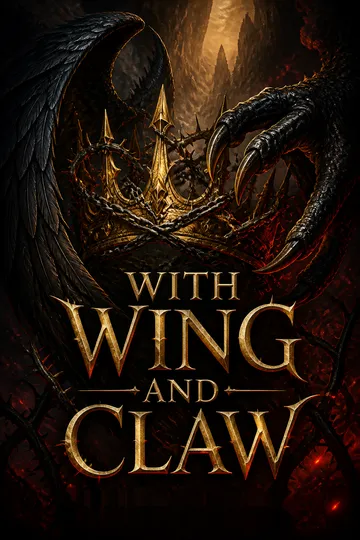
About the Author
Other books by Lisette Marshall






Download PDF
Download EPUB
.epub digital book format is ideal for reading ebooks on phones, tablets, and e-readers.








