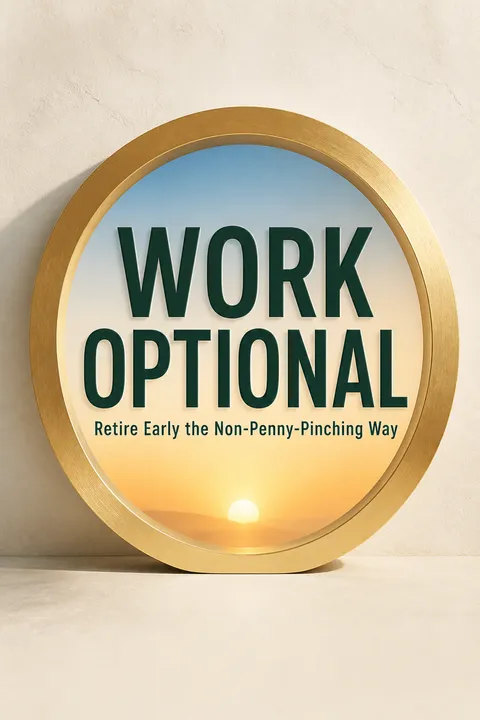


Key Takeaways
Buy back control of your time, not an escape from contribution.
Freedom is the real prize. Tanja Hester and her husband, Mark, had meaningful, successful careers, yet their work left them exhausted and with too little time for the mountains, community service, and each other. After six years of planning, they left their jobs at 38 and 41. Their aim was not to become idle, but to choose how work fit into life.
Retirement has many shapes. A work-optional life means having enough financial control to choose whether, when, and how to work. It can mean permanent financial independence, part-time or seasonal work, self-employment with a safety net, or a career break. The traditional retirement age of 65 is a historical convention, not a rule that defines when freedom is allowed.
What's striking is the shift from asking whether work is good or bad to asking who controls its terms. That distinction makes room for people who find meaning in their jobs and people who want a different balance. It also surfaces an important limit: financial independence depends on income, expenses, health, and opportunity, not mindset alone. The book's invitation is strongest when treated as a direction to design toward, rather than a promise that every household can leave work on the same schedule.
Name the life you want before calculating the number it costs.
Start with the destination. Before making a savings target, Hester asks readers to picture ordinary days, relationships, hobbies, travel, home, community, and what they hope their lives contribute. Grouping answers into themes can reveal that the dream is not simply “more free time,” but, for example, time for family, outdoor life, creativity, or service. The themes guide both spending decisions and the kind of work-optional life to pursue.
Make it a shared plan. Couples should develop a vision together before one partner presents a finished financial plan. Their aims may differ, and children may change the timing or shape of the goal. A couple might choose a slower savings path to have more time with young children, or alternate career breaks. Hester warns that leaving work without a picture of what comes next can lead to boredom and a return to full-time employment.
This order guards against a common planning error: optimizing a measurable target before deciding whether it serves a worthwhile life. In decision science, goals become more durable when they connect to personally valued outcomes, rather than functioning as numbers detached from daily experience. The exercise also makes disagreement useful. Different visions can be discussed while change is still possible, instead of surfacing only after a couple shares unstructured time. A vision should remain revisable, since health, family needs, and interests can change.
Price purchases in hours of life, then protect spending that matters.
Money stores work time. Hester reframes each dollar as time and energy already traded for a paycheck, and as a possible way to buy future freedom. A purchase that costs three hours of earnings takes those hours from life twice: once to earn the money, and again if the spending delays financial independence. This lens makes a small recurring cost easier to evaluate. At a 4% withdrawal assumption, $10 in monthly spending can require about $3,000 more in invested savings.
Separate values from drift. Lifestyle inflation is the gradual rise in spending as income grows, often through purchases that feel normal or necessary. Hedonic adaptation describes how people quickly grow accustomed to new comforts, so the happiness boost fades while the cost remains. Hester’s own restaurant spending crept upward unnoticed. A money mission statement records what deserves spending, what can be cheaper, and what to avoid, including personal spending triggers.
The time-price lens makes opportunity cost emotionally legible: money is not merely a balance but a choice between present consumption and future autonomy. It also helps explain why recurring expenses matter more than their individual price tags suggest. Yet a purchase's value cannot be reduced to its hours-equivalent. A costly meal may sustain connection or pleasure, while a low-cost purchase may be wasteful. The useful question is not whether spending is virtuous, but whether it reliably serves a chosen priority.
Automate saving before temptation can claim the paycheck.
Build around real behavior. Hester struggled to save whatever remained at month’s end, so she arranged for part of each paycheck to go directly into savings. Because she did not see that money in her checking account, she adapted to spending less without relying on a fresh burst of discipline. She and Mark expanded the system to retirement contributions and automatic investments. They called their flexible approach an “unbudget”: constrain the amount available to spend instead of assigning every dollar a strict category.
Make progress routine. Automatic transfers can build an emergency fund, pay debt above the minimum, and invest on a regular schedule. When income rises, increasing contributions before spending expands can accelerate progress. The book also recommends tracking several months of spending to find a comfortable level: one that supports life now while leaving meaningful room for saving. A system that a person actually follows beats a theoretically perfect plan that collapses under temptation.
Automation is a practical answer to present bias, the tendency to give immediate rewards more weight than future ones. By moving saving earlier in the sequence, it changes the default rather than asking a person to win the same internal debate every payday. The approach works best with visibility and periodic review: an automatic transfer can also create overdrafts or excessive deprivation if income fluctuates. The goal is not to hide financial reality, but to make the preferred choice easy and then check that it remains sustainable.
Let low-fee, diversified investments compound; don't make prediction your second job.
Choose broad participation. Hester presents several ways to generate investment income, including market investments, rental property, and businesses. For readers seeking a simple market strategy, she favors diversified index funds, which track a broad market rather than trying to select winning stocks. Their low fees matter because costs compound against the investor. In one example, an investor contributing regularly for 40 years and paying a 1% annual management fee loses about $593,000 compared with the same hypothetical portfolio without that fee.
Manage risk instead of denying it. The book cites historical US stock-market returns of about 9 to 10% before inflation, while emphasizing that returns vary and past performance is no guarantee. Cash protects money needed soon, but can lose purchasing power to inflation; stocks offer growth potential but fluctuate. Hester argues for simple, regular investing, scrutiny of fees, and a cash reserve for near-term needs rather than market timing or frequent trading.
The case for low-cost diversification is powerful because it reduces both financial drag and the behavioral temptation to react to every market swing. In practical terms, a simple portfolio can preserve attention for the life the money is meant to support. The book's historical averages, however, are not forecasts, and market experience differs across countries, periods, and asset mixes. Simplicity should not mean ignoring taxes, liquidity needs, or personal risk tolerance. A sound investment plan is understandable, but it still needs to fit the investor's actual circumstances.
Build your savings target around spending, retirement length, and bad market timing.
Estimate the cost of freedom. A safe withdrawal rate is the share of an investment portfolio withdrawn in the first year of retirement, with later withdrawals adjusted for inflation. Hester uses 3 to 4% as a planning range: roughly 25 to 33 times annual spending for a portfolio-funded retirement. The familiar Trinity study tested historical portfolios over 15 to 30 years. Early retirees may need money to last 40 years or longer, so the book encourages more caution than a traditional retirement calculation might.
Plan for an unlucky start. Sequence of returns risk is the danger that poor market returns early in retirement, when withdrawals are already occurring, shrink a portfolio enough to impair its recovery. The book suggests considering a lower withdrawal rate, flexible spending, and a cash buffer. It also distinguishes a two-phase plan, with separate funds for early and traditional retirement, from using one pool of assets. A career intermission needs less: funds for the break, a buffer, and retirement savings still on track.
This framework makes the savings target responsive to both spending and time horizon, rather than treating a single “retirement number” as universal. Sequence risk also reveals why the order of returns matters when withdrawals begin, even if long-run average returns look acceptable. Historical backtests remain limited evidence: the future can differ from the periods modeled, and a lower withdrawal rate trades years of work for a larger cushion. The framework is most useful when paired with flexibility, such as reducing discretionary spending in a downturn.
Cut housing and transport first, then direct every raise toward freedom.
Target the large costs. Hester rejects the idea that reaching financial independence requires constant couponing or joyless deprivation. For many households, housing and transportation are larger opportunities than small daily purchases. A modest home can free substantial cash, while keeping a reliable car longer, buying used, or living where transit works can reduce transportation costs. Hester and Mark chose a home below what lenders said they could afford, then paid it off early; they saw the resulting low expenses as both a savings advantage and a source of security.
Increase the other side. Spending can only fall so far, but income can rise through negotiating pay, changing careers, taking a suitable side job, or pursuing self-employment. One example in the book is a travel agent who retrained as a nurse and more than doubled her earnings. The key is to direct raises and windfalls toward savings rather than letting expenses rise alongside them. Travel hacking can reduce trip costs, but only for people who pay credit cards in full.
The emphasis on large recurring costs is an efficiency principle: a single housing or commute decision can outweigh years of minor austerity. The income side matters just as much, since cutting costs has a floor while earnings may have room to grow. Still, location, caregiving, disability, and job markets constrain these choices; moving or retraining is not equally available to everyone. The book's strongest practical advice is therefore selective: examine the biggest costs, then choose changes whose benefits exceed their personal and social costs.
Treat healthcare and fallback plans as core retirement costs, not footnotes.
Budget for health and shelter. The book stresses continuous health coverage, especially for people leaving employer-sponsored insurance before Medicare eligibility at 65. ACA exchange plans create an option, but premiums, provider networks, prescriptions, deductibles, and maximum out-of-pocket costs all matter. Medicare also leaves substantial expenses uncovered. Housing choices deserve similar long-range thinking: a tiny home or full-time travel may suit one phase of life, but later illness or limited mobility can require an accessible place to live.
Prepare for bad turns. Hester recommends diversification, adequate insurance, a bare-bones spending plan, and two to three years of expenses in cash near retirement. Other possible reserves include home equity, a rental property that could be sold, a marketable skill, or accessible Roth contributions. These are not reasons to assume disaster; they are ways to avoid relying on a single rescue plan, such as finding a job during a recession.
This emphasis expands retirement planning beyond investment balances. Healthcare affects both the budget and the willingness to seek treatment, while accessible housing shapes whether a person can remain independent as needs change. The broader lesson is resilience through options: cash, insurance, flexible spending, and employable skills address different kinds of shocks. Specific insurance rules and public programs change, especially in the United States, so the book's 2019 details should be treated as a planning map, not current policy guidance.
Retirement succeeds when free time gains rhythm, relationships, and purpose.
Expect an adjustment. Leaving work removes stress, but it can also remove structure, identity, and a daily community. Hester describes needing time to rest and adapt before her new life felt real. During that transition, former workers may feel grief alongside relief. If unstructured days become aimless, routines, classes, regular activities, or modest goals can provide helpful scaffolding without recreating a full-time job.
Build a life that matters. Hester and Mark value outdoor activity, creative projects, volunteering, and time together. The book recommends caring for physical health, continuing to learn, and actively cultivating friendships beyond former colleagues. Its central test is not whether retirement looks busy to other people, but whether daily life offers connection, contribution, and interest. Purpose can be local and ordinary: helping a neighbor, joining a community, or developing a skill can make free time feel consequential.
Freedom supplies autonomy, but well-being also depends on competence and connection. That is a useful distinction from the assumption that removing obligations automatically produces fulfillment. A chosen routine can support those needs without turning leisure into a productivity contest. The caution is against treating purpose as a new performance standard: people differ in how much structure, solitude, and activity suit them. The right measure is whether a life feels sustaining and connected to its inhabitant, not whether it resembles an impressive retirement story.
Analysis
Work Optional combines personal narrative, life-design exercises, and a practical financial roadmap. Its defining move is to make the life plan precede the money plan. That order challenges a common personal-finance instinct to optimize savings first and ask what the savings are for later. Hester's account of career success paired with exhaustion gives the argument a human center, while the examples of parents, single people, career breakers, and different income levels widen the range of imaginable paths.
The book is also unusually behavioral for a retirement guide. It recognizes that lifestyle inflation, impulse spending, and weak savings habits are not solved simply by knowing arithmetic. Its response is to connect spending to personal priorities and build systems, especially automated saving, that reduce reliance on willpower. The financial framework then translates future spending into a savings target, while acknowledging the importance of market risk, health costs, housing, taxes, and relationship decisions.
Its most important limitation is structural. The book insists that many kinds of people can pursue work-optional lives, but the speed and feasibility depend heavily on income, debt, health, family obligations, housing markets, and access to benefits. A longer timeline is not a personal failure, but readers facing low wages or unstable work may find that behavior changes alone cannot close the gap. The book's US-specific coverage and investment rules also reflect its 2019 publication date and require current verification.
A second limitation lies in the uncertainty of long-range investment assumptions. Withdrawal rates and historical market studies help organize decisions, but they cannot guarantee a 40-year outcome. Hester's emphasis on conservative assumptions, backup plans, and flexible spending partly addresses this uncertainty. The broadest value of the book is therefore not a promised early exit date. It is the disciplined question it teaches readers to ask: how can money create more control over time, while preserving a life worth living during the saving years and after paid work becomes optional?
Review Summary
Work Optional receives mixed reviews, with an average rating of 3.90 out of 5. Positive reviews praise its comprehensive guidance on early retirement planning, practical advice, and thought-provoking exercises. Critics find it basic and US-centric, offering little new information for those familiar with personal finance. Some appreciate the author's honesty about privilege and emphasis on finding purpose outside work. The book is recommended for beginners in financial independence but may not provide much value for experienced readers in the FIRE community.
People Also Read






Glossary
Work-optional life
Choice over paid workA life in which financial resources make paid work a choice rather than a necessity. It may mean permanent retirement from paid employment, reduced or seasonal work, self-employment with a financial cushion, or a temporary career break. The central feature is control over work's role, not a requirement to stop contributing or earning.
Magic money
Investment-supported incomeHester's informal name for income generated by invested assets rather than ongoing labor. It can come from investment growth and withdrawals, dividends, rental profits, or a business that requires little continuing effort. The phrase is metaphorical: returns are uncertain, and investments can lose value or fail to produce enough income.
Money mission statement
Values-based spending guideA short written statement connecting money decisions to a person's desired life. It identifies what deserves spending, what should be purchased only as economically as possible, and what spending or triggers to avoid. Its purpose is to simplify repeated choices and keep saving connected to meaningful goals rather than wealth accumulation for its own sake.
Unbudget
A spending limit systemHester and her husband use this term for constraining the amount available to spend rather than assigning every dollar to a detailed budget category. Saving and investing are automated first, leaving a defined amount in the spending account. The approach is designed for people who find traditional line-item budgeting difficult, while still requiring periodic tracking and review.
Safe withdrawal rate
Planned portfolio withdrawal percentageThe percentage of an investment portfolio withdrawn in the first year of retirement, with subsequent withdrawals commonly adjusted for inflation. The book discusses 3 to 4% as a planning range and links it to savings targets of roughly 25 to 33 times annual spending. It is a historical guideline, not a guarantee that funds will last.
Sequence of returns risk
Early losses during withdrawalsThe risk that weak investment returns early in retirement combine with ongoing withdrawals to shrink a portfolio before it can recover. Selling assets after they fall can lock in losses and leave fewer assets to participate in a rebound. The risk is especially relevant when retirement lasts a long time and withdrawals cannot easily be paused.
Two-phase retirement
Separate early and later fundsA plan that treats early retirement and traditional retirement as distinct financial periods, often using separate pools of assets. Accessible investments or income sources support the early years, while tax-advantaged retirement accounts and later benefits are reserved for older age. The approach can provide psychological security, although it may require saving more or working longer.
Substantially equal periodic payments
Early retirement-account withdrawalsA method, described in the book under IRS Rule 72T, for taking calculated distributions from certain tax-advantaged retirement accounts before age 59½ without the usual early-withdrawal penalty. Payments must follow prescribed calculations and continue for a required period. Because the rules are technical and consequential, the book advises consulting a qualified tax professional before using this strategy.
Trinity study
Historical withdrawal-rate analysisA 1998 study examining whether portfolios of stocks and bonds could support inflation-adjusted withdrawals over retirement periods of 15 to 30 years. It helped popularize the 3 to 4% safe withdrawal guideline. The study uses historical market data and does not establish that a particular withdrawal rate will succeed for every investor or for retirements much longer than those modeled.
CAPE median
Valuation-based withdrawal signalA comparison point based on the cyclically adjusted price-to-earnings ratio, a measure that relates stock prices to a longer-term average of corporate earnings. The book describes using the CAPE median to help choose whether to withdraw from stocks or bonds: draw from the asset class that is relatively stronger, rather than selling a fixed proportion regardless of market conditions.
FAQ
What's Work Optional: Retire Early the Non-Penny-Pinching Way about?
- Focus on Financial Independence: The book by Tanja Hester emphasizes creating a life where work is a choice, not a necessity, guiding readers toward financial independence and early retirement.
- Three-Part Structure: It is divided into envisioning a work-optional life, creating a financial plan, and thriving in that life, offering actionable steps and insights.
- Personal Journey: Hester shares her and her husband's journey to early retirement, providing both inspiration and practical guidance for readers.
Why should I read Work Optional: Retire Early the Non-Penny-Pinching Way?
- Empowerment Through Knowledge: The book empowers readers to take control of their financial futures and redefine their relationship with work.
- Practical Advice: It offers practical strategies for saving, investing, and planning for a work-optional life, accessible for readers at any financial stage.
- Real-Life Examples: Includes stories from individuals and families who have achieved financial independence, illustrating that a work-optional life is attainable.
What are the key takeaways of Work Optional: Retire Early the Non-Penny-Pinching Way?
- Define Your Work-Optional Life: Encourages readers to envision their ideal life without work constraints, involving introspection and identifying personal values.
- Financial Planning is Essential: A solid financial plan is crucial, with steps for budgeting, saving, and investing to ensure financial security.
- Mindset Shift: Emphasizes changing one’s mindset about money and work, viewing money as a tool for freedom rather than stress.
What are the best quotes from Work Optional: Retire Early the Non-Penny-Pinching Way and what do they mean?
- Potential and Fulfillment: “What you can become is the miracle you were born to be through the work that you do.” This highlights the potential within each individual to create a fulfilling life.
- Control Over Life: “You can write your own script, one that puts you in control of your time every day.” Emphasizes making choices that align with personal values.
- Critique of Work Culture: “The problem isn’t work itself, but our current societal work culture.” Critiques hustle culture and encourages a healthier work-life balance.
How do I define my work-optional life according to Work Optional: Retire Early the Non-Penny-Pinching Way?
- Reflect on Happiness: Look back at moments of true happiness to identify activities and experiences that bring joy.
- Identify Daily Priorities: Consider what you want to make time for every day, such as hobbies or family, to shape a vision that prioritizes what matters most.
- Create a Vision Board: Use a visual representation of your goals to keep your aspirations front and center.
What financial strategies does Work Optional: Retire Early the Non-Penny-Pinching Way recommend?
- Budgeting and Saving: Emphasizes tracking spending and creating a budget aligned with work-optional goals as a foundational step.
- Investing Wisely: Discusses investment vehicles like index funds and rental properties, advocating for low-fee, diversified investments.
- Emergency Fund: Recommends saving enough to cover three to six months of living expenses for financial security.
What is the magic money concept in Work Optional: Retire Early the Non-Penny-Pinching Way?
- Definition of Magic Money: Refers to income generated from investments rather than earned income from work, such as dividends and rental income.
- Importance of Passive Income: Stresses creating streams of passive income to support a work-optional lifestyle, allowing living without relying solely on a paycheck.
- Long-Term Growth: Encourages focusing on long-term growth through wise investing to achieve financial independence.
How can I create a financial roadmap for my work-optional life according to Work Optional: Retire Early the Non-Penny-Pinching Way?
- Assess Current Financial Situation: Evaluate your current income, expenses, and savings to understand your financial standing.
- Set Clear Goals: Define specific financial goals, such as retirement savings or passive income targets, to provide direction.
- Develop a Savings and Investment Plan: Outline how much to save and where to invest, with guidance on various investment vehicles.
What are the risks associated with early retirement as discussed in Work Optional: Retire Early the Non-Penny-Pinching Way?
- Market Volatility: Warns that market fluctuations can impact investments, highlighting the importance of a diversified portfolio.
- Health Care Costs: Highlights the unpredictability of health care expenses, especially in early retirement, and the need for planning.
- Longevity Risk: Advises building a robust financial plan to account for the risk of outliving savings.
How does Work Optional: Retire Early the Non-Penny-Pinching Way address health care planning for early retirees?
- Understanding Health Care Options: Discusses various options like ACA plans and COBRA, crucial for securing coverage.
- Budgeting for Health Care Costs: Emphasizes estimating potential costs and planning accordingly to avoid financial strain.
- Long-Term Care Considerations: Advises planning for potential future health issues and associated costs as part of your financial plan.
What emotional challenges might I face during the transition to a work-optional life according to Work Optional: Retire Early the Non-Penny-Pinching Way?
- Loss of Identity: Many experience a loss of identity when leaving a career; exploring new roles that align with values can help.
- Social Isolation: Transitioning can lead to feelings of isolation; building new connections and engaging in community activities is beneficial.
- Impatience and Stress: Adjusting to a new routine may bring stress; celebrating small milestones and focusing on positives can help.
How can I maintain social connections after retiring early as suggested in Work Optional: Retire Early the Non-Penny-Pinching Way?
- Join Clubs and Groups: Provides opportunities to meet new people and build friendships based on shared passions.
- Reconnect with Family and Friends: Use newfound time to strengthen relationships and create lasting memories.
- Seek Out Like-Minded Individuals: Engage with online communities or local meetups focused on financial independence for support and encouragement.
Download PDF
Download EPUB
.epub digital book format is ideal for reading ebooks on phones, tablets, and e-readers.








