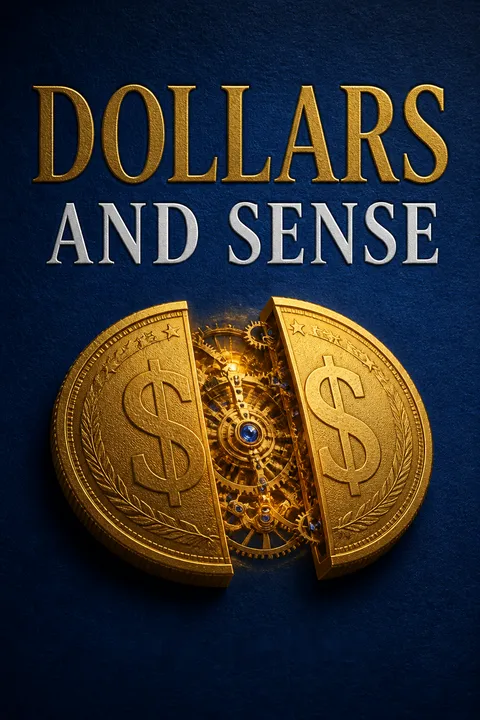


Key Takeaways
Treat every purchase as a choice among the lives your money could fund
Money carries options. Money is useful because it can be exchanged for many things, saved for later, divided into small amounts, and used by almost anyone. But spending it on one thing rules out other uses. Those forgone alternatives are opportunity costs. Buyers at a Toyota dealership rarely connected a car purchase to years of dinners, trips, or student-loan payments. They compared the car mainly with another car, leaving the wider trade-off out of view.
Make the trade-off concrete. The book argues that this neglect is a root cause of many money mistakes. A stereo experiment found that people preferred a $700 system when it came with $300 earmarked for music, even though flexible cash would have been more useful. Specific alternatives are easier to picture than abstract dollars, so name what a purchase displaces before deciding.
Opportunity cost is a powerful bridge between personal finance and public policy: every budget, from a household to a government, allocates scarce resources among competing ends. The practical challenge is that no one can calculate every alternative for every purchase. A broad comparison is most useful for consequential decisions, such as housing or a car, while applying it to every coffee would make ordinary life exhausting. The book’s strongest insight is not that people should deliberate constantly, but that they should make hidden trade-offs visible at the moments when the stakes justify the effort.
Ignore the crossed-out price; judge the dollars leaving your account
Comparisons distort value. JCPenney’s Ron Johnson replaced its routine sales with consistent prices. Customers disliked the change, even though the new prices were roughly what they had paid after discounts. The chain lost $985 million in a year, and the old sale structure returned. Shoppers had used the marked-down price as evidence of a bargain, rather than judging the actual price against other uses for the money.
Question the reference point. This is relativity: people judge an uncertain value against a nearby comparison, such as a former price, a premium model, or a decoy option. A $60 shirt seems more appealing beside a $100 tag, and a $200 car add-on seems negligible beside a $25,000 purchase. Ask whether the item is worth its current price on its own, and compare the absolute dollars, not just the percentage saved.
Reference points are not merely marketing tricks. They help people make decisions when an item has no obvious standalone value, which is why comparisons can be genuinely informative. The danger is letting a seller choose the comparison set. A discount can be real and still be a poor purchase, while a full-price item can be worthwhile. A useful defense is to pause before the comparison takes over: identify the actual price, consider a credible alternative, and include spending nothing as an option.
Budget in broad buckets, but audit the loopholes you invent
Categories can help. Mental accounting means treating identical dollars differently because they have been assigned to different categories, such as rent, gifts, or entertainment. Jane Martin used envelopes to keep household spending within limits. That structure made trade-offs visible and helped her save for annual trips. But the same mental boundaries can create irrational choices: people may refuse to replace a lost theater ticket while readily buying a ticket after losing the same amount of cash.
Keep the rules flexible, not imaginary. A bonus, gift card, or casino win can feel like money for fun, even though it remains part of the same household resources. Malleable mental accounting is the practice of reclassifying expenses to justify a desired purchase. The book suggests one broad discretionary budget, perhaps on a prepaid card, rather than dozens of tiny categories. Use categories to guide spending, then check that they serve the real budget.
Mental accounts resemble organizational budgets: they reduce cognitive load by limiting which choices need to be considered at once. That can make them useful even when they violate the economic principle that money is interchangeable. Their weakness is governance. A rule that can be rewritten whenever temptation arrives is not much of a constraint. Broad categories, automatic transfers, and a regular review can preserve the simplicity of budgeting while making it harder to disguise a splurge as an exception.
Make recurring spending visible before convenience makes it feel free
Payment changes behavior. The pain of paying is the discomfort people feel when attention turns to money leaving their control. It weakens when payment is delayed, hidden, or made effortless. In one study, students spent an average of 18 cents when given a prepaid entertainment account, 12 cents when charged at the end, and 4 cents when prompted to pay for each item as they opened it. Credit cards similarly make spending less vivid, and studies cited in the book link them with larger purchases and poorer recall of spending.
Choose friction deliberately. Prepaying can make a special experience more enjoyable because the bill is settled before consumption. But for repeated, impulsive purchases, visible payment can prompt useful restraint. Cash, spending alerts, or a separate discretionary card can add awareness. The point is not to make every payment painful, but to decide which spending should feel easy and which deserves a pause.
This insight connects consumer psychology to interface design: removing friction is not neutral when the action being streamlined is spending. At the same time, friction can impose real costs, especially for people managing routine bills or limited time. The right design depends on the behavior. Automatic payment may prevent missed essentials, while a visible balance can restrain discretionary purchases. Financial tools are best judged not by whether they are seamless, but by whether their convenience helps the user or the seller.
Price what you own as a buyer would, not as its keeper
Ownership inflates value. The endowment effect is the tendency to value something more once it belongs to you. Tom and Rachel Bradley loved the home they had customized and expected buyers to pay for its memories and design choices. Buyers instead noticed repairs and features they disliked. Experiments described in the book often find that owners ask about twice as much for an item as nonowners are willing to pay.
Separate past from future. Effort can deepen attachment, as in the IKEA effect, where people value objects more after assembling them. Loss aversion, the stronger emotional response to losing something than gaining an equivalent amount, adds to the gap. Sunk costs are past investments that cannot be recovered; they should not dictate whether a project, investment, or relationship is worth continuing. Evaluate what the next step can deliver, not what has already been spent.
Attachment is not always a mistake: personal objects may carry genuine memories, identity, and comfort that a stranger cannot share. The error is assuming that private meaning automatically creates market value. The same distinction helps with sunk costs. Past effort can matter if it produced useful skills or assets, but the irrecoverable expense itself cannot justify further investment. A disciplined decision asks what the next dollar, hour, or commitment is likely to produce from this point forward.
Pay for expertise and outcomes, not theatrical effort
Effort feels like fairness. People often judge a price by how much work they can see, rather than by the outcome or skill involved. A locksmith who opened a door in two minutes was challenged over a $200 fee, while the same customers might accept a higher bill after an hour of fumbling. In a data-recovery study, people were willing to pay more when the same result took longer. Visible labor can seem more deserving, even when it reflects inefficiency.
Ask what the result is worth. In the ultimatum game, a person offered less than a third of a shared sum often rejects it, sacrificing money to punish a perceived unfair split. Fairness can protect people from exploitation, but it can also make them refuse useful services, such as a ride during a storm. Transparency about costs and skill can build trust, though elaborate displays of effort can also manipulate customers.
Effort is a practical proxy when quality is hard to observe, and fairness judgments help sustain cooperation beyond narrow self-interest. Yet the proxy can misfire: expertise often makes valuable work look easy, while performative labor can make weak results appear costly. The relevant question is not simply whether a provider worked hard, but whether the price, outcome, and risks are reasonable. Transparency helps only when it clarifies genuine value rather than staging a convincing story about it.
Use stories and rituals only when they genuinely improve the experience
Descriptions steer attention. Cheryl barely noticed sushi and wine at work, then valued the same dishes more at a restaurant after hearing vivid descriptions and sharing a meal with friends. Consumption vocabulary means specialized language that directs attention to details of an experience. Rituals, such as carefully tasting wine, can also slow people down and make consumption more engaging. Experiments described in the book found that people enjoyed chocolate more after performing a simple ritual before eating it.
Expectation can become experience. A product’s brand, presentation, and reputation can shape what people expect, and those expectations can alter their subjective experience. The book describes studies in which price or branding changed reported enjoyment and even performance. These effects are not necessarily worthless: greater attention and anticipation can create real pleasure. But buyers should distinguish pleasure they knowingly choose from claims that a product is objectively superior.
This is a subtle point because value need not be limited to a product’s physical properties. A meal’s social setting, attention, and ritual are part of what the diner experiences. In that sense, a story can add value rather than merely disguise price. The risk is confusing an enhanced experience with proof of superior ingredients or performance. Consumers can enjoy the ceremony while remaining skeptical of factual claims, especially when a seller benefits from turning atmosphere into a premium.
Make saving automatic because future-you cannot outvote temptation today
The present wins. People often prefer a smaller reward now over a larger one later, even when they endorse patience in the abstract. Rob Mansfield repeatedly planned to save for retirement but spent the money on immediate pleasures. The book reports that nearly one-third of American adults had not begun retirement saving in 2014, and many older workers had also failed to start.
Bind the future decision. A Ulysses contract is a commitment made in advance to limit future choices when temptation is expected. Automatic retirement contributions, automatic saving from future raises, or a prepaid discretionary budget can reduce the number of times a person must resist spending. Other approaches include picturing a specific future self and using reward substitution, pairing a difficult action with an immediate treat. These systems do not require perfect willpower; they change the choice environment.
The book’s emphasis on commitment devices reflects a broader lesson from behavioral science: intentions are fragile when the conditions of action change. Automatic enrollment can make inertia support saving instead of undermining it. Still, a commitment can become harmful if income, health, or family needs change, so a good system allows review without making withdrawal effortless. The aim is not to eliminate agency, but to move the hardest decision to a calmer moment when long-term priorities are easier to honor.
Compare purchases with experiences, not just with their prices
Price is an easy signal. When people cannot assess quality directly, they often assume expensive means good. In a study described in the book, participants given an allegedly pain-relieving pill priced at $2.50 reported about twice the pain relief of those given the same pill priced at 10 cents. Price can influence expectations, but it is not a reliable measure of worth.
Return to what money is for. Money is a means of exchange, not the experience itself. A larger home may cost a vacation, years of tuition, or an earlier retirement. A more expensive phone may mean fewer dinners with friends. Comparing one good directly with another can reveal the trade-off more clearly than comparing either with an abstract number. For major choices, translate the price into the time, experiences, or opportunities it would displace.
Price has real informational value: it can reflect scarcity, quality, labor, or demand. The danger is treating a precise number as a complete account of what matters. Direct comparisons can reconnect a purchase to the purpose it serves, especially when choices belong to different categories. But translating everything into hours or vacations is not a perfect solution either. Such comparisons are prompts for judgment, not a formula that can calculate happiness in advance.
Make invisible savings visible, and interrupt recurring spending before it compounds
Design for attention. The book argues that information alone often fails to change behavior. In a Kenyan savings experiment, a visible coin marked for weekly progress led participants to save about twice as much as text-message reminders alone. The coin worked by keeping saving in view during ordinary days, not only when a reminder arrived.
Choose the right pause. Big decisions deserve careful comparison. Tiny one-off purchases usually do not. Repeated small purchases, however, can accumulate, so review them periodically. Separate savings from checking, make progress visible, or divide discretionary money into smaller portions that create natural stopping points. A pause is useful when it interrupts automatic behavior without turning every pleasure into a tedious financial audit.
The coin study illustrates how a physical cue can outperform a more financially generous incentive by changing what stays salient. This is an important design insight: behavior depends on attention, not just knowledge or reward size. Visible savings can also make prudent choices socially legible, countering the tendency to display consumption while keeping saving private. Still, visible tracking can become burdensome or competitive. The most effective cue is likely one that supports a personally meaningful goal without turning financial life into constant surveillance.
Analysis
The book’s central contribution is to shift the question from whether people understand money to how money is framed, handled, and embedded in daily choices. Money is unusually abstract: it can purchase almost anything, so its opportunity costs are difficult to imagine. People substitute easier signals, including discounts, visible effort, ownership, past prices, payment methods, and social expectations. The result is not random foolishness but patterned judgment, which businesses can anticipate and sometimes exploit.
The strongest practical message is that awareness alone is a weak intervention. A person may understand compound saving and still spend rather than contribute. Systems that make a desired action automatic, visible, or difficult to reverse can outperform repeated exhortations to exercise willpower. This principle applies beyond finance: defaults, reminders, and friction shape whether people follow through on intentions in health, education, and civic life.
The account also usefully resists a simplistic demand for perfect rationality. Mental budgets can reduce cognitive burden; rituals can make an experience richer; and payment pain can restrain waste. A behavior that departs from idealized economics may still serve a human purpose. The better question is whether a bias is helping the person pursue their goals or steering them toward someone else’s.
There are limits. Laboratory findings isolate mechanisms, but purchasing decisions also reflect constraints such as low income, unstable work, and unequal bargaining power. A person’s failure to save may not be chiefly a failure of self-control. Likewise, encouraging commitment devices requires care: defaults can serve consumers, but the same design techniques can be used to trap them. The book is most compelling when it treats behavioral insight as a tool for redesigning choice environments, not as a diagnosis that individuals alone must fix. Its enduring test is practical: does a financial choice serve the life its owner values, or merely the cue that made the choice feel obvious?
Review Summary
Dollars and Sense receives mixed reviews, with an average rating of 3.79 out of 5. Some readers find it repetitive and similar to Ariely's previous works, while others appreciate its insights into behavioral economics and money psychology. The book explores common financial mistakes, cognitive biases, and offers strategies for smarter spending. Critics praise its humor and accessibility, but some find it lacking in new information. Overall, readers value its practical advice on improving financial decision-making and understanding the psychological aspects of money management.
People Also Read









Glossary
Opportunity costs
Value of forgone alternativesOpportunity costs are the alternatives sacrificed when a person uses money, time, or another resource for one purpose. Buying a car, for example, means giving up the other experiences that the same money could have funded. The concept matters because buyers often focus on the item they receive while failing to picture what they can no longer choose.
Value cues
Signals used to judge worthValue cues are features people treat as evidence of an item’s worth, even when those features may not reflect its underlying value. Examples include a crossed-out price, a brand name, visible effort, or a product’s placement beside luxury goods. Sellers can use these cues to guide judgments when buyers cannot easily evaluate an item directly.
Mental accounting
Categories for moneyMental accounting is the practice of assigning money to separate categories based on its source or intended use, such as salary, gifts, entertainment, or savings. It can simplify budgeting, but it can also make people treat interchangeable dollars differently. A person may spend a bonus freely while protecting salary, even though both belong to the same overall financial resources.
Malleable mental accounting
Flexible spending categoriesMalleable mental accounting occurs when people change or reinterpret their budget categories to make a desired expense seem acceptable. A dinner meant to exceed the food budget might be reclassified as entertainment, for example. This flexibility can make budgets easier to live with, but it can also turn spending rules into excuses that can be rewritten whenever temptation arises.
Pain of paying
Discomfort of spendingThe pain of paying is the mental discomfort associated with giving up money. It tends to be stronger when payment is immediate and salient, and weaker when payment is delayed, bundled, or effortless. Cash can make spending vivid, while cards and digital payments can reduce awareness. The reduced discomfort may make purchases easier, but can also undermine restraint.
Anchoring
Influence of an initial referenceAnchoring occurs when an initial number or other reference point influences later judgments, even when it should be irrelevant. A home’s listing price can shape estimates of its value, and a suggested retail price can make a sale price seem unusually attractive. Anchors affect both novices and experts, often without either group noticing their influence.
Arbitrary coherence
Initial price shapes later judgmentsArbitrary coherence describes how an irrelevant starting point can shape an initial valuation, after which later judgments seem consistent because they are compared with that first decision. In experiments, random numbers influenced what people said they would pay for products. Once a first price was established within a category, people used it as a reference for other items.
Endowment effect
Ownership raises perceived valueThe endowment effect is the tendency for owners to value an item more highly than potential buyers do. Ownership shifts attention toward an item’s positive features and can make giving it up feel like a loss. The resulting gap between a seller’s asking price and a buyer’s willingness to pay can appear even when both people face the same item.
IKEA effect
Effort increases attachmentThe IKEA effect is the increased value people place on something they have helped create or assemble. The effort invested can create pride and a sense of ownership, even when the finished object is imperfect. This attachment may increase enjoyment, but it can also lead people to overestimate what others will pay for a customized or self-assembled item.
Loss aversion
Losses weigh more than gainsLoss aversion is the tendency to experience a loss more strongly than an equal-sized gain. The book describes losses as having roughly twice the psychological impact of comparable gains. This helps explain why people cling to possessions, avoid investments with visible short-term declines, or reject an otherwise useful transaction when it is framed as giving something up.
Sunk costs
Past costs that cannot returnSunk costs are resources already spent that cannot be recovered. Because people feel attached to what they have invested, they may continue funding a failing project simply to avoid treating the earlier expenditure as a loss. A sound forward-looking decision asks what future costs and benefits remain, rather than letting unrecoverable past spending determine the next step.
Consumption vocabulary
Words that guide appreciationConsumption vocabulary is specialized language used to describe an experience, such as terms for wine, food, or craft techniques. Such language can direct attention toward details and encourage people to slow down and notice qualities they might otherwise miss. It can enrich enjoyment, but it can also make products seem more valuable through impressive descriptions that do not establish better quality.
Ulysses contracts
Commitments against future temptationUlysses contracts are arrangements made in advance to restrict future choices when a person expects temptation to interfere with long-term goals. Automatic retirement contributions and spending limits are examples. The strategy moves a difficult decision to a calmer moment and reduces repeated reliance on willpower, though any commitment should allow for meaningful changes in circumstances.
Reward substitution
Immediate reward for delayed benefitReward substitution means pairing a difficult action with a smaller, immediate reward when the action’s main benefit is distant. The book describes a patient who endured unpleasant medical treatment by watching a desired movie afterward. The immediate treat helped sustain behavior whose larger health benefit would not arrive for many years.
FAQ
What's Dollars and Sense about?
- Explores money psychology: Dollars and Sense by Dan Ariely and Jeff Kreisler examines how people think about money and the psychological biases that lead to irrational financial decisions.
- Behavioral economics focus: The book combines insights from behavioral economics with real-life examples to show how emotions and social influences shape spending habits.
- Practical advice included: It offers actionable strategies to help readers recognize and overcome financial missteps, improving budgeting, saving, and spending.
Why should I read Dollars and Sense?
- Understand financial behavior: Gain insight into the psychological factors affecting financial decisions, helping you make more informed choices.
- Improve decision-making skills: Learn practical tools to counteract common financial mistakes, leading to better financial outcomes.
- Engaging and relatable: The book uses anecdotes and relatable examples to make complex concepts accessible and engaging.
What are the key takeaways of Dollars and Sense?
- Mental accounting: People compartmentalize money into categories, leading to irrational spending behaviors.
- Pain of paying: The discomfort of spending money can affect enjoyment, with strategies to manage this pain enhancing purchase satisfaction.
- Opportunity costs: Understanding what you sacrifice for a purchase can lead to better financial decisions.
What is mental accounting in Dollars and Sense?
- Definition: Mental accounting is the cognitive process of categorizing money based on subjective criteria, leading to irrational financial decisions.
- Impact on spending: People often spend more freely from "fun" accounts while being frugal with "serious" accounts, distorting the overall financial picture.
- Cognitive limitations: It simplifies financial decisions but can lead to poor choices by ignoring the fungibility of money.
How does the pain of paying affect our spending according to Dollars and Sense?
- Psychological impact: The pain of paying diminishes enjoyment of purchases, with strategies like prepaying alleviating this discomfort.
- Examples in the book: Prepaying for experiences, like an all-inclusive vacation, can enhance enjoyment by separating payment from consumption.
- Strategies to manage pain: Using gift cards or prepaying can create a sense of "free" spending, enhancing enjoyment.
What is the endowment effect discussed in Dollars and Sense?
- Definition: The endowment effect is a bias where individuals overvalue items they own, leading to inflated pricing expectations.
- Impact on decision-making: Emotional attachment can cause mismatches between seller and buyer expectations, affecting financial decisions.
- Connection to loss aversion: It relates to loss aversion, where people fear losing what they own more than acquiring new items.
How does relativity influence our perception of value in Dollars and Sense?
- Understanding relativity: Value is often assessed based on comparisons rather than absolute worth, leading to irrational decisions.
- Examples of relativity: Discounts can distort value perception, causing overpayment for items simply because they are on sale.
- Consequences of relative thinking: Focusing on relative comparisons can lead to overlooking opportunity costs and making suboptimal choices.
What is the significance of opportunity costs in Dollars and Sense?
- Definition: Opportunity costs are the value of the next best alternative forgone when making a decision.
- Impact on decision-making: Neglecting opportunity costs can lead to poor financial outcomes by not appreciating what is given up.
- Encouraging better choices: Understanding opportunity costs helps align decisions with long-term financial goals.
How does Dollars and Sense address the issue of self-control?
- Self-control challenges: Self-control is a barrier to effective financial decision-making, with immediate temptations leading to poor outcomes.
- Strategies for improvement: Ulysses contracts, or precommitment strategies, help individuals stick to financial goals by creating barriers against temptation.
- Connecting to future selves: Visualizing long-term benefits can motivate individuals to resist short-term temptations.
What role do language and rituals play in financial decision-making according to Dollars and Sense?
- Influence of language: Descriptive language can impact perceptions of value, affecting willingness to pay.
- Rituals enhance experiences: Engaging in rituals can increase perceived value, making experiences more enjoyable.
- Practical implications: Being mindful of language and rituals can lead to more informed financial decisions.
How does Dollars and Sense explain the concept of loss aversion?
- Definition: Loss aversion is the preference to avoid losses over acquiring equivalent gains, impacting financial behaviors.
- Impact on decision-making: It can lead to irrational behaviors, like holding onto losing investments, hindering financial growth.
- Strategies to mitigate loss aversion: Reframing decisions to focus on potential gains can lead to more rational choices.
What is the IKEA effect mentioned in Dollars and Sense?
- Definition: The IKEA effect is the tendency to overvalue items we have partially created due to the effort invested.
- Implications for ownership: This effect can distort value perception, making it difficult to part with items.
- Practical advice: Recognizing this bias helps assess the true value of possessions and make rational choices.
About the Author
Other books by Dan Ariely









Download PDF
Download EPUB
.epub digital book format is ideal for reading ebooks on phones, tablets, and e-readers.








