

Key Takeaways
Treat emancipation as the start of a legal struggle, not its conclusion.
Freedom without protection. After the Civil War, Mississippi’s Black Codes required many Black people to show proof of employment. Under vagrancy and enticement laws, people without contracts could be fined, then hired out if they could not pay. The rules narrowed the freedom to leave a plantation or bargain for better wages, while turning familiar acts of survival into crimes against the state.
Power changed hands. Reconstruction briefly expanded Black political participation, but the 1875 Mississippi Plan used intimidation, violence, and election fraud to restore white Democratic rule. Mississippi’s 1890 constitution then helped disenfranchise Black voters. The route from emancipation to Parchman was not a single leap back to slavery. It was a sequence of legal and political choices that made Black freedom increasingly vulnerable.
The history shows why a formal right can be real on paper and fragile in practice. Employment rules, local enforcement, and access to courts determined whether freedom meant mobility or merely a new set of constraints. This distinction matters beyond this particular history: legal equality depends on institutions that make rights usable, not just laws that announce them. The book also makes clear that white supremacy was not maintained by statutes alone. Political violence and the retreat of federal protection helped determine which laws would be enforced.
Make poverty a crime, and courts can supply employers with coerced workers.
Small charges, long sentences. Mississippi’s 1876 Pig Law broadened grand larceny to include stealing a farm animal or property worth at least ten dollars. The number of state prisoners quadrupled between 1874 and 1877. Black people could be sent to prison for petty theft, while similar behavior by white people was much less likely to bring a comparable sentence.
Fees extended the punishment. A misdemeanor conviction could bring fines and court costs that a poor defendant could not pay. Walter Blake, described as a Black boy who gambled, received a fifty-dollar fine and a much larger bill for costs. Unable to pay, he worked on a chain gang for a year. The system made poverty a pipeline: arrest created debt, debt prolonged confinement, and confinement supplied labor.
This is a stark example of how supposedly neutral procedures can produce unequal outcomes. Fines are formally the same for everyone, but a fee that a wealthy defendant pays immediately can become months of forced work for someone poor. The mechanism is more revealing than a claim of bias alone: courts and local officials had financial reasons to keep the pipeline moving. Such incentives make scrutiny of fees, sentencing, and contractor relationships essential whenever punishment is tied to labor.
When the state rents prisoners, profit depends on treating them as replaceable.
Leasing as a business. Convict leasing meant that governments rented prisoners to private employers, who used them in mines, railroad camps, turpentine forests, and fields. Mississippi began leasing convicts in 1868. Contractors could profit from their labor while the state avoided the cost of building and operating a prison. Subleasing spread the arrangement further, separating the people who earned from convict labor from responsibility for prisoners’ lives.
Death was cheap. In the 1880s, Mississippi’s annual convict death rate ranged from 9 to 16 percent. Employers could demand long hours, provide meager food, and replace a worker who died or escaped. Oshinsky’s comparison with slavery concerns this expendability: enslavers had an economic stake in keeping enslaved people alive, while lessees could obtain another prisoner. The systems were not identical, but both tied forced Black labor to economic gain.
The system exposes a central problem in outsourcing public power: contracts can reward output while pushing human costs outside the accounting. A state might collect revenue and a company might finish a railway, yet the people bearing the risk had little ability to refuse or seek redress. The comparison with slavery is most useful when kept precise. It highlights the convict’s disposability under leasing, not an equivalence between distinct legal and social systems. Profitability alone is a poor measure of public success.
A prison can reproduce a plantation even after private leasing ends.
A farm in the Delta. Mississippi opened Parchman on a tract of more than 20,000 acres in 1904. Governor James K. Vardaman opposed convict leasing, which had enriched contractors, and promoted a state-run prison farm as a more orderly alternative. Yet the new institution relied on Black prisoners growing cotton under white supervision, with little emphasis on rehabilitation. In its first year, Parchman made a profit of $185,000.
A better ledger than prison. By 1917, the farm generated nearly a million dollars for the state. Its superintendent was expected to be an experienced farmer, not a specialist in rehabilitation. Parchman replaced private leasing with state ownership of the labor system, but its plantation structure remained visible in its crops, work gangs, and racial hierarchy. Vardaman’s opposition to one form of exploitation did not mean opposition to racial control.
Parchman complicates the idea that public ownership is automatically humane. Removing a contractor can improve accountability, but it does not change the purpose of an institution if its success is still measured by crop yields and low costs. The strongest reading is not that reform was meaningless. State control created a different structure, but it preserved assumptions about whose labor could be compelled and whose future mattered. Institutional design is shaped by the goals that budgets and performance measures reward.
Racist explanations made unequal enforcement look like evidence of racial guilt.
A political story of danger. James K. Vardaman, known as the White Chief, gained support by portraying Black education and demands for equality as threats. He linked Black freedom to crime and used fear of interracial sex to defend white supremacy. Writers and officials echoed these claims with scientific racism, the use of purported scientific evidence to portray racial hierarchy as natural.
Biased numbers, false conclusions. Black people were about 12 percent of the U.S. population and 25 percent of the prison population in 1890; by 1910, the figures were about 11 percent and 34 percent. Such figures were treated as proof of innate criminality, though Black defendants faced greater risks of arrest, conviction, and long sentences. Black scholars, including W. E. B. Du Bois, connected crime to the upheaval of emancipation, poverty, and unequal justice, while also debating problems within Black communities.
The key analytical trap is treating an outcome produced by institutions as independent evidence about the people those institutions target. If policing, trial access, and sentencing differ by race, prison statistics cannot by themselves identify the cause of unequal incarceration. That does not mean every crime statistic is meaningless. It means the conditions that generated the numbers must be examined alongside the numbers. The book’s account of Black intellectual debate also avoids a simple division between denial and accusation: scholars could criticize crime while rejecting racial determinism.
Delegating prison guards to prisoners made brutality part of the system.
The trusty system. At Parchman, selected prisoners called trusty-shooters guarded other inmates, known as gunmen. They carried rifles in the fields and helped supervise the barracks. Trusties could receive better food, privileges, and the possibility of a pardon. Some were pardoned for shooting prisoners who tried to escape. The system placed armed power in the hands of inmates selected largely for their ability to intimidate.
Work backed by the lash. Gunmen began their days before dawn and picked cotton to quotas under armed watch. A leather strap known as Black Annie was used to punish fighting, perceived disrespect, and failure to meet work demands. Work callers led the men in songs that helped them endure the pace and express life inside the farm. These songs were not proof that conditions were benign. They were a way to create rhythm, connection, and some measure of expression in a system inmates could not control.
Delegated enforcement can make a system cheaper while making responsibility harder to locate. The white sergeant chose the trusty, the trusty controlled other prisoners, and officials could present the resulting violence as a matter of inmate behavior. This arrangement also created incentives for trusties to please those above them. The work songs offer a different kind of evidence: they reveal agency and culture without suggesting that prisoners were free within the institution. Survival and resistance can coexist with coercion.
Lynching and execution both taught racial hierarchy through public punishment.
Mob violence as social control. Between 1882 and 1930, Mississippi recorded 463 lynchings, more than any other state. Victims were overwhelmingly Black, and accusations could range from serious crimes to perceived challenges to racial etiquette. Local officials often failed to investigate or prosecute the killers. Public violence warned Black communities that courts might not protect them.
Lawful spectacle, unequal justice. Legal executions could carry a similar message, even though they were carried out by the state rather than a mob. In 1934, three Black men accused of assaulting a white student were convicted after a seven-minute jury deliberation and executed before a crowd. Across the period Oshinsky studies, Black people accounted for 87 percent of Mississippi’s legal executions. Lynching and execution were not identical, but in Mississippi they could both reinforce racial power through visible, tolerated punishment.
The comparison is strongest when it focuses on function rather than claiming the two acts were the same. A legal proceeding and a mob killing differ in authority and procedure, yet both can communicate whose safety matters and whose life is expendable. Public attendance, press coverage, and official acquiescence made punishment a civic performance, not merely a response to an individual crime. The important question is therefore not only whether a punishment was legal, but also whether law was applied fairly and protected the accused from collective vengeance.
Race and gender shaped who was punished, protected, or believed.
Different standards of mercy. White defendants were less likely than Black defendants to be sent to prison for lesser offenses, and white women could receive extraordinary leniency even after serious crimes. In one case, a white woman convicted of murder was pardoned rather than sent to Parchman. The prevailing idea that white women were too respectable for prison helped shape decisions that were rarely available to Black women.
Black women behind bars. Women made up less than 5 percent of the state prison population, but those sent to Parchman were mostly young, poor, and Black. Many served time for violent offenses, often killings arising from domestic conflicts. They worked in the fields, laundry, and sewing rooms. The contrast exposes a double standard: white femininity could invite protection, while Black women’s labor and suffering attracted far less public concern.
The book’s gendered examples show that racial hierarchy did not affect everyone in the same way. A claim of protection for women could grant white women leniency while leaving Black women exposed to imprisonment, sexual exploitation, and hard labor. This is a reminder to analyze race and gender together rather than treating them as separate variables. At the same time, the prison population alone cannot capture all forms of punishment: local jails and plantation control also shaped the lives of women who never reached Parchman.
A prisoner's route home ran through white patrons, not consistent rules.
Mercy by recommendation. Mississippi had no parole system until 1944, so early release depended largely on a governor’s pardon. A prisoner’s case was strengthened by recommendations from the camp sergeant and superintendent, then by letters from prominent white people in the community. Requests often described the applicant as a dependable worker or a favored servant. The process rewarded personal connections and usefulness, not a consistent review of guilt or fairness.
Innocence needed an advocate. John Randolph served fifteen years of a life sentence for a rape that had not occurred. A judge had discovered evidence of his innocence soon after conviction but did not act until Governor Mike Conner held hearings for long-serving prisoners. Randolph was released only after the judge finally spoke on his behalf. His case shows how an official’s silence could turn a wrongful conviction into decades of imprisonment.
Clemency can correct injustices that rigid sentencing leaves untouched, but an informal process distributes mercy unevenly. When access depends on influential supporters, people with fewer connections are less likely to have errors noticed. Randolph’s case is especially revealing because the decisive information existed for years; the obstacle was not a lack of evidence but a lack of institutional urgency. Individual acts of mercy matter, yet they cannot substitute for procedures that reliably identify wrongful convictions.
Federal courts changed Parchman after Mississippi's political system failed to do so.
A constitutional challenge. Civil rights activists brought prisoners’ accounts of beatings, unsafe housing, and abuses by armed trusties to attorney Roy Haber. In 1971, he filed Gates v. Collier, a class action on behalf of Parchman inmates. Federal Judge William Keady visited the prison and found conditions that violated constitutional protections, including the bans on cruel punishment and racial discrimination.
Orders with consequences. Keady required desegregation, an end to the trusty system, civilian guards, safer housing, and improved medical care. The ruling followed decades of complaints that state officials had resisted or minimized. Earlier, Parchman had also been used to confine civil rights demonstrators, including Freedom Riders. Litigation gave prisoners a route to challenge a state system that had offered them few meaningful remedies.
The case demonstrates how courts can serve as a check when local institutions are aligned with the practices being challenged. The decision did more than condemn individual abuses: it changed the prison’s staffing and operating rules. Yet judicial orders depend on ongoing compliance, public oversight, and resources. A court can establish enforceable standards, but it cannot by itself create a culture of humane custody. The story also depends on prisoners who risked retaliation to provide testimony and lawyers willing to make that testimony legible to the law.
Legal reform can end old abuses without solving prison's deeper problems.
The plantation ended, the prison remained. After the Gates decision, Parchman’s trusty system and its plantation labor regime were dismantled. Much of the land was leased to local growers, and the prison lost its role as a self-sufficient cotton operation. The end of forced field labor did not automatically produce enough education, training, or meaningful work for prisoners. Some officials and inmates also worried that less work and more time in crowded units could intensify conflict.
A changing institution. In the book’s 1990s snapshot, Parchman’s population had grown from roughly 2,000 to 6,500 between 1970 and 1995. Civilian staff and improved facilities marked a sharp break from the old farm, while overcrowding and inmate violence remained serious concerns. These figures describe the period Oshinsky examined, not the prison today. Reform ended specific constitutional abuses, but the prison’s scale and conditions remained unresolved questions.
This ending resists two easy stories: that reform changes nothing, or that a court victory completes the work. Ending forced labor and armed inmate guards was a major change, but a prison also needs credible safety, purposeful activity, and accountable staff. The book’s own account complicates the assumption that work is always rehabilitative: coerced cotton labor was abusive, while the absence of alternatives could also leave inmates idle and frustrated. Reform must therefore be judged by both what it dismantles and what it builds in its place.
Analysis
Oshinsky’s history is not simply a chronology of a notorious prison. It traces how Mississippi repeatedly converted political choices into labor systems, then represented the resulting inequality as evidence that Black people needed control. The narrative begins before Parchman existed, with frontier violence and an unequal criminal code, and follows the changing instruments of racial power: Black Codes, convict leasing, the Pig Law, lynching, the prison farm, and Jim Crow courts. The institution changes, but the relationship between punishment, labor, and white supremacy remains central.
The book’s most valuable analytical move is to connect economics to racial ideology without reducing one to the other. Convict leasing supplied employers with labor and governments with revenue, while racial stereotypes made the prisoners’ suffering easier to disregard. Parchman then shows how a state can replace private exploitation without abandoning the social order that made exploitation possible. Its profitable cotton operation was not an accidental resemblance to a plantation. Its work, supervision, and assumptions about Black labor were part of the prison’s design.
The evidence also makes justice appear less like a stable code than a set of unequal relationships. A defendant’s race shaped arrest, trial, punishment, and the likelihood of receiving mercy. Black prisoners often depended on white patrons to gain a hearing, even when officials had evidence of innocence. Public executions and lynchings made that hierarchy visible, while the songs of prisoners preserved a record of their inner lives that official reports rarely supplied.
The central claim should not be mistaken for a claim that every period or institution was identical. Slavery, leasing, sharecropping, and imprisonment differed in law and experience. The force of the history lies in showing how newer institutions could preserve coercive labor and racial subordination through different mechanisms. The final reform story is equally complicated: federal litigation dismantled major abuses, but ending one arrangement did not settle how prisons should provide safety, meaningful activity, or accountability. Parchman’s history is therefore both a specific Mississippi story and a study of how unequal systems defend themselves, adapt, and leave costs for later reforms to address.
Review Summary
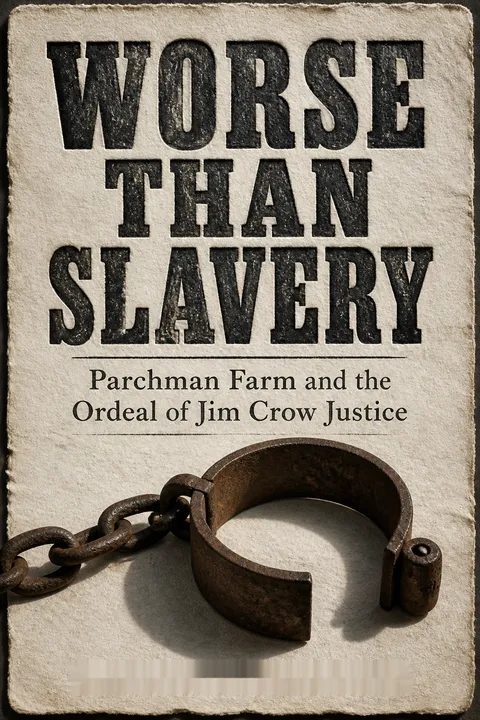
Worse Than Slavery examines Parchman Farm prison and Mississippi's convict leasing system following the Civil War. Reviews consistently describe the book as well-researched, devastating, and essential reading for understanding systemic racism and mass incarceration's origins. Readers emphasize how freed Black Americans were arrested for minor or fabricated offenses and worked to death under conditions reviewers compared to slavery and concentration camps. Many found the content horrifying yet necessary, noting the book contextualizes modern criminal justice issues within Jim Crow era brutality and racial violence that persisted through the twentieth century.
People Also Read








Glossary
Convict leasing
Prisoners rented for laborA system in which state or local governments contracted prisoners out to private employers. Employers used them in industries such as railroads, mining, turpentine, and agriculture. The state could earn revenue while avoiding prison costs, but prisoners had little protection from extreme work, physical abuse, illness, or death.
Pig Law
Expanded theft penaltiesThe name given to a Mississippi law passed in 1876 that broadened the definition of grand larceny. Stealing a farm animal or property valued at ten dollars or more could bring a state prison sentence. The law sharply increased convictions and helped supply prisoners to the expanding convict labor system.
Mississippi Plan
Violent political restorationThe campaign used by Mississippi Democrats in 1875 to regain state power and end Reconstruction-era Republican rule. It combined intimidation, violence, economic pressure, and election fraud, especially against Black voters and their political allies. The campaign helped establish a model for white Democratic control elsewhere in the South.
Scientific racism
Racial hierarchy dressed as scienceA set of claims that used purported scientific, statistical, or medical evidence to portray racial inequality as natural and Black people as inherently inferior or criminal. In the book, these claims helped explain away unequal arrest and punishment as racial characteristics rather than consequences of poverty, discrimination, and biased courts.
Trusty system
Prisoners guarding prisonersParchman’s system of assigning selected inmates, called trusty-shooters, to guard and control other prisoners. Trusties carried firearms, supervised work gangs, and guarded barracks. Their privileges and possible pardons encouraged loyalty to prison staff, but the arrangement gave armed authority to prisoners chosen without consistent safeguards.
Black Annie
Parchman’s punishment strapThe name given to a wide leather strap used to whip prisoners at Parchman. Prisoners could be punished for fighting, disobedience, perceived disrespect, or failure to meet work quotas. The punishment was often administered by a sergeant in front of other inmates, and its use varied with the camp and supervisor.
Gates v. Collier
Federal challenge to ParchmanA class-action lawsuit filed in 1971 on behalf of prisoners at Mississippi’s Parchman Farm. Judge William Keady found that prison conditions violated constitutional protections, including protections against cruel punishment and racial discrimination. His orders required desegregation, civilian guards, an end to the trusty system, and improvements to housing and medical care.
Download PDF
Download EPUB
.epub digital book format is ideal for reading ebooks on phones, tablets, and e-readers.








