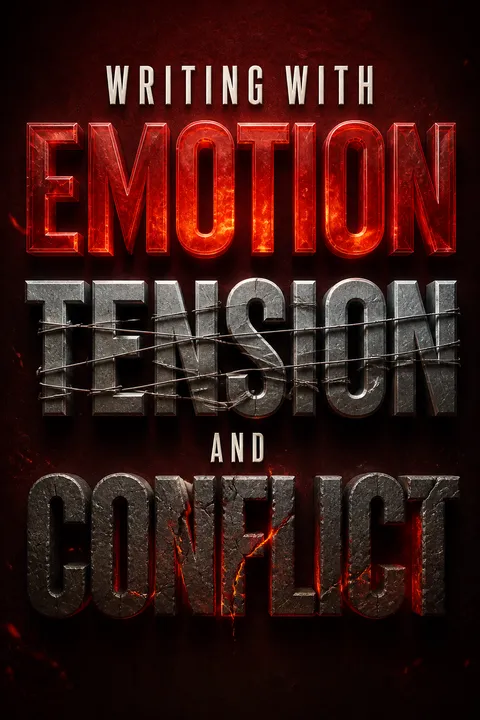


Key Takeaways
Make readers feel the character's risk, not merely follow events
Feeling creates attachment. Cheryl St. John argues that fiction holds attention when readers care what happens to a character. Events alone are not enough. A shark attack matters differently to a frightened police chief protecting his town, a scientist pursuing discovery, and a fisherman driven by old trauma. Their distinct reasons make the same danger emotionally legible in different ways.
Craft turns feeling into story. St. John learned this through years of rejected manuscripts and critique. A reader's deeply personal response to one of her novels showed her that imagined characters could offer someone hope. That connection, rather than a flawless plot or ornate prose, is the point of the craft: carry a writer's imagined experience into a reader's emotional life.
The distinction between event and felt consequence is the book's strongest organizing idea. It explains why a modest loss can command attention while spectacular danger can feel empty: importance is measured against a character's values, not the size of the explosion. This also places responsibility on the writer to earn emotion through context rather than demand it with dramatic language. The approach has a useful limit: readers do not all respond to the same wounds or hopes. Emotional credibility depends on rendering a particular person's experience, not assuming one universal trigger will work for everyone.
Give every obstacle a goal-specific reason to hurt
Conflict blocks a want. St. John defines conflict as whatever prevents a character from reaching a goal. The goal needs to be concrete, and the character needs a credible motivation for pursuing it. She groups goals as obtaining something, escaping something, or seeking revenge. A missed bus may be irritating, but it becomes consequential only if it threatens a goal the character cannot abandon.
Make the pressure personal. In Jaws, the police chief wants to protect the community, the oceanographer wants to study the shark, and Quint appears to want money. Their different motives change how each man experiences the hunt. Mere delay, unexplained arguing, or a misunderstanding easily cleared up in conversation usually cannot sustain a plot. The obstacle must matter enough to force action.
This is a practical test for distinguishing plot from a string of incidents: ask what the protagonist wants, then ask how this specific complication threatens it. The test also helps writers avoid treating conflict as noise. A hostile exchange is dramatic only when it exposes a real incompatibility, value, or fear. The framework is especially useful in revision, though not every scene needs to threaten the central goal directly. A quieter scene can deepen relationships or reveal a motive, provided it changes what the reader understands.
Build the plot from competing inner needs, not random trouble
Give each goal an emotional source. External conflict comes from circumstances, such as a storm, a rival, or a dangerous journey. Internal conflict arises from a character's fears, needs, and history. The two should interact: the outside problem presses on an inner vulnerability, prompting a decision that changes the character's next goal. St. John describes plot as the linked events that keep characters engaged with one another until their central issues are resolved.
Plan enough to find the spine. Her character sheets track motivation, long- and short-term goals, flaws, and opposing forces. In Jerry Maguire, Jerry's professional ambition collides with his difficulty committing emotionally. A useful outline need not dictate every sentence; it should show why each major turn follows from character choices rather than arriving as unrelated trouble.
The model resembles a feedback loop: pressure reveals a character, the reaction creates a new problem, and that problem demands another choice. This makes planning serve causality rather than predictability. It also explains why the book welcomes both planners and improvisers, so long as their scenes connect. One caution is that internal and external conflict can blur in practice. That is not a flaw in a story. The distinction is most valuable as a diagnostic tool, not as a rigid sorting exercise.
Reveal the wound only after readers need its meaning
Earn the backstory. A character's backstory is what happened before the story begins. A prime motivating factor is a past event or pattern that shaped the character's present personality and behavior. These experiences make goals and reactions believable, but explaining them all at the opening can stall the story before readers care.
Plant curiosity, then answer it. In Pay It Forward, teacher Eugene Simonet's burns and guarded manner invite questions before the film explains the abuse behind them. The reveal arrives when his distance matters to his relationship with Arlene. St. John recommends offering hints first, then giving fuller context when another character and the reader have reason to want it. The character's current choices should carry the backstory's effects even while its details remain unrevealed.
This approach treats information as a relationship between writer and reader. A withheld fact creates suspense only when the story has made its absence noticeable; otherwise, a late revelation can feel like a trick. The useful balance is to conceal explanation while showing consequences. Eugene's guardedness is visible before its cause is known, so the reader can form a question from evidence. This resembles good investigative storytelling: clues invite inference, while a timely answer changes the interpretation of what came before.
Filter every detail through what this character notices and fears
Use the character as the lens. Deep point of view presents a scene through one character's immediate perceptions, thoughts, and reactions, rather than repeatedly reminding readers that the character is seeing or thinking. A sound, object, or gesture earns its place when this person would notice it and it affects the moment. In a scene about grief, the ticking of a watch can carry more emotional force than a paragraph naming the emotion.
Show the response, not a label. St. John urges writers to use sensory details, physical behavior, and specific word choices instead of explaining what readers should feel. She also describes method writing: imagining a scene from inside the character's history and circumstances. This can deepen a reaction, but it still needs selection and restraint; an unfiltered stream of thought can slow the action.
Point of view is more than grammatical distance. It is a system for deciding which parts of reality become meaningful. A grieving person and an impatient person can occupy the same room yet experience different scenes because attention follows need. This makes description an instrument of characterization. The technique also guards against emotional overstatement: concrete signs let readers participate in interpretation. Still, interior access is not automatically intimacy. A character's thoughts become compelling when they reveal a distinctive mind, not merely when narration moves closer.
Make the setting alter choices, not decorate the page
Let place exert pressure. Setting includes more than geography. It can encompass climate, customs, work, language, history, and the people attached to a place. St. John argues that it should affect characters and help shape the plot. A small German-American brewery in nineteenth-century Colorado, for example, makes its streams, rail access, beer production, and a Denver exposition relevant to the family's livelihood.
Choose details through viewpoint. Indirect description is setting shown through a character's response to what they encounter. A newcomer might notice snow, unfamiliar customs, or a noisy street that a longtime resident ignores. Research supports believability, but gathered facts should be used selectively. A detail is strongest when it establishes atmosphere, reveals character, creates an obstacle, or grounds the reader in the scene.
The advice makes setting active without requiring every novel to become a travelogue. Place can constrain available choices, supply social expectations, and expose a character's assumptions. That is a richer use than scenic description because it links world-building to consequence. Research, however, can tempt writers to display knowledge rather than dramatize it. The practical standard is not how much the writer knows, but whether a selected fact changes the reader's picture of the character's options or experience.
Keep outcomes uncertain, but give scenes room to breathe
Tension depends on a doubtful result. St. John recommends worsening the problem in ways tied to the character's goal and vulnerability. The Hunger Games offers a clear example: Katniss faces deadly competitors, but the worst threat is the selection of her younger sister, which gives Katniss a personal reason to enter the contest. A black moment is the character's internal crisis when a deepest fear seems to have become reality.
Vary the pressure. Hooks leave a question unresolved at the end of a scene or chapter, giving readers a reason to continue. But constant intensity flattens the experience. Calm scenes, reflection, humor, and intimacy create contrast with high-pressure moments. Backstory and description should not interrupt urgent action, while quieter passages can carry them. Escalation works best when each setback changes the character's choices.
Suspense is not simply the presence of danger; it is uncertainty about an outcome the reader values. That distinction explains why a small interpersonal dilemma can sustain attention and why a parade of disasters may become numbing. Rhythmic variation matters because contrast teaches the reader how to interpret intensity. The approach also invites a useful revision question: does each setback alter the situation, or only repeat the same threat? Escalation should deepen the dilemma, not merely increase the volume.
Let speech, silence, and bodies reveal what characters conceal
Dialogue does several jobs. It can expose a goal, deliver information, express conflict, or shift a relationship. Because fictional conversation is more compressed than ordinary talk, each exchange should have a reason to be on the page. In Longmire, the sheriff's terse reply about an injured hand suggests guardedness more efficiently than a full explanation would. A character's speech should also reflect upbringing, knowledge, and temperament.
Listen for subtext. Subtext is the implied meaning beneath spoken words. A pause, evasive answer, physical reaction, or change of subject can reveal what a character cannot admit aloud. St. John favors unobtrusive speech tags and action that clarifies who is speaking without clutter. Body language can support the dialogue, but it should be chosen with the character and situation in mind, rather than treated as a universal code.
Dialogue is powerful because readers interpret both content and performance. What a character says, avoids, and does while speaking can create several layers of meaning in a short exchange. This compression is one reason dialogue often accelerates a scene. Yet gestures are not a reliable dictionary of emotion: the same silence may signal fear, anger, or careful thought. The writer must establish context so readers can infer, rather than assuming a single physical cue has a fixed meaning.
Treat every draft as practice, and build a process you can sustain
Technique is learned by doing. St. John spent seven years studying, writing, and revising before selling a book. After a critique exposed the weakness of an early manuscript, she set it aside, wrote a new one using what she had learned, and later returned to the first with a clearer sense of what to cut. The story illustrates a useful distinction: persistence does not mean endlessly polishing one project.
Make tools fit the writer. She uses notebooks, character sheets, research files, and outlines, while acknowledging that another writer may need a different system. Her advice is to understand why a technique works before following or breaking a rule. Finish projects, seek criticism, revise with purpose, and protect time for both focused work and renewal.
The book's account of craft is deliberately anti-mystical. Skill grows through repeated attempts, external feedback, and a willingness to diagnose process errors. That model is more useful than treating talent as a fixed possession. Its flexibility matters too: a planning tool is valuable only if it helps a writer make decisions and complete work. At the same time, persistence is not a command to ignore exhaustion or poor fit. Sustainable practice combines follow-through with the judgment to pause, revise course, or begin again.
Analysis
St. John's book is a craft manual organized around one governing claim: fiction earns attention by making readers feel the consequences of a character's struggle. Its many subjects, including goals, backstory, point of view, setting, tension, dialogue, and revision, are not isolated techniques. They form a causal chain. A past experience shapes a character's beliefs; those beliefs shape a goal; opposition tests the goal; the character reacts in ways that reveal personality; and the reader's understanding of those reactions supplies emotional investment.
The most useful implication is that revision can be diagnostic. When a scene feels inert, the writer can ask whether the goal is unclear, the obstacle is generic, the reaction is unmotivated, or the point of view is too distant. This replaces vague advice to make a scene more exciting with identifiable craft problems. The book's insistence on character-specific stakes also offers a corrective to spectacle. A small loss can matter more than a catastrophe if it threatens the protagonist's identity or deepest need.
The framework is strongest as a flexible set of questions, not a formula. St. John repeatedly emphasizes that writers differ in method, and her examples show that emotional credibility can coexist with comedy, romance, adventure, or tragedy. Some prescriptions, such as broad claims about how men and women communicate, require particular caution. They are better treated as possible patterns than universal rules, since characters and cultures vary. The larger principle survives that qualification: speech should arise from an individual history and purpose.
The book's own origin story reinforces its method. Early rejection did not prove that the writer lacked a story; it revealed a gap between imagined experience and what appeared on the page. Study, critique, and new drafts helped close that gap. The practical promise is not instant mastery, but better questions, sharper choices, and a more deliberate route from a writer's felt idea to a reader's felt experience.
Review Summary
Writing With Emotion, Tension, and Conflict receives mostly positive reviews, with an average rating of 4.06/5. Readers appreciate the practical advice, examples, and exercises provided. Many find it a valuable resource for both new and experienced writers. Some criticize the author's use of her own work as examples and her focus on genre writing. A few reviewers feel the advice is too simplistic or promotes cliché techniques. Overall, most readers find the book helpful in improving their writing, particularly in creating emotional depth and tension in their stories.
People Also Read






Glossary
Prime motivating factor
Past shaping present behaviorA significant event or pattern from a character's past that helps shape present personality, beliefs, fears, and reactions. It explains why a character wants a particular goal or responds strongly to certain situations. The writer may know much more about this history than the reader needs to learn, revealing details when they matter to the story.
Deep point of view
Immediate character-filtered narrationA close narrative perspective that presents events through one character's perceptions, thoughts, and reactions as they occur. Rather than announcing that a character saw, wondered, or realized something, the prose directly conveys the character's experience. The technique helps readers inhabit the scene, while requiring the writer to keep description and thought consistent with that character.
Indirect description
Setting through character reactionA way of describing a place by showing how a viewpoint character responds to its sensory details and conditions. Instead of listing features as if in a guidebook, the writer selects details the character notices, ignores, values, or fears. The description then does double work by establishing setting and revealing the character's state of mind.
Givens
Details with ready-made associationsCharacter types, relationships, or situations that tend to arrive with familiar emotional associations for readers. St. John gives examples such as children, orphans, animals, and underdogs. These elements may help establish sympathy or concern, but they do not create emotional investment automatically. The characters still need credible motives and reactions.
Scene and sequel
Action followed by responseA storytelling pattern in which an active scene presents an event, confrontation, or new information, and a sequel shows the viewpoint character processing what happened and deciding what to do next. The reaction may appear within the same scene or in a following passage. The pattern links events through character choice and can be adapted to faster pacing.
Black moment
Crisis of apparent total lossThe point at which a character's deepest fear seems to have come true and the desired outcome appears lost. St. John emphasizes that this is fundamentally an internal crisis, even when an external event triggers it. Its force depends on the reader understanding what the character fears and why that loss would matter.
Method writing
Imagining life from inside characterA technique in which the writer mentally enters a character's circumstances, using the character's history, knowledge, and needs to imagine how the moment would feel and what reaction would be believable. It differs from relying only on the writer's personal experience. The goal is not impersonation for its own sake, but a more specific and motivated portrayal.
GMC
Goal, motivation, conflict planningAn abbreviation for goal, motivation, and conflict, used as a planning framework for a character or story. The writer identifies what a character wants, why the goal matters, and what prevents its achievement. St. John uses these elements alongside internal and external goals, flaws, and turning points to develop a plot with believable opposition.
Download PDF
Download EPUB
.epub digital book format is ideal for reading ebooks on phones, tablets, and e-readers.








