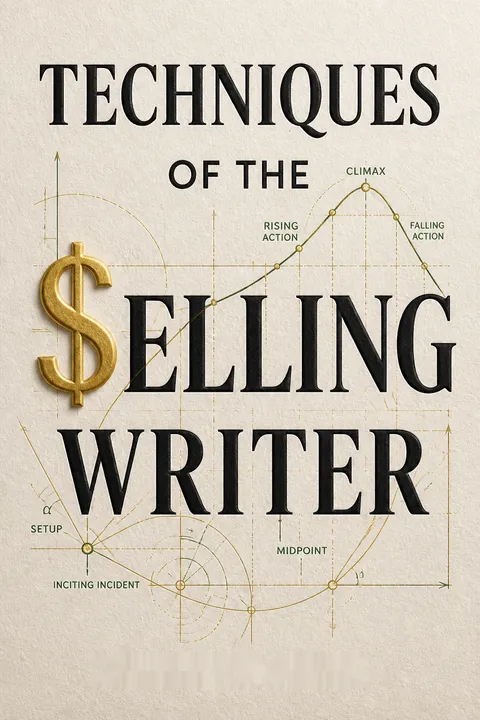


Key Takeaways
Write from a feeling, then use craft to make readers feel it too
Start with emotional fuel. Swain’s central claim is that fiction begins with a feeling the writer wants to communicate. A newspaper report about young people dabbling in witchcraft, for instance, is only an incident until the writer develops characters, consequences, and a perspective that makes it matter. Technique can shape and transmit excitement, but it cannot supply excitement that the writer does not feel.
Use rules as tools. Swain rejects both the fantasy of a single magic formula and the idea that craft rules should dictate every story. Learn why a technique works, then decide whether it serves this particular material. A fast opening full of violence may suit one story and flatten another that depends on atmosphere. Draft from instinct, then use craft knowledge to diagnose what is unclear or inert.
The distinction between motive and method resembles the difference between artistic intention and technical execution in music: practice enlarges expressive options, but scales alone do not create a song. This is a useful corrective to both rule worship and vague appeals to inspiration. Still, feeling is not a guarantee of reader response. A writer may be intensely moved by an idea that readers find opaque, so emotional conviction needs to be tested through clarity, pacing, and feedback.
Make every sentence sensory, specific, and easy to understand
Choose concrete language. Swain’s practical test for vivid prose is whether readers can imagine what a character sees, hears, smells, tastes, or touches. A specific animal creates a clearer picture than a broad category; an active verb gives that picture movement. Instead of merely labeling someone unhappy or seated, show behavior that lets the reader infer the feeling and position.
Clarity beats decoration. Words carry associations as well as dictionary meanings, so a label can praise, insult, or mislead beyond its literal definition. Use comparisons when they sharpen an image, but avoid obscure terms that force readers to stop and decode. Vary sentence rhythm, check pronouns, and remove accidental repetition. Brevity is useful, but the main aim is vivid meaning that arrives without confusion.
This advice anticipates a basic principle of cognitive fluency: readers build mental scenes more readily from concrete, familiar details than from abstract labels. Sensory writing also gives emotion evidence, rather than merely naming a mood. Yet an absolute ban on static verbs or abstraction would make prose mechanical. Stillness, summary, and conceptual language can be expressive when deliberately chosen. The key distinction is not active versus passive at all costs, but purposeful language versus language that obscures the scene.
Give readers one emotional compass, then make the world change around it
Anchor the reader. A focal character is the person whose reactions help readers judge the significance of events. This character links separate incidents, gives them emotional meaning, and becomes someone readers may admire, dislike, or fear. The focal character need not be morally admirable or the viewpoint character. In the Sherlock Holmes stories Swain discusses, Holmes drives the central action while Watson often provides the viewpoint.
Connect outer and inner change. A story needs more than unusual events. The external situation must change in ways that affect the focal character’s feelings, choices, and future. A long sunset description earns its space when it becomes part of a character’s urgent struggle; the same description is decorative if nothing in the story depends on it. Make each major event matter to someone.
A focal character functions like a guide in an unfamiliar environment: readers need not share the character’s judgments, but they need a stable basis for interpreting what happens. This connects with narrative perspective in film, where editing directs attention and shapes emotional inference. Multiple viewpoints can create productive breadth, but they also increase the reader’s work. The practical question is whether each shift adds a distinct, necessary understanding or merely disperses attention.
Put the stimulus before the reaction, and let each beat cause the next
Build causal beats. Swain calls a motivation-reaction unit an external stimulus followed by a character’s response. A teacher sits on a hidden tack, then cries out and springs up: the event comes first, and the reaction follows. In a more nuanced passage, the response may include feeling, physical action, and speech, in that order, though a writer can omit parts when the meaning remains clear.
Keep the sequence legible. A chain of these units gives the reader a sense of living through events moment by moment. A character should not react before the relevant stimulus, and a major stimulus should not pass without a response. Fragment a complicated reaction when needed. This is not a command to make every sentence formulaic. It is a way to spot missing causes, unexplained behavior, and gaps that make a scene feel jumpy.
The sequence resembles how people ordinarily infer causality: they notice an event, register its significance, and then act. Making that order visible reduces the mental effort required to follow a scene. It also gives writers a diagnostic tool for character motivation. However, real perception is often simultaneous, delayed, or unconscious. Fiction can reproduce those effects, but it must signal them clearly enough that readers recognize deliberate ambiguity rather than a continuity error.
Make each scene a struggle with a clear goal and a costly setback
Put a want under pressure. A scene is a continuous stretch of conflict in which a character pursues an immediate objective despite opposition. The objective should be specific enough to picture as an action, not merely a broad hope such as becoming happy. In Swain’s example, a student wants a particular date, but the girl’s existing promise and her father’s disapproval complicate the attempt.
Escalate the resistance. Repeating the same argument rarely deepens a scene. Introduce new information or obstacles that change the situation and force the character to adapt. A scene’s ending should create a consequential new problem or uncertainty, not simply stop when the conversation is over. The setback can be actual or implied, but it should make readers ask what the character can do now and give the answer a bearing on the story.
The scene model is valuable because it translates a vague instruction like “make this interesting” into observable pressures: someone wants something, another force resists, and the balance shifts. That logic applies beyond commercial fiction, including courtroom drama and negotiation. But opposition need not always come from a villain or a direct contest. Conflicting duties, uncertainty, or a character’s own incompatible desires can create equally sharp resistance when they produce consequential choices.
Use the aftermath to turn defeat into a believable next move
Bridge one struggle to another. Swain calls the transition between scenes a sequel. It shows how the character absorbs the last outcome, confronts the choices now available, and settles on a new objective. After a boxer is knocked out, for example, he must reckon with the loss and decide whether to leave the sport or pursue another match. Without that process, the next fight can feel arbitrary.
Compress without losing logic. Sequel also lets a writer move across time, distance, and routine. A character need not be followed through every meal or mile of travel. Instead, select details that reveal the continuing emotional problem, then make the next action plausible. Longer transitions can strengthen credibility; shorter ones can keep the story moving. The right length depends on how much the character’s thinking or circumstances have changed.
This transition gives narrative structure a psychological dimension. People rarely move from setback to action without some adjustment, however brief, and showing that adjustment makes even brisk plots feel earned. The model also explains why summary is not inherently inferior to scene: it can efficiently carry a continuing concern across uneventful time. A useful caution is that not every decision needs a displayed internal debate. Sometimes behavior itself makes the choice evident.
Spend words in proportion to tension, not clock time
Measure by emotional pressure. Swain distinguishes clock time from emotional time: an anxious minute can feel longer than a relaxed hour. In fiction, the more a change threatens a character’s hopes, the more space it may deserve. A soldier’s routine exposure to danger can be summarized if it does not affect the story’s central problem; a letter that destroys his confidence in a relationship may need close attention.
Shape peaks and valleys. Give consequential turning points enough detail for readers to understand the danger and the character’s response. Summarize routine action and use transitions to let intensity fall. Then build pressure again through new complications, urgency, and narrowing choices. Delay alone is not a complication: it matters only when it worsens the character’s situation. A story that stays at maximum intensity can exhaust readers just as surely as one that never rises.
This is a sophisticated account of pacing because it treats page space as a signal of importance. Readers infer significance partly from how long the narrative asks them to attend to an event. The approach resembles attention design in other media, where duration and detail direct emphasis. Its risk is overexplaining every emotional shift. Restraint can intensify a moment too, especially when readers already understand the stakes and can supply the feeling themselves.
Make the climax a costly choice that reveals who deserves the goal
Test character under pressure. In Swain’s commercial-story model, the climax forces the focal character to choose between personal advantage and a principle that matters to them. The choice should be concrete, urgent, and costly. A character might secure the person they love by concealing a serious wrong, or tell the truth and risk losing that relationship. The decision alone is not enough: the character must act in a way that changes the situation.
Make the ending feel earned. The resolution rewards or punishes the choice and releases the tension built by the story. Swain favors outcomes in which conduct helps determine what the character receives, rather than rescue by coincidence. He also distinguishes a stated goal from the emotional need beneath it: money may represent self-respect, for example. A satisfying ending can fulfill the deeper need without granting the literal prize.
The model gives a climax ethical weight: the final action reveals priorities that ordinary circumstances can conceal. Its strongest version does not ask whether a character is simply good, but what they will sacrifice when values collide. The framework’s neat reward-and-punishment logic reflects a particular commercial tradition, not a universal law of narrative. Tragic or unresolved fiction can satisfy readers too, provided its ending completes the work’s emotional and thematic argument.
Build characters from private lacks, visible habits, and courageous risks
Give behavior an engine. Swain’s account of character direction begins with a perceived lack: something that makes a person feel inadequate or unable to control their life. Compensation is the behavior used to counter that feeling, through striving or avoidance. A character who feels physically weak may pursue power; another who fears failure may withdraw. The goal they choose can symbolize a deeper need, even when they do not understand that need themselves.
Make people distinct and test them. Establish a dominant impression, then complicate it with a few credible contradictions. Give characters distinguishable traits in appearance, speech, manner, or attitude, and reveal those traits through action. Most important, make someone attempt something difficult, forbidden, or risky. Swain argues that readers are drawn to characters who challenge limits, because they can experience that daring vicariously. Develop each character only as deeply as the story requires.
The lack-and-compensation model gives writers a practical route from biography to behavior: a trait matters when it shapes a choice. This is compatible with modern character psychology, which emphasizes how people adapt to perceived threats and needs, though the book’s categories are deliberately simplified. Characters should not become diagnostic case studies. Contradictory motives, changing contexts, and unexplained impulses can make people feel more real than a single tidy explanation.
Protect the draft's spontaneity, then revise for story logic and market fit
Create before judging. Swain recommends generating many possibilities through focused free association, then keeping an outline loose enough to welcome discoveries during drafting. Plan the central conflict, not every detail. Set regular work periods and a realistic output target, finish drafts, and revise after the creative pass. When stuck, investigate whether the problem needs new ideas, missing facts, or a break from overwork. Research should be sufficient to prevent distracting errors, not so expansive that it replaces writing.
Send work into the world. Study the publications and publishers a writer hopes to reach, including their readership and preferences. Then write the story on its own terms, submit it, and keep it circulating rather than treating rejection as a verdict on the work’s worth. Swain presents selling as a practical activity: learn the markets, mail manuscripts, and continue submitting. Professional craft includes both imaginative work and the persistence to complete and place it.
The separation of drafting from editing aligns with a broader principle of creative cognition: divergent thinking benefits from temporarily suspending evaluation, while revision benefits from deliberate comparison and selection. The market advice adds an economic reality often omitted from romantic accounts of writing. Still, market awareness can become self-censorship if audience expectations dominate too early. A useful balance is to understand the market clearly, then let the draft pursue the writer’s strongest material.
Analysis
Swain’s book is a craft manual organized around one governing problem: how can a writer make invented events feel emotionally consequential, coherent, and worth following? Its answer is unusually integrated. Language creates sensory access; a focal character gives events meaning; causally linked reactions create movement; scenes concentrate conflict; transitions make choices credible; and endings connect conduct to consequence. These are not isolated tips so much as a model of how readers experience narrative, from moment-to-moment attention to final satisfaction.
The model’s greatest practical strength is diagnostic precision. A writer can ask what the character wants now, what opposes that want, what changed, and why the next action follows. That is more useful than the vague command to improve plot or deepen character. Its emphasis on feeling also prevents technique from becoming mere ornament. Words, pacing, and structure matter because they shape a reader’s experience.
The book is also historically situated. It addresses selling fiction in a mid-century commercial environment and treats suspense, individualized protagonists, decisive climaxes, and morally legible rewards as broadly reliable sources of reader satisfaction. Those remain powerful options, but not universal requirements. Contemporary readers also value ambiguity, distributed agency, quiet narrative, and endings that refuse easy justice. Swain’s own warning against mechanical rule-following helps preserve flexibility, though his most prescriptive claims sometimes press against it.
A productive modern reading treats the system as a set of questions, not a mandatory template. Its strongest principle is causal and emotional intelligibility: readers need to understand what matters to a character and how events alter the character’s choices. The writer can then decide whether to heighten, disrupt, or withhold the expected pattern. Craft does not guarantee a story will move every reader, but it makes the writer’s intended effects more deliberate and testable.
Review Summary
Techniques of the Selling Writer receives high praise for its practical advice on crafting compelling fiction, despite its dated language and examples. Readers appreciate Swain's insights on story structure, character development, and evoking emotion. Many consider it essential for aspiring authors, citing its clear explanations of writing fundamentals. Critics note the book's sexist attitudes and outdated references but acknowledge its enduring value. While some find it dense, most agree it offers invaluable techniques for creating engaging, commercially viable stories.
People Also Read







Glossary
Motivation-reaction unit
Stimulus followed by responseA small narrative sequence in which an external event or detail prompts a character’s response. The response may include feeling, physical action, and speech. Swain uses the unit to help writers keep events in a clear causal order and show how each moment affects the character.
Focal character
Reader's emotional compassThe central character whose responses give a story continuity and significance. Readers use this person’s reactions to judge the importance of events and other characters. The focal character may also be the viewpoint character, but the two roles are distinct: one organizes the story’s emotional focus, while the other determines whose perceptions readers access.
Scene
Continuous unit of conflictA stretch of story time in which a character pursues an immediate objective while facing opposition. The struggle changes the character’s situation and creates uncertainty about what will happen. Swain treats scenes as the main units for dramatizing conflict and raising reader interest.
Sequel
Transition between conflictsA passage that follows a scene and shows the character responding to its outcome, considering the resulting problem, and choosing a direction. Sequels connect one conflict to the next, make decisions believable, and allow the writer to compress routine time or movement without losing emotional continuity.
Story question
Central outcome at stakeThe central uncertainty that frames the story’s conflict, typically whether the focal character will achieve an important goal despite opposition. A clear story question helps the writer judge whether scenes belong and gives readers a continuing reason to wonder about the outcome.
Gimmick
Emotional cue for a choiceA recurring object or sensory detail associated with a character’s strong feelings or principles. When it reappears at a decisive moment, it can prompt a response that feels emotionally prepared rather than arbitrary. Swain describes it as a practical way to make a climactic choice credible.
Significant detail
Detail that carries meaningA selected feature of a person, place, or event that conveys more than its literal presence. It may establish setting quickly, reveal a character’s attitude, or symbolize a larger emotional condition. Its value comes from what it helps readers infer, not from how much descriptive space it occupies.
Tag
Recognizable character markerA recurring feature that helps readers distinguish and remember a character. Tags may involve appearance, speech, mannerisms, or habitual attitudes. They are most effective when woven into action and when they fit the character, rather than repeated as detached labels.
Compensation
Response to perceived inadequacyBehavior a person adopts to offset a perceived lack or inadequacy. Swain describes characters as striving toward a goal or avoiding a challenge in an effort to recover a sense of control. The response may be productive, destructive, or mixed, and it helps explain the character’s direction.
Wish-fulfillment
Vicarious satisfaction of desireThe reader’s emotional satisfaction from experiencing, through a fictional character, actions or freedoms unavailable or difficult in ordinary life. Swain links reader interest to characters who pursue difficult, forbidden, or dangerous aims. The appeal depends on the reader’s own desires and therefore varies across audiences.
Emotional time
Time shaped by feelingThe subjective sense that time passes quickly or slowly according to a character’s emotional state. Relaxation can make an interval seem brief, while fear or uncertainty can make moments feel prolonged. Swain uses this idea to guide how much narrative space an event deserves.
FAQ
What's Techniques of the Selling Writer about?
- Focus on Fiction: The book is a comprehensive guide to writing fiction, aimed at helping writers craft compelling stories.
- Practical Techniques: It offers practical tools and techniques used by successful writers to engage readers and sell their work.
- Step-by-Step Approach: Dwight V. Swain provides a step-by-step method to mastering storytelling, making it accessible for beginners.
Why should I read Techniques of the Selling Writer?
- Improve Writing Skills: The book provides a wealth of techniques to enhance your writing and storytelling abilities.
- Commercial Success: It focuses on writing commercially successful fiction, emphasizing what makes stories appealing to readers.
- Avoid Common Pitfalls: Swain identifies common traps that hinder writers and offers strategies to overcome them.
What are the key takeaways of Techniques of the Selling Writer?
- Motivation-Reaction Units: These are essential for building scenes and character development.
- Conflict and Change: Stories revolve around conflict and change, crucial for maintaining reader interest.
- Scene and Sequel Structure: Understanding how to structure scenes and sequels helps create a cohesive narrative flow.
What is the motivation-reaction unit in Techniques of the Selling Writer?
- Definition: A fundamental storytelling block where a character reacts to a motivating stimulus.
- Components: Consists of a motivating stimulus followed by the character's reaction.
- Importance: This structure creates emotional engagement and drives the narrative forward.
How does Swain define a scene in Techniques of the Selling Writer?
- Unit of Conflict: A scene is a unit of conflict experienced by both the character and the reader.
- Goal, Conflict, Disaster: Each scene should have a clear goal, present conflict, and culminate in a disaster or significant event.
- Time Unification: Scenes should occur without breaks in action, creating immediacy.
What is a sequel according to Techniques of the Selling Writer?
- Unit of Transition: A sequel links two scenes, showing the character's reaction to the previous scene's disaster.
- Structure: Typically consists of reaction, dilemma, and decision, transitioning smoothly into the next scene.
- Purpose: Provides motivation for the character's next actions, ensuring narrative continuity.
How does Techniques of the Selling Writer suggest building conflict?
- Character Goals: Conflict arises when a character's goal is opposed by another force or character.
- Clear Opposition: Effective conflict involves a clear opponent, raising stakes and engagement.
- Raising Questions: Each scene should raise questions about the character's success or failure.
What techniques does Swain suggest for character development?
- Establish Goals: Characters should have clear, compelling goals driving their actions.
- Flaws and Strengths: A well-rounded character possesses both strengths and weaknesses.
- Motivation and Reaction: Understanding motivations and reactions is crucial for depth and authenticity.
How does Swain suggest building suspense in a story?
- Create Uncertainty: Suspense is built through uncertainty about the character's journey outcome.
- Raise the Stakes: Increasing stakes keeps readers engaged and invested.
- Use Curiosity: Initial curiosity should evolve into suspense, compelling readers to continue.
What are some common traps that writers fall into, as mentioned in Techniques of the Selling Writer?
- Unrealistic Expectations: Writers often have unrealistic views about the writing process.
- Magic Secrets: Beginners look for shortcuts or "magic keys" to success, which don't exist.
- Fear of Mistakes: Fear of being wrong can paralyze writers, preventing necessary risks.
How does Swain recommend handling revisions?
- Separate Processes: Separate writing from editing to focus on creativity first.
- Check Clarity and Consistency: Ensure the story is clear, consistent, and logically structured.
- Emotional Impact: Maintain the emotional core during revisions, keeping character motivations intact.
What is the role of the villain in a story according to Swain?
- Personification of Danger: The villain represents the primary obstacle to the hero's goals.
- Ruthlessness: A compelling villain is characterized by ruthlessness and determination.
- Dynamic Interaction: The villain's actions should create dynamic interactions with the hero, escalating tension.
Download PDF
Download EPUB
.epub digital book format is ideal for reading ebooks on phones, tablets, and e-readers.








