

Key Takeaways
Read royal service as a medieval hierarchy dressed in modern employment language.
Power ran downhill. The book traces royal service to a social order in which kings controlled nobles through land and favor, while nobles controlled the people who worked their estates. Medieval villeins had few rights and could be treated as property. Over centuries, servants became paid workers, then staff, but the old assumption that rank entitled some people to command others proved stubbornly durable.
The words changed first. Royal employees are now called staff, and modern royals are expected to avoid openly treating them as inferiors. Yet the author describes lasting barriers: employees may live in palace apartments or estate cottages, but they are not generally invited to share the employers’ social life. The book’s central claim is that modern employment sits on top of an older structure of deference and privilege.
The distinction between legal status and lived status is crucial. A person can be a free employee under modern law while still working inside a culture where discretion, availability, and deference are expected. That is a useful way to read institutions beyond monarchy, from elite universities to family businesses: formal equality does not automatically dissolve inherited habits. The argument is strongest when it tracks specific practices across time. It needs care, however, not to imply that contemporary staff are equivalent to medieval serfs. The comparison illuminates cultural inheritance, but the difference in legal rights and personal autonomy is profound.
Count the servants: their numbers advertise power as much as they perform work.
Scale was part of the spectacle. In 1900, about 1.5 million people in the United Kingdom worked as domestic servants. Royal households maintained especially large staffs, including jobs that were ceremonial, highly specialized, or seemingly unnecessary. In 2024, Buckingham Palace employed more than 800 people and contained 188 staff bedrooms. The author argues that these numbers signal royal status, not merely household need.
Wealth sustains the display. The book connects the modern household to land and property inherited through the Crown and royal duchies. It reports Crown Estate profits of £1.04 billion in 2023/24, while noting that only a portion supports the monarchy. The point is not that every employee is idle: vast estates and public duties require real work. Rather, the institution’s size and resources help preserve an image of exceptional rank.
Organizations communicate power through architecture, ceremony, and staffing as well as through laws. A large household makes authority visible, while specialized roles turn that authority into routine. This helps explain why downsizing can feel threatening to an institution even when technology or changing practice makes some jobs unnecessary. The counterpoint is that headcount alone cannot show whether work is wasteful: palaces, estates, events, and public engagements involve substantial operations. The sharper question is which roles serve a practical purpose, which preserve tradition, and which exist primarily to make hierarchy visible.
Notice how palace rank divides servants almost as sharply as it divides royals.
Below stairs had its own ladder. A royal household was not one unified workforce. Butlers supervised male domestic staff, housekeepers directed female staff, and both could be outranked by a comptroller or another senior official. Valets and ladies’ maids gained prestige from working closely with royals, while kitchen maids and cleaners occupied lower rungs. Senior servants could treat junior employees with the same condescension they received from their employers.
Status shaped the smallest details. Footmen were selected partly for height and appearance; some wore artificial calf padding to create the expected silhouette. A servant named Albert was reportedly renamed because Queen Victoria objected to a worker sharing her late husband’s name. Such practices reduced individuality while confirming the household’s social order. The author’s point is that service was not simply work performed for royals. It was a hierarchy reproduced among the workers themselves.
This is a miniature study of how hierarchy reproduces itself. People lower in an organization can gain limited status by managing those below them, even when their own position remains insecure. That pattern is familiar in bureaucracies and other rigid workplaces, where rank can become a resource employees defend. The examples also show how control extends beyond tasks into identity, appearance, and even names. Still, the structure was not perfectly fixed: access to specialized roles or a royal patron could sometimes change a servant’s prospects. The system constrained people, but it did not make every career identical.
Proximity to a monarch can turn service into intimacy, influence, and dependence.
Access made some jobs powerful. The Groom of the Stool, an attendant responsible for the king’s close stool and lavatorial needs, held unusually intimate access. The exact extent of the physical duties is uncertain, but the role also brought the monarch’s trust and, at times, political influence. Henry VIII’s Groom of the Stool, Sir William Compton, received offices and favors that enriched his family.
Closeness could become a life. In the twentieth century, Margaret MacDonald, known as Bobo, began caring for the young Elizabeth and remained close to her for decades, eventually helping her dress and sharing daily routines. William Tallon, the Queen Mother’s Page of the Backstairs, served her for more than fifty years. Such relationships could be affectionate and sustaining, yet they also blurred the line between work and personal identity. Loyalty could become so complete that a servant’s own life receded.
Intimate service creates a form of knowledge that formal advisers may lack. An attendant sees moods, habits, and vulnerabilities, and can become trusted precisely because the work is repetitive and private. Organizational scholars might describe this as influence arising from access rather than title. The same closeness can also bind a worker to an employer through affection, identity, and limited alternatives. The book’s examples make that ambiguity vivid. They should not, however, be treated as proof that devotion was universal: exceptional bonds are memorable partly because they stand out against a much larger workforce.
Follow the favors: royal appointments have long rewarded connections more than open competition.
Patronage organized the court. For centuries, positions and rewards flowed through personal connections. Aristocrats sought royal favor, while cooks and senior servants might use their own authority to place relatives in junior jobs. A court appointment could bring income, status, land, or access, and sometimes benefited a whole family for generations.
The pattern outlived royal power. The author traces prominent families’ wealth and court roles to ancestors who served monarchs or became royal favorites. Arnold Joost van Keppel, for example, rose after William III took a personal interest in him. The book also notes exceptions: Thomas Cromwell, whose father was not a nobleman, climbed to high office through ability and opportunity. The overall picture is a court where merit mattered, but lineage and personal recommendation often mattered more.
The court resembles a networked labor market in which trust and access substitute for transparent hiring. Personal recommendation can efficiently identify people for sensitive work, but it also closes opportunities to outsiders and makes privilege self-reinforcing. This is why the same appointment may look like loyalty from inside the network and nepotism from outside it. The book’s historical examples sharpen the point without reducing every successful courtier to an unqualified beneficiary. Ability could matter, as Cromwell’s rise suggests, but a system built on patronage gives talent unequal chances to be noticed.
Workers gained leverage when factory jobs made domestic service easier to refuse.
The labor market shifted. Domestic service offered long hours, little privacy, and strict rules governing servants’ free time. The introduction describes girls beginning work as young as twelve or fourteen and working twelve-hour days for most of the week. After the First World War, many women preferred factory jobs, where pay could be better, hours more predictable, and personal freedom greater.
Employers had to adapt. The royal household retained an unusual appeal, but even royal employers faced pressure to raise pay, reduce hours, and treat staff less harshly. One worker recalled a once-distant royal employer learning her name and asking her to stay when she gave notice. The author calls this a revolution in relations. Its engine was not simply a change of heart among elites. Workers had alternatives, and their ability to leave changed what employers could demand.
This account makes a useful labor-history point: rights and respect often advance when workers gain bargaining power, not only when employers become more enlightened. The servant who can leave has leverage that the servant dependent on a single household lacks. That dynamic remains relevant wherever work is isolated, live-in, or tied to housing and personal loyalty. The historical contrast should not be overstated, since domestic service varied across households and periods. Yet the broader mechanism is clear: changing outside options can transform relationships that moral appeals alone have not changed.
Royal oddities expose power where it reaches bodies, bedrooms, and laughter.
The private body became public business. The Groom of the Stool shows how royal authority once extended into the monarch’s most intimate routines. By contrast, modern royals may insist on private lavatories, personal bathroom arrangements, or help with dressing. The details can seem comic, but they reveal how completely a household can organize itself around one person’s preferences.
Humor had its own place. Medieval and early modern courts also kept fools and jesters. Some were professional entertainers; others were considered naturally foolish or mentally impaired. Their closeness to the monarch could let them voice criticism that courtiers avoided, though they could also be mocked or treated as curiosities. Henry VIII’s fool Will Somers became a familiar presence at court. These roles expose the contradictions of royal life: intimacy could create trust, but low status could leave a person vulnerable.
Bodily routines are a revealing test of power because they show who is expected to adapt to whom. A private preference becomes an institutional task when a large staff is available to absorb it. The fool offers a different lesson: humor can create a narrow channel for truth inside a system that rewards flattery. Yet the role was ethically compromised when people with disabilities were kept for amusement. The book is valuable here because it does not reduce court life to protocol. Its strange details reveal both human connection and the unequal terms on which that connection operated.
Royal sport and spectacle depend on hidden labor, and carry changing moral costs.
Leisure required an army of workers. Royal hunting, shooting, and fishing depended on keepers, beaters, gillies, stable staff, and others who prepared the land and guided the day. At shoots, beaters drove birds toward the guns; the monarch could be placed where more birds were likely to pass. The author cites days when eight or ten guns killed as many as 5,000 birds.
Tradition meets scrutiny. At Balmoral, gillies guided royal fishing and stalking, sometimes carrying equipment and helping locate or retrieve animals. The same work that made elite leisure possible also linked servants to practices increasingly challenged over animal welfare and wildlife decline. The Queen’s closeness to her dogs and some estate staff sat alongside her participation in shooting. The chapter presents this as a tension, not a simple portrait of either cruelty or conservation.
Leisure is often presented as personal taste, but here it is a whole labor system: workers manage landscapes, animals, schedules, and guests so that a small group can experience sport as effortless. That makes the activity’s ethical costs harder to separate from its social structure. The book also captures a real tension between land management and animal welfare, especially where game is bred or protected for shooting. Its anecdotal accounts cannot settle the ecological debate, but they show why tradition is not merely private when it shapes land use and wildlife policy.
Modern politeness has softened palace manners without erasing inherited social boundaries.
Courtesy became necessary. By Elizabeth II’s reign, openly treating employees as inferior could provoke public criticism. Accounts in the book describe the Queen joking with staff, making tea for retired workers, and arranging practical help for employees in need. The old language of servant and master gave way to staff and employer, and some palace workers recall a marked improvement in everyday treatment.
Access remained unequal. Senior court roles continued to be filled largely through aristocratic, privately educated, or military networks. Ladies in waiting were renamed companions under Queen Camilla, but the author argues that the social character of the role remained much the same. Honours also reflected rank: a long-serving working-class attendant could receive a lower grade than a well-born courtier. Politeness changed the surface of the relationship more quickly than it changed who belonged near power.
Manners are not trivial: everyday courtesy can reduce humiliation and make a workplace more humane. But politeness does not necessarily redistribute authority, status, or access. That distinction is visible in the palace, where staff may be treated warmly while still remaining outside the employer’s social circle. It is also a useful lens for modern institutions that celebrate inclusion while retaining narrow recruitment pipelines. The account invites a precise question: has respect become a general right, or does it still depend on an individual employer’s temperament?
Harry and Meghan’s rupture exposed the collision between personal autonomy and palace discipline.
The household expected coordination. The book presents the royal family as an institution in which public work, schedules, and status are managed by senior royals and courtiers. Staff accounts describe Meghan as warm with junior employees and uncomfortable with formal rules, while some palace insiders saw her independence as a challenge to the established system. Her habit of hugging colleagues and relatives became a small but telling point of friction in a culture built around distance and rank.
Two needs collided. According to the author’s interviewees, Harry was drawn to Meghan’s willingness to question the family’s arrangements, while others expected him to preserve his royal role and follow institutional direction. The couple’s break with the household is therefore presented not only as a family feud, but as a conflict over who could define royal work and personal freedom. These are retrospective accounts, often anonymous, rather than a neutral transcript of events.
The conflict shows how intimate relationships can become disputes about governance. A family member may understand autonomy as a basic personal right, while an institution interprets unscripted behavior as a risk to coordination and reputation. The tension is especially acute when an organization claims to be both a family and a public institution: affection is personal, but access and status are managed. Anonymous staff testimony offers valuable proximity, yet it can also reflect factional loyalties and hindsight. The most reliable reading separates what an account observes from the motives it assigns.
Analysis
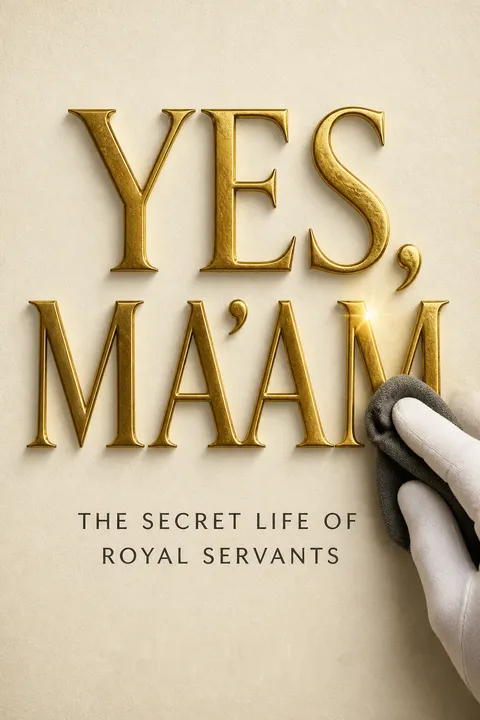
Yes, Ma’am is a social history told through anecdotes, job descriptions, and the memories of royal employees. Its organizing idea is continuity: the modern palace has changed its vocabulary and some of its manners, while retaining a hierarchy whose roots lie in land, patronage, and inherited status. That framework gives disparate subjects, from kitchen work to royal hunting, a common explanation. Servants are not just witnesses to royal life; their labor helps create the visible performance of monarchy.
The book is particularly effective when a small detail makes an abstract system tangible. A footman renamed Albert, a servant carrying a monarch’s personal lavatory seat, or a Queen making tea for a retired keeper each reveals how status operates in ordinary encounters. The strongest stories hold two truths together: royal employers could show genuine affection, and employees could remain socially subordinate. That tension avoids a simple morality tale in which every royal is cruel and every servant powerless.
The evidence requires some caution. The modern chapters rely heavily on interviews, many anonymous, and recollections gathered long after events. These can illuminate private settings unavailable to formal records, but they also reflect memory, personal loyalties, and the storyteller’s perspective. This matters especially in the accounts of Harry, Meghan, William, and Kate, where conflicting motives are inferred from staff observations. Those passages are best read as evidence of how palace insiders interpreted the rupture, not as a complete or independently verified account of the couple’s private lives.
The book’s broad claim that royal service descends from serfdom is most persuasive as cultural inheritance, not literal equivalence. Modern employees have legal rights and choices unavailable to medieval villeins. Yet the persistence of deference, patronage, and class-coded access shows how institutions can preserve old assumptions after the law has changed. The result is an engaging portrait of monarchy as both a family and an employer, sustained by workers who are close enough to see its humanity, but rarely close enough to share its status.
Review Summary
"Yes, Ma'am" received mixed reviews, with an average rating of 3.58/5. Readers appreciated the historical insights into royal servants but were disappointed by the limited modern-day content. Some found it informative and fascinating, while others felt it lacked depth and personal anecdotes. The book covers the evolution of royal household roles, focusing more on historical context than contemporary details. Several reviewers noted that the content was not what they expected, hoping for more behind-the-scenes glimpses of current royal life. Despite this, some readers still found it an enjoyable and interesting read for royal enthusiasts.
People Also Read





Glossary
Groom of the Stool
Royal intimate attendantA male royal servant responsible for the monarch’s close stool, a portable commode, and associated intimate routines. The precise extent of the Groom’s physical duties is debated, but the role brought unusual access to the king. Over time, it became associated with court influence and financial administration, then shifted toward a less intimate ceremonial position.
gillie
Scottish outdoor servantA male outdoor servant, from a Gaelic word for a young man or attendant. In royal service at Balmoral, gillies guided fishing and deer stalking, helped with other outdoor activities, and advised guests about the land and sport. Their work could involve carrying equipment, locating animals, and assisting the royal party across difficult terrain.
lady in waiting
Aristocratic royal companionA woman, traditionally of aristocratic background, appointed to accompany a queen or senior royal. Her role could include companionship, advice, and attendance at public or private events, rather than routine domestic labor. The position has changed over time, but the book emphasizes that its social function and elite recruitment endured even as its title was replaced by companion.
grace and favour
Royally provided residenceA home or apartment provided by the monarch or royal household, often as a privilege connected to service or status. Such accommodation could form part of the reward for a courtier or trusted employee. The arrangement made royal service materially attractive while also tying a worker’s living situation to the institution and its decisions.
bona vacantia
Ownerless property ruleA legal term for property belonging to no identifiable owner, including certain estates left without a will or known heirs. The book describes a medieval arrangement under which some unclaimed assets within the Duchy of Lancaster or Duchy of Cornwall accrue to the relevant duchy rather than the general government. The practice links modern royal income to old jurisdictional rules.
The Firm
Royal household institutionA nickname used for the monarchy and its organized household, emphasizing that royal life operates through staff, advisers, rules, and public responsibilities as well as family relationships. The label helps describe the institution’s collective interests and its management of reputation, but it can also make personal conflicts appear like corporate disputes.
Download PDF
Download EPUB
.epub digital book format is ideal for reading ebooks on phones, tablets, and e-readers.








