

Plot Summary
Barbara's Invisible Handymen
At Dulcie Meriwether's funeral, Sheriff Walt Longmire listens as elderly Barbara Thomas credits angels with repairing her home, though they also eat her fried chicken and use her shower. She would rather Walt not interrupt their good works, but he checks her house and finds a skinny blond boy under the kitchen sink.
The boy crashes into undersheriff Victoria Moretti, escapes without his trousers, and disappears. Walt finds the pants bear a Belle Fourche sanitation label, but local searches and a yearbook turn up nothing. That night, while crossing the schoolyard, he spots the same boy swinging alone, still half dressed, and decides the next encounter will require handcuffs.
The case begins with an elderly woman interpreting practical kindness as divine intervention. Walt is inclined to investigate the repairs rather than challenge her belief, a choice that makes the boy visible without turning Barbara into a suspect. The comic search for a runaway quickly acquires a more serious undertone: the boy has no name the authorities can verify, no apparent home, and an instinctive terror of being caught. Walt's method is characteristic. He approaches eccentricity with patience, but once a vulnerable person is involved, curiosity becomes responsibility. The angels are a cover story, yet Barbara's wish to protect their good work anticipates the larger question of whether concealment can sometimes be an act of care.
The Name Inside the Bible
Walt times the swing's backward arc and cuffs the boy, whose name is Cord. At the sheriff's office, Cord speaks sparingly, quotes scripture, and asks for a Book of Mormon found in Barbara's pump house.
Its inscription names Orrin, while the gun catalog hidden beside it hints at a more complicated life than a runaway's. Health Services therapist Nancy Griffith explains that some fundamentalist Mormon groups expel adolescent boys so older men can claim the young women.
Tim Berg, sheriff in South Dakota, confirms that Sarah Tisdale recently reported her son missing from a fenced religious settlement. Cord gets a dishwashing job with Dorothy at the Busy Bee rather than a foster placement, while Walt begins tracing the boy's family and the people who may have discarded him.
Cord's sparse speech makes objects do the work of biography. The Book of Mormon suggests an inherited religious identity, while the weapon catalog suggests that he has learned to prepare for danger without understanding how to escape it. Nancy's explanation reframes his apparent oddness as possible evidence of institutional abuse, not an individual defect. Dorothy's offer of work matters because it gives Cord routine and a place among adults who do not demand immediate disclosure. Walt's choice to delay foster placement is not a solution, but it creates the first small alternative to the system that expelled him. The title of the book inside the pump house becomes a clue, not proof, and the sheriff has to keep those categories distinct.
A Grandmother's Lost Daughter
Walt traces the phone number Sarah left to Eleanor Tisdale, a Short Drop shopkeeper who has not seen her daughter in seventeen years. When Walt shows her Cord's photograph, she recognizes Sarah in his face and realizes she has a grandson.
Their reunion has not happened yet, but Eleanor's sudden grief gives Walt a living relative to protect. Before he can learn more, armed George Lynear arrives on behalf of Roy Lynear, a wealthy religious patriarch whose men are already clashing with local ranchers.
Roy meets Walt from a custom chair in his truck and insists that his settlement wants only peace. His scriptural authority and armed entourage make that claim hard to trust. Eleanor's land borders the Lynear operation, and Cord's disappearance now touches a volatile local dispute.
Eleanor's recognition converts an anonymous runaway into a child with a family history, but the discovery does not offer easy comfort. She has been separated from Sarah for years, and the resemblance in a photograph cannot answer where her daughter is or whether she is safe. Roy Lynear's arrival folds that private grief into a territorial conflict. He speaks as a spiritual authority while sending armed men to deliver his requests, making religious language inseparable from material power. Walt's jurisdiction is limited: he can warn Roy against provoking neighbors, but he cannot enter private land merely because its owner unsettles him. The novel builds tension through that gap between what the sheriff suspects and what he can lawfully prove.
Rockwell Rides Flicka
Before Walt can make sense of the Lynears, rancher Wally Johnson reports two men trying to catch horses by hand. One is Cord. The other calls himself Orrin Porter Rockwell, claims to be the nineteenth century Mormon gunman, and watches My Friend Flicka as if the film were a revelation. Cord says the old man is his bodyguard.
Walt's research finds that Rockwell's history is real, but the man in custody should be centuries old. On a trip to South Dakota with Vic and Henry Standing Bear, Walt meets Vann Ross, an eccentric builder of homemade spaceships. Tim Berg reveals that Vann's surname is Lynear, linking him to Roy and the armed religious settlement. The family tree looks less like a congregation than a chain of eccentric, dangerous men.
The strange pairing of Cord and Rockwell gives the investigation a second mystery: whether the old man is deluded, performing a role, or hiding a history he cannot articulate. Cord's unquestioning trust in him is striking beside his fear of the church. The film becomes a rare shared pleasure, something the boy can experience without religious rules or practical demands. Vann Ross's backyard spaceships initially seem like comic local color, but his Lynear name connects private eccentricity to the larger family network. The episode warns against treating bizarre behavior as harmless by default. Walt can laugh at the impossible claim of a two hundred year old bodyguard while still watching the man's hands, weapons, and relationship to Cord.
The Lamb's Armed Sons
On the South Dakota ridge, Walt's party finds armed Lynear teenagers guarding the settlement's territory. Henry forces their pickup off a narrow bridge after the boys threaten the sheriff, then Walt learns they are adopted Lost Boys from other fundamentalist communities.
One, Edgar, admits that Sarah was expelled about a month earlier because of Cord. He leads Walt toward a roadside bake table where his younger sister, a disabled girl with no fingernails, has been left selling food all day without water. Walt buys her a soda.
When the settlement's men arrive, Earl Gloss knocks the drink away, and Walt punches him into a ditch. The church elders deny knowing Sarah or Cord, but Edgar's account makes the group's treatment of children impossible to dismiss as merely a private religious practice.
This encounter tests Walt's restraint against a visible, immediate cruelty. He has no warrant to seize the children, and the church has prepared armed sentries to make even a conversation dangerous. Yet the abandoned girl changes the moral scale of the scene: a cold soda becomes a small intervention in a day structured by neglect. Walt's punch is not a legal solution, and he knows it may worsen the children's position, but he refuses to let a powerful adult humiliate a child in front of him. Edgar's disclosure gives the search for Sarah a precise cause. She was not simply missing; the community expelled her after she resisted its control over her son.
A Heir's Childhood Terror
Back in Durant, Cord explains that Roy Lynear's doctrine names him as one of three destined leaders, but the church has declared him a traitor for leaving. He believes his mother is dead because she has not returned, though Walt knows she once searched for him.
When Walt asks about the gun catalog, Cord describes elders forcing boys to decapitate live cattle with a chainsaw as punishment. The memory explains his fear and the weapons he has studied in secret.
Bishop Drew Goodman confirms that Cord's religious education belongs to an older, more extreme tradition. Walt then confronts Rockwell, finds several concealed historic weapons, and finally has Vic arrest him. Rockwell slips custody again, leaving Walt with an endangered boy and an unreliable witness.
Cord's account links doctrine to bodily coercion. The church's promise of a celestial future is enforced through an exercise designed to numb boys to suffering, so his fear is not abstract or merely theological. His belief that Sarah is dead reveals how thoroughly abandonment has shaped his expectations: he treats a parent's absence as evidence of death, even when Walt can supply contrary facts. Rockwell's weapons complicate the protective role Cord assigns him. Walt must recognize both the old man's care and the danger he carries. The section's emotional center is not the church's unusual theology but the learned helplessness it produces, and the sheriff's challenge is to offer Cord safety without demanding that he trust adults all at once.
Books, Soda, and Escape
Walt asks Cord whether he wants to meet his grandmother, and Eleanor welcomes him into the Short Drop Mercantile with a soda and room to browse. Cord discovers My Friend Flicka among her books, and Eleanor lets him keep it, valuing what the story means to him above its price.
Walt and Vic leave him with her while they investigate the East Spring gate. There they meet Big Wanda, one of Roy Lynear's women, carrying groceries, ammunition, and a pistol. Wanda denies knowing Sarah, then reverses her car and flees.
The Plymouth rolls into a ditch, but Walt cuts her seat belt and pulls her free. At the hospital she is stable, though her panic and the ammunition in her car deepen Walt's suspicion that the Lynear ranch hides more than a religious community.
Eleanor offers Cord a different kind of inheritance: books, food, and permission to want something for himself. His excitement over a story he can barely read shows how little access he has had to ordinary childhood pleasures, while her generosity makes their bond practical rather than sentimental. The scene with Wanda shifts the investigation back toward danger. Her ammunition and flight could indicate guilt, but they could also reflect a woman conditioned to fear law enforcement. Walt chooses rescue over pursuit when her car overturns, an instinct that keeps the inquiry humane even as it costs him control of the scene. The episode places two kinds of refuge side by side, Eleanor's open shop and Roy's guarded ranch.
A Ghost in the Truck
After Wanda's crash, Walt finds Rockwell hiding beneath the cover of his truck, where he has been concealed for hours. Rather than return him to a cell, Walt takes him to East Spring to notify Roy and Tomás Bidarte about Wanda.
The compound is active in the dark: men are repairing a massive drilling rig, and Roy says it is for a new water well. Tomás listens when Walt explains that his mother is in the hospital, but George Lynear tries to control the conversation. Walt arrests George after he obstructs him, then releases him at the gate rather than escalate the encounter.
Rockwell's presence gives Walt a reason to enter the property, but the industrial machinery gives him a new reason to look closer. The supposed quiet religious settlement is beginning to resemble a concealed business operation.
Walt's decision to bring Rockwell along is both humane and reckless. The old man is difficult to manage, yet his presence lets the sheriff approach the ranch under a plausible pretext and witness activity he might otherwise never see. Tomás's restrained response to news of his mother contrasts with George's need to dominate every exchange, hinting at different loyalties within the settlement. Walt's brief arrest of George establishes that authority can be asserted at the gate, but his release also shows how little leverage he has without evidence. The drilling rig is the key change in the case: religious isolation may explain fences and armed guards, but costly industrial equipment asks a different question about money and purpose.
Airdale's Borrowed Legend
At Ray's garage, Walt and Vic find a high value Hughes drilling bit hidden in Wanda's Plymouth, where it had been packed beside groceries and ammunition. The bit is too specialized for a simple water well.
Deputy Double Tough traces its lease through several companies to a Mexican contractor, while Vic uncovers Tomás Bidarte's violent family history and years in prison. Former intelligence administrator Donna Johnson researches the name on a military file and identifies the mysterious Rockwell as Dale Airdale Tisdale, Sarah's father and Eleanor's estranged husband.
Dale had been a CIA operative, then a prisoner in Mexico, where he shared a cell with Tomás. Walt realizes the man has survived by becoming a legend. He also learns that the Lynears bought the ranch from Dale, tying the oil equipment, the missing woman, and the old man's return together.
The hidden drill bit converts suspicion into a material trail. Its value and specialized design contradict Roy's explanation of a modest water project, while the chain of leases demonstrates how illicit commerce can hide inside legitimate subcontracting. The identity reveal about Dale is psychologically sharper than a simple case breakthrough. He has not merely lied about his name; he has lived inside a role that allowed him to survive imprisonment and the loss of his former life. Tomás's past suggests that their prison bond may carry debts deeper than ordinary friendship. By linking the equipment to Sarah's family, the narrative makes the oil operation personal without pretending that personal grief alone can prove a crime.
Fire in Powder Junction
On the drive back from Donna Johnson's ranch, Walt and Henry see the Powder Junction sheriff's substation burning. A fireman warns that chemicals nearby could ignite, but Walt charges inside, crawling through smoke and water until he reaches Double Tough's cot.
Henry breaks through a wall and drags Walt and the deputy out as the structure collapses. At first Double Tough appears dead. Walt finds a key ring and smells kerosene among the ruins, making the fire look deliberate.
Hours later, Vic tells him that medics revived Double Tough with a defibrillator; he is badly burned and will lose an eye, but he is alive. The attack turns a suspicious investigation into a personal hunt, while the surviving deputy's report about a traffic stop will soon expose a connection to the Lynear boys.
Walt's rescue is a physical expression of the loyalty he expects from his department and gives in return. He ignores the fire chief's warning because the possibility that Double Tough is trapped outweighs the risk to himself. Henry's intervention makes that loyalty reciprocal, though Walt initially experiences it only as the terror of nearly losing both men. The discovery of kerosene supplies evidence, but not yet a perpetrator. The later news that Double Tough survived allows grief to turn back into action without erasing the cost of the fire. His burns and lost eye are not a clean victory; they are the bodily price paid by a small department confronting an operation with money, guns, and reach beyond the county.
Frymire's Open Door
After the Lynears' lawyers arrive and Rockwell escapes custody again, Walt checks on deputy Chuck Frymire, whose sudden move to Colorado has never been confirmed. At Chuck's rented house, the open doors and a broken window suggest trouble.
The supposed fiancée arrives with a pizza, unaware that Chuck is dead in the backyard, stabbed while digging a grave for a raccoon. Walt sees the attack as a deliberate attempt to delay the investigation. At the burned substation, Vic finds Double Tough's traffic warning to Eddy Lynear, placing the teenager near the station before the fire.
Walt now has a lead connecting the Lynear boys to the stolen equipment and arson. The personal losses have become a chain of evidence, and the sheriff has to move before the lawyers and the ranch can erase it.
Frymire's murder makes the conspiracy intimate in a way the stolen equipment could not. The open doors and domestic details initially suggest an ordinary homecoming, then reveal that someone has used a young deputy's routine as an opportunity to kill him. The pizza delivery places the fiancée in the path of the aftermath, extending the violence beyond its intended target. Vic's recovery of the traffic ticket matters because it is a modest administrative record, not a dramatic confession. It places Eddy near the fire and shifts suspicion toward the teenagers. The section contrasts two methods of power: the Lynears use intimidation and legal pressure, while Walt relies on paperwork, observation, and a willingness to revisit a colleague's last ordinary shift.
The Gate Gives Way
Walt reaches East Spring with a warrant, but Eddy Lynear and several teenagers block the gate with shotguns and rifles. Eddy says Tom Lockhart has ordered them to kill anyone who enters and has convinced them that Armageddon is near.
Walt tries to separate the boys from Lockhart's influence, but Vic ends the standoff by driving Walt's truck into their vehicle and shoving it aside. The teens surrender their weapons, and Eddy admits they entered the substation to recover the drilling bit and set the fire without realizing Double Tough was inside.
The boys point out the road they were forbidden to travel. Walt leaves them under guard, takes the weapons, and chooses a rough approach across the open land rather than wait for reinforcements. The route leads toward a secret the church's religious story cannot explain.
The teenagers are both armed participants and manipulated children, a distinction Walt tries to preserve even after they threaten him. Lockhart has converted their religious vocabulary into a tactical command, making the threat of apocalypse a way to recruit boys into violence. Vic's truck assault breaks the immediate stalemate, but the real breakthrough comes when Eddy admits the boys' role and reveals that they acted on a promise of inclusion. Their confession does not absolve them, especially given the fire, but it exposes the machinery of recruitment. Walt's choice to proceed with a small team is dangerous and ethically compromised. He is trying to prevent the leaders from escaping, yet his urgency risks repeating the same pattern of using young people as instruments.
The Canyon's Last Stand
A concealed canyon opens onto a large oil rig hidden beneath camouflage netting, with milk trucks carrying stolen crude away. Walt blocks the narrow exit with a tanker while Henry and Vic cover the approach. Before entering the canyon, Vic makes clear she wants a future with Walt, and he stops postponing his answer.
Lockhart claims government authority, but Dale recognizes Tomás and learns the truth about his identity just before Bidarte stabs him. Walt signals for the tanker to explode, scattering the armed crew. In the creek, he captures Lockhart, then finds Bidarte waiting with a knife.
Walt's submerged pistol fires, and Vic's shots drop Bidarte, but the dying man stabs her. She survives, while Dale dies after reclaiming his own name. The operation is broken, though its most dangerous conspirators have not all been accounted for.
The canyon literalizes the operation's central strategy: concealment made profitable through distance, infrastructure, and the appearance of official legitimacy. The tanker blocks the only exit, turning the smugglers' hidden geography into a trap. Dale's recognition of his own name arrives at the instant when it can no longer repair his lost family, but it restores a measure of agency before death. Walt's willingness to risk an explosion reflects the exhaustion of lawful options, while Vic's choice to fight beside him makes their relationship a concrete commitment rather than an unspoken attraction. The ending refuses a clean victory: Lockhart is captured, the rig is exposed, Dale is dead, Vic is wounded, and Bidarte's fate remains uncertain.
Epilogue
Investigators recover Sarah Tisdale's body from beneath the roadside marker at East Spring. Without the stolen oil money, the church compounds in Wyoming, South Dakota, Nebraska, and Kansas collapse, and the remaining women and children enter protective custody. Eleanor admits she asked Dale to find Sarah, hoping he could use his old connections.
Double Tough survives but loses an eye, while Frymire's death leaves Walt to face another funeral. At the hospital, Walt learns that Vic had been seven weeks pregnant when Bidarte stabbed her. She is asleep, alive, and unaware he knows. Walt places the black and orange homecoming corsage beside her pillow, offering a quiet answer to the future she had asked him to choose.
The epilogue closes the case by recovering Sarah's body, but it does not restore what the Lynears took from the living. The settlements dissolve through legal and financial pressure, leaving children to be placed with foster families and survivors to rebuild outside the system that shaped them. Eleanor's confession complicates her role: she did not know Cord existed, yet she sent Dale into danger because she had exhausted every other way to reach Sarah. Walt's final visit to Vic brings the public and private plots together. The corsage fulfills her request for a homecoming gesture, while his knowledge of the pregnancy turns it into an answer to a future neither of them had planned.
Analysis
The novel sets two kinds of authority against each other. Roy Lynear claims spiritual supremacy, while Tom Lockhart borrows the language of government and corporate expertise. Both depend on followers accepting a story that places them above ordinary accountability. Walt's badge gives him real but limited power: he can question, arrest, and protect, yet he cannot enter a guarded property simply because its occupants are frightening. The investigation therefore turns on evidence gathered through relationships and objects: Cord's book, a traffic warning, a hidden drill bit, and the physical traces of violence.
Cord's story makes the cost of the compound visible in a child who has learned to obey doctrine, anticipate punishment, and imagine no future outside the group. His growing trust in Walt, Vic, and Eleanor is not a sudden conversion. It develops through work, food, a film, and a book, ordinary experiences that restore choices without demanding that he explain himself. Eleanor's estrangement from Sarah and Walt's own grief over his wife give the case a family dimension, but the novel avoids treating reconciliation as automatic. Love can motivate action without undoing the harm that preceded it.
Dale's assumed identity extends this concern into the adult world. His self invention is both a survival mechanism and a loss of self, shaped by imprisonment and the abandonment of his country. When he reclaims his name, the act cannot repair his family, but it gives him a final moment of agency. The ending offers no clean moral triumph: a deputy is dead, another is permanently injured, and the oil operation's violence has outlasted its religious cover. Walt's gesture at Vic's bedside matters because it is small, personal, and chosen. Against systems that turn people into assets, heirs, or instruments, the story insists on the value of showing up for one person at a time.
Review Summary
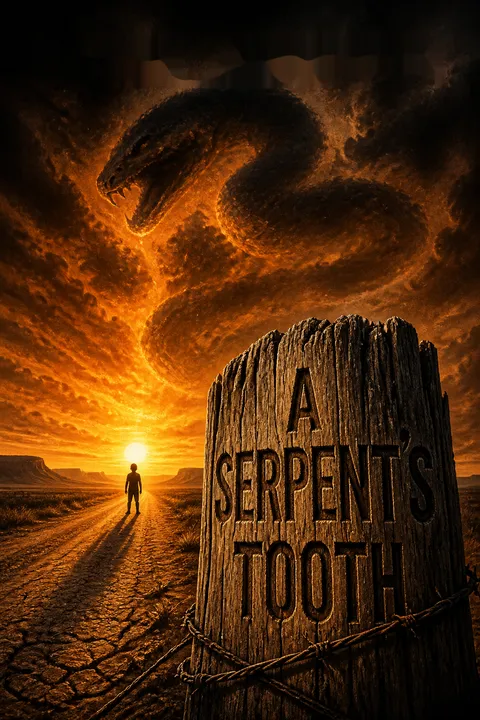
A Serpent's Tooth receives mostly positive reviews (4.3/5 rating) as the ninth Walt Longmire mystery. Readers praise Johnson's dry humor, engaging characters, and Wyoming setting. The plot involves a Mormon "lost boy" searching for his missing mother, leading Walt to investigate a polygamous cult with surprising connections to oil drilling and the CIA. Some critics note the story feels unfocused with too many plot threads, excessive violence, and awkward handling of Walt and Vic's relationship. Many appreciate the book's return to earlier series strengths, though a few find it disappointing compared to previous installments.
People Also Read

Characters
Walt Longmire
The stubborn county sheriffWalt is the elected sheriff of Absaroka County, a widower, father, former Marine, and former college football player whose public duties keep colliding with private grief. He is observant, patient with eccentric people, and inclined to see a human problem where others see an inconvenience. That generosity can become recklessness: he takes physical risks, delays hard emotional decisions, and sometimes substitutes force for the legal process he is meant to uphold. His investigation tests whether compassion can remain useful when powerful people exploit it. Walt's loyalty to his deputies and friends is not abstract; he shows it through time, shelter, and physical danger, even when he has to reckon with the consequences afterward.
Victoria Moretti
The sharp eyed undersheriffVic is Walt's undersheriff, a Philadelphia law officer whose blunt humor and quick instincts cut through the county's habits of understatement. She is physically capable, fiercely protective of her colleagues, and less inclined than Walt to trust a suspect's performance of innocence. Her sarcasm can conceal vulnerability, especially when she wants Walt to stop treating intimacy as another problem to postpone. She notices evidence he misses, questions the cost of his heroics, and acts decisively when danger becomes immediate. Vic's independence is central to her appeal and her conflict with Walt: she wants partnership without surrendering her own judgment, and she insists that affection be answered with action.
Henry Standing Bear
Walt's steadfast friendHenry is Walt's closest friend, a Northern Cheyenne man, businessman, and trusted companion whose calm makes him a counterweight to Walt's impulsiveness. He reads situations with patience, notices what others overlook, and brings physical strength without mistaking it for wisdom. His knowledge of history, culture, and people helps Walt interpret events without reducing them to police procedure. Henry rarely needs to announce his loyalty; he appears when Walt is in danger and remains present when grief makes conversation difficult. His humor is dry, but his attention is tender. He understands that Walt's sense of duty can become self-destructive and tries to keep his friend connected to the people who depend on him.
Cord
The church's runaway boyCord is a fifteen year old who has grown up inside an isolated fundamentalist religious community and arrives in Wyoming with little experience of ordinary life. He is quiet, intensely literal, and fluent in scripture, yet unsure how to interpret trust, love, or freedom outside the rules he was taught. His fascination with My Friend Flicka reveals a capacity for wonder that his upbringing has not erased. He wants safety and independence, but he has learned to prepare for danger rather than imagine a future beyond it. Walt, Vic, and Eleanor offer him different forms of care, and Cord's gradual willingness to accept them becomes one of the story's most delicate measures of change.
Eleanor Tisdale
The bookselling grandmotherEleanor runs the Short Drop Mercantile, a bookstore, library, and bar shaped by her practical competence and love of old books. She has been estranged from her daughter Sarah for many years, and that rupture has left her with both regret and a hard defense against being judged. Eleanor is direct, independent, and generous on her own terms. She recognizes Cord's resemblance to Sarah and offers him a home within the limits of what she knows how to provide. Her collection of books is more than a hobby: it is a way of preserving knowledge and passing it on, especially when words are the only inheritance she can offer.
Sarah Tisdale
The missing motherSarah is Eleanor's estranged daughter and Cord's mother. Though absent for most of the story, her choices set the investigation in motion: she seeks help for her missing son after being separated from him by the religious community. Her history with Eleanor is marked by pride and distance, while her bond with Cord is shaped by a desire to protect him within a system that gives her little power. Sarah's absence is never treated as evidence that she does not care. Instead, the search gradually reveals the difference between a person who has abandoned a family and a person whose family has been taken from her.
Roy Lynear
The compound's patriarchRoy is a wealthy, charismatic religious leader who surrounds himself with family, followers, heavy equipment, and armed guards. His authority rests on a doctrine that grants him extraordinary spiritual status, but he is also attentive to property, money, and control over who belongs in the community. Roy's affable manner can quickly turn into dismissal when someone challenges his power. He presents isolation as a form of peace, yet the locked gates and armed sons tell a more complicated story. His importance lies in the way he fuses belief with hierarchy: followers are taught to treat obedience to him as obedience to God.
Tomás Bidarte
The poet with a knifeTomás is a Basque Mexican mechanic and poet who works for Roy Lynear. His polished manners and dry wit make him more difficult to read than the openly aggressive men around him. He is skilled with machinery and weapons, and his past links him to both organized violence and the religious settlement. Family loyalty remains important to him, though it does not make him gentle or predictable. Tomás understands power as something maintained through money and force, a worldview that stands in sharp opposition to Walt's belief in obligation and human attachment. His composed presence gives the story an antagonist whose danger is measured rather than theatrical.
Orrin Porter Rockwell
The wandering bodyguardThe elderly, long haired man who calls himself Orrin Porter Rockwell appears first as a secretive handyman and then as Cord's self-appointed bodyguard. He is steeped in Mormon history, carries an alarming collection of weapons, and behaves as if stories from the nineteenth century are personal memories. His attention to Cord is genuine, even when his judgment is unreliable. Walt must weigh the man's tenderness against the danger of his delusions and concealed past. Rockwell embodies the unstable border between identity and survival: he has a name, a history, and a fierce sense of purpose, but no one around him can initially tell which parts belong to the present.
Tom Lockhart
The polished strategistLockhart is a technically informed outsider who presents himself as a government and corporate authority. He is disciplined, persuasive, and adept at turning other people's fears into leverage. Unlike the Lynears' religious leadership, his power comes from professional language, institutional connections, and promises of financial reward. He regards ordinary officials as obstacles to be managed, not people with legitimate duties. His composure makes him dangerous because he can make criminal plans sound like routine business. Lockhart's presence exposes how easily a claim of expertise can intimidate people who lack access to the same networks.
Big Wanda
A frightened ranch insiderWanda is a large, guarded woman connected to the Lynear settlement and the mother of Tomás Bidarte. She carries groceries, ammunition, and the habits of someone who expects authority to bring danger. Her fear of law enforcement is rooted in past violence, so her evasions cannot be read simply as evidence of guilt. She is both part of the settlement's household and a person whose position within it remains unclear. Her encounter with Walt briefly opens a window onto the human cost of the compound's secrecy, even as her frightened flight makes the investigation harder.
Chuck Frymire
The absent deputyChuck Frymire is a deputy assigned to the Powder Junction substation and a former fire investigator. He is practical, mechanically knowledgeable, and trusted enough to work far from the county seat with little supervision. His plans to leave for Colorado seem ordinary at first, but the lack of direct contact makes his absence increasingly troubling. Chuck's connection to Walt is professional and collegial, yet his fate makes the investigation personal for the entire department. He represents the quiet labor that keeps a small rural office functioning.
Double Tough
The deputy who enduresDouble Tough is a broad shouldered deputy from Powder Junction, a former oil rig worker with mechanical skill and a gentle streak. He eats cookies, repairs old vehicles, and treats Cord with more patience than he knows how to express. His good nature can make him seem uncomplicated, but his practical knowledge becomes crucial as the case turns toward oil equipment. He is part of the department's informal support system, the person who will stay late or take an extra shift without making a performance of it.
Tim Berg
The neighboring sheriffTim is the sheriff of Butte County, South Dakota, and Walt's friend across the state line. He shares information freely, knows the local religious settlement, and is troubled by the harm he has seen there. His rough humor sits beside a strong sense of responsibility toward women and children who have little recourse. Tim provides the first concrete link between Cord and the compound, then helps Walt investigate without pretending that jurisdictional boundaries are easy to cross.
Vann Ross
The spaceship builderVann is an elderly South Dakota eccentric who builds lifelike homemade spaceships from salvaged aircraft parts. He believes divine forces will carry the faithful to other worlds and talks to dogs through mental telepathy. Beneath the comic spectacle is a man whose elaborate beliefs have shaped his household and strained his neighbors' patience. His backyard gives Walt and Henry an unexpected clue to the Lynear family network.
Donna Johnson
The discreet intelligence contactDonna is a rancher with a long history of government service and an ability to find information that ordinary channels cannot provide. She is careful about what she reveals, protective of old colleagues, and alert to the consequences of exposing classified work. Walt respects her boundaries even as he asks for help. Her research gives the investigation a path through institutional secrecy without making her an all knowing solution to the case.
Nancy Griffith
The county therapistNancy is the Health Services therapist who evaluates Cord and recognizes patterns associated with fundamentalist communities. She is a practical, trusted friend of Walt's late wife and does not mistake unusual behavior for illness without examining its context. Nancy supplies language and background that help Walt interpret what Cord has experienced, while leaving the boy's choices and privacy intact.
Edgar Lynear
The reluctant older brotherEdgar is one of the young men raised inside the Lynear religious network. He is cautious around authority but willing to give Walt information when his sister's welfare is at stake. His small acts of protection reveal a conscience working within a system that rewards obedience. Edgar helps connect Cord's expulsion to Sarah's fate.
Drew Goodman
The Mormon bishopBishop Goodman leads a local Latter day Saints congregation and knows the history of the faith well. He distinguishes the mainstream church from the splinter group's teachings and recognizes the historical knowledge behind Rockwell's claims. His perspective helps Walt avoid treating all religious practice as the same.
Barbara Thomas
The angel believing auntBarbara is an eighty two year old woman who believes angels repair her home in exchange for food and a shower. Her account is eccentric, but her willingness to shelter the boy gives him time to survive outside the settlement. She is protective, proud, and more perceptive than her neighbors assume.
Plot Devices
The Inscribed Book of Mormon
A clue to Cord's originsAn old Book of Mormon with a handwritten dedication to Orrin is found among the belongings hidden in Barbara's pump house. It gives Walt a name to investigate and initially encourages the assumption that the runaway belongs to a Mormon family. The book also joins Cord's scripted religious upbringing to the stranger who calls himself Rockwell. Its function changes as the investigation proceeds: first a practical clue, then a source of historical identity, and finally an object tied to the emotional damage caused by the church's teachings.
My Friend Flicka
A borrowed childhoodThe old movie and Cord's beloved VHS copy give the boy an experience he has never had: a story he can watch for pleasure, without being tested or instructed. Double Tough's decision to watch it with him establishes unexpected tenderness between the deputy and the runaway. The film becomes a recurring point of recognition among Cord, Rockwell, Walt, and the people who offer them shelter. Later, Eleanor's copy of the book lets Cord begin to claim a story for himself, even though reading is difficult for him.
The Hughes Drill Bit
Evidence of hidden oilThe expensive industrial drill bit hidden in Wanda's station wagon does not fit the Lynears' explanation that their rig is only drilling for water. Its lease trail runs through multiple contractors and connects the ranch to Mexican oil interests. The bit gives Walt a physical object to investigate when the settlement's walls, weapons, and religious claims are not enough to justify a search. Its discovery exposes the difference between the public story of self sufficiency and the private economics of the compound.
The Rockwell Legend
Identity as survivalThe elderly bodyguard's claim to be the historical Orrin Porter Rockwell first appears impossible, then becomes a way to consider how a person may survive by inhabiting a story. His weapons, knowledge, and relationship with Cord keep Walt from dismissing him as merely harmless. Donna Johnson's records eventually connect the legend to a man whose earlier life has been erased by government secrecy and imprisonment. The device turns a comic mystery into a question about what remains of a person after years spent living under false names.
The Camouflaged Oil Rig
A secret made physicalThe drilling site hidden in a canyon beneath netting reveals the Lynear operation's true scale. A single narrow road conceals the rig from distant view, while milk trucks provide a disguise for transporting crude oil. The landscape is not merely scenery: its ravines, remote roads, and limited exits enable secrecy and later shape the confrontation. The hidden site converts a chain of clues into visible evidence and forces Walt to decide whether to wait for reinforcements or prevent the operation from disappearing.
Walt Longmire Series

Download PDF
Download EPUB
.epub digital book format is ideal for reading ebooks on phones, tablets, and e-readers.








