

Plot Summary
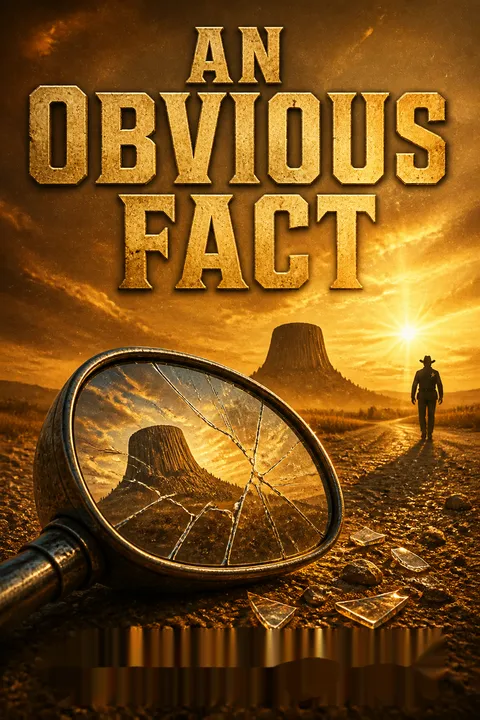
A Crash Beneath Devils Tower
Absaroka County Sheriff Walt Longmire and his Cheyenne friend Henry Standing Bear arrive in Hulett during the Sturgis rally after local officer Corbin Dougherty asks Walt to examine a young biker’s suspected hit-and-run.
Bodaway Torres lies in a coma, and members of his Tre Tre Nomads club are already pressuring Corbin for answers. Walt’s first encounter with their forceful spokesman, Brady Post, nearly becomes a fight until a familiar local biker, Eddy, steps in.
Then Lola Wojciechowski, Henry’s former lover, approaches and slaps him in front of the crowd. The blow makes clear that the case has reached beyond a routine traffic inquiry: Lola has returned after decades, and Henry’s carefully planned vacation has become personal before he understands why.
The case begins amid a public spectacle, where the rally makes every private conflict visible. The slap is more than a reunion device: it punctures Henry’s practiced distance and turns the town into an audience for a history he has not chosen to revisit. Walt, by contrast, reads the social pressure as investigative evidence. His instinct is to manage the crowd and establish facts, even as the people around him begin pulling the inquiry toward old loyalties.
The Gold Cadillac
Lola appears at Walt’s cabin with a pink-gripped revolver and reveals that Bodaway is her son. Walt accompanies her to the hospital, where she admits the Tre Tre Nomads fear someone may return to finish him. Post confronts Walt in the parking lot over Lola’s borrowed Cadillac, but Dog, Walt’s enormous dog, drives the biker onto a truck bed and ends the threat without a fight.
In Rapid City’s evidence lot, Walt studies Bodaway’s wrecked Harley and finds gold paint embedded in its damage. Lola’s battered gold Cadillac has a fresh dent on its front fender. The matching colors suggest her car struck the motorcycle, though she insists that many club members borrow it and says she does not know who was driving.
Lola’s maternal fear and the physical evidence arrive together, making care and culpability difficult to separate. Her casual lending of the Cadillac reflects a world where property circulates through the club like shared family equipment, but that informality also destroys the clean boundaries an investigation needs. Walt refuses to treat her distress as proof of innocence. His suspicion is concrete, yet his willingness to accompany her shows how quickly compassion can become entanglement.
The Empty Passenger Seat
Traffic investigator Mike Novo explains that Bodaway’s motorcycle did not behave like a high-speed machine that simply lost control. The Harley had been traveling near the road’s edge with the rider’s hands off the handlebars, a pattern consistent with low-speed flutter and extra weight at the rear. A missing passenger or heavy load could explain the instability.
Lola tells Walt she was at a motorcycle burnout event the night of the crash and was not driving her Cadillac, but cannot identify who used it. Corbin supplies Bodaway’s damaged phone and Chloe Nance’s report that she found him after the crash. When the phone powers up, a fresh message directs Bodaway to meet someone at the Devils Tower golf course’s ninth green.
The motorcycle becomes a physical witness, but its testimony remains conditional. Novo’s expertise narrows possibilities without naming a culprit, preserving the distinction between inference and proof that Walt must maintain throughout the case. The missing passenger also complicates the simple image of a lone outlaw on a dangerous road. A phone message turns mechanical evidence into a social map, linking bodily risk to relationships Bodaway’s mother and club have not disclosed.
A Meeting at Ninth Green
Before Walt can follow the phone’s lead, Henry’s failed practice run at the Jackpine Gypsies hill climb reminds Walt that his friend is still haunted by an old romance with Lola.
That night, Brady Post visits the cabin, reveals that he is an undercover ATF agent, and explains that Bodaway has been moving illegal guns through the Tre Tre Nomads. Post wants cooperation, not competing investigations. Walt then answers Bodaway’s phone and arranges to meet Chloe Nance at the golf course.
Chloe, a young aspiring actress, denies witnessing the crash and admits only that she found Bodaway afterward. Her wealthy father, Bob Nance, arrives armed and brings Walt to his lavish home, where he tries to protect Chloe from questions about her past substance abuse and her connection to Bodaway.
The case’s apparent local scale breaks open when Post identifies the biker club as a route in a federal weapons investigation. Yet the most consequential information arrives through family secrecy: Chloe’s father shields her, Lola withholds club knowledge, and Post conceals his identity until he needs allies. Each character treats information as a form of protection. Walt’s challenge is to distinguish protective silence from active obstruction without allowing either to substitute for evidence.
Henry Conquers the Hill
Henry returns to the hill climb after years of trying to repeat his 1974 victory. He studies the course, chooses a daring diagonal route, and reaches the summit in 13.59 seconds, faster than anyone has managed before.
Lola watches, then approaches him privately; whatever she tells him leaves him shaken rather than celebratory. Walt learns that Henry once defended a dancer from armed men at a bar, winning Lola’s admiration and beginning their on-again, off-again relationship. Henry had not expected the old connection to matter again.
Meanwhile, Walt discovers that Vic Moretti, his undersheriff, has flown in from Philadelphia. Her arrival brings warmth and familiar friction, but the renewed investigation and Henry’s troubled reaction to Lola keep the group from settling into celebration.
Henry’s athletic victory resolves a long pursuit but does not deliver uncomplicated satisfaction. The hill offers a test with visible rules and a measurable result; Lola’s return reopens a history that has no such finish line. Henry can master terrain through preparation, yet he cannot make the past answer to effort. The contrast exposes a vulnerability beneath his reserve: achievement is legible, while intimacy leaves him unsure what he has won or lost.
The Rally Turns Violent
At the motorcycle show, Lola tries to speak with Henry, but a group of bikers provoke him and he answers with a brutal fight. Vic joins the disorder, and several men end up injured and arrested. Henry is taken to the hospital with a possible concussion, then slips away before Walt and Vic can find him.
The pair locate him outside Bodaway’s intensive-care room, where he has gone to look at the unconscious young man. Vic tells Walt that doctors see almost no chance of Bodaway recovering.
The news changes the urgency of the case: the person who put him there may be the only one able to explain what happened. At the same time, Vic shares the stalled investigation into her brother Michael’s killing, drawing Walt back toward the grief she has carried from Philadelphia.
Violence gives Henry an outlet for emotions he cannot yet articulate, but it also leaves him physically exposed and legally vulnerable. His escape from the hospital is not a victory over authority so much as a refusal to wait while Bodaway remains helpless. Vic’s stalled homicide case places another unresolved loss beside the young biker’s probable fate. These parallel injuries sharpen Walt’s motive: he investigates not only to punish, but to speak for people who cannot make their own account.
The Chop Shop's Secret
At a Rapid City pizza shop, Vic notices that Bodaway resembles Henry closely enough to raise the possibility that Lola’s old relationship concealed a family connection. Henry cannot confirm it, and Lola has said nothing.
The phone’s call history leads the investigators to Tiffany, a waitress who identifies two of Bodaway’s associates: Post and Billy ThE Kiddo, a violent celebrity motorcycle builder. Walt, Vic, and Henry visit Kiddo’s Chop Shop, where the mechanic threatens them with a cutting tool and Vic draws her pistol.
Kiddo’s history includes a .40-caliber Glock and a shooting incident involving a neighbor’s lawn mower. After police intervene, a restraining order blocks Walt from approaching him. The confrontation yields little, but it gives the investigators a specific weapon and a repeat connection worth testing.
The suspected resemblance between Henry and Bodaway makes biological kinship an investigative question before it becomes an emotional one. Neither resemblance nor ancestry can settle paternity, and Henry’s restraint reflects his fear of building a life around an assumption. Kiddo, meanwhile, performs outlaw bravado as television persona and real threat. The shop scene reveals how spectacle can conceal practical skill: beneath the showman’s insults is a mechanic whose technical knowledge may matter more than his celebrity.
A Champion With a Shotgun
When Lola drives away from Rapid City, Vic pursues in a rented Dodge Challenger, drawing a highway patrolman after them and escaping through a back road with Walt’s directions. The detour confirms Walt’s commitment to the case, even as Vic presses him to stop pretending that duty and feeling are separate.
They reach Bob Nance’s charity shooting event, where Vic enters the women’s division with a borrowed shotgun. She defeats experienced competitors, then beats Nance in the final by hitting two clay targets with one shot after her ammunition falls from the table.
Nance conceals his irritation beneath a polished public manner. That night, Walt returns to Hulett and finds Kiddo attacking Corbin in an alley. Walt knocks the mechanic down, then discovers that the rally’s showmanship has given way to a live threat.
Vic’s shooting makes her competence visible in a setting designed to flatter Nance’s wealth and control. Her victory is earned through patience and adaptation, not the theatrical aggression he expects. The high-speed escape and the alley assault show a more dangerous version of the rally’s performance culture: speed and toughness can become cover for recklessness. Walt’s decision to keep pursuing the case is increasingly a choice to protect vulnerable people, though his reliance on force remains part of the cost.
A Body in the Cadillac
After Walt stops Kiddo from assaulting Corbin, Henry produces a genetic ancestry report Lola obtained for Bodaway. It shows a close Northern Cheyenne match but does not establish paternity.
Henry is still weighing the possibility when Kiddo returns to a bar with a revolver and threatens Walt; Dog attacks, and the gun is identified as Lola’s. Searching for her, Walt and Henry find Post dead in her Cadillac, shot at close range. Walt secretly moves the car and body to Hulett’s police workshop, fearing a federal response will drive the killer away.
DCI identifies a .40-caliber weapon, not Lola’s revolver. The distinction points back toward Kiddo, whose history includes a matching Glock, while the genetic report deepens Henry’s personal stake without settling anything.
The chapter’s revelations refuse the comfort of a single answer. The ancestry report offers belonging without certainty, while Post’s murder converts suspicion into a homicide investigation with federal consequences. Walt’s decision to conceal the scene is an ethical compromise made in service of preserving evidence and preventing flight. That maneuver may protect the inquiry, but it also binds him more tightly to risks he cannot fully control.
The Plastic Cube
DCI recovers Post’s recording wire and a small khaki cube hidden in his motel-room light fixture. The recording reveals a covert operation and a contact unwilling to let Post meet the unseen leader.
ATF agent John Stainbrook arrives and identifies the cube as advanced synthetic polymer, material that could make weapons difficult to detect. He traces the technology to engineer Bill Tichenor, an earlier developer murdered after his work was suppressed, and to Delshay Torres, Bodaway’s father.
Walt and Vic uncover Nance’s old tax-fraud history and payments linking him to the original weapons venture. They also retrieve a bullet from the lawn where Kiddo once shot a neighbor’s mower; ballistics match it to Post’s murder. Kiddo’s bail, funded through Nance, adds a financial tie to the technical one.
The cube changes the scale of the mystery: what looked like a local gang dispute is now a struggle over a weapon that defeats ordinary security. Its smallness is narratively important. A two-inch object carries the weight of a suppressed technology, past deaths, and present alliances. The evidence chain also models responsible inference: financial records, material analysis, and ballistics converge, making Nance more than a wealthy man with suspicious associates.
The Bunker at Hulett Airport
Drunk Eddy tells Walt that Kiddo worked for Nance at a fortified bunker near Hulett’s small airport. From a ridge, Walt, Vic, and Corbin watch armed guards load Kiddo into a Jeep, apparently taking him toward an escape plane. Vic drives through a hay field to intercept them. Gunmen fire from the Jeep; Walt shoots out its tires, and it crashes into a bale.
One guard dies, the other is badly injured, and Kiddo survives. In custody, Kiddo admits that he fabricated parts for Nance’s weapons project and says Nance has taken Lola hostage. He also confirms that Nance’s people are preparing to leave. With the runway and the bunker both exposed, the investigators have little time before the operation disappears.
The rescue reverses Kiddo’s role from suspected threat to endangered witness, without making him innocent. His survival depends on the same violent improvisation he once used to intimidate others. The hay-field pursuit turns the rural landscape into both obstacle and protection, while the hostage revelation converts an evidence problem into an immediate moral demand. Walt and Henry must now act against a stronger force, not simply gather enough proof to persuade it.
The Pequod Breaks Through
Walt drives the fifteen-ton MRAP, dubbed the Pequod, into the bunker’s guarded gate while Henry enters from behind. Gunmen shoot at the armored windshield, which holds; Walt then crushes vehicles and smashes through the reinforced entrance.
Henry finds an ATF agent tied inside, while Nance and Lola have already gone to Nance’s house. There, Walt locates Lola in a towel and sends her to a locked bathroom before confronting Nance in his private shooting gallery.
Nance holds a prototype .454-caliber polymer revolver behind bullet-resistant glass and boasts that it can penetrate the barrier. Walt keeps him talking, pointing out that his guards and escape plane are gone and police are closing in. The standoff traps Nance with the weapon he built and the evidence he could not destroy.
The Pequod turns a symbol of militarized overreach into a tool for interrupting a real armed conspiracy. Because Nance funded the vehicle, its use against his fortress carries a precise irony, not merely a spectacle of force. Walt’s breach is reckless, yet it is aimed at preventing evidence destruction and protecting Lola. The final faceoff opposes Nance’s technological certainty to Walt’s insistence on time, witnesses, and consequences.
The Road Back Home
After Nance’s operation is contained, Walt, Henry, and Vic prepare to leave Hulett. Near Devils Tower, they find Henry and Lola speaking beside their motorcycles. Henry rides on without renewing their relationship, and Lola stops Walt’s Thunderbird to thank him.
Walt returns Bodaway’s phone and tells her that he believes she drove the Cadillac into her son’s Harley. He cannot prove why: she may have wanted to stop him riding with Chloe, or to pull him away from Nance’s weapons business.
Lola neither confirms nor denies the accusation. Walt refuses to arrest her, reasoning that Bodaway’s permanent injuries are already a punishment she will live beside. He drives away without looking back, while Henry’s possible paternity remains untested and unresolved.
The ending does not convert suspicion into courtroom certainty. Walt gives Lola his conclusion, but her silence leaves motive and responsibility in the space between evidence and confession. His choice not to arrest her is not absolution; it recognizes that formal punishment may be smaller than the consequence she faces every day. Henry’s departure likewise resists a sentimental reunion. The story closes on limits: love can prompt action, but it cannot restore Bodaway or make the past verifiable.
Epilogue
After the federal depositions, Nance faces prison, and investigators identify his pistol as the weapon that killed Post. Chloe is arrested for tax evasion, though the evidence suggests she and Bodaway were lovers rather than partners in the weapons scheme. Kiddo cooperates and hopes his testimony will soften the consequences.
Lola remains at the hospital with Bodaway. Henry celebrates his hill-climb victory by riding home on his Indian motorcycle, while Walt follows with Vic, Dog, and the damaged bikes in tow. The case is legally contained, but Bodaway’s condition and Henry’s uncertain connection to him travel home with them.
The epilogue sorts legal outcomes without pretending that they repair private damage. Nance’s prosecution, Post’s identification as a murder victim, and Kiddo’s cooperation restore an official account of the conspiracy. Chloe’s relationship with Bodaway complicates the assumption that every contact was criminal. Yet the central wounds remain open: Bodaway cannot speak, Lola stays with him, and Henry leaves without proof of fatherhood. The return journey offers movement, not closure.
Analysis
The novel’s central question is how much a lawman may infer when people and evidence refuse to provide complete accounts. Walt begins with a damaged motorcycle and an inconclusive witness, then builds a case from paint transfer, vehicle dynamics, phone records, a concealed material sample, financial history, and ballistics. Each discovery narrows the field, but the crucial personal questions remain less stable. The ancestry report cannot prove Henry is Bodaway’s father; Lola never explains her actions; and Walt’s final conclusion about the crash rests on accumulated clues rather than confession.
That uncertainty gives the title its force. An apparent fact can mislead because it seems self-explanatory: a rally biker appears to have crashed, a philanthropist appears to serve his town, an outlaw appears to be the obvious criminal. The investigation repeatedly overturns those readings. Nance’s charitable MRAP becomes the tool that breaks his bunker, while Kiddo’s loud outlaw image masks his usefulness as a technical fabricator and compromised witness.
The book also distinguishes justice from repair. Walt can expose the weapons operation and help bring Nance to account, but he cannot restore Bodaway’s speech or resolve Henry’s possible fatherhood. His decision to leave Lola without arrest is not a legal verdict. It is a judgment about the punishment already embedded in her life. The ending therefore resists the detective story’s usual promise that naming the culprit makes damage manageable. Here, truth clarifies responsibility, but it cannot reverse consequence.
Review Summary
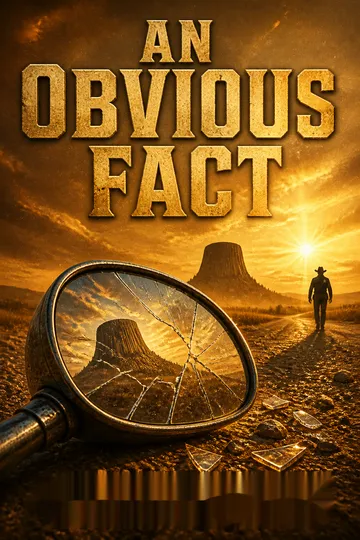
An Obvious Fact, the twelfth Walt Longmire mystery, finds Sheriff Longmire, Henry Standing Bear, and Vic Moretti investigating a motorcycle hit-and-run near Devil's Tower during the Sturgis rally. Readers meet the infamous Lola, namesake of Henry's Thunderbird and Walt's granddaughter. Reviews praise Johnson's trademark humor and character banter, though some note less mysticism and depth than earlier entries. The mystery involves biker gangs, ATF agents, and illegal gun trafficking. Most reviewers rated it 4-5 stars, appreciating the entertaining plot and beloved characters, though a few found it less compelling than previous books.
People Also Read
Characters
Walt Longmire
The stubborn county sheriffWalt is the sheriff of Absaroka County, visiting Hulett with his longtime friend Henry when a local officer asks for help. He distrusts easy conclusions, relying on physical evidence and careful questioning, but he is also drawn toward people who cannot defend themselves. His tenderness toward his daughter Cady and his growing concern for Bodaway expose the personal motive beneath his procedural discipline. Walt often bends rules when he believes delay will let a dangerous person escape, then carries the moral weight of that choice himself.
Henry Standing Bear
Walt's fearless lifelong friendHenry is a Cheyenne leader, business owner, and Walt’s closest friend. His calm manner and broad knowledge can make him seem unreadable, while his loyalty is fierce and physical when a friend is threatened. He returns to the Sturgis hill climb each year, treating the dangerous race as a discipline rather than a stunt. Lola’s arrival unsettles him because it reconnects him to a younger version of himself, one whose choices may have consequences he never knew.
Victoria Moretti
The fearless undersheriffVic is Walt’s undersheriff, a Philadelphia law officer with formidable driving and shooting skills. She is blunt where Walt is reflective, and her humor often exposes the sentiment he would rather disguise. She is grieving her brother Michael’s death and frustrated by the stalled investigation into it, yet she still travels to support Walt and help him work the Hulett case. Vic’s loyalty is active rather than soothing: she challenges Walt, takes risks beside him, and expects him to acknowledge what he is doing.
Lola Wojciechowski
The dangerous returning flameLola is Bodaway’s mother and Henry’s former lover, a magnetic woman who knows how to command attention and redirect a conversation. She has spent years in the orbit of the Tre Tre Nomads and understands the protection and obligations that club membership offers. Her fierce concern for Bodaway is genuine, but she withholds information and treats trust as something to bargain with. That mixture makes her difficult for Walt to read and makes Henry wary of mistaking her need for honesty.
Bodaway Torres
The silenced bikerBodaway is a Tre Tre Nomad from Arizona whose severe brain injury leaves him unable to explain the crash that brought Walt to Hulett. His phone records and relationships become the case’s main map. People describe him as handsome and popular, but the investigation reveals that he is also entangled in adult loyalties and dangerous business. His inability to speak gives the story a difficult center: others must decide how to protect him without claiming certainty about what he wanted.
Bob Nance
The wealthy local benefactorNance is a prosperous entrepreneur and a powerful presence in Hulett, where his donations support local projects and the police department. He is polished, protective of his daughter, and accustomed to being welcomed into influential spaces. His technical background gives him a connection to materials science, while his control of money and property lets him shape the environment around him. Walt’s investigation steadily tests the distance between Nance’s public generosity and his private interests.
Billy ThE Kiddo
The volatile biker celebrityKiddo is a television-famous motorcycle builder with a violent temper, a talent for fabrication, and an appetite for attention. His public persona as an outlaw blurs into real intimidation, making him a plausible suspect and an unreliable witness. Beneath the performance, he has debts and ambitions that leave him vulnerable to richer people who know how to use his skills.
Brady Post
The club's hard-edged spokesmanPost presents himself as an enforcer and spokesman for the Tre Tre Nomads. His physical confidence and insistence on access to Bodaway’s case make him a threat to local law enforcement. Yet his approach suggests that his role in the club and his interest in the investigation are more complicated than they first appear.
Corbin Dougherty
Hulett's pressured deputyCorbin is the young officer investigating Bodaway’s crash during a week when Hulett’s population and workload swell with rally visitors. He calls Walt for help when club members pressure him for answers. Though inexperienced in a volatile scene, he is earnest and willing to learn, and Walt treats him as a colleague rather than a subordinate.
Chloe Nance
The protected witnessChloe is Bob Nance’s daughter, an aspiring actress whose past struggles have made her father fiercely protective. She is connected to Bodaway and is the person who finds him after the crash, but she resists Walt’s questions. Her guardedness reflects both her father’s influence and her own wish to control what others know about her.
John Stainbrook
The senior federal investigatorStainbrook arrives from the ATF after Post’s death and brings knowledge of the federal weapons investigation. He is wary of local improvisation but recognizes that Walt has become deeply involved. His careful disclosures reveal how agencies protect information even when cooperation would help solve a murder.
Cady Longmire
Walt's grieving daughterCady is Walt’s daughter, a new assistant attorney general in Cheyenne and mother to a young child named Lola. She is grieving her husband Michael while building a new life and finding childcare. Her calls with Walt reveal their warmth and familiar teasing, as well as his instinct to remain close even when she is hundreds of miles away.
Mike Novo
The motorcycle crash expertNovo is a Division of Criminal Investigation traffic specialist whose knowledge of motorcycle dynamics helps Walt distinguish a simple loss of control from a crash involving extra weight or a passenger.
William Nutter
Hulett's seasoned police chiefNutter is Hulett’s longtime police chief, a practical, dry-humored officer managing a tiny department through the overwhelming Sturgis rally. He accepts help when the case exceeds his resources, even as he worries about the trouble Walt brings into town.
Big Easy
Bodaway's imposing guardBig Easy is a massive Tre Tre Nomad assigned to protect Bodaway at the hospital. His size makes him an effective deterrent, though his presence cannot prevent the investigators from finding their own way into the case.
Eddy the Viking
The rally's drunken regularEddy is a familiar Hulett rally figure whose comic, drunken manner causes trouble. His past work for Kiddo gives him one useful piece of information about Nance’s hidden property.
Plot Devices
The damaged Harley
Physical evidence of impactBodaway’s crushed motorcycle carries the first evidence that the crash may not have been an ordinary accident. Gold paint on the bike corresponds to damage on Lola’s Cadillac, while the location of the bike and road debris invite a closer reconstruction. Novo’s analysis adds the possibility of a passenger or heavy load. Together, these clues keep the investigation grounded in material facts even when Lola, the club, and Nance all offer incomplete accounts.
Bodaway's phone
A map of hidden tiesThe phone connects Bodaway to Chloe, Lola, Post, Kiddo, and other contacts. Its late message sends Walt to the golf course, while its call history reveals relationships the people around Bodaway have not volunteered. The phone does not explain the crash by itself; instead, it directs Walt toward witnesses and competing motives. It also becomes a practical lifeline for communication as Walt works far from his own department.
The polymer cube
A sample of forbidden technologyThe small khaki cube hidden in Post’s motel room is initially opaque and nearly impossible to identify. Stainbrook recognizes it as an advanced synthetic polymer linked to an undetectable weapons project. Its discovery connects the local motorcycle businesses to an old government controversy, earlier deaths, and Nance’s technical and financial history. The object gives Walt a tangible bridge between Post’s murder and the larger conspiracy.
The Pequod
A donated battering ramHulett’s fifteen-ton MRAP is an expensive gift from Nance, awkwardly oversized for a small police department and almost impossible for Chief Nutter to operate. Walt first drives it through town to reach a fuel pump. Later, he uses its armored body to withstand gunfire and breach the bunker Nance built. The vehicle’s reversal of ownership gives the climax a concrete irony: Nance’s donation becomes the instrument that blocks his escape.
Post's recording wire
A voice from the conspiracyThe tiny recorder recovered from Post’s clothing preserves fragments of a tense meeting with a source who refuses to identify the operation’s leader. Its incomplete audio does not solve the case, but it verifies that Post was pursuing a concealed weapons scheme and that someone near him was frightened of discovery. Combined with the polymer sample and Stainbrook’s account, it turns an otherwise unrecorded murder into part of a traceable federal investigation.
Walt Longmire Series
About the Author
Other books by Craig Johnson
Download PDF
Download EPUB
.epub digital book format is ideal for reading ebooks on phones, tablets, and e-readers.








