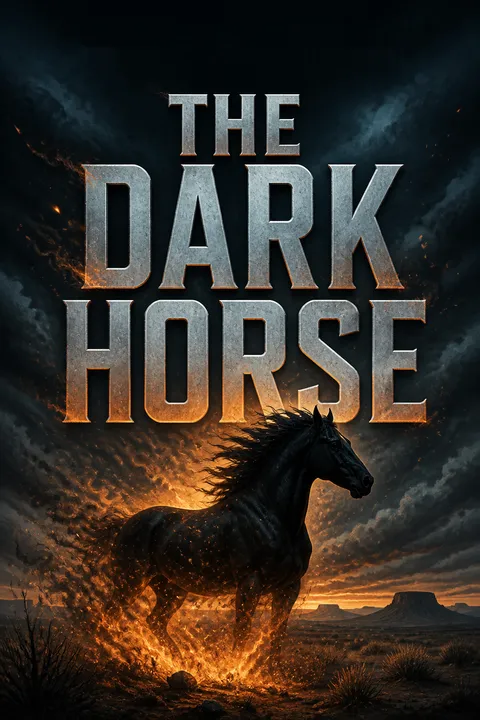


Plot Summary
Six Shots, No Certainty
Sheriff Walt Longmire has been sleeping at his county jail since his daughter, Cady, left Wyoming. When Campbell County transfers Mary Barsad to his custody, he learns she allegedly shot her husband, Wade, six times while he slept, then set their home ablaze. The public story is that Wade had burned Mary’s prized horses alive, giving her a reason to kill him.
Mary confirms the shooting repeatedly, yet she seems too consumed by grief to meet Walt’s expectations of a guilty person. He also notices that the sparse report cannot explain why anyone would burn a barn full of valuable horses and then go to bed. Though this is outside his jurisdiction, Walt begins to suspect that the confession has closed the case too neatly.
Walt’s first doubt comes from the mismatch between the legal account and Mary’s visible distress, not from a clever technicality. His response is shaped by his own recent separation from Cady: he is lonely, but his attention to Mary is not simply a substitute attachment. He recognizes a form of grief that the official file has flattened into motive and confession. The case begins with a moral problem as well as a mystery: whether a person’s apparent lack of remorse can be treated as evidence, and whether an investigator can listen when a suspect’s behavior does not fit the story the authorities have already accepted.
Wade’s Long Ledger
Walt calls Campbell County Sheriff Sandy Sandberg and asks why Wade’s death seems so straightforward. Sandy names rancher Bill Nolan, the unpaid cowhand Hershel Vanskike, bar owner Pat, and hired hand Cliff Cly among the men who had reason to hate Wade.
Wade had cheated neighbors, withheld wages, and blocked Nolan’s access across land he had sold. He was also hiding money from the IRS and from Mary, who had filed for divorce.
A federal report adds a larger danger: Wade was formerly Willis Barnecke, an embezzler tied to organized crime who entered witness protection after cooperating with investigators. A list of names and accounts he kept on tiny notes remains missing. Walt decides the confession is not enough and accepts Sandy’s offer to fund his inquiry.
Wade’s history turns a seemingly local murder into a collision between private grievance and institutional protection. His money has not made him secure; it has multiplied the people he can exploit and the people who may come looking for him. The missing list functions as more than a clue because it gives Wade’s past a continuing claim on the present. Walt’s decision to investigate is therefore not simply an act of compassion for Mary. It is an attempt to determine whether a closed case has left a dangerous man, or a dangerous secret, beyond the reach of the law.
Sleep Without Rest
At night, Walt finds Mary standing at her cell bars, crying and speaking as if she were tending horses that are not there. On another occasion she believes the animals are injured and that fire is approaching. Her behavior unsettles Walt, while his undersheriff, Victoria Moretti, recognizes the possibility of sleepwalking.
Walt and deputy Sancho Saizarbitoria examine the medical file and learn that Mary suffered chronic insomnia and had sedative-hypnotics in her bloodstream. The drugs can cause complex behaviors during sleep, and Mary had used them for nearly two years.
When she eventually talks, she describes recurring images of burning horses and says Wade claimed he had killed her champion mare, Wahoo Sue. Her fractured memories make the confession less reliable, but do not yet explain what happened.
The sleep episodes give the investigation a psychological dimension without turning Mary’s distress into a convenient diagnosis. Her body appears to remember what her conscious account cannot organize, and the horses recur as both beloved animals and the center of a trauma she cannot master. Walt’s willingness to take these episodes seriously contrasts with the report’s preference for stable, repeatable statements. Yet the medication is not proof of innocence by itself. The narrative keeps uncertainty alive: altered awareness may explain Mary’s confusion, but it also leaves open the possibility that someone deliberately used that confusion.
The Hospital Scalpel
During a hospital examination, an intruder knocks over the treatment table and leaves a small scalpel lodged in Mary’s throat. Vic and Dr. Isaac Bloomfield control the bleeding and keep Mary breathing until Bloomfield can clamp the damaged vessel.
After Mary survives, Walt returns to her with the case file and asks for the sequence of that night. She recalls leaving the ranch, returning to find Wade and her horse gone, then being drawn toward the burning property by a familiar male voice.
She says she fired only three times, and that the voice urging her to shoot sounded like Wade’s. The six shots in the official account no longer fit her memory. Someone has now tried to kill the one person whose confused recollections could expose how the scene was staged.
The hospital attack makes the case’s uncertainty materially dangerous. Mary is not merely a witness whose memory is unreliable; someone is willing to prevent her from speaking at all. Walt’s response is both procedural and personal: he helps keep her alive, then treats her account as evidence rather than as a confession already settled. Her recollection of Wade’s voice complicates the idea of a simple hallucination, while the discrepancy between three remembered shots and six recovered bullets suggests another participant. The scene shifts the question from whether Mary is guilty to who benefits from her being judged guilty.
The Town Called Absalom
To investigate on the Powder River without announcing his office, Walt travels to Absalom posing as insurance claims investigator Eric Boss, using the real investigator’s paperwork. The town meets him with closed doors and warnings. At the failing AR bar, its owner Pat claims every motel room is unavailable, but bartender Juana Balcarcel finds him one anyway.
Her young son, Benjamin, steals Walt’s business card from the rental car, correctly guessing that the visitor is more than an insurance man. Juana has studied law enforcement and reads Walt’s manner closely, though she does not expose him. Her sharp intelligence and Benjamin’s daring give Walt his first allies in a place where people are practiced at keeping outsiders at a distance.
The disguise gives Walt access while also staging the central tension between appearance and knowledge. In Absalom, people judge his hat, car, and paperwork, but Juana looks past the costume because she has learned to read authority from its habits. Benjamin’s theft is childish and consequential at once: it tests the danger around Walt and establishes the boy as observant rather than merely mischievous. Their household offers a contrast to the town’s collective silence. Juana is vulnerable because of her immigration status, yet she is not passive; her expertise and judgment let her participate in the investigation on her own terms.
Seven Horses Burned
Walt examines the ruin of the Barsad ranch and finds the bedroom obliterated along with the barn and house. There he meets Hershel Vanskike, Wade’s underpaid ranch hand, who shares a beer and describes Mary as an exceptional horsewoman.
Hershel corrects the town’s story: seven horses died, not eight. Before the fire, Wade loaded Wahoo Sue, Mary’s famous black mare, into a trailer and returned without her. Hershel believes Wade hated animals and suspects Mary may not have killed him.
Later, Walt discovers the cowhand’s cramped trailer plastered with photographs of Mary from her riding career. The old man’s affection for her is unmistakable, but his account also establishes that the missing mare may still be somewhere on the wide, isolated range.
The missing horse makes the alleged motive more complicated. Mary’s attachment to her animals is real, but Wade’s cruelty may have been part of a longer pattern rather than a single explosive event. Hershel’s photographs reveal how devotion can survive without possession: he has preserved Mary’s image in a lonely trailer, but his reverence also risks making him an unreliable witness. The ranch ruins, by contrast, offer no clean answer. Fire has erased the material scene while leaving scattered tracks in the testimony. The case now depends on people whose loyalties, shame, and solitude shape what they are able to say.
A Shotgun in the Dark
At the AR, Walt encounters Cly, a swaggering ranch hand who boasts about the coming tough-man contest, and Mike Niall, an old rancher Wade had cheated. Later, Walt hears a heated meeting behind the bar and slips inside.
Pat approaches with a shotgun, and Walt knocks him unconscious before another man fires a pistol through the bar and flees in a large red Dodge without license plates. Walt’s shotgun proves nearly useless because it has only one shell.
Campbell County deputies arrest him, but Sandy and retired sheriff Lucian Connally secure his release. Pat gives them a false account of the shooting, and the motel residents say little. Juana later confirms that a red truck left the scene, linking the violence to a vehicle Walt has already noticed.
The gunfight turns Absalom’s unfriendliness into active obstruction. The town’s silence is not proof that everyone is complicit, but it protects whoever can move through it armed and unseen. Walt’s empty shotgun underlines the cost of acting alone: his training helps him survive, yet he has entered a situation with incomplete information and no reliable backup. Sandy and Lucian’s intervention restores his freedom without restoring his cover. Juana’s observation becomes valuable because she is willing to notice what others choose not to report. Her account also shifts the investigation toward the red Dodge and the relationships hidden behind ordinary local traffic.
The Road to Longmire
At Bill Nolan’s auction, Walt asks about Wade and then follows Bill to the ranch where Walt grew up. The visit returns him to his parents’ home after years of avoiding it, and Bill finally recognizes his old schoolmate beneath the insurance disguise. Bill admits he and Mary were friends; she gave him sleeping pills when he could not sleep.
He denies killing Wade, but his new red Dodge resembles the truck from the bar and has been used by Hershel. Bill’s explanations leave room for suspicion, while the childhood landscape pulls Walt into grief he has kept at a distance. At the auction, Walt also outbids Bill for a battered horse trailer, giving Hershel and Benjamin a way to travel toward the remote Battlement.
Bill’s journey with Walt joins investigation to memory. The ranch is not a sentimental refuge: it makes Walt confront the physical place he abandoned after his parents died. Bill’s delayed recognition demonstrates how thoroughly Walt’s disguise has altered his social identity, while the sleeping pills make Bill a possible conduit between Mary and the crime. Walt neither treats old friendship as exoneration nor discards it as irrelevant. The horse trailer purchase is equally telling. He turns attention outward, toward Benjamin and Hershel’s proposed journey, at the moment his own return home threatens to pull him inward.
The Fight Takes Over
Before the town’s boxing contest, Cady calls Walt from Philadelphia and tells him that Michael Moretti, Vic’s brother, has proposed marriage. She has not decided, and Walt encourages her to take the time she needs. At the AR, Henry Standing Bear enters the contest despite his age and injures his hand. When Cly mocks Cady and spits beer on Walt, Walt climbs into the ring and knocks him down with a blow that starts a brawl.
Henry protects Walt as chairs and bottles fly. The fight draws attention to the undercover sheriff and leaves Cly badly hurt, but it also breaks Walt’s spell of passivity: his anger about Cady, Mary, and his own unsettled life erupts in public, with consequences for both the investigation and his body.
The fight is a deliberately poor solution to emotional pressure. Walt has been trying to keep his private grief separate from his professional judgment, but Cly’s insult collapses that boundary. His violence is effective in the immediate contest and damaging in the larger investigation, because it makes him more visible and risks turning inquiry into retaliation. Henry’s presence has a different function: he helps Walt act, then protects him from the crowd’s response. Cady’s undecided engagement parallels her father’s difficulty accepting change. Walt can advise her to choose freely, but he cannot make distance feel safe.
The Mesa Takes Its Due
Walt, Hershel, and Benjamin ride onto the Battlement with the refurbished trailer. Hershel reveals that a Campbell County contact says Cly was never properly tested about Wade’s murder. While Benjamin and Dog collect wood, an ATV carries the boy away. Hershel rides back toward town for help, leaving Walt to follow the tracks through worsening weather.
At the trailer, Walt finds a note and discovers that the trail has turned east. He later finds Hershel shot in the back and head, then drinks from the canteen Wade has poisoned. Still moving through the drugged fog, Walt follows the tracks to a barren circle where Wahoo Sue is chained and starving. Wade appears alive beside her, and Cliff Cly arrives carrying Hershel’s rifle.
The mesa gathers the story’s scattered dangers into one exposed place: a missing child, a murdered witness, a poisoned sheriff, and a horse kept alive only to be tortured. Hershel’s death is especially cruel because he has spent the story protecting Mary through loyalty rather than authority. The poison makes Walt’s competence bodily fragile; he must reason while his perception and coordination fail. Wahoo Sue’s confinement literalizes Wade’s control over the landscape and its inhabitants. The circle’s isolation also strips away the town’s protective silence. Whatever happens next must be decided by the people physically present.
The Dark Horse Runs
Wade reveals that the body identified as his was his brother’s, whom he killed to fake his death and collect insurance money while escaping pressure from the mob and FBI. He had drugged Mary and made her shoot the corpse, leaving her with a false memory of killing Wade.
Cly, now exposed as an FBI agent, has secretly helped Benjamin escape on the ATV. Wade shoots Cly, and Walt, barely conscious, frees Wahoo Sue from her chain and rides her off the mesa. After finding Benjamin with Henry, Walt draws Wade’s red Dodge onto the condemned bridge.
Sue leaps the barriers; the truck breaks through the weakened planks and becomes stranded. Walt uses a lariat to disarm Wade and bring him into custody. Cly survives, and Wade’s staged death finally collapses.
The revelations do not simply replace one culprit with another; they explain how coercion made Mary’s confession appear convincing. Wade used the sedatives, his wife’s trauma, and a dead body to turn her into the apparent author of his crime. Cly’s concealed identity complicates the opposition between law and deception: he has lied, but his actions give Benjamin a chance to flee. The climax’s decisive partnership is not between men and their weapons, but between Walt and the mare he rescues. Sue’s speed defeats the truck’s force, while the compromised bridge turns Wade’s engineered escape into a trap.
A Fortune Under Brass
After Wade’s arrest, Walt understands that Hershel’s repeated claim about his fortune was a warning. In the brass plate on the Henry rifle, he finds Wade’s missing kite, a tiny paper record of names and accounts that can expose the people Wade was protecting himself from.
The remaining consequences settle into view: Bill is cleared, Pat faces a conspiracy charge, Cly recovers, and the FBI continues searching the burned ranch for evidence. Wade faces two life sentences but withholds information.
Walt is reelected sheriff. Mary intends to rebuild the ranch that was hers before Wade claimed it, while Juana plans to finish her education and Benjamin returns to school. Their plans do not erase what happened, but they are no longer being dictated by Wade’s lies.
The hidden kite makes Hershel’s apparent eccentricity legible without reducing him to a puzzle box. He trusted Walt only enough to leave a clue embedded in an object tied to military history and his own idea of fortune. The list remains dangerous, so the resolution is not a fantasy of total justice: Wade can still withhold names, and the wider network may persist. Yet the people he tried to define by fear recover some agency. Mary chooses to rebuild, Juana chooses a profession, and Benjamin returns to ordinary life. Their futures are practical acts of repair rather than declarations that the damage has vanished.
Epilogue
On November 7, Walt waits beside the new bridge on crutches as Juana, Benjamin, and Mary arrive. Benjamin greets Dog, while Mary goes straight to Wahoo Sue in the horse trailer and the mare presses close to her. Mary confirms that she will rebuild her ranch.
After they leave, Walt watches Mike Niall drive his hay truck across the new span, then takes off his black hat and throws it into the river. He keeps his badge. The gesture separates the identity he wore in Absalom from the work he has chosen to continue.
The final image does not offer a clean return to the old life. The condemned bridge has been replaced by a safer, blander crossing, and Walt must use crutches, reminders that survival has left marks. He discards the black hat, a prop of the false identity that carried him into Absalom, but keeps the badge, choosing the obligation beneath the disguise. Mary’s reunion with Sue and decision to rebuild place care and ownership back in her hands. Niall’s crossing supplies a quieter counterpoint: taking a risk is no longer only the province of the young or reckless.
Analysis
The novel treats confession not as a conclusion but as an object that must be interpreted. Mary’s repeated admission appears to resolve the case, yet the conditions around it are compromised by insomnia, sedatives, trauma, and Wade’s ability to control the scene. The story asks readers to distinguish between a statement’s legal usefulness and its psychological truth. Walt’s attention to what does not fit becomes an ethical practice: he resists converting Mary’s demeanor into proof simply because the county wants a complete account.
Absalom’s isolation is social as much as geographical. The town’s residents have been cheated, indebted, frightened, or simply trained not to volunteer information. Their silence is not uniform guilt; it is a survival strategy in a place where the person with money can own the bar, the land, and the narrative. Juana’s sharp observations, Hershel’s loyalty, and Bill’s evasions show how truth travels through relationships rather than through official channels alone. Walt’s undercover identity exposes the limits of formal authority, since a badge cannot compel trust once he removes it.
The horses make power visible. Wade’s treatment of them expresses the same possessiveness he directs toward people, while Mary’s skill with them marks a form of attention that is reciprocal rather than coercive. Wahoo Sue’s escape depends on patience, bodily trust, and the strength Wade failed to extinguish. The final contrast between horse and truck is not a rejection of modernity so much as a reminder that efficiency and force cannot solve every problem.
Walt’s personal arc runs beside the investigation. Cady’s departure and uncertain engagement leave him with little control over the people he loves. He cannot protect her by making her choices for her, just as he cannot rescue Mary by accepting her confession at face value. His work becomes a way to act responsibly without pretending that responsibility guarantees safety. The conclusion offers repair, not restoration: Mary can rebuild, Juana can study, and Walt can keep serving, but the missing kite and the scars of the case leave the world unresolved.
Review Summary
The Dark Horse receives mostly positive reviews, with readers praising the well-developed characters, engaging plot, and vivid Wyoming setting. Many appreciate Walt Longmire's character and his relationships with other recurring characters. Some note that the narrative structure, alternating between two timelines, can be confusing. The audiobook narration by George Guidall is highly praised. While a few readers found the pacing slow at times, most consider it a strong entry in the Longmire series, with its blend of Western and mystery elements.
People Also Read

Characters
Walt Longmire
The listening sheriffWalt is the sheriff of Absaroka County, a former Marine and a widower whose humor often shields a deep reserve of grief. He trusts careful observation, but his strongest instinct is to notice when a person has been reduced to a convenient story. Cady’s departure has left him emotionally adrift, and Mary’s case gives that unsettled energy a purpose. He is compassionate without being naïve: he challenges evidence, questions his own assumptions, and accepts that help may come from people whose methods he does not fully understand. His authority matters less to him than the responsibility it creates, though his stubbornness can make him take risks alone.
Mary Barsad
The guarded horsewomanMary is a gifted rider and trainer whose life has been narrowed by a turbulent marriage, insomnia, and the loss of the horses she raised. She is physically resilient but emotionally withdrawn, often protecting herself with silence rather than trying to persuade people to like or believe her. Her apparent lack of repentance unsettles those who expect a suspect to perform guilt in familiar ways. Her bond with animals gives her an identity separate from her husband’s wealth and power. Mary’s difficulty telling her story is not the same as indifference; she carries memories in fragments and resists turning private pain into a performance for investigators.
Wade Barsad
The polished predatorWade is a wealthy newcomer to the Powder River country who buys land, businesses, and influence while treating local people as obstacles or instruments. He is handsome, socially adept, and skilled at presenting himself as more successful than he is. His contempt for ranch life sits uneasily beside his control of a ranch, and his dealings leave neighbors financially and emotionally bruised. Wade’s charm is not warmth so much as a tool for getting past other people’s defenses. His history of reinvention suggests a man who sees identity as something to manipulate, while his need to control those around him reveals how little security his money can buy.
Victoria Moretti
Walt’s sharp undersheriffVic is Walt’s undersheriff, a former Philadelphia officer with a quick temper, practical intelligence, and a strong grasp of police procedure. She can move from flirtation to blunt professional challenge without losing sight of the work. Her skepticism keeps Walt from mistaking instinct for proof, while her loyalty makes her willing to stand beside him when the case crosses jurisdictional and political boundaries. She is also considering what authority would demand of her if she took on more responsibility. Vic resists being defined by either her competence or her relationship with Walt, and she expects him to take her ambitions seriously.
Henry Standing Bear
Walt’s steadfast friendHenry is Walt’s longtime Cheyenne friend, a broad, observant man whose stillness can conceal both humor and resolve. He understands the cultural and historical landscape around Absalom and is comfortable acting without explaining himself to outsiders. His loyalty to Walt is intimate but not submissive: he challenges him, notices when he is emotionally stuck, and intervenes in ways Walt may resist. Henry’s relationship with the past is active rather than nostalgic, shaped by family memory, Cheyenne knowledge, and a sharp sense of what people choose not to see. He offers Walt companionship without demanding that grief be discussed on command.
Juana Balcarcel
The watchful bartenderJuana is a Guatemalan bartender living without legal status in Absalom and raising Benjamin largely on her own. She has studied criminal justice and has learned to read people quickly because mistakes carry practical risks. Her wit and directness protect her from being dismissed, while her care for her son remains visible beneath her guarded manner. Juana sees through Walt’s cover but chooses how much to reveal, making her an active participant rather than a source of information to be used. Her interest in further study reflects an ambition she has had to postpone, not abandon.
Benjamin Balcarcel
The small-town outlawBenjamin is Juana’s twelve-year-old son, half Cheyenne, bold enough to steal Walt’s card and observant enough to recognize that the supposed insurance man is a law officer. He uses bravado and cowboy play to manage a life marked by absence, including the loss of his father. His curiosity about horses, history, and the Battlement gives him a world larger than Absalom’s narrow streets. Benjamin’s mischievousness is not carelessness; when danger comes, he can listen, improvise, and act with more courage than adults expect.
Hershel Vanskike
The old horsemanHershel is an aging ranch hand who has spent years working for Wade and living in a modest sheep wagon. He values horses, old weapons, and the sparse rituals that make a hard life bearable. His affection for Mary is expressed through loyalty and preserved photographs, but he does not confuse devotion with ownership. Hershel is suspicious of titles and institutions, preferring to judge people by how they behave when no audience is present. His humor, poverty, and eccentric beliefs can make him seem harmless, yet his memory holds details others overlook.
Bill Nolan
The displaced rancherBill is a lifelong Powder River rancher and Walt’s childhood schoolmate. Years of selling family land and dealing with Wade have left him tired of ranching and ready to try life in Denver. He is personable, but alcohol and grief have become part of his daily rhythm. His old connection to Walt gives him a way to speak about the landscape and the past, though friendship cannot substitute for evidence. Bill’s uncertain future mirrors the broader changes around Absalom, where family holdings and old routines are being traded for new forms of wealth.
Cliff Cly
The swaggering contenderCly arrives in Absalom as a loud, physically confident ranch hand with a taste for drinking, provocation, and public contests. He makes himself easy to dislike by using other people’s vulnerabilities as entertainment, particularly when he taunts Walt. His confidence draws attention, but his presence also complicates the town’s shifting loyalties. Cly is difficult to read because his bluster may be performance as much as personality. He is one of several men whose apparent role in the Barsad affair invites suspicion.
Cady Longmire
Walt’s distant daughterCady is Walt’s daughter, a Philadelphia lawyer whose move back east leaves her father struggling with the silence of home. She is independent, warm, and accustomed to making decisions under pressure, but her recent relationship history gives her reason to move carefully. Her conversations with Walt carry affection and irritation in equal measure. She wants him to respect her judgment rather than protect her by default. Her uncertainty about commitment tests whether Walt can remain close to her without trying to control the risks she chooses.
Sandy Sandberg
The easygoing sheriffSandy is the sheriff of Campbell County and a friend whose genial manner can obscure how much he knows. His department is overwhelmed, which makes him willing to let Walt pursue a case he cannot prioritize. He respects Walt’s instincts but also has to negotiate the political and federal pressures surrounding Wade. Sandy’s humor softens difficult conversations, though his choices about what to disclose reveal the limits of friendship inside law enforcement.
Pat
The guarded bar ownerPat owns the AR and controls the town’s main gathering place, where business, gossip, and intimidation overlap. He is wary of outsiders and uses his authority over rooms and drinks to manage the people who depend on the bar. His relationship with Wade has left him financially entangled, and his guarded behavior makes him hard to separate from the town’s wider silence. Pat is practical rather than polished, and his self-protective instincts often outweigh honesty.
Dog
Walt’s loyal companionDog is Walt’s huge, shaggy dog, a constant presence at the jail and on the trail. He reads people through posture and scent, offering a form of companionship that does not require explanation. His easy attachment to Juana and Benjamin helps soften their first meetings with Walt, while his instinctive reactions sometimes alert Walt to danger. Dog is not merely a mascot for the sheriff; he anchors Walt in daily routine when grief and sleeplessness threaten to pull him into isolation.
Lucian Connally
The retired sheriffLucian is Walt’s former boss, a retired sheriff whose bluntness and hard-won judgment still shape the department. He knows when to mock Walt and when to quietly show up for him. His long experience gives him a practical understanding of danger, but he does not mistake caution for wisdom in every situation. Lucian represents the institutional history Walt inherited, including its rough humor and its obligations to people in trouble.
Wendell Barnecke
Wade’s estranged brotherWendell is Wade’s brother in Ohio, a dentist who wants no part in the Wyoming investigation. His clipped answers suggest a long history of disappointment and resentment. He speaks of Wade’s debts with the weariness of someone who has been left to manage consequences from a distance.
Eric Boss
The insurance investigatorEric Boss is a Montana insurance investigator handling the large claim connected to the Barsad ranch. He asks Walt to look into possible fraud after another investigator has a frightening experience in Absalom. His professional interest gives Walt a plausible reason to enter the town without immediately announcing his badge.
Mike Niall
The stubborn old rancherMike Niall is an elderly rancher who has lived beside the Powder River for most of his life. He distrusts outsiders, speaks plainly, and has his own history of being cheated by Wade. His stubborn attachment to the old bridge and the old country makes him a measure of how quickly the region is changing.
Plot Devices
Sedative-hypnotics
Unreliable memory mechanismMary’s long-term use of insomnia medication creates the possibility of complex behavior while she is not fully conscious. The drugs help explain her sleepwalking, fragmented memories, and confusion around the night of the fire, but they do not by themselves prove what happened. Wade’s exploitation of that vulnerability turns a medical detail into a tool of coercion. The device keeps the investigation psychologically uncertain until physical evidence and other witnesses can test Mary’s account.
Eric Boss’s identity
Undercover accessWalt poses as insurance investigator Eric Boss to enter Absalom without openly invoking his authority as sheriff. The claim gives him a plausible reason to ask about the fire, the house, and the horses, while his unfamiliar clothes and manner make locals suspicious. Juana quickly recognizes that his cover is incomplete. The disguise provides access, but it also forces Walt to rely on observation and local trust rather than the direct power of his badge.
Wade’s missing kite
A secret hidden in plain sightWade’s tiny paper notes contain names and financial information connected to the criminal world he left behind. Their absence keeps both his former associates and federal investigators interested in him. Hershel repeatedly refers to his fortune being in an antique Henry rifle, but Walt initially treats the remark as an eccentric attachment to the weapon. The clue eventually leads Walt to the note concealed under the rifle’s brass plaque, where a physical object preserves the secret that Wade has been hunting.
Wahoo Sue’s chain
A test of earned trustWade chains Mary’s prized mare in a bare circle on the Battlement, keeping her alive but starving and injured. The setup reveals his cruelty and gives the missing horse a concrete role in the mystery. Walt cannot free Sue by force without risking her panic and his own life, so he approaches slowly with a treat and the gentle routine Mary used with horses. Their brief trust becomes the means of escape and the turning point in the chase.
The condemned bridge
A narrowing path to justiceThe condemned Powder River bridge is introduced as a familiar local structure scheduled for removal. Its weakened planks and blocked approaches later force Walt and Wade into a final confrontation. Walt’s horse can cross where Wade’s heavy truck cannot safely follow, reversing the apparent advantage of modern power over animal speed. The bridge becomes both a practical trap and a boundary between the town’s old, compromised order and a new, uncertain one.
FAQ
Synopsis & Basic Details
What is The Dark Horse about?
- Undercover Quest for Truth: Sheriff Walt Longmire goes undercover as an insurance investigator in the desolate Wyoming town of Absalom, driven by an instinct that Mary Barsad, accused of murdering her husband Wade, is innocent despite her confession.
- Unraveling Deception: Walt navigates a community steeped in secrets, encountering characters like the enigmatic bartender Juana, the loyal cowboy Hershel, and the embittered rancher Bill Nolan, all while uncovering Wade Barsad's shadowy past involving organized crime and a faked death.
- Personal & Professional Stakes: As Walt delves deeper into the complex web of murder, arson, and identity fraud, he faces personal challenges, including his daughter Cady's life choices and his own emotional turmoil, all leading to a dangerous confrontation with the true antagonist.
Why should I read The Dark Horse?
- Deep Psychological Insight: The novel offers a profound exploration of trauma, grief, and resilience, particularly through Mary Barsad's dissociative state and Walt's own struggles with loss, making for a rich character study.
- Masterful Blend of Genres: Craig Johnson seamlessly weaves classic Western noir with elements of mystery, humor, and poignant emotional depth, set against the rugged, symbolic landscape of Wyoming, offering a unique reading experience.
- Subtle Thematic Layers: Beyond the thrilling plot, the book delves into themes of justice, identity, the nature of truth, and the enduring human-animal bond, rewarding readers who appreciate nuanced storytelling and rich symbolism.
What is the background of The Dark Horse?
- Wyoming's Desolate Beauty: The story is set in the fictional, isolated town of Absalom, Wyoming, a place described as "halfway between woebegone and far away," reflecting the harsh, unforgiving, yet beautiful high-plains environment that shapes its inhabitants.
- Biblical Allusion & Local Lore: The town's name, Absalom, is a direct biblical reference to King David's rebellious son, subtly foreshadowing themes of betrayal and conflict, while local legends and historical events, like the buffalo soldier incident, ground the narrative in a rich, often violent, Western past.
- Economic & Social Undercurrents: The narrative touches upon the impact of energy development (methane gas) on rural communities, the struggles of family ranches, and the insular nature of small-town life, where distrust of outsiders and a strong sense of self-reliance are prevalent.
What are the most memorable quotes in The Dark Horse?
- "dark horse: noun 1 a: a usually little known contender (as a racehorse) that makes an unexpectedly good showing b: an entrant in a contest that is judged unlikely to succeed 2: a person who reveals little about himself or herself, esp. someone who has unexpected talents or skills": This opening definition is a powerful piece of The Dark Horse symbolism, directly foreshadowing the unexpected turns of the plot and the hidden depths of characters like Walt, Mary, and Wahoo Sue.
- "I think our hearts are the most fearless organ we've got, considering how often they'll make the same mistake, over and over again.": Walt's poignant reflection on the human heart, shared with Mary Barsad, encapsulates a central theme in The Dark Horse about vulnerability, resilience, and the repeated pursuit of connection despite past pain, offering deep Walt Longmire analysis.
- "You know, one of the worst images perpetrated on society is the idea of a cowboy with a gun — you give a real cowboy a choice between a gun and a rope and he'll take the rope every time, because that's how he makes his living. No self-respecting cowboy makes a living with a gun.": This quote, delivered by Walt during the climax, defines his core philosophy and the true spirit of the West, contrasting genuine skill and purpose with destructive force, providing key Walt Longmire motivations explained.
What writing style, narrative choices, and literary techniques does Craig Johnson use?
- First-Person, Introspective Voice: The novel is narrated by Walt Longmire, offering readers direct access to his dry wit, philosophical musings, and deep emotional landscape, creating an intimate and engaging reading experience that defines Craig Johnson's writing style.
- Rich Sensory Detail & Pacing: Johnson employs vivid descriptions of the Wyoming landscape, weather, and the physical sensations of action, immersing the reader in the setting. The narrative balances moments of quiet introspection with sudden bursts of intense action, building suspense effectively.
- Subtle Foreshadowing & Allusion: The author masterfully plants subtle clues and references throughout the story, from biblical allusions (Absalom) to seemingly minor character interactions, which gain significant meaning later, rewarding attentive readers and enriching the The Dark Horse analysis.
Hidden Details & Subtle Connections
What are some minor details that add significant meaning?
- The Meadowlark's Song: The seemingly innocuous detail of hearing a "western meadowlark" on the phone call with Wade's supposed brother in Ohio is the crucial clue that reveals Wade Barsad is alive and impersonating his brother, a brilliant piece of The Dark Horse explained through subtle sensory detail.
- Hershel's "Fortunes": Hershel Vanskike's obsession with the Kmart astrology scrolls, which he calls his "fortunes," initially seems like a quirky character trait but subtly foreshadows the hidden "kite" (list of names) found within the Henry rifle, linking his personal beliefs to the central mystery and providing The Dark Horse symbolism.
- The .22 Varmint Rifle: The fact that Wade Barsad was allegedly killed with his own .22 varmint rifle, rather than one of his many locked-up weapons, is a subtle but critical detail that hints at the staged nature of the crime and Mary's manipulated involvement, deepening the Mary Barsad analysis.
What are some subtle foreshadowing and callbacks?
- Mike Niall's Warnings: The old rancher Mike Niall's repeated warnings to Walt, "I wouldn't go down there if I was you; it's not a friendly place," and his later comment about Absalom being "cursed," subtly foreshadow the pervasive danger and deep-seated corruption Walt encounters in the town, setting the tone for The Dark Horse themes.
- The "Dark Horse" Definition: The dictionary definition of "dark horse" at the book's opening directly foreshadows the unexpected emergence of key characters (Mary Barsad, Wahoo Sue) and the surprising twists in the plot, particularly Wade Barsad's faked death, providing a meta-narrative layer to The Dark Horse symbolism.
- Walt's Broken Foot: The injury Walt sustains at the end, a "proximal avulsion fracture of my fifth metatarsal," is a callback to the horse landing on his foot, a physical manifestation of the risks he takes and the literal "grounding" he experiences, contrasting with his earlier emotional detachment and adding to Walt Longmire analysis.
What are some unexpected character connections?
- Cliff Cly as FBI Agent: Cliff Cly, initially presented as a volatile local thug and rival, is unexpectedly revealed to be an undercover FBI agent, transforming his earlier aggressive interactions with Walt into a complex, almost collaborative, dynamic, a major twist in The Dark Horse plot explained.
- Bill Nolan's Family History with Walt: Bill Nolan, a key suspect, is revealed to have known Walt since childhood, having grown up near his family's ranch. This personal connection adds a layer of complexity to Bill's character and his involvement, highlighting the deep roots of community in The Dark Horse.
- Mary Barsad's "Voice" as Wade's: The chilling revelation that the "voice" Mary heard, instructing her to shoot Wade, was actually Wade's own voice, reveals a profound psychological manipulation and the depth of his depravity, offering a shocking insight into Mary Barsad's motivations.
Who are the most significant supporting characters?
- Hershel Vanskike: More than just a quirky cowboy, Hershel embodies the fading spirit of the old West and serves as a moral compass, his deep connection to animals and his quiet loyalty to Mary and Benjamin providing a stark contrast to Wade's cruelty, crucial for The Dark Horse character analysis.
- Juana Balcarcel: Juana, the Guatemalan bartender, is a resourceful and intelligent ally who, despite her undocumented status, provides Walt with critical information and a grounded perspective on Absalom's hidden dynamics, representing resilience and the challenges of marginalized communities in The Dark Horse.
- Benjamin Balcarcel: Juana's young son, Benjamin, is not merely a child in peril but a keen observer whose innocent insights and eventual deputization symbolize the passing of the torch and the enduring hope for justice in a harsh world, adding a poignant layer to The Dark Horse themes.
Psychological, Emotional, & Relational Analysis
What are some unspoken motivations of the characters?
- Wade Barsad's Need for Control: Beyond financial gain, Wade's elaborate scheme to fake his death and frame Mary, including psychologically manipulating her with drugs and his voice, reveals a deep-seated need for absolute control and a sadistic pleasure in tormenting others, central to Wade Barsad's motivations.
- Mary Barsad's Self-Punishment: Mary's initial confession and her subsequent refusal to eat or speak are not just signs of trauma but also a form of self-punishment, driven by guilt over her perceived role in the horses' deaths and her inability to escape Wade's psychological grip, offering a deeper Mary Barsad analysis.
- Walt's Grief Aversion: Walt's intense focus on Mary's case and his willingness to go to extreme lengths (undercover, fighting) are subtly motivated by his own unresolved grief and anxiety over Cady's past trauma and departure, using the case as a way to exert control and protect, a key aspect of Walt Longmire's emotional journey.
What psychological complexities do the characters exhibit?
- Mary's Dissociative State: Mary's sleepwalking, her inability to recall events clearly, and her hearing Wade's voice are manifestations of a dissociative state induced by trauma and the sedative-hypnotic drugs, highlighting the psychological impact of abuse and the fragility of memory in The Dark Horse explained.
- Walt's Moral Ambiguity: Walt grapples with the ethical lines of his undercover work and the violence he employs, revealing his internal conflict between the lawman's duty and his personal code. His willingness to bend rules for justice showcases a complex moral landscape, a core element of Walt Longmire's character development.
- Cliff Cly's Conflicted Loyalty: Cliff Cly's dual role as a "thug" and an FBI agent creates psychological tension, as he navigates his undercover persona while maintaining a semblance of his true mission. His actions, though sometimes brutal, are ultimately driven by a professional duty that clashes with personal ethics, adding depth to Cliff Cly's motivations.
What are the major emotional turning points?
- Mary's First Real Conversation: When Mary finally speaks to Walt, admitting "I shoot people in the head" with chilling calm, it marks a critical emotional shift, signaling her emergence from catatonia and the beginning of her trust in Walt, a pivotal moment in Mary Barsad's journey.
- Walt's Fight in the Bar: Walt's spontaneous, violent outburst against Cliff Cly, triggered by Cly's crude remarks about Cady, is a raw emotional turning point, revealing the depth of Walt's protective instincts and his simmering rage, a key scene for Walt Longmire analysis.
- Wahoo Sue's Redemption: The moment Wahoo Sue, the traumatized "dark horse," finally accepts Walt's touch and allows him to ride her to safety, is a powerful emotional climax, symbolizing healing, trust, and the triumph of connection over abuse, a central piece of Wahoo Sue symbolism.
How do relationship dynamics evolve?
- Walt and Mary: From Jailer to Protector: Their relationship transforms from a formal prisoner-sheriff dynamic to one of deep empathy and trust, as Walt becomes Mary's unwavering advocate, convinced of her innocence and committed to her salvation, a core emotional arc in The Dark Horse.
- Walt and Henry: Unspoken Understanding: The bond between Walt and Henry Standing Bear deepens through shared experiences and unspoken communication, particularly during the fight and Benjamin's rescue, reinforcing Henry's role as Walt's steadfast moral and practical anchor, highlighting friendship themes in The Dark Horse.
- Walt and Absalom Locals: Distrust to Reluctant Acceptance: Initially met with suspicion and hostility ("You lost?"), Walt gradually earns a grudging respect from some locals like Mike Niall and Juana, demonstrating the slow, hard-won process of building trust in an insular community, a key aspect of small-town dynamics.
Interpretation & Debate
Which parts of the story remain ambiguous or open-ended?
- The Fate of Wade's "Kite": While the list of names and account numbers is recovered from the Henry rifle, its ultimate impact on the mob and the FBI's ongoing investigations remains open-ended, leaving the reader to ponder the long-term consequences of Wade's criminal past.
- Walt's Political Future: Despite his re-election, Walt's internal debate about his desire to remain sheriff and his contemplation of a federal marshal position (mentioned by Joe Meyer) leaves his long-term career path ambiguous, suggesting his journey of self-discovery is ongoing.
- Absalom's Future: While Mary Barsad plans to rebuild her ranch and Juana aims for citizenship, the overall future of Absalom as a town, particularly after the dramatic events and the destruction of its old bridge, remains uncertain, symbolizing the constant flux of the Western landscape.
What are some debatable, controversial scenes or moments in The Dark Horse?
- Walt's Use of Violence: Walt's brutal, almost primal, response to Cliff Cly's taunts during the bar fight, where he admits to hitting Cly "with the intention of the last" (to lay him out), sparks debate about the line between justice and personal vengeance, and the ethics of a lawman's actions, central to Walt Longmire's character.
- The Ethics of Walt's Undercover Work: Walt's decision to go undercover, using a false identity and engaging in deceptive practices, raises questions about the ethical boundaries of law enforcement, especially when it involves manipulating locals and operating outside his jurisdiction, a point of contention in The Dark Horse analysis.
- Mary Barsad's Culpability: Despite the revelation of Wade's manipulation, Mary's initial confession and her dissociative state leave a lingering ambiguity about her true level of responsibility or agency in the murder, prompting readers to debate the nature of guilt and innocence under extreme duress, a key aspect of Mary Barsad explained.
The Dark Horse Ending Explained: How It Ends & What It Means
- Wade Barsad's Demise & Justice Served: The climax sees Walt, riding the resilient Wahoo Sue, outmaneuver Wade Barsad on the old, condemned bridge. Wade's truck becomes high-centered as the bridge collapses, trapping him. Walt forces him to surrender his weapon, and Wade is ultimately arrested, facing two life sentences for his brother's murder and Hershel's death. This signifies the triumph of justice, albeit through unconventional means, and the end of Wade's reign of terror, providing a clear The Dark Horse ending explained.
- Symbolism of the Hat & New Beginnings: In the epilogue, Walt throws his old, sweat-stained hat into the Powder River, a powerful act of The Dark Horse symbolism. This gesture represents his shedding of the "Eric Boss" undercover persona, his acceptance of his re-election as sheriff, and a symbolic release of the burdens and grief he carried throughout the investigation. It signifies a new beginning for Walt, Mary (who plans to rebuild her ranch), Juana (pursuing citizenship), and Benjamin (deputized), suggesting healing and hope for the future of Absalom.
- The Enduring Spirit of the West: The final scene, with Mike Niall driving his old truck across the new bridge, and Walt's reflection on being "the cautious type" while Niall "likes to take chances," encapsulates the enduring spirit of the West. It highlights the blend of tradition and progress, the resilience of its people, and the constant interplay between risk and caution, reinforcing the core themes in The Dark Horse about adaptation and survival.
Walt Longmire Series
About the Author
Other books by Craig Johnson
Download PDF
Download EPUB
.epub digital book format is ideal for reading ebooks on phones, tablets, and e-readers.








