


Plot Summary
Tracks Beneath the Storm
A collision has killed two elk and left a cow with a badly broken leg wandering toward the Bighorns. Wyoming game warden Joe Pickett crosses the Double Diamond Ranch with his old Labrador, Daisy, hoping to end her suffering before a blizzard closes in. He finds fresh tire tracks and an unfamiliar SUV near the elk’s trail. The wounded animal bolts when Joe calls out, and he kills it cleanly.
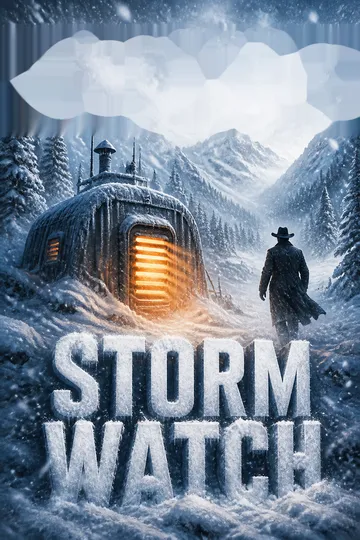
But the parked vehicle is empty, its map marked with several locations, and boot prints lead away toward a strange metal building. Joe follows them through thickening snow. At the building, industrial fans whine behind steel louvers, and a man’s legs hang from one opening. The day’s animal call has become a human emergency.
Joe’s first choice is not investigative ambition but the practical mercy of ending an animal’s pain. That duty carries him past the point where weather and common sense advise retreat. The transition from elk tracks to human boot prints quietly widens the story’s moral field: Joe cannot treat a life as someone else’s problem simply because it falls outside his assignment. The storm makes this instinct costly. Snow erases evidence even as it isolates the people who might explain it, turning the landscape into both a crime scene and an active threat.
A Fan Takes Its Victim
Joe descends to the building and sees that the dead man’s head has been drawn into the industrial fan. He photographs the body, the blood, and the tracks before snow can bury them, then finds the victim’s wallet. Two bullets strike the building while he is still there. Joe takes cover with Daisy and glimpses a vehicle on the ridge before the shooters disappear into the storm.
He reaches his truck and identifies the dead man as Zhang Wei, a University of Wyoming engineering professor. On the drive home, Joe reports the murder to Sheriff Scott Tibbs, who resents inheriting the case, and sends the evidence onward. Director Rick Ewig then calls with a more unexpected summons: Governor Colter Allen wants Joe in Cheyenne immediately.
The building makes technology physically dangerous: a machine built to cool computers has become the instrument of a man’s death. Joe’s photographs are an improvised defense against the weather, but the shots aimed at him establish that documentation itself has become risky. The institutions meant to take over the case arrive already compromised by fatigue, irritation, or political pressure. Joe remains a careful observer, yet his role shifts from finding facts to protecting them before they vanish or are suppressed.
The Order to Forget
After digging his pickup out of the blizzard, Joe drives south toward Cheyenne. Sheriff Tibbs calls with news that deputies found the metal building but not Zhang Wei’s body. The fans have stopped, the scene has been cleaned, and tracks suggest someone hauled something away on a sled before law enforcement arrived.
At the capitol, Allen orders Joe and Ewig to stop investigating, delete the photographs, and leave the matter to state authorities. Joe secretly sends his images to his wife, Marybeth, before moving them to the phone’s trash. On his way out, he sees his mother-in-law, Missy, leaving with Allen, their familiarity unmistakable. Joe returns to the road with an official command to stand down and fresh reason to distrust it.
The missing body changes the mystery from a murder investigation into a struggle over who gets to define what happened. Allen’s order does not clarify the danger; it makes secrecy part of it. Joe’s concealed transfer of the photographs is a small act of resistance, but it also reveals his instinctive hierarchy: evidence and public duty matter more than a superior’s comfort. Missy’s appearance connects private influence to public power, suggesting that the case may be entangled with relationships that Joe cannot dismiss as merely political.
A Recruit at the Door
While Joe is away, Jason Demo arrives at Nate Romanowski’s remote compound. Nate, a former special operator who now runs a falcon-abatement business with his wife, Liv, refuses to welcome the stranger until he understands his purpose.
Demo describes a supposed western movement resisting federal control and energy restrictions, then tries to enlist Nate’s military skill and reputation. Nate offers no commitment, but Demo leaves believing he has planted an idea. Nate asks Liv to investigate Demo and a group called the Keystoners.
Meanwhile, Sheridan Pickett, Joe and Marybeth’s falconer daughter, stays at the Double Diamond with Clay Hutmacher Jr. Their promising romance strains when Clay assumes a future together and presses for more intimacy than Sheridan wants. She leaves for her apartment, unsettled by both his expectations and her own hesitation.
Demo’s appeal is persuasive because it borrows the language of genuine grievance and addresses Nate’s history of being used by institutions. Nate recognizes enough of himself in the pitch to resist it carefully rather than dismiss it outright. Sheridan’s thread echoes that tension on a smaller scale: affection does not erase the need for boundaries, and a future imagined by one person can feel like pressure to the other. Both scenes ask whether belonging is freely chosen or manufactured through someone else’s expectations.
Fong Knows the Name
On his drive through Laramie, Joe stops to see his youngest daughter, Lucy, and her Hong Kong roommate, Fong Chan. He asks whether Fong knows Professor Wei. Fong abruptly leaves, alarming Lucy and confirming that the name touches a hidden nerve.
Joe explains that he found a murdered man who may be Wei, though authorities are keeping the case quiet. Lucy does not know why her friend reacted so strongly, but promises to speak with her. Joe continues north with more questions than answers.
At home, Marybeth agrees to look into Missy’s political donations and the governor’s campaign, while Joe admits he cannot simply forget the murder. The family’s ordinary concerns, including Lucy’s spring-break plans and Marybeth’s library work, now sit beside a secret none of them can safely name.
Fong’s departure is an event without an explanation, which makes it more revealing than a confident accusation would be. Joe has not threatened her, but his question punctures the distance she has kept between her studies and her private fears. Lucy’s response is characteristically relational: she worries first about her friend, then about what the question may mean. The scene brings the investigation into the family’s everyday life, showing how secrecy travels through friendship long before official institutions acknowledge a crisis.
Mining in the Backcountry
At Nate’s compound, Joe meets Geronimo Jones, a fellow falconer who has brought a Bitcoin-mining unit to help finance Yarak, Inc.’s expansion. Geronimo explains that powerful computers process cryptocurrency transactions, while natural gas from capped wells can generate their electricity.
The remote location and cold mountain air help protect valuable equipment from theft and overheating. Joe recognizes the metal unit as the same kind of structure where he found Wei. Geronimo is angered to learn that Michael Thompson, owner of the Double Diamond, already operates one.
Later, ranch foreman Clay Hutmacher admits the computers have been moved into a barn, but says he never knew Wei. The technology offers Joe a plausible reason for the professor’s visit without yet explaining his murder.
The minipod links two seemingly distant worlds: local energy infrastructure and a global digital currency. Its remote placement is presented as practical protection, but secrecy also makes the facility difficult to inspect and easy to remove. Joe’s recognition gives the case a material center, yet the explanation remains incomplete. The machine can account for why Wei might have traveled to the ranch, not why he died there. Geronimo’s enthusiasm and Joe’s caution also establish a useful contrast between entrepreneurial confidence and investigative skepticism.
Antlers on the Snow
A skier’s report sends Joe into the Bighorns, where he follows the tracks of several snowmobiles into a high meadow. From a ridge, he watches four riders drive a herd of elk into dense timber. The frightened bulls smash their antlers against branches, dropping them before the legal collecting season begins.
The riders gather the sheds for resale, risking the animals’ strength after a hard winter. Joe recognizes a helmet marked with gold lightning bolts and connects the riders’ vehicles to Ogden Driskill and Cade Molvar.
Because the men are armed and outnumber him, he avoids a direct confrontation. He photographs them and decides to find their cache before making arrests. The brazen wildlife crime may also connect to the trespassers at the mining site.
The poachers turn wildlife distress into a commodity, profiting from the very panic they create. Joe’s anger does not make him reckless; he chooses evidence over a confrontation that could leave him dead in the snow. That restraint marks experience rather than passivity. The episode also provides a concrete bridge between the murder mystery and local criminal activity. Joe does not yet know the connection, but the repeated presence of armed men and sleds makes coincidence increasingly difficult to accept.
The Library After Dark
At dinner, Joe’s circle divides the investigation: Marybeth researches public and official records, Sheridan searches online networks, and Joe focuses on the shed hunters. Nate agrees to make contact with Demo, despite Joe’s warning that the movement could be dangerous. Later, Demo, Molvar, and the man they call the Big Fish try to break into Marybeth’s library, where Governor Allen is due to hold a campaign event.
Deputy Buck Holmes catches them, but instead of arresting them, he offers a key from the sheriff’s office and warns them to be more careful. The group now has a way inside the library and a date for its operation. Demo distrusts the recruited criminals, but the Big Fish insists that the movement needs numbers.
The library’s significance changes when it becomes a target rather than a neutral civic space. The attempted break-in is amateurish, but Holmes’s intervention turns it into an organized threat by giving the conspirators access to public facilities. His apparent law-enforcement role no longer guarantees public safety. Demo’s doubts expose the gap between a movement’s polished rhetoric and the unstable people recruited to enact it, while the Big Fish treats bodies as interchangeable assets.
The Marmot House Body
Joe returns to the Marmot House, a ruined duplex shared by Driskill and Leland Christensen, hoping to document their snowmobiles and stolen antlers. A shed behind the building contains hundreds of pounds of antlers, including freshly bloodied sheds.
Passing a broken window, Joe sees a boot attached to a dead leg. Inside, Christensen lies with his throat cut, and the blood has begun to dry. Driskill has already fled. Two FBI agents, Scott and Fetterman, arrive without warning and order Joe away from the scene.
They refuse to explain why federal agents are investigating local shed poachers, and they deny knowing about Wei’s murder. Joe records their exchange before yielding access. Their presence confirms that the case has drawn powerful outsiders, but not that those outsiders are acting in good faith.
The antler cache converts Joe’s careful surveillance into physical evidence, while Christensen’s body raises the stakes from wildlife crime to a second homicide. Driskill’s disappearance makes him a suspect, but the facts do not yet establish what he did. The federal agents’ immediate effort to exclude Joe repeats the governor’s earlier demand in a different uniform. His recorder is therefore more than a procedural safeguard: it preserves a version of events that powerful people might prefer to revise.
The Professor’s Other Life
At the Double Diamond, Joe confronts Michael Thompson about the mining facility. Thompson confirms that the computers were removed to protect them from theft and plans to restart the operation elsewhere, but says he never knew Zhang Wei.
Lucy later explains why Fong fled dinner: Fong’s parents, pro-democracy activists trying to leave Hong Kong, believe Wei may have belonged to the Chinese Communist Party and been sent to the United States. The theory gives Wei’s interest in advanced engineering and cryptocurrency a possible national-security dimension.
That evening, Sheridan photographs FBI agent Scott’s credit card and records him meeting Cade Molvar at the Stockman’s Bar. Missy visits the Pickett home with expensive gifts, defends her closeness to Allen, and hints that his campaign money is coming from far beyond Wyoming.
The story’s scale widens without resolving its central question. Fong’s family offers a credible reason to suspect state involvement, but hearsay is not proof, and Joe must resist treating a frightened student’s account as a complete explanation. Meanwhile, Sheridan’s discreet recording and Marybeth’s attention to political money turn domestic skills into investigative tools. The same people who demand silence are surrounded by increasingly visible connections: a removed computer installation, unexplained federal agents, and a governor whose support may have sources beyond his electorate.
Demo’s Unwanted Mission
Nate meets Demo in an isolated campground and quickly discovers that Demo has been recording him. After disarming him, Nate learns that Demo is not simply recruiting for the Sovereign Nation. A powerful man called the Big Fish has threatened Demo with exposure and prison unless he draws Nate into the group.
The Big Fish has recruited local criminals, ideological Keystoners, and Holmes, while using Molvar as an informant on more than one side. Nate realizes the supposed movement may be a staged operation designed to make its recruits appear like domestic extremists.
He and Demo make a second recording, but Nate marks it so the later statements can be dismissed as false. Demo then reveals the coming operation: the group plans to seize Governor Allen during his campaign event in Saddlestring.
Nate’s interrogation turns a recruitment story into a story about coercion. Demo’s beliefs are not fabricated, but his participation is constrained by threats against his family and former unit, complicating the easy division between sincere extremist and innocent target. The staged recording is Nate’s countermeasure against a system that manufactures evidence as well as danger. His discovery also reframes the group’s disorder: poor judgment and criminality may not be flaws the Big Fish overlooked, but ingredients useful to a political trap.
A Trap Inside the Trap
At Joe and Marybeth’s home, Nate lays out what Demo told him. He identifies the Big Fish as Jeremiah Sandburg, a former FBI agent who once clashed with Nate and Joe. Sandburg has built a false extremist movement, using paid informants, local recruits, and Holmes to create an apparent threat that federal agents can publicly defeat.
The planned target is Allen’s campaign announcement at Marybeth’s library. Joe sees why the governor insisted on secrecy, though Allen’s own role remains uncertain.
Rulon’s intended political challenge and Missy’s influence add further pressure, but neither solves the immediate danger. Joe, Marybeth, Sheridan, Nate, and Geronimo plan to act before the storm and the governor’s schedule make the operation harder to stop.
The revelation makes the threat doubly unstable: the recruits may be dangerous, but the operation is also designed to produce danger for an audience. Sandburg’s scheme depends on institutions performing their expected roles while concealing who set the scene. Joe’s team has no reliable chain of command to trust, so the family and its allies become an improvised public-safety network. Their decision is not based on certainty about every motive; it is based on the clearer fact that a governor and bystanders may be placed in danger.
Holmes Turns His Weapon
Before the storm closes in, Joe returns to the shed at the Marmot House with a warrant and finds Wei’s frozen body hidden beneath the antlers. The head injury matches the industrial fan, confirming that the professor was killed at the mining site and moved afterward.
Deputy Buck Holmes arrives alone. He tasers Joe, handcuffs him, and admits he was among the snowmobilers who encountered Wei. Holmes says the group fed the professor into the fan after he saw them, then killed Christensen because he might talk.
Holmes intends to execute Joe as well, invoking his own political beliefs to excuse the murders. Joe cannot fight back, but Nate and Geronimo have followed his plan. Nate shoots Holmes before he can kill Joe, leaving Joe alive beside the body he came to recover.
Holmes’s betrayal is especially chilling because his authority once gave him access to the investigation and the power to redirect it. He does not describe himself as corrupt; he interprets violence as service to a political cause. That self-justification shows how ideology can preserve a person’s image of virtue even while he murders people who contradict it. Joe’s helplessness briefly reverses their usual roles, and Nate’s intervention makes loyalty literal: Joe’s trust in his friends becomes the difference between a witness and another concealed body.
The Storm Breaks In
Joe reaches Sheriff Tibbs and persuades him to send Deputies Steck and Bass toward the airport. The deputies then help Joe seize Scott and Fetterman at their hotel, using a fire alarm to bring both armed men into the hall at once. At Cade Molvar’s house, Nate confronts the armed Keystoners and Driskill before they can move on the library.
When Buddy draws a pistol, Nate shoots him, then kills two more men and wounds Molvar; Geronimo stops Driskill and the Bear as they flee. Outside town, Marybeth and Sheridan block Sandburg’s RV with their van and weapons, forcing him to surrender. The coordinated actions dismantle the planned assault before Allen reaches the library, though the blizzard makes every encounter more dangerous.
The climax is not a single duel but a coordinated refusal to let the plot dictate where violence will occur. Each member of Joe’s circle uses a distinct competence: Joe’s procedural improvisation, Nate’s force, Geronimo’s marksmanship, and the women’s willingness to intercept Sandburg directly. The operation succeeds, but not cleanly; several men die, and the storm magnifies the cost of every decision. The book grants practical courage to people outside formal command structures while refusing to make that courage painless.
The Governor’s Hidden Patron
At the airport, Joe keeps Allen aboard the state plane long enough for former governor Spencer Rulon to arrive. Rulon reveals that Wei once approached him on behalf of China, offering support for Wyoming energy projects while probing local cryptocurrency technology.
Rulon rejected him and later concluded that Allen accepted Chinese backing. Allen also knew about Sandburg’s staged operation and intended to use its public defeat to strengthen his reelection campaign. Molvar and Sandburg are taken into custody, while Rulon pressures Allen to withdraw and explain his departure as a return to private life.
Missy, discovering Allen’s betrayal, turns against him. Joe has shot the plane’s engine to prevent its departure, so the family’s hoped-for getaway is cancelled. They leave the airport together for the Stockman’s instead.
The resolution distinguishes the conspiracies rather than forcing them into one master plan. Wei’s visit and Allen’s compromised campaign connect to foreign influence, while Sandburg’s false extremist operation serves a separate domestic political purpose. Allen’s desire to appear heroic makes him vulnerable to both schemes, and Rulon’s intervention restores accountability through political leverage rather than formal investigation alone. The damaged plane supplies a characteristically material ending: Joe has protected the governor and the public, but once again at the cost of state property and the family’s plans.
Analysis
Storm Watch builds its thriller from collisions between systems that claim to protect the public. Joe’s local wildlife work brings him to the crime scene, but the governor, sheriff, and federal agents each try to control what can be known. The novel’s central pressure is therefore not simply whether a murder can be solved; it is whether evidence can survive when powerful people have reasons to suppress it. Snow makes that struggle physical. Tracks disappear, roads close, and a body can be moved before investigators arrive. Joe’s camera and Marybeth’s research become modest forms of resistance against erasure.
The novel also distinguishes between genuine grievance and the political use of grievance. Demo, the Keystoners, and Nate can recognize real losses in western communities, from vanishing jobs to distant federal control. Those injuries do not make every proposed response just, and they do not excuse Sandburg’s manipulation or Holmes’s violence. By making the staged extremist movement draw on recognizable anger, the story shows how political operators can turn authentic frustration into evidence for a predetermined narrative. Allen’s ambition compounds the danger: he is willing to treat a manufactured crisis as a campaign opportunity, while foreign influence presses through a separate vulnerability.
Against this machinery, the Picketts’ network is deliberately informal. Marybeth researches, Sheridan notices and records, Geronimo contributes technical knowledge, and Nate supplies the force that official channels cannot be trusted to provide. Their teamwork is effective because its members know one another’s strengths and limits, though the violent climax makes clear that competence carries a human cost. Sheridan’s hesitation with Clay Junior adds a quieter version of the same moral question: care does not grant anyone the right to decide another person’s boundaries or future. Across both private and public life, the novel values accountable choices over claims of authority, patriotism, or affection that demand obedience without consent.
Review Summary
Storm Watch receives mostly positive reviews, with readers praising the suspenseful plot, character development, and Wyoming setting. Many enjoy the return of familiar characters and the introduction of new ones. Some criticize the book's political themes and conspiracy theories as distracting. Fans appreciate Box's descriptive writing and ability to weave current issues into the story. While some find the plot over-the-top, most agree it's an entertaining addition to the Joe Pickett series, though a few longtime readers express disappointment with recent entries.
People Also Read







Characters
Joe Pickett
The stubborn game wardenJoe is a Wyoming game warden whose work begins with injured wildlife, trespassing, and the practical demands of a remote district. He is observant, patient with people who are angry, and reluctant to let an authority figure substitute an order for an explanation. His sense of duty extends beyond his job description, which repeatedly places him in danger and frustrates his wife, Marybeth. As a father, he is protective but knows his daughters are building lives beyond his reach. Joe’s strength is not fearlessness so much as the ability to keep gathering facts while afraid. He relies on procedure when it helps, and on trusted friends when institutions fail.
Nate Romanowski
The falconer with a pastNate is Joe’s closest friend, a former special operator who has built a quieter life around falconry, his wife Liv, and their young daughter. He distrusts government power because he has seen how secret operations can exploit loyalty and hide wrongdoing. That history makes him alert to Demo’s rhetoric, but not immune to it: some of the grievances Demo voices resemble Nate’s own. Nate tends to act decisively once he believes he understands a threat, and his formidable competence can make him frightening even to allies. His central tension is the pull between the peaceful life he has earned and the violent skills that once defined him.
Marybeth Pickett
The family’s clear-eyed anchorMarybeth directs the county library and is Joe’s partner in both family life and judgment. She is an exacting researcher who knows how to turn public records, institutional resources, and an ordinary conversation into useful information. Her intelligence is practical rather than showy, and she is often quicker than Joe to recognize how a personal relationship affects a public decision. She supports his conscience but does not confuse support with blind approval; when his work becomes dangerous, she asks what the cost will be to their family. Her strained relationship with her mother, Missy, adds an old, intimate source of pressure to the political crisis.
Sheridan Pickett
The falconer daughterSheridan is Joe and Marybeth’s oldest daughter and a developing master falconer in Nate’s bird-abatement business. She is capable, independent, and comfortable with the physical demands of her work, but she is still learning how to protect her personal boundaries without dismissing affection. Her growing relationship with Clay Junior appeals to her because it feels familiar and respectful, yet she notices when he assumes more commitment than she has offered. Sheridan’s fluency with online spaces and her willingness to act on what she discovers make her an important partner in the family’s investigation, not simply its protected younger member.
Jason Demo
The reluctant recruiterDemo is a former Army Ranger and special operator from Montana, now a husband and father who wants a settled life. His political disillusionment is sincere, which makes him a persuasive recruiter and a useful instrument to people who know how to exploit his beliefs. He respects Nate’s abilities and recognizes the danger of relying on untrained, unstable recruits. Demo’s divided position reflects the strain between personal conviction and coercion: he is not simply pretending to believe, yet he is not fully free to choose what he does.
Geronimo Jones
The entrepreneurial falconerGeronimo is a master falconer, former special operator, and business-minded friend of Nate. He hopes to expand Yarak, Inc. through cryptocurrency mining and brings both a detailed plan and the money to test it. His confidence can outrun Nate’s caution, but he listens when risk becomes immediate. Geronimo’s humor and impatience make him an uneasy participant in Wyoming’s political turmoil, especially when his new business venture gives him a practical reason to remain involved.
Lucy Pickett
The socially gifted studentLucy is Joe and Marybeth’s youngest daughter, a popular University of Wyoming student with an easy warmth that helps people confide in her. She values her friendship with Fong and worries when her roommate is distressed. Lucy can keep a confidence, but she also recognizes when a friend’s fear may matter to her family’s safety. Her openness contrasts with Joe’s guarded habits, and their relationship lets him remain a father even as she becomes an adult with her own loyalties.
Fong Chan
Lucy’s guarded roommateFong is a Hong Kong exchange student studying engineering at the University of Wyoming. She is bright, hardworking, and close to Lucy, but her family’s political circumstances make her careful about what she shares. Her sudden reaction to Wei’s name signals private knowledge and fear without immediately revealing its source. Fong’s position between university life in Wyoming and her family’s struggles abroad gives the investigation a personal human cost beyond the officials and institutions involved.
Governor Colter Allen
The embattled incumbentAllen is Wyoming’s sitting governor, polished in public and increasingly besieged by political failures, personal scandal, and dwindling trust. He wants control of his public image and expects state employees to protect his administration from embarrassment. His impatience with Joe reflects a broader habit of treating inconvenient facts as problems to be managed rather than questions to be answered. Allen’s ambition makes him sensitive to opportunities for political advantage, while the weakening of his position leaves him vulnerable to powerful patrons.
Spencer Rulon
The former governorRulon is Allen’s popular predecessor, a seasoned political operator who retains a strong sense of obligation to Wyoming. He values Joe’s independence even when it makes him difficult to direct. Unlike Allen, Rulon is willing to risk political capital by confronting powerful interests, but he also understands that influence and timing can accomplish what formal authority cannot. His return places him between public service and personal ambition, since he may have to consider another campaign to prevent Allen from remaining in office.
Jeremiah Sandburg
The retired federal agentSandburg is a former FBI agent with a history of conflict with Nate and Joe. He is physically impaired and outwardly retired, but he remains ambitious, calculating, and skilled at working through intermediaries. His experience inside federal law enforcement gives him knowledge of its procedures and its vulnerabilities. Sandburg represents the danger of a public servant who becomes convinced that his private purpose excuses methods the law would otherwise forbid.
Buck Holmes
The ambitious new deputyHolmes is a young deputy with military experience and a reputation strong enough to make him a possible successor to Sheriff Tibbs. He is disciplined and capable, but his political certainty can harden into distrust of anyone he considers an enemy of his way of life. He moves comfortably among law-enforcement procedure and the rhetoric of rural grievance, a combination that makes him difficult for others to read. His presence tests the assumption that a badge reliably signals shared moral purpose.
Zhang Wei
The absent engineering professorWei is an associate dean and engineering professor at the University of Wyoming. His expertise places him near advanced research and technologies that could attract attention from governments and private companies alike. Joe initially knows him only through a university photograph, a wallet, and the circumstances of his death. Wei’s professional distance from the rural ranch where he is found makes his presence there a central question, while his lack of an immediate family contact delays the discovery that he is missing.
Cade Molvar
The Keystoners’ hard caseMolvar leads the local Keystoners, a rough group of former pipeline workers and associates who share a deep resentment toward federal authority. He is armed, self-assured, and skilled at cultivating alliances when they serve him. His position depends on keeping the group together despite its members’ unstable habits and divided motives. Molvar’s suspicion of Nate and contempt for institutional rules make him a volatile presence in a town where political anger and criminal opportunity overlap.
Missy
Marybeth’s formidable motherMissy is Marybeth’s wealthy, socially ambitious mother, known for moving through relationships and elite circles with practiced ease. She gives her granddaughters lavish gifts but often misunderstands what they value, a mismatch that captures her difficulty offering intimacy without turning it into display. Missy wants proximity to power and is unembarrassed by the influence her money and connections can provide. Her history with Joe and Marybeth means even a brief visit can unsettle the household.
Clay Hutmacher Jr.
Sheridan’s ranch-raised suitorClay Junior is the son of the Double Diamond foreman, a former soldier and University of Wyoming graduate with a promising future in ranch management. He is courteous and attentive, qualities that make Sheridan’s interest in him feel natural. Yet his confidence can become assumption when he begins planning a shared life before Sheridan is ready. He provides a personal counterpoint to the larger conflict: good intentions still require attention to another person’s pace and consent.
Clay Hutmacher
The Double Diamond foremanHutmacher manages Michael Thompson’s vast Double Diamond Ranch and is a longtime local who knows its land and people intimately. His job requires loyalty to his employer, but he is uneasy when secrecy conflicts with his personal sense of fairness. He respects Joe’s work and has a warm connection to the Pickett family through his son. Hutmacher’s divided position shows how a private employee can become an essential witness while still fearing the consequences of speaking freely.
Scott Tibbs
The retiring sheriffTibbs is the county sheriff approaching retirement, increasingly distracted by his private life and eager to finish his term without new burdens. He has a prickly working relationship with Joe and often resents the game warden’s involvement in criminal cases. Tibbs is not naturally decisive under pressure, but he understands the personal consequences of leaving a public disaster unanswered. His reluctance creates an institutional vacuum that Joe’s informal network must repeatedly fill.
Rick Ewig
Joe’s department directorEwig leads Wyoming Game and Fish and is a former game warden who understands the realities of field work. He values Joe and hopes to leave the agency in capable hands, but his position makes him vulnerable to pressure from the governor. Ewig’s conflict is not a lack of conscience so much as the narrowing choices of an administrator close to retirement.
Plot Devices
The spring blizzards
Weather erases the evidenceThe storm first drives Joe toward the hidden building because he wants to reach the injured elk before conditions worsen. Once the murder is discovered, snow threatens to cover tracks and forces him to photograph the scene quickly. It also delays law enforcement, hides the movement of bodies and equipment, and makes travel hazardous during the planned attack on Allen. The weather is not merely scenery: it creates urgency, isolates witnesses, and repeatedly changes what can be proven.
The Bitcoin minipod
A machine links distant motivesThe remote steel building houses powerful computers used to process cryptocurrency transactions, with natural gas supplying the energy. Its cooling fans explain the fatal injury, while its secrecy and value offer a reason for trespassers to approach it. The unit also connects rural energy debates to advanced technology and foreign interest. Joe’s recognition of the same type of structure at Nate’s compound turns a baffling crime scene into a question with a physical, traceable location.
The shed-antler cache
Poached antlers expose the localsJoe’s observation of snowmobilers driving elk into timber establishes how illegal commercial shed hunting works: the frightened bulls knock off antlers against branches, and the hunters collect them before the season opens. The cache at the Marmot House gives Joe evidence he can photograph and later seize. It also places several armed locals near the ranch and creates the trail that leads him to Christensen’s murder and the hidden body of Professor Wei.
The Sovereign Nation
A movement masks a staged threatDemo presents the Sovereign Nation as a rural resistance movement, appealing to real anger over energy, federal control, and economic decline. Its loose collection of Keystoners, criminals, and law-enforcement contacts appears chaotic, but that instability serves the operation being assembled around them. Nate’s investigation reveals that the group’s public identity has been shaped to make its members useful as apparent domestic extremists. The device tests how easily genuine grievances can be recruited into a false political narrative.
Nate’s falconry
Skill becomes practical allianceFalconry defines Nate and Sheridan’s work, gives them a shared discipline, and provides the setting for Geronimo’s business proposal. The practice depends on patience, close observation, and a precise understanding of a predator’s behavior, qualities that echo their approach to the investigation. The falconers’ partnership also becomes a source of practical support when Joe needs help beyond official channels. The birds are not magical instruments; their presence connects the characters’ livelihood, temperament, and mutual trust.
Joe Pickett Series
Download PDF
Download EPUB
.epub digital book format is ideal for reading ebooks on phones, tablets, and e-readers.








