

Plot Summary
Prologue
Months before the main investigation, Wyoming game warden Joe Pickett catches outfitter Ote Keeley illegally shooting three trophy mule deer. When Joe writes him a citation, Ote takes Joe’s revolver and points it at his face.
He eventually returns the gun, but Joe lets him leave without arresting him, accepting silence in exchange for his own life and career. Ote later boasts about the humiliation, leaving Joe ashamed and exposed to a disciplinary inquiry that may still come.
The opening makes Joe’s central vulnerability concrete before the larger crime begins: he believes in rules, yet fear has already made him compromise them. Ote’s brief control of Joe’s gun reverses the authority their uniforms are meant to guarantee. Joe’s silence protects him physically, but it leaves a moral debt that cannot be settled by pretending the encounter is over. The prologue also establishes the story’s governing tension between public duty and private survival. When Ote later returns to Joe’s life, the earlier bargain makes the new mystery personal as well as professional.
Blood at the Woodpile
By fall, Joe is making pancakes when his daughter Sheridan describes a bloodied man who came through the yard at night. Outside, Joe finds Ote dead across the woodpile, his clothes soaked with blood and an empty, claw-scratched cooler beside him. Small animal droppings inside recall the strange creature Sheridan glimpsed. Ote’s horse stands nearby, ridden hard.
Joe collects some of the droppings before the sheriff arrives, but Sheriff Barnum gives the scene little attention. Ote had been shot in the mountains, and the campers who saw him ride through reported a weapon and a swinging plastic box. Joe recognizes that Ote could have sought help elsewhere. His arrival at the Pickett home turns an old humiliation into a new, unanswered case.
The domestic setting makes the crime impossible for Joe to compartmentalize. Ote’s body lies beside the family’s ordinary routines, while Sheridan’s account suggests that a child noticed what adults dismissed. Joe’s careful collection of the scat is a small act of professional attention, but the sheriff’s indifference shows how authority can narrow an investigation before the evidence is understood. The cooler links the dead man to an unknown animal without explaining the link, creating a mystery that is at once forensic and ecological. Joe is drawn in by duty, but also by the sense that Ote’s return has reopened the unfinished moral business between them.
The Crazy Woman Camp
With the sheriff’s helicopter unavailable, Joe rides into the roadless mountains with fellow warden Wacey Hedeman and Deputy McLanahan to reach Ote’s hunting camp. They approach before dawn, expecting armed suspects.
A huge badger crawls from a tent carrying bloody meat, briefly distracting Joe. Then a man emerges with a rifle, and McLanahan and Wacey shoot him. Joe is struck in the face by a ricochet. Inside another tent, the men find Kyle Lensegrav and Calvin Mendes dead, their bodies partly eaten.
The wounded suspect is Clyde Lidgard, an isolated local found with a pistol. Investigators later connect that gun to the killings, and the case appears settled. Joe, however, cannot explain why Ote escaped the camp or what he carried in the cooler.
The operation’s confusion converts a criminal inquiry into a spectacle of force. Barnum’s oversized preparations and the crowd’s appetite for action make the expedition feel more like public theater than careful investigation. In the camp, Joe sees how quickly uncertainty becomes lethal: a movement behind canvas, a raised rifle, a ricochet, then a body beneath a tent. The badger’s presence offers an immediate, natural explanation for the torn corpses, but the human deaths remain unresolved. Clyde’s apparent guilt provides the authorities with a stopping point. Joe’s discomfort begins where that closure ends, in the gaps between the evidence and the story everyone is ready to accept.
Sheridan’s Secret Guests
After the family returns from a motel, Sheridan discovers three quick, intelligent animals living in the woodpile. Having lost pets before, she feeds them cereal and meat, then persuades little sister Lucy to keep their visits secret.
Sheridan names them Lucky, Hippity-Hop, and Elway, imagining them as a family of their own. Wacey, who has been watching the yard, confronts Sheridan in a barn stall and discovers she has seen the animals. He threatens her family if she tells anyone.
After the Picketts move temporarily to the Eagle Mountain Club, he approaches her again beside the school bus, asking how she lured the creatures out and using a grisly threat to keep her quiet. Sheridan hides what happened, frightened that speaking might endanger her parents and the animals.
Sheridan’s secret grows from a child’s real need for attachment, not from a taste for mischief. She turns the animals into a family because she knows how easily beloved pets disappear and fears that a new baby will further displace her. Her care is tender but also isolating: secrecy lets her protect the creatures while leaving her alone with a predatory adult. Wacey exploits the logic of childhood, making his familiarity with her father seem like safety and her silence seem like responsibility. The contrast between Sheridan’s chosen names and Wacey’s threats reveals two competing forms of power: care that depends on trust, and control that manufactures fear.
Vern’s Pipeline Offer
At the hospital, Joe’s former mentor, Vern Dunnegan, visits and offers him a much better-paid position with Inter West Resources, the company racing to build a gas pipeline through the region.
Vern argues that the project could revive struggling Saddlestring, while warning that an endangered-species discovery could bring federal restrictions and destroy local livelihoods. Joe’s doubts deepen when hunters Hans and Jack hint that something rare has been found in the mountains.
He sends the animal droppings to state biologists, but headquarters claims the package never arrived. A frightened employee later confirms that it was received and then disappeared. Joe now has reason to suspect that the missing sample and Vern’s business interests are connected, though he still lacks proof.
Vern’s offer joins private temptation to public argument. Joe’s family needs money, and the pipeline promises more than a paycheck: it offers the stability he has never been able to provide. Vern frames ecological protection as a threat to ordinary people, turning a legitimate concern about economic hardship into a reason not to investigate. The missing sample makes that rhetoric newly suspect. Rather than simply debating policy, the story shows institutions shaping what can count as evidence: a package can vanish, a report can be delayed, and uncertainty can be used to protect a project. Joe’s conflict is sharpened because the same choice could secure his family and compromise his duty.
Jeannie’s Half-Remembered Animal
Joe visits Ote’s widow, Jeannie, and hears how Ote’s hunting business left her with debts, young children, and little security. She recalls that before his death Ote claimed he had found an animal that would make Joe drop the poaching charges and restore his outfitter’s license. Jeannie remembers a name associated with the creature: Miller’s weasel.
She also says Ote once accused Vern of forcing him to make something right after catching him poaching. Joe searches Clyde Lidgard’s filthy trailer and finds no nine-millimeter ammunition, weakening the case against him. The freezer contains animal hair and blood, but before Joe can investigate further, the trailer explodes into flames. He glimpses a departing vehicle like Vern’s Suburban.
Jeannie’s account changes Ote from a one-dimensional poacher into a desperate man who may have found something valuable enough to bargain with. Her bitterness about his debts and their crowded home keeps the mystery rooted in material consequences: conservation law and criminal ambition land on families already struggling to survive. The remembered species name links Ote’s secret to the vanished sample, while her account of Vern’s past pressure adds a pattern of influence. At Clyde’s trailer, the absence of ammunition is a modest but important contradiction. The fire then turns uncertainty into suspected obstruction. Joe is no longer merely pursuing loose ends; someone appears willing to destroy the places where answers might be found.
Badge, Job, and Evidence
At a disciplinary hearing in Cheyenne, Assistant Director Les Etbauer suspends Joe over the earlier loss of his revolver and accuses him of mishandling the murder investigation. The timing leaves Joe little chance to appeal before losing his field post.
He studies old accounts of Miller’s weasel, a species believed extinct after the disappearance of the buffalo herds. An independent analysis of the scat supports the possibility that an unknown animal left it. Joe decides to accept Vern’s offer, but Vern withdraws it, citing Joe’s suspension and damaged reputation.
The rejection confirms that Joe cannot rely on a new employer to rescue him. With only a few days of authority left, he chooses to keep investigating and rides alone toward the remote basin beyond the outfitter camp.
The hearing makes bureaucratic procedure another instrument of pressure. Joe’s earlier mistake is real, but the severity and timing of the punishment suggest that the agency is responding to forces beyond routine discipline. His study of the weasel gives the scattered clues a biological frame, while the independent test prevents headquarters from controlling the only scientific interpretation. Vern’s withdrawal of the job strips away the practical compromise Joe hoped to make. The result is not a romantic embrace of poverty or danger; Joe still worries about his family. He acts because every available path now carries a cost, and continuing the investigation is the only way to avoid letting other people decide what happened.
The Killing Field
Joe rides up the narrow Crazy Woman Creek canyon, forcing his frightened horse through water and tight rock walls until they reach a hidden mountain basin. A silent hillside draws him toward twenty-six low mounds.
Their blocked burrow openings, spent bullets, poisoned elk meat, and fired cyanide traps show that someone systematically destroyed the animals living there. Joe finds tiny bones and photographs the evidence. The devices were designed to kill predators, not merely to control a nuisance, and their use points to deliberate extermination.
The basin’s remoteness explains why the colony escaped notice, but it also means the perpetrators could work unseen. Joe leaves with evidence that the weasels existed and that the apparent murders may have been part of a larger effort to erase their discovery.
The basin turns an abstract species question into a physical landscape of intent. The evidence is not a single dramatic weapon but a sequence of methods, bullets, poisoned carcasses, and cyanide traps, each suggesting preparation and repetition. Joe’s discovery also complicates the idea that nature is simply resilient: this colony was not lost through gradual change but hunted with human tools. The remote setting offers beauty and concealment at once, a refuge that has been made into a killing ground. Joe’s photographs and collected remains matter because memory alone cannot challenge an official account. His fieldwork gives the dead animals a place in the case, even before he knows who ordered their destruction.
The Shot Through Glass
While Joe is still in the mountains, Marybeth brings Sheridan back to their house so she can check on the hidden animals. Wacey is there searching the yard. When Marybeth sees him at the woodpile and switches on the lights, he fires through the kitchen window, wounding her and ending her pregnancy.
Sheridan realizes the man who threatened her is responsible, then escapes through the yard and into the foothills. Joe returns to flashing emergency lights and learns that Marybeth has been flown to a Billings hospital while Sheridan is missing.
Doctors tell him Marybeth is alive but badly injured, and that their unborn son could not be saved. In the same hospital, Joe learns that Clyde Lidgard is still alive. The case now threatens his family as directly as the animals.
The violence collapses the distance Joe has tried to maintain between field duty and home. The woodpile, once a place of secret play and then a crime scene, becomes the point where Wacey’s search reaches Marybeth. Sheridan’s flight is an act of survival, but it also leaves her alone in the landscape she once imagined as the source of monsters. Joe’s losses arrive in fragments: a wounded wife, a dead unborn child, and a missing daughter. The hospital offers facts but no comfort. This section makes the stakes intimate without turning family love into a solution; Joe must still find Sheridan, and the truth about the animals has become inseparable from her safety.
Lidgard’s Unclaimed Photographs
Joe finds Clyde conscious in his hospital room. Clyde remembers photographing the weasels but never seeing the developed pictures. At Barrett’s Pharmacy, Joe searches the unclaimed envelopes and finds Clyde’s recent images, including the animals’ dens and pictures of Vern and Wacey in the mountains with cyanide traps.
Armed with the photographs, Joe confronts Vern at a motel. Vern admits that Wacey learned of the weasels and recruited Clyde to help conceal them, then killed the outfitters when they found the colony.
Wacey shot Ote, framed Clyde for the camp murders, and later tried to eliminate the remaining animals. Vern also reveals that Wacey believes Sheridan knows where they are. Joe forces Vern to lead him back to the house, where Sheridan may still be hiding.
The photographs transform Clyde’s apparent uselessness into a witness record. His habitual picture-taking, which seemed to reveal little about his life, has preserved the very evidence other people tried to erase. Their delayed development makes an ordinary pharmacy envelope a hinge between the past crime and the present danger. Vern’s confession also clarifies how self-interest can organize violence without making every participant equally committed: the pipeline mattered to Vern, while Wacey’s hunger for power and control drove him further. Joe’s decision to force Vern to the house is not a triumph of methodical policing. It is a desperate response to a child still in danger, made with proof strong enough to stop Vern from denying the conspiracy.
The Pickett Yard Showdown
At dawn, Sheridan sees Joe approaching the house with Vern and runs toward him. Wacey, who has been waiting for her, turns with his pistol raised. Joe fires his shotgun, destroying Wacey’s gun arm and then disabling both legs. He shoots Vern in the hip when Vern tries to escape, then keeps both men alive for the authorities. Sheridan reaches her father, filthy, exhausted, and safe.
Joe learns that Barnum’s deputies are on the way. His restraint has limits: he has used lethal force to stop an immediate threat, but he refuses to let either man disappear into a convenient story. The girl who was ordered to keep silent is now beside the father who believes her, while the conspiracy that endangered her can finally be exposed.
The confrontation resolves the story’s central question of whose account will be believed. Sheridan’s knowledge was treated as a child’s secret to exploit; Joe’s arrival turns it into testimony that can be protected. His violence is precise and consequential, directed at the threat rather than used to punish the men after they are down. That distinction matters because the book has shown how easily law enforcement can become performance or revenge. Joe’s actions are not clean victories: they leave severe injuries and cannot undo Marybeth’s loss. But he prevents Wacey from converting Sheridan’s silence into permanent concealment, and he holds the perpetrators for public accountability.
Epilogue
By spring, the discovery of Miller’s weasels has brought federal protection, media attention, and severe restrictions to the valley. Two colonies decline, one from disease, while local families lose jobs as logging, grazing, and recreation are curtailed. Joe’s position is restored after Vern’s arrest, and Marybeth is recovering with a limp.
The Picketts foster April Keeley, whose mother left her behind. Sheridan and Joe secretly feed the surviving weasels beneath their garage, where Elway has produced kits. Rather than surrender the animals to a system that has already failed them, Joe plans to move the family to a protected mountain valley with Sheridan’s help.
The ending refuses to make exposure synonymous with rescue. Public discovery brings legal protection, but the official attention also brings disruption, and the monitored colonies continue to suffer. Joe’s private decision to protect the weasels echoes his earlier duty while challenging the institutions that define responsible care. His choice is not presented as a universal policy; it is a father’s ethically risky response to a system he has watched fail both people and animals. The foster placement of April extends the family’s care beyond blood ties, while Marybeth’s recovery and Sheridan’s partnership with Joe show how survival is practiced in ordinary acts. The story closes on stewardship rather than certainty.
Analysis
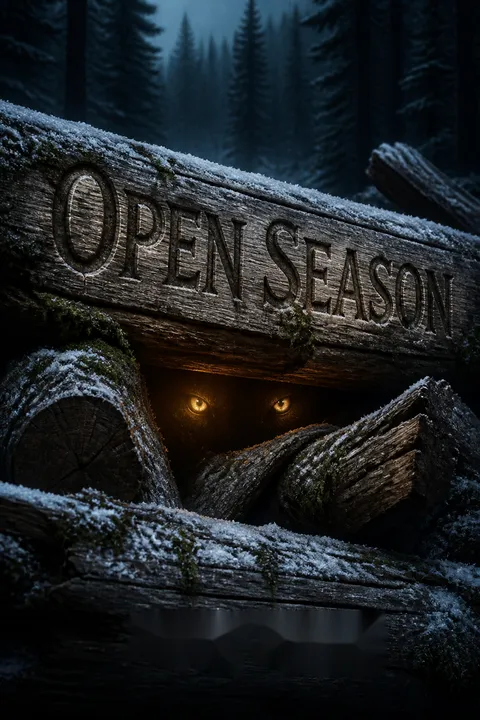
Open Season makes conservation a conflict over power as much as a question of ecological principle. The possible survival of Miller’s weasels matters because it forces competing groups to decide who may define a landscape: local residents whose work depends on access, corporations seeking a profitable route, government agencies charged with protection, and a child who simply wants to keep small animals alive. The novel resists making any one of these positions uncomplicated. Vern’s warnings about lost jobs are grounded in a town already hollowed out by economic decline, yet he uses that truth to excuse concealment and violence. Federal protection later brings real restrictions, but the remaining animals continue to die under scientific attention. The law can name a species endangered without guaranteeing its survival.
Joe’s personal arc gives this public argument its emotional weight. He begins with a compromised act of self-preservation, then faces a system that turns his mistake into leverage. His integrity is not pristine; it is repeatedly tested by shame, money, loyalty, and fear for his family. His choice to continue investigating is meaningful because he knows it may cost him his job and still cannot accept an easy explanation. Sheridan’s story mirrors his in smaller form. She sees clearly, but adult authority teaches her that speaking may put others at risk. Joe’s willingness to believe her counters the conspiracy’s central method, which is to isolate witnesses and decide in advance what counts as truth.
The family’s recovery does not erase the cost of violence. Marybeth loses a pregnancy and faces a long physical recovery; Sheridan carries fear; Joe must live with the consequences of shooting two former allies. Yet the household expands through April’s foster placement and the secret care of the weasels. The final choice to move the animals privately is ethically unstable, but it expresses the book’s most precise claim: responsibility sometimes begins where formal systems fail, while remaining answerable to the harm those systems were designed to prevent.
Review Summary
Open Season introduces Joe Pickett, a Wyoming game warden with strong morals but limited skills. Readers appreciate the authentic portrayal of rural life, family dynamics, and environmental issues. The plot, involving murders and endangered species, is engaging but predictable for some. Box's writing is praised for its descriptive prowess and character development, though critiqued by some for amateurish elements. Overall, reviewers found it an enjoyable start to the series, with many planning to continue reading about Pickett's adventures.
People Also Read

Characters
Joe Pickett
A warden with a conscienceJoe is a Wyoming game warden, husband to Marybeth, and father to Sheridan and Lucy. He believes that rules matter because they protect people and wildlife, though his earlier failure to keep control of his gun has left him privately ashamed. He is observant in the field and often awkward in town, more comfortable reading tracks than managing politics. His loyalty to his family competes with his devotion to a job that pays poorly and demands constant absence. Joe’s defining strength is not invulnerability but his willingness to admit what he does not know, gather evidence, and keep working when powerful people insist that the case is closed.
Marybeth Pickett
Joe’s practical anchorMarybeth is Joe’s wife and the steady center of a family that has moved repeatedly for his work. She manages their tight budget, protects the girls from adult pressures, and sees the cost of Joe’s choices more clearly than he does. Her practicality is not a lack of ambition; she is aware that her own life has narrowed around the demands of his career and motherhood. She can be warm and playful with Joe, but she also challenges his assumptions and expects him to take responsibility. Marybeth’s strength lies in balancing care with clear judgment, especially when financial security and family loyalty seem to pull in opposite directions.
Sheridan Pickett
A watchful, lonely daughterSheridan is Joe and Marybeth’s seven-year-old daughter, an imaginative reader who has struggled to make friends after the family’s repeated moves. She wears glasses, misses the pets she has lost, and worries that a new baby will take more of her parents’ attention. Her secret care for small animals grows from that loneliness, but it also shows her capacity for patience and close observation. Sheridan is frightened by adults who misuse trust, yet she thinks carefully under pressure and can distinguish a reassuring voice from a safe person. Her inner life is vivid, and the story takes seriously the gap between what she knows and what adults are prepared to believe.
Vern Dunnegan
The influential former mentorVern is the celebrated former game warden who trained Joe and Wacey and helped shape their careers. He is sociable, persuasive, and skilled at making self-interest sound like practical wisdom. After leaving public service, he works for Inter West Resources on a pipeline project that could bring money to a struggling county. Vern’s bond with Joe mixes genuine mentorship with a desire to influence him, and he understands how much Joe values his family and reputation. His charm makes him difficult to read: he can offer encouragement, test a weakness, or redirect a conversation without changing his genial manner.
Wacey Hedeman
Joe’s ambitious fellow wardenWacey is a neighboring game warden, former rodeo rider, and a longtime working companion of Joe’s. His easy charm and confidence make him effective with people, while his command of the outdoors earns him respect in the field. He is more politically ambitious than Joe and is considering a run for county sheriff. Wacey’s practical competence can look reassuring, especially beside Joe’s self-doubt, but his appetite for influence creates tension in their friendship. He knows how to read local loyalties and how to present himself as a man who can take charge.
Ote Keeley
A volatile local outfitterOte is a professional hunting outfitter whose fierce attachment to self-sufficiency coexists with repeated violations of wildlife law. He values guns, horses, and the image of a life beyond government control, but his business and family are financially fragile. His encounter with Joe leaves both men bound by a humiliating bargain. Ote can be reckless and threatening, yet he is also a husband and father whose ambitions affect everyone under his roof. His choices set the investigation in motion, while the fragments he leaves behind suggest that his private dealings were more complicated than his public bluster.
Clyde Lidgard
A solitary mountain watcherClyde is a reclusive former mill worker and veteran who lives in a trailer outside Saddlestring. He is regarded as unstable, keeps to himself, and carries an old rifle into the mountains. His habits include photographing landscapes and ordinary objects, creating a scattered record that others initially dismiss. Clyde’s isolation makes him an easy suspect when violence occurs, while his unconventional attention to the world gives him access to details other people overlook. He is difficult to understand through reputation alone, a fact that matters in a story where official conclusions arrive before anyone has properly examined the evidence.
Sheriff Bud Barnum
The county’s veteran sheriffBarnum has been sheriff of Twelve Sleep County for decades and is deeply woven into its civic life. He is a commanding, practical presence with a taste for dramatic gestures and a long memory for local people. His experience makes him effective, but his confidence can become impatience when a case appears straightforward. Barnum must also contend with an approaching election and the possibility of leaving the office that has defined his public identity. He represents both the familiarity of local authority and its limits when a crime reaches beyond the boundaries of ordinary county business.
Jeannie Keeley
Ote’s burdened widowJeannie is Ote’s pregnant widow, raising young children in a cramped house while facing debt and uncertain support. She is wary of Joe and guarded about her family, but once she begins talking, anger and exhaustion spill out together. Her resentment toward Ote’s spending and stubborn dreams sits beside a clear understanding of how much his choices have shaped her life. Jeannie does not present herself as a polished witness; she remembers fragments, shifts between subjects, and reveals what she knows in the middle of complaints. Those fragments still help Joe understand the pressures and secrets surrounding Ote.
Lucy Pickett
Sheridan’s younger sisterLucy is Joe and Marybeth’s three-year-old daughter. She is affectionate, stubborn, and eager to name or imitate the things around her. Her closeness to Sheridan gives the older girl a companion, but Lucy is too young to grasp why some family secrets must be kept. She responds to upheaval through ordinary childhood demands, from wanting to stay in a motel to resisting her father’s absence. Lucy’s presence reminds Joe and Marybeth that the family’s crisis affects children differently, even when they share the same home.
Missy Vankeuren
Marybeth’s status-conscious motherMissy is Marybeth’s mother, an attractive and socially ambitious woman who visits from Arizona. She is preoccupied with comfort, appearances, and the life she believes her daughter might have had. Her relationship with Marybeth carries affection as well as old disappointment, and Joe often feels judged by her. Missy can be amusingly self-absorbed, but her presence exposes the class expectations and family comparisons that shape Marybeth’s private frustrations.
Deputy McLanahan
Barnum’s eager deputyMcLanahan joins Joe and Wacey on the mountain search, heavily equipped and less skilled on horseback than the other two. He is eager to take part in real action, but anxiety and the pressure of Wacey’s criticism quickly unsettle him. His mistakes have immediate consequences in the chaotic camp encounter, where a ricochet wounds Joe.
April Keeley
A child in need of safetyApril is Ote and Jeannie’s young daughter, a quiet child Joe sees sick in the family’s crowded home. She seems to expect punishment and carries herself with a guardedness that contrasts with her age. Her presence makes Ote’s choices legible not only as criminal acts but as decisions that leave vulnerable children with few resources.
Dave Avery
Joe’s trusted biologist friendDave is Joe’s college friend and a game biologist in Montana. Joe sends him the scat sample when Wyoming headquarters cannot be trusted to examine it. Dave’s independent analysis helps Joe test his suspicion without turning an uncertain result into premature proof. He is a professional ally who understands both the scientific stakes and the need for discretion.
Kyle Lensegrav and Calvin Mendes
Ote’s outfitter partnersKyle and Calvin are fellow outfitters who work and hunt with Ote. Their shared history and their presence at the remote camp place them inside the same rough, competitive world of guiding and game hunting. They are remembered locally as outsiders in the outfitter community, men whose practices and reputations have already drawn suspicion.
Maxine
The family’s loyal dogMaxine is Joe’s yellow Labrador and a familiar companion on his rounds. She is alert to the household’s moods and remains close to the family through moves, investigations, and changes at home. For Sheridan, Maxine is also a reminder that animals can be loved as members of a family.
Plot Devices
The cooler and animal scat
A trace that survivesOte reaches Joe’s yard carrying an empty cooler marked by claws and small droppings. Joe preserves some of the scat, creating a physical clue that links the dead outfitter to an unfamiliar animal. The sample’s disappearance at headquarters turns a simple piece of evidence into a sign of institutional interference.
Miller’s weasels
The secret worth killing forThe weasels are a species believed extinct, historically dependent on buffalo but possibly adapted to other food sources. Their survival could trigger scientific attention and restrictions on land use. They connect Sheridan’s private act of feeding animals to the murders, the pipeline debate, and the wider conflict over who gets to manage the landscape.
Clyde’s photographs
A record hidden in plain sightClyde’s habit of photographing whatever catches his eye leaves undeveloped images at a local pharmacy. Joe first treats the pictures as the ramblings of an isolated man, but the unclaimed envelopes contain evidence of both the weasels and the men trying to destroy them. The photographs turn an eccentric habit into testimony.
The pipeline project
Economic pressure with a priceInter West’s proposed gas pipeline promises employment for a declining county, giving Vern a persuasive argument against public scrutiny of the mountains. The project makes ecological protection appear to threaten local survival, while also giving powerful figures a financial reason to suppress a discovery. It places Joe’s family’s need for security inside the larger political conflict.
The Endangered Species Act
Protection and unintended costThe law provides a mechanism to protect threatened animals, but its enforcement can halt local activities and bring federal attention to a rural county. Vern uses those consequences to discourage Joe from reporting the possible species discovery. The epilogue shows both sides of the problem: protection expands, yet colonies decline and local livelihoods suffer.
Joe Pickett Series
Download PDF
Download EPUB
.epub digital book format is ideal for reading ebooks on phones, tablets, and e-readers.








