

Key Takeaways
Treat attention problems as brain-based patterns, not character flaws
A different explanation. Hallowell describes ADD as a pattern of attention, impulsivity, and restlessness that can be a trait or become disabling when it disrupts daily life. Attention may wander, but it can also lock onto something deeply interesting. The label “attention deficit” can obscure that unevenness, leaving people blamed as lazy or careless for struggles they cannot simply will away.
A late diagnosis. Paul, a successful 47-year-old who had struggled in school and relied on alcohol, recognized himself in an interview, then delayed seeking an evaluation for months. A diagnosis reframed his history and helped him pursue treatment and reconsider long-abandoned ambitions. It did not guarantee a new life, but it offered a more useful starting point than self-condemnation.
What's valuable here is the distinction between a difficulty and a moral defect. A neurological explanation can reduce shame and make practical support easier to accept. At the same time, a diagnosis should not become a complete identity or imply that every difficulty has the same cause. The book itself stresses impairment and lifelong patterns, not a checklist of occasional lapses. That distinction matters because everyone is distracted sometimes, while only some people experience persistent disruption across important parts of life.
Build around the abilities that engage a person, not only deficits
Find the live wire. The book argues that treatment should identify both what causes trouble and what draws out a person's abilities. Broad traits it associates with ADD include originality, energy, humor, and persistence, though people differ widely. Bob Lobel, a Boston sports broadcaster, struggled with scripted copy but excelled at spontaneous on-air commentary. His career grew from working with that strength rather than trying to become a different kind of performer.
Build on what works. Hallowell's approach does not mean ignoring missed deadlines, disorganization, or other problems. It means developing capabilities that can support a satisfying life, while adding help where needed. A diagnosis can also prompt people to reconsider interests and goals they had abandoned after years of being told they were not trying hard enough.
This strength-based view has a practical advantage: it gives a person a reason to engage with treatment beyond avoiding failure. Motivation often grows when people have meaningful choice and can see progress in something they value. Yet strengths should be discovered, not assigned by stereotype. Creativity or entrepreneurial energy is not guaranteed by an ADHD diagnosis, and a person's worth should not depend on turning a talent into a career. The useful question is not “What gift must this diagnosis contain?” but “Where does this person show interest, competence, or growing confidence?”
Let connection and play make effort self-renewing
A repeating cycle. Hallowell's five-step process for developing strengths begins with connection to a supportive person or community. A sense of safety makes play possible, meaning imaginative engagement in an activity. Repeated play becomes practice; practice brings mastery, defined here as making progress rather than becoming the best. Recognition of that progress strengthens connection and begins the cycle again.
Start with interest. The book warns against demanding practice before a person has found an activity that engages them. A school example shows a quiet student who struggled with reading and writing building a solar-powered model car. The project gave him a way to participate and gain recognition while his academic skills also improved. The framework applies to adults as well as children.
The cycle connects emotional safety with skill development: people are more willing to persist when they feel accepted and can notice improvement. It also offers a useful alternative to treating motivation as a fixed personal resource. A limitation is access. Not every child has a responsive teacher, a flexible school, or money for enrichment, so this cannot rest entirely on individual initiative. The framework is strongest when families and institutions create opportunities for connection and exploration, rather than expecting people to uncover an interest alone.
Put memory and organization into the environment, not just your head
Make support visible. Hallowell uses “structure” to mean habits or external aids that compensate for tasks the mind does not reliably manage. A basket for keys, reminders, a simple filing system, a coach, or delegated bill-paying can make daily life more dependable. These supports are not evidence of laziness; they are ways to make intentions easier to carry out.
Reduce the pileup. The book's acronym OHIO means “Only Handle It Once.” When a letter or bill arrives, act on it, file it, or discard it instead of creating another pile to revisit. The goal is not perfect neatness. Hallowell recommends becoming organized enough to reach one's goals, using systems that fit the person's habits rather than chasing an ideal of total order.
External reminders are a form of cognitive offloading: they move information out of working memory and into a place where it can be retrieved. This is useful well beyond ADHD, but tools only help when they are easy to maintain. A complicated filing system can become another abandoned project. The book's emphasis on “well enough” organization is therefore important. A workable routine that survives ordinary chaos is more valuable than an elegant system that depends on constant attention.
Treat the whole life, not attention alone
More than a prescription. The book's comprehensive plan includes accurate diagnosis, education, attention to strengths, lifestyle changes, external structure, counseling or coaching, targeted tutoring or other therapies, and medication if the person chooses it. Sleep, exercise, food, supportive relationships, and school or job fit can all affect how manageable attention problems feel. No single plan fits everyone, and an ineffective approach should be reconsidered with a qualified professional.
Medication is one tool. The authors cite research available at the time of publication suggesting medication helped many people, while emphasizing that it should not stand alone or be forced on someone. Their figures and discussion reflect a book published in the mid-2000s, not a current individual prediction. Medication decisions require professional evaluation, attention to benefits and risks, and consideration of the costs of untreated impairment.
The integrated approach is stronger than a narrow symptom checklist because attention is shaped by health, relationships, demands, and available supports. Exercise and sleep routines, for example, may improve daily functioning even when they do not replace treatment. The book's older medication statistics and discussion of emerging therapies should be read in historical context, not as present-day prescribing guidance. A balanced plan also avoids a false choice between medication and behavioral support: the right combination depends on the person and should be reviewed over time.
Check the full history before calling distraction a diagnosis
Start with the story. Hallowell says diagnosis should rely heavily on a careful history, including information from the person being evaluated and someone who knows them well. For children, teachers' observations and medical history can add context. The evaluator should look for symptoms that began in childhood, appear in more than one setting, and cause meaningful impairment, while also identifying strengths.
Look beyond one label. ADD can coexist with learning differences such as dyslexia, depression, anxiety, substance problems, or bipolar disorder. Sophie, a bright teenager whose grades and behavior changed, was first treated as if motivation and family conflict explained everything. A fuller evaluation eventually identified ADD, and her difficulties improved with professional care. The book also discusses tests including the qEEG and SPECT, but presents none as a substitute for the overall assessment.
This emphasis on history and multiple perspectives guards against two common errors: mistaking ordinary lapses for a disorder and overlooking a genuine condition because someone performs well in one setting. It also recognizes that the same behavior can have different explanations. A checklist can organize questions, but it cannot by itself reveal context, development, or coexisting needs. The book's favorable discussion of some brain tests reflects the evidence and debates of its era; readers should not treat those claims as current diagnostic standards.
Meet the need for stimulation without letting it choose dangerous outlets
Understand the pull. Hallowell describes an “itch” as a restless dissatisfaction that may push some people with ADD toward intense stimulation. Risk-taking, conflict, gambling, substances, compulsive spending, or sex can briefly change how a person feels, but may cause serious harm. The book discusses reward deficiency syndrome, a proposed model in which differences in the brain's reward systems may make ordinary pleasures less satisfying for some people. It is presented as a hypothesis, not a complete explanation of addiction.
Build safer alternatives. The book recommends noticing the urge early and finding more adaptive ways to shift one's state: exercise, creative work, an absorbing activity, or connection with other people. It also presents 12-step groups as one possible source of fellowship and accountability for people struggling with addiction or recurring destructive patterns.
The useful insight is that harmful behavior can serve a short-term function, such as relief from boredom or distress, even when its consequences are damaging. Understanding that function can help identify safer replacements without excusing harm. The proposed dopamine-based explanation is necessarily incomplete: addiction involves more than one brain chemical or a single inherited tendency. Support should therefore address the person's circumstances, mental health, and relationships as well as the urge itself. The book's call for connection is especially relevant when shame encourages secrecy.
Practice college independence before daily supervision disappears
Freedom needs rehearsal. The book describes Eric, a student with ADD who enjoyed his first college semester socially but stopped attending classes. His grade-point average was 0.00. The problem was not a lack of intelligence; the move from a highly supervised home to a less structured campus exposed difficulties with planning, attendance, and follow-through.
Train before the transition. Hallowell recommends using the final months of high school to practice waking up, managing money, doing laundry, scheduling study time, and asking for help. Families should investigate accommodations early and consider a reliable coach or mentor. Eric returned with a plan, coaching, and sustained effort, eventually graduating with a GPA above 3. The lesson is not to control a young adult indefinitely, but to transfer responsibility in stages.
A major transition can reveal problems that were previously hidden by family routines, school supports, or reminders. Practicing daily tasks in advance makes independence a skill-building process rather than a sudden test. The book's advice is most useful when the young adult participates in designing the plan; otherwise support can feel like surveillance and invite resistance. Colleges also differ in the services they provide, so families should verify current policies directly rather than assuming that high-school accommodations will automatically continue.
Replace family power struggles with structured problem-solving
Choose what needs a boundary. Psychologist Ross Greene's collaborative problem-solving approach sorts conflicts into three groups: situations requiring immediate adult direction, situations open to negotiation, and issues that can be dropped. The goal is to move as many recurring conflicts as possible into joint discussion, while keeping firm limits for safety. This approach treats cooperation and negotiation as skills to teach, not rewards for perfect behavior.
Protect the relationship. Hallowell also emphasizes regular, positive time together so family life is not built entirely around corrections and arguments. In one story, a parent and teenager escalated a conflict until each held a sports implement. The crisis eased when the conversation shifted toward safety and finding a solution. Humor and connection helped, but the episode also shows why families should seek professional support when conflict becomes dangerous.
The framework distinguishes nonnegotiable safety limits from conflicts where adults can share control. That distinction can reduce needless battles while helping children practice flexibility and problem-solving. It is not a promise that every disagreement can end in agreement, and negotiation should not replace protection when someone is at risk. The deeper value is relational: a family that spends time together outside moments of failure has more trust to draw on when setting limits. Where there is intimidation or violence, qualified outside help is essential.
Analysis
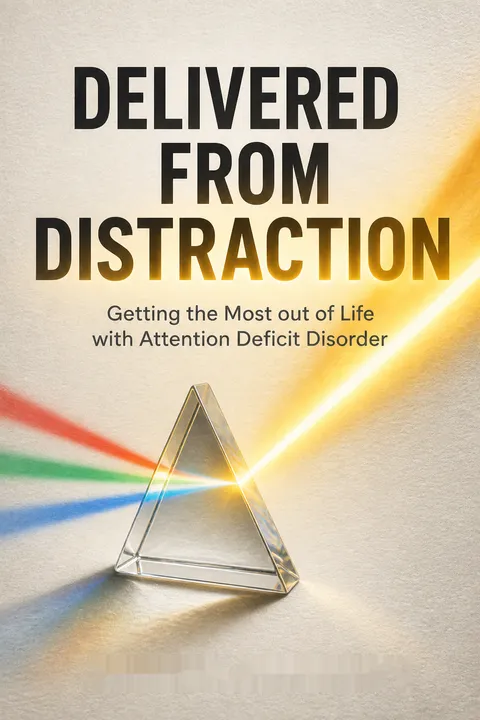
Delivered from Distraction is part clinical guide, part collection of case stories, and part argument for changing the way society interprets attention problems. Its central move is moral as well as medical: a person who repeatedly fails to meet expectations may not lack effort or care, and shame can compound the original difficulty. The book pairs that reframing with practical supports and an unusually strong insistence that treatment should uncover capacities, not merely suppress symptoms. Its narrative examples make variability legible. Paul can be financially successful and still feel constrained by an unrecognized pattern; Sophie can be bright and sociable yet falter when demands change; Eric can thrive socially at college while losing his academic footing. These stories resist the idea that intelligence, achievement, or good intentions rule out serious impairment. They also show why context matters: a flexible teacher, supportive partner, or external routine can change what a person is able to demonstrate.
The most durable framework is the combination of connection, interest, practice, progress, and recognition. It treats motivation as something cultivated through relationships and meaningful activity, rather than demanded through reprimand. The recommendations for external structure and gradual preparation for college translate that principle into daily action.
The book also reflects the unsettled science and clinical debates of its 2004 publication. Some proposed tests, nutritional interventions, and brain-training methods are presented with enthusiasm despite limited evidence in the text itself. Its medication claims and clinical guidance should likewise be understood as period-specific, not as current medical advice. A further caution is that celebrating possible strengths must not romanticize impairment or imply that every person with ADHD is unusually creative. The strongest reading is neither “disorder explains everything” nor “difference is always a gift.” It is that careful assessment, humane treatment, practical supports, and recognition of individual strengths can make life more workable without reducing a person to a diagnosis.
Review Summary
Delivered from Distraction receives mixed reviews averaging 4.11/5 stars. Many readers praise its reassuring tone and comprehensive ADHD overview, finding validation in recognizing their experiences. Positive reviews highlight practical coping strategies, the authors' personal understanding of ADHD, and the book's accessible writing style. Critics note disorganized structure, outdated information (published 2005), repetitive content, and excessive promotion of unproven supplements and medications. Some find diagnostic criteria too broad, making everyone seem ADHD-positive. Several reviewers recommend reading selectively rather than cover-to-cover, particularly Part 1. The book's "ADHD as gift" perspective resonates with some but frustrates others seeking more scientific rigor.
People Also Read








Glossary
Five-step process
Strength-building cycleHallowell's process for developing strengths moves through connection, play, practice, mastery, and recognition. Supportive relationships make exploration safer; an engaging activity invites repeated effort; practice leads to progress; and recognition reinforces confidence and belonging. Recognition then deepens connection, allowing the cycle to begin again.
SPIN
A pattern of getting stuckAn acronym for shame, pessimism and negativity, isolation, and no creative or productive outlet. Hallowell uses it to describe forces that can stall progress for people with ADD. Addressing the pattern means reducing shame, challenging negative expectations, reconnecting with others, and finding an activity that creates engagement or accomplishment.
SLIDE
A downward spiralAn acronym for self-attack, life-attack, imagining the worst, dread, and escape. It describes a sequence in which a setback triggers harsh self-judgment, broad pessimism, catastrophic thinking, and attempts to escape through harmful choices. The book advises learning personal triggers and preparing actions or reminders that can interrupt the sequence early.
Collaborative problem solving (CPS)
Shared conflict resolutionA method developed by psychologist Ross Greene that approaches recurring conflicts as problems to solve with a child, rather than simply demands for obedience. Hallowell describes sorting situations into those requiring immediate adult direction, those suitable for negotiation, and those that can be dropped. The method aims to teach communication and problem-solving while preserving clear safety limits.
Adult Self-Report Scale (ASRS)
Adult ADHD screening toolA six-question screening questionnaire developed by researchers in conjunction with the World Health Organization to help identify adults who may benefit from a full ADHD evaluation. In the book, a positive score is a reason to seek further assessment, not a diagnosis. The authors explicitly caution that a negative result does not rule out ADHD.
Reward deficiency syndrome (RDS)
Proposed reward-system modelA model discussed in the book that proposes some people experience ordinary rewards less strongly and may seek more intense stimulation. Hallowell connects the hypothesis to addiction risk and to some people with ADD, while acknowledging that it simplifies a complex system of pleasure and motivation. It should be understood as a proposed explanation, not a settled diagnosis.
qEEG
Quantified brain-wave testA quantitative electroencephalogram records electrical activity in the brain and analyzes patterns in the resulting brain waves. The book describes it as a possible aid to ADD assessment and treatment planning, but also says it cannot replace a careful personal history. Its favorable claims reflect the scientific discussion at the time of publication.
About the Author
Other books by Edward M. Hallowell

Download PDF
Download EPUB
.epub digital book format is ideal for reading ebooks on phones, tablets, and e-readers.








