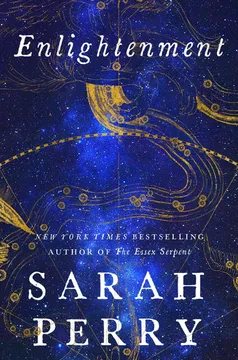


Plot Summary
The Planisphere Arrives
In 1997, Thomas Hart, a solitary fifty-year-old columnist for the struggling Essex Chronicle, is ordered by editor Nick Carleton to write about astronomy. Nick gives him a planisphere left by his dead father, but Thomas resists looking up. A letter from museum curator James Bower offers a more compelling subject: documents about a woman who vanished from Lowlands House, the source of Aldleigh’s ghost story.
On his walk home, Thomas finds a hooded stranger painting a strange mark on Bethesda Chapel, where he worships, and scrubs it away with pages from his notebook. He carries the star map home, still unsure what to write. The assignment and the letter have disturbed the routine he has used to keep wonder, grief, and desire at a distance.
The opening binds two kinds of inheritance: Nick’s planisphere and James’s invitation to investigate a woman erased from local memory. Thomas treats both as unwanted burdens because attention threatens the settled habits that protect him. His instinct to clean the chapel’s vandalized door is equally revealing: he tends a familiar institution even as he resists the unfamiliar sky. The episode establishes the novel’s central tension between evidence and interpretation. Thomas does not begin as a believer in marvels; he begins as a man who would rather decide in advance that nothing can surprise him.
Moonlight Changes the Assignment
At Bethesda, Thomas watches seventeen-year-old Grace Macaulay, the strict pastor’s daughter, when a golf ball smashes her window. Nathan, the shortsighted boy who hit it, enters to retrieve it, and Grace is left with a small cut on her neck and a new curiosity about him.
Later, Thomas takes binoculars to Lowlands Park and sees the moon in startling detail; the experience transforms his column and makes him eager for the newly visible comet Hale-Bopp.
He finally visits James Bower, who shows him a photograph of Maria Văduva, the vanished wife of Lowlands’ former owner, and a letter she hid in the house. The marks on her other papers look like nonsense, but Thomas recognizes the woman in an old chapel photograph. The ghost story has acquired a real name and a paper trail.
The shattered window is a literal breach in Bethesda’s controlled world, but its consequence is not simply romance. Nathan’s arrival gives Grace a first encounter with someone outside her father’s rules, while Thomas’s lunar discovery loosens a different form of confinement. Both are drawn toward experiences they cannot yet interpret. James’s documents then give Thomas a method for following that impulse: patient observation rather than inherited legend. The section makes curiosity contagious. A boy’s accident, a columnist’s new attention, and a museum file each open a path beyond the characters’ accustomed explanations.
Maria's Lost Letters
Maria’s unfinished letter describes her move from Romania to Lowlands, her fascination with the night sky, and her unhappy marriage to the wealthy John Bell. She writes of loving a man who does not return her feelings, and of going out to hunt at night.
Thomas reads the private pages repeatedly, then begins speaking to Maria’s photograph as if she were present. In that imagined confidante, he admits what he has hidden from Bethesda: he desires men, and has divided his life between London and the chapel to preserve both sexuality and faith.
He also recognizes that his attraction to James is becoming more than professional interest. Maria’s words about loving beyond reach sharpen his awareness of his own longing, while her strange drawings remain unexplained.
Maria becomes more than an object of research because her private writing gives Thomas a vocabulary for feelings he has treated as incompatible. His confession to her imagined presence is a psychological compromise: he can speak honestly while avoiding the risk of being heard by a living person. The parallel between their unreturned love is not exact, and the novel uses that difference to resist easy consolation. Thomas’s faith does not vanish when he names his desire, nor does desire become harmless because he can theorize it. His growing attachment to James makes the investigation intimate, exposing the cost of his long self-division.
The Stranger in Potter's Field
Grace and Nathan begin meeting in Potter’s Field, where their friendship lets Grace test small freedoms beyond Bethesda’s rules. Meanwhile Grace discovers a destitute, injured man living beneath a tarpaulin beside the chapel.
She helps him light a fire, then invites him to her eighteenth-birthday gathering, where her father, Ronald, and aunt Anne accept him despite Lorna Greene’s contempt. Thomas takes the stranger home when the party ends and learns his name: Richard Dimitru Dines, a Romanian pastor tortured under the former regime and left unable to sleep or trust safety.
Dimi has been carrying a damaged book he found near his shelter. Its title identifies it as Maria’s star diary, turning the stranger Grace chose to help into the missing link in Thomas’s investigation.
Grace’s kindness is imperfect, but it is active: she approaches a man others would classify as dangerous or unworthy, and gives him food, shelter, and a place at her table. That choice contrasts with the chapel’s moral certainty, where compassion can be narrowed by respectability. Dimi’s arrival also brings political violence into the novel’s intimate Essex setting. His damaged body and distrust do not function as a puzzle to solve; they remain consequences of a history Thomas cannot erase. The diary reaches the present through an act of care, linking ethical attention to historical recovery.
A Nebula in the Blot
Dimi translates Maria’s diary while Thomas compares her sketches with the night sky. A circular blot marked M42 proves to be the Orion Nebula, not evidence of madness. Other clues fall into place: Maria’s morning visitor Lucifer is the planet Venus, and the lenses found at Lowlands suggest she owned a telescope.
Thomas and James return to the ruined house, where a rat leads Thomas to more concealed pages, though some documents disappear before they can secure them. A frightened young woman later burns one of Maria’s letters in Thomas’s office, but a scrap survives. It confirms the astronomical reading. The mystery changes shape: Maria was a serious observer, and her disappearance may be bound to a discovery rather than a breakdown.
The M42 revelation shows how interpretation can rescue a person from a false diagnosis without pretending to know everything about her. Thomas does not prove Maria was happy or sane in every respect; he proves that her drawings have an intelligible object. That distinction matters, because the archive has reduced her to a vanished wife and a ghost. The rat, the hidden pages, and the burning letter make knowledge precarious, repeatedly exposed to concealment and loss. Thomas and James’s collaboration turns evidence into intimacy, but it also leaves them vulnerable to mistaking shared investigation for a promise of shared life.
A Birthday at Aldwinter
For Grace’s eighteenth birthday, Thomas drives her and Nathan to Aldwinter, an isolated settlement being surrendered to the sea. At its great oak, headstones removed from the flooded cemetery lean against the trunk, preserving the names of people whose homes and church have disappeared beneath the estuary.
Thomas turns the place into a story of tides, dead villagers, and a lost bell, while Grace and Nathan roam toward the water without him. The trip gives Grace a rare taste of choosing where to go and whom to follow. Her attraction to Nathan grows more difficult to contain, even as she recognizes that their worlds are unequal: he knows popular music and ordinary freedoms, while she has been taught to treat desire as a danger to her soul.
Aldwinter makes disappearance material. Its relocated gravestones preserve names while the landscape that gave those names a home is erased by water. That image anticipates Maria’s uncertain history and Grace’s fear that a life can vanish without leaving evidence. Thomas’s invented village tales soften the bleakness, but they also reveal his protective habit of turning pain into narrative. Grace’s movement toward Nathan is her own emerging agency, yet freedom arrives tangled with unfamiliarity and risk. The scene asks whether a person can choose a life without first knowing the language in which that choice will be judged.
The Fair Breaks Apart
At the Easter fair in Lowlands Park, Grace and Nathan slip away together, while Thomas moves through the crowd and is struck in the hip by a failing ride mechanism. A young woman has set fire to Lowlands House; James enters the burning building and brings her out, while Nathan helps in the rescue. The fire exposes a hidden section of wall, where James and Thomas later find Maria’s telescope.
Thomas’s injury leaves him dependent on others and unable to follow the people he loves. The same night, Grace’s private desire for Nathan becomes physical. What looks like a sudden disaster therefore alters several lives at once: the house yields its secret, Thomas is permanently hurt, and Grace crosses a boundary she has only been warned against.
The fair’s broken machinery makes bodily vulnerability impossible to keep abstract. Thomas’s hip injury converts his observer’s distance into dependence, while the fire forces James to act rather than merely wonder what kind of man he might be. The telescope is recovered from the wreckage, but the young arsonist’s rescue complicates any simple division between culprit and victim. Grace’s sexual awakening occurs amid this disorder, not as a neatly chosen rite of passage. The episode links knowledge, danger, and desire through consequence: each character is changed by entering a situation that cannot be controlled by doctrine or professional role.
Thomas Closes the Chapel Door
After the fair, Thomas learns that Nathan came to Bethesda while Grace was preparing for baptism. Thomas saw him at the chapel entrance and deliberately sent him away, believing he was protecting Grace from a painful, unequal attachment. Grace enters the water without knowing Nathan had returned, and the moment confirms her belief that he has chosen not to come back.
Thomas keeps his interference secret, allowing her to understand the loss as fate and God’s silence. His hip continues to trouble him, while his bond with Grace remains tender on the surface. The decision becomes the novel’s central act of concealed control: Thomas turns his own jealousy and fear into a judgment about what Grace can bear.
Thomas’s action is paternal in form but self-protective in origin. He frames his choice as mercy, yet denies Grace the information and agency needed to decide for herself. The baptism intensifies the irony: Grace enters a ritual of chosen faith at the very moment a human choice has been hidden from her. Her later anger is therefore not merely romantic disappointment. It is a response to having her life managed by someone she trusted. The scene exposes how benevolent motives can become coercive when one person claims superior knowledge of another’s future.
Maria's Comet Returns
In 2008, Dimi returns to Thomas with the completed translation of Maria’s diary. He identifies her beloved as the Romanian poet Mihai Eminescu, who died just before Maria recorded a comet in Cassiopeia.
The entry suggests she discovered the object first, though French astronomer Vincent du Lac later received credit. Dimi also connects Maria’s London friend, C., to a request that her observations be hidden. Thomas wants to restore Maria’s name, while Dimi plans to take the story back to Romania and consult its scholars.
Thomas invites James to the coming Lowlands exhibition, hoping to renew their closeness. The comet’s predicted return, roughly a century after Maria saw it, gives the mystery a future date and turns archival recovery into a race against time.
The diary’s final entry transforms the novel’s central symbol from an image of wonder into a claim about credit and historical power. Maria’s discovery matters scientifically, but its suppression is bound up with grief and the limits imposed on a woman’s ambition. Dimi’s translation restores her voice while revealing the damage caused by her attempt to control how that voice would be remembered. Thomas’s wish to correct the record is generous, yet it is also personal: he wants the investigation, and James, to keep giving his life direction. The return date promises resolution while postponing it.
The Blue Eclipse
Anne’s cancer brings Grace back from London, but traffic delays her until her aunt has died. Dimi leaves the stalled car in distress and is later found dead beneath the railway arch, his battered hands and Maria’s diary lost to rain and the river. Five days after Anne’s death, Thomas takes Grace to watch a partial solar eclipse and finally admits he turned Nathan away at her baptism.
Grace rejects his explanation and backs into the dredged Lowlands lake. Rescuers pull her from the water with the recovered stone statue of Maria, whose hand Grace had grasped below the surface. Thomas has tried to make his confession a kindness, but it arrives after years of consequences and cannot repair what he chose for her.
The eclipse provides a precise image for the delayed truth: a real body is obscured, then exposed again, but the interval cannot be undone. Thomas’s confession gives Grace the missing fact while also revealing that his protection was a form of control. Her fall into the lake makes the confrontation bodily, and Maria’s statue joins two women whose lives have been shaped by love, loss, and other people’s decisions. Dimi’s death and the diary’s disappearance deepen the section’s refusal of tidy recovery. Some histories can be clarified, but clarification does not restore the people or years already lost.
A Funeral Makes Thomas Visible
At Anne’s funeral, Grace publicly reveals that Thomas desires men, using the revelation to punish him for the betrayal he has just confessed. Thomas leaves Bethesda, convinced the congregation now sees him as a sinner who never belonged.
At the Lowlands exhibition, he later meets James again. They speak about the recovered telescope and their history, but Thomas refuses James’s offer of physical intimacy, unwilling to accept pity or a belated consolation.
James leaves, and the two never meet again; Thomas learns years later that James died without contacting him. The lost relationship joins his estrangement from Grace and Bethesda. His writing, however, receives a new force from the pain, and his novel The Horse and Rider eventually earns public acclaim.
The funeral scene makes belonging conditional on what others are willing to know. Grace’s disclosure repeats the injury Thomas inflicted on her, but revenge does not make their positions equivalent: he controlled her choices, while she exposes a truth that was never hers to weaponize. Thomas’s refusal of James is not a clean victory over longing; he declines an encounter that cannot answer the years of asymmetry. The later fame of his novel offers no substitute for intimacy, though it shows that pain can become form. The section treats shame as social, relational, and productive, never as a simple private defect.
The Lowlands Firestarter Returns
In 2017, a woman leaving a psychiatric hospital visits Thomas at the Chronicle. She is the young trespasser who once burned Maria’s letter and helped set the Lowlands fire. She asks what became of James, and Thomas tells her he died years earlier.
She explains that she had spent weeks living unseen in Lowlands, then feared Hale-Bopp would bring disaster and set the house alight to force change. Before leaving, she gives Thomas a water-damaged letter found among Maria’s belongings.
It is from C., who refuses Maria’s request to prove affection by suppressing her discovery. The woman’s return does not settle the past, but supplies Thomas with an overlooked piece of the correspondence and reopens the question of where Maria’s scientific records went.
The former intruder embodies the danger of treating catastrophe as a substitute for change. Her fire was an attempt to make the world answer her, but it injured people and left her institutionalized. Her later visit is not a conventional confession or redemption; she brings evidence, admits her fear, and leaves Thomas to decide what it means. C.’s letter also reframes Maria’s disappearance as a conflict between loyalty and self-erasure. The novel repeatedly shows that love can demand impossible proofs. This document suggests that a friend may refuse such a demand without refusing the person.
Three Names on Foulis Street
Grace, now living above the Jackdaw and Crow and making costumes, discovers an old cleaning ticket sewn into a black silk dress from the 1880s. Its address is Foulis Street, the London road Maria teasingly called Foolish Street, and its initials match C.’s.
Grace researches the 1891 census and sends Thomas the names of three women who could fit the clue. Their evidence is imperfect, since the census was taken two years after Maria disappeared, but one candidate, Cora Seaborne, has connections to Aldwinter.
Thomas asks the museum for records of the graves moved from the flooded village. Grace’s practical knowledge of clothing has done what abstract speculation could not: a neglected ticket has connected Maria’s dress, her friend, and a forgotten Essex grave.
Grace’s work with damaged garments becomes a form of historical method. She reads seams, labels, and wear as evidence, noticing what official records overlook. That skill is inseparable from her life among discarded objects and limited means; she recognizes value because she has had to make it from what others leave behind. The census does not produce certainty, only a narrowed field of possibility. This is important to the novel’s view of knowledge: discovery often begins with a detail too small to command attention, and remains provisional until other people and records can answer it.
The Knots of Aldwinter
At the autumn gathering beneath Aldwinter’s tomb tree, Thomas unexpectedly meets Nathan, now a married father living with chronic pain. Grace arrives soon after, and she and Nathan resume the intimacy that began when they were teenagers. Around them, villagers and visitors tie ribbons and rope to the oak, dance, and surrender themselves to a disorderly festival.
Grace joins a handsome stranger in a provocative game of binding, and Nathan’s jealousy exposes feelings he has kept under control. Later, Grace and Nathan become lovers for one night, but he remains committed to his wife and daughter. Their reunion gives Grace the closeness she has wanted, while refusing to turn that desire into a simple promise of a shared future.
The knots offer no single moral meaning. They can signify attachment, play, erotic power, or entrapment, and the characters move among those meanings without mastering them. Nathan’s pain makes his body a visible limit, while his marriage makes his emotional availability a limit he cannot wish away. Grace’s flirtation with the stranger briefly reverses the old balance between them, but does not erase her dependence on Nathan’s attention. The festival’s communal disorder gives their private desire room to surface, not a guarantee that it can be made equitable. The section treats longing as consequential even when it cannot become a conventional relationship.
Cora's Buried Box
Thomas’s museum inquiries lead to a box recovered from Cora Seaborne’s grave when Aldwinter’s cemetery was moved. Its papers include Maria’s final letter and the exact time and coordinates of her observation in Cassiopeia. Maria had seen the comet first, then, after learning Eminescu was dead, tried to burn her observations.
Unable to destroy them, she gave them to Cora and asked her to keep silent so the comet would remain a memorial to her lost love. Cora obeyed and buried the evidence with herself. The discovery resolves the mystery of the missing diary pages and gives Thomas proof to submit to the International Astronomical Union. Maria’s silence was neither madness nor simple erasure; it was a painful choice made by a grieving woman.
The box completes a chain of care and concealment: Maria entrusts her work to Cora, Cora honors the request, and generations later the grave returns what it was meant to hide. The revelation complicates Thomas’s impulse to correct the record. Giving Maria credit respects her scientific achievement, but it also overrides the final wish she expressed while grieving. The novel does not offer a frictionless answer. It asks whether honoring a person means preserving their chosen silence or refusing the injustice that made silence seem necessary. Thomas must act without pretending that truth can restore what the truth cost.
Văduva-du Lac Rises
The International Astronomical Union accepts Maria as the comet’s first observer and assigns it the name Văduva-du Lac, though the decision arrives too late for this appearance. Thomas resigns from the Chronicle and prepares food for a clear night at Lowlands, where Nathan waits beside him.
Grace comes through the yews as the comet rises, and Thomas experiences the dead and absent people he loved gathering around the lake: Anne, James, Dimi, Maria, and Cora. The vision does not undo their losses or settle Grace and Nathan’s future. It places their lives together for one moment under the returning comet. Thomas, who has spent decades trying to make experience meaningful in words, accepts the event as something his language cannot contain.
The climax resolves the factual mystery while keeping emotional resolutions incomplete. Maria receives scientific recognition, but too late to enjoy it; Grace and Nathan meet again, but their attachments remain constrained by history and present obligations. Thomas’s vision gathers people across time without claiming that grief has been conquered. Its force comes from relation: every life has altered another, even where love was unreturned or forgiveness withheld. The comet’s return makes recurrence visible, yet not repetition. The characters come together changed, and the novel’s final consolation is not that suffering was necessary, but that their shared attention made a world between them.
Analysis
Enlightenment makes the search for knowledge inseparable from the question of who is allowed to keep, interpret, and claim it. Maria’s astronomical work survives only in fragments: a sketch mistaken for madness, a dress ticket, a census entry, and a box buried with a friend. Each recovery depends on someone choosing to look closely, but looking does not automatically confer moral authority. Thomas must decide whether correcting the public record honors Maria or violates the silence she requested. Grace’s history offers a parallel problem of interpretation. Thomas believes he can spare her pain by controlling what she knows, then discovers that his protection has altered her life more profoundly than the truth might have.
The novel’s religious and scientific vocabularies do not cancel one another. Thomas remains drawn to Bethesda even as he studies astronomy and physics, and his wonder depends less on certainty than on sustained attention. The stars offer laws, but those laws become metaphors rather than answers: attraction does not guarantee reciprocity, and an orbit’s return cannot restore a lost moment. The book is especially alert to asymmetrical love. Thomas loves James without receiving the life he hopes for; Grace’s attachment to Nathan crosses decades without making him free; Maria’s work is entangled with a love that cannot be returned. Their suffering is not romanticized as proof of virtue. Instead, it exposes how love can be generous, possessive, humiliating, and sustaining at once.
Time in this novel is not a straight road toward resolution. Letters survive, people return, places change, and the past remains active in the present without becoming reversible. The final comet does not repair the damage between the characters, but it gathers their histories into a shared act of attention. Enlightenment ultimately treats wonder as a disciplined openness: the willingness to observe carefully, revise an assumption, and admit that another person’s inner life exceeds the explanation we have made for it.
Review Summary
Reviews of Enlightenment are polarized. Many praise Sarah Perry's exquisite, lyrical prose and richly drawn characters, particularly Thomas Hart, a closeted gay man navigating faith and astronomy in Essex. Admirers laud its meditations on love, faith, and the cosmos, comparing it favorably to The Essex Serpent. Critics, however, find the narrative disjointed, overly coincidental, and frustratingly slow, with characters feeling anachronistically Victorian despite a late 20th-century setting. The novel was longlisted for the 2024 Booker Prize but did not make the shortlist, reflecting its divisive reception. Overall rating: 3.56/5.
People Also Read






Characters
Thomas Hart
The star-bound columnistThomas is the Essex Chronicle’s elegant, solitary columnist, a lifelong Baptist whose curiosity about astronomy is awakened by a reluctant assignment. He measures experience through language, old books, and the order of the chapel, yet his attention to people is more tender than his careful manner suggests. His faith and desire for men coexist uneasily, and he has learned to divide his life rather than risk asking either world to accept the whole of him. His loyalty to Grace is fatherly but not always wise; his attachment to James exposes the loneliness beneath his self-command. Astronomy gives Thomas a way to think about forces he cannot control, though it never lets him escape responsibility for his choices.
Grace Macaulay
The chapel's restless daughterGrace is the small, sharp-tempered daughter of Bethesda’s pastor, raised within a strict faith that shapes how she understands her body, desire, and choices. She is tactile, observant, and drawn to beautiful things, often stealing or remaking them when they seem beyond her reach. Her affection for Thomas is instinctive and deeply rooted, while her attraction to Nathan opens a world she has been taught to fear. As an adult she makes costumes from old garments and builds a life from scraps, but remains unsettled by questions of goodness, belief, and belonging. Grace’s strength lies less in certainty than in her capacity to feel opposing things at once without pretending one cancels the other.
Nathan
Grace's first outside worldNathan first appears as a boy whose golf ball breaks a chapel window, bringing him into Grace’s sheltered world by accident. He is easy in his body, amused by convention, and initially unaware of how much his attention matters to her. His kindness is often casual, which can make it feel effortless to him and momentous to Grace. As an adult, he carries chronic pain and the obligations of a wife and daughter. He is not simply the freedom Grace once imagined: he has his own limits, history, and responsibilities. His relation with Grace is shaped by genuine affection, unresolved desire, and the difficult difference between wanting someone and being free to build a life with them.
Maria Văduva Bell
The forgotten sky watcherMaria is a Romanian woman living at Lowlands House in the late nineteenth century, intellectually alert and fascinated by the night sky. Her marriage to the wealthy John Bell gives her security but not freedom from loneliness or disappointment. She writes privately, observes the heavens, and resists being reduced to the role of a decorative wife or a local ghost. Her papers reveal a mind that treats scientific observation and emotional life as intertwined, though not interchangeable. Maria’s pride, wit, and capacity for grief make her more than a recovered historical subject. She embodies the conflict between a woman’s claim to her own achievement and the sacrifices she may make for love.
James Bower
The museum's restless historianJames is a museum curator in Aldleigh whose work at Lowlands uncovers the first evidence about Maria. He is capable, sociable, and dissatisfied with the life he has built, though he rarely knows what change he wants. His curiosity is sharpened by Thomas’s unusual manner, and their investigation gives him an unexpected intimacy outside his ordinary routines. James is married and has a family, but his attraction to risk and sudden action suggests a man who sometimes needs an extraordinary event to feel fully present. His connection with Thomas is marked by warmth, ambiguity, and missed chances, revealing how two people can recognize one another without agreeing on what that recognition requires.
Richard Dimitru Dines
The displaced Romanian pastorDimi is a former pastor from Bucharest who survives political imprisonment and severe torture, carrying lasting injuries, sleeplessness, and dependence on alcohol. When Grace finds him in Potter’s Field, he is homeless and wary of pity, but still capable of humor, authority, and generosity. His Romanian language allows Maria’s diary to become legible, making him both a translator and a witness. Dimi’s faith changes form without resolving into certainty; he continues to search for God while mistrusting easy explanations of suffering. His relationship with Thomas is built through practical care, shared food, and the difficult work of listening rather than trying to repair what cannot be repaired.
Anne Macaulay
Grace's patient auntAnne leaves her teaching life in Scotland to help raise Grace after her sister-in-law dies in childbirth. Shy and dutiful, she initially feels little affection for the baby, then slowly becomes the person most consistently attentive to Grace’s needs. Her faith is sincere but not showy, and her friendships beyond Bethesda reveal a desire for a wider life that she has rarely permitted herself. Anne often mediates between Ronald’s severity and Grace’s rebelliousness, offering care through ordinary acts such as meals, gifts, and practical help. Her emotional life is marked by guilt over what she cannot feel and gratitude for the bonds she eventually forms.
Ronald Macaulay
Grace's strict pastor fatherRonald is Bethesda’s pastor and Grace’s widowed father. He is devout, grave, and shaped by a theology that often frames ordinary desires as dangers to the soul. His love for Grace is real, though he expresses it through rules, prayer, and a strong sense of parental duty. As he grows older, practical care sometimes leads him beyond the certainty of his pulpit, and his kindness can surface where doctrine cannot explain what a loved one needs.
Nick Carleton
Thomas's impatient editorNick edits the Essex Chronicle and knows Thomas’s habits well enough to press him into unfamiliar work. He is practical, ambitious for the paper, and often amused by Thomas’s formality, but his loyalty is genuine. His father’s planisphere becomes the small object that redirects Thomas’s attention toward astronomy.
Lorna Greene
The chameleon in satinLorna is a socially polished woman who moves between religious communities, adapting her manner to the people she hopes will welcome her. Her flattery and judgment can be manipulative, especially when she senses vulnerability in others. Beneath her carefully assembled image is a hunger for companionship and recognition, making her more complicated than the worldly intruder Bethesda assumes her to be.
Cora Seaborne
Maria's London confidanteCora is a London woman and Maria’s trusted correspondent, remembered through her letters and the records connected with her family. She is intelligent, independent-minded, and committed to women’s capacity to pursue knowledge and live beyond conventional expectations. Her friendship with Maria gives the older woman a rare relationship in which intellectual ambition can be discussed plainly.
John Bell
Maria's wealthy husbandJohn Bell is a prosperous wool merchant who owns Lowlands House and marries Maria after she leaves Romania. He is generous with money and attentive to appearances, yet his affection does not always amount to understanding. His efforts to please Maria reveal both genuine tenderness and the limits of a marriage shaped by unequal freedom.
Emily Bower
James's perceptive wifeEmily is James’s wife, a warm and observant presence who understands that her husband has an unusual attachment to Thomas. She meets Thomas with kindness rather than suspicion, and her steadiness makes visible the established domestic life James is reluctant to disrupt.
The Lowlands firestarter
The frightened trespasserA young woman living unseen around Lowlands, she is frightened by the comet and by the prospect that nothing in her life will change. Her secretive presence and anxious actions make her a source of danger, but also a portrait of fear turning into destructive urgency.
Mihai Eminescu
The Romanian poetMihai is a celebrated Romanian poet whose life and work reach the novel through Maria’s memories and Dimi’s knowledge. His reputation gives the private history of Maria’s love a connection to a larger literary world.
Plot Devices
Comet Hale-Bopp and Văduva-du Lac
A clock in the heavensHale-Bopp first pulls Thomas into astronomy and fills Aldleigh with competing expectations of disaster, salvation, and spectacle. Maria’s earlier comet, discovered in 1889 and scheduled to return in 2017, gives the investigation a long temporal arc. Its eventual naming joins personal longing to a historical correction. The comets do not explain human behavior; rather, their predictable motion contrasts with the uncertainty of love, faith, and memory. Their returns let the novel place separate generations under the same sky without making their experiences identical.
Maria's diary and papers
Evidence against erasureThe diary, drawings, letters, and archival records slowly replace the local legend of a mad ghost with evidence of Maria’s life as an observer of the sky. Each document clarifies one question while opening another: the marks become nebulae, a friend becomes traceable through a dress ticket and census, and the missing observations are found among objects buried with Cora Seaborne. The papers also expose an ethical problem, because Maria entrusted her discovery to a friend while asking that it be concealed. They make historical recovery depend on interpretation, material evidence, and respect for conflicting intentions.
Planisphere and telescope
Tools for learning to lookThe planisphere begins as an unwanted assignment from Nick and becomes Thomas’s practical introduction to the night sky. Maria’s telescope links his new attention to the older woman whose life he is investigating. The instruments do not produce instant understanding: Thomas must learn to orient the map, interpret the drawings, and distinguish a celestial object from a smear. Their function is both practical and symbolic. They train him to look again, while reminding him that observation requires patience and that seeing clearly is not the same as possessing the truth.
Orbits and physical laws
A language for attachmentThomas uses Kepler’s laws, tidal forces, eclipses, stellar spectra, and quantum uncertainty to think about attraction, distance, and change. These ideas recur as working metaphors rather than proofs that human choices are predetermined. An orbit can return, but the people within it have been changed by their passage; one body can affect another without controlling it completely. Physics gives Thomas a vocabulary for experiences his religious formation cannot easily hold, while the gaps in his scientific knowledge preserve the possibility of wonder rather than replacing it with certainty.
Bethesda and Lowlands
Two worlds in collisionBethesda Chapel represents inherited faith, discipline, and community; Lowlands House holds decay, rumor, hidden records, and the possibility of trespass. The chapel’s fixed routines contrast with the house’s unstable floors, shifting walls, and eventual fire. Grace moves between the two, testing the rules she has been taught, while Thomas experiences both as places he cannot simply abandon. The nearby Potter’s Field and flooded Aldwinter extend this geography into a landscape of neglected people and displaced graves. Place gives private conflicts a visible structure without reducing the characters to symbols.
Download PDF
Download EPUB
.epub digital book format is ideal for reading ebooks on phones, tablets, and e-readers.








