

Key Takeaways
Outsmart your brain by trusting learning evidence over easy feelings.
Ease can fool you. The brain favors activities that feel productive now: rereading familiar pages, copying notes, or watching an explanation without testing yourself. Yet wanting to learn does not itself create learning, and repeated exposure can leave surprisingly basic details unknown. Willingham compares effective study to difficult exercise: the effortful version may feel slow and unsuccessful, while the comfortable version can create a false sense of progress.
Judge by what sticks. A useful method may feel harder because it makes memory do real work. Retrieval practice, for example, means bringing information to mind rather than merely looking at it. The practical rule is to evaluate a strategy by whether it improves understanding and later recall, not by how fluent or pleasant it feels during the session.
What's valuable here is the distinction between subjective fluency and durable learning. Smooth performance can be a poor guide precisely because familiarity feels like competence. This is a useful corrective in any skill where practice should build future capacity, not just produce a satisfying session. The caveat is that difficulty alone is not proof of effectiveness: confusion without feedback can reinforce errors. Effort becomes useful when paired with checks that show whether the learner is building accurate knowledge.
Rebuild the argument behind a lecture or chapter, not just its facts.
Ideas arrive in sequence. Lectures and textbooks, however, are usually organized around a hierarchy: a central claim supported by reasons, examples, and details. A history lecturer may mention Shirley Temple films, then explain that they helped audiences escape the hardship of the Great Depression. A listener who records each fact but misses the link loses the point. Written texts create the same risk when a sentence contradicts an earlier claim and the reader fails to connect them.
Give reading a job. Before a lecture, identify its theme and main sections from an outline or opening remarks. While listening, watch for transitions and ask how each detail fits the larger point. For difficult reading, SQ3R offers a structure: survey headings, pose questions, read for answers, recite what the section means, and review.
The key move is from collecting information to constructing a model of how it fits together. That model supports both comprehension and memory because each detail gains meaningful links. It also explains why asking whether a lecture made sense is not enough: a learner may understand sentences individually while missing the argument. The method is especially useful when instructors provide weak signposting, though a clear outline from the speaker can reduce needless guesswork.
Take notes for understanding, then repair them while the lecture is fresh.
Writing competes with listening. People speak about six times faster than they can write, so complete notes are impossible. When students try to keep up, they often copy the speaker's words and spend less attention understanding them. Research cited in the book finds that students capture only about 25 to 50 percent of the points instructors consider important. Decide in advance whether a lecture requires recording many straightforward details or concentrating on complex ideas and writing less.
Make notes usable later. Paraphrase important ideas in your own words, mark confusion, and check during pauses whether your shorthand will make sense to your future self. After class, draw a simple map of the main claim and its supporting ideas, identify missing facts or connections, and compare with classmates. The act of rebuilding the structure is itself a form of study.
Notes are not merely storage. They are a record of what the learner attended to and a set of cues for later recall. That makes another student's notes helpful as a backup, but not a full replacement for one's own mental work. The book also resists fashionable overengineering: a complicated note format can consume attention better spent understanding. The most useful system is often the one simple enough to leave room for thinking.
Before an activity, decide what it is supposed to teach you.
Doing has different purposes. An activity may teach a physical process, create an experience that cannot be conveyed by description alone, or make an abstract idea easier to understand. A playground exercise in which students form circles can make the relationship between radius and circumference visible. A scripted lab might instead teach a technique or a broader method such as forming and testing a hypothesis. If the purpose is unclear, ask what to notice rather than simply completing the task.
Attend deliberately. For an analogy, identify which features of the familiar situation correspond to the new idea and which do not. For projects, choose work that teaches the desired skill, seek feedback before the end, and record what the process revealed. Repeated experience is not automatically practice: improving a complex skill requires attention to one component, feedback, and attempts to adjust it.
Activities can feel memorable while teaching the wrong lesson. Attention selects what enters memory, so an engaging task needs a learning target, not just energy and participation. The distinction between experience and practice is especially important: repetition may increase comfort without improving performance. A well-designed activity therefore makes its purpose visible and gives learners some way to check their interpretation. The learner's question, what should I pay attention to, can often rescue an under-explained exercise.
Build a complete question guide and retrieve its answers across several days.
Testing strengthens memory. Retrieval practice is the act of pulling information out of memory. In an experiment described in the book, students who took a test during a study session scored about 10 to 15 percent higher later than students who used that session to study the material again. Corrective feedback matters, and only tested material receives the benefit. Turn class notes and readings into your own question-and-answer guide, including both specific facts and broader explanations.
Spread the effort. Answer questions before looking at the solutions, speak answers aloud, check them, and shuffle their order. When a fact will not stick, make it meaningful by asking why or how it relates to other ideas; reserve mnemonics for arbitrary lists. Cramming can support an exam score, but the book's example found that students recalled far less of crammed material after several days than of content practiced over weeks.
The study guide is doing double duty: creating it organizes the course, and using it forces retrieval. This helps explain why borrowing a polished deck can be a poor shortcut, even when it is accurate. The strategy also changes what counts as a productive study session: missing an answer is information about what needs work, not evidence that the session failed. Feedback is essential, because practicing a wrong answer repeatedly can make the error easier to retrieve.
Measure mastery by unsupported explanation, not by familiarity or a lucky score.
Recognition is not recall. Rereading can make material feel known because it is familiar, but an exam may require producing the answer without the text nearby. To judge readiness, leave time between study and self-testing, use varied questions, and explain answers aloud. Looking at an old exam can reveal the instructor's question styles, but it samples only part of the course and cannot show whether the full study guide is learned.
Work the question. During an exam, read carefully, watch for familiar ideas that pop to mind but do not answer the question, and keep trying to retrieve a difficult answer before giving up. For essays, sort relevant evidence under the parts of the prompt and outline the argument before writing. Afterward, classify mistakes: missed content, missing notes, weak recall, misread wording, or careless execution. Each diagnosis points to a different fix.
This section treats assessment as both performance and measurement. A score matters, but a learner's interpretation of that score matters too: one can be overconfident after an easy test or dismiss a real gap as an unfair question. Exam analysis turns disappointment into diagnostic information. Its limit is that self-assessment still depends on good questions and accurate feedback. A student who cannot tell whether an explanation is correct needs a classmate, instructor, or reliable source to calibrate the judgment.
Schedule learning as regular work, then make each task small enough to start.
Planning beats rescue work. The planning fallacy is the tendency to underestimate how long tasks will take. The Sydney Opera House, for instance, opened ten years later than planned and cost far more than its original estimate. For students, waiting until the next deadline often creates cramming and leaves no room for surprises. Set a regular study block, keep assignments and preparation reminders in one calendar, and begin each session with a short ranked task list.
Lower the starting barrier. Break large assignments into specific pieces that take roughly 20 to 60 minutes. A vague instruction to study is hard to begin; a defined piece of a study guide is easier to act on. Repeating work after a consistent cue can make starting habitual, reducing reliance on willpower. Protect sleep as part of the plan: the book notes that sleep supports attention the next day and helps stabilize what was learned.
The strongest planning insight is that time management is partly a memory problem: intentions disappear unless they are externalized in calendars, reminders, and lists. Small tasks also make progress visible, which can reduce avoidance. The daily block should be a sustainable commitment rather than an inflexible productivity test. A schedule that ignores work, health, or family demands is not disciplined; it is poorly designed. A good plan anticipates interruptions and leaves room to adapt.
Remove distractions before relying on willpower to resist them.
Distraction unfolds in stages. A notification appears, captures attention, seems important, and prompts a response. It is easier to prevent the interruption by silencing or removing the phone than to resist once a social app is open. Multitasking also has a switching cost: moving between a text conversation and an essay requires resetting attention, even when both tasks feel familiar. Video playing in the background reliably interferes with work in the research Willingham reviews; findings about music are less consistent.
Shape the work session. Choose a location that suits the task and the person, reduce visible digital temptations, and plan breaks instead of waiting until concentration collapses. Mind wandering is normal, so the goal is to return promptly, perhaps with a task list or a brief check-in. The book also distinguishes wanting to check social media from actually enjoying it, a difference learners can test by recording both reactions.
Environmental design matters because self-control is most fragile after attention has already been captured. Turning off a device is not a moral victory; it is a practical way to avoid making the harder choice repeatedly. The advice also avoids treating every distraction alike: a quiet room helps some people, while the presence of other focused learners can help others. Breaks are similarly individual. Their value lies in restoring attention, not in obeying one universal timer.
Build learner confidence from progress, not comparison or inherited labels.
A learner is made through actions. Academic self-image reflects more than grades: it is shaped by feedback, friends, comparisons, and family attitudes toward education. A student can mistake a difficult start for proof of fixed inability, even though learning depends substantially on what the person does. Comparing current performance with one's own earlier progress offers a fairer measure than ranking against a high-achieving sibling or classmate. Finding peers who value learning can also make sustained effort feel socially normal.
Interest can follow competence. The book describes a reinforcing cycle: attention supports memory, memory helps performance, success can build confidence, and confidence can make further learning feel more possible and interesting. The cycle does not require starting with passion. Understanding a topic can make it more engaging. This broadens the idea of an independent learner: not someone who finds every assignment fun, but someone who can use effective methods and remain open to discoveries.
The account of confidence is more grounded than simple positive thinking because it links self-belief to observable practices and social context. A learner can build evidence of competence through preparation, reflection, and gradual progress. At the same time, confidence cannot be reduced to individual effort alone: access to time, support, and useful instruction also shapes results. The cycle between understanding and interest is especially useful because it gives learners a route into an unfamiliar subject without requiring enthusiasm in advance.
Manage anxiety by taking small steps, not by waiting to feel calm.
Anxiety can grow by association. A humiliating moment in a math class, for example, can make later math tasks feel threatening even when no immediate danger exists. Avoidance may bring short-term relief while preserving the fear. Willingham therefore defines progress as doing something important despite anxiety, not eliminating anxious feelings first. A student who fears speaking in class might begin with a brief comment, then gradually attempt longer contributions.
Reinterpret and reengage. The book suggests normalizing anxious thoughts, considering how likely the feared outcome is and what would happen if it occurred, then returning attention to a small useful action. Physical arousal can also accompany excitement, so a racing heart is not always proof of danger. Persistent or overwhelming anxiety may need professional support; the book cautions against relying on alcohol or drugs as unsupervised relief.
This approach separates discomfort from incapacity. That distinction can keep anxiety from dictating every choice, while gradual action supplies new evidence that a feared situation can be endured. The advice is not a substitute for clinical care, and some anxiety disorders require more than self-guided strategies. Its practical contribution is narrower but important: everyday nervousness need not be treated as a veto. Progress can be measured in participation, not in perfect calm.
Analysis
The book's organizing idea is not that learning can be made effortless, but that ordinary instincts often steer learners toward activities that feel productive rather than those that produce durable knowledge. Its strongest contribution is the way it connects cognitive science to the overlooked work around studying: interpreting lecture structure, choosing what to attend to during an activity, building useful notes, planning time, and judging one's own competence. Learning is presented as a chain of dependent tasks, not as a single act of concentration.
That breadth is also the challenge of adapting the book. A compressed summary can make its recommendations sound like a checklist, when their value comes from diagnosing where a learner's process breaks down. A student missing key concepts needs different help from one who understands but cannot recall them, or one who knows the material but misreads exam prompts. The book's emphasis on distinguishing these cases is more valuable than any isolated trick.
Its practical stance is generally strong because it treats human limitations as design constraints. Phones, memory failures, anxiety, and optimistic scheduling are not problems solved by scolding. They require structures that make the desired action more likely. Still, strategies should not be treated as universal prescriptions. The author himself notes uncertainty in areas such as laptop note-taking, music, and break schedules. The broader lesson is to test methods against results, while seeking feedback where self-assessment is unreliable.
The final picture is a virtuous cycle: understanding supports memory, successful recall supports confidence, and confidence makes further effort easier. The cycle is plausible, but not automatic. Students need adequate instruction, realistic workload, and support, not merely better personal technique. The book is most empowering when it gives learners practical control without implying that every educational obstacle is theirs alone to solve.
Review Summary
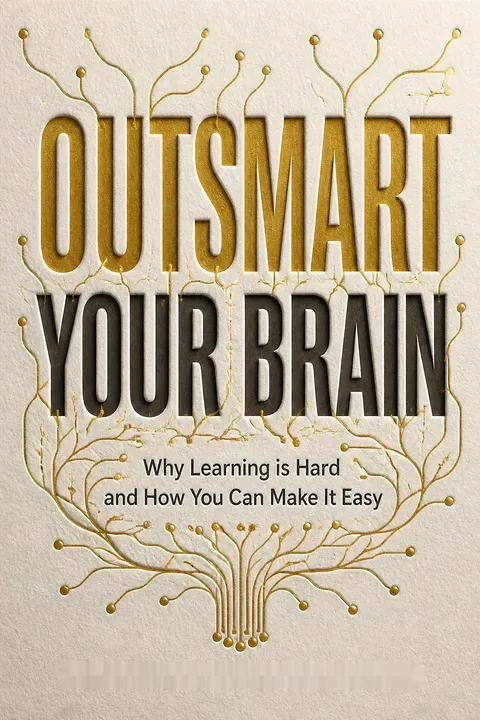
Outsmart Your Brain receives mostly positive reviews for its practical advice on improving learning and study skills. Readers appreciate the research-backed tips and organization, finding it useful for students and educators alike. Some criticize its length and repetition, while others wish they had this resource earlier in their education. The book is praised for challenging ineffective learning methods and providing actionable strategies. However, a few reviewers note it's primarily focused on college-level learning and may not be as applicable to other contexts.
People Also Read









Glossary
SQ3R
structured reading methodA reading strategy whose steps are Survey, Question, Read, Recite, and Review. The reader previews a text, develops questions, reads to answer them, summarizes each section from memory, and revisits the material. Its purpose is to make reading goal-directed and to check comprehension instead of relying on passive rereading.
retrieval practice
memory-strengthening self-testA study method in which a learner actively recalls information rather than simply reviewing it. Recalling an answer can strengthen later memory, especially when the learner receives prompt corrective feedback. The method improves knowledge that is actually tested, so practice questions should cover the material the learner needs to retain.
spacing effect
learning across separate sessionsThe memory advantage produced by spreading study across multiple sessions rather than concentrating the same effort in one sitting. The gaps make some relearning necessary, which can feel inefficient, but spaced study generally supports longer retention than cramming. The book recommends distributing practice without insisting on a perfect schedule.
overlearning
practice beyond initial masteryContinuing to practice material after it can already be recalled correctly. This additional work can protect against forgetting before a test or another later use. Because continued practice feels unnecessary once answers are easy, learners may stop too soon; the book recommends some additional study without claiming one exact amount suits every situation.
planning fallacy
underestimating task timeThe tendency to predict that a task will take less time than it actually does. It affects both individuals and large projects, because planners focus on the intended path and discount possible complications. The book's remedy is to make time estimates more cautious and begin work early enough to absorb delays.
prospective memory
remembering intended future actionsMemory for carrying out an intention at a later time, such as remembering to buy something on the way home or take medication at a set time. Because these intentions can be forgotten, the book recommends external reminders and consistent routines rather than trusting that an intention will stay active in memory.
self-handicapping
creating an excuse for failureA strategy, often outside conscious awareness, in which a person creates an obstacle that can explain poor performance. Procrastinating before an exam, for example, can provide the excuse of inadequate preparation if the result is disappointing. The book connects this behavior to fear that failure after genuine effort would expose a lack of ability.
pop knowledge
familiar fact mistaken for an answerInformation that quickly comes to mind when a test question contains a familiar cue, but does not necessarily answer the question being asked. A voltmeter may bring resistance to mind, for example, even when a question asks what must be observed in a direct-current circuit. The remedy is to read the full prompt and check the fit.
academic self-image
belief about oneself as learnerA person's view of their own academic ability and identity as a learner. It is shaped by grades and feedback, but also by family values, friends, and comparisons with other people. This self-image influences how setbacks are interpreted and which educational goals seem attainable.
mind wandering
attention drifting from a taskA shift of attention away from the intended activity toward unrelated thoughts. It becomes more likely during long, boring, overly easy, or overly difficult tasks. The book treats it as a normal occurrence and emphasizes noticing the drift and returning to work, rather than expecting uninterrupted concentration.
FAQ
What's Outsmart Your Brain about?
- Focus on Learning Strategies: Outsmart Your Brain by Daniel T. Willingham delves into effective learning strategies grounded in cognitive science. It aims to help students understand their brain's workings to improve learning outcomes.
- Independent Learning: The book emphasizes the importance of becoming an independent learner, encouraging students to take responsibility for their education as they progress.
- Practical Advice: Filled with practical advice, the book offers techniques that students can apply immediately to enhance their study habits and academic performance.
Why should I read Outsmart Your Brain?
- Evidence-Based Techniques: The book provides scientifically-backed methods to enhance learning, making it a valuable resource for students aiming to improve academic performance.
- Empowerment: Willingham empowers students by placing the responsibility for learning in their hands, fostering increased confidence and better academic outcomes.
- Wide Audience: While primarily aimed at students, the insights are also beneficial for teachers and lifelong learners, making it a versatile read for anyone interested in improving learning processes.
What are the key takeaways of Outsmart Your Brain?
- Understanding Your Brain: Understanding how your brain processes information can help you learn more effectively, as discussed by Willingham.
- Effective Study Strategies: The book outlines strategies like retrieval practice and spaced repetition, which enhance memory retention through active engagement.
- Importance of Organization: Organizing information hierarchically aids memory and understanding, helping students see connections between concepts.
What is retrieval practice, and why is it important in Outsmart Your Brain?
- Definition of Retrieval Practice: It involves recalling information from memory, strengthening memory retention more effectively than simple review.
- Improves Long-Term Memory: Engaging in retrieval practice solidifies information in long-term memory, making it easier to access later, especially for exams.
- Feedback Matters: Immediate feedback during retrieval practice is crucial, as it reinforces learning and corrects misunderstandings.
How does Outsmart Your Brain suggest I take effective lecture notes?
- Active Engagement: Willingham advises actively engaging with lecture material by identifying the hierarchy of ideas presented.
- Use of Visual Cues: Visual cues like diagrams or outlines help represent the lecture's structure, aiding understanding and memory.
- Evaluate and Revise: Post-lecture, students should evaluate their notes for completeness and clarity, identifying gaps and seeking clarification.
What are some common study strategies that Outsmart Your Brain advises against?
- Ineffective Highlighting: Highlighting text does not enhance understanding or retention and often leads to overconfidence.
- Rereading and Passive Review: Rereading notes or textbooks without active engagement is discouraged, as it doesn't promote deep understanding.
- Just Reading: Reading without a clear purpose or strategy is ineffective; students should approach reading with specific questions or goals.
What is the SQ3R method mentioned in Outsmart Your Brain?
- Survey, Question, Read: SQ3R stands for Survey, Question, Read, Recite, and Review, encouraging students to skim material, formulate questions, and guide their reading.
- Active Engagement: The method promotes active engagement, as students recite learned material and review their understanding to solidify knowledge.
- Effective for Difficult Texts: SQ3R is particularly useful for dense material, helping students break down complex information into manageable parts.
How can I improve my exam preparation according to Outsmart Your Brain?
- Create a Study Guide: Willingham recommends a comprehensive study guide in a question-and-answer format to consolidate knowledge and aid retrieval practice.
- Distribute Study Sessions: Spreading study sessions over time enhances retention and reduces the likelihood of forgetting material.
- Self-Testing: Regular self-testing with varied question formats is crucial for assessing knowledge and reinforcing learning.
How does Outsmart Your Brain address test anxiety?
- Common Experience: Test anxiety is common and can negatively impact performance by hindering concentration and memory recall.
- Coping Strategies: Strategies like reducing caffeine, practicing relaxation techniques, and visualizing supportive figures can help manage anxiety.
- Preparation Reduces Anxiety: Thorough preparation can alleviate anxiety, as confidence in knowledge reduces stress during exams.
What is the "planning fallacy" mentioned in Outsmart Your Brain?
- Definition of Planning Fallacy: It refers to underestimating the time required to complete tasks, leading to poor time management and stress.
- Strategies to Combat It: Allocating more time than initially estimated for tasks can help accommodate unexpected challenges and reduce anxiety.
- Importance of Consistent Scheduling: Establishing a consistent study schedule improves time management and mitigates the planning fallacy's effects.
How can I improve my focus while studying according to Outsmart Your Brain?
- Choose the Right Environment: A distraction-free study environment significantly enhances concentration and productivity.
- Limit Multitasking: Avoiding multitasking allows for deeper engagement and better retention of information.
- Plan Breaks: Regular breaks prevent burnout and maintain focus, with techniques like the Pomodoro method structuring work and rest periods.
What are the best quotes from Outsmart Your Brain and what do they mean?
- “Learning is not an innate ability but a skill that can be developed.”: This emphasizes that learning capabilities can be improved through practice and strategies, challenging the notion of fixed intelligence.
- “Anxiety is not a disability; it’s a challenge to be managed.”: Willingham highlights that anxiety, while overwhelming, should not prevent goal pursuit; coping with it is essential for success.
- “You can make yourself more interested in content that initially bores you.”: This suggests that interest can be cultivated through engagement and effort, not solely dependent on the subject matter.
About the Author
Other books by Daniel T. Willingham

Download PDF
Download EPUB
.epub digital book format is ideal for reading ebooks on phones, tablets, and e-readers.








