



Plot Summary
The Shot That Missed
In a guarded Washington office, agency handler Doug Jacobs18 directs what he believes is a sniper operation against Ferat Ahmadi, a Syrian political contender. The shooter appears ready on Jacobs’s18 satellite feed, but when the scheduled moment arrives, a bullet comes through Jacobs’s18 window instead. Ahmadi survives.
The agency later discovers that Jessica Reel,2 the operative assigned to the supposed hit, was nowhere near its prepared sniper nest. She had used that setup to draw Jacobs’s18 attention while firing from a Washington townhouse with a clear view into his office. By killing her handler18 and vanishing, Reel2 makes a routine covert assignment the first sign of a crisis inside the agency.
The opening makes distance look like safety. Jacobs can direct violence from a screen, yet the very system that lets him treat a killing as clean and remote leaves him exposed to the operative he thought he controlled. Reel’s deception is not merely a technical trick: she turns the agency’s own habits of compartmentalization against it. Ahmadi’s survival leaves the plot’s first question deliberately unsettled. The apparent failure may be less important than the fact that Jacobs was her intended target.
Robie’s Central Park Kill
Will Robie,1 a veteran CIA assassin, spends the night hidden inside a Central Park maintenance room and kills a protected political target with a carefully timed sniper shot. He escapes through Manhattan’s underground tunnels, destroys the weapon, and returns to the agency expecting another assignment. Instead, senior officials tell him that Reel2 has killed Jacobs18 and disappeared.
Because Robie1 once trained alongside her, captured her in an exercise, and saved her life, they believe he is the best person to track her down. Robie1 doubts he is suited to detective work, but the order is unavoidable. His work has made him efficient at ending other people’s lives; now the agency sends him after the one colleague who may understand him best.2
Robie’s opening mission establishes competence as a practiced routine, not a thrill. His meticulous escape and solitary habits reveal how thoroughly he has separated work from ordinary life. The assignment to hunt Reel turns that discipline inward: he must use intimate professional knowledge against someone whose skill matches his own. The agency treats their history as a tactical advantage, but it also makes the pursuit emotionally unstable. Robie is not just chasing a target. He is being asked to convert a former trust into a weapon.
A Killer Sends Warning
Before Robie1 has finished reviewing Reel’s2 record, an untraceable message from her confirms that she knows he has been assigned to find her. He visits the abandoned townhouse used to shoot Jacobs18 and reconstructs the line of fire, then narrowly avoids crossing paths with FBI agent Nicole Vance,3 who is investigating the death.
At dinner, Vance3 makes clear that she suspects Jacobs18 worked in intelligence, but Robie1 cannot tell her what he knows. Reel2 studies the Central Park crime scene and independently identifies the hidden firing position Robie1 used there.
She concludes that he will be sent after her and begins planning for him. Each operative now understands that the other is in motion, while the institutions around them keep parts of the truth sealed.
The pursuit begins as a contest in interpretation. Robie and Reel read physical traces with the same professional fluency, while Vance reads institutional evasions from outside the covert world. Their different kinds of knowledge create friction rather than a simple division between informed and uninformed. Reel’s warning also changes the emotional terms: the hunt is no longer a silent operation. Each knows the other is watching, so even restraint and communication can function as tactics.
Gelder Falls, Robie Burns
Reel2 stages a nighttime traffic stop to kill Jim Gelder,17 the agency’s number two, firing through a lowered passenger window and escaping on the Metro. At nearly the same time, Robie1 searches her isolated cottage on Virginia’s Eastern Shore. He finds no one inside, but a hidden explosive mechanism turns his exit into a corridor of fire.
Robie1 realizes the nearby pond has been laced with fuel and avoids being drawn into it, escaping with serious burns. Reel2 watches the attempt on a remote camera and learns that he survived. Robie1 sees the targeted sophistication of her trap, while the agency sees another dead senior official. Neither yet knows why Reel2 has moved from Jacobs18 to Gelder.17
The second killing widens the crisis from a handler’s death to a strike at agency leadership. Reel’s attack is exact and public enough to be noticed, while the cottage trap is private and designed to erase Robie. Her camera makes the failed trap an experiment: she studies his response as closely as he studies hers. Robie’s survival depends on reading intention rather than trusting appearances. A pond that seems to offer rescue is actually the danger, a lesson that foreshadows how little the agency’s official account can be trusted.
The Rose and the Mentor
Robie1 finds fragments of white roses at the crime scenes and learns from a florist that their meaning can include mourning as well as affection. At an agency medical facility, he meets Janet DiCarlo,5 the interim number two and the handler who trained Reel.5 DiCarlo5 recounts Reel’s2 brutal childhood, her work as a teenage informant against a neo-Nazi group, and her unusual path into the agency.
She also admits that unexplained missions, missing personnel, money, and equipment have troubled her for years. Robie1 asks for unredacted files and an account of what agency personnel removed from the crime scenes. DiCarlo5 cannot give him either answer immediately, but her guarded manner confirms that Reel2 may not be the only person hiding something.
The roses shift the investigation from ballistics toward moral symbolism, but they do not provide a ready-made verdict. DiCarlo’s history of Reel offers context without solving her motives: survival and patriotism can coexist with a capacity for violence, and neither guarantees obedience. More consequentially, DiCarlo’s list of anomalies gives Robie a pattern that official files have concealed. The agency’s secrecy, designed to protect operations, now obstructs the very inquiry meant to protect it.
The Sniper in the Dark
At DiCarlo’s5 remote home, Robie1 realizes that her thin security detail cannot protect her from a coordinated attack. Long-range gunmen kill her guards and wound her. He moves her into an armored vehicle and tries to drive them out, but the attackers close in.
A counter-sniper then opens fire from the darkness, breaking the assault and giving Robie1 time to reach a hospital. He believes the shooter was Reel,2 though he withholds that suspicion from the agency.
When DiCarlo5 is transferred from the hospital by Homeland Security without the CIA director’s7 knowledge, Robie’s1 doubts deepen. He also repairs his relationship with fourteen-year-old Julie Getty,4 whose anger at his absence forces him to acknowledge how his protective instincts have hurt her.
The rescue complicates the agency’s simplest explanation of Reel as an enemy. Robie has no proof of the counter-sniper’s identity, yet his judgment is shaped by what he knows of her abilities and by the danger DiCarlo faced. The attack confirms that DiCarlo’s mistrust was warranted, while her unexplained transfer shows that authority is divided even among federal institutions. Julie’s return to Robie’s life supplies a smaller but sharper consequence: protecting someone by disappearing can feel indistinguishable from abandoning them.
The White Paper’s Author
Reel2 recruits Michael Gioffre,13 a retired intelligence operative who owes her his life, to obtain information about former agency analyst Roy West.12 Robie1 follows a separate lead through an old clandestine contact and learns that West12 lives in the Arkansas wilderness.
Both reach West’s12 heavily fortified cabin, where Reel2 demands to know who received his secret paper describing a catastrophic attack. West12 admits that an unidentified contact, using the name Roger the Dodger,8 requested the work.
When armed militia members arrive, Reel2 fights her way toward escape and Robie1 intervenes against the attackers. He has a clear chance to kill her afterward but lowers his weapon instead. Their first direct confrontation ends with Reel2 alive and the conspiracy still unnamed.
West embodies the danger of expertise detached from judgment. His paper turns a speculative security exercise into a possible blueprint, while his militia compound shows how paranoia can make violence seem like preparation. Robie’s decision to spare Reel is a breach in his professional reflex, but not yet a declaration of allegiance. He recognizes that the evidence does not fit the agency’s simple story, and his restraint buys time for a more consequential explanation.
Gwen’s Last Safe House
Back on the agency trail, Robie1 notices that files on Jacobs,18 Gelder,17 and Reel2 contain the same concealed deletions. He also finds white rose petals the investigators missed. Reel’s2 abandoned locker holds a modified pistol, a World War II history, and a photograph; her hint to follow their order leads Robie1 to an old motor court in Pennsylvania.
At Cabin 17, he finds pictures of Jacobs18 and Gelder17 marked with black slashes, plus empty frames for future targets. Reel2 arrives with Gwen Jones,14 the former foster guardian14 who gave her a rare sense of family. Before the three can talk, gunmen attack. Gwen14 stays behind to delay them, and Robie1 and Reel2 escape through a tunnel beneath the cabin.
The clue chain reveals how Reel communicates without trusting a channel that can be monitored. A weapon, a book, a photograph, and a flower become a private grammar that Robie can decipher only because he remembers their shared habits. Gwen’s presence makes the stakes of that code personal: Reel’s chosen refuge is not merely a tactical hideout but a place built around one of her few enduring attachments. Her loss turns their escape into more than a successful maneuver.
The Train’s Bloody Trap
Robie1 and Reel2 board an Amtrak train, hoping to move without drawing attention, but armed men enter from both ends of their car. The pair slick the floor with water, ambush the attackers, and use flash-bangs before jumping from the moving train into a drained lakebed. Robie1 later finds that a tracking device was hidden in the sutures covering his burns.
Its trail leads them to CIA physician Karin Meenan,11 who treated him and had contact with West.12 They capture her and discover encrypted-looking emails signed with the initials associated with Roger the Dodger.8 Meanwhile, a disguised shooter kills Congressman Howard Decker,10 another figure connected to intelligence oversight, while Reel’s2 remaining informant15 is drawn into danger.
The train makes the conspiracy physically legible: the pursuers are not simply finding the pair through superior skill, but through a device placed inside Robie’s body by someone with access to his treatment. The escape depends on cooperation that neither operative would have risked earlier. Meenan’s connection to West turns a medical act into surveillance, collapsing the boundary between care and control. Decker’s killing reinforces the sense that the hidden group is removing people who might expose its plan.
Friends Die at the Mall
Robie1 and Reel2 seek help from Gioffre13 at his GameStop, hoping he can identify the person behind Roger the Dodger.8 Two teams of gunmen converge on the mall. Robie1 stops one group, while Reel2 and Gioffre13 confront the other; Gioffre13 is killed in the exchange.
Reel2 blames herself for failing to detect the surveillance team, but Robie1 keeps her moving before security arrives. Their investigation links the code name to Gus Whitcomb,8 the president’s national security adviser,8 through his old football nickname.
They also learn that West’s paper described simultaneous attacks on the G8 leaders. The discoveries bring the threat close to the White House, while giving Robie1 and Reel2 reason to believe that the paper’s authors have adapted its original target.
Gioffre’s death gives Reel’s errors a cost no tactical adjustment can undo. Robie’s insistence that she keep functioning is not emotional indifference; it is his attempt to preserve the only partnership capable of reaching the truth. The code name’s discovery shifts the inquiry from a vague internal network to a person with direct access to the president. Yet the G8 plan is still only a framework. Knowing the intended scale does not tell them where the attackers will strike.
The Summit’s Real Target
Robie1 and Reel2 travel to Dublin expecting the G8 summit to be the target. After listening to conference attendees, Robie1 realizes the more vulnerable gathering is a separate meeting of Middle Eastern leaders in Canada. They reach the small host town and identify former operative Dick Johnson16 among the attackers preparing an assault.
Robie1 locates their weapon cache; the pair then position themselves around the opening ceremony. When gunmen disguised as emergency responders try to set the building ablaze and attack the assembled leaders, Robie1 and Reel2 open fire, giving Canadian and FBI teams time to arrest most of them. Judge Sam Kent9 is taken into custody, but Johnson16 shoots him before he can reveal the plot’s full chain of command.
The shift from Dublin to Canada is the book’s central act of inference: Robie recognizes that the most important target is not necessarily the most famous one. The attackers’ use of false emergency personnel exploits the public trust attached to rescue, turning a security system into camouflage. Robie and Reel’s decision to alert the FBI transforms their private hunt into a coordinated intervention. Kent’s death prevents a clean explanation, so success arrives with an unresolved center.
Whitcomb’s Hidden Hand
The intercepted plot leads Robie1 to Gus Whitcomb,8 who arranged the scheme with Kent9 and others in the belief that orchestrated assassinations could reshape global power. At a meeting on Roosevelt Island, Robie1 confronts Whitcomb8 with Karin Meenan’s11 testimony and evidence connecting him to the tracker and the conspirators.
Whitcomb8 names additional participants when Reel2 threatens his family, but she keeps her promise not to harm them. She raises her weapon, then leaves without firing. Meanwhile, Janet DiCarlo5 awakens from her coma with severe brain damage and cannot recognize Reel.2 The conspiracy’s architect is exposed, yet the cost of the struggle remains visible in the people it has taken from both operatives.
Whitcomb’s rationale recasts political murder as a shortcut to stability, but the people he sacrifices are never abstractions to those left behind. Reel’s threat secures names, yet her refusal to shoot him marks a limit she had not known she possessed. DiCarlo’s injury offers no triumphant restoration: survival is not the same as recovery. The section moves accountability away from a simple body count and toward the harder question of what violence does to the person who administers it.
Syria’s Second Betrayal
The agency offers Reel2 a chance to clear her record by killing Ahmadi in Syria, with Robie1 assigned to accompany her. The two accept, but Blue Man’s6 warning tells Robie1 that the promised protection is a double-cross. In Damascus, Syrian security forces swarm the planned sniper position before Reel2 can fire, proving the operation has leaked.
Robie1 and Reel2 abandon the official plan and kill Ahmadi outside a government building, then escape through the city in disguise. They cross Syria by road and bicycle, slip into Turkey amid fighting, and eventually reach the United States. Their success completes the job the opening operation failed to carry out, but confirms that neither can safely trust the agency’s assurances.
The return to Ahmadi closes the opening’s unfinished operation while reversing its moral structure. The first attempt was a covert decision imposed from above; the second is carried out by agents who know their own leaders may be trying to sacrifice them. Their survival depends on improvisation rather than institutional protection. The mission’s success is therefore not a return to obedience. It is proof that skill can serve a cause even when the organization claiming that cause has become unreliable.
Medals, Then a Choice
Back in the United States, Robie1 and Reel2 receive the CIA’s highest intelligence decoration for preventing the Canadian attack and killing Ahmadi. The ceremony does not settle Reel’s2 status; she remains caught between official punishment and the agency’s need for her work. Robie1 takes her to meet Julie Getty,4 the fourteen-year-old he once tried to protect by vanishing from her life.4
Julie4 welcomes the connection, and Reel2 finds herself unexpectedly included in an ordinary dinner. Later, as rain soaks them beside Robie’s1 car, he tells Reel2 he wants a life that includes people rather than only assignments. She doubts she can leave the work behind, but when she asks him to close his eyes and opens them again, Robie1 is still there.
The medal recognizes operational success without resolving the ethical damage that produced it. Robie’s most consequential change is not a promotion or a new mission, but his willingness to remain present for Julie and to invite Reel into that possibility. Reel cannot promise a clean break from violence, and the ending does not pretend that affection cancels danger. Its small final gesture answers the book’s recurring fear of abandonment with something provisional but concrete: one person choosing not to disappear.
Analysis
The novel tests the difference between serving an institution and serving the people an institution claims to protect. Robie1 and Reel2 are trained to treat obedience as the structure that makes covert work possible. Their crisis begins when evidence suggests that the structure itself has been captured by people using secrecy to pursue private political designs. The agency’s redactions, compromised medical care, missing personnel, and concealed weapons make distrust rational, but distrust alone cannot tell the operatives whom to trust instead.
Robie1 and Reel2 approach that problem through different moral habits. Robie1 relies on restraint, verification, and a reluctance to kill without understanding the target. Reel2 acts sooner because she has learned that delay can leave vulnerable people exposed. Her choices save lives and also create grief, especially when people who helped her are killed. Neither method is sufficient by itself. Their partnership works because Robie’s1 caution slows Reel’s2 certainty, while Reel’s2 decisiveness prevents Robie1 from mistaking institutional procedure for justice.
The book also refuses to make violence clean simply because its targets are dangerous. Official missions turn people into problems to be removed, and even the protagonists have spent years accepting that language. The rose and White Rose references give Reel2 a vocabulary of resistance, but they do not absolve her. Her hesitation before Whitcomb8 matters because it exposes a limit within the assassin’s logic: a sanctioned killing can still be a choice she must live with.
Julie4 offers Robie1 a modest alternative to the life of pure function. He cannot promise safety, restore Gwen14 or Gioffre,13 or erase the work he has done. He can, however, choose not to disappear from a child who trusted him. The ending’s hope is therefore deliberately small. It is not a clean escape from violence, but a decision to remain human and accountable within a world that rewards people for becoming tools.
Review Summary
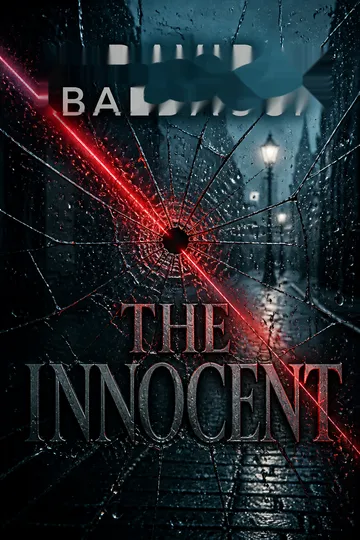
The Hit receives mostly positive reviews, with readers praising the thrilling cat-and-mouse dynamic between assassins Will Robie and Jessica Reel. Many appreciate Baldacci's fast-paced writing, short chapters, and character development, particularly Reel's strong characterization. Several reviewers note excellent action sequences and political conspiracy elements that maintain suspense. However, some criticize the book for being generic, having an underdeveloped doomsday scenario, and featuring a weak ending. A few found it disappointing compared to the series' first book, citing overly complex agency politics and predictable twists. Overall, most consider it an entertaining thriller despite occasional clichés.
People Also Read

Characters
Will Robie
The solitary field operativeRobie is a highly trained CIA assassin whose calm, exacting methods have made solitude feel like part of the job. He keeps few possessions, avoids lasting attachments, and treats emotional distance as a form of operational safety. His history with Jessica Reel2 complicates that discipline: he knows how capable she is, but also sees that official explanations can be incomplete. Robie’s loyalty is not simply obedience to an institution. He is driven by a personal belief that preventing harm matters, even when the agency’s own conduct becomes suspect. His care for Julie Getty4 exposes the cost of his self-protection, and his willingness to stay connected suggests that he is beginning to imagine a life beyond the next assignment.
Jessica Reel
The agency’s missing operativeReel is a precise, self-reliant operative who plans for betrayal because her childhood taught her that dependence can be dangerous. She grew up amid violence, moved through foster care, and learned to survive through observation, physical discipline, and controlled distance. Her professional skill is matched by an independent moral judgment that makes obedience increasingly difficult when orders conflict with what she believes is right. Reel speaks little about herself and communicates through actions, coded clues, and carefully chosen risks. Her relationship with Robie1 is built on mutual recognition: each can anticipate the other’s methods, yet neither can assume the other’s trust. Under her hardened competence lies a persistent wish to protect the few people she considers family.
Nicole Vance
The determined FBI agentVance is an ambitious, capable FBI agent who approaches evidence with persistence and distrusts easy answers. She knows Robie1 well enough to recognize his evasions, but she respects the limits imposed by their incompatible jobs. Her concern for Julie4 and her insistence on pursuing the Jacobs18 investigation make her more than a procedural obstacle. Vance represents a public law-enforcement system trying to do its work without access to the covert information that shapes the case. Her professional loyalty does not erase her personal feelings, though she rarely lets either one dominate the other.
Julie Getty
The girl Robie protectsJulie is a sharp, resilient fourteen-year-old who has survived the murder of her parents and the instability of foster care. She is quick to detect condescension and refuses to let adults decide what is best for her without explanation. Her anger at Robie’s1 disappearance comes from trust, not mere defiance: she believed his promise to remain in her life. Julie’s new home with Jerome Cassidy gives her a chance at security, but she does not mistake comfort for a reason to stop being watchful. She challenges Robie1 to recognize that protection without honesty can become another form of abandonment.
Janet DiCarlo
Reel’s former handlerDiCarlo is an experienced agency official who helped train Reel2 and understands the unusual pressures placed on field operatives. Her knowledge of Reel’s2 origins gives Robie1 a more human account than the official personnel file can provide. As a senior leader, she is also alert to irregularities within the agency, including unexplained missions and missing resources. DiCarlo’s caution reflects a career spent inside institutions where information is both essential and dangerous. She values competence, but her concern for the agency’s integrity makes her willing to question the people above her.
Roger Walton, Blue Man
Robie’s trusted agency contactKnown to Robie1 as Blue Man, Roger Walton is a senior agency official who has worked with him long enough to understand the costs of field service. He is more reflective than the hard-edged leaders around him, though his professional role requires discretion and compromise. Walton’s trust in Robie1 is important because he can offer advice without demanding that the operative pretend every order is sound. He is also cautious about what can be said within the agency, a caution that reflects both institutional discipline and genuine uncertainty about whom to trust.
Evan Tucker
The agency directorTucker leads the CIA’s clandestine operations with a forceful, impatient manner. He expects field agents to follow orders and regards institutional stability as a priority, especially when agency personnel are under attack. His background is managerial rather than operational, which separates his experience from Robie’s1 and Reel’s2. Tucker’s certainty can make him seem dismissive of doubts that do not fit the official account. He is a political and bureaucratic survivor, accustomed to protecting the agency’s authority in a world where every disclosure can carry consequences.
Gus Whitcomb
The president’s adviserWhitcomb is the president’s national security adviser, an influential figure whose access to the Oval Office gives his counsel unusual weight. He has a military past and a reputation for decisive action, but he operates chiefly through policy, intelligence, and political judgment. His role places him at the intersection of competing agencies and international priorities. Whitcomb represents the kind of senior official whose choices can affect people far beyond the rooms where those choices are made. He presents himself as a committed public servant, though his confidence in strategic solutions can make the human costs seem remote.
Sam Kent
The powerful federal judgeKent is a seasoned federal judge whose appointment to a secretive surveillance court gives him access to sensitive matters beyond ordinary public scrutiny. He is polished, socially assured, and accustomed to moving among wealthy political figures. His earlier military service gives him a bearing different from that of a conventional jurist, while his private life appears comfortable and established. Kent’s position makes him a figure of institutional authority, and his confidence suggests a man who believes he understands both the rules and the exceptions that govern power.
Howard Decker
The intelligence committee chairmanDecker chairs the House intelligence committee and is a practiced politician who values influence, access, and the appearance of control. Wealth and professional success have insulated him from many ordinary consequences, but the national security portfolio gives him a role in decisions with life-and-death stakes. He thinks of himself as patriotic and is drawn to ambitious plans that promise a more stable world. That mix of conviction and ambition makes him vulnerable to treating secrecy as permission rather than responsibility.
Karin Meenan
The agency physicianMeenan is a physician who has worked both in a public trauma center and within the intelligence world. Her medical training makes her attentive to injury and procedure, while her agency position places her near information ordinary clinicians would never encounter. She is practical, self-contained, and careful about what she reveals. Meenan’s professional identity sits uneasily between care for individual patients and the demands of a secretive employer, a tension that makes her a consequential witness to the novel’s institutional conflict.
Roy West
The discarded agency analystWest is a former intelligence analyst who believes his work has been overlooked and his warnings ignored. He retreats to a remote Arkansas cabin, where self-reliance and suspicion harden into an isolated worldview. His technical knowledge and elaborate thinking give him confidence, but he mistakes the act of imagining catastrophe for the wisdom to prevent it. West is driven by a hunger for recognition and by an increasingly absolutist distrust of government authority.
Michael Gioffre
Reel’s retired intelligence allyGioffre is a former spy who now works at a video-game shop and prefers the safer competitions of civilian life. He is technically resourceful, wary of risk, and still bound by debts of loyalty to Reel2, who once saved him. His humor and casual appearance conceal a sharp understanding of intelligence work. Gioffre illustrates how retirement does not erase old obligations, especially when former colleagues remain in danger.
Gwen Jones
Reel’s foster guardianGwen gave Reel2 a rare experience of steadiness during an unstable childhood. Later, she runs the Pennsylvania motor court that Reel2 uses as a refuge. Practical and protective, Gwen is one of the few people who knows Reel2 beyond her professional identity. Their connection is rooted in care rather than shared work, giving Reel2 a sense of family she otherwise lacks.
Joe Stockwell
Reel’s former marshal mentorStockwell is a retired U.S. marshal who once protected Reel2 during her time in witness protection. He is experienced, patient, and willing to investigate powerful people when he believes public safety is at stake. His connection to Reel2 is one of the few enduring relationships she has maintained outside the agency. He represents a model of service grounded in personal responsibility rather than unquestioning institutional loyalty.
Dick Johnson
The vanished operativeJohnson is a former clandestine operative whose training makes him difficult to track and dangerous to underestimate. He is disciplined enough to blend into a crowd and experienced enough to recognize surveillance. His disappearance from ordinary agency channels makes him a troubling figure in an investigation already shadowed by missing personnel.
Jim Gelder
The agency’s second-in-commandGelder is a senior intelligence official who oversees clandestine operations and carries substantial institutional authority. His long public-service career and military background make him appear dependable to colleagues. He operates at a level where decisions can reach field agents without exposing him to the dangers they face.
Doug Jacobs
The remote mission handlerJacobs is an intelligence analyst turned handler who coordinates field assignments from Washington. He is confident in planning, secure communications, and the expertise of operatives like Reel2. His role reflects the agency’s reliance on people who manage dangerous missions from a distance.
Plot Devices
The White Rose
A clue to shared resistanceRose fragments left at crime scenes initially look like an eccentric signature. Their significance grows when Robie1 connects them to a World War II history in Reel’s2 locker and learns about the White Rose, an anti-Nazi resistance group. The reference does not prove Reel’s2 innocence, but it tells Robie1 that she is framing her actions as resistance against a betrayal inside her own institution. The flower also works emotionally: it links the killings to grief, remembrance, and the lives that official investigations erase.
West’s White Paper
A blueprint for catastropheRoy West’s12 paper lays out a coordinated attack on the G8 leadership and describes how political chaos might be exploited afterward. It begins as a speculative security scenario, then becomes the intellectual source material for a real conspiracy. The plotters adapt its original plan rather than follow it exactly, forcing Robie1 and Reel2 to distinguish the document’s intended target from the attack they must actually stop. It binds the agency deaths, the hidden weapons, and the international summit into one causal chain.
The Hidden Tracker
Medical care becomes surveillanceA tracking device disguised as surgical sutures is placed in Robie’s1 burns by a physician with access to his treatment. It explains how armed teams repeatedly locate him and Reel2 despite their careful movement. The device turns an apparent act of care into an instrument of pursuit, revealing that their enemy can reach them through trusted institutional channels. Discovering it lets the pair identify Meenan11 and understand that the hunt is being coordinated from within their own world.
Tradecraft as Code
Clues survive institutional erasureReel2 expects her employer to search her belongings and clean crime scenes, so she distributes clues through objects that appear ordinary: modified gun parts, a photograph, a history book, and rose petals. Robie1 can decode them because their shared training gives him a particular way of noticing details. The method turns their past partnership into a communications channel that surveillance cannot easily intercept. It also makes trust active rather than sentimental: Robie1 has to risk believing that the clues are meant for him before he can follow them.
The False Emergency Team
Rescue uniforms hide an assaultIn Canada, the attackers use vehicles and clothing associated with emergency responders to approach the gathering of Middle Eastern leaders. The disguise exploits the expectation that firefighters and ambulance crews are there to help, while the narrow access route makes the crowd easier to trap. Robie1 and Reel2 recognize the assault as it begins and force the disguised gunmen into the open, allowing FBI and Canadian security teams to intervene. The device makes the conspiracy’s central method legible: it turns public trust into an entry point for violence.
Will Robie Series


About the Author
Other books by David Baldacci






Download PDF
Download EPUB
.epub digital book format is ideal for reading ebooks on phones, tablets, and e-readers.








