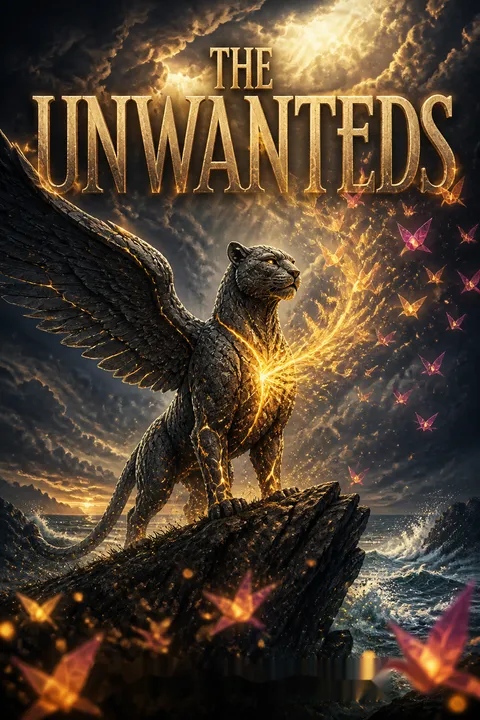


Plot Summary
A Twin Is Chosen
At thirteen, identical twins Alex and Aaron Stowe face Quill’s annual Purge, which sorts children into Wanted, Necessary, and Unwanted. Aaron is named Wanted; Alex, already expecting rejection, is shackled and sent away while their parents show little grief. On the bus, Alex recognizes Meghan Ranger and meets the younger Lani Haluki, whose father is among the governors delivering the children.
Samheed Burkesh, once certain he would join the Quillitary, is there too. Aaron returns home to prepare for university and is urged to forget his brother. Meanwhile, High Priest Justine celebrates the Purge and tightens the law: even one reported infraction will now be enough to condemn a child.
The Purge makes family affection answer to a state category: Aaron’s promotion is treated as proof of worth, while Alex’s removal is treated as administrative routine. The twins’ brief look across the crowd matters because it preserves a private bond inside a public ritual designed to erase it. Quill’s calm is not evidence of consent. It is the trained appearance of people who have learned that visible grief can itself be dangerous.
The Death Farm Blooms
At the black gates, the chained children expect the boiling lake to be their end. A winged tortoise named Jim arrives, and Marcus Today, the supposed Death Farmer, calls a transformation that replaces the gray building and barren ground with a vast green world, a mansion, and a calm sea. The shackles fall away.
Marcus explains that he has saved them and offers classes and warrior training, while warning that any contact with Quill could expose everyone in Artimé. The children learn that the Unwanteds from earlier Purges are alive here, including Meghan’s older brother, Sean. Alex is stunned that his own brother is absent, but accepts the need for secrecy rather than endangering his new refuge.
The rescue reverses the meaning of the Death Farm without erasing the children’s fear: the first sight of beauty arrives under the expectation of execution. Marcus gives them safety, but his warning shows that sanctuary depends on remaining unseen. Alex’s immediate concern for Aaron establishes the story’s central tension. He has gained a life in which imagination is permitted, yet the person he most wants to share it with remains inside the system that condemned him.
Artimé Teaches Them
Marcus introduces the newcomers to Artimé’s creatures, classes, and freedoms, including the right to speak openly. Meghan’s reunion with Sean gives her a glimpse of a brother who has grown up among music and magic; Sean also shows Alex how to draw, confirming that the marks Alex once made in dirt were art.
Lani explains that her storytelling helped bring about her Purge, and refuses to treat her father’s rejection as a reason to regret reaching Artimé. School soon reveals each child’s strength: Alex paints, Meghan plays music, Lani writes and tells stories, and Samheed acts. Samheed distrusts Marcus’s plan to prepare artists for battle and walks off rather than accept that the children Quill discarded could resist its army.
Artimé does more than teach techniques; it gives the children a language for experiences Quill had trained them not to notice. Alex’s drawing becomes a talent instead of evidence against him, while Meghan’s music can be enjoyed rather than concealed. Lani’s refusal to mourn her father’s judgment marks an early act of self-definition. Samheed’s anger, meanwhile, is not simply resistance to Marcus. He has learned to measure himself by Quill’s standards, so believing in Artimé would require him to revise his own sense of failure.
The First Warrior Vests
As the children train, Meghan, Lani, and eventually Samheed qualify for Magical Warrior Training, each receiving a vest for carrying spell components. Alex keeps excelling under the painter Ms. Octavia but is not advanced, and his friends’ success sharpens his fear that he is failing again.
Samheed apologizes for injuring Alex in a classroom brawl and reveals why he was Purged: someone reported his boast that he would join the Quillitary. He suspects Aaron, who had been with the twins that day. Alex refuses to believe him. Lani’s teasing spells worsen the distance between them, and after she makes him fall face-first into soup, Alex retreats to his room, shuts out his friends, and starts longing for Aaron more intensely.
The vest turns training into a visible hierarchy, echoing the Wanted and Unwanted labels the children hoped they had escaped. Alex reads delay as proof that the old verdict still defines him, even though his art is flourishing. Samheed’s accusation threatens Alex’s memory of Aaron, so he protects the familiar image of his twin rather than examine the evidence. The friends’ attempts at humor and play then fail because they overlook how easily Quill’s old shame can return in a new setting.
The Inspection Nearly Finds Them
At the six-month mark, Alex ignores warnings and wanders outside during a governors’ inspection, while everyone else follows lockdown. Marcus’s concealment spell holds, but the breach frightens the community and leaves Alex blamed and humiliated.
He has been shunning his friends and silencing his blackboard, so he missed the notices. Marcus admits he kept Alex from warrior training because he feared the twins’ bond might lead him back to Aaron. He reverses that decision, and Octavia begins teaching Alex to use art supplies as weapons.
Soon Simber, the winged-cheetah statue, stops Lani from casting a spell during another quarrel. Marcus then warns all of Artimé that Quill may discover them, turning training from a class into preparation for a real defense.
Alex’s mistake grows from loneliness, not malice: he has withdrawn so thoroughly that he cannot receive the information meant to protect him. Marcus’s secrecy repeats a familiar form of paternal control, even though he intends to keep Alex safe. The episode exposes a paradox in Artimé: a community founded on freedom can still make decisions for its members. Alex’s training begins only after that protection has caused harm, and the threat of discovery gives his private frustration public consequences.
Aaron Rises in Quill
While Alex learns spells, Aaron excels at Wanted University. He devises a Favored Farm that reserves the best crops and animals for Quill’s elite, then earns a post as assistant secretary to Justine. His ambition is matched by dreams of Alex that he tries to suppress. In Artimé, Alex and Samheed discover a concealed hallway whose blackboards show live scenes from Quill.
Alex watches Aaron alone in his dormitory and sees the strain behind his rigid composure. The images make the distance feel crossable, and Alex starts trying to paint a three-dimensional doorway. He also learns from Samheed that the gallery has let him watch Quill before, though Samheed remains guarded about what he has seen and why he keeps returning.
The parallel between the twins is not a simple contrast between a free brother and a captive one. Aaron gains status by designing a system that repeats Quill’s sorting logic, while private dreams hint that the system has not erased his attachment to Alex. The gallery turns longing into surveillance: Alex can see his brother but cannot know what he thinks. That partial access tempts him to treat a picture as a relationship, setting up the risk of acting before he understands Aaron’s choices.
Two Doors Take Shape
Lani helps Alex understand that a carefully painted three-dimensional doorway can open into the place it depicts. Their growing closeness briefly surfaces when Alex kisses her cheek, then retreats into silence as he concentrates on the painting. In the library archives, he discovers Will Blair and Samheed working on a similar door.
Will, son of Quill’s general, intends to enter Quill disguised as Aaron, kill him, and take his place. Samheed appears to think the plan is only meant to frighten Aaron, but Will’s threats make clear how little control Samheed has over his former friend. Alex overhears them, hides rather than expose himself, and realizes that his own painstaking work may be the only way to reach Aaron first.
The doorway makes art a form of passage, but the same technique serves radically different motives. Alex wants to rescue a brother whose loyalty he still trusts; Will wants to wear another person’s identity as a weapon. Samheed’s participation is compromised by old resentment and his desire to belong, yet his hesitation suggests that he has not surrendered his judgment entirely. Alex and Lani’s awkward affection offers a counterpoint: intimacy requires attention to another person, not merely the power to enter their world.
Aaron Rejects the Rescue
Alex finishes his painted door and enters Aaron’s dormitory at night. Aaron first believes his brother is a dream, then listens as Alex describes Artimé and warns that Will plans to kill him. He refuses to leave, calls himself loyal to Quill, and insists that Alex is dead.
Their argument exposes the old incident in the mud: Aaron had drawn too, then let Alex take the blame. Alex now understands that Aaron also reported him and other children to the governors.
Aaron follows him through the doorway into Marcus’s office, but rejects the offer of sanctuary and returns to Quill. Alex tells Marcus what happened. Marcus reveals that Aaron’s reports helped build his path to the palace, then seals away the painted door and asks Gunnar Haluki to watch him.
The reunion does not restore the twins’ childhood intimacy; it tests whether shared history can outweigh a chosen ideology. Aaron’s refusal is painful precisely because Alex arrives prepared to believe that their bond will decide the matter. The discovery that Aaron reported him transforms Alex’s memory of their childhood, but it does not make his love disappear. Marcus’s decision to seal the door acknowledges that access is not the same as consent, even when Alex’s motives are protective.
Quill Sees Artimé
Aaron requests access to the Great Lake of Boiling Oil to investigate Quill’s failing vehicles, and Justine accompanies him with Governor Strang. At the gate, they find Marcus and Artimé instead of the death ground Quill expects.
Justine recognizes Marcus, her old collaborator, and demands a private meeting; he refuses to leave his people and removes the gate, opening the border between the lands. The revelation leaves Quill’s rulers exposed, while Marcus warns Artimé that an attack is likely.
Will slips into Quill using a disguise, but the next report says Alex has crossed over and failed to return. Clive corrects it: Will has gone in Alex’s appearance. The Quillitary is already marching, and General Blair arrives with Will’s dead body as a threat.
The gate’s removal changes secrecy into a political choice. Marcus could keep the refuge hidden only by continuing the kind of isolation Quill imposed, so he instead allows both communities to see one another and accepts the danger. Justine’s arrival also reveals how much her authority depends on controlling the story people hear about the Death Farm. Will’s disguise turns Alex’s longing into a vulnerability: the same painted passage that promised reunion now gives an enemy a route into Quill.
The First Wave Breaks
General Blair’s message names Alex and presents Will’s body, then the Quillitary opens fire. Simber shields the front line with his wings while Artimé’s fighters answer with paint, music, spells, and origami dragons.
Alex blinds the vehicle drivers, causing two rusty trucks to crash, and Samheed kills General Blair with a throwing star after seeing the man show no grief for his son. Inside Artimé, Samheed’s own father attacks him; Samheed hesitates, is struck down, and Lani is injured trying to free him.
When his father later raises a knife against him, Samheed’s theater teacher knocks the man away. By sunset the first wave is contained, but many Artiméans are wounded and a second Quillitary force is coming. Marcus takes Alex toward the palace by sea.
The battle turns Quill’s hierarchy into a physical assault, but Artimé’s defense relies on skills the state dismissed as useless. Samheed’s actions make his change visible: he kills the general, yet still hesitates when faced with his own father. Lani’s effort to protect him costs her a serious wound. The fighters’ inventions can disable an army, but the casualties prevent their creativity from becoming a clean, triumphant answer to violence.
The Mage’s Old Bargain
On the voyage, Marcus tells Alex that Quill is an island, its imagined enemies and border threats part of Justine’s control. He admits that he once helped her suppress dissent and hide the Purged, then built Artimé after he could no longer watch children die, including his own daughter, Claire.
Through a secret passage, Marcus, Alex, and Simber enter the palace, immobilize its guards, and seal its doors. Aaron ambushes them with a lethal scatterclip. Alex freezes him, but the clip pierces Alex’s chest; Simber carries the critically wounded boy away.
Back in Artimé, Lani’s throwing star strikes her father, Governor Haluki, who transforms into a wolf and escapes. Justine holds Claire hostage until Lani uses a spell that silences her. Marcus freezes the remaining soldiers, while Samheed and Octavia catch Aaron disguised as Alex.
Marcus’s confession complicates the rescue without excusing him: Artimé exists because he changed course, but it was built after he had helped make Quill’s cruelty possible. Alex’s wound comes from the brother he tried to save, making the cost of loyalty immediate and bodily. The parallel confrontations force the others to choose under pressure too. Lani’s response to her father, and Samheed’s recognition of Aaron’s handedness, turn knowledge of individual people into the difference between a mistaken attack and a deliberate act.
Peace Leaves Scars
Alex survives, and the injured fighters begin recovering in Artimé. Samheed apologizes for helping Will and for the harm his choices caused; Alex accepts the apology without pretending the damage never happened. Gunnar Haluki, revealed as Lani’s father and a longtime ally of Marcus, becomes Quill’s new High Priest.
He and Marcus agree that the lands will remain separate but open to visitors, and that future Unwanteds may come safely to Artimé. Alex meets Aaron at the border, but Aaron will not say whether he intends to join or oppose them.
Alex leaves without forcing reconciliation. At the next Purge, thirty-two children arrive in Artimé, including Lani’s younger brother. The rescued children celebrate their new home while recognizing that peace cannot instantly repair every severed family bond.
The resolution offers political change without demanding emotional absolution. Gunnar’s leadership makes a peaceful border possible, and the new arrivals show that Artimé’s original purpose continues. Yet Alex does not confuse survival with restored trust: he lets Aaron leave without surrendering his own judgment. The ending’s hope is practical rather than complete. Children can cross into safety, but people harmed by Quill retain the right to decide whether family ties can be repaired.
Analysis
The novel sets two systems of value against each other through material practices. Quill sorts children, rations water, limits communication, and suppresses art because unpredictable thought threatens the state’s control. Artimé does not simply replace those rules with unrestricted comfort: it teaches skills, demands collective preparation, and asks its citizens to choose how much force they will use. The contrast becomes clearest in battle, where music, painting, acting, and invention are not decorative alternatives to strength. They are the means by which the Unwanteds survive an army that has underestimated them.
Alex’s attachment to Aaron gives this political conflict an intimate cost. Alex initially treats their twin bond as evidence that Aaron must share his values, while Aaron treats loyalty to Quill as proof of his worth. Their meeting breaks the assumption that shared childhood guarantees shared ethics. Alex must learn that loving Aaron cannot make Aaron choose rescue, and that the refusal to reconcile is not the same as surrendering compassion.
Marcus’s history prevents Artimé from becoming a morally effortless refuge. He once helped Justine maintain control, then changed course when the state’s policies became unbearable. His past resembles the children’s present in one important way: recognizing wrongdoing does not undo the people already harmed. The open border and new arrivals offer a practical beginning, not instant repair. The book’s hope rests on creating room for choices, then accepting that people may use that freedom differently, including the choice to remain apart.
Review Summary
The Unwanteds receives mixed reviews, with praise for its creative magic system and engaging characters, but criticism for its premise that only artistic people are creative. Some readers love the imaginative world and character development, while others find it derivative of Harry Potter and The Hunger Games. The book's target audience of middle-grade readers generally enjoys it more than adult readers. Critics argue the dichotomy between artistic and academic pursuits is flawed, but fans appreciate the magical elements and character growth throughout the story.
People Also Read




Characters
Alex Stowe
Unwanted twin and painterAlex is an observant, imaginative boy whose habit of noticing shapes and color makes him a natural artist, though Quill teaches him to see that instinct as a liability. His twin Aaron is the person he trusts most, and that attachment shapes many of his choices even when it puts him at risk. Alex is sensitive to exclusion and can retreat into anger when he feels left behind. He also has a strong protective impulse and a stubborn capacity to act on his own ideas. His story examines the difference between loving someone and assuming that love gives you the right to choose for them.
Aaron Stowe
Ambitious Wanted twinAaron is Alex’s identical twin, but he has learned to present himself as disciplined, controlled, and wholly devoted to Quill. Being named Wanted gives him a route to authority, and he works hard to prove that he deserves it, particularly because his parents are Necessaries. His intelligence and ambition make him adept at solving the practical problems Quill cares about, while his fear of appearing weak keeps him from admitting uncertainty. Aaron’s attachment to Alex is difficult to separate from his desire for rank and approval, making the brothers’ relationship emotionally charged even when they are apart.
Marcus Today
Mage and refuge keeperMarcus Today is the vivid, inventive leader of Artimé and the adult who gives the Unwanteds a place to develop their talents. His humor and warmth help frightened children adjust, but his habit of withholding information shows that he is not free of the protective instincts he opposes in Quill. Marcus carries a complicated history with the government he now resists, and he believes people must have real responsibility if they are to preserve their community. His care for the children is genuine, but the story repeatedly asks whether benevolent intentions are enough when someone else bears the consequences.
Lani Haluki
Young storyteller and readerLani is a year younger than the other Purged children, but she meets danger with a composure that surprises them. Her talent for storytelling comes from a vivid inner life that Quill regards as disruptive. She is the daughter of a senior governor, a connection that makes her rejection especially painful and politically complicated. In Artimé, Lani reads constantly, studies magic, and can be playful to the point of provoking others. Beneath that mischief is a keen sense of loyalty and an increasing ability to judge when a joke or a spell has crossed into harm.
Samheed Burkesh
Angry actor and fighterSamheed arrives convinced that Quill made a mistake by rejecting him. He expected to join the Quillitary and measures himself against the strength and status he believes he should have earned. His anger can make him cruel, especially toward Alex, but acting gives him a productive way to use the emotions he was taught to suppress. Samheed is also vulnerable to the approval of people who seem more powerful or more certain than he is. His capacity to question those loyalties, and to recognize when a friend is in danger, forms the core of his moral struggle.
Meghan Ranger
Musician and loyal friendMeghan is a gifted singer and instrumentalist whose musical talent has been treated as an offense in Quill. In Artimé, she discovers both technical skill and the pleasure of sharing it. Her older brother Sean gives her an early example of what life beyond the Purge can look like. Meghan is warm and eager, but she also understands how success can reopen the shame of being sorted as Unwanted. She tries to celebrate her friends without making them feel lesser, and her music becomes one of the many ways Artimé turns a suppressed talent into a form of protection.
High Priest Justine
Ruler of sealed QuillJustine rules Quill through strict classification, controlled information, and the promise that only the strong deserve to remain. Her authority depends on making fear seem like common sense, so she treats creativity and questioning as threats rather than ordinary parts of childhood. She is decisive and politically shrewd, with little patience for weakness in others. Her history with Marcus connects her rule to the origins of Artimé, though she presents Quill’s policies as necessary safeguards. Justine represents a form of leadership that mistakes obedience for stability and protection for ownership.
Will Blair
Resentful actor and rivalWill is the son of Quill’s general and carries the resentment of someone who believes his family background should have guaranteed him a higher place. In Artimé, he studies acting and develops impressive theatrical magic, but his talent sits beside a persistent scowl and a habit of treating others as obstacles. His connection to Samheed reaches back to their lives in Quill, where each boy understood the other’s ambitions. Will’s fixation on status makes him particularly vulnerable to envy and retaliation.
Sean Ranger
Older brother and mentorSean is Meghan’s older brother, who was Purged years before her and has grown up in Artimé. He welcomes her with affection and introduces both her and Alex to the arts and magic that have become ordinary to him. Having already passed through the shock of arrival, Sean can translate unfamiliar skills into approachable lessons. He is nearing adulthood and considering a teaching role, so he stands between the children and the older generation that built their refuge.
Ms. Octavia
Demanding painting teacherMs. Octavia is an octogator whose many limbs let her draw, paint, and teach several tasks at once. She is exacting with her students but recognizes Alex’s unusual artistic ability early. Her support matters because she sees his talent even when his delayed advancement makes him doubt it. Octavia also treats instruction as preparation for real danger, pushing students to learn how their creative tools can restrain or defend against an opponent.
Claire Morning
Music teacher and commanderClaire Morning teaches music and helps students understand how their art can become a magical skill. She encourages Meghan’s talent while warning her that advancement can stir painful comparisons among friends. Claire is calm under pressure and trusted with organizing Artimé’s defense. She balances care for individual students with the hard demands of preparing a large community for attack.
Simber
Winged-cheetah guardianSimber is a living, stone winged cheetah who guards the mansion and watches over Artimé’s children. His size and strength make him intimidating, but he is also observant, loyal, and capable of sharp humor. He intervenes when students misuse their magic and takes his duty to protect the community seriously. His close working relationship with Marcus gives him an unusual position between guardian, soldier, and friend.
Gunnar Haluki
Senior governor and fatherGunnar is the senior governor of Quill and Lani’s father. In public, he serves the government that classifies children and enforces its laws. His connection to Lani gives their family relationship a political edge: she has grown up close to the authority that rejected her. Gunnar is careful, experienced, and difficult for the young Unwanteds to read, embodying the distance between public duty and private feeling.
Florence
Statue and warrior instructorFlorence is a towering ebony statue who moves and speaks, with the bearing of a practiced warrior. She leads group training and insists that students learn to cooperate rather than rely on individual spells. Her size gives her authority, but her instruction is practical: strength matters only when a team can use it intelligently.
Jim
Winged tortoise guideJim is a large, white-feathered, winged tortoise whose slow speech contrasts with his importance at the Unwanteds’ arrival. He helps mark the boundary between the feared Death Farm and the world hidden beyond it, and remains a distinctive presence in Artimé.
Mr. Appleblossom
Rhyming theater teacherMr. Appleblossom teaches theater in improvised verse and understands that dramatic students may bring their feelings onto the stage. He can be exasperated by unruly classes, but he also recognizes Samheed’s acting ability and tries to guide the boy’s behavior without dismissing his talent.
General Blair
Commander of the QuillitaryGeneral Blair commands Quill’s military and is Will Blair’s father. He represents the armed power behind Justine’s rule, as well as the expectations Will has grown up under. His presence makes the conflict between the two lands personal as well as political.
Mr. Burkesh
Samheed’s militarist fatherMr. Burkesh is Samheed’s father and a product of Quill’s militarized values. His relationship with his son is shaped by the expectation that strength and obedience matter more than affection. For Samheed, his father represents the approval he once hoped to earn.
Plot Devices
The Purge
Sort children by state decreeAt thirteen, Quill classifies children as Wanted, Necessary, or Unwanted. Wanteds are sent to university, Necessaries are assigned essential labor, and Unwanteds are supposedly eliminated at the Death Farm. This system gives the ruling class a way to make social hierarchy appear natural and final. It also drives the central conflict: the children Quill calls useless are precisely the ones whose creativity allows Artimé to exist and defend itself.
Artimé’s hidden world
Shelter behind a false landscapeMarcus’s magic transforms the Death Farm into a world far larger than the barren ground Quill believes it occupies. The mansion, sea, grounds, and hidden spaces give the rescued children room to learn, live, and prepare. Concealment protects Artimé, but it also creates a constant risk: the community must obey inspection lockdowns and avoid contact with Quill. Once the gate is removed, the hidden refuge becomes a visible political neighbor rather than a secret escape.
Art as magic
Turn creative skills into defenseIn Artimé, drawing, music, acting, writing, and other arts can be combined with magic to create practical effects. Students use painted spells, musical charms, theatrical language, sculpted objects, and origami creatures to restrain or attack opponents. The device reverses Quill’s central assumption that creativity is dangerous because it leads to revolt. Art is indeed powerful, but its effects depend on imagination, practice, teamwork, and the user’s choices about harm.
The blackboard gallery
Make distant Quill visibleArtimé’s talking blackboards deliver notices, offer guidance, and help residents navigate the mansion. A concealed gallery of boards shows live scenes from Quill, allowing Alex and Samheed to watch the land they left behind. The images provide information but not understanding: Alex can see Aaron’s face, yet cannot know whether he is grieving, plotting, or simply following routine. That gap between observation and knowledge drives Alex toward a dangerous attempt to cross back.
The three-dimensional door
Paint a passage between worldsA sufficiently realistic three-dimensional painting of a doorway can become a usable entrance into the place it depicts. Alex studies the technique to reach Aaron, while Will and Samheed attempt a similar passage for their own purposes. The device makes artistic skill physically consequential: the image is not a symbol of escape but an actual threshold. Because the painter chooses where the door opens, the spell also turns private motives into routes others can exploit.
FAQ
Synopsis & Basic Details
What is The Unwanteds about?
- A Dystopian World Divided: The Unwanteds is set in a world where children are sorted at age thirteen into three categories: the "Wanteds" (intelligent, obedient), the "Necessaries" (laborers), and the "Unwanteds" (creative, artistic), who are sent to their deaths.
- A Secret Magical Haven: The story follows Alex Stowe, an Unwanted, who discovers that the "Death Farm" is actually a magical land called Artimé, a sanctuary for creative individuals, led by the benevolent mage Mr. Today.
- Struggle for Survival & Freedom: The narrative chronicles Artimé's fight for survival against the oppressive, magic-fearing regime of Quill, led by Alex's twin brother, Aaron, and the broader struggle to protect creativity and individuality in a world that seeks to suppress it.
Why should I read The Unwanteds?
- Rich World-Building & Magic: Readers are drawn into a vibrant, imaginative world where art and creativity are literal magic, offering a stark contrast to the drab, controlled society of Quill. The unique magical system, from origami dragons to sentient statues, is consistently engaging.
- Deep Emotional & Thematic Resonance: The series explores profound themes of identity, freedom, the power of imagination, and the courage to stand up against oppression, resonating with anyone who has felt like an outsider.
- Compelling Character Arcs & Relationships: The characters, particularly Alex, Lani, and Samheed, undergo significant growth, grappling with leadership, loss, and complex relationships, making their journeys emotionally impactful and relatable.
What is the background of The Unwanteds?
- A Legacy of Fear and Control: The world of Quill was founded by High Priest Justine, who, fearing magic and creativity, established a rigid, utilitarian society that purges "Unwanteds" to maintain control and order. This historical fear underpins the entire societal structure.
- Artimé as a Counter-Culture: Artimé was created by Mr. Today as a direct response and refuge, a hidden world where creativity is not only allowed but is the very source of life and magic, offering a stark philosophical and practical alternative to Quill.
- Technological Stagnation vs. Magical Innovation: Quill operates with rudimentary technology and strict adherence to rules, while Artimé thrives on magical innovation and artistic expression, highlighting a fundamental conflict between two opposing ways of life.
What are the most memorable quotes in The Unwanteds?
- "Imagine. Believe. Whisper. Breathe. Commence.": These five words, revealed through Mr. Today's cryptic clue, are the core of Artimé's restoration spell, symbolizing the fundamental steps of creation and the power of belief in bringing dreams to life.
- "Creativity is in everything. Even the people of Quill are creative, but they'd be horrified to be called that.": Meghan's profound insight to Sky (Chapter: While Alex Slept) redefines creativity, suggesting it's an inherent human trait, even in oppressive societies, and highlights Quill's deep-seated fear of self-expression.
- "I'm sorry to tell you that your mother . . . was one of those brave people, and she died.": Alex's heartbreaking confession to Lani (Chapter: One Last Tale) marks a pivotal moment of raw grief and the harsh reality of war, underscoring the personal cost of their fight for freedom.
What writing style, narrative choices, and literary techniques does Lisa McMann use?
- Direct and Evocative Prose: McMann employs a clear, concise writing style that is accessible yet capable of conveying deep emotion and vivid imagery, making the fantastical elements feel grounded and immediate.
- Alternating Perspectives & Pacing: The narrative frequently shifts between characters and locations (Artimé, Quill, Warbler, Pirate Island), building suspense and offering a comprehensive view of the unfolding conflicts, often with rapid, action-driven pacing.
- Symbolism and Metaphorical Language: The author skillfully uses symbolism, such as the thorn necklaces representing silenced voices, the "dots" as hidden truths, and the contrasting environments of Quill and Artimé, to enrich the thematic depth of the story.
Hidden Details & Subtle Connections
What are some minor details that add significant meaning?
- Matilda the Gargoyle's Agency: The gargoyle Matilda, initially a decorative piece in Aaron's office, is later shown to be actively spying and communicating with Charlie (Chapter: A Sleepless Night for the High Priest), revealing a hidden network of sentient Artiméan creations within Quill and underscoring the pervasive nature of magic.
- The Pirate Ship's Whispers: The pirate ship's constant, unintelligible whispers (Chapter: More Plans) are initially a quirky detail but are later revealed to be its "wishes to turn back home" in an ancient, lost language (Chapter: The Death Enchantment), subtly hinting at the deep, inherent magic of objects and the interconnected history of the islands.
- Henry's Magnifying Glass: Henry's magnifying glass, initially a simple tool for starting fires (Chapter: Magnify, Focus, Every One), becomes the crucial component for deciphering Mr. Today's spell, highlighting how seemingly ordinary objects can hold extraordinary significance and that solutions often lie in plain sight.
What are some subtle foreshadowing and callbacks?
- Aaron's Early Cruelty: Aaron's childhood memory of letting Alex take the blame for drawing in the mud (Chapter: The High Priest Aaron) foreshadows his later ruthlessness and willingness to sacrifice others, including his own family, for personal gain and to avoid consequences.
- Mr. Today's "Nasty Places" Warning: Mr. Today's past warning to Alex about the tube to "Haluki's house and other nasty places" (Chapter: Touch and Go) subtly foreshadows Claire Morning's imprisonment there and the dark secrets of Quill's power structure, implying a deeper knowledge of Quill's hidden cruelties.
- The Ostrich's Transformation: The grouchy ostrich statue, initially a target for Alex's origami dragons (Chapter: More Plans), later becomes a brave, active participant in the Warbler rescue (Chapter: Finding Lani), showcasing the transformative power of Artiméan magic and the potential for even the most reluctant characters to find courage.
What are some unexpected character connections?
- Charlie and Matilda's Secret Network: The gargoyles Charlie and Matilda, seemingly isolated statues, are revealed to communicate through sign language and act as spies (Chapter: The Birds, the Birds!), establishing a hidden intelligence network that transcends the physical boundaries of Artimé and Quill.
- Sky and Crow's Mother as a Pirate Slave: The revelation that Sky and Crow's mother is alive and enslaved on Pirate Island (Chapter: A Face in the Pool) creates a profound personal stake in the Pirate Island detour, connecting the silent siblings' past trauma directly to a new, unexpected threat.
- Gunnar Haluki's Shared Language with Crow: Gunnar Haluki, Lani's father, is able to understand Crow's sign language (Chapter: The Birds, the Birds!), forging an unexpected bond between the former High Priest and the Silent boy, and highlighting the universal nature of communication beyond spoken words.
Who are the most significant supporting characters?
- Henry Haluki, the Budding Healer: Henry, Lani's younger brother, evolves from a quiet boy to a brave and skilled magical healer, whose magnifying glass is crucial for Artimé's restoration and whose "magic stitches" (Chapter: A Somber Ride) become vital for the injured, demonstrating the potential of young talent.
- Sky, the Silent Strategist: Sky's keen observation skills and deep knowledge of Warbler Island (Chapter: Making Plans) are indispensable for the rescue missions, proving that her "silent" nature belies a powerful intellect and strategic mind, making her a pivotal ally and a symbol of reclaimed voice.
- Mr. Appleblossom, the Theatrical Moral Compass: The theater instructor, Mr. Appleblossom, provides not only comic relief but also poetic wisdom and a moral perspective, often speaking in couplets (Chapter: Broken Harmony) that subtly guide Alex and remind the Unwanteds of their artistic values.
Psychological, Emotional, & Relational Analysis
What are some unspoken motivations of the characters?
- Aaron's Deep-Seated Insecurity: Aaron's ruthless pursuit of power and control in Quill is driven by a profound insecurity and fear of inadequacy, constantly seeking validation and terrified of appearing weak, especially in comparison to Alex (Chapter: Behind the Wall).
- Mr. Today's Sacrifice for Artimé: Mr. Today's decision to make Artimé's existence dependent on his life, and the cryptic nature of his restoration spell, suggests a hidden motivation to force Alex to step into leadership and fully embrace his mage abilities, rather than simply providing an easy solution.
- Sky's Lingering Guilt and Loyalty: Sky's initial reluctance to remove her thorn necklace (Chapter: For a Brief Moment) and her later desperate attempt to rescue her mother alone (Chapter: A Fight) reveal a deep-seated guilt over her own escape and an unwavering, almost self-sacrificing, loyalty to her family.
What psychological complexities do the characters exhibit?
- Alex's Burden of Leadership and Grief: Alex grapples with immense psychological pressure, oscillating between self-doubt and reckless anger (Chapter: Descent), and experiencing profound grief for Mr. Today and the lost Artiméans, which manifests in physical illness (Chapter: Land Ho!), highlighting the heavy toll of unexpected leadership.
- Samheed's Transformation from Anger to Empathy: Samheed's captivity on Warbler forces him to confront his hotheaded nature, leading to a profound shift towards vulnerability and empathy, particularly in his bond with Lani (Chapter: Together, Apart), demonstrating how shared suffering can foster deep emotional growth.
- Meghan's Silent Resilience and Inner Strength: Meghan's ordeal with the thorn necklace, which renders her mute, showcases her incredible inner strength and resilience, as she continues to contribute and support her friends despite her inability to speak, symbolizing the power of non-verbal communication and determination.
What are the major emotional turning points?
- Alex's Outburst Against Mr. Today: Alex's desperate, angry outburst, blaming Mr. Today for Artimé's collapse (Chapter: Descent), is a critical emotional turning point, revealing his raw vulnerability and the immense pressure he feels, allowing him to process his grief and step into his own power.
- Lani and Samheed's Shared Vulnerability: The moment Lani realizes she can see and Samheed cannot, and his plea, "Please don't leave me" (Chapter: The Sun Also Rises), marks a profound emotional shift, solidifying their bond and transforming their relationship from rivalry to deep, interdependent affection.
- Sky's Confession and Alex's Promise: Sky's tearful confession about her mother and Alex's unwavering promise to rescue her (Chapter: Waiting) is a pivotal emotional moment, revealing the depth of their connection and Alex's commitment to his friends, even amidst overwhelming challenges.
How do relationship dynamics evolve?
- Alex and Lani: From Crush to Deep Friendship: Their relationship evolves from a potential romantic interest to a strong, platonic friendship, particularly evident when Lani turns to Samheed for comfort after her mother's death (Chapter: One Last Tale), signifying Alex's acceptance of his role as mage over personal romance.
- Samheed and Lani: From Rivalry to Unbreakable Bond: Their shared captivity and reliance on each other forge an unbreakable bond, transforming their initial rivalry into a deep, loving connection that provides mutual strength and comfort, becoming the emotional anchor of their survival.
- Alex and Sky: A Complicated, Budding Romance: Their relationship develops from a pragmatic alliance to a complex, unspoken attraction, marked by subtle gestures, a surprising kiss (Chapter: Destination: Unknown), and Alex's eventual, heartfelt promise to help her, indicating a potential future romance despite the burdens of his leadership.
Interpretation & Debate
Which parts of the story remain ambiguous or open-ended?
- The Nature of the "Other Lands": The mysterious vessel crashing from the sky and the hints of other islands beyond the known seven (Chapter: Lights) leave the broader world's geography and the existence of other civilizations largely ambiguous, setting the stage for future explorations and conflicts.
- Gondoleery's True Intentions: Gondoleery Rattrapp's withdrawal to hone her magic and her cryptic interactions with Eva Fathom (Chapter: Gondoleery Rising) leave her ultimate loyalties and plans open to interpretation, suggesting she is a powerful, independent force whose role in future events is uncertain.
- The Source of Magic and Creativity: While Artimé clearly thrives on creativity, the ultimate origin and limits of magic itself, particularly how Mr. Today initially created Artimé and how Alex's powers manifest, remain somewhat mysterious, allowing for continued wonder and exploration of its potential.
What are some debatable, controversial scenes or moments in The Unwanteds?
- Aaron's Treatment of His Father: Aaron's decision to send his own father to the Ancients Sector for disrespect (Chapter: Behind the Wall), even if temporarily reversed, is a controversial display of his tyrannical nature, sparking debate about the depths of his cruelty and his capacity for redemption.
- The Sacrifice of the Squirrelicorn: During Samheed's rescue, a squirrelicorn is accidentally dissipated when Alex uses the "dissipate" spell on Samheed's thorns (Chapter: The First Loss), raising ethical questions about the cost of magic and the value of individual lives in a larger conflict.
- Alex's Initial Anger at Mr. Today: Alex's emotional outburst, blaming Mr. Today for Artimé's disappearance (Chapter: Descent), can be seen as controversial, as it challenges the benevolent image of the beloved mage and forces readers to consider the complexities of leadership and the burden of legacy.
The Unwanteds Ending Explained: How It Ends & What It Means
- Artimé's Resurgence and New Leadership: The story concludes with Artimé fully restored and thriving under Alex's leadership, who has matured into a confident mage. This signifies the triumph of creativity and community over oppression, establishing a new era for the Unwanteds.
- Lingering Threats and Unresolved Conflicts: Despite the immediate victories, the ending leaves several major conflicts unresolved: Aaron's growing paranoia and magical power, Warbler's impending attack, and the mystery of Pirate Island and Sky's mother. This sets the stage for future installments, emphasizing that the fight for freedom is ongoing.
- Personal Growth and Shifting Relationships: Alex accepts his role as mage, understanding the sacrifices it entails, including a potential lonely path. His relationships with Lani and Samheed solidify into deep friendship, while his complex feelings for Sky hint at a future romantic possibility, signifying personal evolution amidst the larger struggle.
Download PDF
Download EPUB
.epub digital book format is ideal for reading ebooks on phones, tablets, and e-readers.








