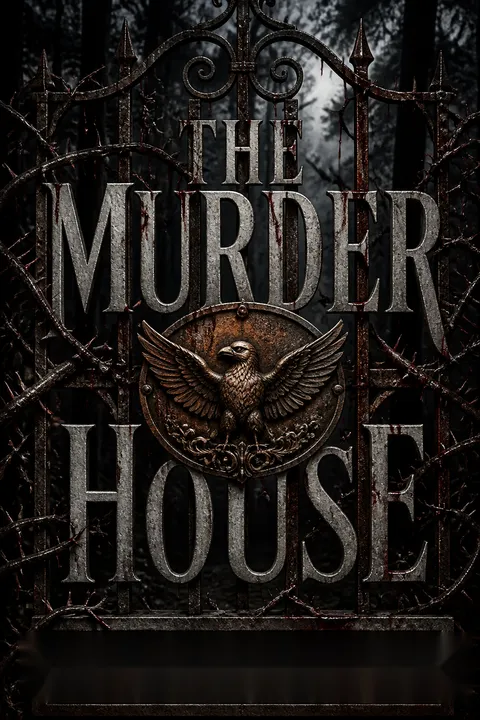


Plot Summary
Prologue
In 1995, a twelve-year-old leaves home before dawn carrying a trombone case. At Bridgehampton School, he opens it to reveal a loaded BB rifle and fires into the arriving students, savoring the panic as children scatter and several are struck.
The attack is carefully limited to pellet wounds, but the boy’s delight in controlling the crowd points toward a far darker appetite. His private thrill becomes a buried piece of the town’s history, one that will later complicate the official story of who fired that day.
The opening makes childhood violence disturbing not because the weapon is powerful, but because the boy experiences fear as a form of mastery. He has planned the attack, chosen his moment, and imagined the audience before pulling the trigger. That deliberate theatricality gives the scene a second function: it establishes that public explanations of the school shooting may be incomplete. The boy’s age does not soften his actions. Instead, it unsettles the boundary between adolescent cruelty and the adult violence that will haunt Bridgehampton, while planting a question about who was present and who was allowed to take the blame.
The Trombone Case Opens
In 2011, handyman Noah Walker is at home with Paige Sulzman, the wealthy married woman with whom he has begun an affair, when vehicles close in around his house. Noah assumes Paige’s husband, John, has sent men to punish them.
He grabs a roofing knife and prepares to fight, but the intruders are Southampton police officers led by red-haired detective Jenna Murphy. They knock Noah down, cuff him, and arrest him for the recent murders of waitress Melanie Phillips and talent agent Zachary Stern.
Paige protests while Chief Langdon James oversees the search. Noah is left with no explanation for the force of the raid, only the terrifying suspicion that John Sulzman’s money and influence have reached him before the police have even shown their case.
The arrest turns a private affair into a public accusation, but the power imbalance is already visible before the evidence appears. Noah reads the raid through the lens of class, assuming a rich husband can command violence; the police then arrive with a force that makes his fear plausible. Jenna’s presence complicates that spectacle. She is both the officer who helps seize him and the investigator most likely to question what the arrest is built upon. The scene asks readers to distinguish coercive certainty from actual proof, a distinction the town’s powerful people repeatedly try to erase.
Handcuffs Behind the Armoire
Jenna attends Melanie’s funeral even though the double-murder case belongs to Langdon, her uncle and the town chief. She slips into 7 Ocean Drive, the Gothic mansion where Melanie and Zach were killed, and compares the crime-scene photographs with the room.
The victims’ positions make the damage to an armoire leg significant: someone had fastened Melanie there while Zach died nearby, forcing her to witness his suffering before she was killed. That detail contradicts the department’s theory of a jealous lover acting in sudden rage.
Jenna reports her conclusion to Langdon, but he refuses to reopen the case. He tells her Noah has already confessed, leaving her with a disturbing scene and a chief who appears more interested in closure than scrutiny.
Jenna’s breakthrough comes from attending to spatial evidence rather than accepting the emotional story attached to it. The scarring on the furniture changes the murders from an impulsive lovers’ quarrel into an organized performance of cruelty. Her reading is forensic, but it is also moral: Melanie’s forced witnessing means the killer designed suffering rather than merely causing it. Langdon’s refusal puts family intimacy and professional authority in conflict. Jenna cannot yet prove that he is wrong, but his appeal to a confession asks her to substitute trust in him for the act of investigation that defines her work.
Another Body in the Woods
Jenna reaches a wooded crime scene where a young woman has been impaled on a sharpened tree trunk. The victim is identified as Bonnie Stamos, a sex worker, and the extensive blood around the site suggests she was alive when the killer placed her there. Jenna recognizes the same intent to prolong pain that she saw at the mansion, but her partner Isaac Marks dismisses the crimes as unrelated.
Langdon orders the department to keep the gruesome details from the press and warns Jenna not to connect Bonnie’s death to Noah. He fears that an investigation touching the murder case will weaken the prosecution. When Jenna refuses to drop the lead, he suspends her for a month, converting a disagreement over evidence into a test of her loyalty.
Bonnie’s murder expands the case beyond the wealthy victims who command headlines. Jenna sees a repeated method of suffering, while her superiors classify the victim in a way that makes public attention easier to contain. The suppression is partly defensible as media control, but it also protects a prosecution from inconvenient facts. Langdon’s suspension reveals how institutions can use procedure selectively: Jenna is disciplined not for misconduct at a scene, but for pursuing a connection that may complicate the department’s preferred conclusion. Her instincts are not yet proof, yet the costs of asking the question are already real.
Surfer Jesus on Trial
Paige uses an account her husband does not control to help Noah post bail, then continues seeing him despite police harassment. Months later, Noah stands trial under the tabloid nickname Surfer Jesus.
Prosecutor Sebastian Akers presents the bloody knife, a necklace belonging to Melanie, and testimony from Remy Handleman, who received a reduced sentence, and Dio Cornwall, a jailed informant. Both men claim Noah admitted the murders. Noah’s old key to 7 Ocean Drive and his argument with Melanie strengthen the case, even though he denies killing anyone.
Jenna, meanwhile, returns from suspension to a narcotics task force and later attends the crowded trial. She sees how paid testimony and gruesome photographs make a persuasive public story, though neither witness earns her confidence.
The prosecution builds coherence by arranging fragments into a single motive: jealousy, access, violence, confession. The courtroom’s emotional force comes from the victims’ real suffering, but that force can obscure the weakness of the witnesses who narrate Noah’s supposed admissions. Noah’s refusal to expose Paige also leaves a gap in his own defense, since revealing their relationship would explain why he may have moved on from Melanie. The trial shows how a story can feel convincing because its parts reinforce one another, even when the chain depends on incentives and assumptions rather than independently verified facts.
The Chief's Final Testimony
On the eve of his testimony, Langdon is attacked at home by a masked intruder. The assailant shoots him repeatedly in the limbs, then heats a fireplace poker and drives it into his kidney, echoing the deliberate torture Jenna has associated with the other murders. At the hospital, Langdon manages to urge Jenna to keep looking, but he dies during surgery.
Grief overwhelms her, and she drives to Noah’s house with a gun, determined to make him admit the attack. She beats him and threatens to shoot, yet Noah continues to deny the murders. Jenna fires once, deliberately missing him, then lowers the weapon. The man she came to kill remains alive, while the chief’s killer has taken away the witness who could decide Noah’s trial.
Langdon’s murder collapses the boundary between professional investigation and personal grief. The attacker does not simply eliminate a witness; the slow, staged violence makes the chief’s body part of the pattern Jenna has been trying to prove. Her confrontation with Noah exposes the danger of emotional certainty: she nearly turns suspicion into an execution. The fact that she misses is not a resolution, but a moment in which trained judgment survives a wish for revenge. Noah’s denial offers no exoneration, only a reason for Jenna to pause before letting grief dictate the next irreversible act.
A Witness Lies Under Oath
With Langdon dead, Noah’s lawyer challenges the prosecution’s central evidence: only the chief can testify where the knife was found or that Noah confessed to him. Judge Barnett appears ready to dismiss the charges.
Akers asks Jenna whether Langdon told her about the confession immediately after it happened, which could make her account admissible. Jenna knows he told her hours later, but she lies and claims it was immediate. She also withstands cross-examination about her departure from the NYPD under an internal investigation.
The jury hears Noah’s earlier school-shooting record, watches him lose control under Akers’s questioning, and returns guilty verdicts on both murders. Paige reaches him before deputies restrain him, while Jenna’s false testimony helps send an innocent man to prison.
Jenna’s lie is a consequential moral compromise, not a simple triumph of justice over procedure. She believes Noah is guilty of Langdon’s murder and fears he will kill again, so she bends evidentiary rules to preserve a prosecution she has not independently secured. Her motive is protective, but the means reproduce the system’s central failure: a desired conclusion is made to stand in for reliable proof. Noah’s courtroom outburst then supplies the jury with an image of volatility that can seem to confirm guilt. The verdict is legally final in the moment, yet ethically unstable from its foundation.
Two Girls Behind the Fence
Years earlier, Yale students Dede Paris and Annie Church leave New Haven without telling their families they are going to stay at 7 Ocean Drive. The couple slips through the estate’s fence and makes the empty mansion a secret summer home. Handyman Noah catches them there while repairing the roof, warns them away from the basement, and does not report them.
A watcher with a key later enters the house while the women are alone. After a confrontation in the kitchen, he knocks them down and leaves them dead. In 2008, the same predator approaches a streetwalker known as Barbie, takes her to a motel, and kills her after his attempt to create a more intimate encounter collapses. Their disappearances remain unconnected for years.
The mansion’s apparent vacancy becomes a form of exposure: Dede and Annie believe they have found privacy, but their secrecy also removes the ordinary people who might notice they are missing. Noah’s warning about the basement is an early clue that the house contains more than local legend. The killer’s fantasies depend on treating other people as participants in a script they never agreed to perform. When reality interrupts that fantasy, he converts disappointment into violence. The contrast between the couple’s mutual affection and the predator’s imagined intimacy makes the violence especially chilling without making the victims responsible for their vulnerability.
Cello Music at Night
In 2010, Sally Pfiester travels alone after ending an engagement and leaving a job that made her feel trapped. A man calling himself Holden watches her at a beach café, records details about her plans and musical tastes, and prepares a hidden chamber beneath 7 Ocean Drive. That night he approaches her on a secluded beach, plays cello music she recognizes, and offers wine.
He has drugged it. Once Sally loses control of her body, he carries her into the mansion’s basement and suspends her above a sharpened pole. He adjusts the chain as she struggles, turning her trust and her plans for independent travel into part of his ritual. Her murder adds another missing woman to a pattern no investigator has yet assembled.
Sally’s independence is not portrayed as recklessness; it is a deliberate attempt to reclaim a life chosen for herself. The killer exploits precisely the skills that make her open to experience: attention, curiosity, and willingness to speak with a stranger. He studies her preferences not to know her, but to counterfeit recognition. The cello becomes a tool of manipulation, and the hidden room converts aesthetic refinement into a setting for bodily control. This contrast exposes the predator’s central delusion: he mistakes carefully staged access for intimacy, while the victim remains a person whose choices he has engineered away.
Seven Hours Missing
After Noah’s conviction, Jenna returns to Langdon’s files and finds a letter he left on his computer. It admits that he planted the knife and Melanie’s necklace in Noah’s kitchen, then pressured Dio Cornwall to give false testimony. Langdon had also invented Noah’s confession.
Jenna tells Akers the truth at a post-conviction hearing, and Judge Barnett vacates Noah’s convictions. In prison, Noah has endured an assault by Aryan Brotherhood inmates, loses hope after learning Paige has died, then attacks their leader and is sent to solitary confinement.
Jenna arranges his transfer back to Suffolk County and tells him he was framed. When Noah is freed, she asks whether he killed the victims or Langdon; he denies both, but she still does not know whether to trust him.
The letter makes Langdon’s love for Jenna inseparable from his corruption. He may have believed Noah guilty, but he chose to manufacture certainty rather than tolerate an unsolved crime. Jenna’s testimony now repairs part of the harm her earlier lie helped create, though it cannot return Noah’s lost year or Paige’s life. Noah’s release is therefore not a clean restoration. The two leave the courtroom carrying different injuries: he has been treated as disposable by the state, while she must face that her loyalty to family once helped perpetuate the injustice she now exposes.
The Town's Oldest Secret
After Isaac Marks, now chief, sidelines Jenna with a school-safety assignment, she continues investigating off duty with rookie Lauren Ricketts. They review unsolved stabbings and the 1995 BB-gun attack.
Darryl Friese recalls being struck in the left eye before the panic began, from a direction inconsistent with Noah’s supposed position; gym teacher Arnie Cooper remembers finding Noah calmly waiting near the road afterward. Jenna concludes there must have been another shooter. She also studies the Dahlquist family, whose descendants named Holden were tied to old disappearances and impalements.
At the estate fountain, the carved shrike, a bird that impales prey, links the family crest to the modern crimes. The house’s history turns a string of separate cases into a possible inherited or imitated pattern.
Jenna’s inquiry advances by treating contradictions as evidence rather than noise. Friese’s wound direction and Cooper’s memory do not prove who fired the shots, but together they weaken the version that made Noah the lone attacker. The Dahlquist history offers a second interpretive frame, one that may explain imitation without proving biological inheritance. The shrike emblem is potent because it makes violence seem encoded in the landscape, yet Jenna must resist treating symbolism as a solved case. Her method improves when she uses the symbol to generate questions, then tests those questions against witnesses, records, and physical details.
Jenna's Name in the File
As Jenna presses into the Dahlquist history, Ricketts finds a 1994 missing-person report for Jenna herself. Her aunt Chloe explains that eight-year-old Jenna vanished for seven hours during a family visit, then appeared on the beach near 7 Ocean Drive with a cut on her palm. Her family left the Hamptons and never discussed the episode again.
Jenna recognizes that her recurring panic attacks and fragments of a boy leading her through darkness are memories, not visions. She later enters the mansion and finds the initials Dede and Annie carved on a windowsill, confirming they stayed there. The house is no longer merely a crime scene or a historical curiosity; it is the place where Jenna’s own childhood disappeared from her memory.
The revelation changes the meaning of Jenna’s symptoms without making memory a perfect witness. Her body has been responding to a place that her conscious mind could not explain, and the family’s silence preserved her safety at the cost of her own story. Chloe’s account offers facts, but the missing hours remain unresolved until Jenna returns to the house. The initials carved by Dede and Annie connect Jenna’s private past to the missing women’s fate, making the mansion a physical archive where different histories have been concealed in plain sight.
Fingerprints in the Wrong Place
Jenna finds wax figures of Aiden Willis’s parents in his basement and old photographs suggesting his mother, Gloria, had another child. She suspects Aiden knows more about the violence, but he escapes after she confronts him.
Meanwhile, someone sends Ricketts to the buried bodies of Dede and Annie, along with a knife bearing Aiden’s and Jenna’s fingerprints. Jenna is arrested for the women’s murders. Noah refuses to abandon her. He breaks into an off-site storage warehouse and steals the old legal file connected to Holden Dahlquist VI, while Jenna’s lawyer secures a two-million-dollar bond through Justin Rivers.
Forensics then show the knife did not kill Dede and Annie: it killed Holden in 1994, and Jenna’s blood is on it. The case against her collapses, but the old murder now points directly toward her missing childhood.
This reversal places Jenna inside the machinery she once operated. Fingerprints, blood, and a body site create a plausible accusation, yet their presence does not establish when or why she touched the weapon. Noah’s break-in is an act of loyalty, but it also shifts the investigation outside lawful channels because the official process has already proved vulnerable to manipulation. The distinction between the two sets of victims and the knife’s true history is crucial: evidence can be genuine and still tell the wrong story when context is withheld.
The Daughter in the Dungeon
Freed after the blood evidence links the knife to Holden’s death, Jenna learns that Isaac has issued an alert for her and that Noah has just spoken with him. She and Justin go to the estate, where Jenna finds a concealed trapdoor beneath the carriage house and descends into a tunnel leading to a torture chamber.
Fragmented memories return: as a child, she was brought there by a boy, then led back out by Aiden. In the mansion, Aiden appears again and empties the revolver in Jenna’s hand before leaving, showing he will not let her shoot him.
Noah arrives, and Justin reveals his true role as the killer who has used the house and manipulated the town. He threatens Jenna and Noah, but Aiden’s earlier intervention has already exposed that he is not her enemy.
The underground passage literalizes Jenna’s struggle to approach memories she has survived by forgetting. Her return is not an effortless recovery: panic interrupts her movement, and the chamber’s physical details arrive before their meaning. Aiden’s choice to unload her gun is a quiet act of protection that revises her suspicion without erasing the harm she has experienced. Justin’s exposure brings the hidden architecture of the case into view. The house has served not only as a location for violence, but as a mechanism for controlling what witnesses can know and what the town is willing to believe.
A Daughter, Not a Son
At the mansion, Justin holds Jenna at gunpoint and admits his long history of violence, including helping engineer the schoolyard attack and killing Melanie and Zach while Noah took the blame. He boasts that he expected Jenna to kill Aiden and erase the final loose end.
Justin pulls the trigger on his revolver, but it clicks because Aiden emptied it earlier. Jenna retrieves Noah’s Glock, and Noah knocks Justin unconscious before police arrive.
In the recovered legal papers, Jenna learns that Gloria Willis gave birth to a daughter and asked that the child never be told who her father was. The adoption order names Gary and Lydia Murphy as the child’s parents and identifies the daughter as Jenna. She is Holden’s biological child, and Aiden is her brother.
The climax resolves two mysteries at once, but they carry different emotional weights. Justin’s guilt explains the murder pattern and the deliberate framing of Noah; Jenna’s adoption file explains why the case has always pressed against her own identity. The revelation does not make violence genetic or inevitable. Gloria’s note is an attempt to interrupt inheritance by separating her daughter from a dangerous father, while Justin’s actions show how violence is also learned, cultivated, and chosen. Aiden’s protection of Jenna, rather than blood alone, becomes the first trustworthy evidence of family.
The House Comes Down
Justin is arrested and boasts about his crimes, while the investigation clears Aiden of charges for Holden’s death because he was a child and appears to have acted in defense of Jenna. Isaac apologizes to Jenna, restores her badge and gun, and asks her to return as a detective. Jenna meets Aiden at Gloria’s grave, where he explains that their mother had believed the baby girl died and that Justin had kept him silent with threats involving the old murder weapon.
Jenna takes Aiden’s hand and accepts him as her brother. Four months later, she and Noah watch a wrecking ball demolish 7 Ocean Drive, including the hidden rooms beneath it. Jenna and Noah are building a life together, while she plans to give most of the estate’s proceeds to Aiden.
The ending refuses the fantasy that exposure alone repairs what violence has taken. Jenna regains her work, but the restoration matters because she returns after admitting the department’s failures, not because the institution has remained innocent. Her meeting with Aiden converts biological kinship into an actual relationship through mutual recognition and care. Demolishing the mansion is not a symbolic cure for trauma; it is a practical refusal to preserve a site that has profited from secrecy. Jenna leaves with memory, family, and a future that no longer depends on keeping the past buried.
Analysis
The novel builds its suspense around the unstable relationship between evidence and narrative. Noah appears guilty because the state assembles a coherent story from a key, a knife, an argument, and two alleged confessions. The story works until the reader learns that the chief planted evidence and purchased testimony. Jenna’s own lie strengthens the conviction, making her later effort to correct the record more than a detective’s change of mind. It is an attempt to repair damage she helped authorize.
The murder house concentrates the book’s questions about memory and inheritance. Its Gothic design turns the past into visible architecture: locked doors, hidden rooms, a family crest, and a torture chamber. Jenna’s body remembers what her conscious mind cannot, but recovered memory alone does not solve the crimes. She still needs witnesses, records, and physical evidence. In this way, the novel avoids treating intuition as proof even while making intuition the force that keeps Jenna investigating.
The Dahlquist history invites a nature-versus-nurture reading, but the ending complicates any simple idea of a hereditary killer. Justin chooses violence and cultivates a public identity built on generosity; the family legend gives him a script, not an excuse. Gloria tries to interrupt that script by hiding her daughter’s origin, while Aiden’s protective actions show that kinship can be made through care rather than blood. The final demolition cannot erase what happened, but it denies the house its power to keep the truth contained. Jenna’s recovery depends on accepting both facts: the past shaped her, and it does not dictate what she does next.
Review Summary
The Murder House receives mostly positive reviews, with readers praising its gripping plot, unexpected twists, and fast-paced storytelling. Many found it suspenseful and difficult to put down. Some readers appreciated the complex characters and haunting atmosphere. However, a few critics found the story predictable or the characters unrealistic. Overall, it's considered one of Patterson's better standalone novels, with many fans recommending it as an engaging thriller that keeps readers guessing until the end.
People Also Read





Characters
Jenna Murphy
Red-haired homicide detectiveJenna is a skilled former NYPD detective who has returned to Bridgehampton to work under her uncle, Chief Langdon James. Sharp-eyed and physically capable, she is also stubborn enough to pursue evidence after her superiors tell her to stop. Her experiences with police corruption have left her wary of authority, while family losses have trained her to care for other people before herself. Nightmares, drinking, and an uneasy romantic life expose the cost of that self-protective discipline. Jenna’s central tension is not simply between loyalty and independence; she must decide whether loyalty means preserving a loved one’s reputation or honoring the standards that person taught her.
Noah Walker
Accused local tradesmanNoah is a resourceful handyman who repairs roofs and other property for Bridgehampton residents, rich and poor. His rough manner and history with the police make him easy to cast as a suspect, while his refusal to expose people he once considered friends complicates his defense. He is protective of Paige and reluctant to discuss the parts of his past that could bring her into public view. Noah values practical work, personal loyalty, and the freedom to make his own choices. Under pressure, he can meet violence directly, but his guardedness also leaves others to interpret his silence for him.
Justin Rivers
Charming diner ownerJustin runs Tasty’s, a popular seafood shack known for fair prices and a welcoming atmosphere. He is attractive, generous with his time, and more comfortable helping than boasting about himself. His modest public manner contrasts with his private wealth, and his apparent ease makes people feel safe around him. Justin is attentive to other people’s needs and reads social situations quickly, qualities that make him an effective presence in a small town. His relationship with Jenna begins through ordinary hospitality, which gives their interactions a warmth and ambiguity she is not used to trusting.
Aiden Willis
Solitary cemetery caretakerAiden is a local groundskeeper whose disheveled clothes, wandering gaze, and awkward manner lead others to underestimate him. He keeps to himself, reads alone at Tasty’s, and has known Noah and other Bridgehampton residents since childhood. Aiden seems more comfortable with routines and familiar places than with direct conversation. People who know him describe him as harmless, though his life has plainly included hardship and social exclusion. His guardedness makes it difficult for Jenna to tell whether he is afraid, evasive, or simply unable to explain himself in the way she expects.
Langdon James
Jenna's police-chief uncleLangdon is Bridgehampton’s longtime police chief and Jenna’s closest surviving family connection when she returns to town. Gruff, politically experienced, and stubborn about procedure, he has spent decades protecting the community and takes pride in his authority. He also worries about Jenna’s nightmares, drinking, and career after she leaves New York. His affection is expressed through practical care, familiar teasing, and attempts to steer her away from danger. Langdon believes that protecting people sometimes requires difficult choices, but his confidence in his own judgment can make it hard for him to hear challenges from the detective he helped raise.
Paige Sulzman
Socialite trapped in marriagePaige is John Sulzman’s elegant wife and Noah’s lover. Beneath her polished public manner, she is tired of living under her husband’s control and is considering a life independent of his money and influence. Paige acts decisively when Noah needs help, even when that choice could expose her to consequences. Her care for him is direct and loyal, but she is not merely an escape from his troubles; she is trying to make a choice about her own future.
Isaac Marks
Ambitious police insiderIsaac is Jenna’s former partner and a lifelong Bridgehampton local who later becomes police chief. He is forceful, status-conscious, and skilled at presenting his judgments as settled fact. His shared history with Noah and Aiden gives him knowledge of the town that Jenna initially lacks, but it also clouds his objectivity. Isaac values authority and order, especially when the department faces public pressure. His interactions with Jenna show how easily professional disagreement can become personal when a subordinate refuses to accept the chief’s version of events.
Lauren Ricketts
Eager rookie detectiveRicketts is a young patrol officer who wants to become a serious investigator in a male-dominated department. She brings diligence, curiosity, and a willingness to do unglamorous research, then proves more independent than her rank suggests. Jenna’s advice helps her understand the double standards facing women on the force, while Ricketts offers Jenna a colleague who will question her without simply obeying her. She believes that police work means following evidence even when the answer threatens a comfortable institutional story.
Chloe Danchisin
Langdon's former wifeChloe is Langdon’s former wife and a caring aunt to Jenna. She remembers the family’s years in the Hamptons and carries the emotional burden of a childhood crisis the adults never fully understood. Her affection for Jenna is gentle rather than controlling, and she encourages her to consider a life beyond police work when the job begins to consume her. Chloe’s memories help Jenna approach the past, though she can only share what she witnessed and cannot explain the hours no one remembers.
Melanie Phillips
Waitress with acting dreamsMelanie is a young Bridgehampton waitress who takes drama classes while hoping to become an actress. Her work at Tasty’s connects her to Noah, the local community, and Zach Stern, the talent agent who sees promise in her. She is determined to make a life beyond the town where she grew up, even as others interpret her choices through their own needs. Melanie’s personal ambitions and relationships make her more than a victim in the case that dominates the community.
Zachary Stern
Hollywood talent agentZach is a successful talent agent who once hoped to become an actor himself. He owns a private jet and spends time in the Hamptons, where he meets Melanie and considers representing her. His career gives him access to wealth and influence, but his earlier disappointment as a performer leaves him invested in other people’s ambitions. The contrast between his public success and private history shapes how the town and the press remember him.
Dede Paris
Adventurous Yale studentDede is a tall, athletic Yale student who shares a secret summer at 7 Ocean Drive with Annie. Outgoing and adventurous, she is comfortable with her identity and quick to turn a risky plan into an exciting one. Her confidence does not mean she is careless about the person she loves; Dede’s intimacy with Annie is built on affection, humor, and shared choices. Her disappearance becomes one of the older cases Jenna works to understand.
Annie Church
Violinist and Yale studentAnnie is a Yale student and violinist who comes from a devout Catholic family in rural Michigan. Her relationship with Dede gives her room to acknowledge feelings she had previously kept private. She is playful, romantic, and willing to imagine a shared future, even when that future makes her vulnerable. Annie’s music and her bond with Dede provide a counterpoint to the violence that intrudes on their hidden summer.
Sally Pfiester
Independent backpackerSally has ended an engagement and left a draining job to travel alone. She values exploration, solitude, and the freedom to revise her plans. Her experience gives her confidence in meeting new people, while her travels also leave her without the usual network of friends and family nearby. Sally represents someone actively shaping her own life rather than waiting for permission.
Bonnie Stamos
Young sex workerBonnie is a twenty-four-year-old sex worker with prior arrests who becomes one of the victims Jenna investigates. Her social vulnerability makes it easier for powerful people to minimize her death, but Jenna refuses to reduce her to a label. Bonnie’s case forces the investigation to consider whether the violence against less protected people belongs to the same pattern as the high-profile murders.
John Sulzman
Influential hedge-fund husbandJohn is Paige’s wealthy husband, a hedge-fund figure who spends much of his time lobbying politicians and making deals. He is accustomed to having influence and speaks to Langdon as if police outcomes can be negotiated. John’s money makes him a serious presence in the town, while his marriage to Paige reveals how status can become a form of private pressure.
Sebastian Akers
Ambitious county prosecutorAkers is the assistant district attorney prosecuting Noah’s case. Polished and confident before a jury, he understands how to turn testimony, photographs, and motive into a compelling courtroom narrative. His ambition sharpens his focus on winning, though he also recognizes that a case can collapse when its evidence cannot withstand scrutiny. His role brings the demands of public justice into conflict with the pressure to secure a high-profile conviction.
Joshua Brody
Noah's defense attorneyBrody is a defense lawyer who represents Noah at trial and later helps Jenna understand the limits of accessing old legal files. He is strategic, skeptical of unsupported claims, and attentive to evidentiary rules. Brody’s courtroom work exposes weaknesses in the prosecution, while his practical advice reminds Jenna that suspicion alone rarely gives a person lawful access to proof.
Remy Handleman
Incentivized prosecution witnessRemy is a longtime local acquaintance of Noah who has been arrested for selling drugs. His testimony against Noah comes after he receives a reduced sentence. Awkward and easily led in court, he is vulnerable to both the prosecutor’s framing and the audience’s judgment, making his reliability a central concern.
Dio Cornwall
Jailhouse informantDio is a jailed man awaiting trial for armed robbery who claims Noah confessed while they shared a cell. His testimony carries weight because it supplies details the prosecution needs, but his own legal jeopardy gives him a strong incentive to help the state. He embodies the difficulty of separating useful information from testimony shaped by a promised benefit.
Holden Dahlquist VI
Troubled mansion heirHolden is the last known heir of the Dahlquist family, whose Gothic estate and violent history dominate Bridgehampton folklore. He is described in old records as troubled, isolated, and prone to self-destructive behavior. Stories about him blur documented events with rumor, making it difficult to separate family legend from evidence. His presence in the investigation raises questions about how violence is remembered, concealed, and assigned to the past.
Darryl Friese
Survivor of school shootingDarryl was nine when a BB struck his left eye during the 1995 attack at Bridgehampton School. Years later, he gives Jenna a precise account of where he stood and the direction from which he was hit. His memory is a small but important corrective to the version of events accepted when he was a child.
Arnie Cooper
Teacher and shooting witnessCooper is a Bridgehampton physical education teacher and former track athlete who ran toward the school grounds when he heard the shooting. He remembers the confusion, the search for a costumed figure, and finding Noah apart from the main scene. His observations give Jenna another adult perspective on the attack.
Gloria Willis
Aiden's absent motherGloria is Aiden’s mother, a Bridgehampton woman whose life was marked by poverty and addiction. Old photographs and public records reveal how little protection she had and how difficult her choices were. Her absence shapes Aiden’s sense of family, while the limited information about her forces Jenna to reconstruct a history that others kept hidden.
Plot Devices
7 Ocean Drive
House as crime archiveThe Gothic mansion operates as more than a setting. Its locked basement, concealed passages, old family rooms, and later torture chamber hold evidence from several generations of violence. Jenna’s physical reactions inside it connect present investigation to memories she cannot initially access. The house also gives the killer a place to hide, stage crimes, and exploit the town’s fascination with its reputation. When Jenna finally returns to confront what happened there, the building’s secret architecture makes the buried history literal. The estate is eventually demolished rather than preserved as a spectacle.
The Shrike Crest
A symbol becomes a leadA small bird surrounded by dagger shapes appears on the Dahlquist crest at the estate and cemetery. Ricketts identifies it as a shrike, a bird known for impaling prey on sharp objects. The emblem provides a link between the family history and the modern murders, whose victims are repeatedly stabbed or impaled. It does not prove who committed the crimes, but it directs Jenna toward old records and the Dahlquist line. The symbol’s usefulness depends on treating it as a clue to test rather than a supernatural explanation.
Planted Evidence
A false case gains authorityThe knife and Melanie’s necklace appear to tie Noah to the murders, while the chief’s claim of a confession and Dio Cornwall’s testimony seem to reinforce the case. Langdon’s private letter later reveals that he planted the objects and coached the informant. When Langdon dies before trial testimony can be challenged, the missing witness makes the prosecution’s evidence even harder to examine. Jenna’s own false statement preserves the conviction temporarily. This device shows how a chain of apparently supporting facts can be manufactured when investigators control both the evidence and the story told about it.
The Missing Seven Hours
Trauma hides a childhood clueJenna’s recurring panic, nightmares, and fragmented images intensify whenever she approaches 7 Ocean Drive. She initially cannot connect them to her life, and her family has no clear account of where she was during the seven hours she disappeared as a child. Chloe’s recollection that Jenna was found on a beach near the mansion gives the symptoms a concrete past. Returning to the estate eventually restores enough memory to show that the murder investigation intersects with Jenna’s own childhood. The device makes memory both a source of evidence and a limit: Jenna must recover the past without assuming every fragment is complete.
The Old Legal File
Paper records reveal kinshipThe Dahlquist attorney’s stored files become the only route to information about an abandoned newborn and Holden’s suspicions about paternity. Noah breaks into an off-site storage facility to retrieve the file while Jenna is in custody. Its adoption records resolve a question that neither interviews nor public databases can answer, identifying the child as Jenna. The file also recontextualizes Gloria’s choices and the old knife that links Jenna to Holden’s death. Its physical form matters: the truth survives not in official case summaries, but in documents hidden in a private archive.
About the Author








Download PDF
Download EPUB
.epub digital book format is ideal for reading ebooks on phones, tablets, and e-readers.








